Ohio Agreement between Physicians to Share Offices without Forming Partnership
Description
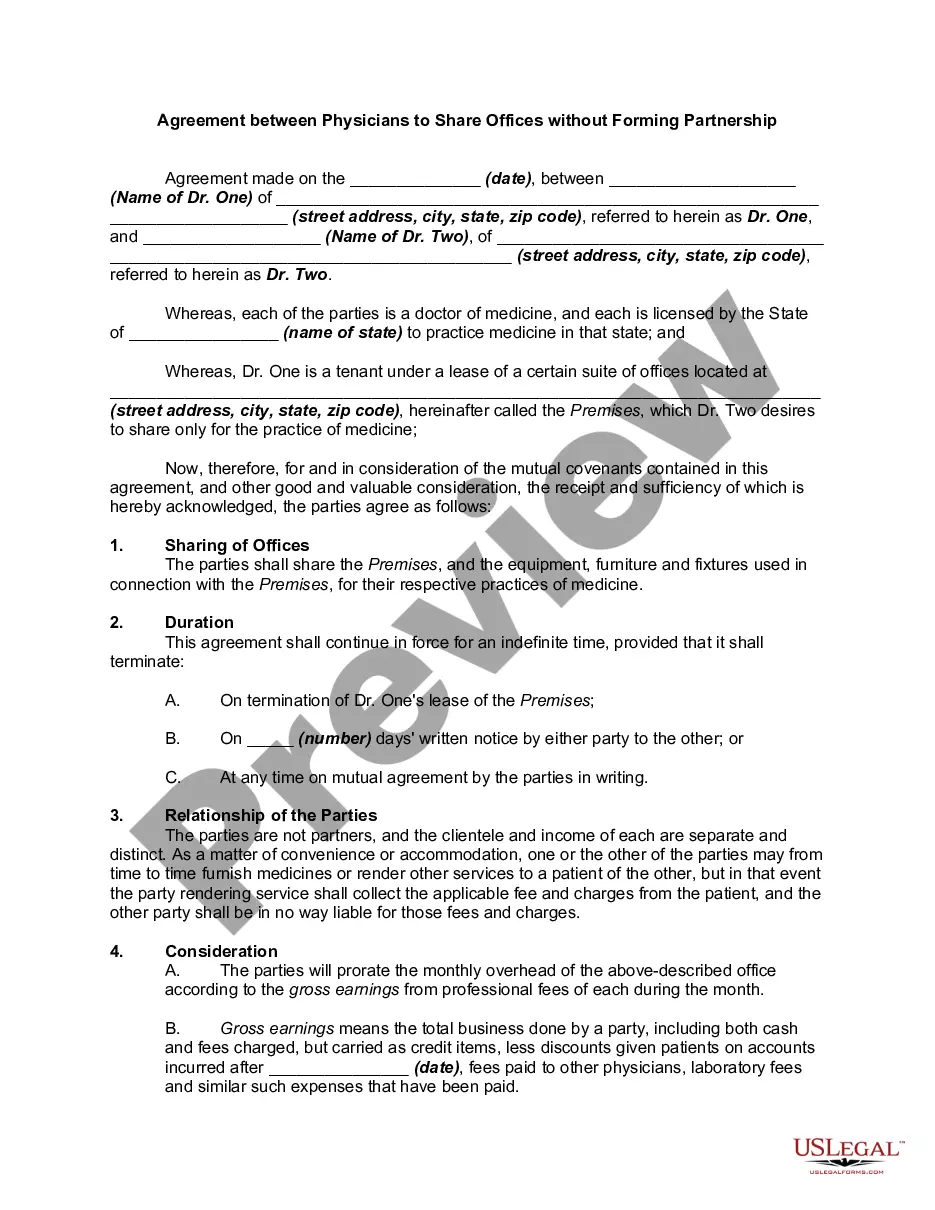
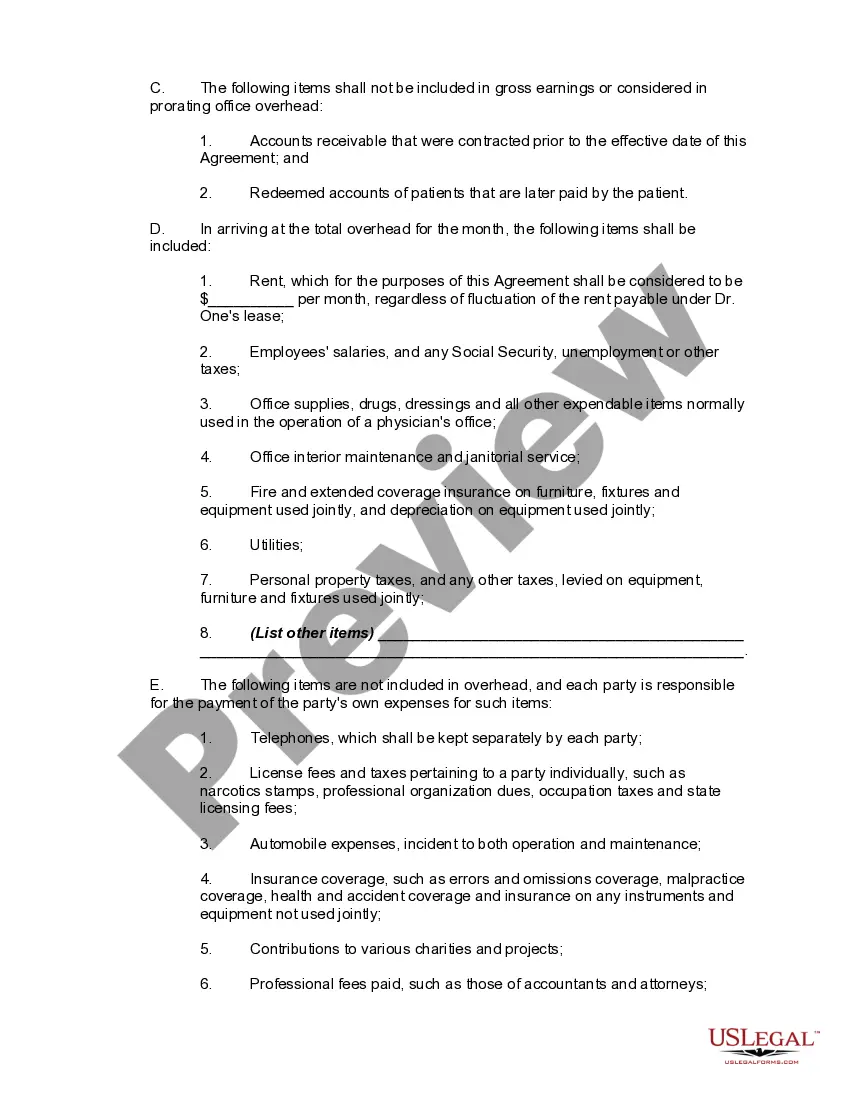
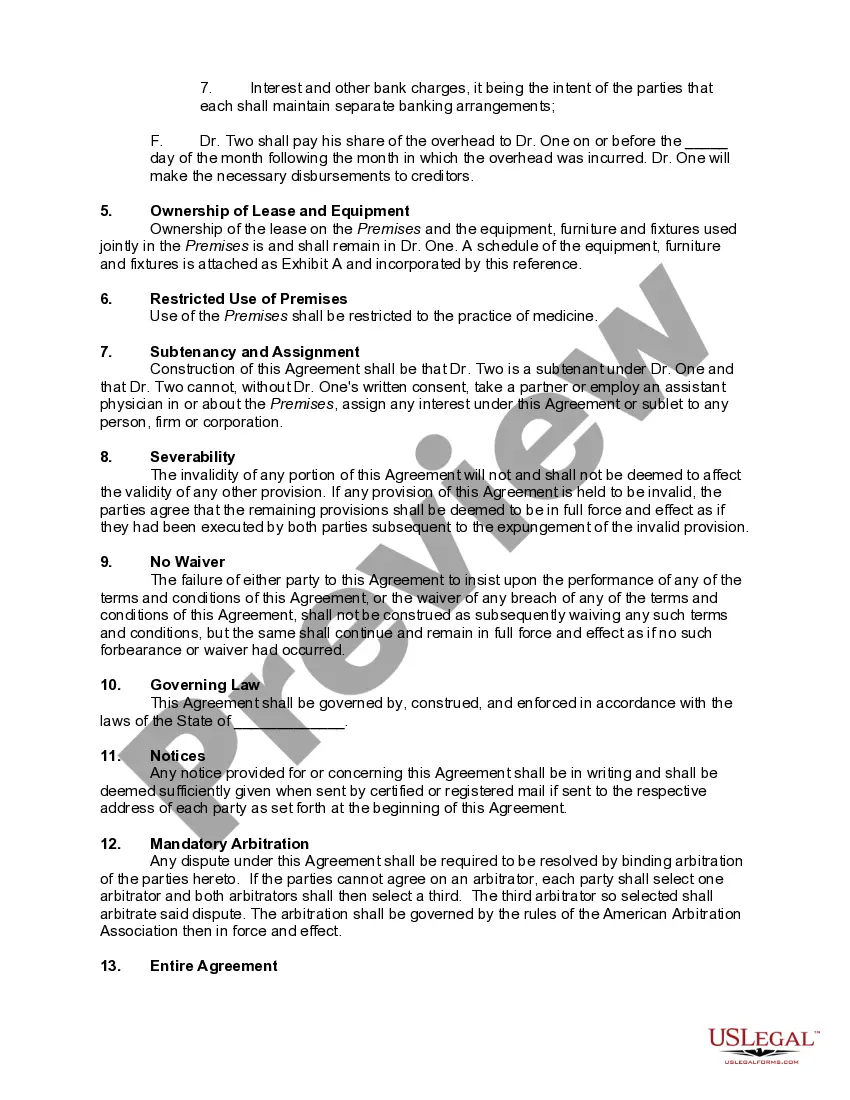












How to fill out Agreement Between Physicians To Share Offices Without Forming Partnership?
Selecting the ideal legal document template may pose a challenge.
Certainly, there are numerous templates accessible online, but how do you locate the legal document you require.
Utilize the US Legal Forms website. This service offers thousands of templates, such as the Ohio Agreement between Physicians to Share Offices without Forming Partnership, suitable for both business and personal purposes.
If the form does not meet your requirements, use the Search bar to find the right form. Once you are convinced that the form is suitable, click the Buy now button to acquire the form. Select the pricing plan you want and provide the necessary details. Create your account and process the payment using your PayPal account or credit card. Choose the document format and download the legal document template to your device. Complete, modify, print, and sign the acquired Ohio Agreement between Physicians to Share Offices without Forming Partnership. US Legal Forms is the largest collection of legal forms where you can find a variety of document templates. Utilize this service to download professionally crafted documents that adhere to state requirements.
- All the forms are reviewed by experts and comply with state and federal regulations.
- If you are already registered, Log In to your account and click the Download button to locate the Ohio Agreement between Physicians to Share Offices without Forming Partnership.
- Use your account to access the legal forms you have previously bought.
- Visit the My documents section of your account to obtain an additional copy of the document you require.
- If you are a new user of US Legal Forms, here are simple steps to follow.
- First, ensure you have chosen the correct form for your area/region. You can review the form using the Review button and read the form description to ensure it is the right one for you.
Form popularity
FAQ
Not all doctors' offices are structured as partnerships. While some medical offices operate as partnerships, many choose alternative arrangements, like the Ohio Agreement between Physicians to Share Offices without Forming Partnership. This flexibility allows physicians to collaborate without the complexities of partnership agreements, enabling them to focus on providing quality patient care.
The CPOM law in Ohio establishes the legal framework that restricts business entities from owning and managing medical practices. This law primarily focuses on maintaining the integrity of the physician-patient relationship. Understanding CPOM laws is essential for physicians considering the Ohio Agreement between Physicians to Share Offices without Forming Partnership, as it influences how they can structure their practices.
The surprise billing law in Ohio aims to protect patients from unexpected medical bills arising from out-of-network services. This law ensures that patients are informed of their coverage while receiving care, which is vital for sustainable healthcare practices. Physicians should be aware of this law, especially when forming an Ohio Agreement between Physicians to Share Offices without Forming Partnership, to ensure transparent billing practices.
The Ohio Personal Information Protection Act is designed to protect personal information held by businesses and healthcare providers across the state. This legislation emphasizes the importance of safeguarding sensitive data, a significant aspect for physicians in their practices. Compliance with this Act is essential for those using the Ohio Agreement between Physicians to Share Offices without Forming Partnership, as it pertains to patient confidentiality.
The medical Practice Act regulates the practice of medicine in each state to ensure public safety and maintain high standards of care. In Ohio, this Act covers licensing, ethical conduct, and the responsibilities of healthcare providers. Familiarity with this Act is crucial for physicians entering into agreements to share offices, as it directly influences their operations.
Section 4731.22 of the Ohio Revised Code addresses the corporate practice of medicine in Ohio. This section outlines the legal framework that prohibits unauthorized individuals or entities from practicing medicine. Physicians need to understand this statute, especially when they consider forming an Ohio Agreement between Physicians to Share Offices without Forming Partnership.
CPOM, or Corporate Practice of Medicine, governs the way medical practices operate in certain states. Ohio is a CPOM state, which means physicians must adhere to specific regulations that impact ownership and management of medical practices. Understanding the nuances of how CPOM applies in Ohio can help physicians successfully navigate their business arrangements.
The legal arrangement where physicians agree to share a facility and staff is commonly referred to as an Ohio Agreement between Physicians to Share Offices without Forming Partnership. This collaborative approach allows medical professionals to reduce overhead costs and enhance their practice's efficiency. By sharing resources, physicians can provide better care to patients while maintaining their independence.
Ohio does not require general partnerships to file formal paperwork with the state. However, it’s wise for partners to create a partnership agreement to outline responsibilities and decision-making processes. This agreement can help prevent disputes and clarify each partner's role. If you're exploring options for collaboration without forming a partnership, consider the Ohio Agreement between Physicians to Share Offices without Forming Partnership as a beneficial approach.
In Ohio, a general partnership is a business structure where two or more individuals agree to manage and operate a business together. Partners share the profits, losses, and responsibilities equally unless otherwise stated. It's important to note that a general partnership does not form a separate legal entity, which can expose partners to personal liability. If you are considering collaborating with other physicians, the Ohio Agreement between Physicians to Share Offices without Forming Partnership can offer a structured alternative.