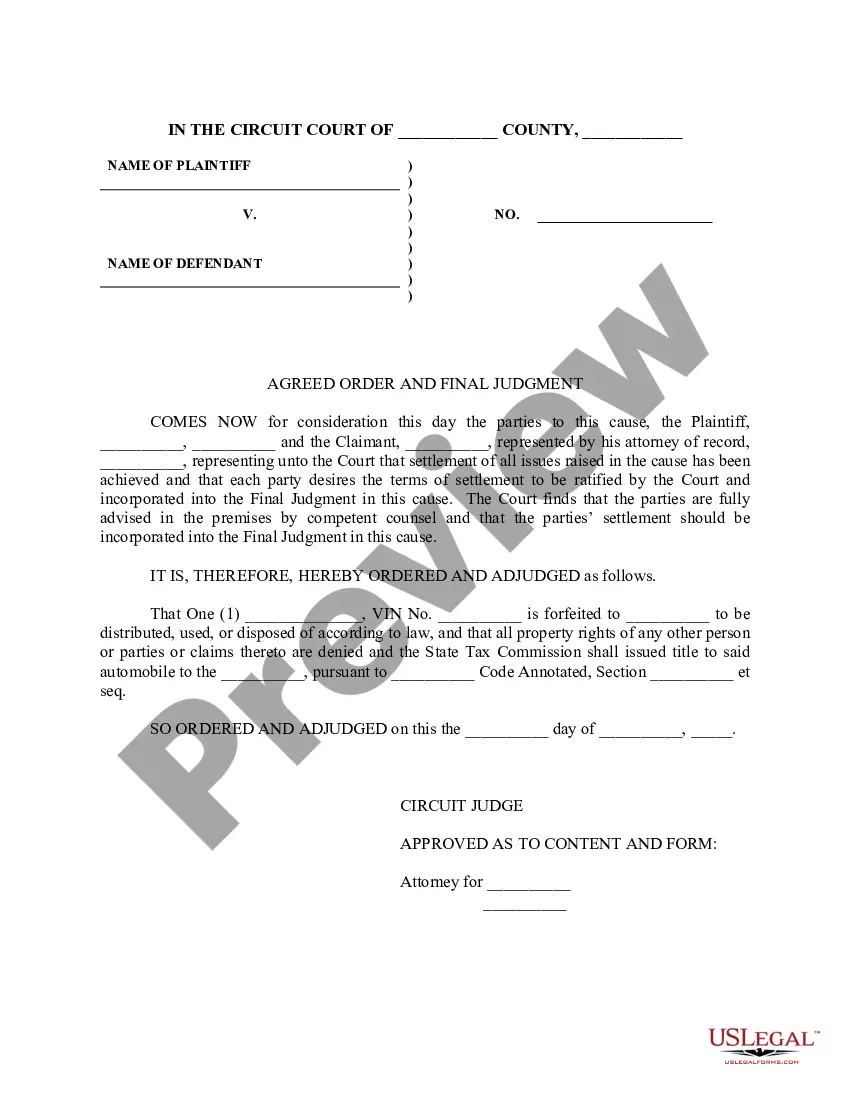
Ohio Agreed Order and Final Judgment - Awarding Forfeiture
Description
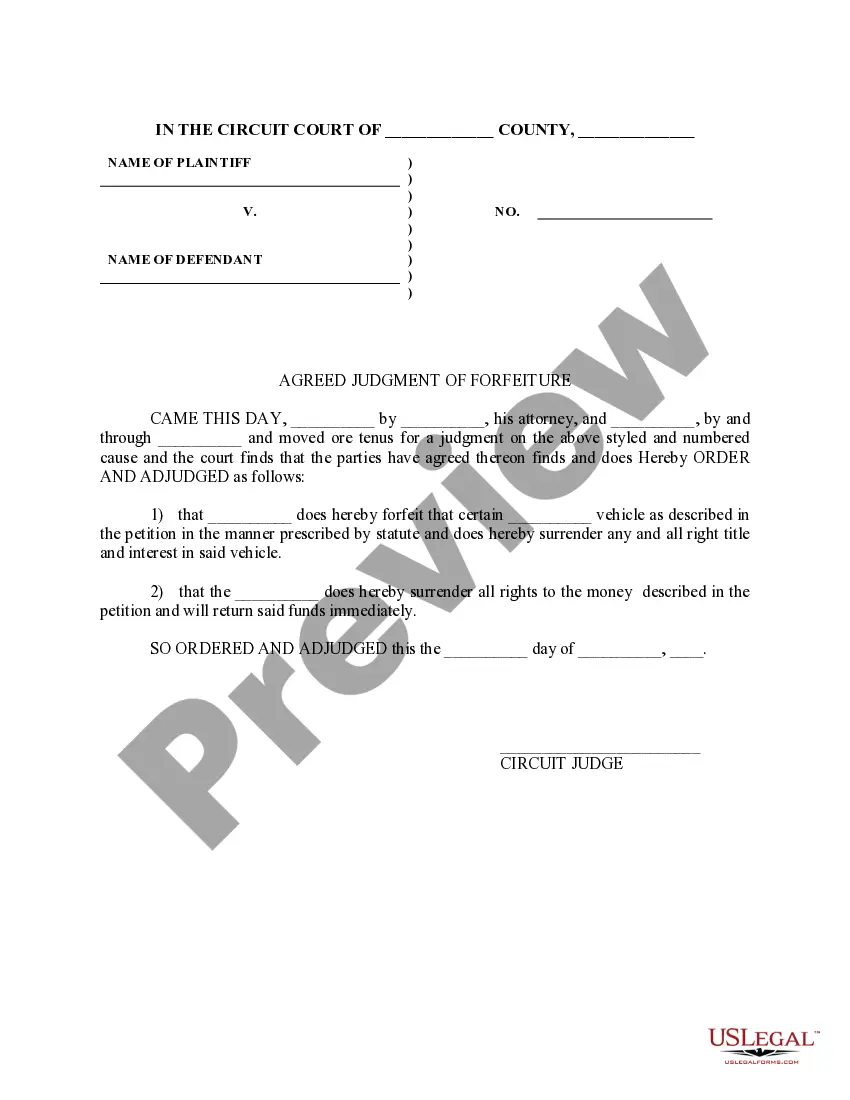
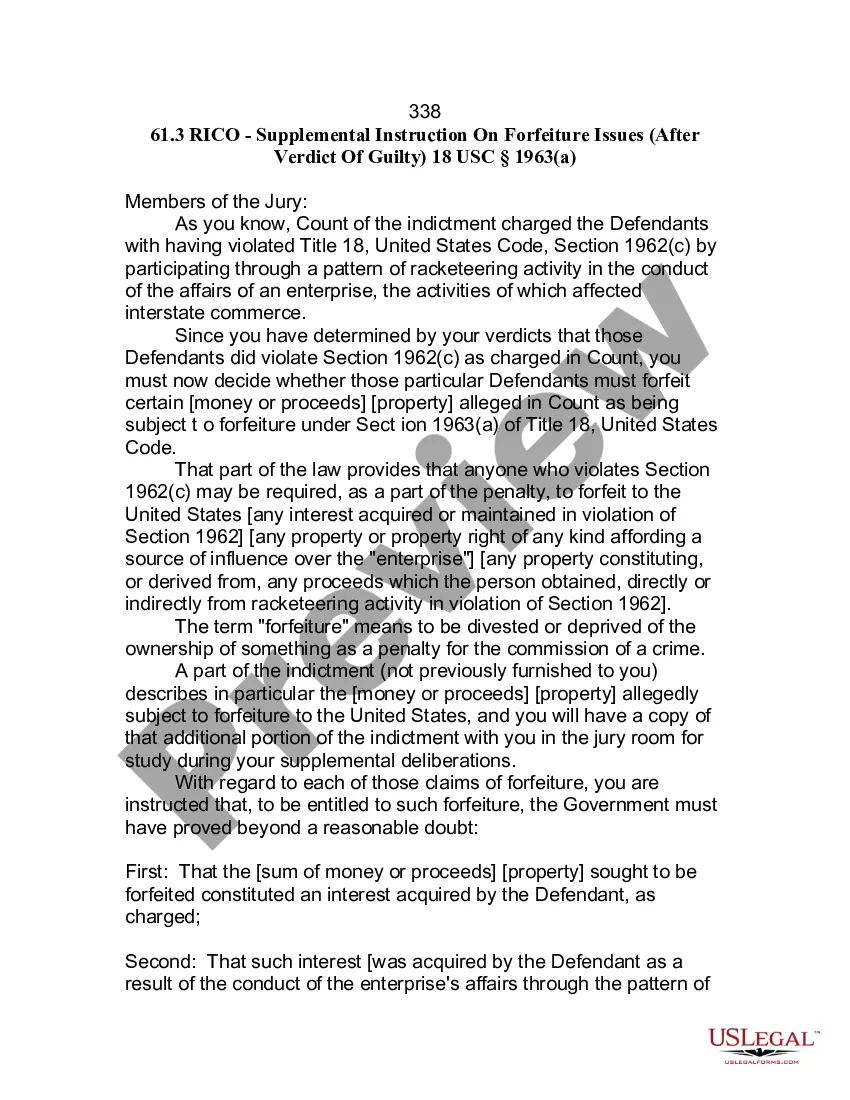

How to fill out Agreed Order And Final Judgment - Awarding Forfeiture?
US Legal Forms - one of the largest collections of legal documents in the United States - provides a broad selection of legal form templates that you can download or print. By using the website, you can access thousands of forms for business and personal purposes, organized by categories, states, or keywords. You can find the latest versions of forms such as the Ohio Agreed Order and Final Judgment - Awarding Forfeiture in moments.
If you already have a monthly subscription, Log In and download the Ohio Agreed Order and Final Judgment - Awarding Forfeiture from the US Legal Forms library. The Acquire button will be visible on each form you view. You can access all previously saved forms in the My documents section of your account.
If you want to use US Legal Forms for the first time, here are simple steps to get started: Make sure you have selected the correct form for your city/region. Click the Preview button to review the form’s content. Check the form summary to ensure you have chosen the right type. If the form does not meet your needs, use the Search field at the top of the screen to find one that does. When you are satisfied with the form, confirm your choice by clicking the Get now button. Then, select the pricing plan you prefer and provide your details to register for an account. Process the payment. Use your credit card or PayPal account to complete the transaction. Choose the format and download the form to your device. Edit. Fill out, modify, print, and sign the downloaded Ohio Agreed Order and Final Judgment - Awarding Forfeiture.
- Every template you added to your account has no expiration date and belongs to you indefinitely.
- So, if you wish to download or print another copy, simply visit the My documents section and click on the form you need.
- Access the Ohio Agreed Order and Final Judgment - Awarding Forfeiture with US Legal Forms, one of the most extensive libraries of legal document templates.
- Utilize a wide range of professional and state-specific templates that cater to your business or personal needs and requirements.
Form popularity
FAQ
Forfeiture is broadly defined as the loss of property for failing to obey the law, and that property is generally lost to the state. A person may have a vested interest in property to be forfeit in two ways: In personum jurisdiction and in rem jurisdiction.
Criminal forfeiture operates as punishment for a crime. It, therefore, requires a conviction, following which the state takes the assets in question from the criminal. Civil forfeiture rests on the idea (a legal fiction) that the property itself, not the owner, has violated the law.
Civ. R. 37(F) provides factors for judges to consider when a party seeks sanctions against an opponent who has lost potentially relevant electronically stored information. This rule does not attempt to address the larger question of when the duty to preserve electronically stored information is triggered.
A general example of forfeiture is a failure to make payment under a contract for the sale of immovable property. The advance for purchase of property is likely to be forfeited under the contract.
Under the state's asset forfeiture laws, Ohio Revised Code 2981.01, police have the right to seize property or assets that are alleged to have been earned by illegal activities. These properties and assets include: Your home, land, rental property, vacation home, or commercial property.
What is an asset forfeiture money judgment? A: An asset forfeiture money judgment can be obtained when the proceeds or property involved in criminal activity cannot be located. In such cases, the Government establishes the value of the assets that would be subject to forfeiture.
A criminal conviction is required, and forfeiture is part of the defendant's sentence. Criminal forfeiture is limited to the property interests of the defendant, including any proceeds earned by the defendant's illegal activity.
Forfeiture Overview Criminal forfeiture is an action brought as a part of the criminal prosecution of a defendant. ... Civil judicial forfeiture is an in rem (against the property) action brought in court against the property.