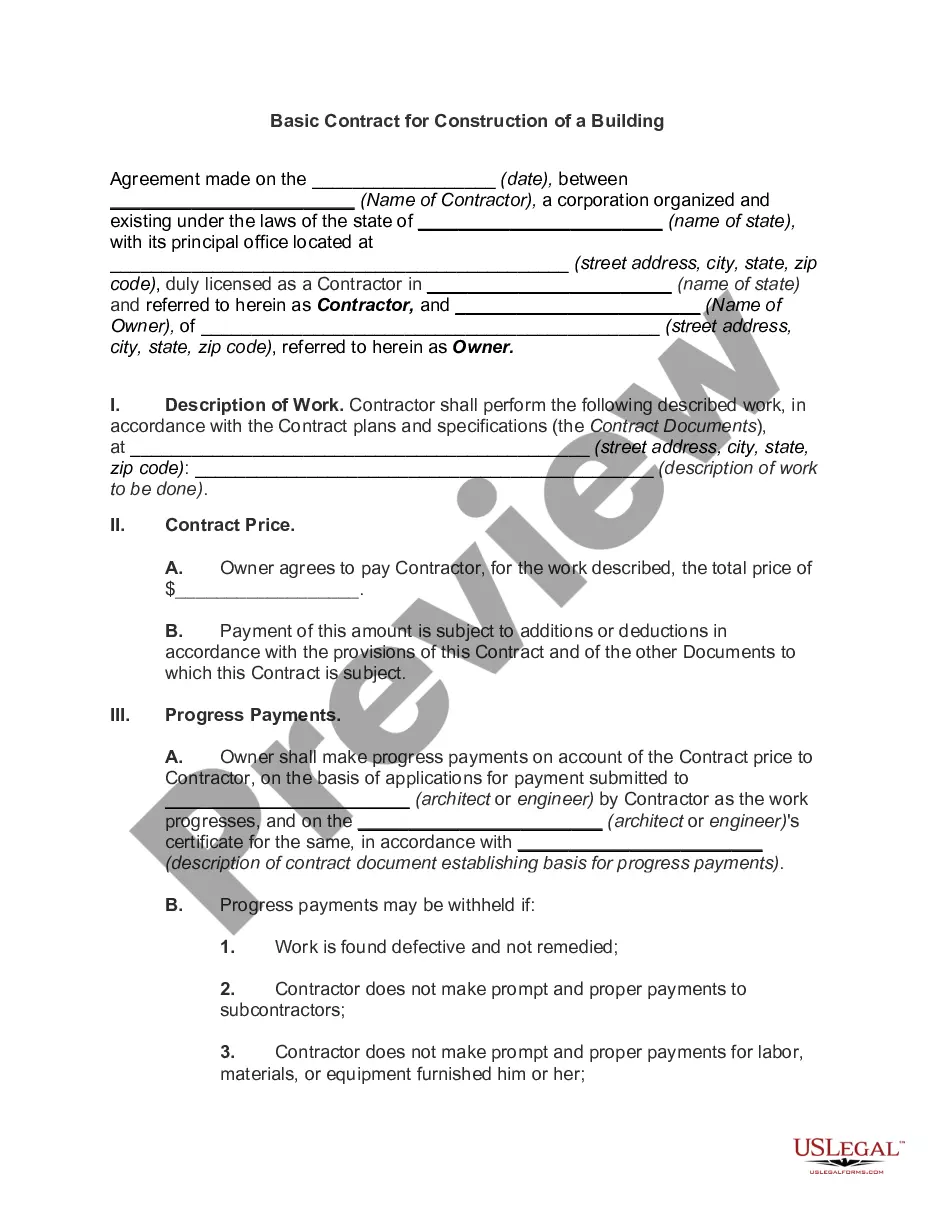
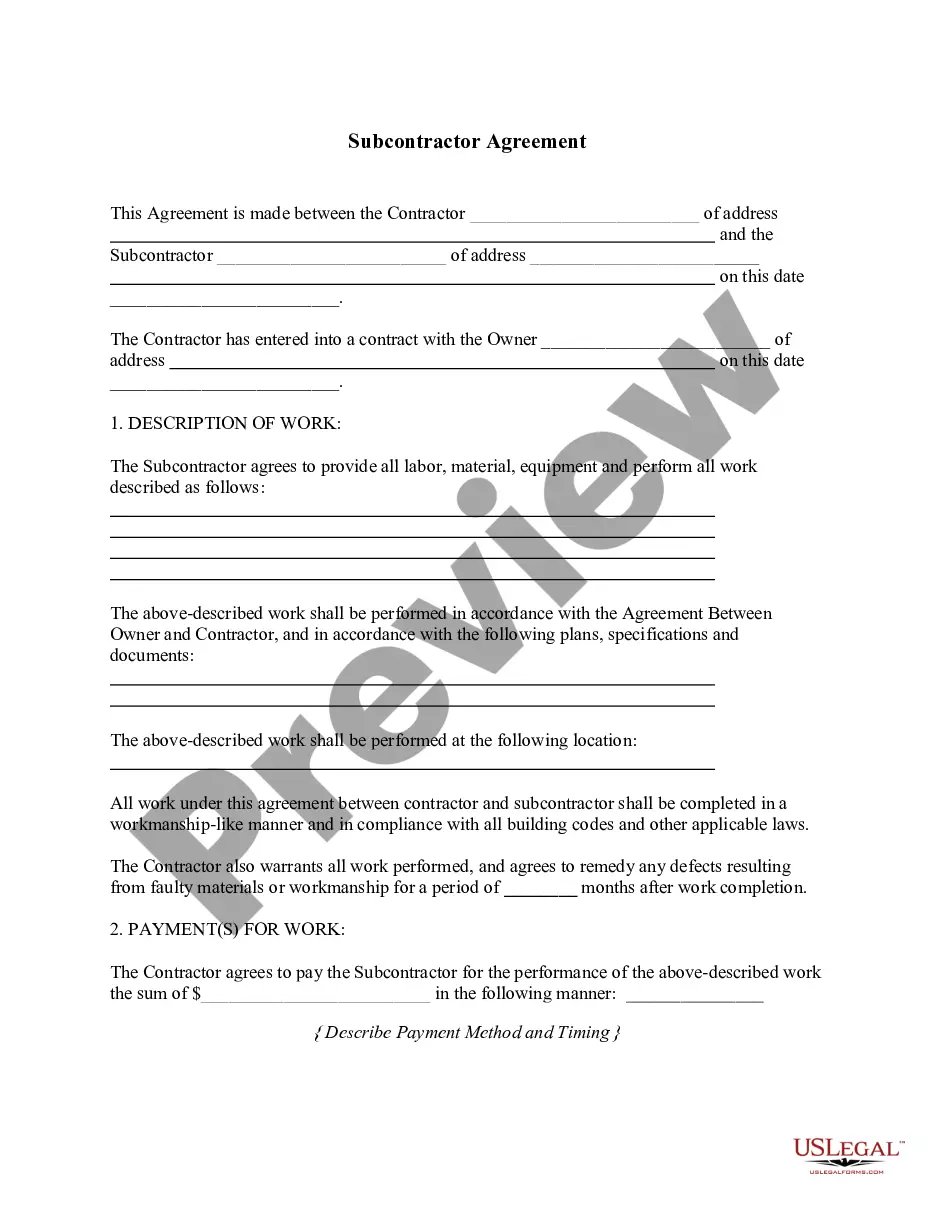
Ohio Construction Contract for Subcontractor
Description
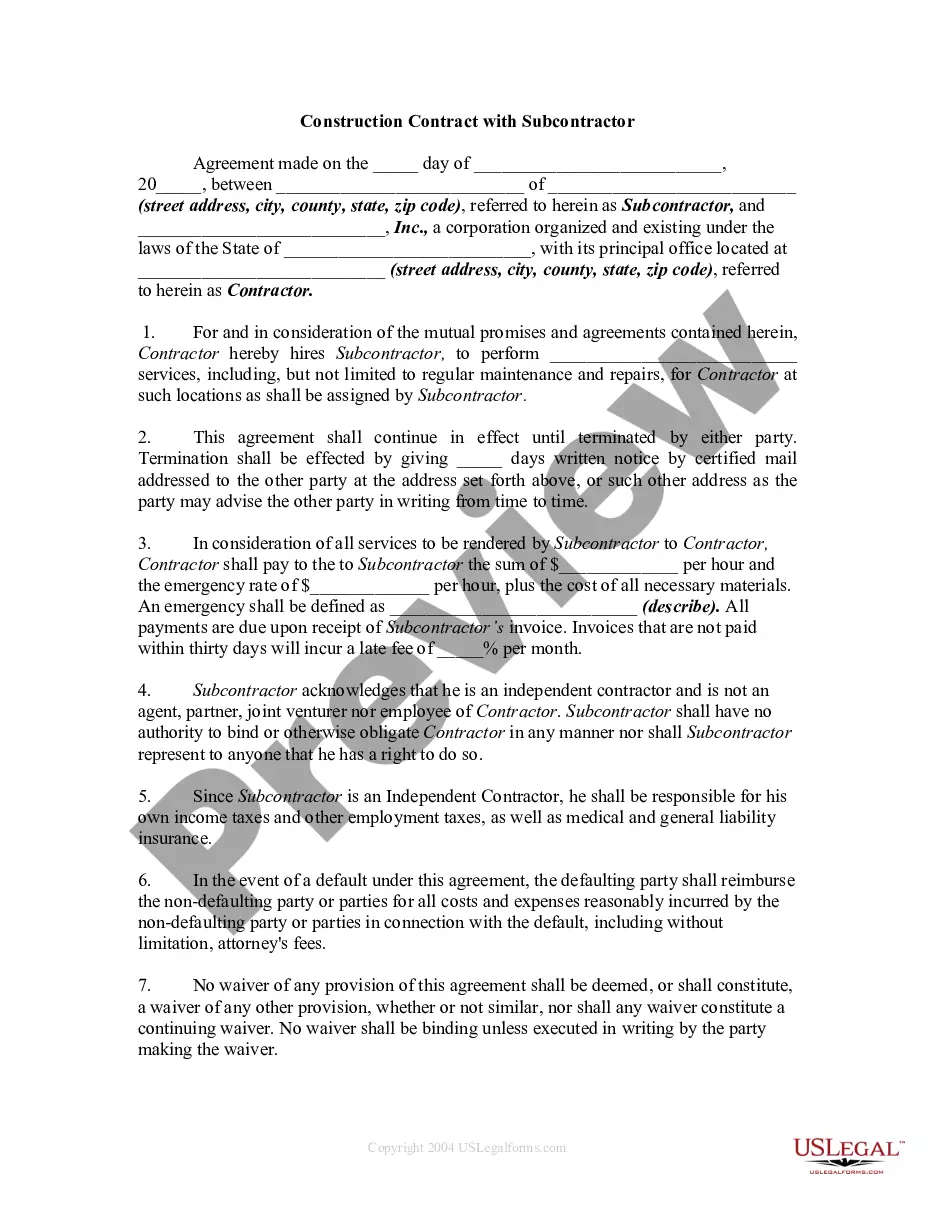
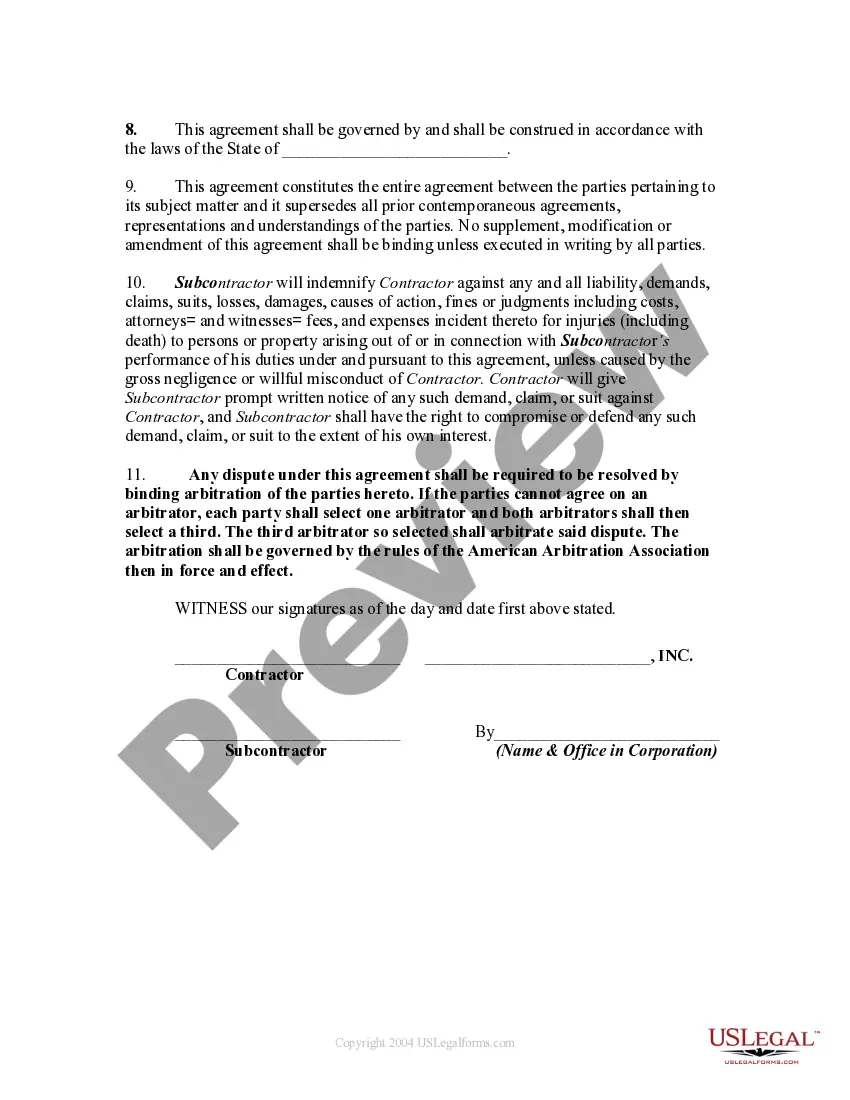
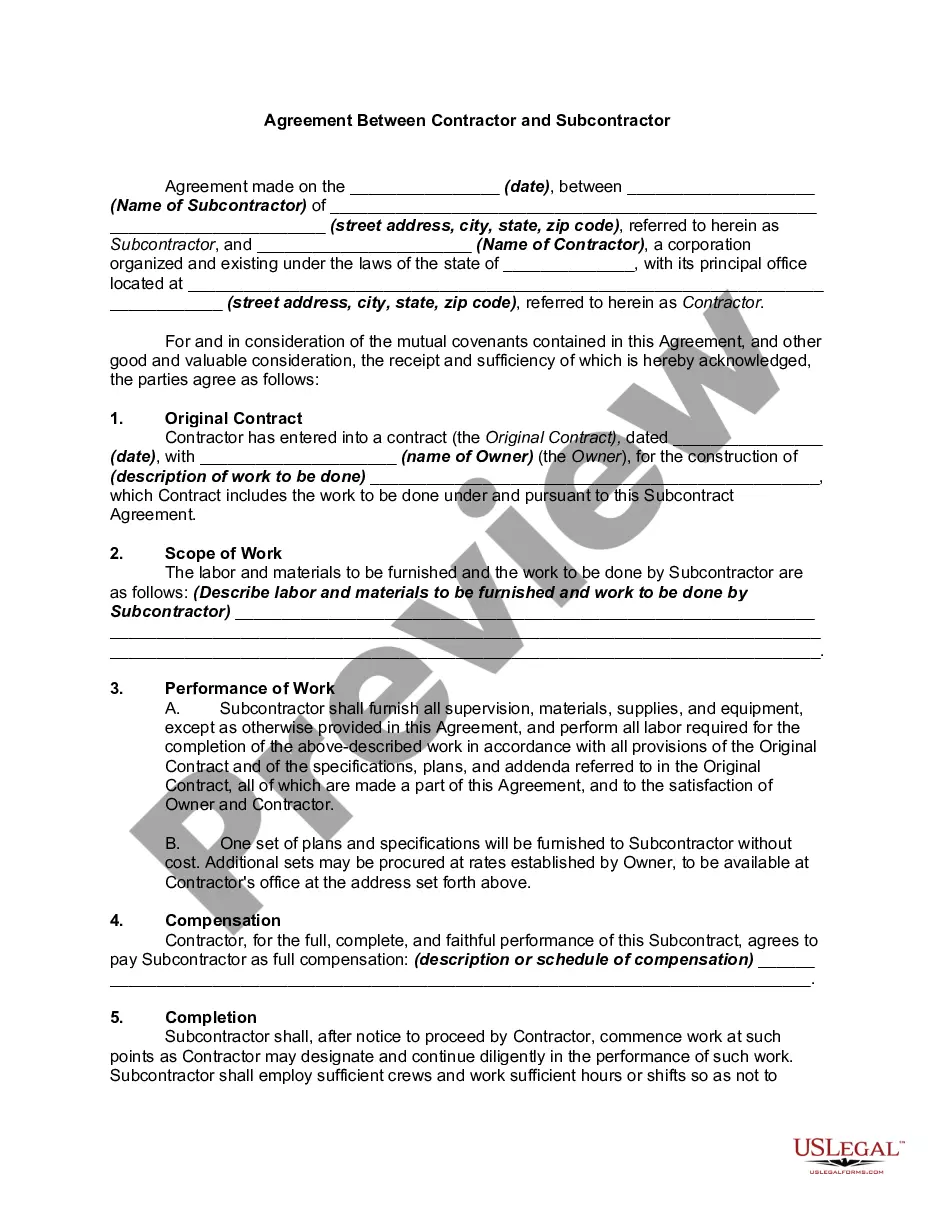
Get your form ready online
Our built-in tools help you complete, sign, share, and store your documents in one place.
Make edits, fill in missing information, and update formatting in US Legal Forms—just like you would in MS Word.
Download a copy, print it, send it by email, or mail it via USPS—whatever works best for your next step.
Sign and collect signatures with our SignNow integration. Send to multiple recipients, set reminders, and more. Go Premium to unlock E-Sign.
If this form requires notarization, complete it online through a secure video call—no need to meet a notary in person or wait for an appointment.
We protect your documents and personal data by following strict security and privacy standards.

Make edits, fill in missing information, and update formatting in US Legal Forms—just like you would in MS Word.

Download a copy, print it, send it by email, or mail it via USPS—whatever works best for your next step.

Sign and collect signatures with our SignNow integration. Send to multiple recipients, set reminders, and more. Go Premium to unlock E-Sign.

If this form requires notarization, complete it online through a secure video call—no need to meet a notary in person or wait for an appointment.

We protect your documents and personal data by following strict security and privacy standards.
Looking for another form?



How to fill out Construction Contract For Subcontractor?
You may spend time online searching for the legal documents template that satisfies the federal and state requirements you need.
US Legal Forms offers a vast array of legal forms that are examined by experts.
You can easily download or create the Ohio Construction Agreement for Subcontractor from the service.
If available, use the Preview button to review the document template as well.
- If you already have a US Legal Forms account, you can Log In and click the Download button.
- After that, you can complete, modify, print, or sign the Ohio Construction Agreement for Subcontractor.
- Every legal document template you purchase is yours permanently.
- To obtain an additional copy of a purchased form, visit the My documents section and click the corresponding button.
- If you are using the US Legal Forms site for the first time, follow the basic guidelines below.
- First, ensure that you have chosen the correct document template for the county/city that you select.
- Review the form description to verify that you have selected the correct form.
Form popularity
FAQ
Yes, subcontractors typically require a license in Ohio to operate legally. To enter into an Ohio Construction Contract for Subcontractor work, it is essential to comply with state regulations and hold the necessary licenses relevant to your trade. Licensing ensures that subcontractors meet the state standards for quality and safety, which protects both the contractor and clients. You can use platforms like uslegalforms to find the appropriate forms and understand the licensing requirements specific to your area.
Creating a contract with a contractor involves outlining the project expectations and payment agreements in detail. You should draft an Ohio Construction Contract for Subcontractor that specifies the work requirements, deadlines, and dispute resolution methods. Additionally, consider using templates or platforms like uslegalforms to simplify the process and ensure all necessary legal elements are included.
To write an effective Ohio Construction Contract for Subcontractor, start by clearly defining the scope of work. Include details such as project timelines, payment terms, and responsibilities for both parties. Make sure to incorporate any state-specific regulations to ensure compliance. Finally, review the contract carefully before signing to avoid any misunderstandings.
You need an Ohio Construction Contract for Subcontractor to ensure a mutual understanding between you and the subcontractor. This agreement safeguards your interests, outlines payment procedures, and specifies project expectations. A well-drafted contract minimizes the risk of disputes and protects your investment in the project.
Creating a subcontractor agreement involves drafting an Ohio Construction Contract for Subcontractor that specifies project details. Include items such as payment schedules, work quality expectations, and deadlines for completion. After both parties agree on the terms, make sure they sign the document to protect their rights.
A contractor manages the overall construction project, while a subcontractor specializes in specific tasks, such as electrical or plumbing work. In an Ohio Construction Contract for Subcontractor, the contractor hires subcontractors to complete specialized parts of the project. Understanding these roles ensures clear communication and efficient project completion.
Yes, using an Ohio Construction Contract for Subcontractor is essential. A contract provides legal protection and clarifies the responsibilities of each party. Without a contract, subcontractors may struggle to prove their claims or receive fair compensation for their work.
To create an Ohio Construction Contract for Subcontractor, start by clearly outlining the scope of work and expectations. Include payment terms, project timelines, and any necessary permits or licenses. Finally, ensure both parties sign the contract to formalize the agreement and protect their interests.
If there is no Ohio Construction Contract for Subcontractor in place, it can lead to disputes over the work performed and payment due. Without a clear agreement, subcontractors may struggle to enforce their rights and recover costs. Additionally, this lack of documentation can result in misunderstandings regarding responsibilities and scope of work.
A contract is valid in Ohio when it includes an offer, acceptance, consideration, and is agreed upon by parties with legal capacity. Additionally, the contract’s purpose must be legal. Ensuring all these elements are in place can help you create a solid Ohio Construction Contract for Subcontractor that can stand the test of legal scrutiny.