Ohio General or Common Law Affidavit

State:
Multi-State
Control #:
US-00479BG
Format:
Word; 
Rich Text
Instant download

Description

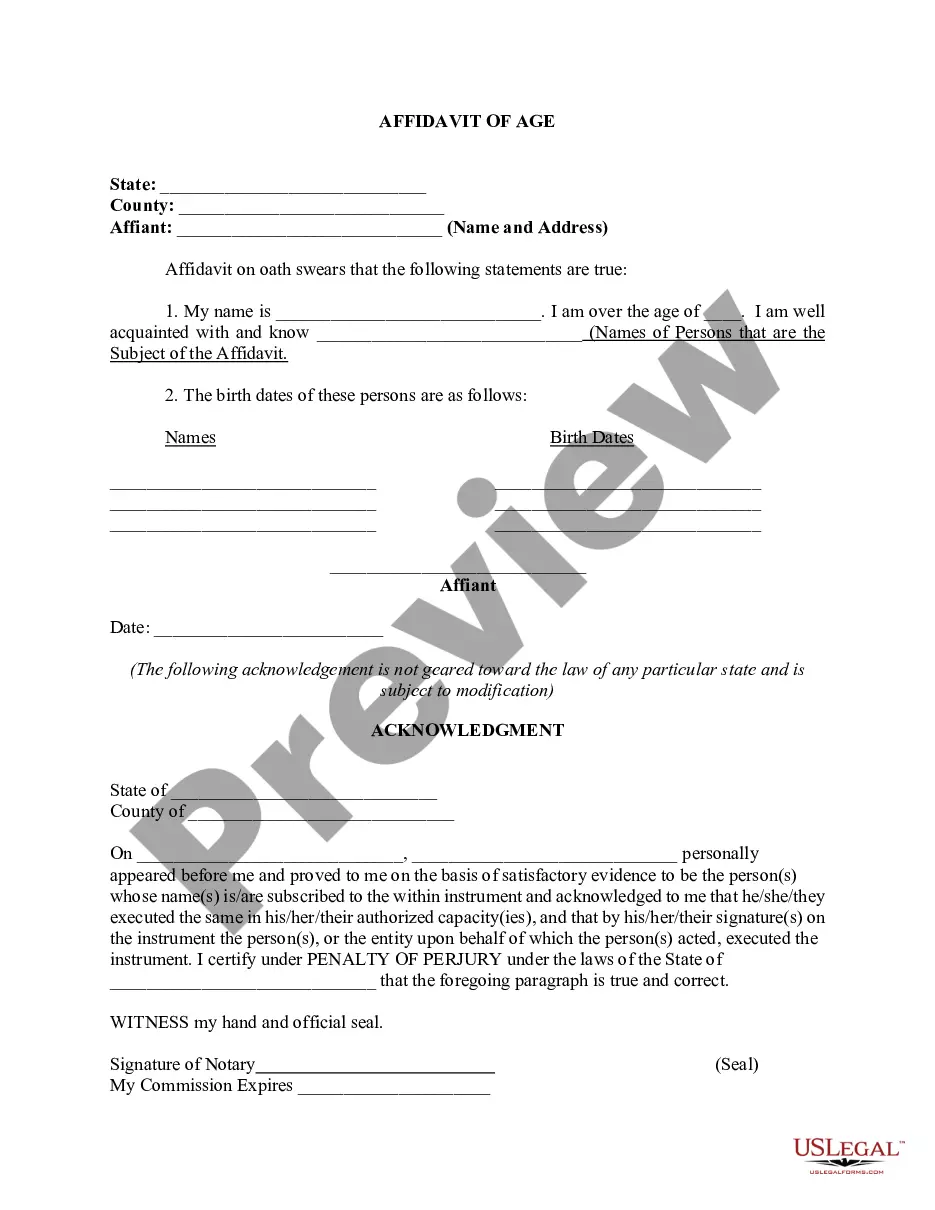
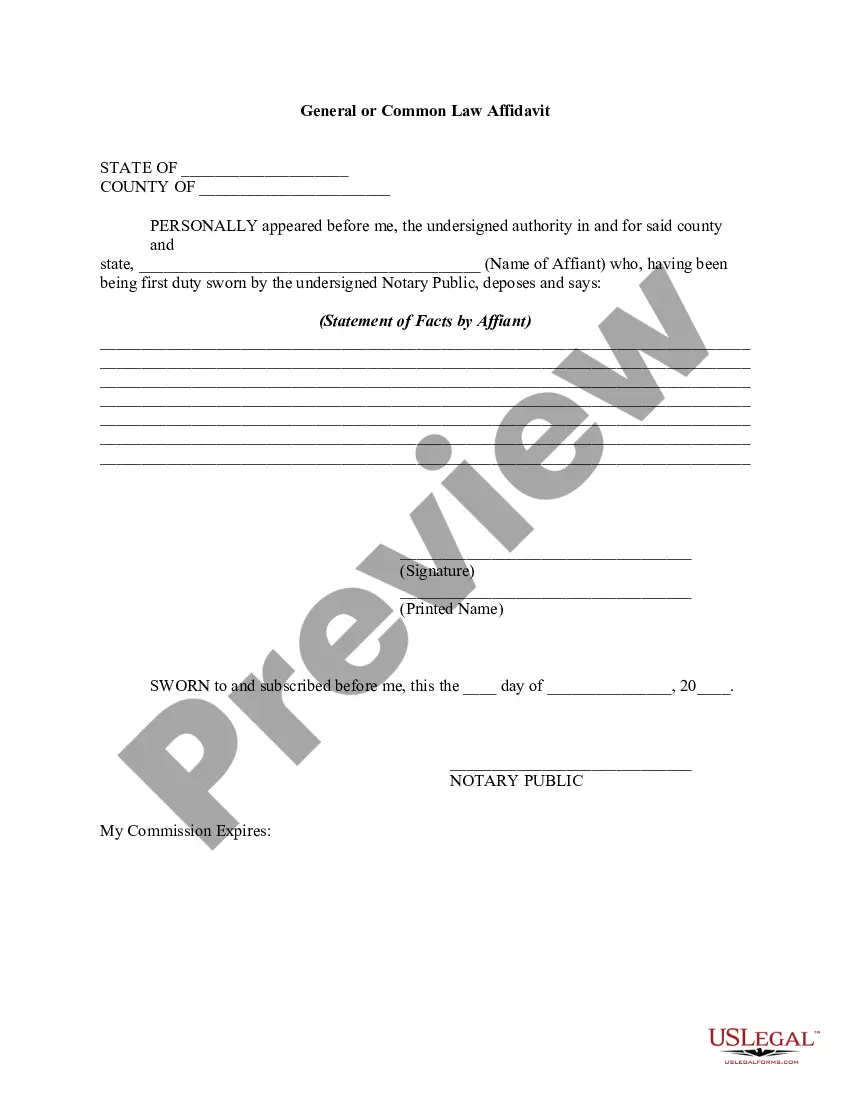
An affidavit must be in writing and be sworn to or affirmed before some legally authorized officer. Statutes of various jurisdictions ordinarily prescribe various formal requirements for the affidavits. These requirements may be just proper form or may be essential as to the legal effect of the affidavit.


The formal requirements of an affidavit usually are:

1. The identification of the place where the affidavit was taken (i.e., the venue);

2. The signature of the affiant (i.,e., the person giving the affidavit); and

3. The certificate evidencing the fact that the affidavit was properly made before a duly authorized officer (i.e. the jurat), which includes the proper authentication by the authorized officer.


It is essential to the validity of an affidavit that it be sworn to, or affirmed before, a notary public or some other officer authorized to administer oaths or affirmations. This may be done by having the officer administer the oath to the affiant or by having the affiant affirm to the officer, with the officers consent, the truth of the matters contained in the affidavit. It is also essential that the affiant be identified as to name, residence and, where appropriate or required by law, as to status or capacity. This is ordinarily done in the introductory paragraph to the affidavit.


The following form is a very basic and general form which can be used in most jurisdictions if properly completed.

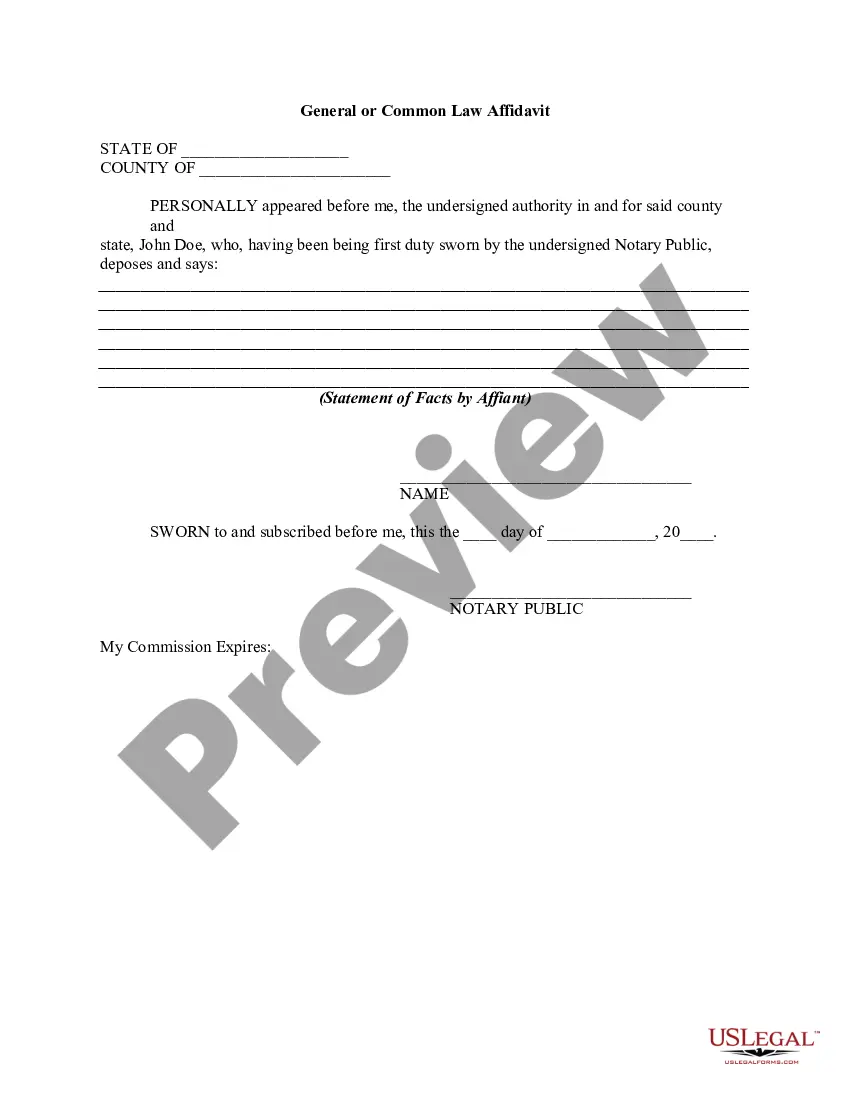
How to fill out General Or Common Law Affidavit?

If you need to compile, download, or create legal document templates, utilize US Legal Forms, the largest selection of legal forms available online.

Leverage the website's user-friendly and functional search to obtain the documents you require.

Different templates for business and personal use are organized by categories and states, or keywords.

Step 3. If you are not satisfied with the form, use the Search field at the top of the screen to find other types in the legal form template.

Step 4. Once you have located the form you need, click on the Get now button. Choose the payment plan you prefer and provide your credentials to register for an account.

  1. Use US Legal Forms to acquire the Ohio General or Common Law Affidavit in just a few clicks.
  2. If you are already a US Legal Forms user, Log In to your account and click on the Download button to retrieve the Ohio General or Common Law Affidavit.
  3. You can also access forms you previously saved from the My documents section of your account.
  4. If you are using US Legal Forms for the first time, follow the steps below.
  5. Step 1. Make sure you have chosen the form for the correct region/state.
  6. Step 2. Use the Preview option to review the form’s content. Be sure to read the details.

Form popularity

FAQ

To file a grievance against a judge in Ohio, you must follow specific procedures set by the Ohio Supreme Court. Start by gathering evidence supporting your complaint, and consider using an Ohio General or Common Law Affidavit to document your experience. This affidavit can lend credibility to your grievance and ensure your concerns are heard properly.

To disqualify a judge in Ohio, explain your reasons in a formal motion and submit it to the appropriate court. It is essential to provide evidence supporting your claims, which often includes an Ohio General or Common Law Affidavit. This affidavit helps clarify your position and provides legal ground for your request.

Getting a judge removed from their position typically involves serious allegations of misconduct or incompetence. While it is a challenging process, documenting your concerns with an Ohio General or Common Law Affidavit can be a crucial step in presenting your case. You may want to consult legal resources for guidance through this process.

Disqualifying a judge is necessary when there is a reasonable belief that the judge cannot remain impartial. Grounds for disqualification may include personal biases, conflicts of interest, or previous involvement in the case. Using an Ohio General or Common Law Affidavit can formalize your request and provide the documentation needed to support your concerns.

A conflict of interest occurs when a judge has a personal stake in a case that impacts their impartiality. This might involve relationships with a party in the case or financial interests. If you feel a judge has a conflict of interest, you may need to prepare an Ohio General or Common Law Affidavit to present your concerns through appropriate legal channels.

The Ohio Revised Code affidavit is a formal written statement made under oath, detailing specific facts relevant to a legal matter. It serves as a critical document in various legal proceedings and helps to establish the facts necessary for an Ohio General or Common Law Affidavit. Understanding this concept will aid you in preparing your legal documents accurately.

A solid sentence for an affidavit clearly states a fact and is based on the affiant's personal knowledge. For instance, 'I, Your Name, declare that I witnessed specific event on date.' When crafting your Ohio General or Common Law Affidavit, ensure your sentences are straightforward and focused on factual clarity. Platforms like USLegalForms can assist in refining your statements for legal effectiveness.

Filling out an affidavit example involves using it as a template for your own statements. You should carefully examine the structure, noting how facts are presented and what information is required. An Ohio General or Common Law Affidavit should reflect your situation accurately, so adapt the example to fit your needs. It's advisable to use USLegalForms' resources, which provide clear examples and customizable options.

A claim affidavit is a sworn statement that supports a specific claim, detailing the facts and circumstances surrounding it. This type of affidavit is often used to substantiate legal claims in court proceedings. When preparing an Ohio General or Common Law Affidavit for a claim, accuracy and honesty in presenting facts are vital. To aid in this process, refer to the forms available on USLegalForms.

When filling out an affidavit for family court, begin by identifying yourself and the other party involved. Include details about the specific issues relevant to your case, such as custody or support. An Ohio General or Common Law Affidavit must be factual and void of opinion, so ensure your statements are based on personal knowledge. Utilizing the templates from USLegalForms can streamline this process and bring clarity to your claims.

Trusted and secure by over 3 million people of the world’s leading companies

Ohio General or Common Law Affidavit