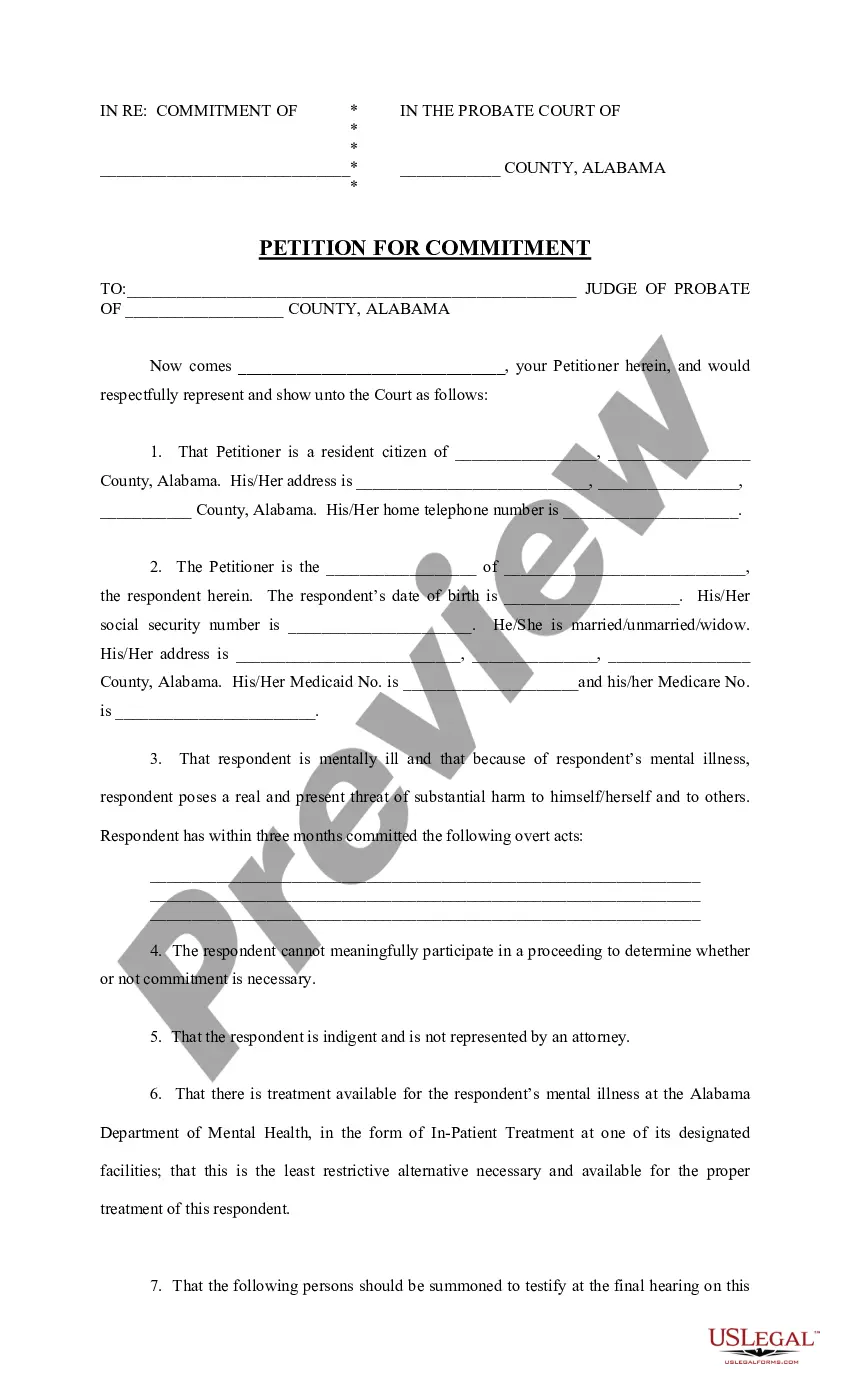
Ohio Affidavit of Occupancy and Financial Status
Understanding this form
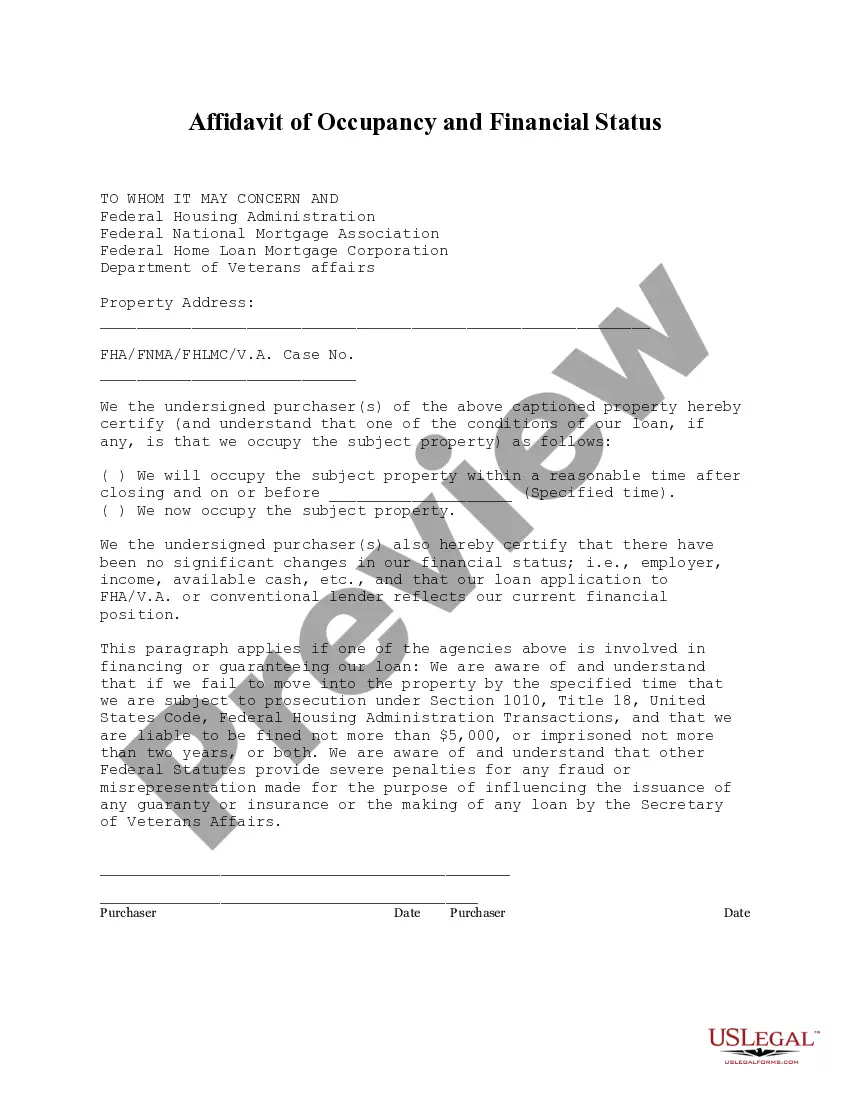
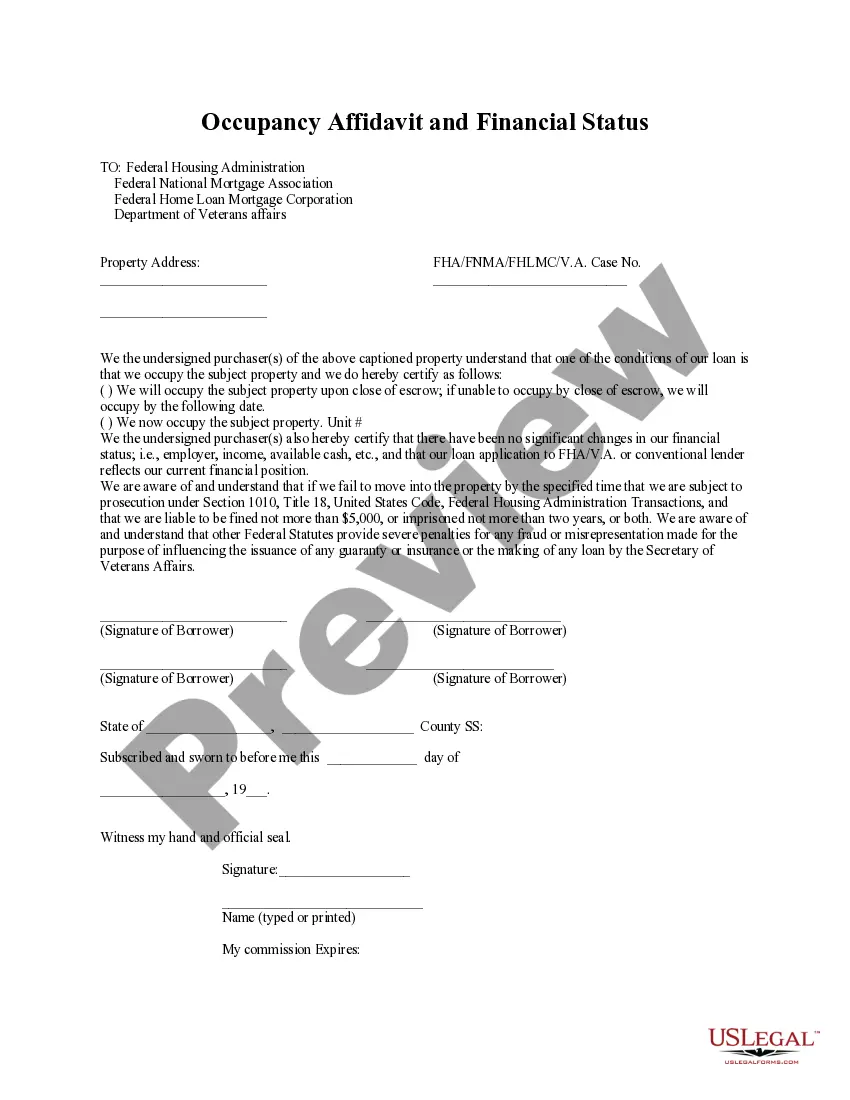
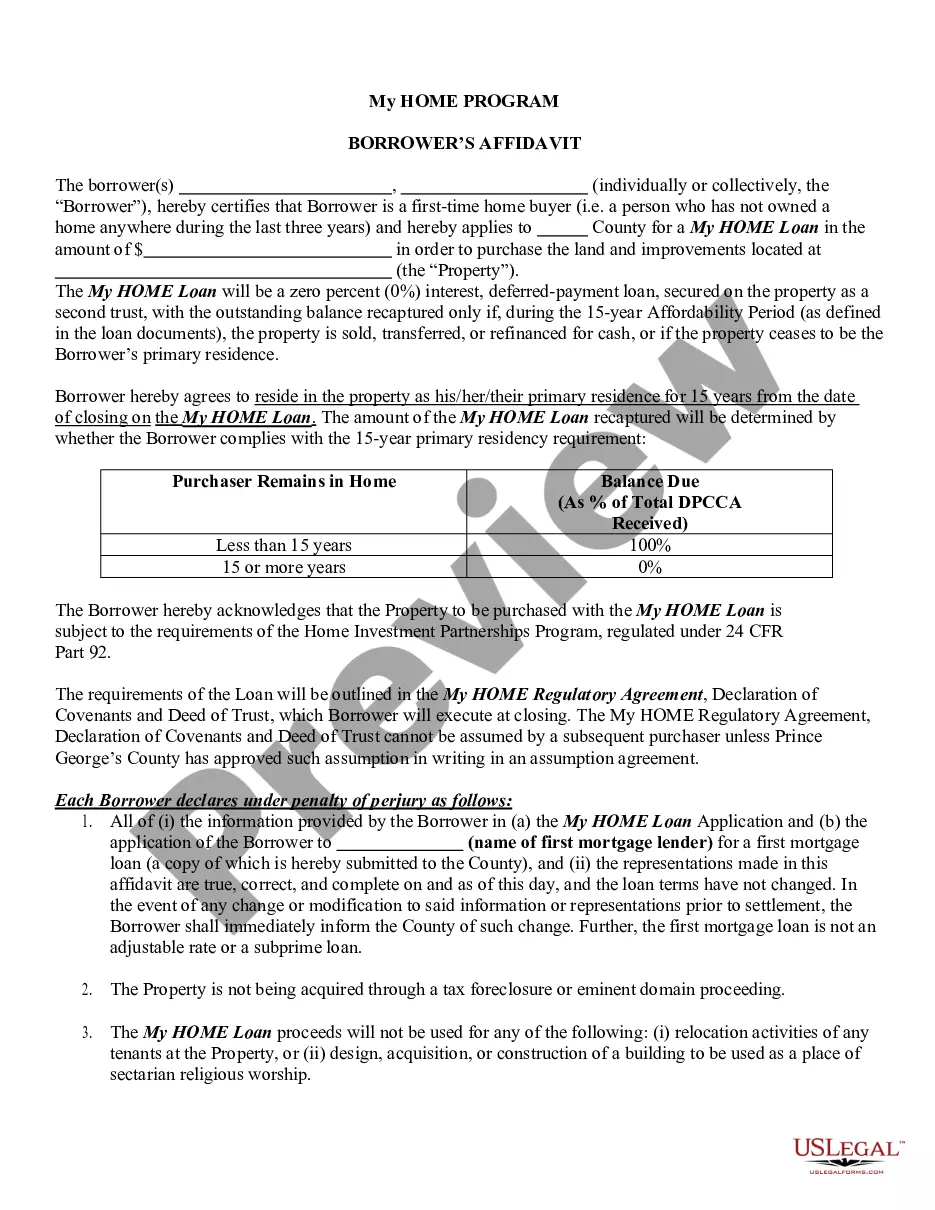
The Affidavit of Occupancy and Financial Status is a legal document that buyers use to declare their intent to occupy a property as their primary residence at the time of closing. This form is essential for confirming that there have been no significant changes in the buyer's financial situation since submitting their loan application. It serves to assure lenders of the buyer's commitment to residency and financial stability, differing from other forms that may not address occupancy or financial status directly.
Form components explained
- Property address and case number for referencing the specific loan.
- Statement confirming the buyer's intention to occupy the property within a specified timeframe.
- Certification regarding the current financial status of the buyer(s).
- Legal acknowledgment of consequences for failing to comply with stated occupancy.
- Signature lines for the purchaser(s) and the date of agreement.

When to use this form
This form should be used during the closing process of a real estate transaction when a buyer is securing a loan that requires them to occupy the purchased property as their primary residence. It is essential when dealing with lenders such as the Federal Housing Administration or the Department of Veterans Affairs, as they often require such declarations to finalize the loan.
Who can use this document
- Homebuyers who are applying for a mortgage.
- Individuals purchasing property with the intent to make it their primary residence.
- Buyers involved in transactions requiring loan guarantees from government agencies.
How to complete this form
- Identify the property by entering the full address and FHA/FNMA/FHLMC/V.A. case number.
- Mark the appropriate checkbox indicating whether you plan to occupy the property or are already residing there.
- Specify the date by which you intend to move in, if applicable.
- Declare that there have been no significant changes in your financial status since your loan application.
- Sign and date the affidavit to acknowledge your understanding and agreement to the terms outlined.
Does this form need to be notarized?
This form does not typically require notarization unless specified by local law. However, it is good practice to have it notarized to ensure legal validity and reduce the risk of disputes in the future.
Get your form ready online
Our built-in tools help you complete, sign, share, and store your documents in one place.
Make edits, fill in missing information, and update formatting in US Legal Forms—just like you would in MS Word.
Download a copy, print it, send it by email, or mail it via USPS—whatever works best for your next step.
Sign and collect signatures with our SignNow integration. Send to multiple recipients, set reminders, and more. Go Premium to unlock E-Sign.
If this form requires notarization, complete it online through a secure video call—no need to meet a notary in person or wait for an appointment.
We protect your documents and personal data by following strict security and privacy standards.

Make edits, fill in missing information, and update formatting in US Legal Forms—just like you would in MS Word.

Download a copy, print it, send it by email, or mail it via USPS—whatever works best for your next step.

Sign and collect signatures with our SignNow integration. Send to multiple recipients, set reminders, and more. Go Premium to unlock E-Sign.

If this form requires notarization, complete it online through a secure video call—no need to meet a notary in person or wait for an appointment.

We protect your documents and personal data by following strict security and privacy standards.
Common mistakes to avoid
- Not marking the occupancy intention box correctly.
- Failing to specify a move-in date if not currently occupying the property.
- Omitting signatures or dates from the document.
Benefits of completing this form online
- Immediate access to a legally compliant form tailored to your needs.
- Ability to easily edit and complete the form as needed before printing.
- Convenience of obtaining the form without the need for office visits or delays.
Legal use & context
- This affidavit serves as a sworn statement to help protect the lender's interests regarding occupancy requirements.
- False statements can lead to serious legal consequences, including fines and potential imprisonment.
What to keep in mind
- The Affidavit of Occupancy and Financial Status confirms the intention to occupy the property and the financial stability of the buyer.
- Completing this form accurately is crucial for the successful closing of a real estate transaction.
- Being aware of the legal implications of misrepresentation is essential for both buyers and lenders.
Looking for another form?
Form popularity
FAQ
You can find a certifier online. You'll need to apply for an occupation certificate if you want to occupy or use a new building that has been completed, or change the whole use of an existing building.
A certificate of occupancy is a document issued by a local government agency or building department certifying a building's compliance with applicable building codes and other laws, and indicating it to be in a condition suitable for occupancy.
Duly accomplished Certificate of Completion, signed by owner/ applicant, signed and sealed by respective architect/ engineers, Forms are available at the Office of the Building Official. Photocopy of all Approved Permit Application Forms ( Back & front) Copy of Approved Construction Plans/Blueprints.
Getting a Copy of a CO Use the Buildings Information System to look up the property. In the building's profile, the View Certificates of Occupancy link will display the CO. You can also obtain a copy of a Certificate of Occupancy from the Department's Customer Service Counter in your borough office.
To issue a Certificate of Occupancy, the building surveyor only checks that the necessary conditions to deem the house occupiable have been fulfilled. Think of this inspection as ticking off the fundamentals for habitation, rather than the entire list of what makes your home final and complete.
Without this document, your building has no legal sanction for occupancy. "Occupancy Certificate gains significance because it is a document which evidences the completeness of all the installations and approvals required for a building to be habitable," says Kunal Arora, associate partner, Alpha Partners.
Applicant purchase and submit application pack to Land Use Allocation Committee (LUAC) Applicant collects acknowledgement slip. Applicant collects letter of offer of allocation (1 day) Applicants pay for allocated land (within 90 days)
The owner of the building, or the land the building is located on, can apply for a certificate of occupancy or use after the relevant building work is complete. For work that requires a building certifier, your building certifier will need to have issued a certificate of completion before the certificate can be issued.
Land information certificate. Receipt for land information fee. Receipt for application form. Publication/inspection fee. Capital contribution (to be calculated based on the size and location of land). Land purchase receipt/agreement (duly stamped).