Ohio Transfer on Death Designation Affidavit - TOD from Husband and Wife to Trust
Overview of this form
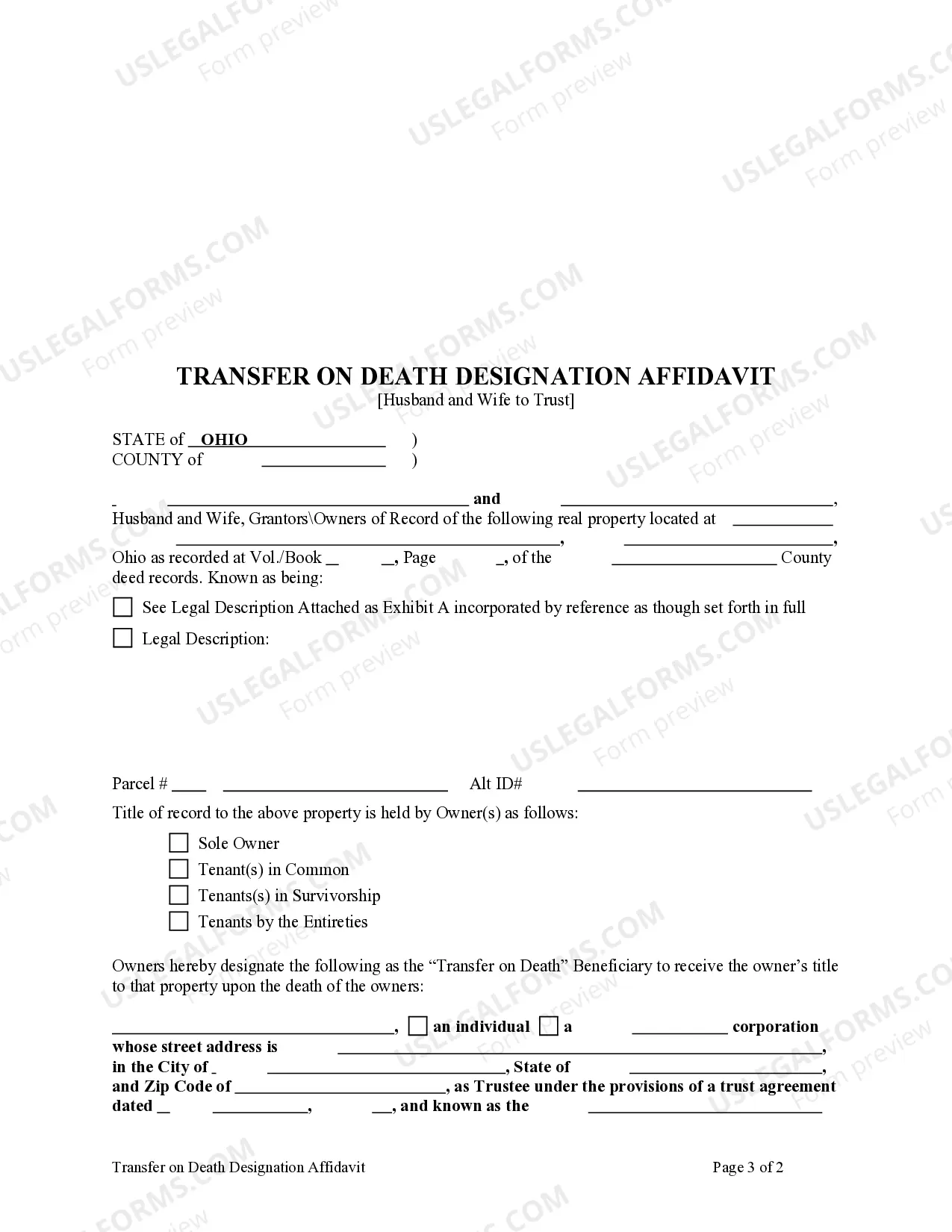
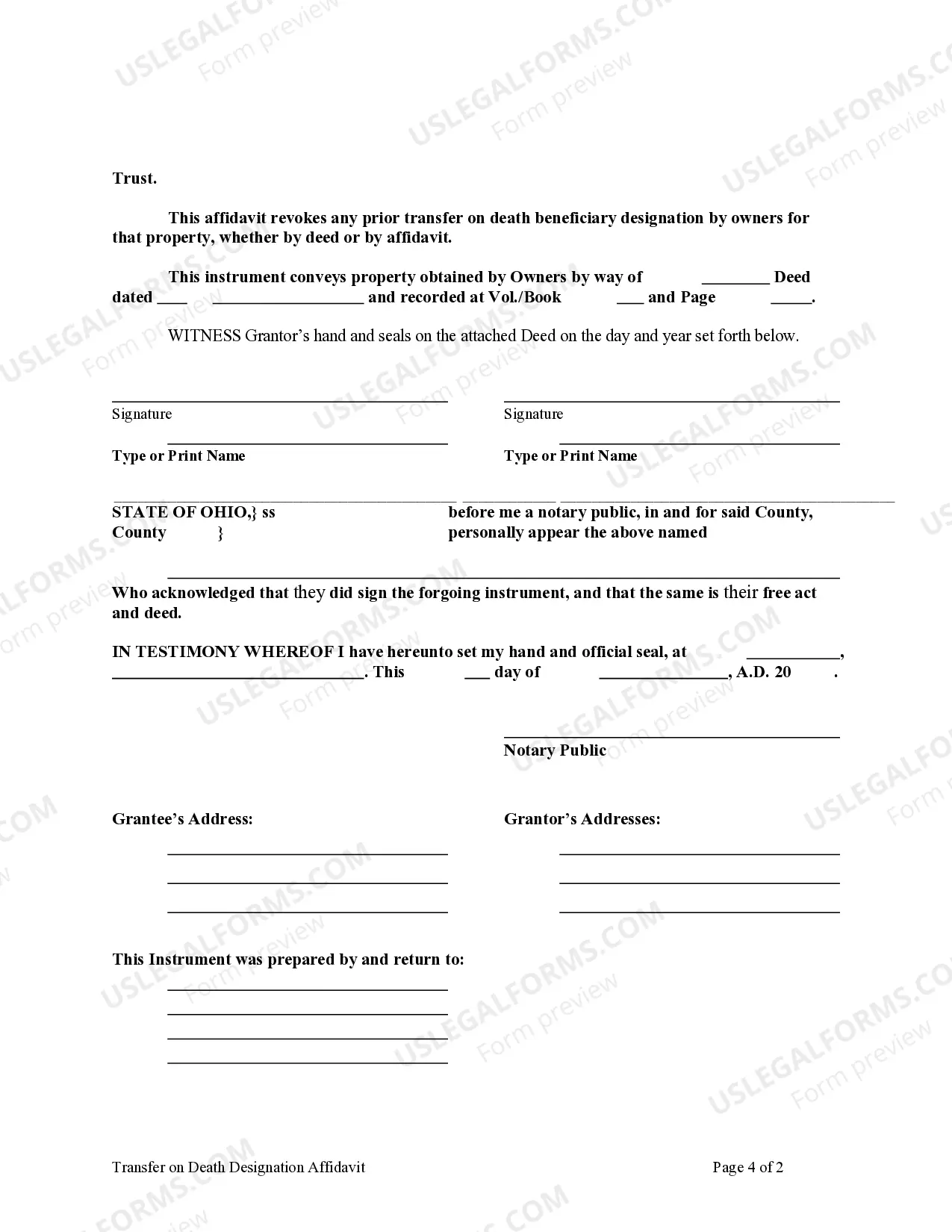
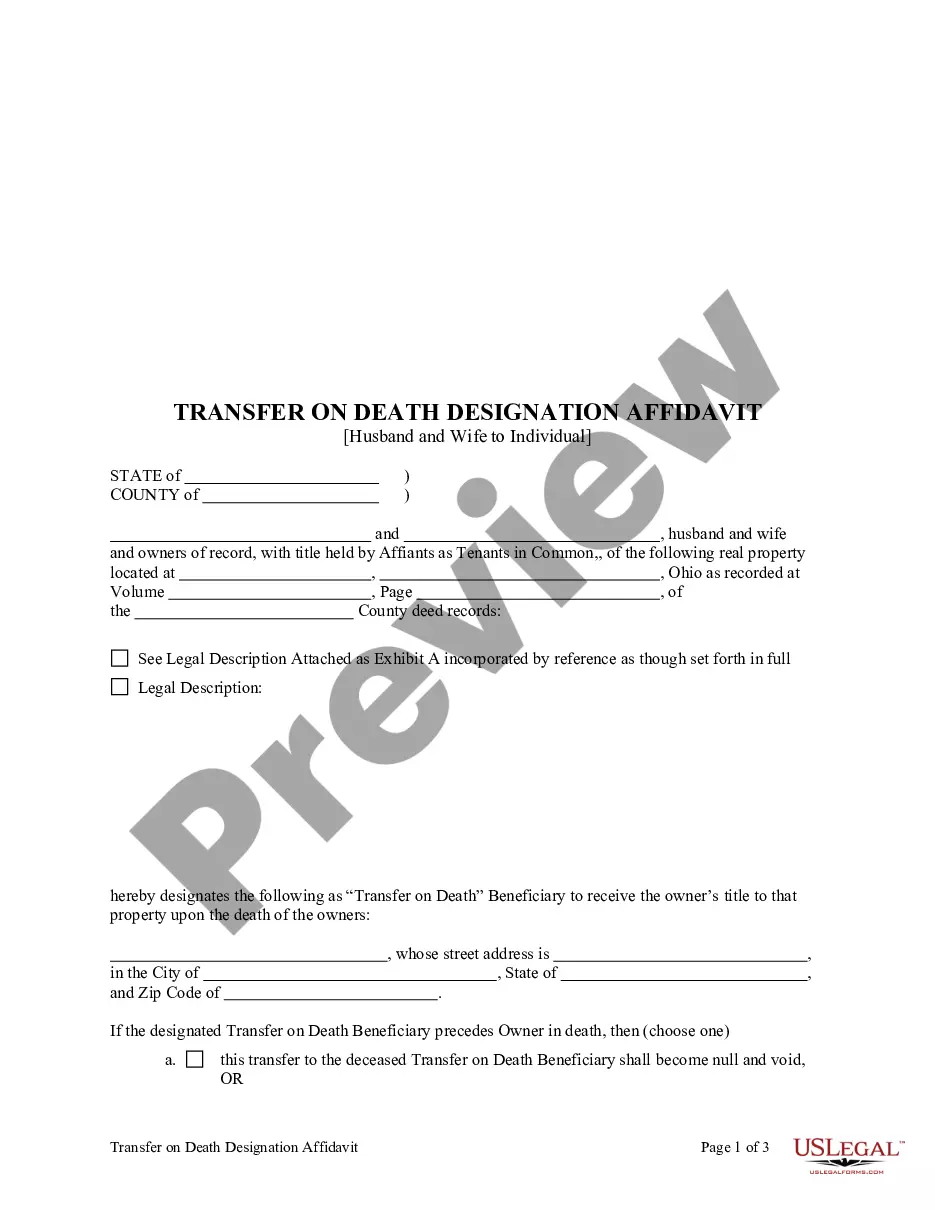
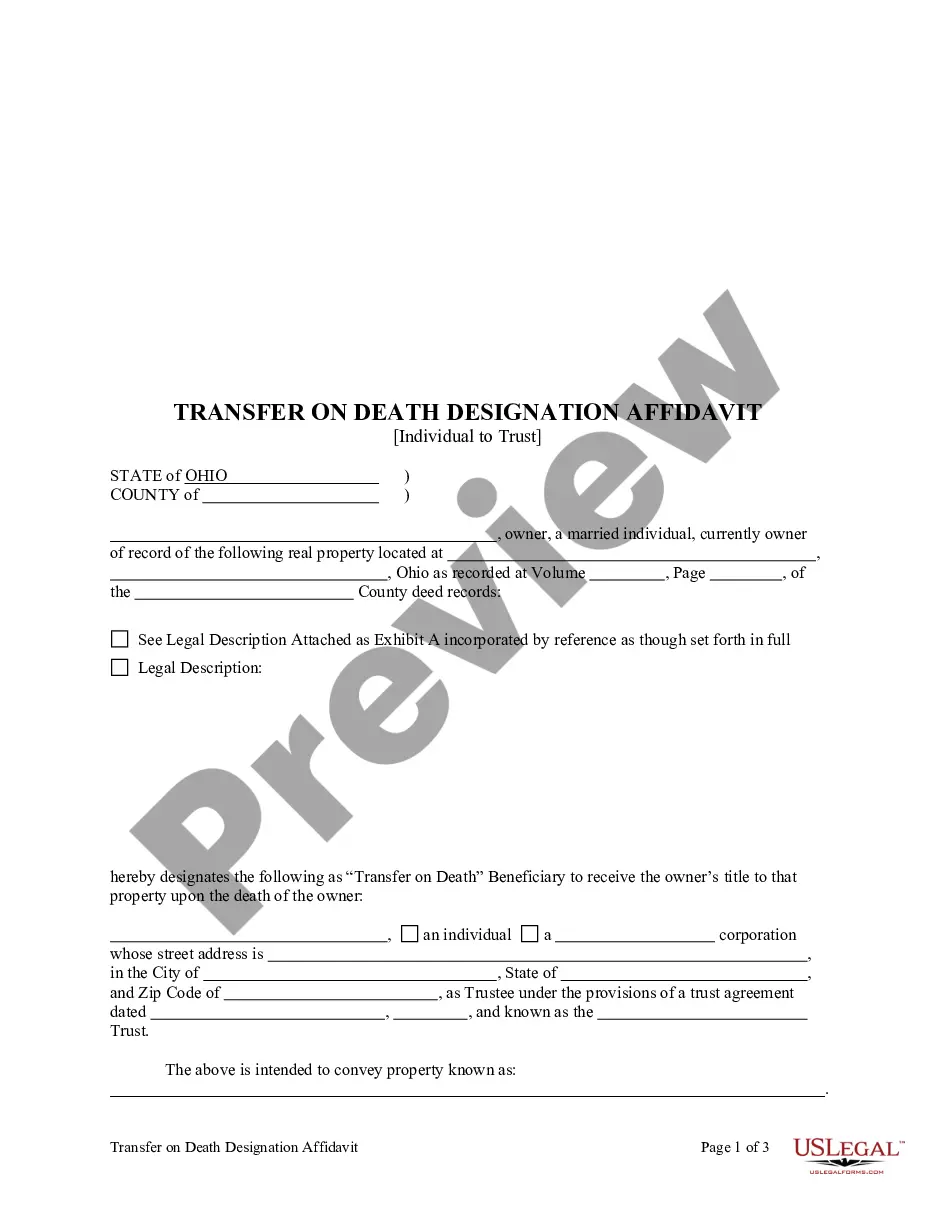
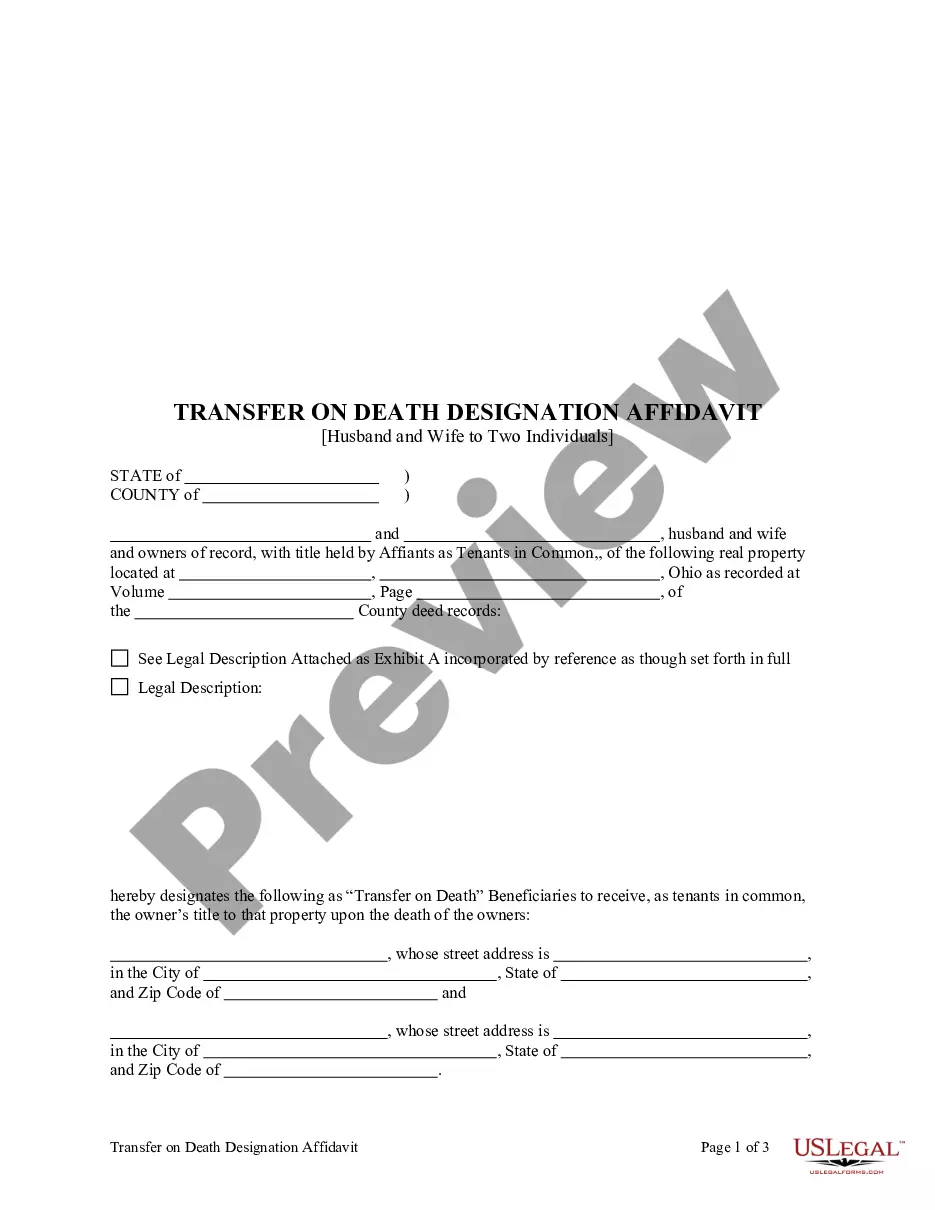
The Transfer on Death Designation Affidavit is a legal document used to transfer the title of a parcel of land from a husband and wife to a designated trust beneficiary upon the owners' death. This form allows the owners to attach any existing covenants and includes provisions for an alternate beneficiary if the primary beneficiary predeceases the owners. Unlike a traditional will, this affidavit can be revoked or changed without the consent of the designated beneficiary, making it a flexible estate planning tool.
Key parts of this document
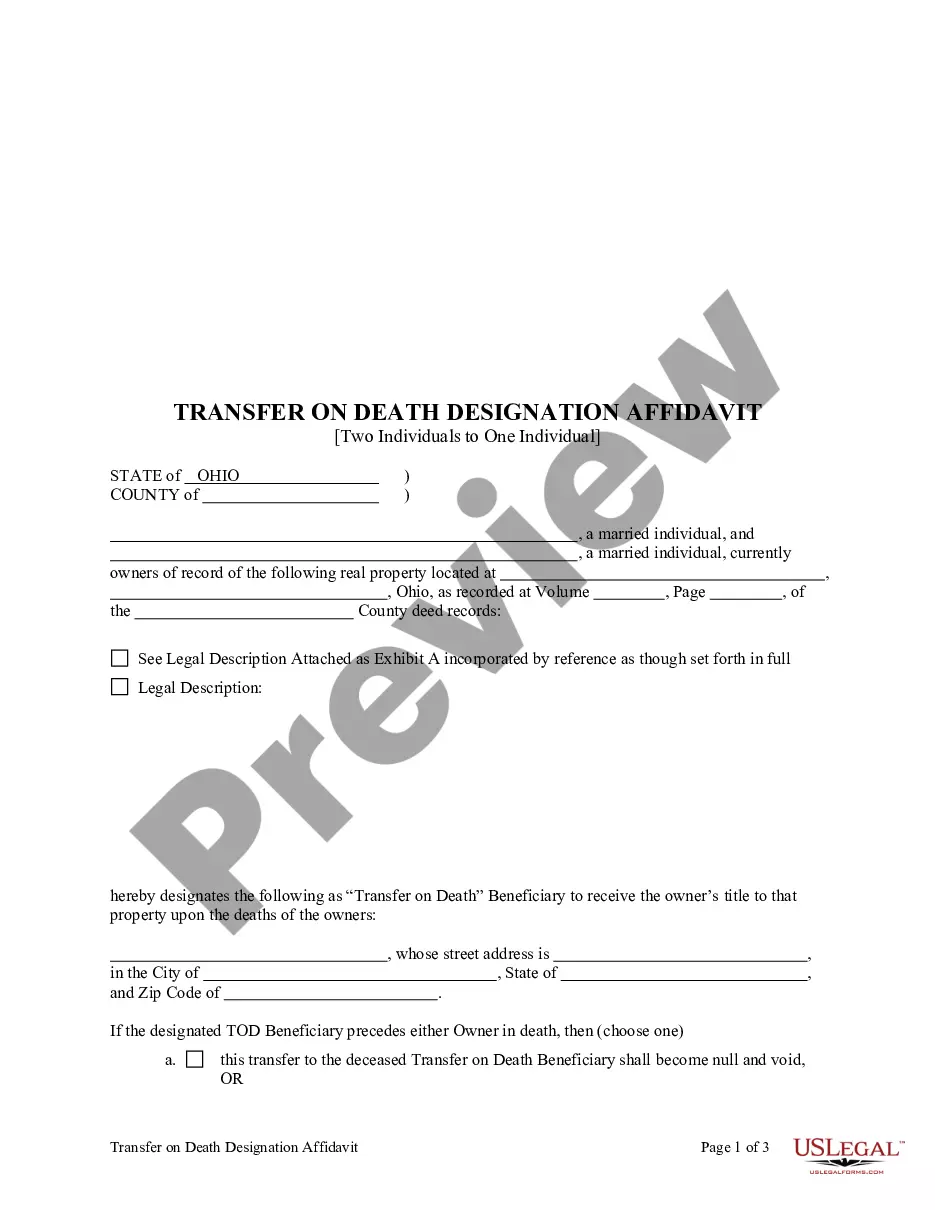
- Identification of the property being transferred.
- Details of the primary beneficiary and alternate beneficiary.
- Signature requirements in front of a Notary Public.
- Revocation clauses for changes to designation.
- Compliance with the Ohio Revised Code Chapter 5301.


When to use this document
You should use the Transfer on Death Designation Affidavit when you want to ensure that your property automatically passes to a designated beneficiary upon your death. It is particularly useful for married couples who wish to transfer property to a trust without going through the probate process. This form is also applicable when you want to maintain flexibility in your estate planning by allowing changes to the beneficiary designation at any time.
Who this form is for
This form is intended for:
- Couples, specifically husbands and wives, who own property together.
- Individuals seeking to transfer property to their trust for estate planning purposes.
- Anyone wanting to avoid probate for real estate upon their passing.
Steps to complete this form
- Identify the parties involved, including the property owners and the designated beneficiary.
- Specify the property details, including the parcel of land's legal description.
- Fill in the names of both the primary and alternate beneficiaries.
- Sign the affidavit in front of a Notary Public.
- Record the completed affidavit with the appropriate county recorder to make it effective.
Notarization requirements for this form
This form must be notarized to be legally valid. US Legal Forms provides secure online notarization powered by Notarize, allowing you to complete the process through a verified video call.
Get your form ready online
Our built-in tools help you complete, sign, share, and store your documents in one place.
Make edits, fill in missing information, and update formatting in US Legal Forms—just like you would in MS Word.
Download a copy, print it, send it by email, or mail it via USPS—whatever works best for your next step.
Sign and collect signatures with our SignNow integration. Send to multiple recipients, set reminders, and more. Go Premium to unlock E-Sign.
If this form requires notarization, complete it online through a secure video call—no need to meet a notary in person or wait for an appointment.
We protect your documents and personal data by following strict security and privacy standards.

Make edits, fill in missing information, and update formatting in US Legal Forms—just like you would in MS Word.

Download a copy, print it, send it by email, or mail it via USPS—whatever works best for your next step.

Sign and collect signatures with our SignNow integration. Send to multiple recipients, set reminders, and more. Go Premium to unlock E-Sign.

If this form requires notarization, complete it online through a secure video call—no need to meet a notary in person or wait for an appointment.

We protect your documents and personal data by following strict security and privacy standards.
Typical mistakes to avoid
- Failing to sign the form in front of a Notary Public.
- Not including the complete legal description of the property.
- Omitting the alternate beneficiary designation.
- Not recording the affidavit after completion.
Benefits of using this form online
- Convenience of accessing the form from anywhere at any time.
- Editable templates that allow for easy completion.
- Reliable resource drafted by licensed attorneys, ensuring legal compliance.
Looking for another form?
Form popularity
FAQ
A Payable on Death (POD) beneficiary is an individual, group of individuals, non-profit, company, organization or trust, other than the owner or co-owner, designated by the owner(s) of the account to receive the balance of funds when the last owner on the account passes away.
Survivorship Deeds contain special language that enables the property to transfer to the surviving owner(s) upon the deceased owner's death.A Transfer-On-Death Designation Affidavit allows the owner of Ohio real estate to designate one or more beneficiaries of the property.
Ohio Eliminates Transfer on Death Deeds.Effective December 28, 2009, Ohio eliminated transfer on death deeds and replaced that deed with a TRANSFER ON DEATH DESIGNATION AFFIDAVIT.
A TOD beneficiary designation means Transfer on Death. Some financial institutions also call this a POD designation (or Pay on Death). Usually the people who name TOD beneficiaries on an account or transfer it to a Trust are trying to avoid probate.
Fill in information about you and the TOD beneficiary. provide a description of the property. check over the completed deed. sign the deed in front of a notary public, and.
Fiduciary - An individual or bank or trust company that acts for the benefit of another.This can be confusing in that you can sometimes be both a trustee and a beneficiary of the same lifetime (inter-vivos) trust you established or a trust established by someone else for you at their death (testamentary trust).
A TOD Designation Affidavit is an effective upon death deed showing the clear intent of the owner of real property to directly transfer the ownership of the real property upon the owner's death to whomever the owner designates by name.
Keep in mind that if you have a revocable living trust and name it as the beneficiary of your TOD accounts, each time you change the beneficiaries of the trust you will also change the TOD beneficiaries without having to change the designation you have on file with the investment company.
TOD Agreements supersede other arrangements regarding those assets listed in your will or trust. Your State of Domicile must be one of the states that offer the TOD service.