Ohio General Warranty Deed - Trust to Two Individuals
Understanding this form
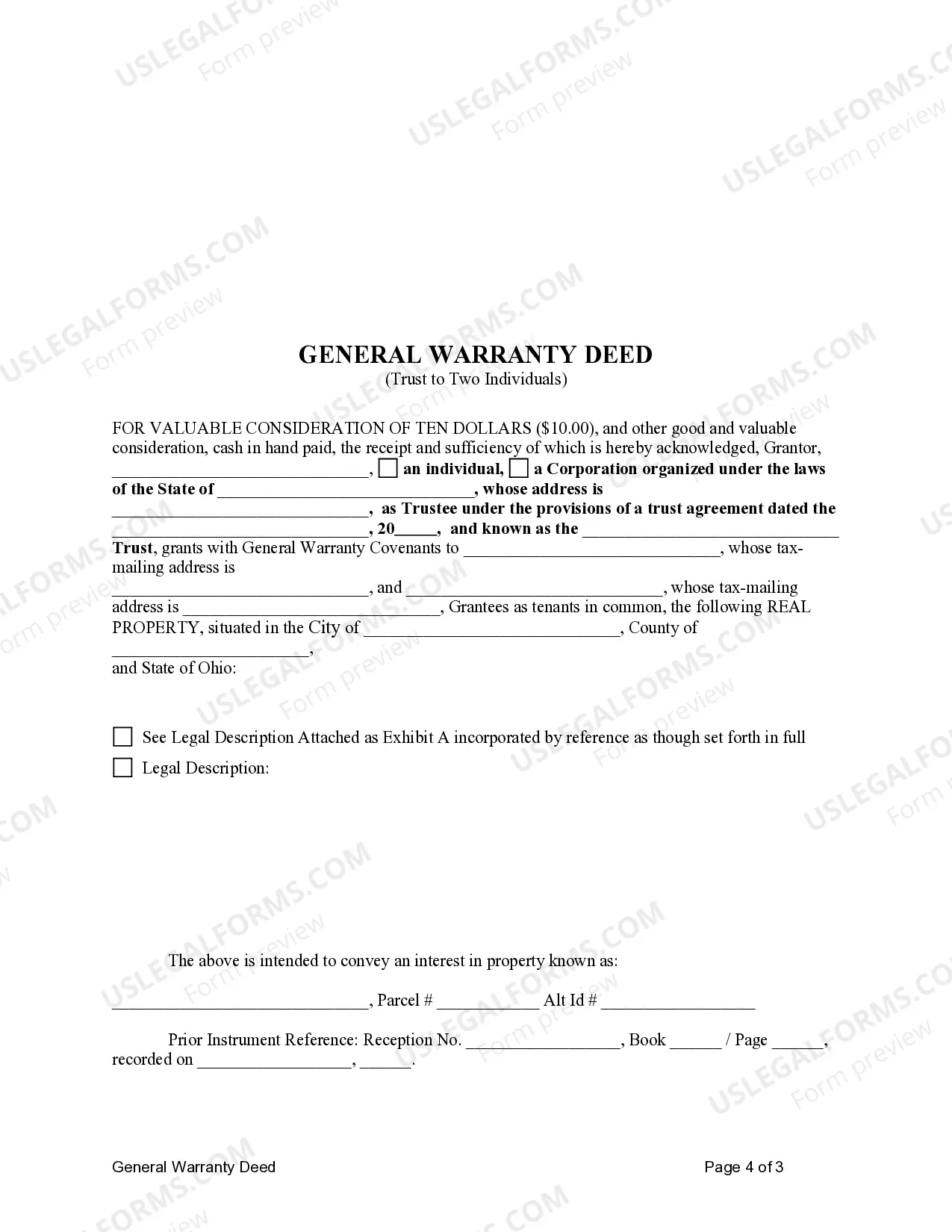
The General Warranty Deed - Trust to Two Individuals is a legal document that allows a trust, serving as the Grantor, to convey property ownership to two individuals, who will be the Grantees. This form guarantees that the Grantor has the right to sell the property and will defend the Grantees against any claims against the title. It is distinct from other deeds because it includes warranties of quality and covenants regarding the title, which provides the Grantees with robust protections.
Main sections of this form
- Identification of the Grantor (the Trust) and Grantees (the two individuals).
- Legal description of the property being conveyed.
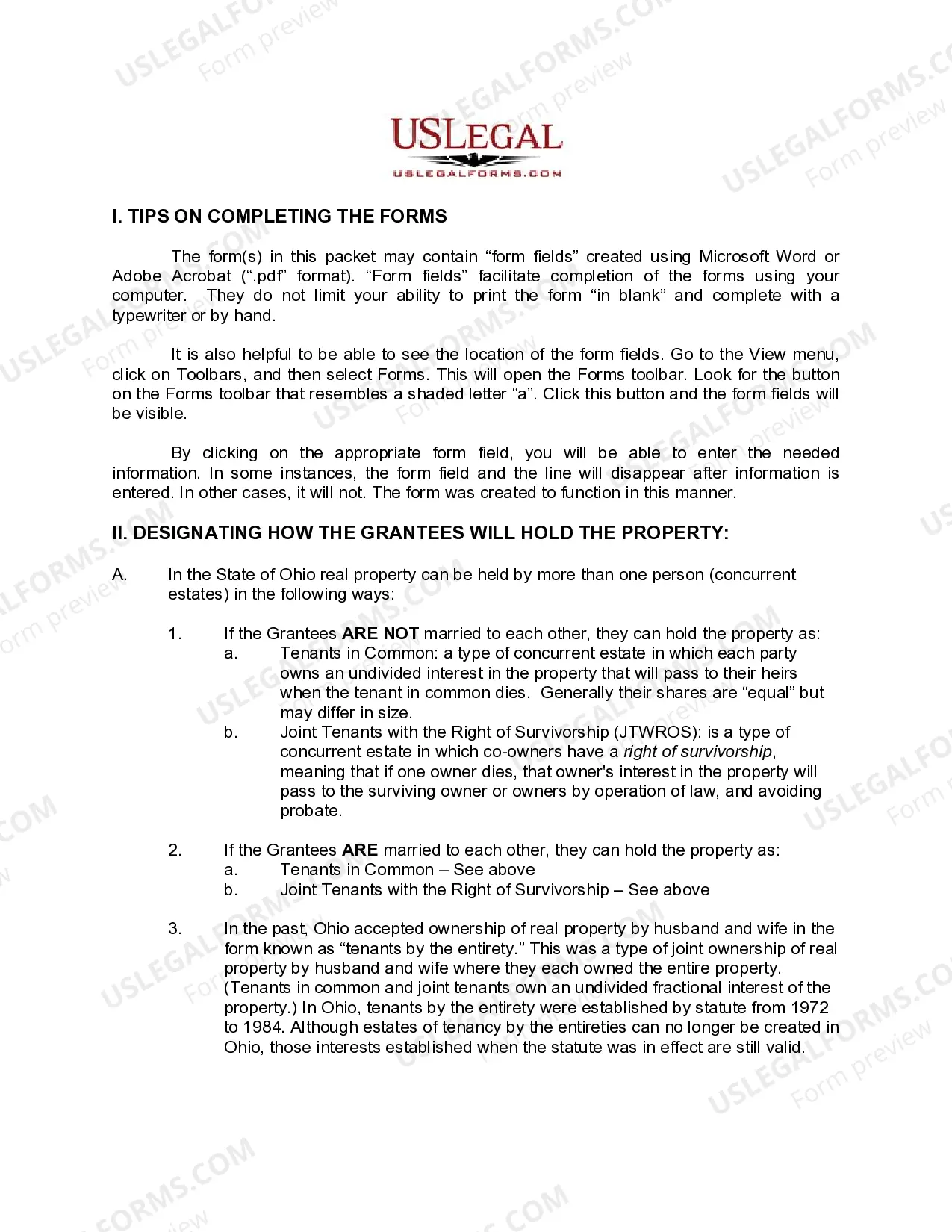
- Designation of how the Grantees will hold the property (as tenants in common or joint tenants with right of survivorship).
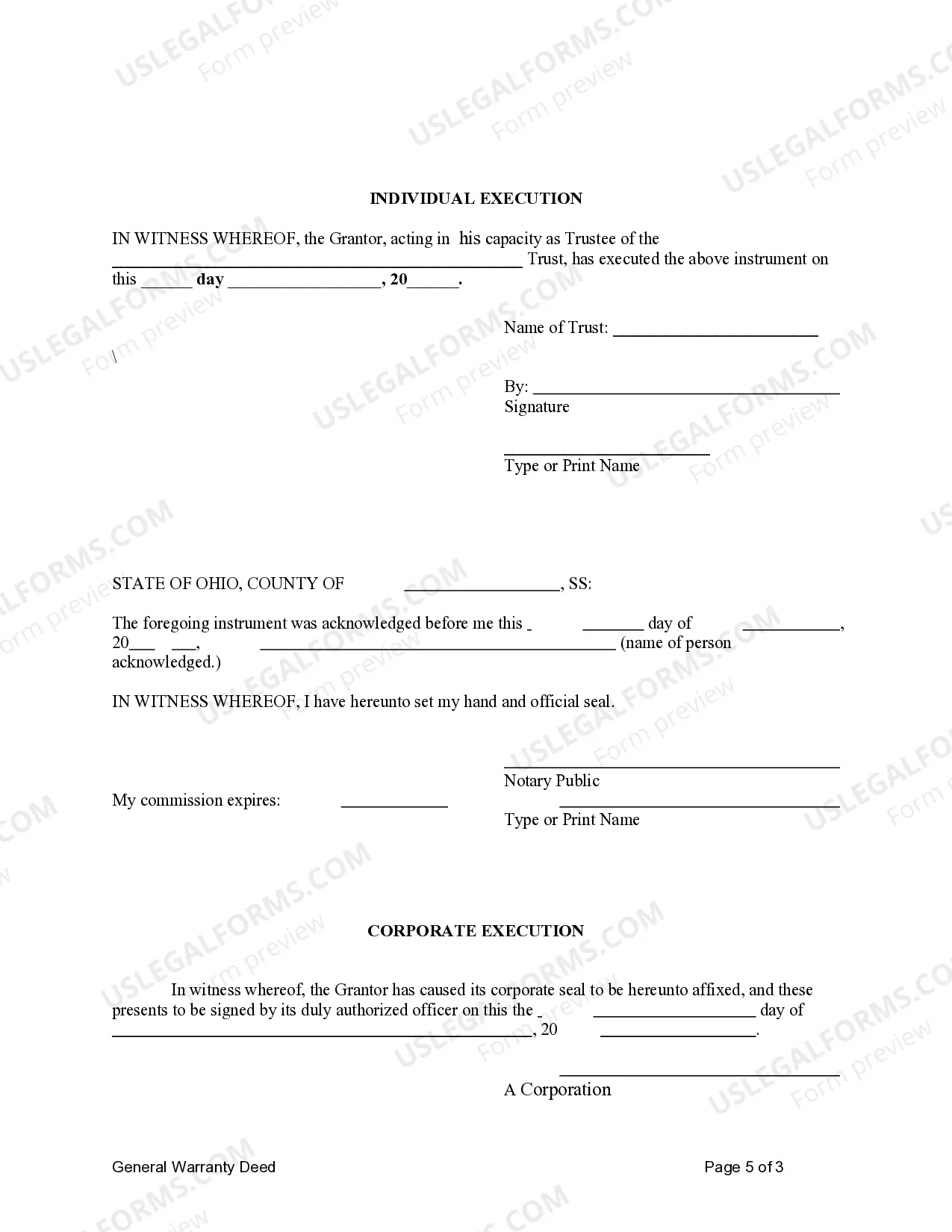
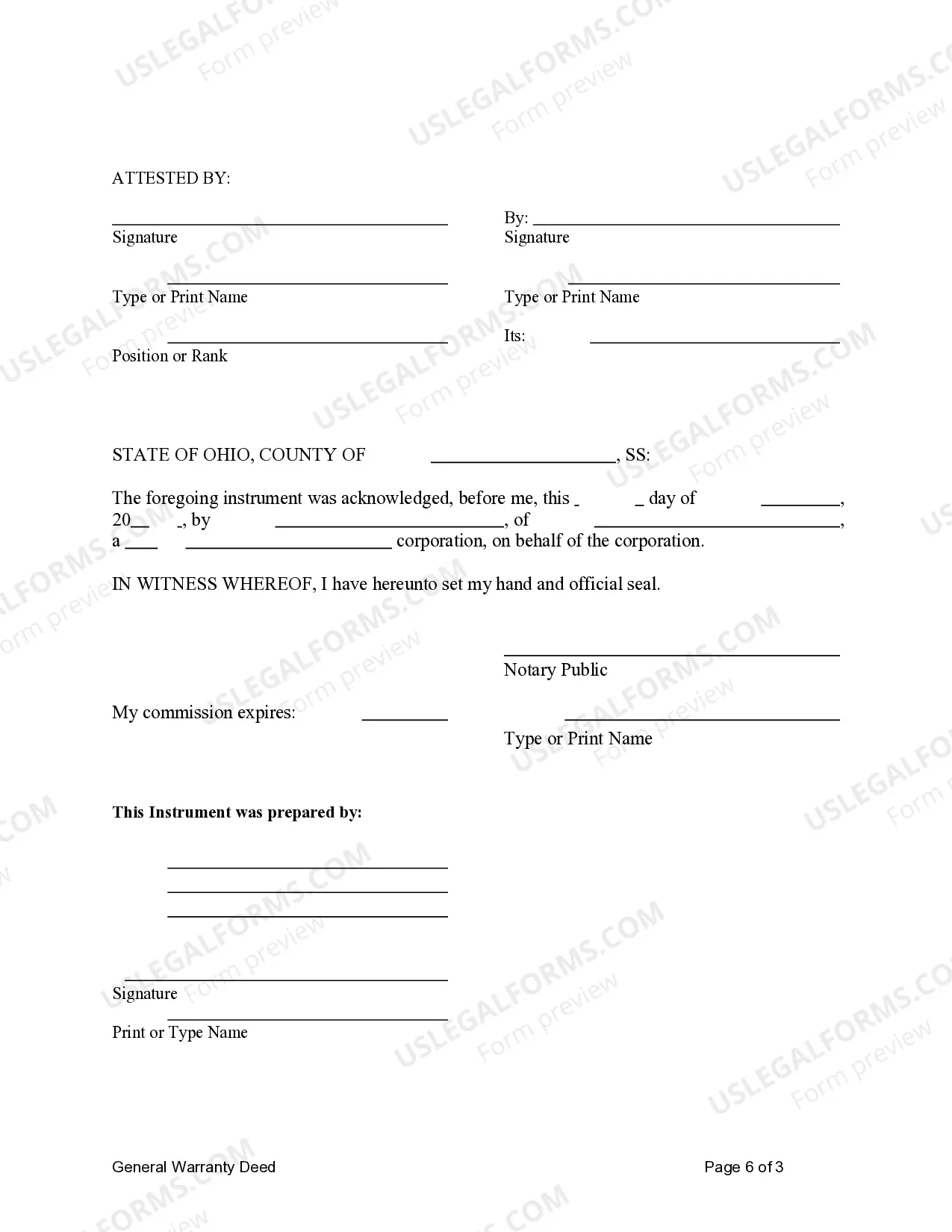
- Signature lines for the Trustee representing the Grantor and for witnesses, if required.
- Acknowledgment of the deed execution, which may require notarization.







When this form is needed
This form should be used when a trust conveys real property to two individuals. It is particularly relevant when the Grantor wishes to ensure the Grantees have strong ownership rights, and clear options for how the property will be held. Common situations include estate planning, transferring property for gift purposes, or when the Grantor wants to support family members through property ownership without asset division disputes in the future.
Who should use this form
- Individuals serving as Trustees who need to transfer property from a trust to two individuals.
- Individuals involved in estate planning who want to ensure property is designated clearly among heirs.
- Couples or co-owners who wish to establish their property ownership rights upon receiving property from a trust.
How to complete this form
- Identify the Grantor by entering the name of the Trust.
- Specify the names of the two Grantees receiving the property.
- Clearly describe the property being transferred (attach a legal description as necessary).
- Decide and indicate how the Grantees will hold the property (as tenants in common or joint tenants with right of survivorship).
- Obtain the Trustee's signature, and ensure any required witnesses are present.
- If required, arrange for the deed to be notarized to validate the transfer.
Is notarization required?
This form typically requires notarization to be legally valid. Notarization provides an extra layer of protection by verifying the identity of the signers and their willingness to sign the document. US Legal Forms offers integrated online notarization, making the process easy and accessible.
Get your form ready online
Our built-in tools help you complete, sign, share, and store your documents in one place.
Make edits, fill in missing information, and update formatting in US Legal Forms—just like you would in MS Word.
Download a copy, print it, send it by email, or mail it via USPS—whatever works best for your next step.
Sign and collect signatures with our SignNow integration. Send to multiple recipients, set reminders, and more. Go Premium to unlock E-Sign.
If this form requires notarization, complete it online through a secure video call—no need to meet a notary in person or wait for an appointment.
We protect your documents and personal data by following strict security and privacy standards.

Make edits, fill in missing information, and update formatting in US Legal Forms—just like you would in MS Word.

Download a copy, print it, send it by email, or mail it via USPS—whatever works best for your next step.

Sign and collect signatures with our SignNow integration. Send to multiple recipients, set reminders, and more. Go Premium to unlock E-Sign.

If this form requires notarization, complete it online through a secure video call—no need to meet a notary in person or wait for an appointment.

We protect your documents and personal data by following strict security and privacy standards.
Avoid these common issues
- Forgetting to include a legal description of the property.
- Not specifying how the Grantees will hold the property.
- Failing to obtain necessary signatures or notarization when required.
Benefits of using this form online
- Convenience of filling out the form from your computer.
- Editability allows users to make adjustments before finalizing.
- Reliable templates created by licensed attorneys ensure compliance with state laws.
Summary of main points
- The General Warranty Deed - Trust to Two Individuals is essential for transferring property from a trust to two individuals with full rights.
- Be clear about how the property is held to avoid future disputes.
- This form is specific to Ohio and complies with local laws.
Looking for another form?
Form popularity
FAQ
A In order to make your partner a joint owner you will need to add his name at the Land Registry, for which there is a fee of £280 (assuming you transfer half the house to him). You won't, however, have to pay capital gains tax, as gifts between civil partners (and spouses) are tax free.
Locate the deed that's in trust. Use the proper deed. Check with your title insurance company and lender. Prepare a new deed. Sign in the presence of a notary. Record the deed in the county clerk's office.
Adding someone to your house deed requires the filing of a legal form known as a quitclaim deed. When executed and notarized, the quitclaim deed legally overrides the current deed to your home. By filing the quitclaim deed, you can add someone to the title of your home, in effect transferring a share of ownership.
The name and address of the seller (called the grantor) The name and address of the buyer (called the grantee) A legal description of the property (found on the previous deed) A statement that the grantor is transferring the property to the grantee.
If you live in a common-law state, you can keep your spouse's name off the title the document that says who owns the property.You can put your spouse on the title without putting them on the mortgage; this would mean that they share ownership of the home but aren't legally responsible for making mortgage payments.
Today's question is is it possible to deed real estate to someone without them knowing it? Strictly speaking, the answer is no. Because it does not meet the acceptance element of a valid deed transfer. Us lawyers must learn to speak in elements because it governs everything that we do.
To make the form legally binding, you must sign it in front of a notary public. You must then file your signed and notarized deed with the county office that's in charge of recording property documents. Once the grantee signs the warranty deed, he/she legally has ownership and claim to the property.
If you've recently married and already own a home or other real estate, you may want to add your new spouse to the deed for your property so the two of you own it jointly. To add a spouse to a deed, all you have to do is literally fill out, sign and record a new deed in your county recorder's office.
In California, all property bought during the marriage with income that was earned during the marriage is deemed "community property." The law implies that both spouses own this property equally, regardless of which name is on the title deed.