Ohio Quitclaim Deed - Four Individuals to Three Individuals
About this form
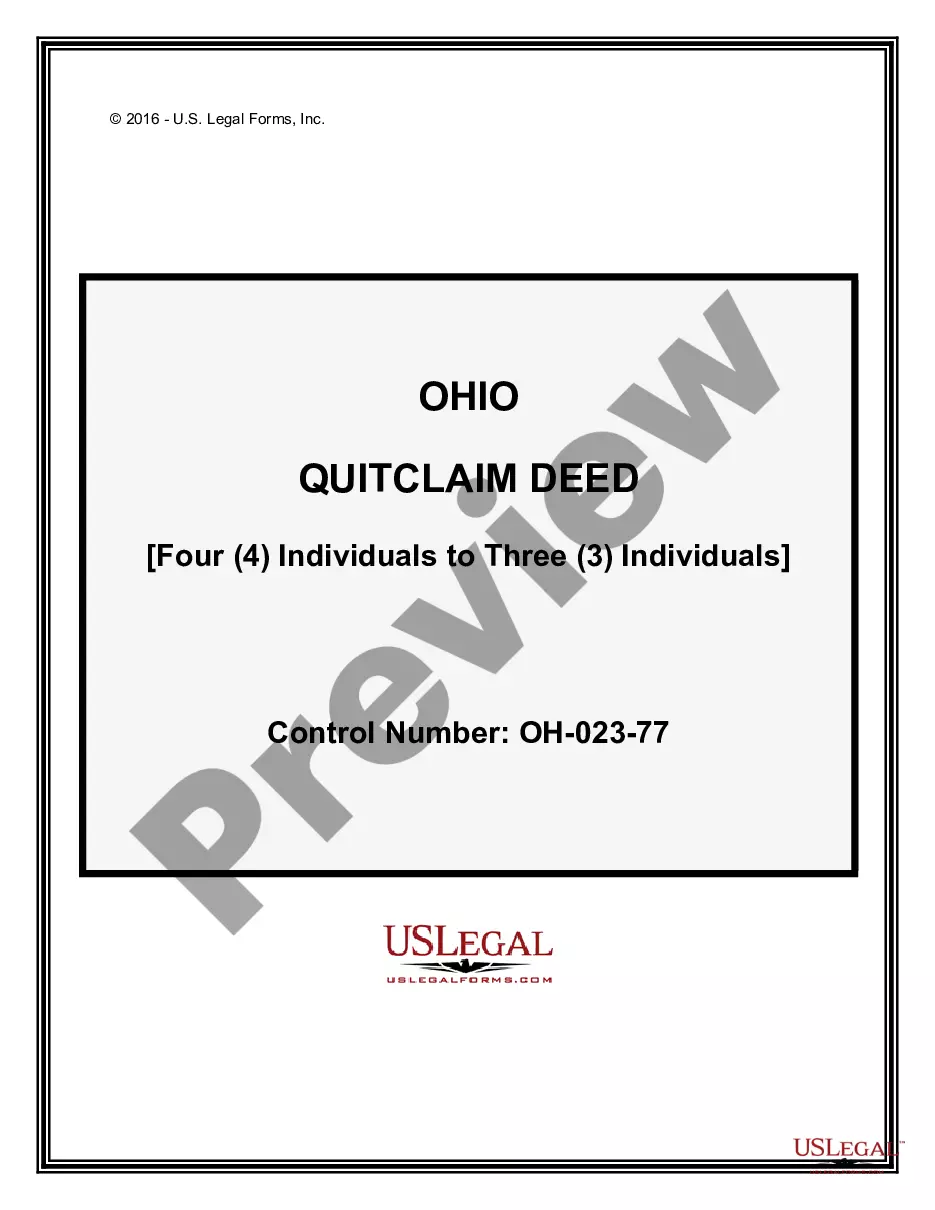
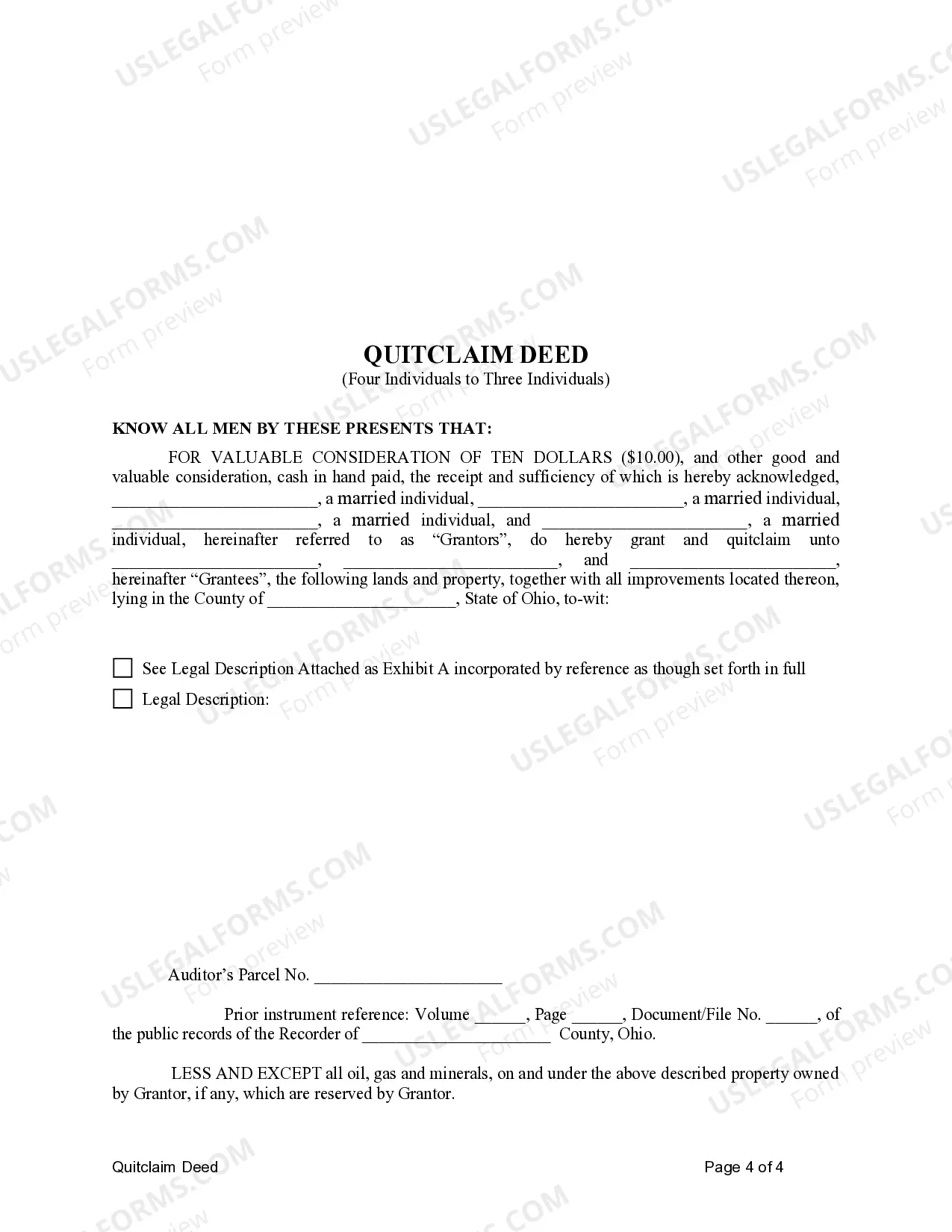
This Quitclaim Deed form allows four individuals (grantors) to transfer their interest in a property to three individuals (grantees). Unlike other deed forms, a quitclaim deed conveys any ownership rights the grantors have without guaranteeing that those rights are valid. This means that the grantees receive whatever interest the grantors possess, if any, in the specified property.
Form components explained
- Grantor section: Names and details of the four individuals transferring the property.
- Grantee section: Names and details of the three individuals receiving the property.
- Property description: A clear and specific description of the property being transferred.
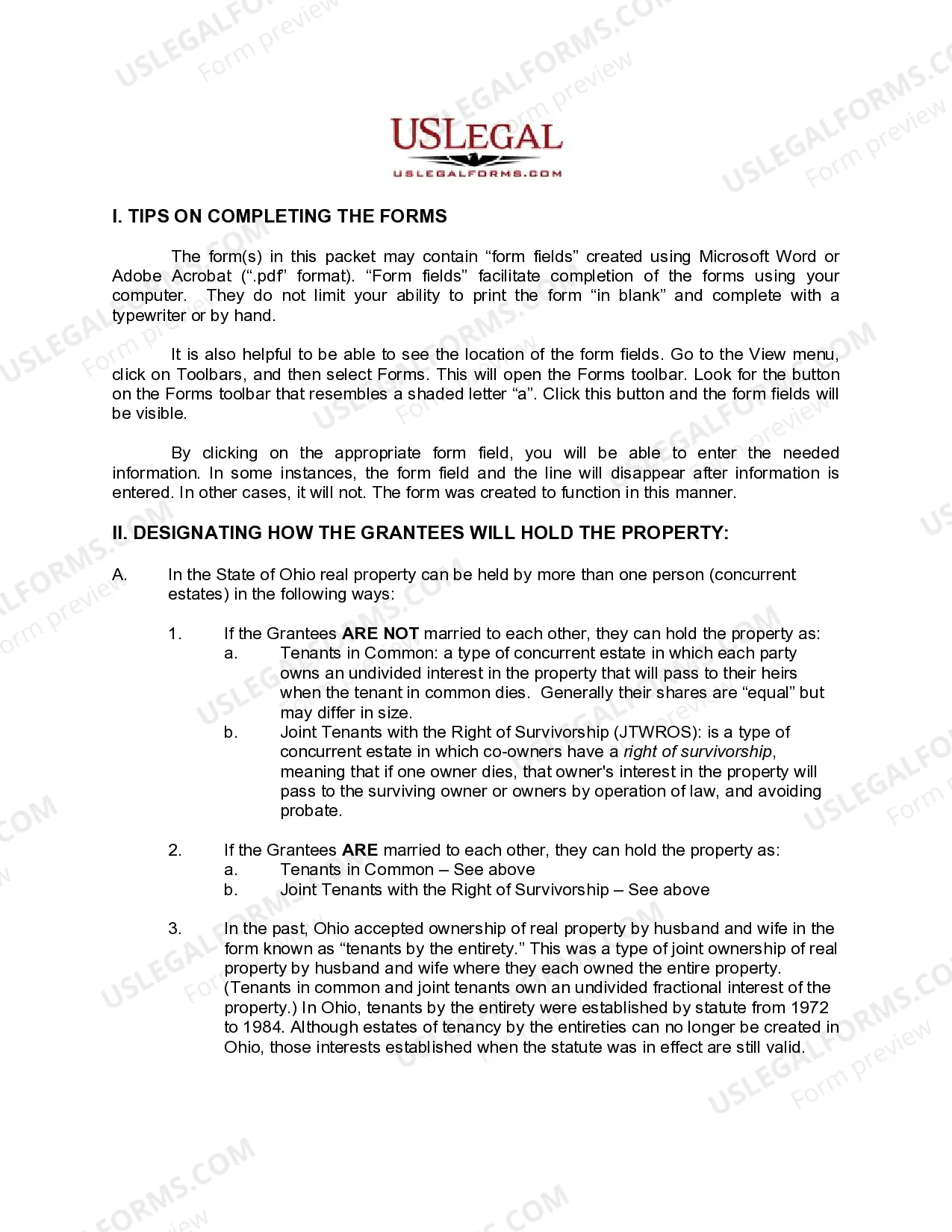
- Holding type: Selection of how the grantees will hold the property (e.g., tenants in common or joint tenants with the right of survivorship).
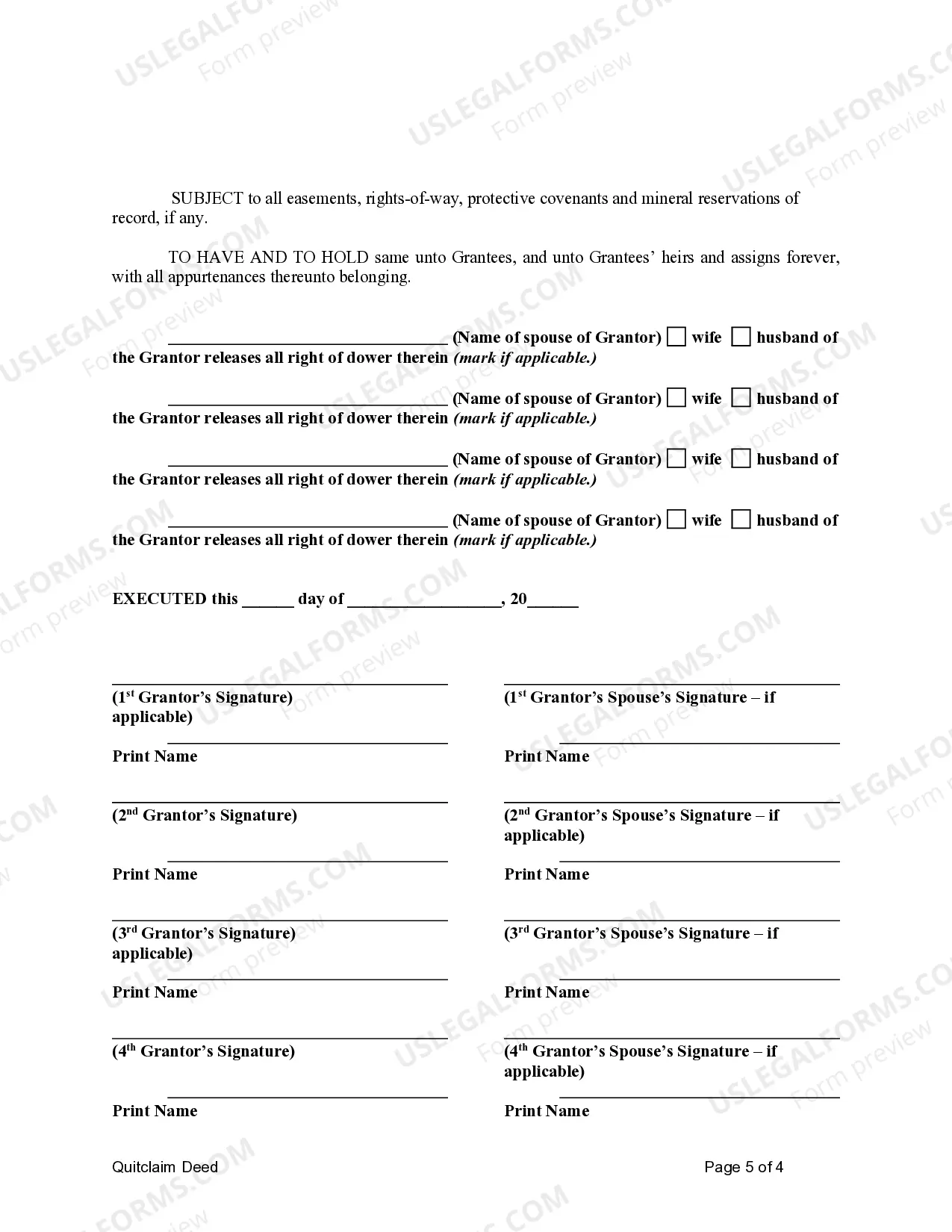
- Signatures: Required signatures of all grantors to validate the deed.




Common use cases
This form is commonly used when multiple individuals want to transfer ownership of real property. Situations may include family members wanting to consolidate property ownership or friends who wish to formalize a shared ownership arrangement. It is essential to use this form when you need to clarify the transfer of property rights without formal title guarantees.
Intended users of this form
This form is suitable for:
- Individuals who own real estate and wish to transfer their interest to new owners.
- People entering into informal agreements regarding shared property ownership.
- Family members consolidating property titles among themselves.
Completing this form step by step
- Identify the parties involved: List the names of the four grantors and the three grantees.
- Specify the property: Provide a detailed description of the property you are conveying.
- Choose the holding type: Indicate how the grantees will hold the property, either as tenants in common or joint tenants with the right of survivorship.
- Gather signatures: Have all grantors sign the deed to validate the transfer.
- Record the deed: Once completed, file this deed with the county recorder to make the transfer official.
Notarization guidance
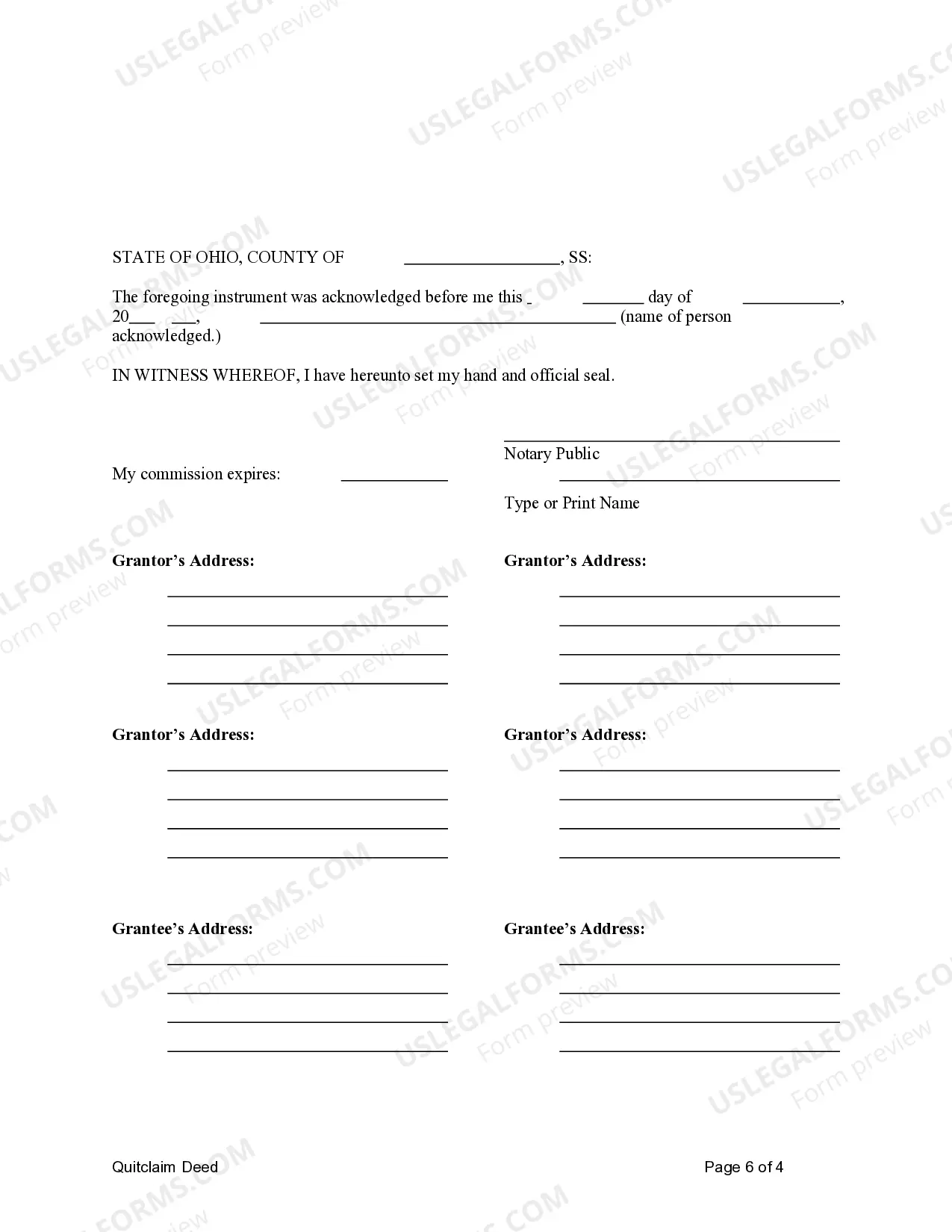
This document requires notarization to meet legal standards. US Legal Forms provides secure online notarization powered by Notarize, allowing you to complete the process through a verified video call, available 24/7.
Get your form ready online
Our built-in tools help you complete, sign, share, and store your documents in one place.
Make edits, fill in missing information, and update formatting in US Legal Forms—just like you would in MS Word.
Download a copy, print it, send it by email, or mail it via USPS—whatever works best for your next step.
Sign and collect signatures with our SignNow integration. Send to multiple recipients, set reminders, and more. Go Premium to unlock E-Sign.
If this form requires notarization, complete it online through a secure video call—no need to meet a notary in person or wait for an appointment.
We protect your documents and personal data by following strict security and privacy standards.

Make edits, fill in missing information, and update formatting in US Legal Forms—just like you would in MS Word.

Download a copy, print it, send it by email, or mail it via USPS—whatever works best for your next step.

Sign and collect signatures with our SignNow integration. Send to multiple recipients, set reminders, and more. Go Premium to unlock E-Sign.

If this form requires notarization, complete it online through a secure video call—no need to meet a notary in person or wait for an appointment.

We protect your documents and personal data by following strict security and privacy standards.
Common mistakes
- Not fully identifying the property, leading to ambiguous language.
- Failure to include all necessary signatures from grantors.
- Selecting the incorrect holding type without understanding the implications.
- Not recording the deed with county authorities after completion.
Why complete this form online
- Convenience of filling out the form at your own pace from any device.
- Editability allows you to make necessary corrections easily.
- Access to legally vetted templates ensures compliance with state laws.
Looking for another form?
Form popularity
FAQ
An Ohio quit claim deed is a legal document that adheres to state law, and legally transfers the ownership interest of a property from one person to the next. This form of transfer comes with no warranties or guarantees that the property title is clear, and the seller has the authority to sell the property.
An unrecorded quit claim deed is still valid.Failure to record a deed could render transfer or mortgaging of the property impossible and create numerous legal difficulties. The purpose of the recording a quit claim deed is to give notice to the world that there has been a change in ownership.
Yes, you can use a Quitclaim Deed to transfer a gift of property to someone. You must still include consideration when filing your Quitclaim Deed with the County Recorder's Office to show that title has been transferred, so you would use $10.00 as the consideration for the property.
It's usually a very straightforward transaction, but it's possible for a quitclaim deed to be challenged. If a quitclaim deed is challenged in court, the issue becomes whether the property was legally transferred and if the grantor had the legal right to transfer the property.
A quitclaim deed affects ownership and the name on the deed, not the mortgage. Because quitclaim deeds expose the grantee to certain risks, they are most often used between family members and where there is no exchange of money.Quitclaim deeds transfer title but do not affect mortgages.
Under California law, a deed that purports to convey title (ownership) or any other interest in real property, such as an easement, is completely void if the conveyancing party's signature on the deed is forged.
A Quitclaim Deed must be notarized by a notary public or attorney in order to be valid. What does "Grantee's assigns" mean? Grantee's assigns refers to any person that the Grantee transfers the property to, after having received the property from the Grantor.
If the quitclaim deed requires the signature of all co-owners, the deed is invalid unless all co-owners have signed it and the deed is then delivered to the grantee.If one individual owns real estate and desires to add a co-owner such as a spouse, a quitclaim deed might be used.
A quitclaim deed transfers title but makes no promises at all about the owner's title.A person who signs a quitclaim deed to transfer property they do not own results in no title at all being transferred since there is no actual ownership interest. The quitclaim deed only transfers the type of title you own.