Ohio Interim - Final Report and Answer of Garnishee
Overview of this form
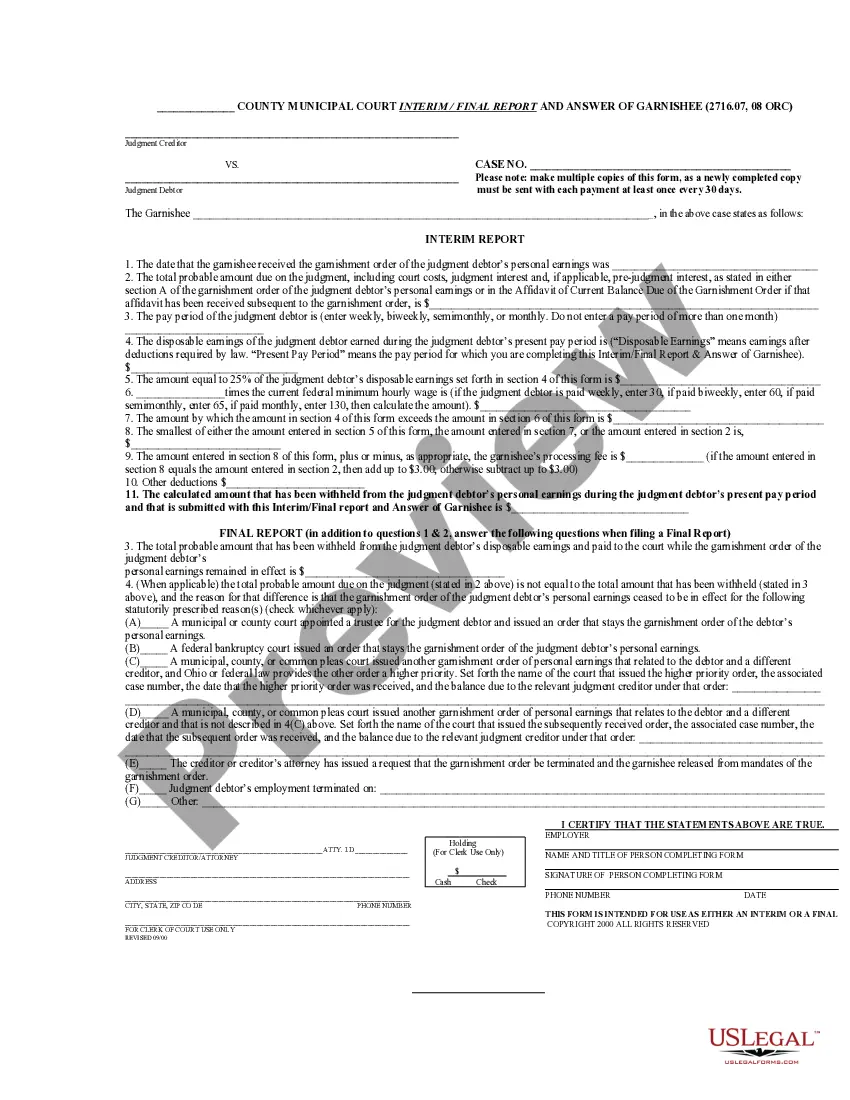
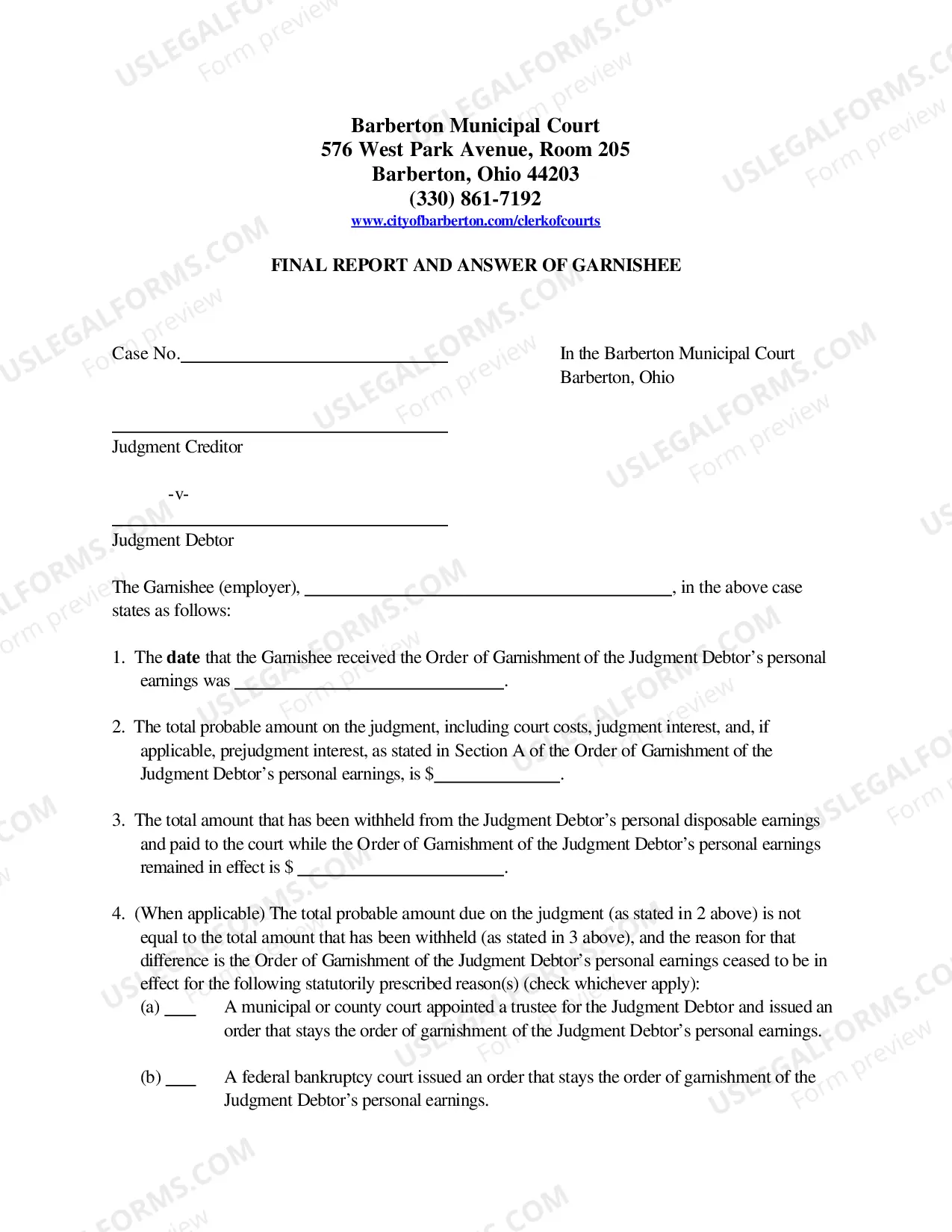
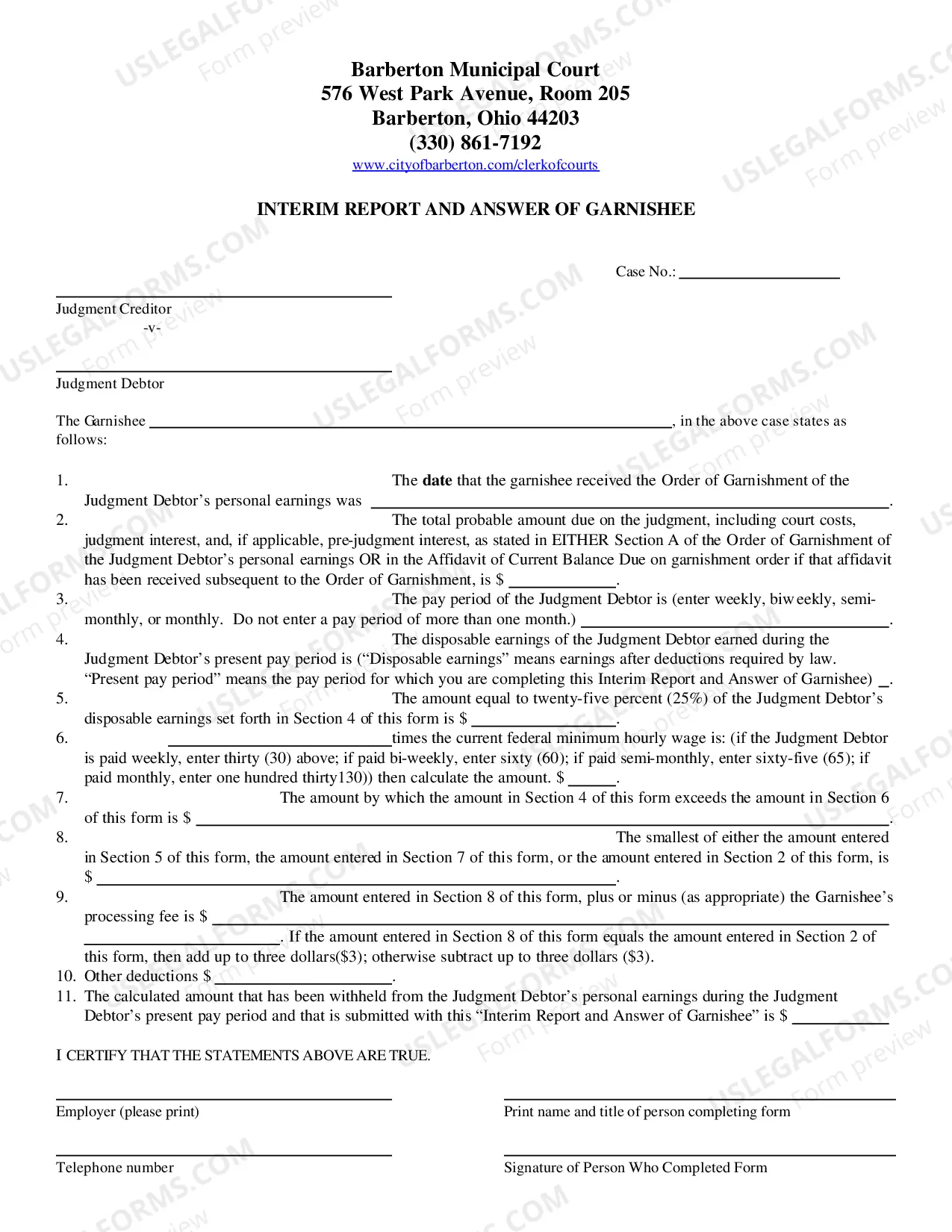
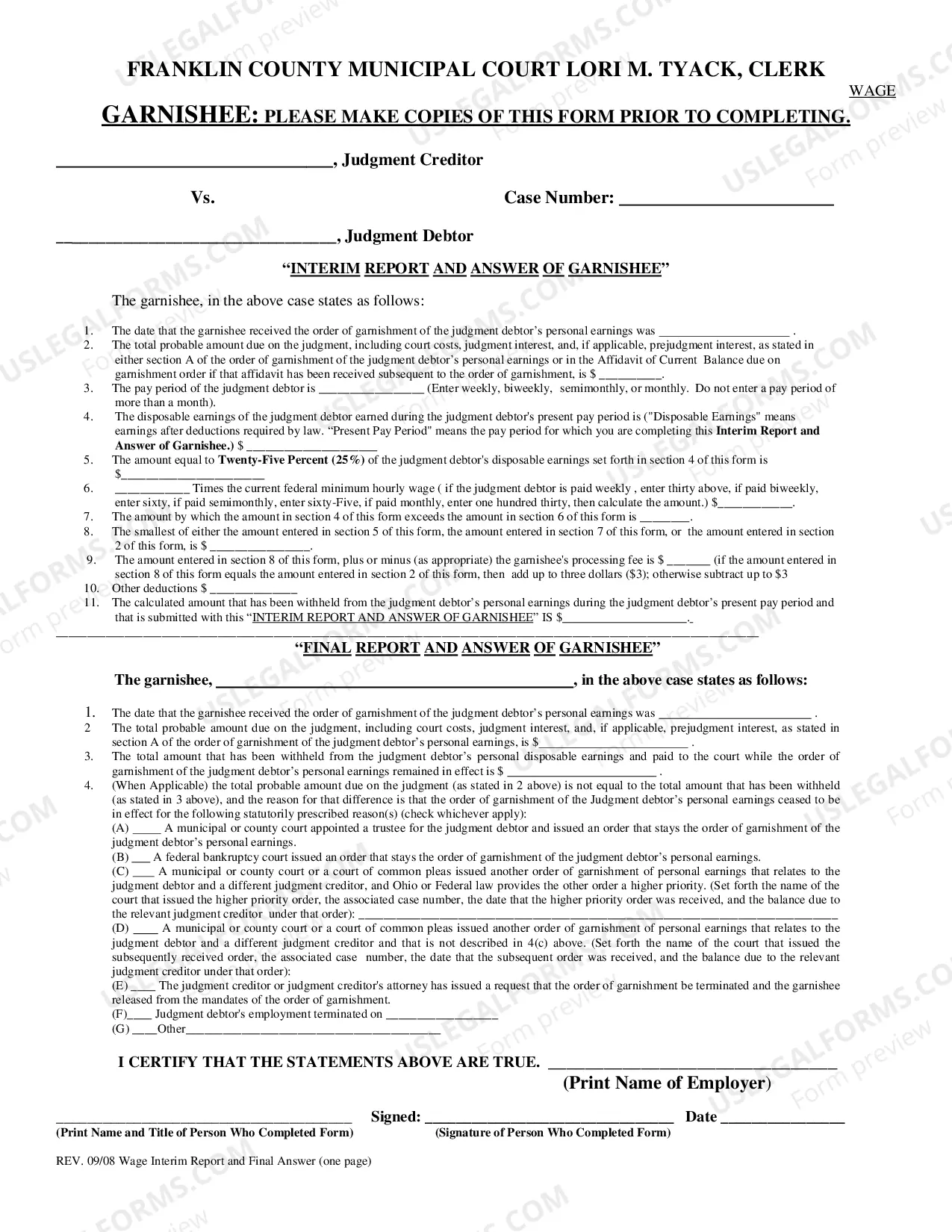
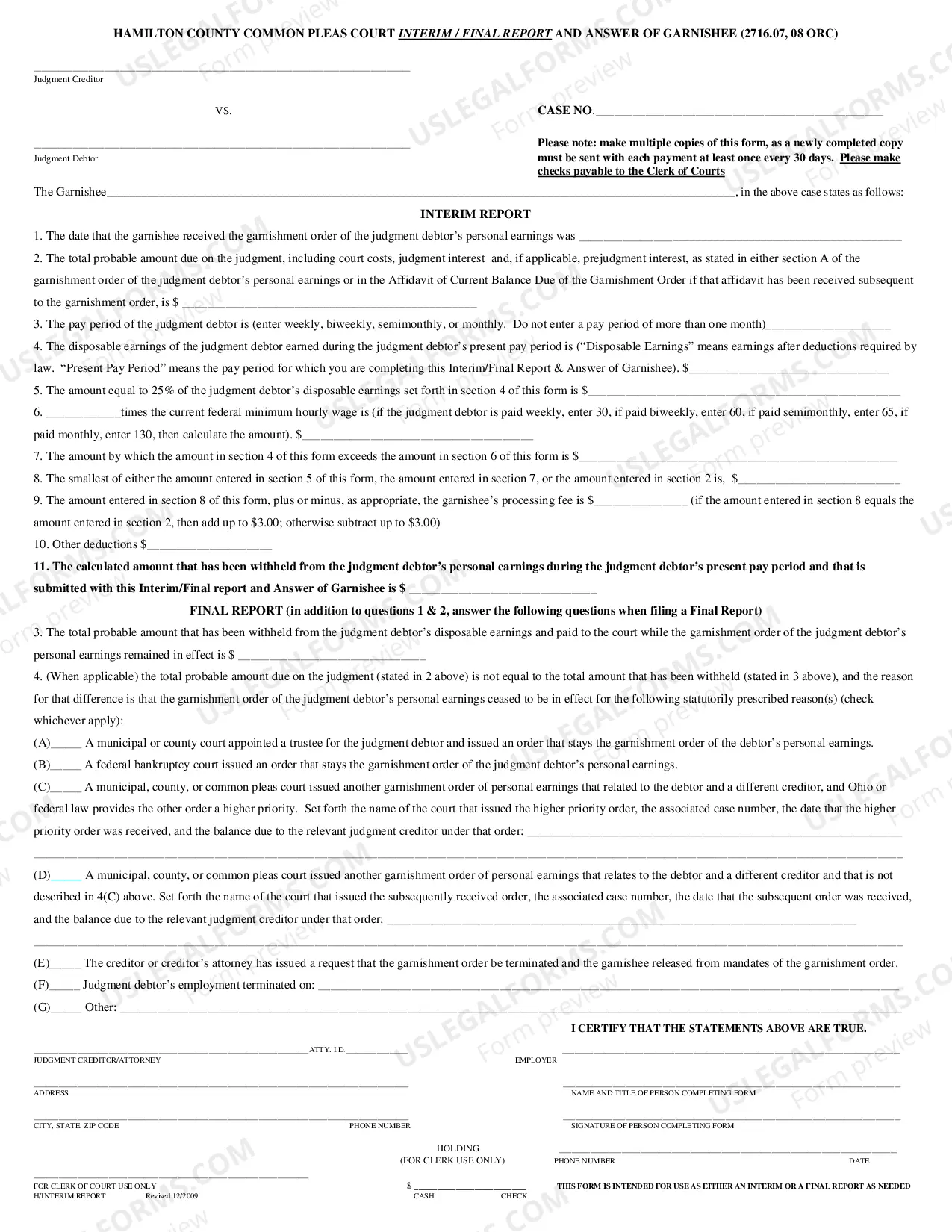
The Interim - Final Report and Answer of Garnishee is a legal document used in Ohio garnishment cases. This form serves to report the amount withheld from a judgment debtor's earnings and outlines the garnishee's response to a court order. It can be filed as either an interim or final report, depending on the status of the garnishment. This form is essential for ensuring compliance with garnishment laws and for keeping all parties informed regarding payments toward debt obligations.
Main sections of this form
- Identification of parties involved: Includes the names of the judgment creditor, judgment debtor, and garnishee.
- Interim report section: Contains fields to report the date of receipt of the garnishment order and details of disposable earnings.
- Calculation of withheld amounts: Includes calculations for what can be withheld from the debtor's earnings, including garnishee processing fees.
- Final report section: Additional fields for summarizing total amounts withheld and any reasons for discrepancies in payments.
- Certification: A declaration section where the garnishee certifies the accuracy of the reported information.
Common use cases
This form should be used any time a garnishee receives a garnishment order related to a judgment debtor's earnings. It is particularly crucial when the garnishee is required to report how much has been withheld from the debtor's pay on an interim basis (typically every 30 days) or when concluding the garnishment process with a final report.
Who this form is for
This form is intended for:
- Garnishees who are legally obligated to withhold wages from a judgment debtor's earnings.
- Judgment creditors seeking to verify payments being made toward a judgment debt.
- Legal representatives of either the creditor or debtor involved in the garnishment process.
Instructions for completing this form
- Gather all relevant information, including the judgment creditor and debtor's details, and the garnishment order.
- Complete the interim report section, entering the date of receipt of the garnishment order and identifying the debtor's disposable earnings.
- Perform all necessary calculations as indicated on the form, including withholding amounts and any applicable processing fees.
- Fill out the final report section if applicable, summarizing the total amounts withheld for the duration of the garnishment.
- Sign the form to certify the accuracy of the disclosed information before submission.
Notarization guidance
This form does not typically require notarization unless specified by local law.
Get your form ready online
Our built-in tools help you complete, sign, share, and store your documents in one place.
Make edits, fill in missing information, and update formatting in US Legal Forms—just like you would in MS Word.
Download a copy, print it, send it by email, or mail it via USPS—whatever works best for your next step.
Sign and collect signatures with our SignNow integration. Send to multiple recipients, set reminders, and more. Go Premium to unlock E-Sign.
If this form requires notarization, complete it online through a secure video call—no need to meet a notary in person or wait for an appointment.
We protect your documents and personal data by following strict security and privacy standards.

Make edits, fill in missing information, and update formatting in US Legal Forms—just like you would in MS Word.

Download a copy, print it, send it by email, or mail it via USPS—whatever works best for your next step.

Sign and collect signatures with our SignNow integration. Send to multiple recipients, set reminders, and more. Go Premium to unlock E-Sign.

If this form requires notarization, complete it online through a secure video call—no need to meet a notary in person or wait for an appointment.

We protect your documents and personal data by following strict security and privacy standards.
Common mistakes
- Failing to keep multiple copies of the form for each payment period.
- Incorrectly calculating disposable earnings or withholdings.
- Not including required signatures or certifications.
Benefits of using this form online
- Convenient and quick access to the latest version of the form.
- Ability to download and edit the form as needed before submission.
- Streamlined process reduces paperwork and ensures compliance with legal standards.
Legal use & context
- The form serves as an official record of earnings withheld under a garnishment order.
- Accuracy in reporting is crucial to avoid legal penalties or disputes.
- Filing the form in a timely manner ensures compliance with court mandates.
Key takeaways
- The Interim - Final Report and Answer of Garnishee is essential for reporting wage garnishments in Ohio.
- Accurate completion and timely submission are critical for legal compliance.
- Employers and legal representatives must understand their reporting obligations based on the garnishment order.
Looking for another form?

Form popularity
FAQ
It releases your garnishment! When a creditor sues you, they eventually get a judgment in court. With this judgment, they can send a letter to your employer so that they can garnish your wages. A release of garnishment would stop any future garnishments.
Garnishment is a proceeding by a creditor (a person or entity to whom money is owed) to collect a debt by taking the property or assets of a debtor (a person who owes money). Wage garnishment is a court procedure where a court orders a debtor's employer to hold the debtor's earnings in order to pay a creditor.
When a creditor obtains a writ of garnishment, the employer is the garnishee and the creditor is the garnishor.In most states, employers answer a writ of garnishment by filling out the paperwork attached to the judgment and returning it to the creditor or the creditor's attorney.
A garnishee order is a common form of enforcing a judgment debt against a creditor to recover money. Put simply, the court directs a third party that owes money to the judgement debtor to instead pay the judgment creditor. The third party is called a 'garnishee'.the debtor's bank account, or.
If you are served with a garnishment summons, do not ignore these documents because they do not directly involve a debt that you owe. Instead, you should immediately freeze any payments to the debtor, retain the necessary property, and provide the required written disclosure.
Respond to the Creditor's Demand Letter. Seek State-Specific Remedies. Get Debt Counseling. Object to the Garnishment. Attend the Objection Hearing (and Negotiate if Necessary) Challenge the Underlying Judgment. Continue Negotiating.
In most states, employers answer a writ of garnishment by filling out the paperwork attached to the judgment and returning it to the creditor or the creditor's attorney.
If it's already started, you can try to challenge the judgment or negotiate with the creditor. But, they're in the driver's seat, and if they don't allow you to stop a garnishment by agreeing to make voluntary payments, you can't really force them to. You can, however, stop the garnishment by filing a bankruptcy case.