New York Employee Confidentiality and Noncompetition Agreement
Description
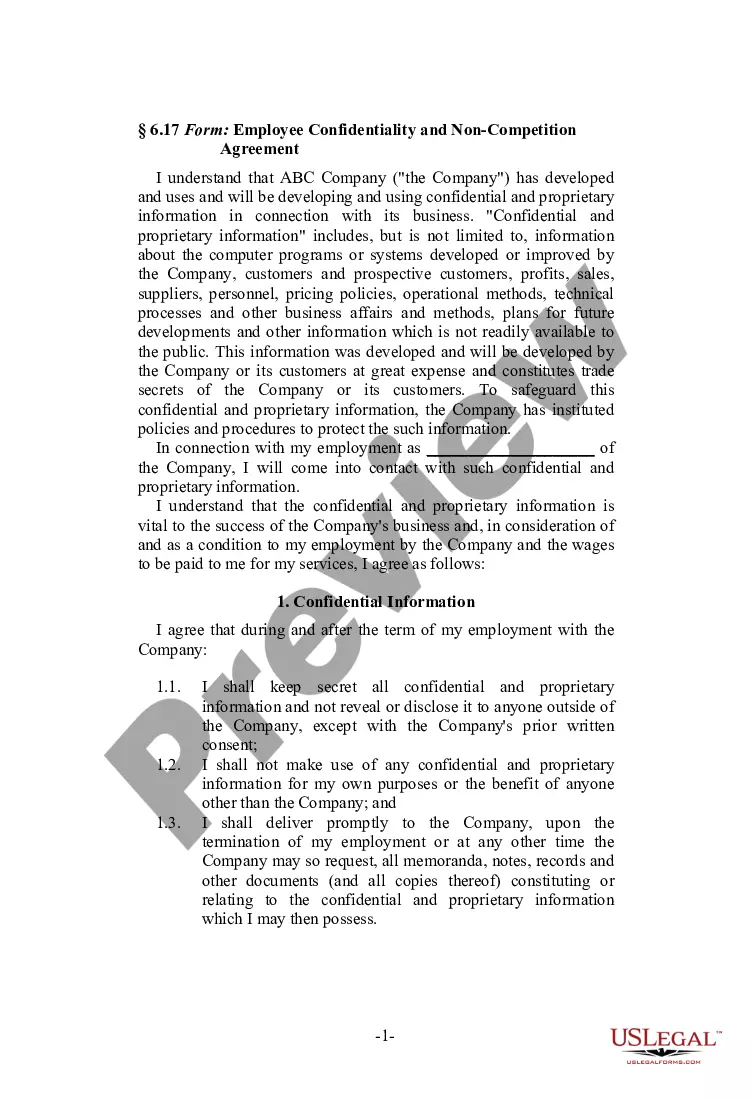
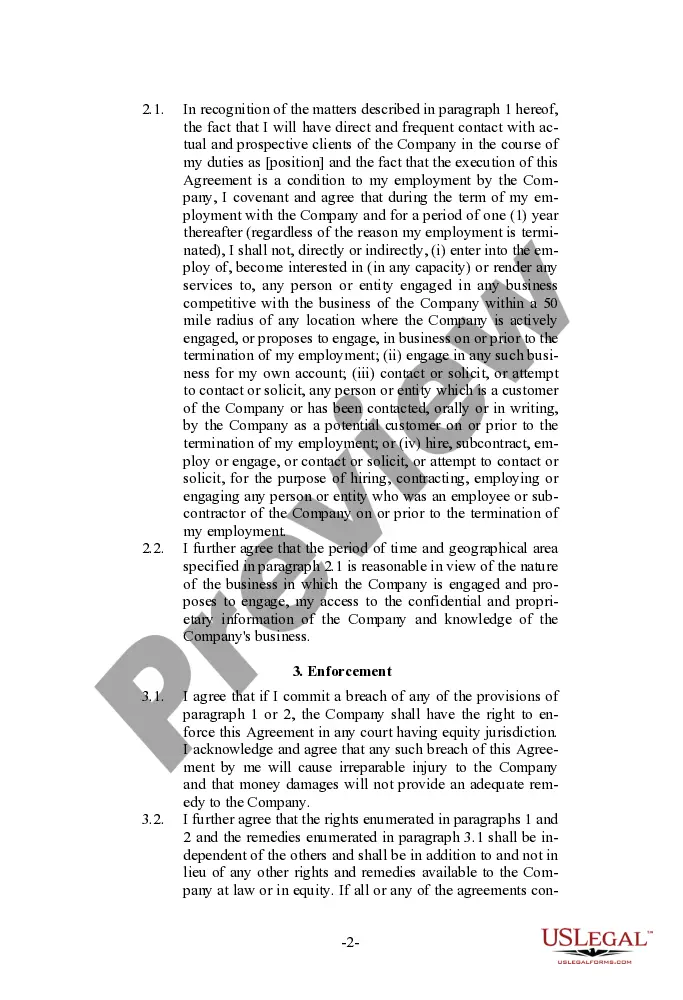
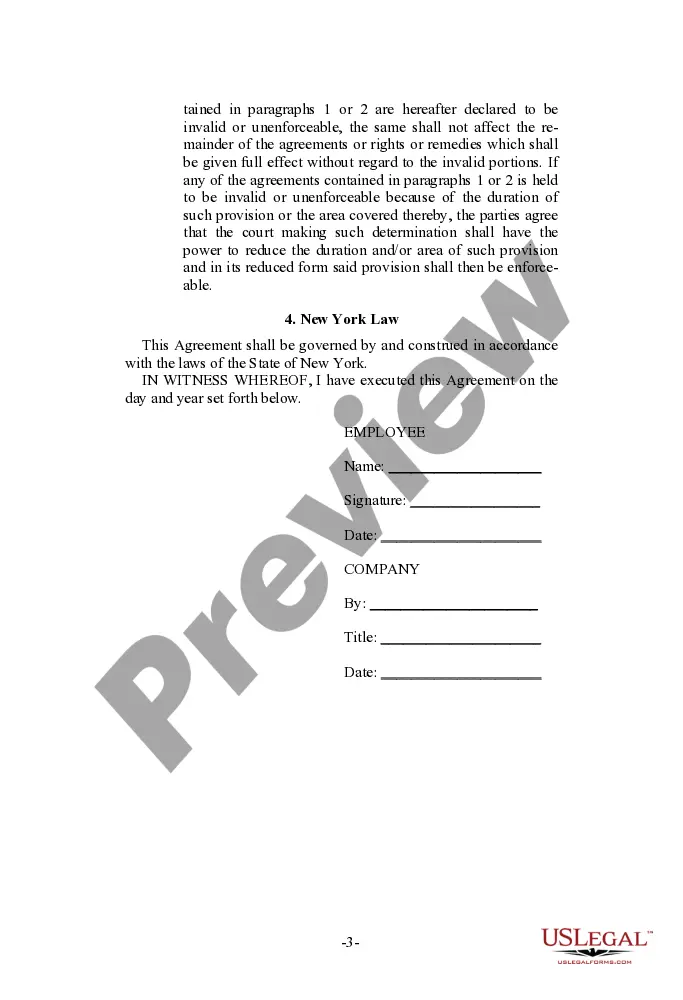
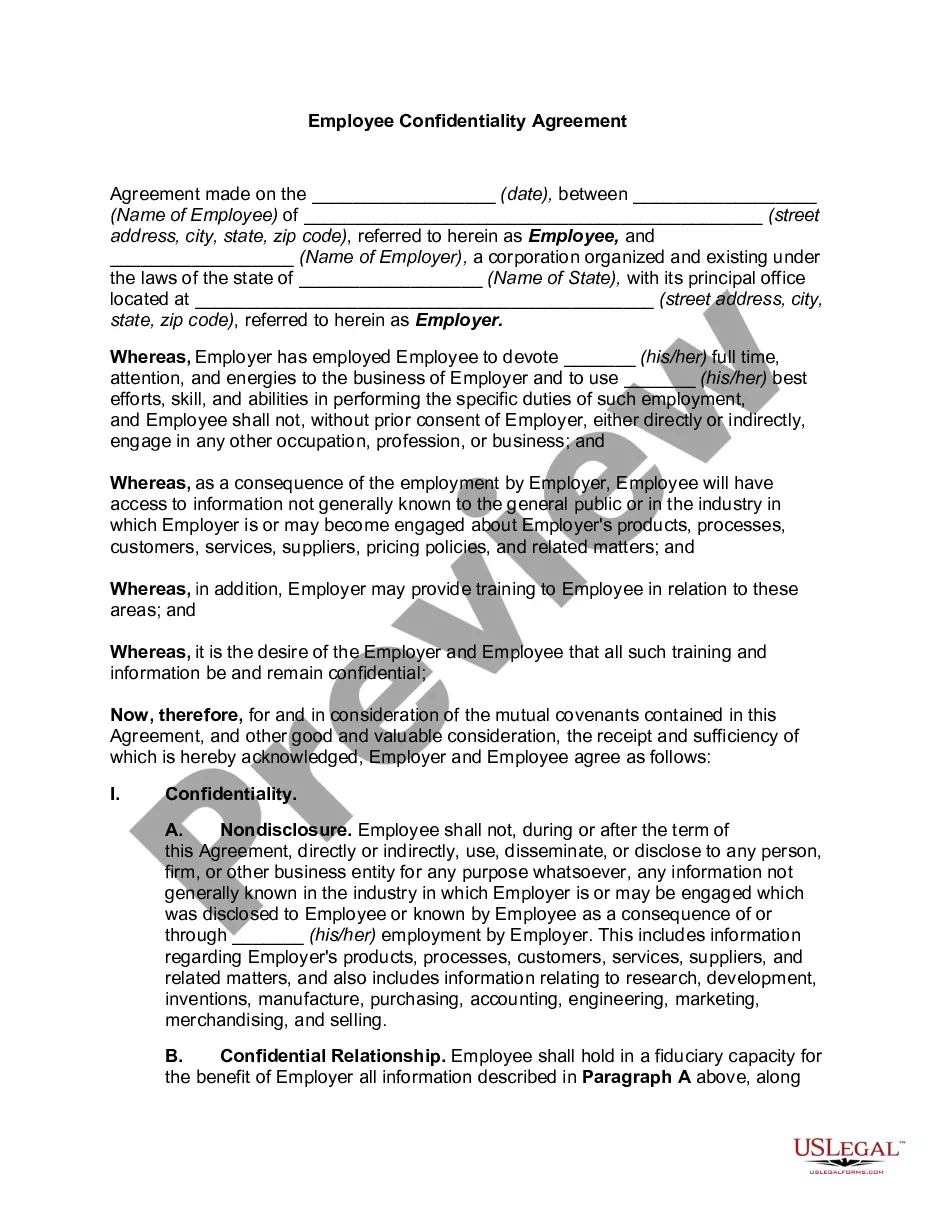
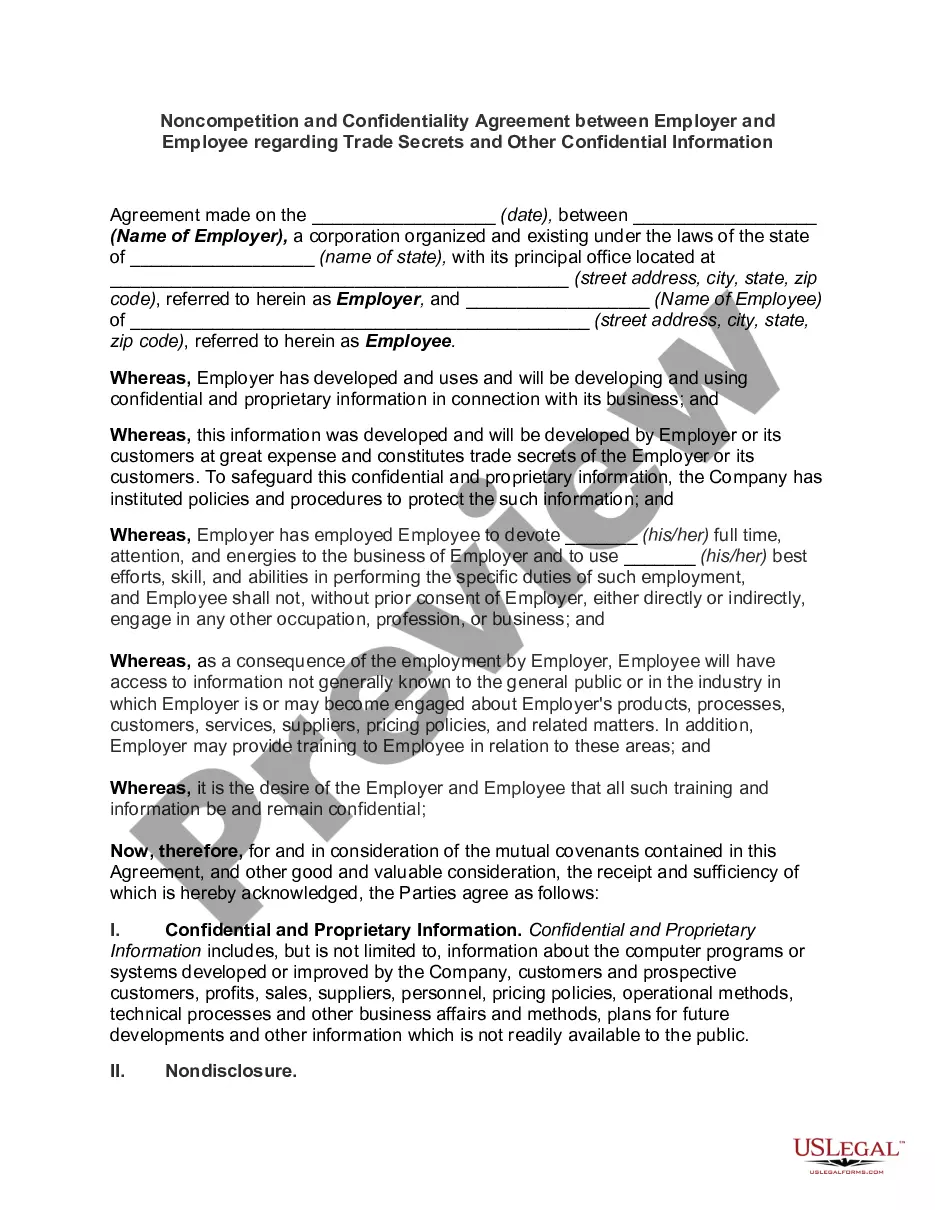
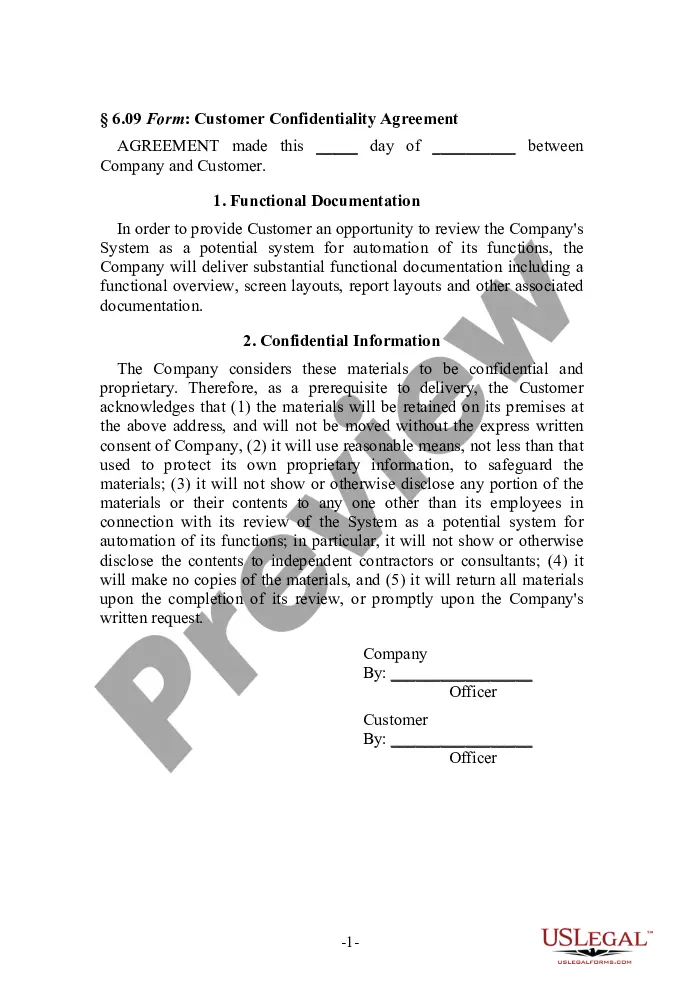
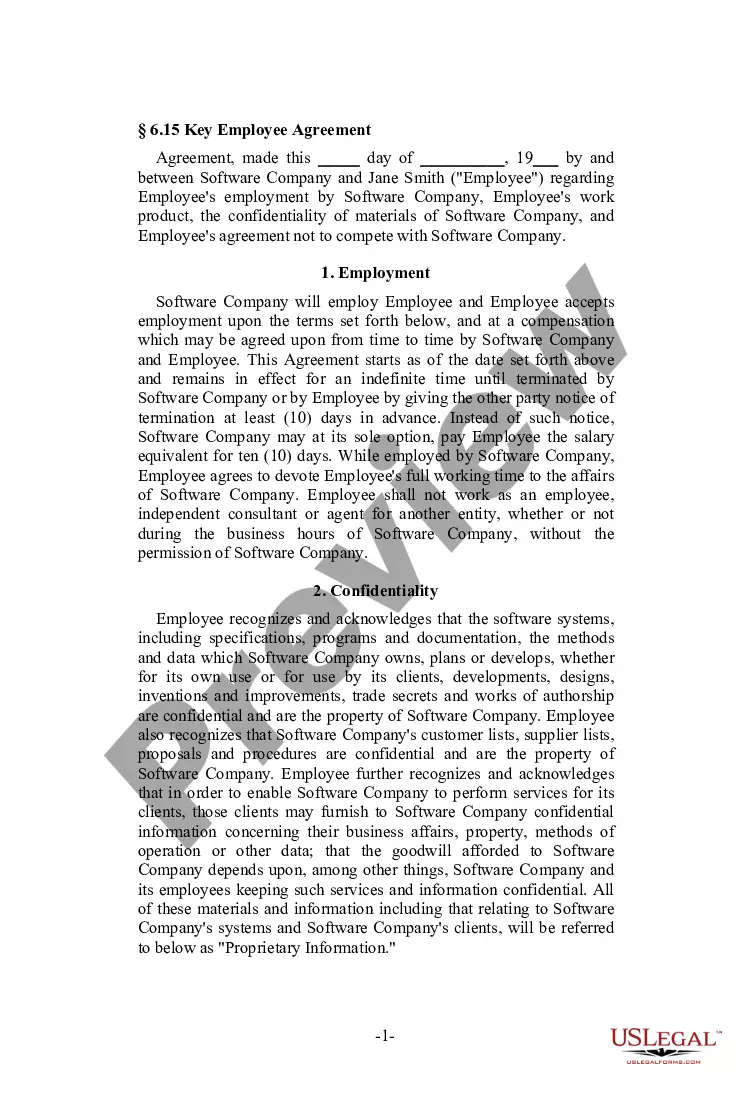
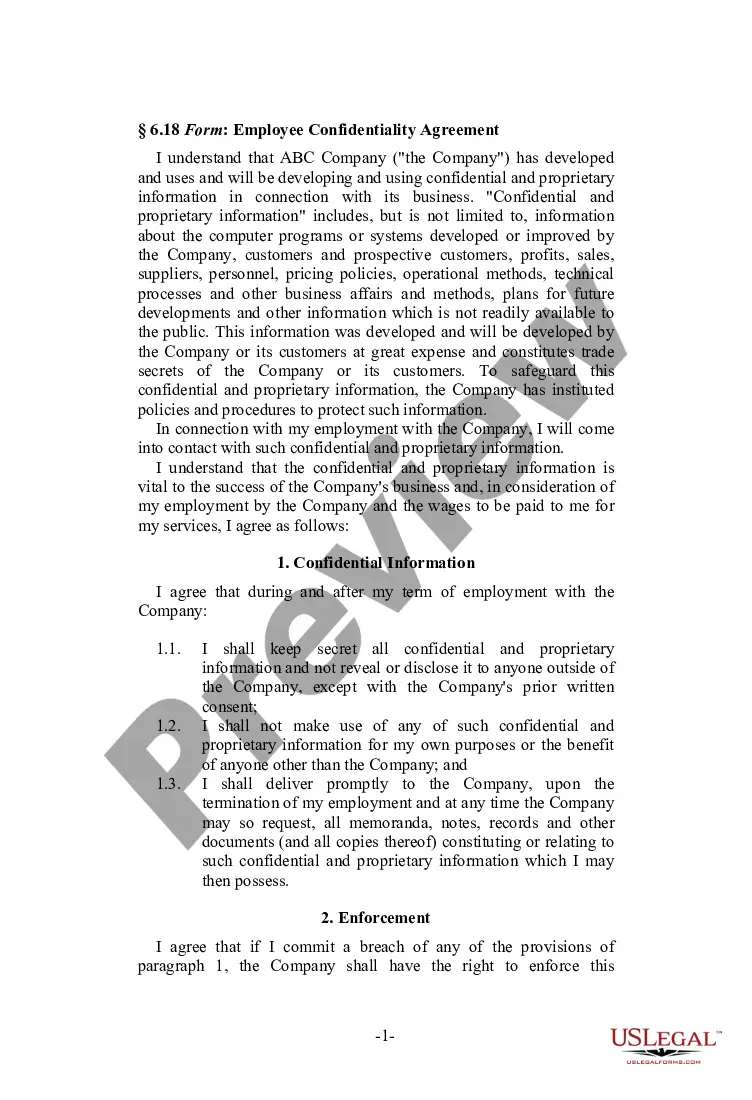
How to fill out Employee Confidentiality And Noncompetition Agreement?
You can devote time online trying to find the authorized file template that meets the federal and state needs you will need. US Legal Forms offers a huge number of authorized forms that are examined by experts. It is possible to down load or produce the New York Employee Confidentiality and Noncompetition Agreement from our service.
If you have a US Legal Forms account, it is possible to log in and click the Obtain key. After that, it is possible to total, modify, produce, or indicator the New York Employee Confidentiality and Noncompetition Agreement. Each and every authorized file template you purchase is yours permanently. To get an additional duplicate of any purchased kind, check out the My Forms tab and click the corresponding key.
If you use the US Legal Forms internet site the first time, adhere to the basic recommendations below:
- Initial, be sure that you have chosen the proper file template for the state/city of your choosing. Read the kind outline to ensure you have picked the correct kind. If available, take advantage of the Preview key to check through the file template also.
- In order to find an additional model in the kind, take advantage of the Research discipline to find the template that fits your needs and needs.
- When you have located the template you desire, just click Purchase now to continue.
- Find the pricing plan you desire, type in your credentials, and register for an account on US Legal Forms.
- Full the financial transaction. You can use your bank card or PayPal account to cover the authorized kind.
- Find the file format in the file and down load it in your gadget.
- Make changes in your file if required. You can total, modify and indicator and produce New York Employee Confidentiality and Noncompetition Agreement.
Obtain and produce a huge number of file web templates making use of the US Legal Forms site, that provides the largest variety of authorized forms. Use professional and status-distinct web templates to deal with your small business or personal demands.
Form popularity
FAQ
Under the employee choice doctrine, an employee who leaves the company may choose to accept those benefits from his employer provided she promises not to work for a competitor.
In general, the New York employee choice doctrine will apply to your existing non-compete agreement in the following manner: Courts will uphold the non-compete agreement and not inquire into its reasonableness if the employee has a choice of either: Working for a competitor and giving up certain benefits.
Although New York disfavors restrictive covenants based on public policy, which respects the right of people to earn their own living, these provisions are enforced if: (1) there is a legitimate business interest in enforcement, and (2) the scope of the restriction is narrowly drawn.
Are non-competes legal? A non-compete is only allowed and enforceable to the extent it (1) is necessary to protect the employer's legitimate interests, (2) does not impose an undue hardship on the employee, (3) does not harm the public, and (4) is reasonable in time period and geographic scope.
On June 20, 2023, the New York State Assembly passed A1278B, amending the state's current labor law to prohibit non-compete agreements for workers. The bill comes in the wake of the Federal Trade Commission's proposal for a nationwide ban on non-competes.
In New York, courts largely disfavor non-compete agreements and enforce them only when necessary. They consider four factors when determining whether to enforce an agreement: If the agreement protects legitimate business interests, e.g. trade secrets or special skills acquired during employment.
The basics: the employee choice doctrine is an exception to the usual requirement that a covenant not to compete be reasonable. In other words, reasonableness be damned if an employee has the choice between not competing, and receiving certain contractual benefits, or competing and giving up those benefits.
It provides that a restrictive covenant is reasonable, and thus, enforceable, if: (1) its terms are no greater than is required to protect the employer's legitimate business interest; (2) it does not impose undue hardship on the former employee; and (3) it is not injurious to the public.