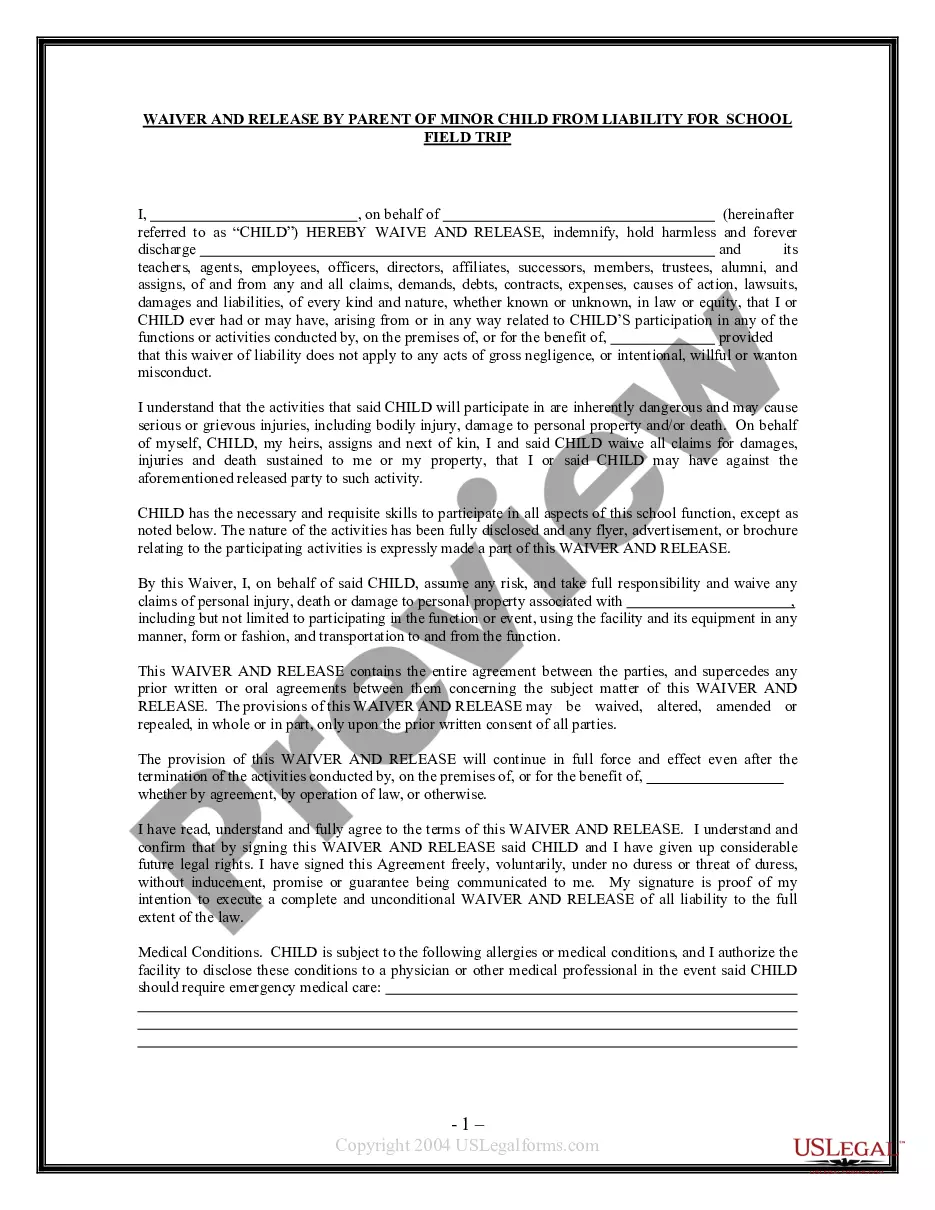
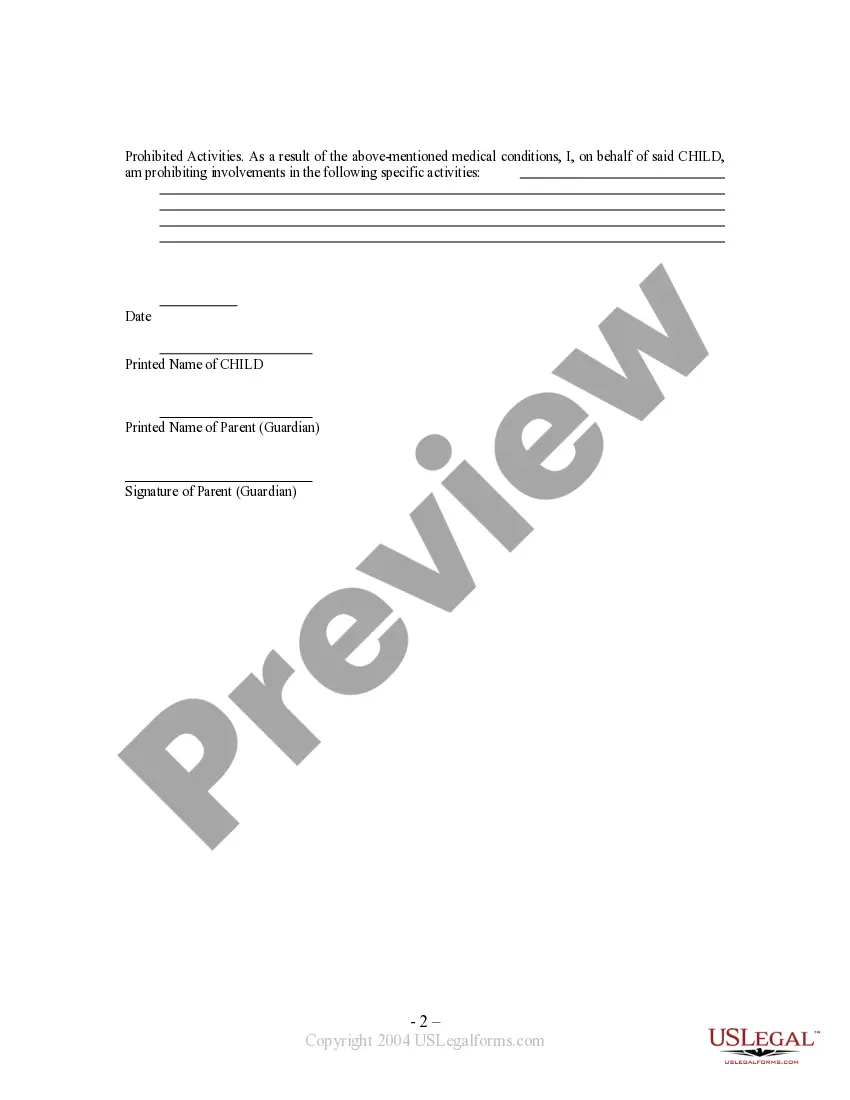
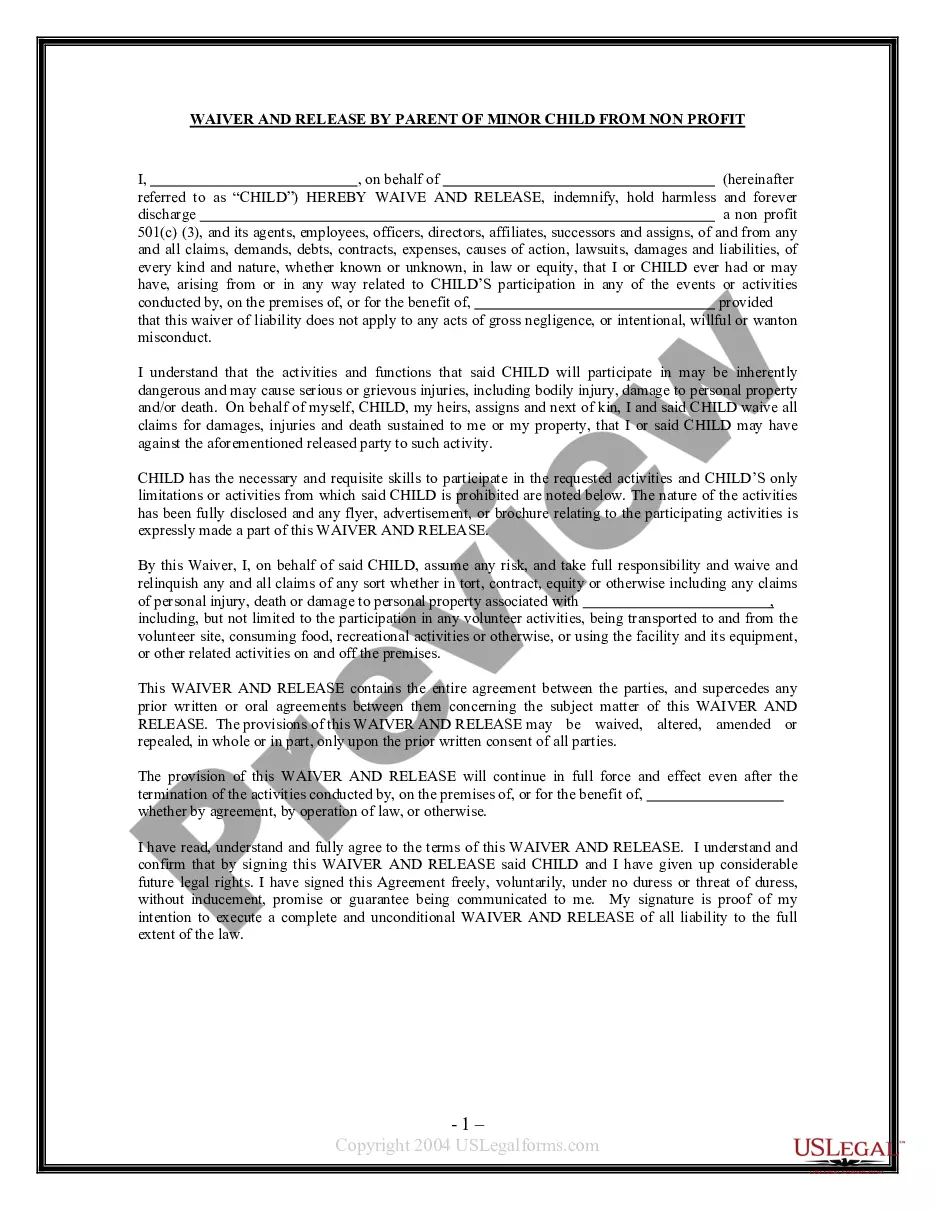
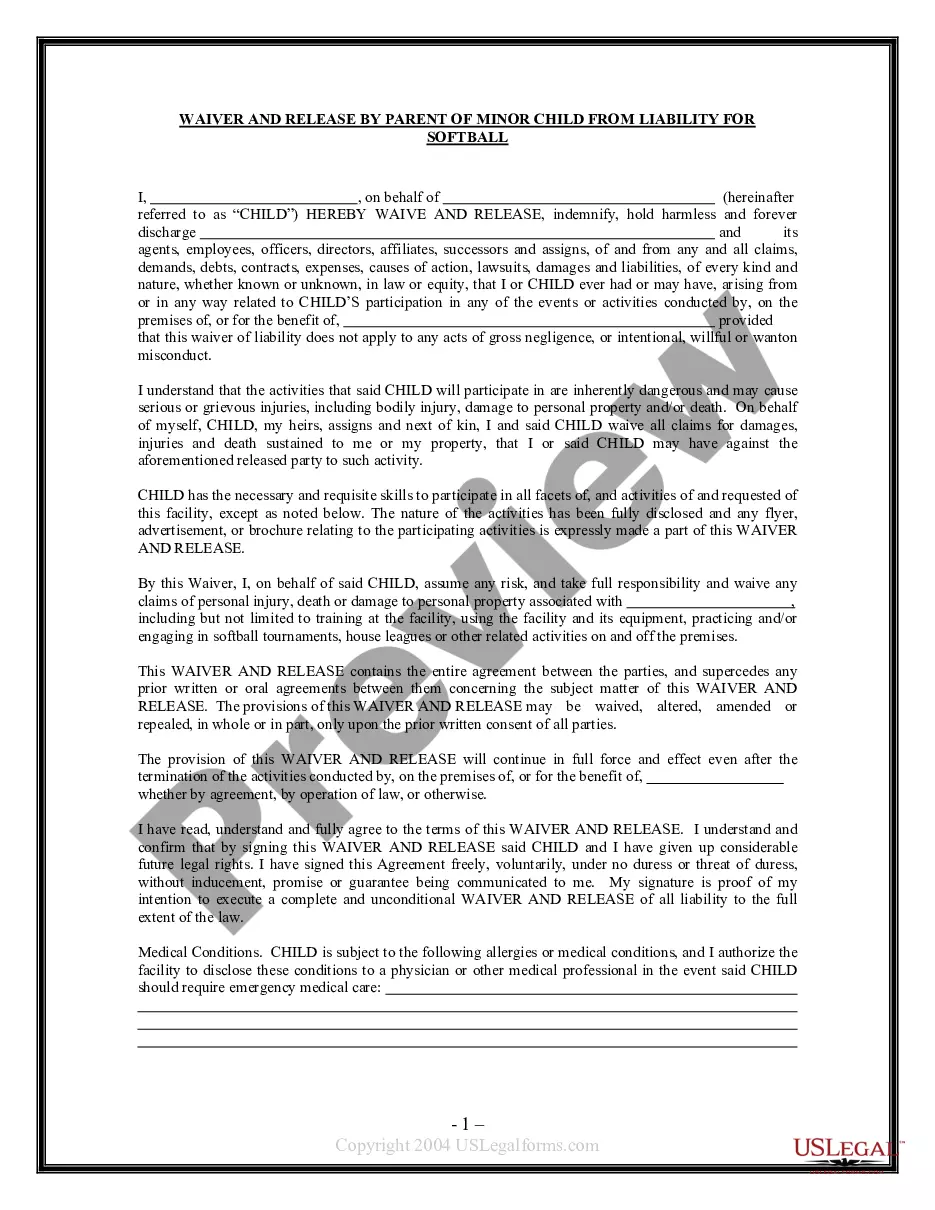
This form allows a parent or guardian to release a minor for a school field trip from liability for injuries which may be incurred by a minor child while on the premises, taking part in activities, etc.
New York Waiver and Release From Liability For Minor Child for School Field Trip
Category:
State:
Multi-State
Control #:
US-WAV-77M
Format:
Word;
Rich Text
Instant download
Description
Free preview
Get your form ready online
Our built-in tools help you complete, sign, share, and store your documents in one place.
Built-in online Word editor
Make edits, fill in missing information, and update formatting in US Legal Forms—just like you would in MS Word.
Export easily
Download a copy, print it, send it by email, or mail it via USPS—whatever works best for your next step.
E-sign your document
Sign and collect signatures with our SignNow integration. Send to multiple recipients, set reminders, and more. Go Premium to unlock E-Sign.
Notarize online 24/7
If this form requires notarization, complete it online through a secure video call—no need to meet a notary in person or wait for an appointment.
Store your document securely
We protect your documents and personal data by following strict security and privacy standards.

Make edits, fill in missing information, and update formatting in US Legal Forms—just like you would in MS Word.

Download a copy, print it, send it by email, or mail it via USPS—whatever works best for your next step.

Sign and collect signatures with our SignNow integration. Send to multiple recipients, set reminders, and more. Go Premium to unlock E-Sign.

If this form requires notarization, complete it online through a secure video call—no need to meet a notary in person or wait for an appointment.

We protect your documents and personal data by following strict security and privacy standards.
Looking for another form?
How to fill out Waiver And Release From Liability For Minor Child For School Field Trip?
US Legal Forms - one of the largest compilations of legal templates in the United States - offers a multitude of legal document formats that you can download or print.
By utilizing the website, you can access thousands of forms for business and personal purposes, sorted by categories, states, or keywords.
You can find the latest versions of documents such as the New York Waiver and Release From Liability For Minor Child for School Field Trip in just seconds.
If the form does not fulfill your requirements, use the Search field at the top of the screen to find the one that does.
Once satisfied with the form, confirm your choice by clicking the Get now button. Then, choose the payment plan you prefer and provide your information to register for an account.
- If you have an account, Log In to download the New York Waiver and Release From Liability For Minor Child for School Field Trip from the US Legal Forms library.
- The Download button will appear on every form you view.
- You can access all previously downloaded forms in the My documents section of your account.
- If it's your first time using US Legal Forms, here are some simple instructions to help you begin.
- Ensure you have selected the correct form for your location/state.
- Click the Review button to verify the content of the form.
Form popularity
FAQ
Under California law, waivers of liability may not prevent people from suing for injuries resulting from gross negligence, recklessness, intentional torts or illegal acts.
Under New York law, liability waivers in gym membership agreements are unenforceable in most cases. With the holidays around the corner, New York gyms will soon be full of people attempting to stay true to their New Years' resolutions.
Under these circumstances, signing a liability waiver does not preclude your right to pursue a personal injury lawsuit. The other party involved will likely allege you cannot sue them. Always take that information with a grain of salt since a personal injury attorney can advise you whether you can pursue a claim.
Liability waivers are enforceable in California solely to the extent they shift to the customer the risk of ordinary negligence. Under California law, a liability waiver cannot excuse an injury caused by a defendant's gross negligence, recklessness or intentionally wrongful act.
In California, a liability waiver must be clear, unambiguous, and explicit. In other words, waivers cannot be printed in faded ink, in small font, on the back of a paper, or in an otherwise ambiguous form. If the waiver that you sign is not represented clearly, it may not hold up in the event of a lawsuit.
Waiver and release refers to the waiving of rights or privileges and the release of a party from their obligations or rights.
You might think that since you signed a waiver acknowledging the risks of the activity, you have no legal leg to stand on to file a personal injury lawsuit. Waivers can make personal injury lawsuits more complex, but you can still seek damages for injuries that could have and should have been prevented.
A waiver is an exculpatory contract. That means it's used to excuse a party from responsibility when the other contracted party is injured by either known or unknown risks in a particular activity. This includes inherent risks and ordinary negligence.
A waiver is not a variation to a contract. Variations: are a legally binding agreement in their own right, and. change the terms of a contract.