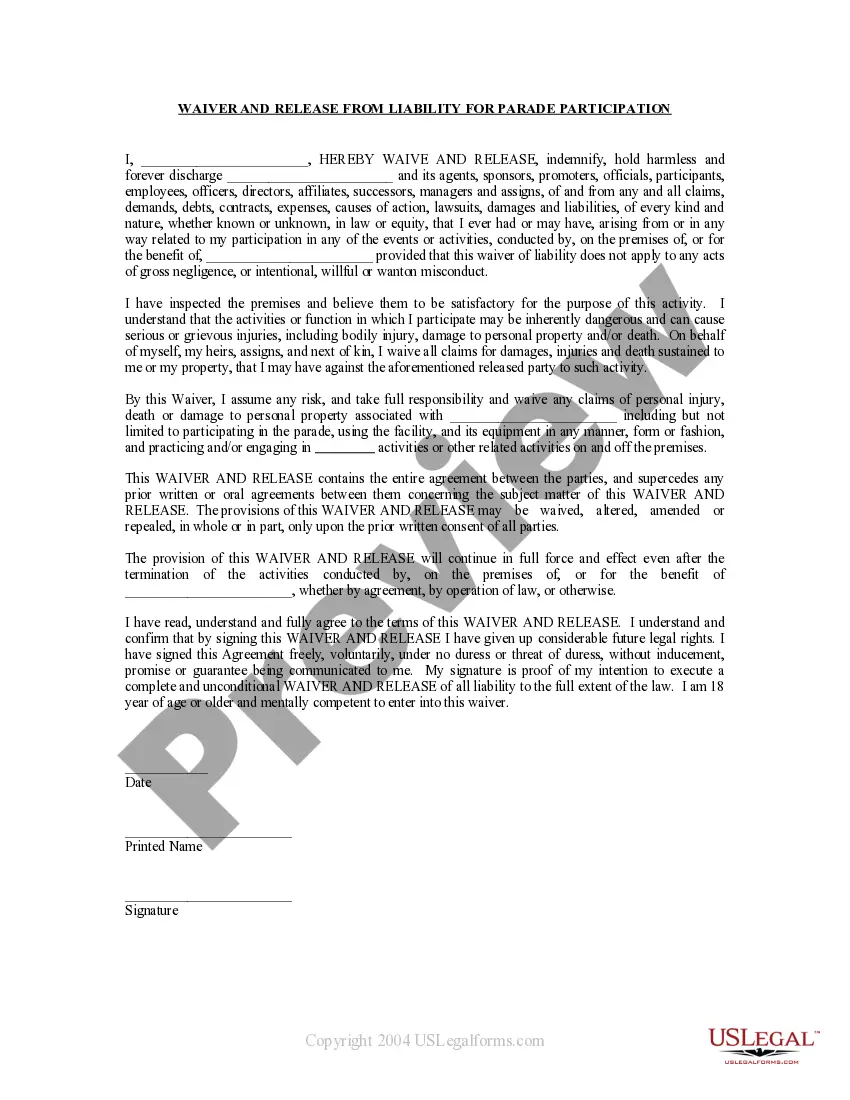
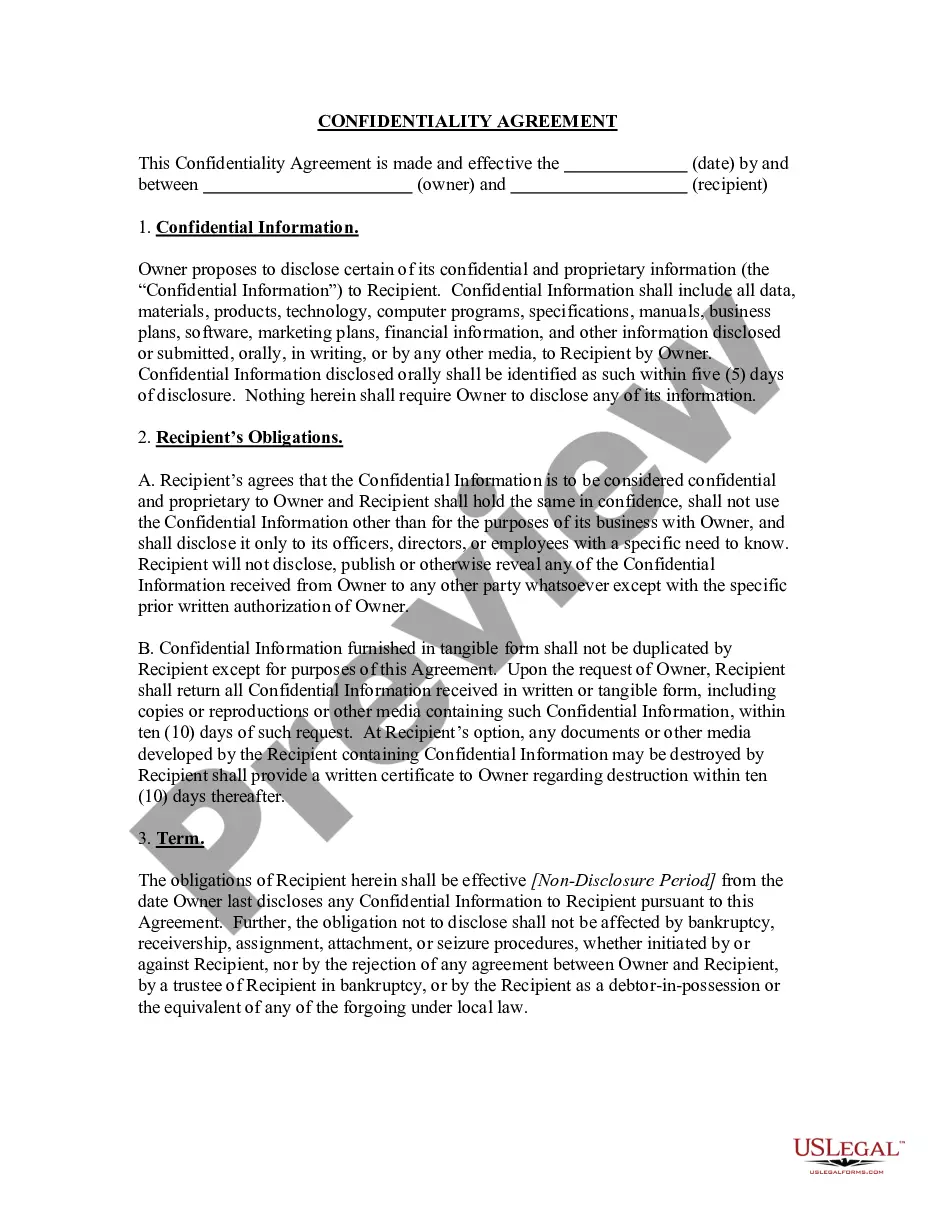
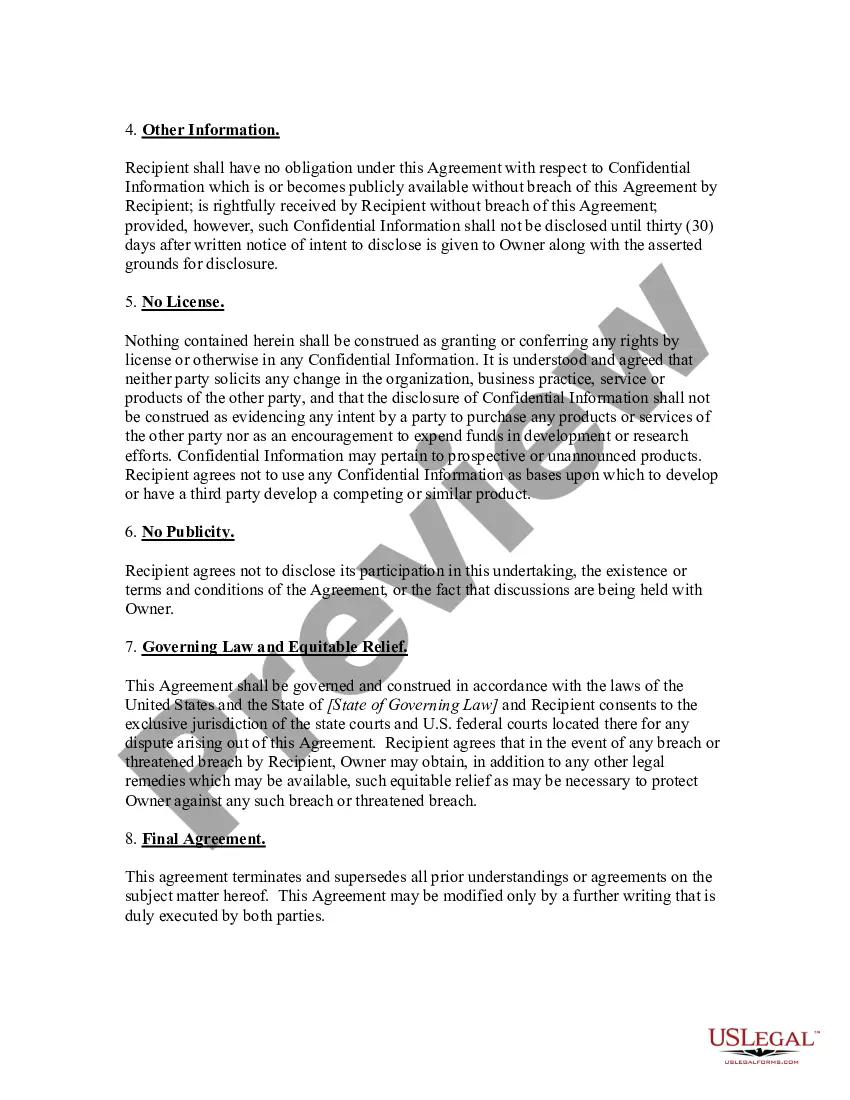
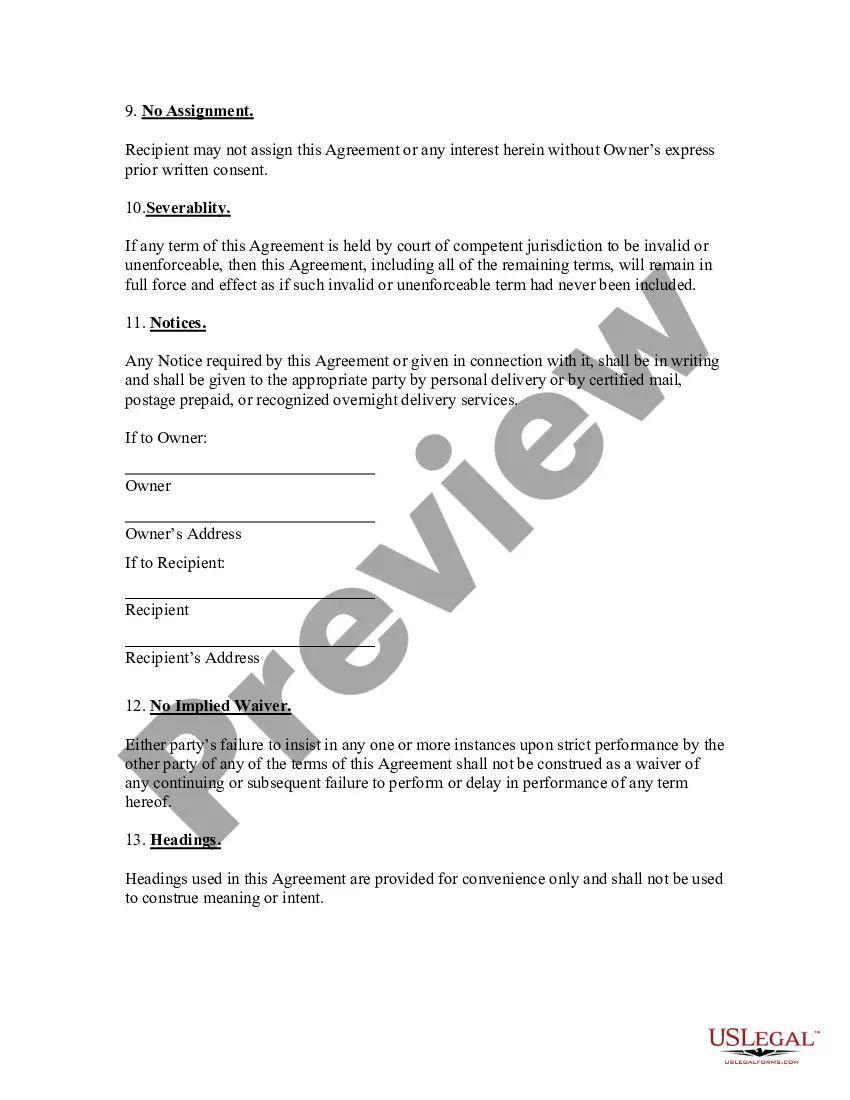
New York Confidentiality Agreement for Intellectual Property
Description
Get your form ready online
Our built-in tools help you complete, sign, share, and store your documents in one place.
Make edits, fill in missing information, and update formatting in US Legal Forms—just like you would in MS Word.
Download a copy, print it, send it by email, or mail it via USPS—whatever works best for your next step.
Sign and collect signatures with our SignNow integration. Send to multiple recipients, set reminders, and more. Go Premium to unlock E-Sign.
If this form requires notarization, complete it online through a secure video call—no need to meet a notary in person or wait for an appointment.
We protect your documents and personal data by following strict security and privacy standards.

Make edits, fill in missing information, and update formatting in US Legal Forms—just like you would in MS Word.

Download a copy, print it, send it by email, or mail it via USPS—whatever works best for your next step.

Sign and collect signatures with our SignNow integration. Send to multiple recipients, set reminders, and more. Go Premium to unlock E-Sign.

If this form requires notarization, complete it online through a secure video call—no need to meet a notary in person or wait for an appointment.

We protect your documents and personal data by following strict security and privacy standards.
Looking for another form?

How to fill out Confidentiality Agreement For Intellectual Property?
You can dedicate hours online searching for the legal document template that fulfills the federal and state obligations you require.
US Legal Forms offers numerous legal forms that can be assessed by specialists.
You can download or print the New York Confidentiality Agreement for Intellectual Property from our services.
First, ensure that you have selected the correct document template for the county/region of your choice. Review the form outline to confirm you have chosen the right form. If available, use the Preview option to review the document template as well.
- If you already have a US Legal Forms account, you may Log In and select the Download option.
- Subsequently, you may complete, modify, print, or sign the New York Confidentiality Agreement for Intellectual Property.
- Every legal document template you purchase is yours indefinitely.
- To acquire another copy of any purchased form, navigate to the My documents tab and select the appropriate option.
- If you are using the US Legal Forms website for the first time, follow the straightforward instructions below.
Form popularity
FAQ
Filling out an NDA agreement involves several key steps. First, accurately input the names of all parties and define the scope of the confidential information in the context of a New York Confidentiality Agreement for Intellectual Property. Ensure that both parties understand and agree to their obligations before signing the agreement, as clarity is crucial for legal enforcement.
A confidentiality agreement is a written legal contract between an employer and an employee. The confidentiality agreement lays out binding terms and conditions that prohibit the employee from disclosing company confidential and proprietary information.
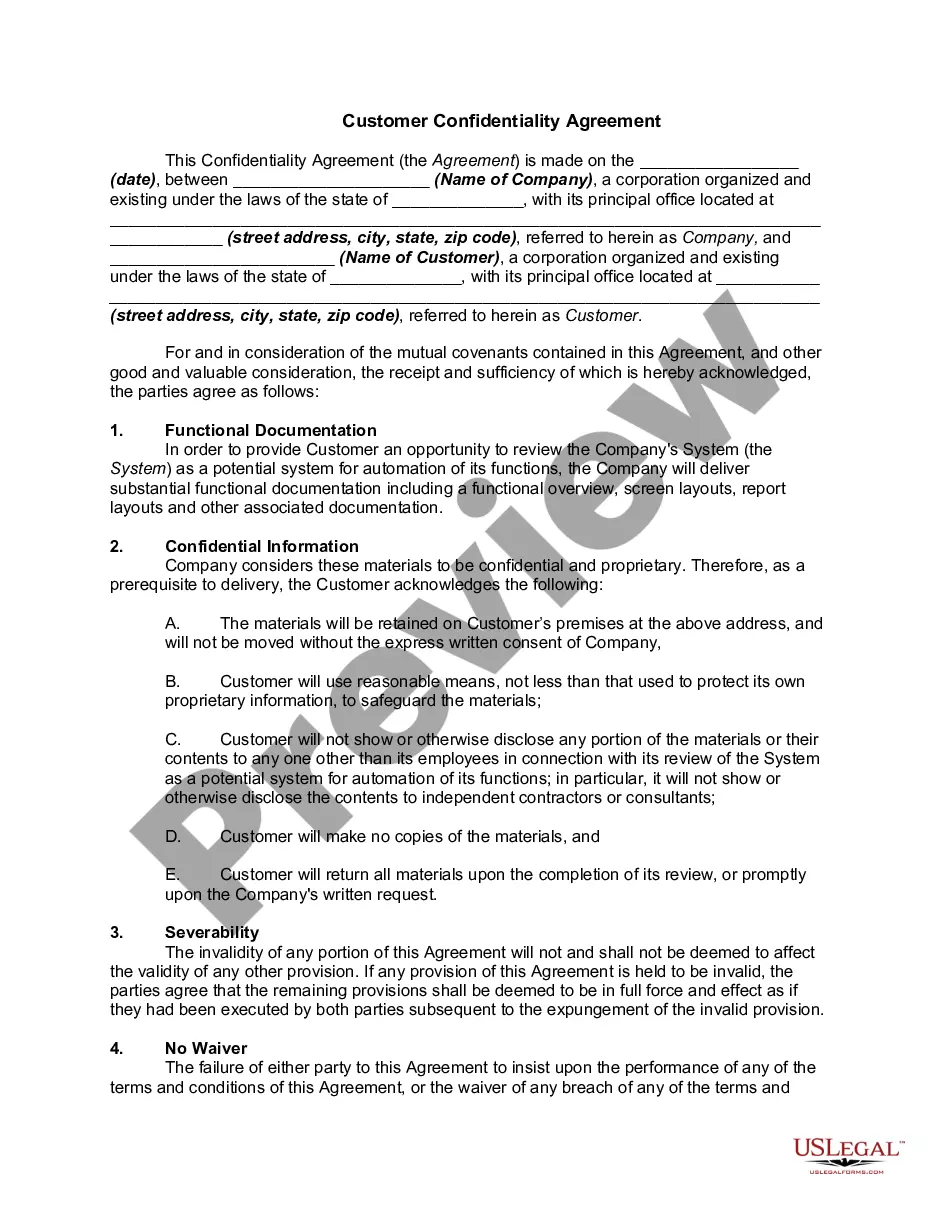
disclosure agreement is a legally binding contract that establishes a confidential relationship. The party or parties signing the agreement agree that sensitive information they may obtain will not be made available to any others. An NDA may also be referred to as a confidentiality agreement.
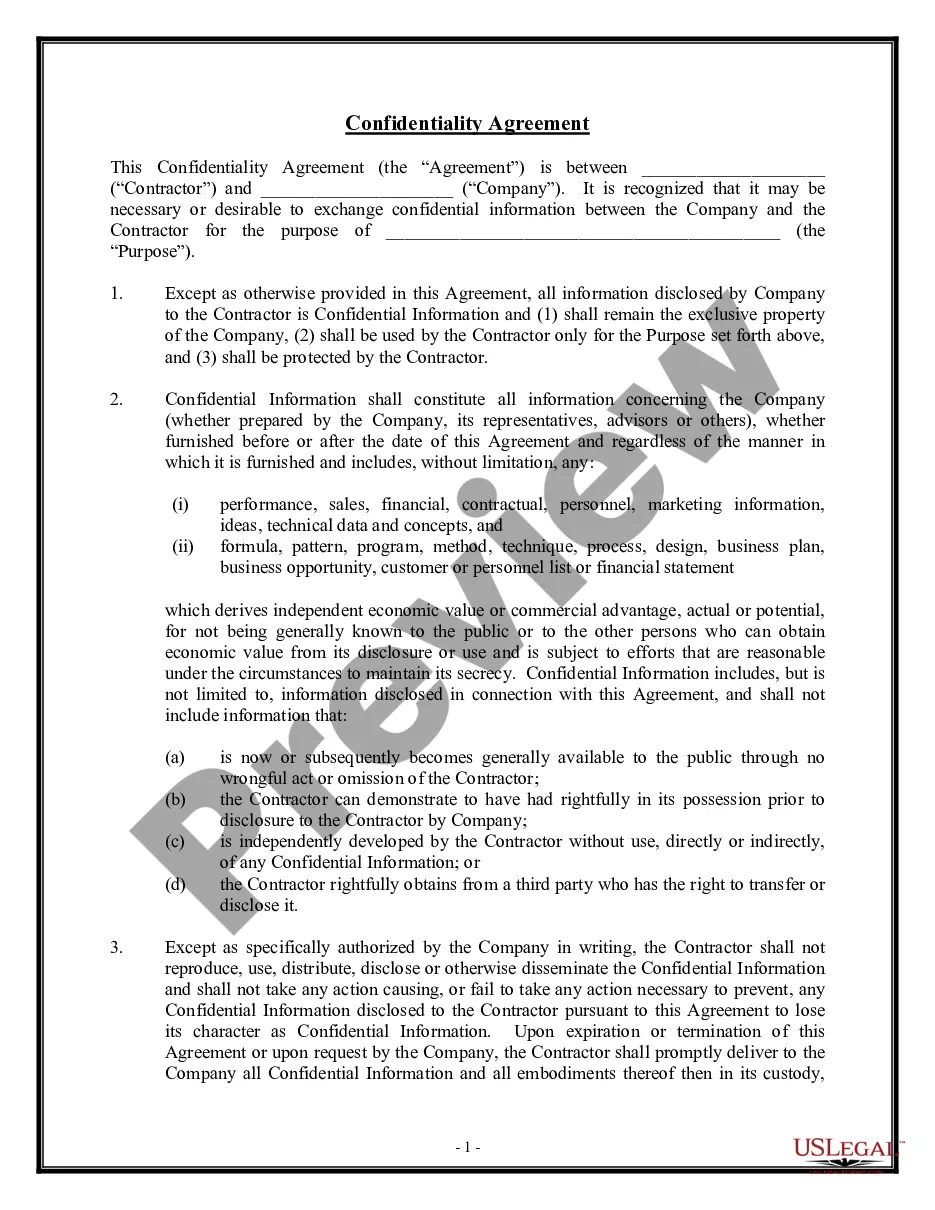
Confidentiality agreements, sometimes called secrecy or nondisclosure agreements, are contracts entered into by two or more parties in which some or all of the parties agree that certain types of information that pass from one party to the other or that are created by one of the parties will remain confidential.
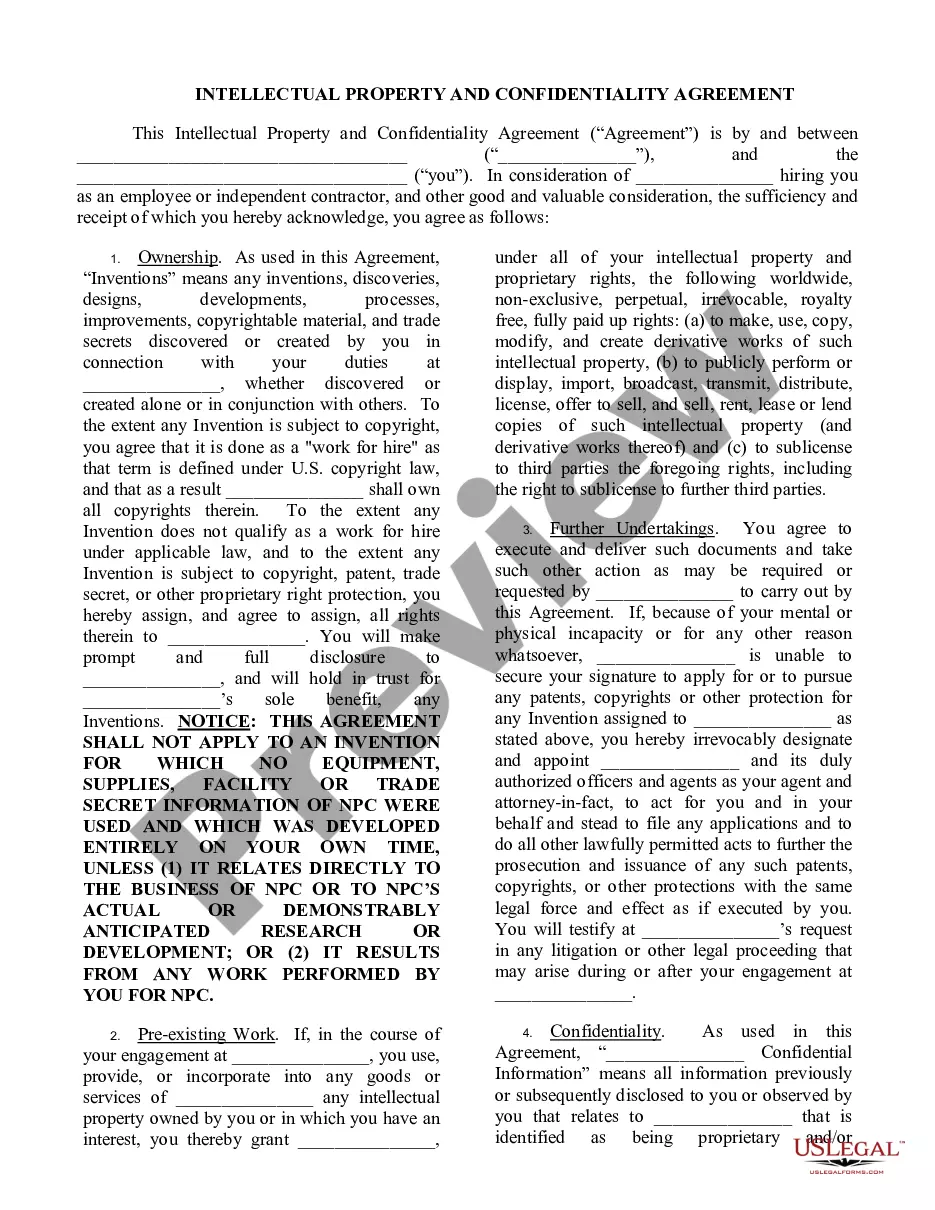
Also known as Proprietary Information and Inventions Assignment Agreements (or PIIAAs), Confidential Information and Inventions Assignment Agreements ensure that intellectual property and other proprietary rights created by employees during the course of their employment are assigned to the employer.
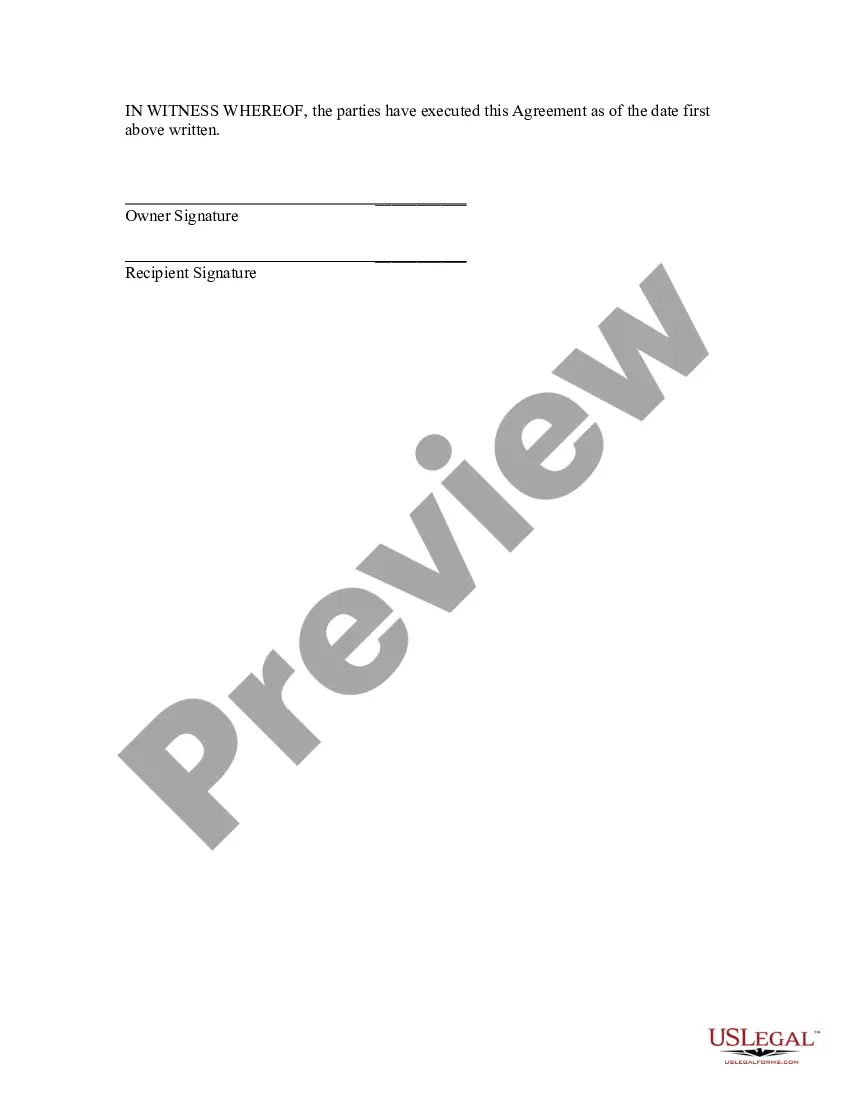
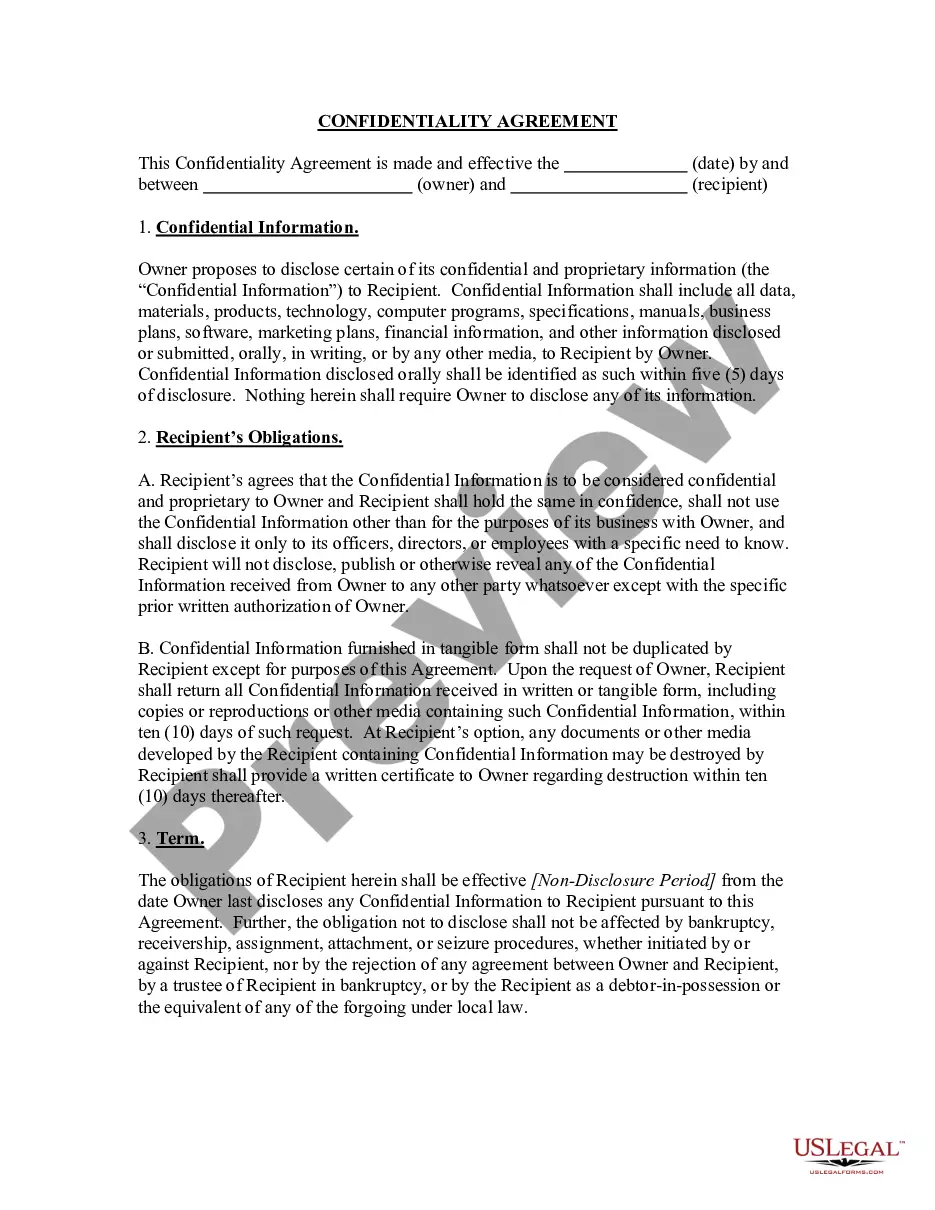
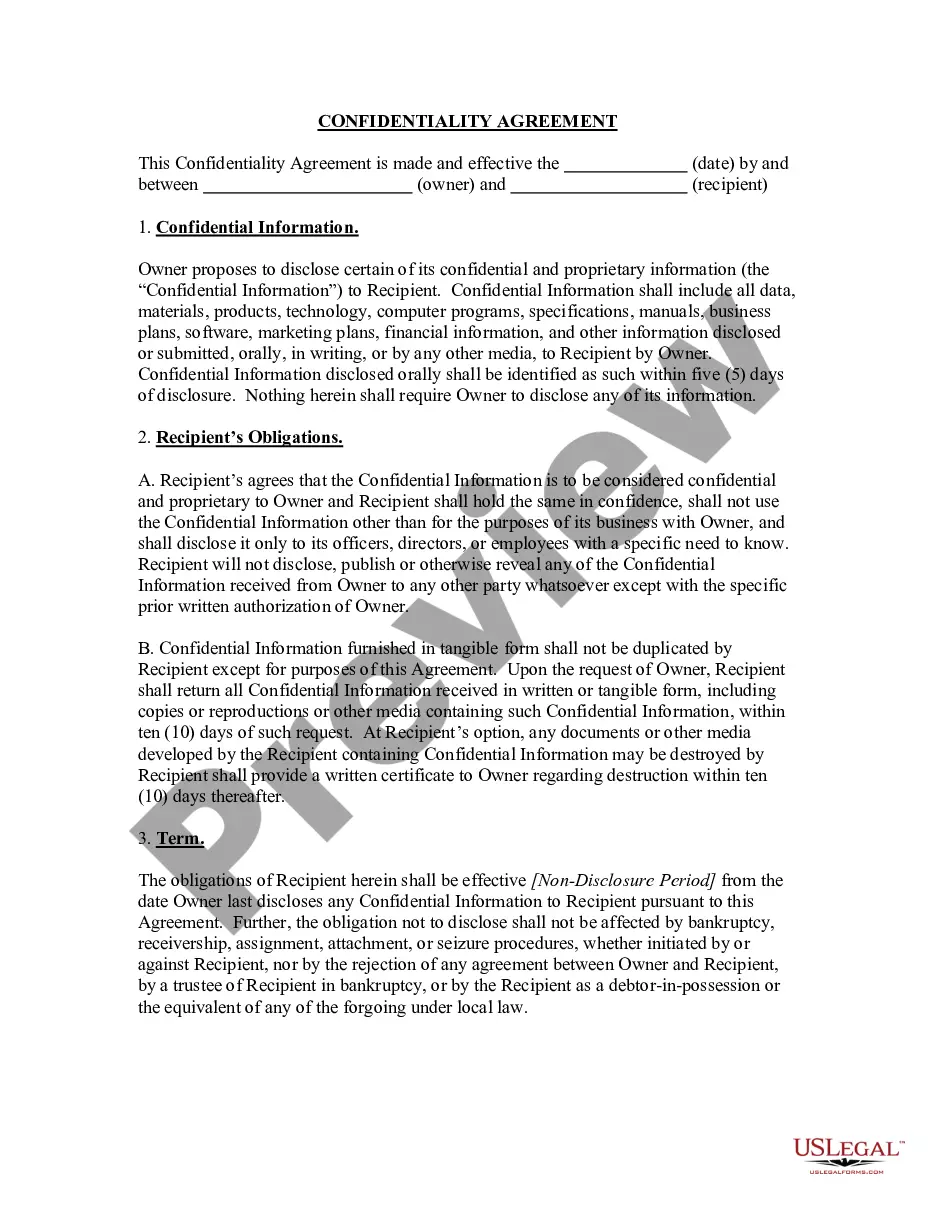
CONFIDENTIAL INFORMATIONOWNER agrees to disclose INFORMATION to RECIPIENT to facilitate possible future business dealings between the parties.
A nondisclosure agreement (NDA), sometimes called a confidentiality agreement, allows a company to share its intellectual property with others whose input it needs without unduly jeopardizing that information.
New York courts generally enforce such agreements as a condition to employment if they are: reasonable in time and geographic scope; necessary to protect the employer's legitimate interests; not harmful to the general public; and.
Updated December 17, 2021. A patent or invention non-disclosure agreement is a unilateral (1-way) agreement that is used to protect an invention. Due to the confidential nature of an unexecuted idea for a product, an NDA can be essential for an inventor when sharing confidential information to 3rd parties.
Confidentiality clauses are not legally binding if they try to stop you talking to the police or a regulator about issues between you and your employer or someone at work. An agreement may not be legally binding if you're not given reasonable time to think about it and/or get independent legal advice before signing it.