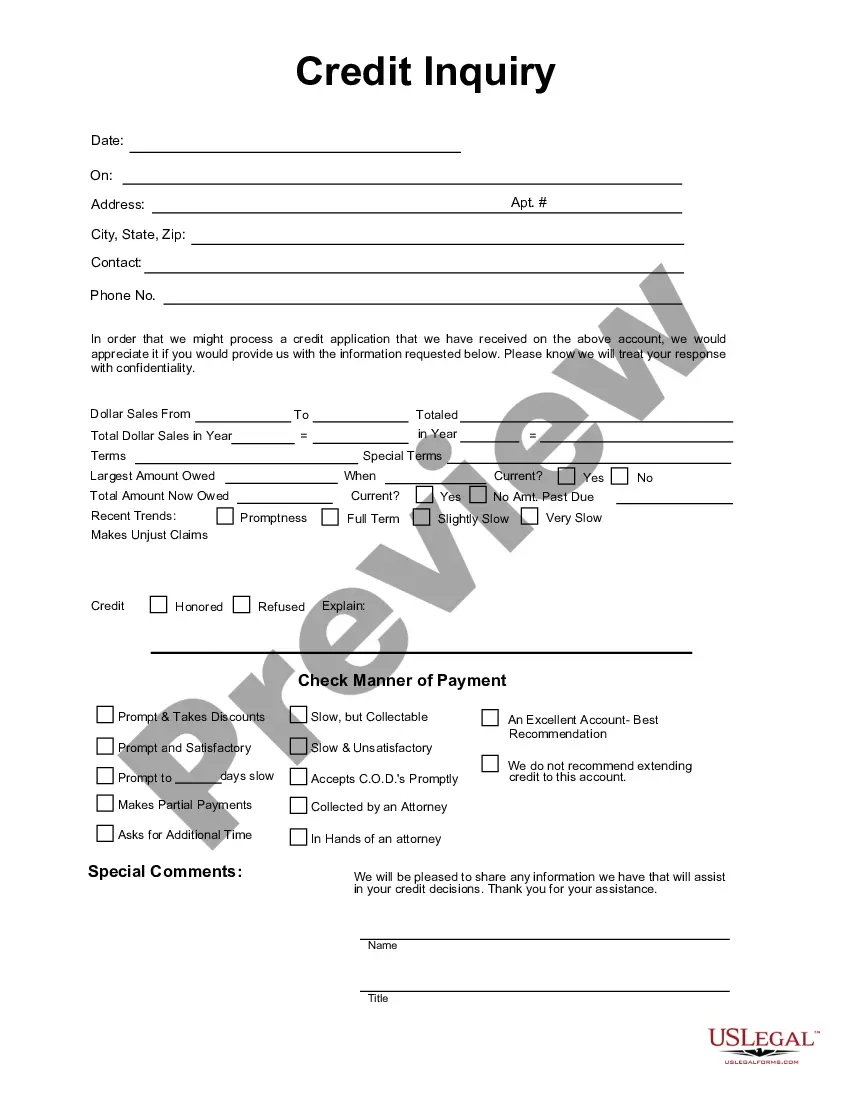
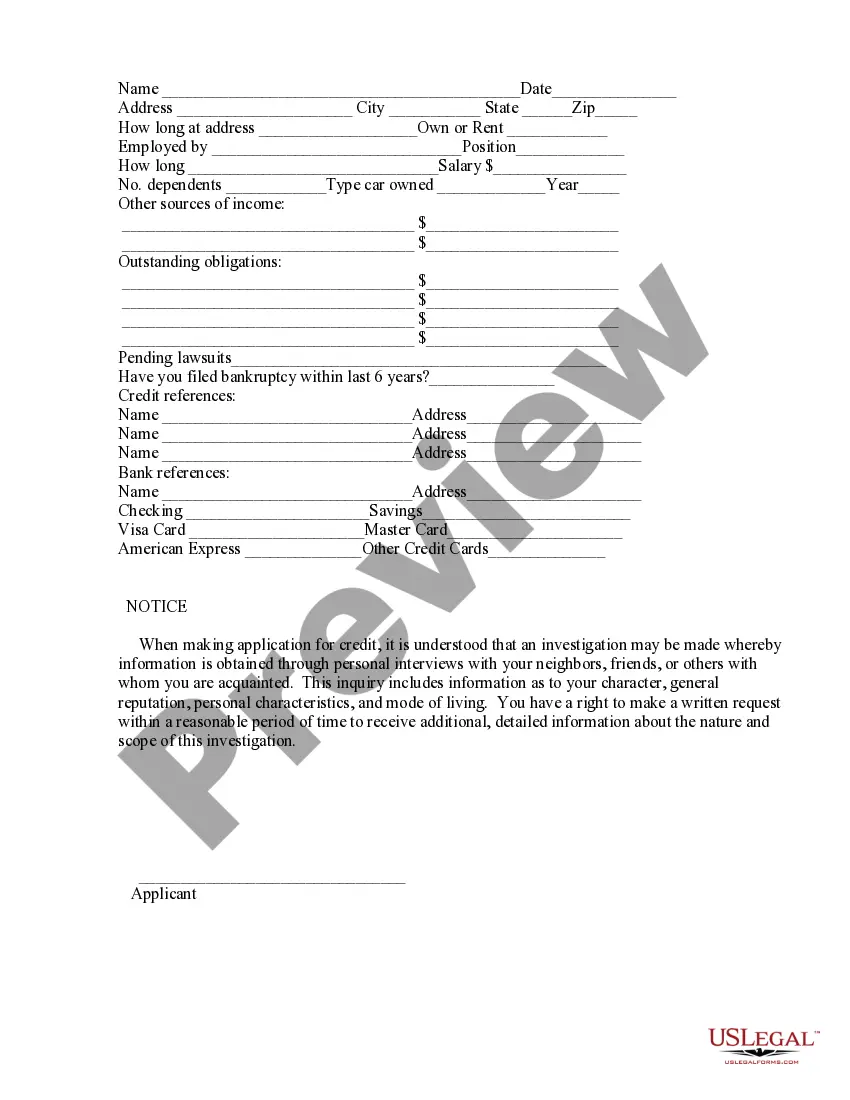
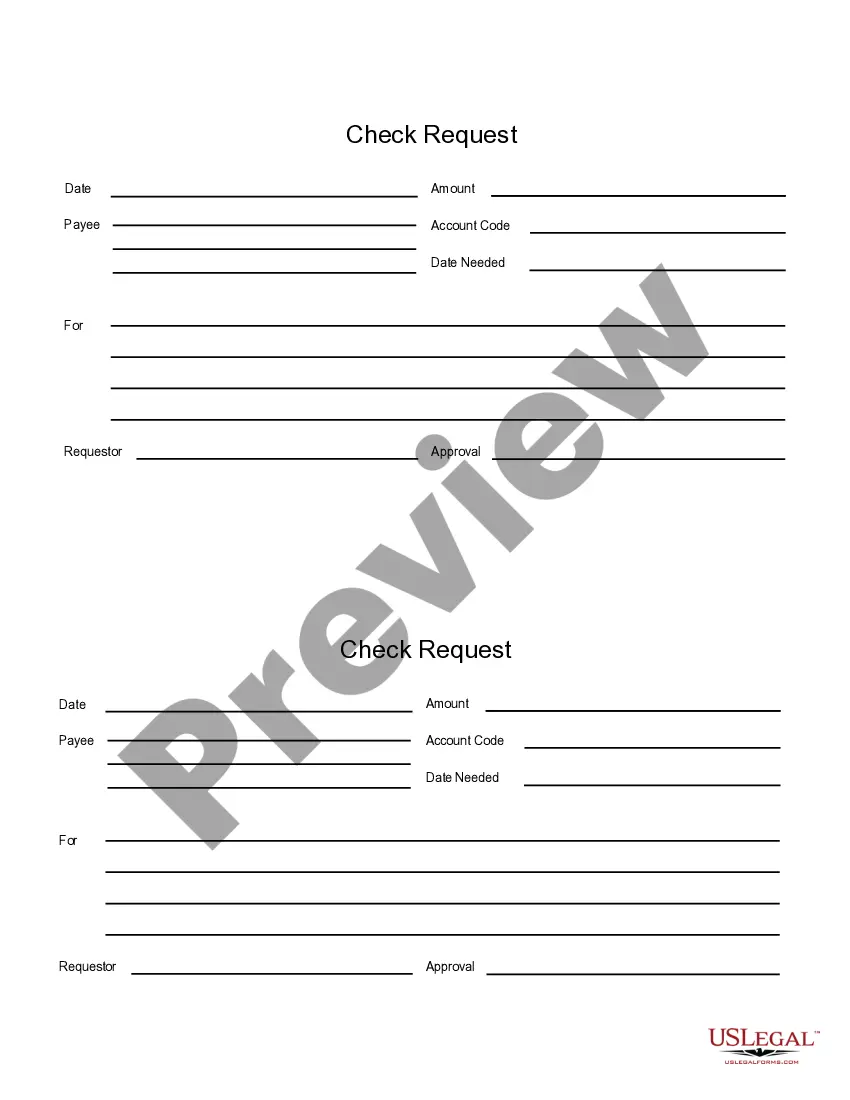
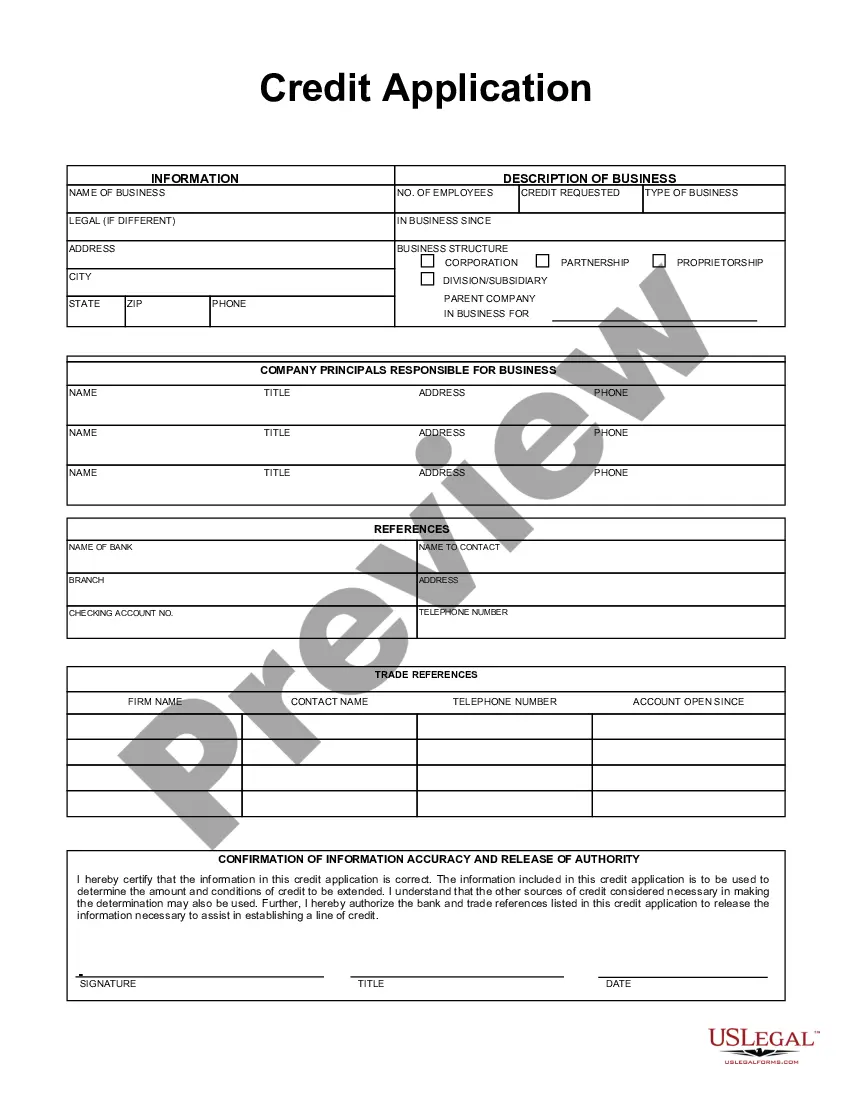
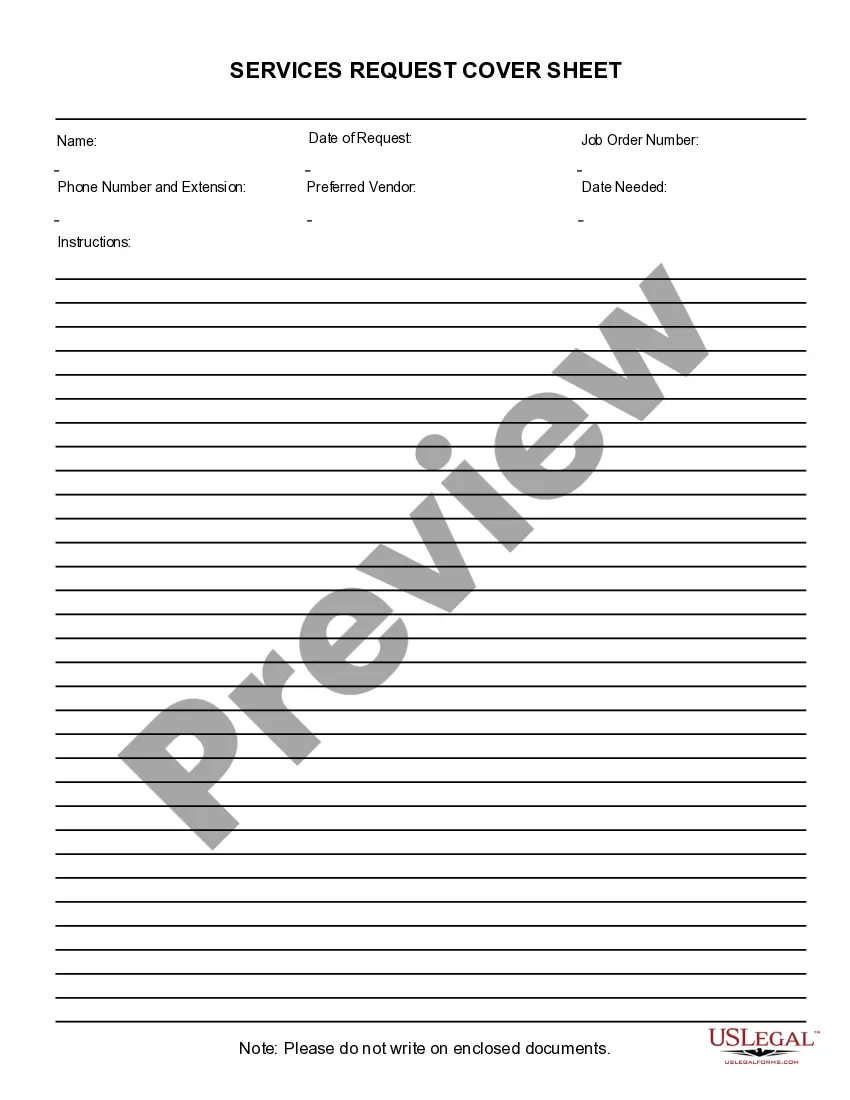
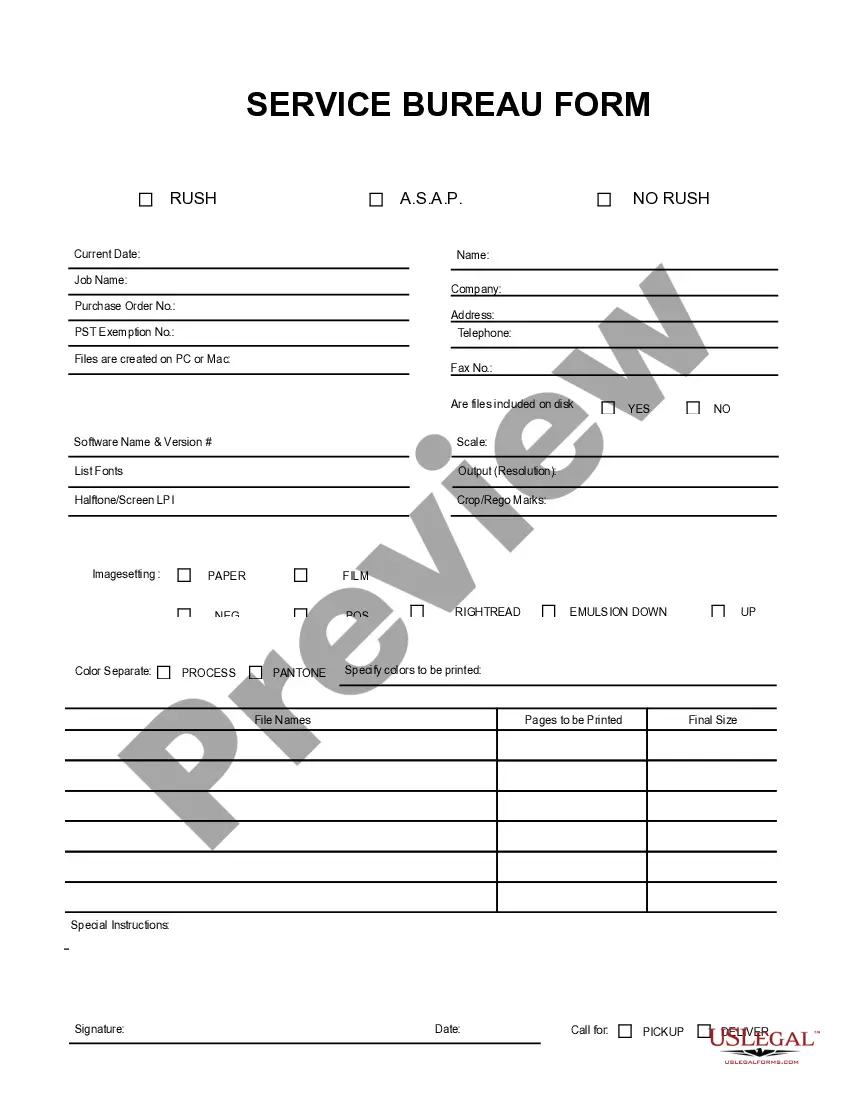
This form is a business type form that is formatted to allow you to complete the form using Adobe Acrobat or Word. The word files have been formatted to allow completion by entry into fields. Some of the forms under this category are rather simple while others are more complex. The formatting is worth the small cost.
New York Credit Inquiry
Category:
State:
Multi-State
Control #:
US-135-AZ
Format:
Word;
PDF;
Rich Text
Instant download
Description
Get your form ready online
Our built-in tools help you complete, sign, share, and store your documents in one place.
Built-in online Word editor
Make edits, fill in missing information, and update formatting in US Legal Forms—just like you would in MS Word.
Export easily
Download a copy, print it, send it by email, or mail it via USPS—whatever works best for your next step.
E-sign your document
Sign and collect signatures with our SignNow integration. Send to multiple recipients, set reminders, and more. Go Premium to unlock E-Sign.
Notarize online 24/7
If this form requires notarization, complete it online through a secure video call—no need to meet a notary in person or wait for an appointment.
Store your document securely
We protect your documents and personal data by following strict security and privacy standards.

Make edits, fill in missing information, and update formatting in US Legal Forms—just like you would in MS Word.

Download a copy, print it, send it by email, or mail it via USPS—whatever works best for your next step.

Sign and collect signatures with our SignNow integration. Send to multiple recipients, set reminders, and more. Go Premium to unlock E-Sign.

If this form requires notarization, complete it online through a secure video call—no need to meet a notary in person or wait for an appointment.

We protect your documents and personal data by following strict security and privacy standards.
Looking for another form?




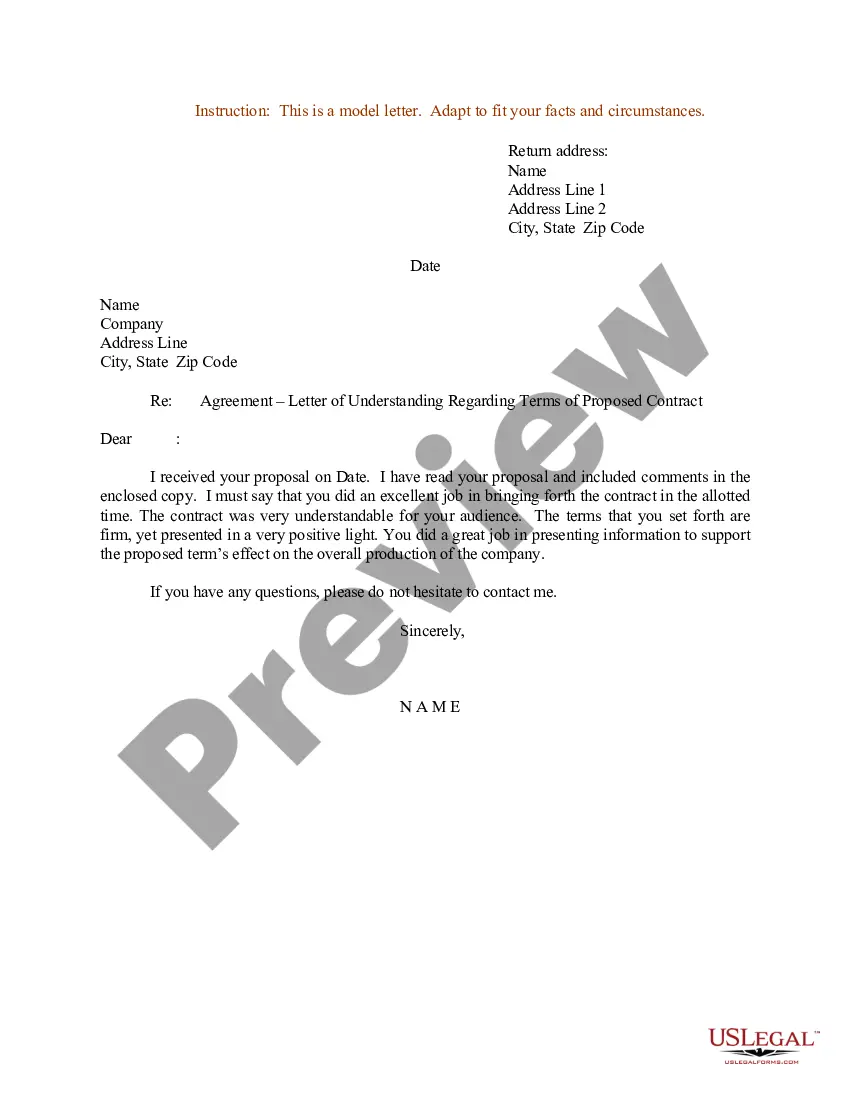
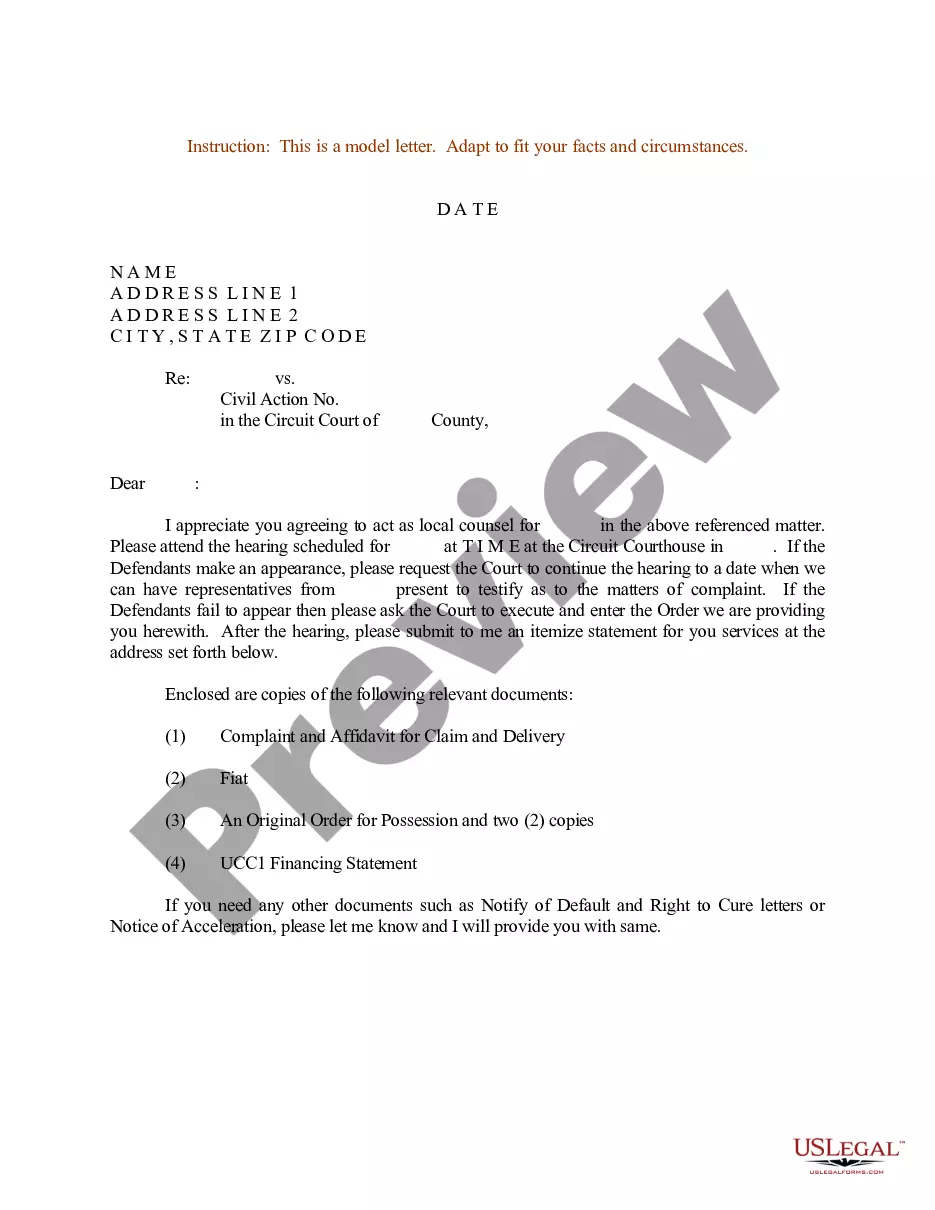

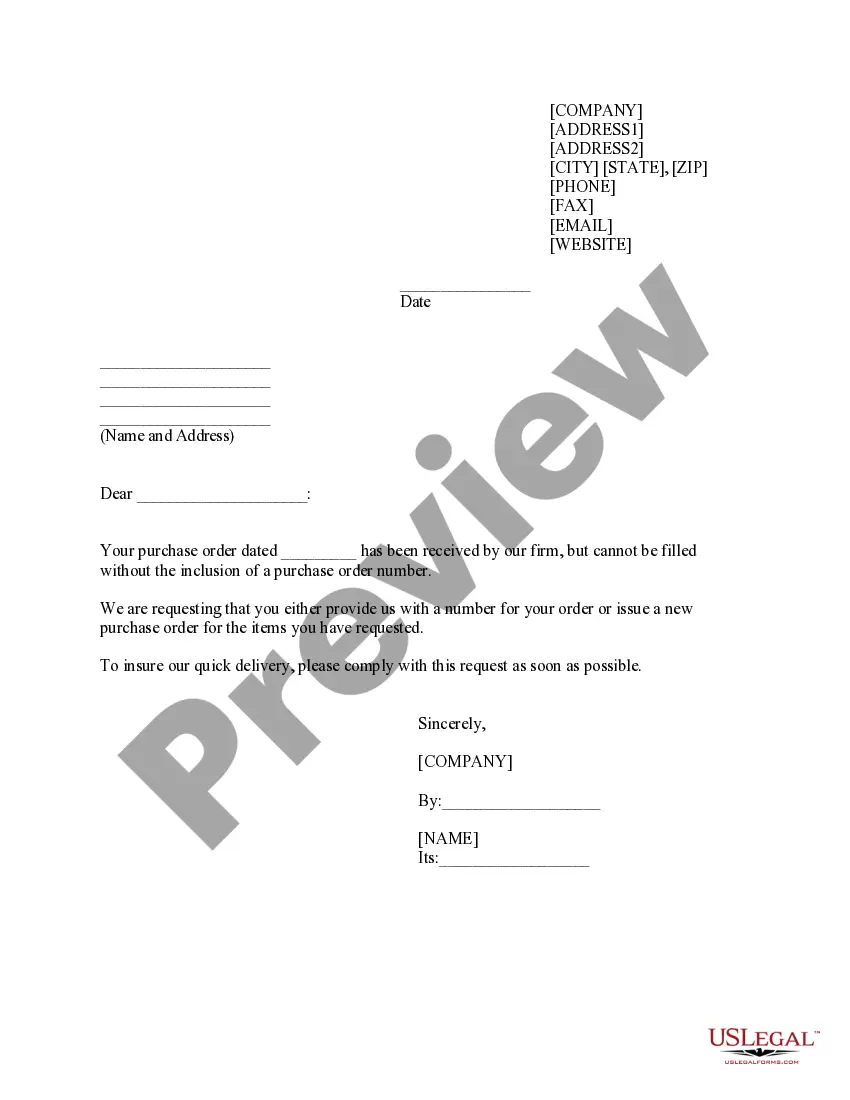


How to fill out Credit Inquiry?
If you need to finish, download, or create sanctioned document formats, utilize US Legal Forms, the largest assortment of sanctioned templates, accessible online.
Take advantage of the site’s straightforward and convenient search to find the documents you require.
Different templates for professional and personal use are organized by categories and regions, or keywords.
Step 4. Once you have located the form you need, click the Acquire now button. Choose the pricing plan you prefer and provide your details to register for an account.
Step 5. Process the transaction. You can use your Visa or MasterCard or PayPal account to complete the transaction.
- Utilize US Legal Forms to procure the New York Credit Inquiry with a few mouse clicks.
- If you are currently a US Legal Forms user, Log In to your account and then click the Download button to obtain the New York Credit Inquiry.
- You can also access forms you previously acquired in the My documents tab of your account.
- If you are utilizing US Legal Forms for the first time, refer to the guidelines below.
- Step 1. Ensure you have selected the template for your appropriate city/country.
- Step 2. Use the Review option to examine the document’s details. Remember to read through the information.
- Step 3. If you are not satisfied with the form, use the Search field at the top of the screen to find alternative versions of the legal form format.
Form popularity
FAQ
This information is reported to Equifax by your lenders and creditors and includes the types of accounts (for example, a credit card, mortgage, student loan, or vehicle loan), the date those accounts were opened, your credit limit or loan amount, account balances, and your payment history.
All new auto or mortgage loan or utility inquiries will show on your credit report; however, only one of the inquiries within a specified window of time will impact your credit score. This exception generally does not apply to other types of loans, such as credit cards.
Most job seekers don't' even know this, and it raises a really important question is: can you be denied a job because of bad credit? The short answer is yes, you can. Also, keep in mind that bad credit is different than no credit but in this case, bad credit can be the culprit.
Though prospective employers don't see your credit score in a credit check, they do see your open lines of credit (such as mortgages), outstanding balances, auto or student loans, foreclosures, late or missed payments, any bankruptcies and collection accounts.
The official website from which consumers can request their free annual credit report is .
Keep in mind that while employers can legally pull your credit report, it's one of many factors that go into getting hired for a new job. But there is a simple way to appear just as good on your credit report as you do in your job interview: Make sure you always pay your bills on time.
Thanks to the Fair Credit Reporting Act (FCRA), employers can't go checking your credit history behind your back. They must have written consent before pulling an applicant's credit history.
NYC agrees. A new law prohibits most businesses from checking or using your credit history for employment decisions.
Employers are most likely to check credit when the job you're applying for requires you to manage finances or handle sensitive data. But some cities and states limit whether, and to what extent, employers can use credit history in hiring decisions.
Unfortunately, while federal laws prevent discrimination in the workplace regarding race and gender, no such laws exist to prevent being denied a job due to poor credit history.