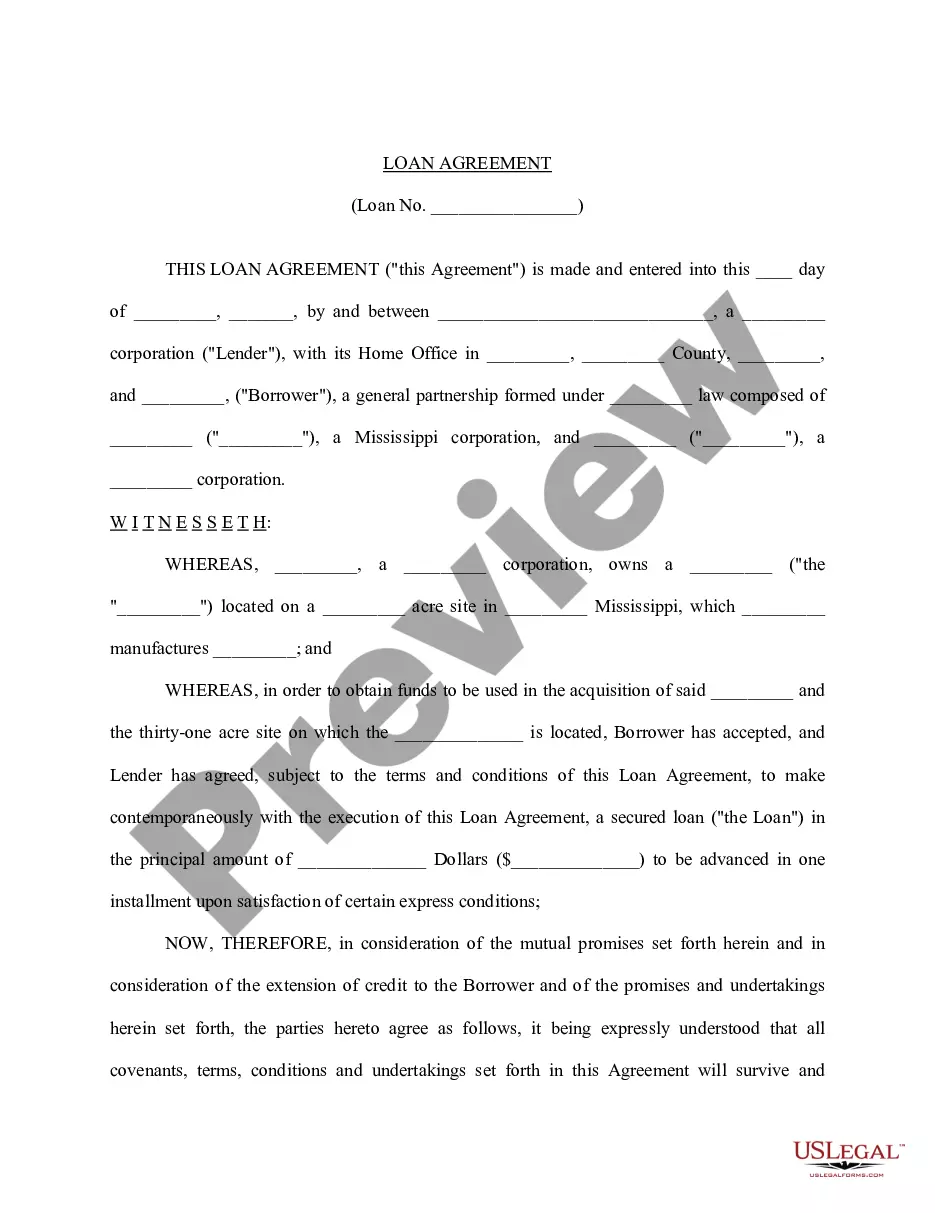
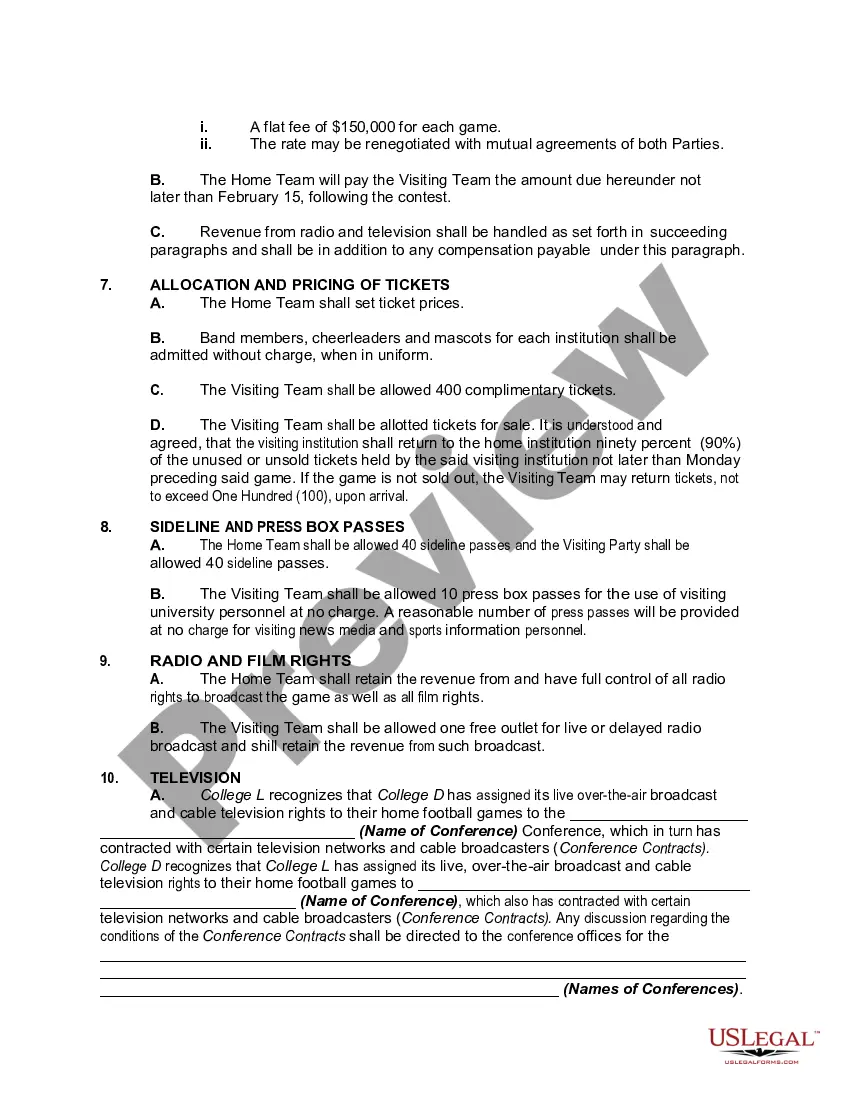
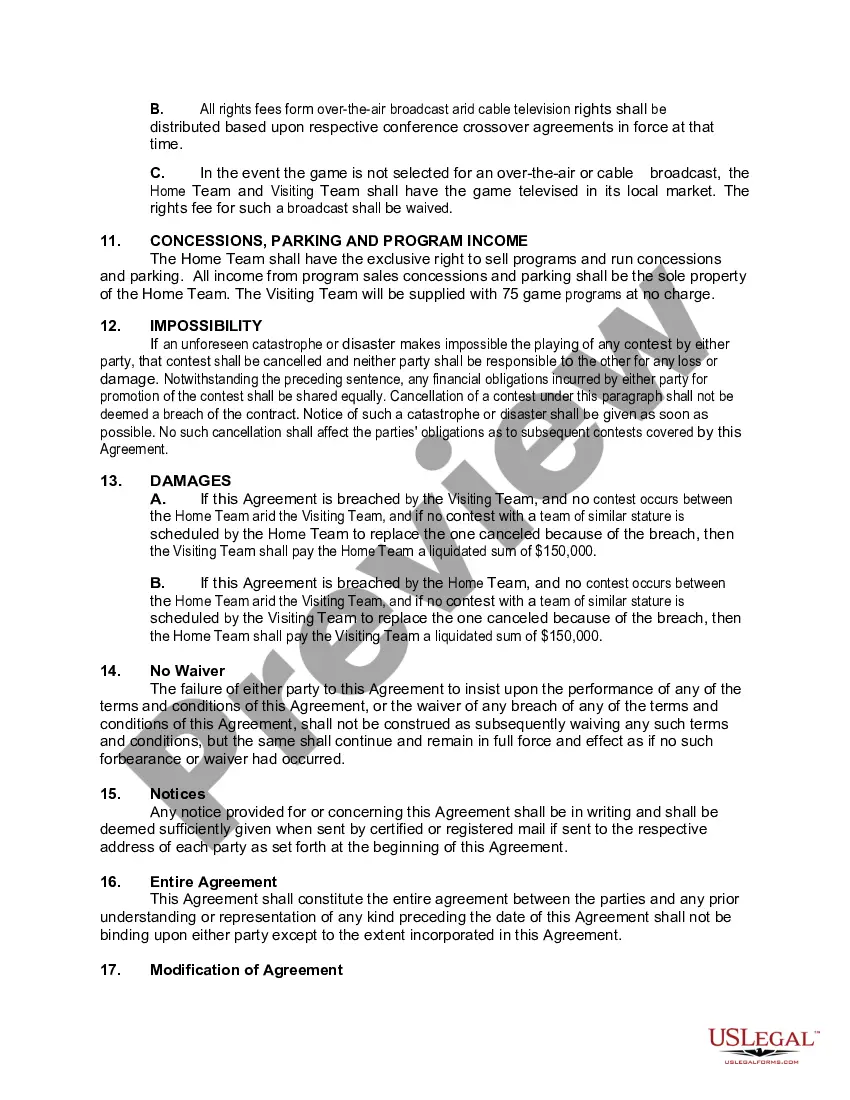
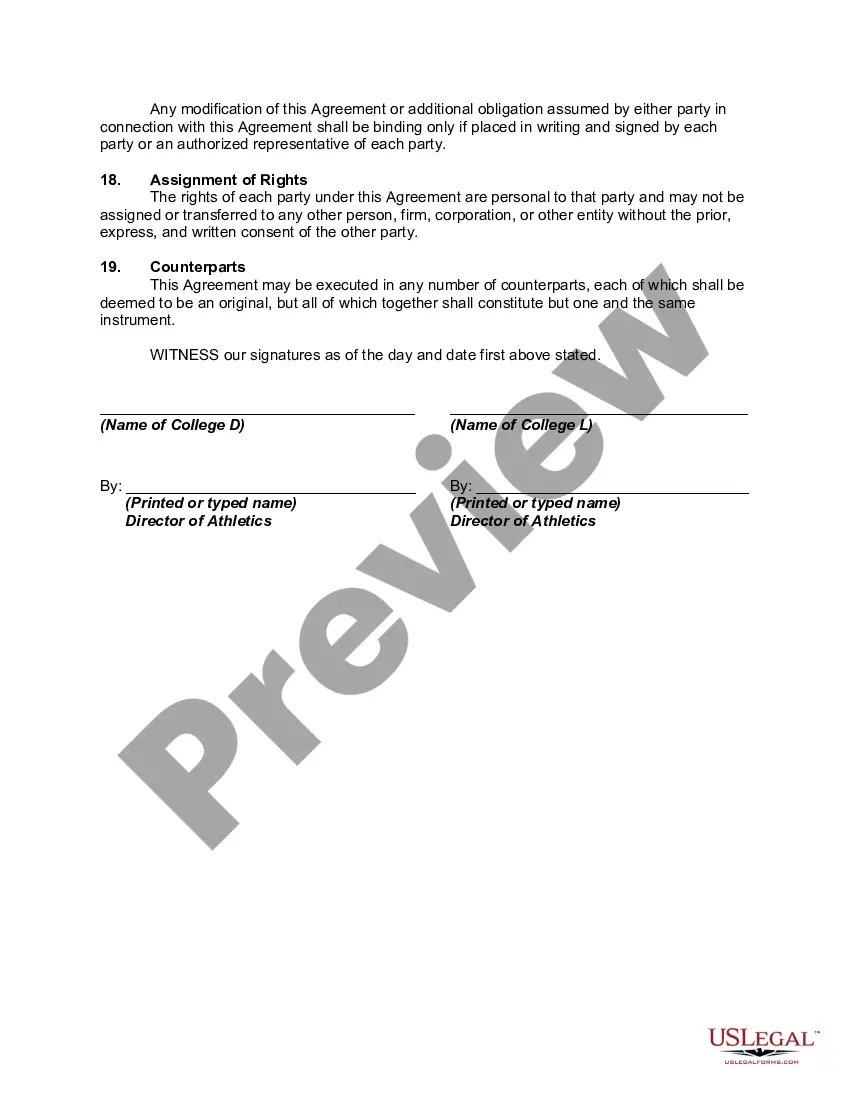
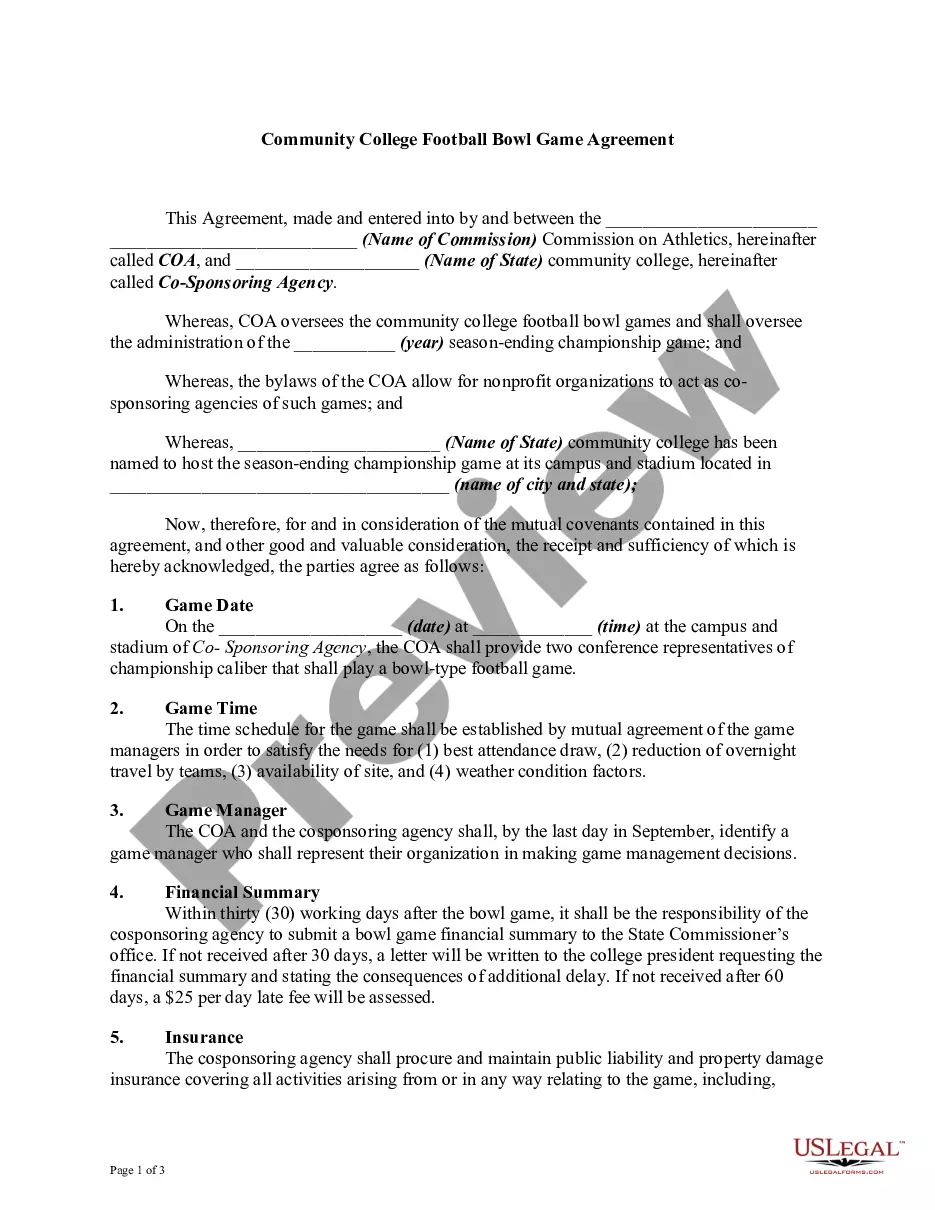
This form is a sample of an agreement between two NCAA Division I Colleges to play football games over a four year period.
New York NCAA Intercollegiate Athletic Competition Agreement - Football
Instant download
Description
Free preview
Get your form ready online
Our built-in tools help you complete, sign, share, and store your documents in one place.
Built-in online Word editor
Make edits, fill in missing information, and update formatting in US Legal Forms—just like you would in MS Word.
Export easily
Download a copy, print it, send it by email, or mail it via USPS—whatever works best for your next step.
E-sign your document
Sign and collect signatures with our SignNow integration. Send to multiple recipients, set reminders, and more. Go Premium to unlock E-Sign.
Notarize online 24/7
If this form requires notarization, complete it online through a secure video call—no need to meet a notary in person or wait for an appointment.
Store your document securely
We protect your documents and personal data by following strict security and privacy standards.

Make edits, fill in missing information, and update formatting in US Legal Forms—just like you would in MS Word.

Download a copy, print it, send it by email, or mail it via USPS—whatever works best for your next step.

Sign and collect signatures with our SignNow integration. Send to multiple recipients, set reminders, and more. Go Premium to unlock E-Sign.

If this form requires notarization, complete it online through a secure video call—no need to meet a notary in person or wait for an appointment.

We protect your documents and personal data by following strict security and privacy standards.
Looking for another form?



How to fill out NCAA Intercollegiate Athletic Competition Agreement - Football?
You can invest hours online trying to find the valid document format that meets the federal and state requirements you need.
US Legal Forms offers a vast array of valid templates that are reviewed by experts.
It's easy to download or print the New York NCAA Intercollegiate Athletic Competition Agreement - Football from my service.
If available, take advantage of the Preview button to examine the document format as well.
- If you already possess a US Legal Forms account, you may Log In and click on the Download button.
- After that, you may fill out, modify, print, or sign the New York NCAA Intercollegiate Athletic Competition Agreement - Football.
- Each legal document format you acquire is yours indefinitely.
- To obtain another copy of the downloaded form, go to the My documents tab and click on the appropriate button.
- If you are using the US Legal Forms website for the first time, follow the simple instructions outlined below.
- Firstly, ensure you have chosen the correct document format for the state/city of your selection.
- Review the form description to confirm you have selected the right document.
Form popularity
FAQ
The NCAA settlement related to the New York NCAA Intercollegiate Athletic Competition Agreement - Football usually includes claims from a specific period, as defined by the court. This timeframe often extends several years back, covering qualifying student-athletes during that duration. Consulting with a legal professional can help you understand the implications of the settlement timeline.
Eligibility for the NCAA settlement under the New York NCAA Intercollegiate Athletic Competition Agreement - Football primarily includes former and current student-athletes who participated in specific NCAA sports. It is important to evaluate your participation and the relevant timelines. Understanding these parameters can enhance your chances of receiving any entitled benefits.
Individuals who have participated in NCAA football programs during the relevant time frame outlined in the New York NCAA Intercollegiate Athletic Competition Agreement - Football typically qualify for the NCAA lawsuit. If you were a student-athlete during this period, you should review the lawsuit details to determine your eligibility. Engaging with legal resources can provide clarity on your standing.
To fulfill the NLI agreement, a student athlete must enroll and attend the institution that they signed with for a minimum of one academic year. The New York NCAA Intercollegiate Athletic Competition Agreement - Football outlines that meeting this commitment is crucial for maintaining eligibility. Understanding the terms of your agreement is vital for a successful collegiate athletic career.
Eligibility for the NIL settlement under the New York NCAA Intercollegiate Athletic Competition Agreement - Football generally includes student-athletes who had an active role in NCAA-sanctioned sports programs. If you participated in any intercollegiate football activities, you may qualify. Ensure you review the detailed eligibility criteria to confirm your status.
The NCAA settlement concerning the New York NCAA Intercollegiate Athletic Competition Agreement - Football will be distributed based on the guidelines set by the court. Eligible claimants, including student-athletes, will receive their share of the funds according to specific criteria. It is essential for you to provide accurate information to ensure proper distribution.
As part of the evolving landscape of college athletics, there will be significant changes to signing day in 2025. The New York NCAA Intercollegiate Athletic Competition Agreement - Football outlines expectations surrounding this process, aiming for increased flexibility in commitments. While the traditional signing day may change, the commitment to recruiting remains strong. Schools must communicate changes effectively to recruits and their families.
The 2.8 billion NCAA settlement relates to ongoing discussions about athlete compensation and rights. This settlement aims to advocate for improved conditions for college athletes across the country. The New York NCAA Intercollegiate Athletic Competition Agreement - Football emphasizes the importance of addressing these issues comprehensively. Schools and athletes both stand to benefit from the outcomes of this settlement.
The NCAA is actively developing policies regarding Name, Image, and Likeness (NIL) as part of its reform efforts. The New York NCAA Intercollegiate Athletic Competition Agreement - Football plays a crucial role in this strategy. Athletes will have opportunities to monetize their personal brands without jeopardizing their eligibility. Universities must embrace these changes to empower their student-athletes.
Yes, the NCAA is moving toward eliminating the National Letter of Intent (NLI) by 2025. The New York NCAA Intercollegiate Athletic Competition Agreement - Football will guide this transition towards alternative agreements. This change aims to foster a more student-athlete-friendly commitment process. Institutions must adapt to maintain engagement with recruits and support their programs.