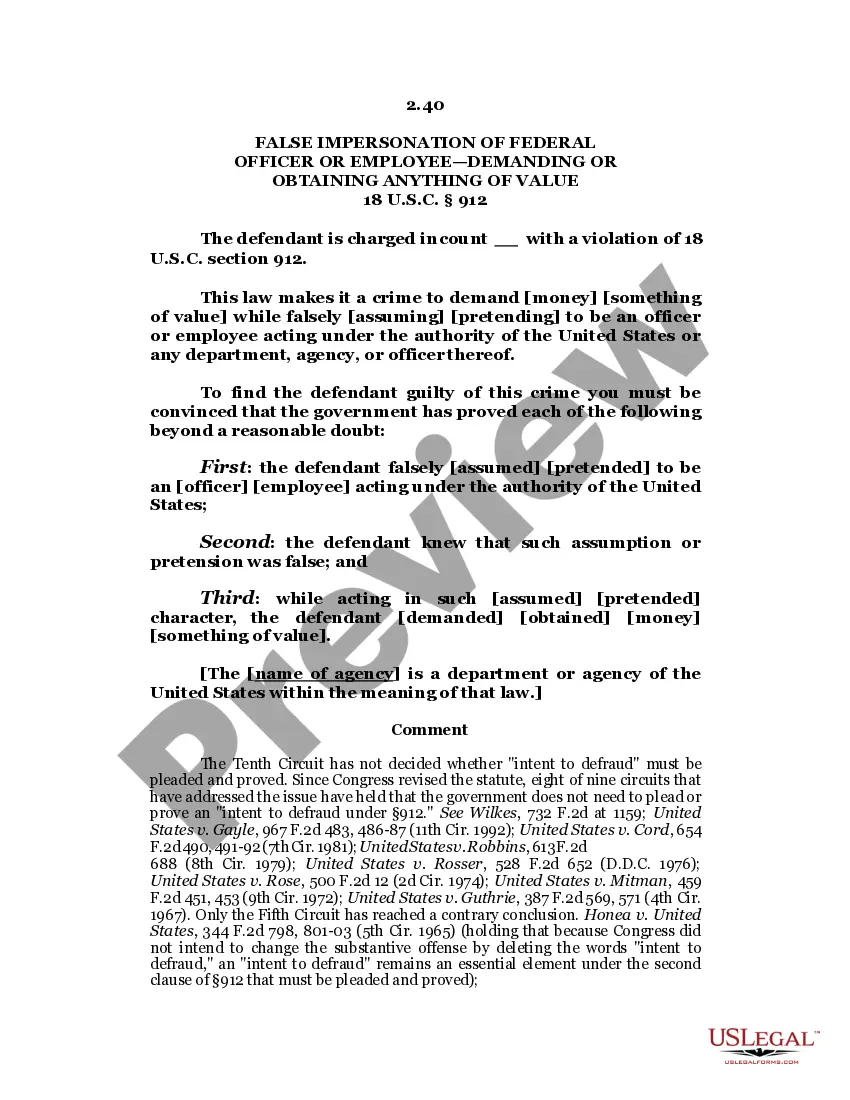
The decree of the bankruptcy court which terminates the bankruptcy proceedings is generally a discharge that releases the debtor from most debts. A bankruptcy court may refuse to grant a discharge under certain conditions.
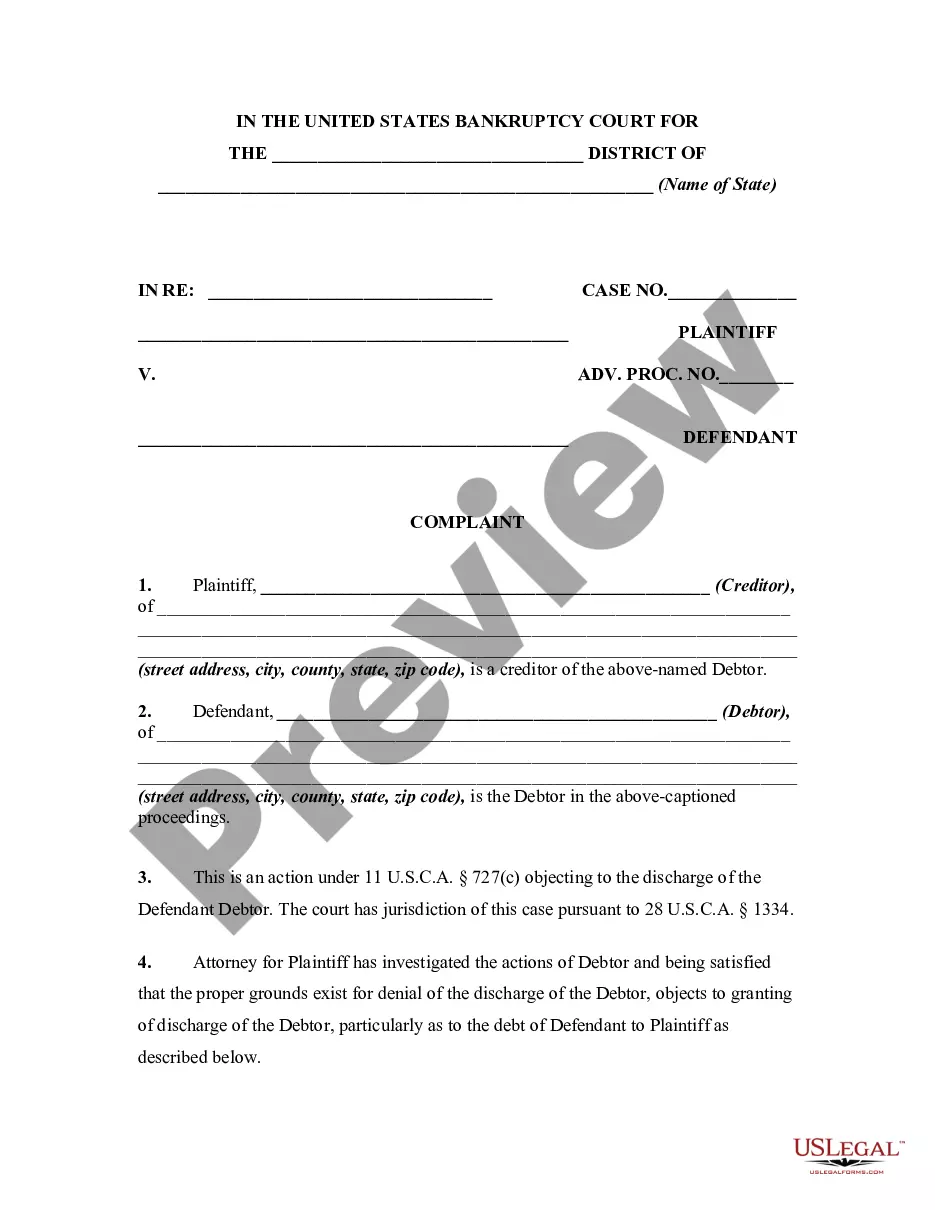
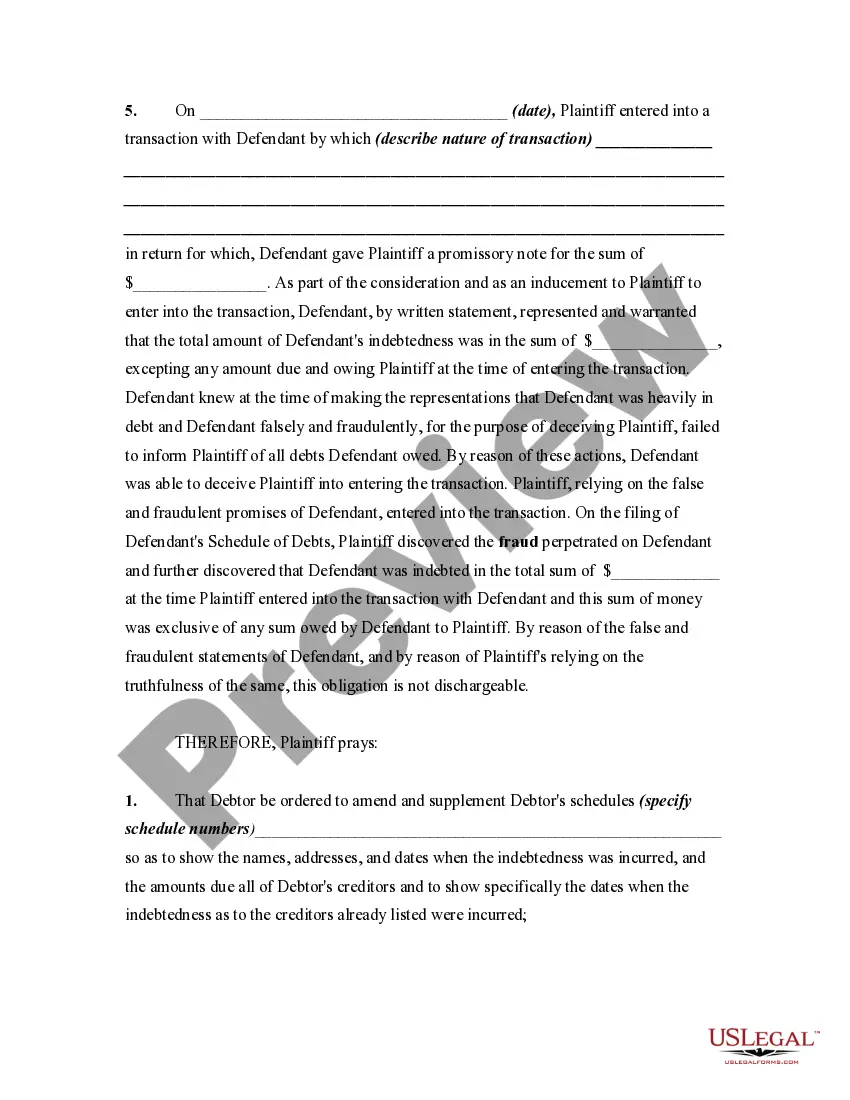
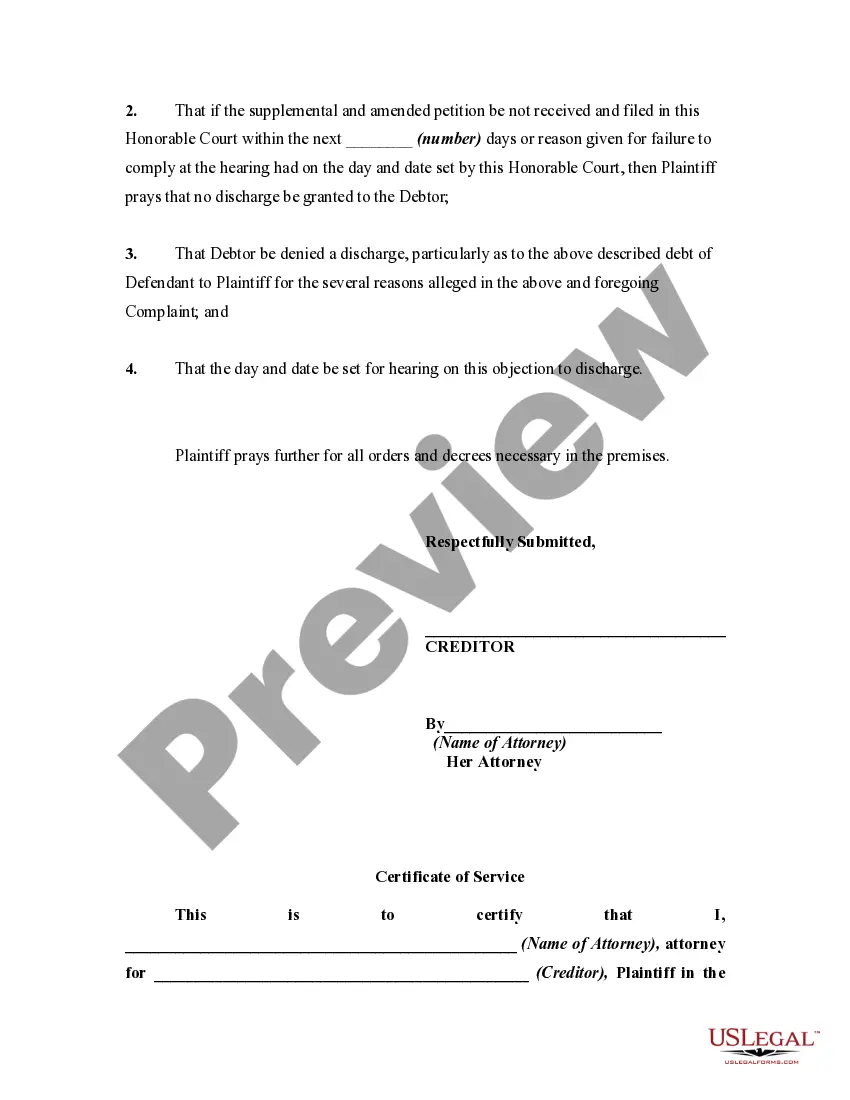
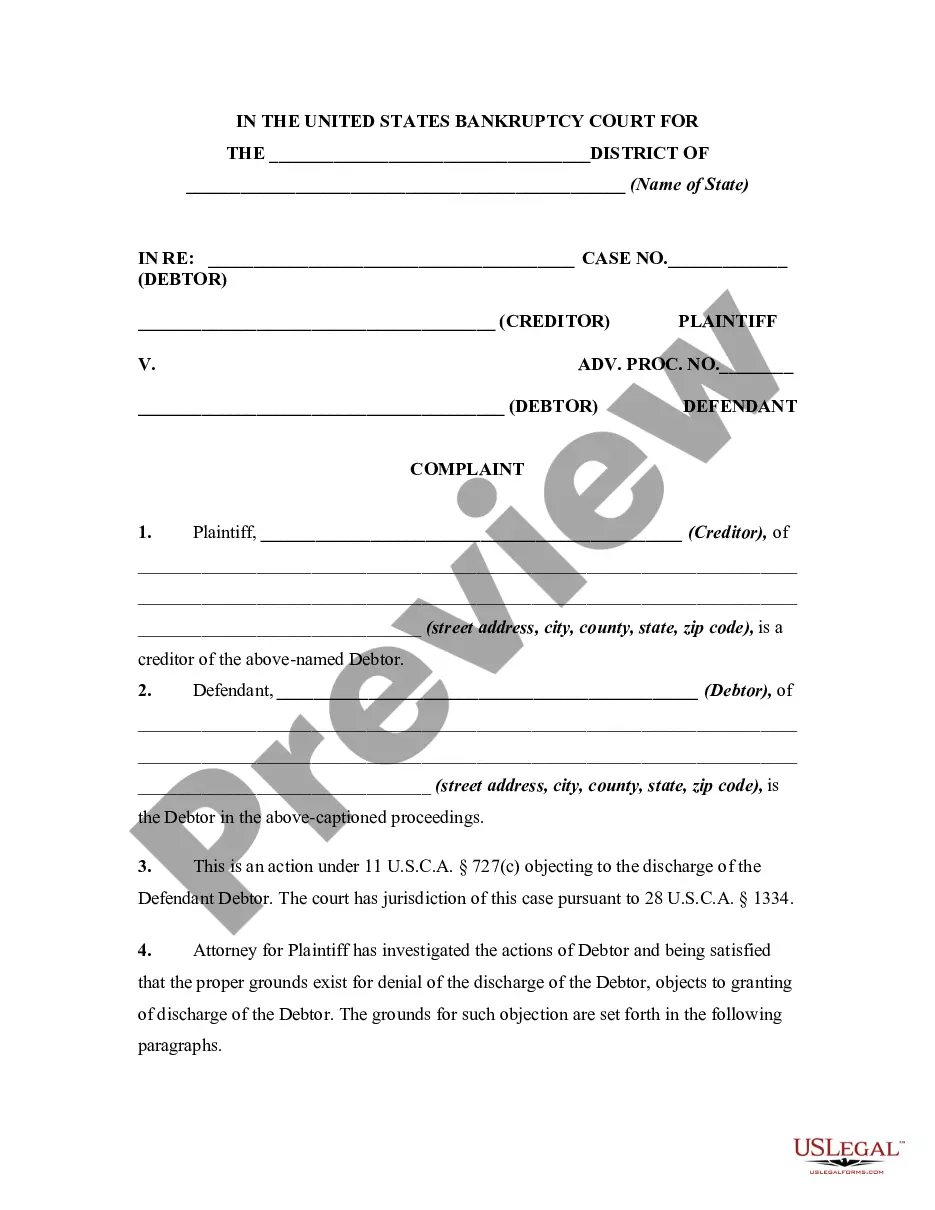
New York Complaint Objecting to Discharge by Bankruptcy Court on the Grounds that Transaction was Induced by Fraud Regarding Debtor's Financial Condition
State:
Multi-State
Control #:
US-01070BG
Format:
Word;
Rich Text
Instant download
Description
Free preview
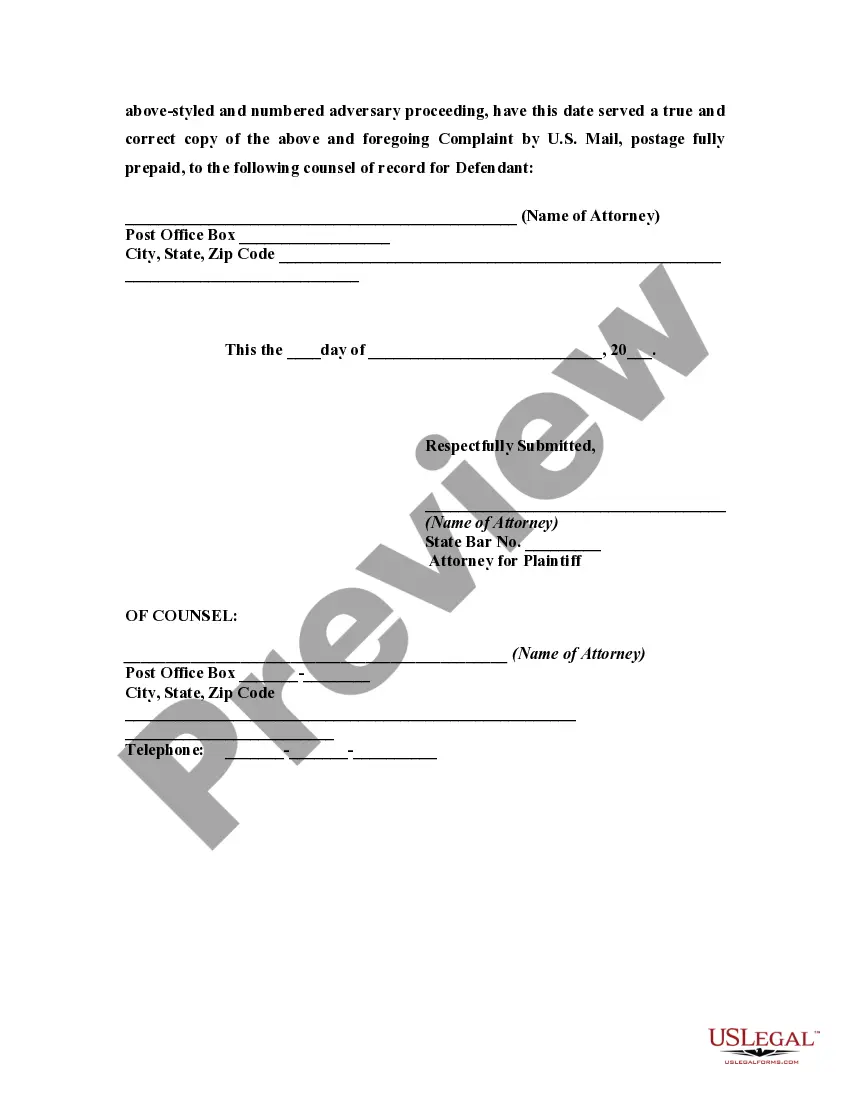
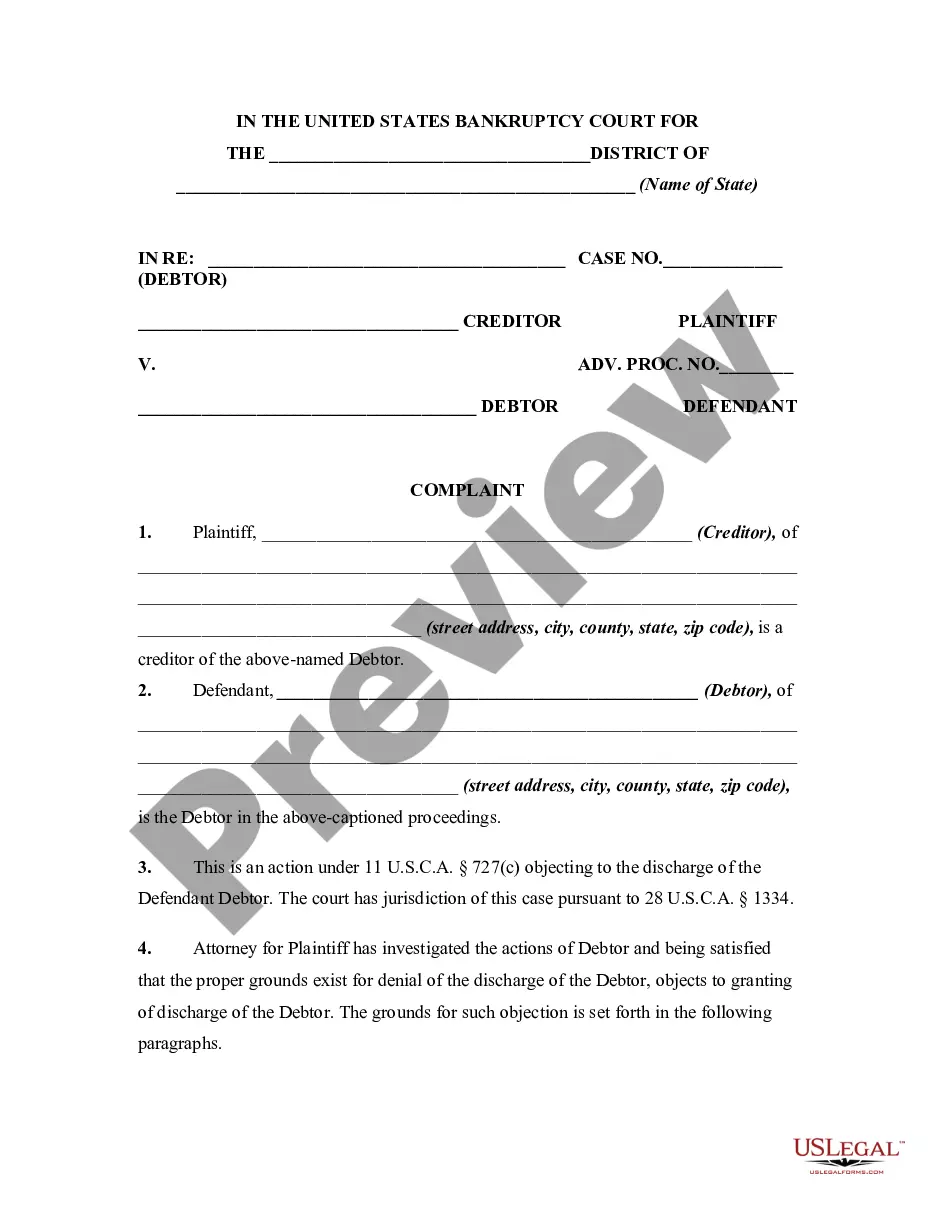
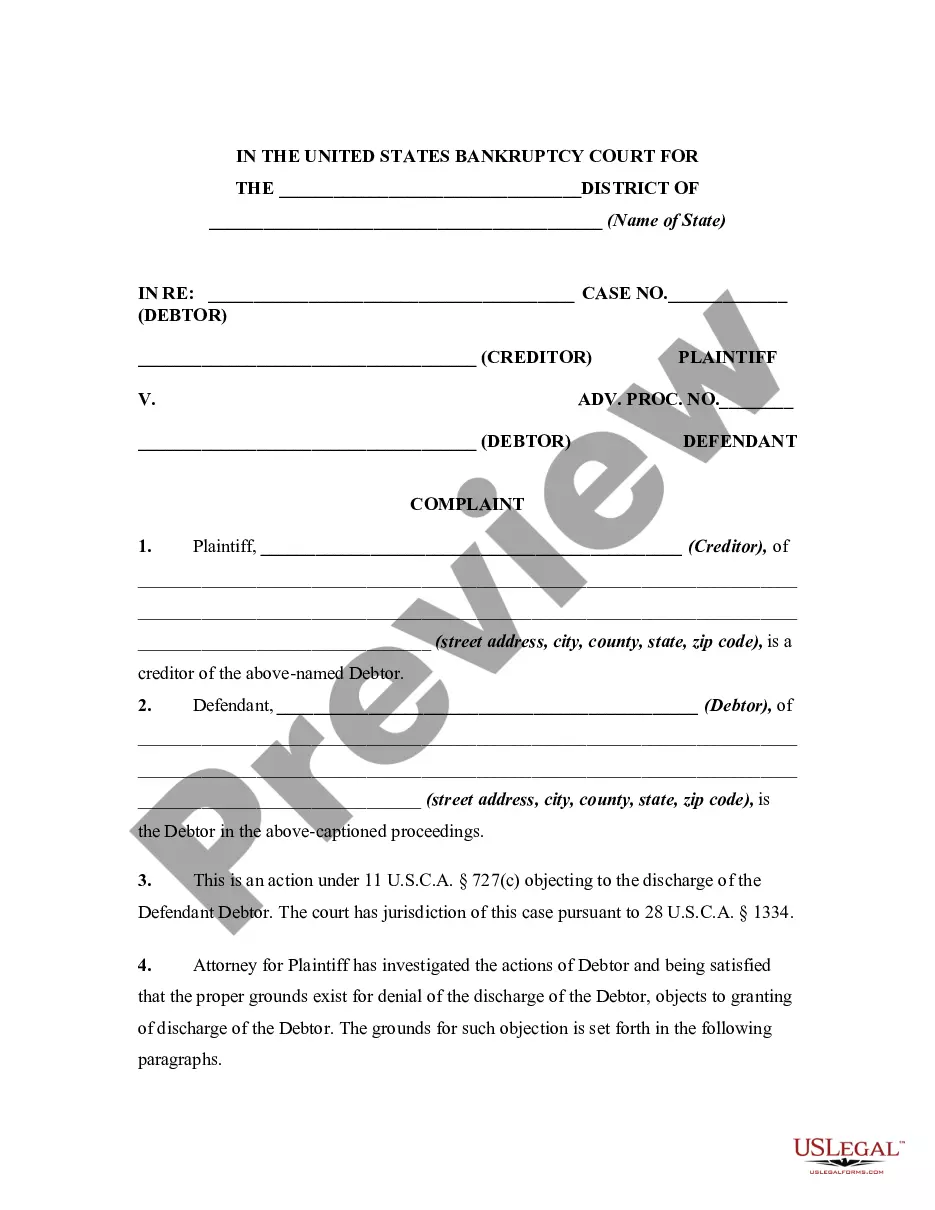
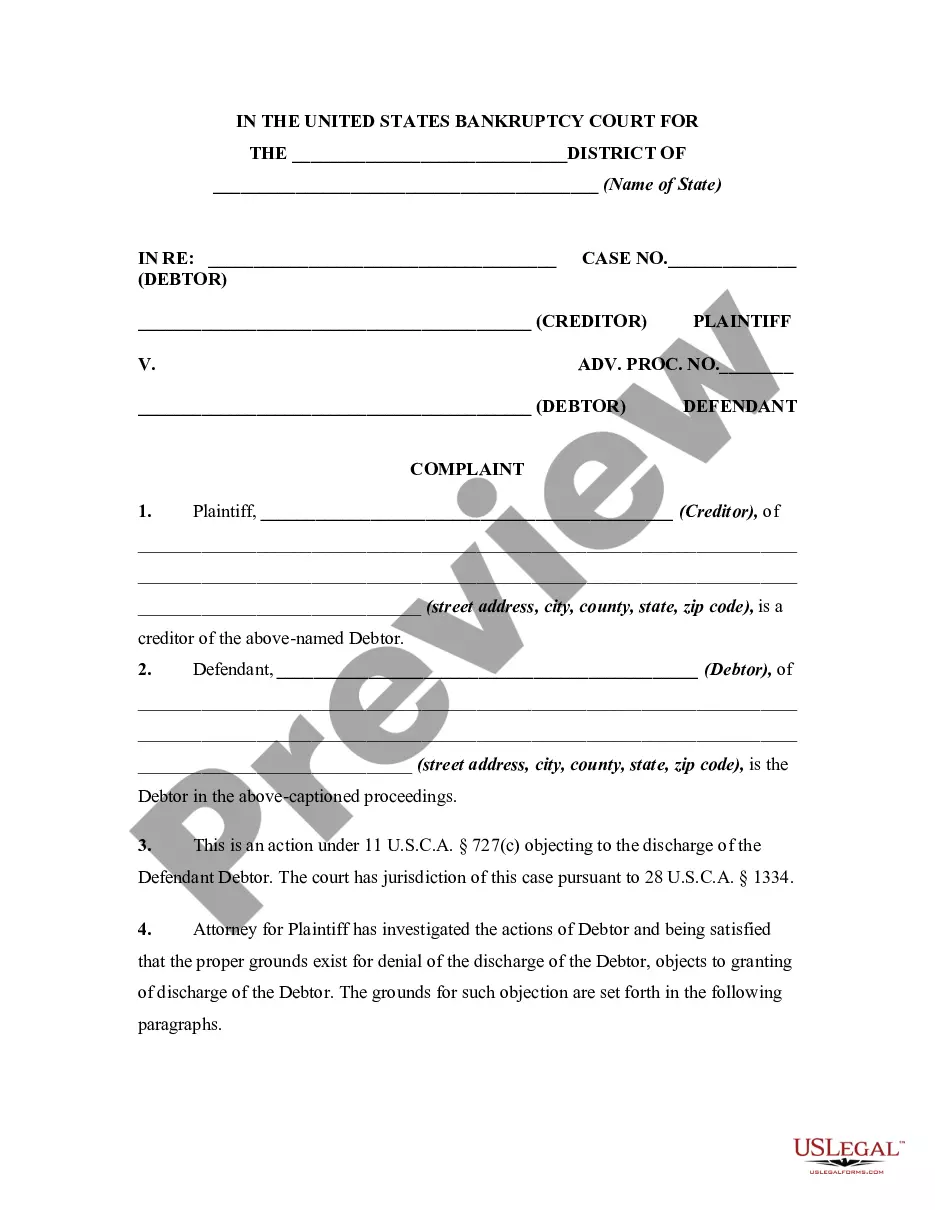
How to fill out Complaint Objecting To Discharge By Bankruptcy Court On The Grounds That Transaction Was Induced By Fraud Regarding Debtor's Financial Condition?
You can spend hours on the web trying to find the legitimate papers template that suits the state and federal specifications you will need. US Legal Forms provides 1000s of legitimate forms that are examined by pros. You can actually down load or print out the New York Complaint Objecting to Discharge by Bankruptcy Court on the Grounds that Transaction was Induced by Fraud Regarding from your service.
If you have a US Legal Forms profile, you can log in and click on the Down load button. Following that, you can comprehensive, change, print out, or indicator the New York Complaint Objecting to Discharge by Bankruptcy Court on the Grounds that Transaction was Induced by Fraud Regarding. Every legitimate papers template you purchase is the one you have forever. To get one more copy of any purchased develop, visit the My Forms tab and click on the corresponding button.
If you use the US Legal Forms website the first time, keep to the simple guidelines listed below:
- First, ensure that you have selected the right papers template for that region/city of your liking. Browse the develop explanation to ensure you have chosen the correct develop. If available, make use of the Review button to look throughout the papers template as well.
- If you would like find one more model from the develop, make use of the Lookup field to get the template that meets your needs and specifications.
- Once you have located the template you want, click on Acquire now to continue.
- Pick the prices program you want, enter your references, and sign up for a merchant account on US Legal Forms.
- Comprehensive the financial transaction. You can use your charge card or PayPal profile to cover the legitimate develop.
- Pick the file format from the papers and down load it to the device.
- Make modifications to the papers if needed. You can comprehensive, change and indicator and print out New York Complaint Objecting to Discharge by Bankruptcy Court on the Grounds that Transaction was Induced by Fraud Regarding.
Down load and print out 1000s of papers templates while using US Legal Forms website, which provides the most important assortment of legitimate forms. Use expert and state-particular templates to tackle your company or personal needs.
Form popularity
FAQ
An Objection to Discharge is a motion by a creditor to a bankruptcy court asking the court not to discharge a person's specific debt owed to that creditor. If the court grants the motion, the debt is not discharged in bankruptcy and remains due.
Objecting to a Discharge Generally This might be appropriate when the debtor lied to the bankruptcy judge or trustee, made false statements on the bankruptcy petition, fraudulently transferred title to property, destroyed property, or disregarded a court order.
The procedure when a discharge is opposed When a discharge is opposed the court reviews the details of the opposition. The registrar will then set a time for a hearing. The challenger and the debtor and if desired their lawyers will attend the hearing. The registrar will provide a written decision.
The trustee can object to the discharge of a particular debt or the discharge of all debts. The trustee will usually do this when the trustee suspects fraud, (hiding assets, transferring assets to another, or destroying assets).
If your bankruptcy trustee opposes your discharge, you will need to attend a court hearing and explain to the bankruptcy judge why you did not meet one or more of your obligations. They will then assess your case and decide how to proceed.
To object to the debtor's discharge, a creditor must file a complaint in the bankruptcy court before the deadline set out in the notice. Filing a complaint starts a lawsuit referred to in bankruptcy as an "adversary proceeding."
Another exception to Discharge is for fraud while acting in a fiduciary capacity, embezzlement, or larceny. Domestic obligations are not dischargeable in Bankruptcy. Damages resulting from the willful and malicious injury by the debtor of another person or his property, are also not dischargeable in Bankruptcy.