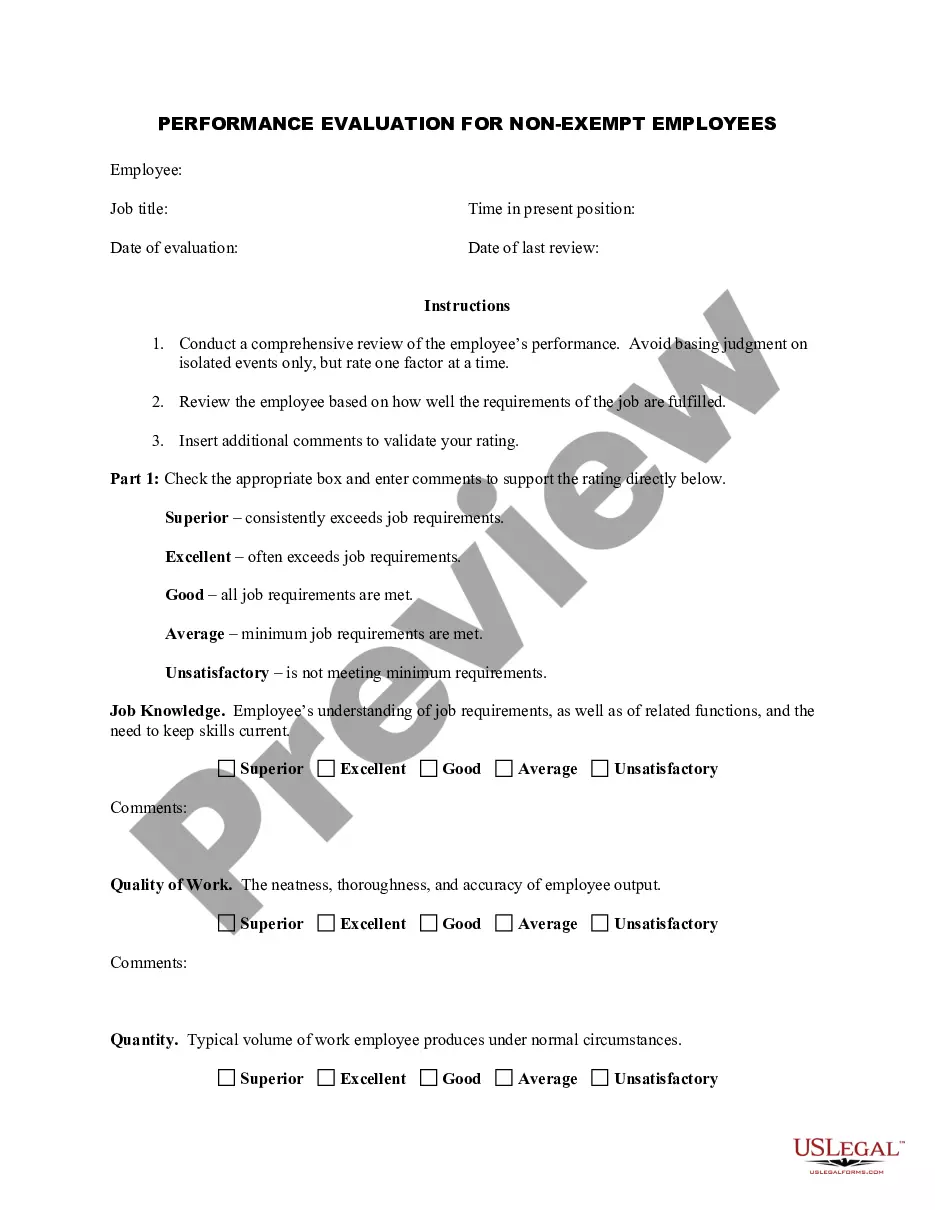
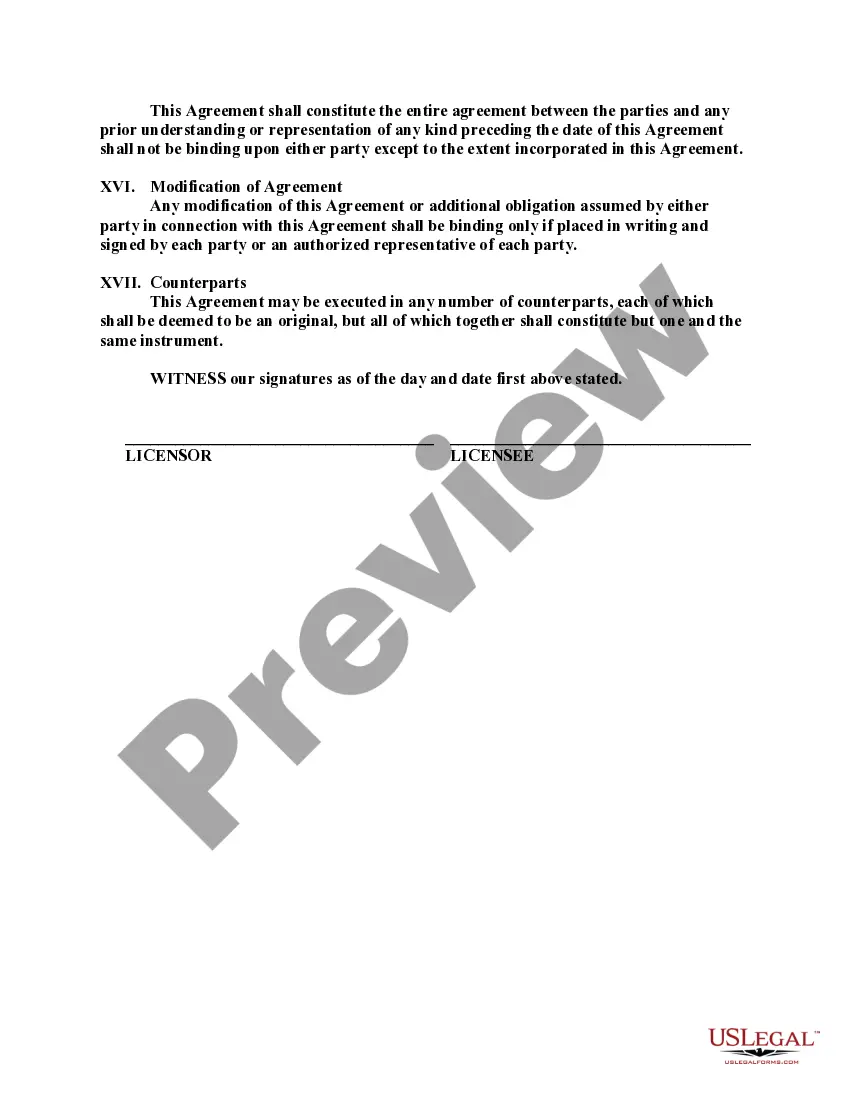
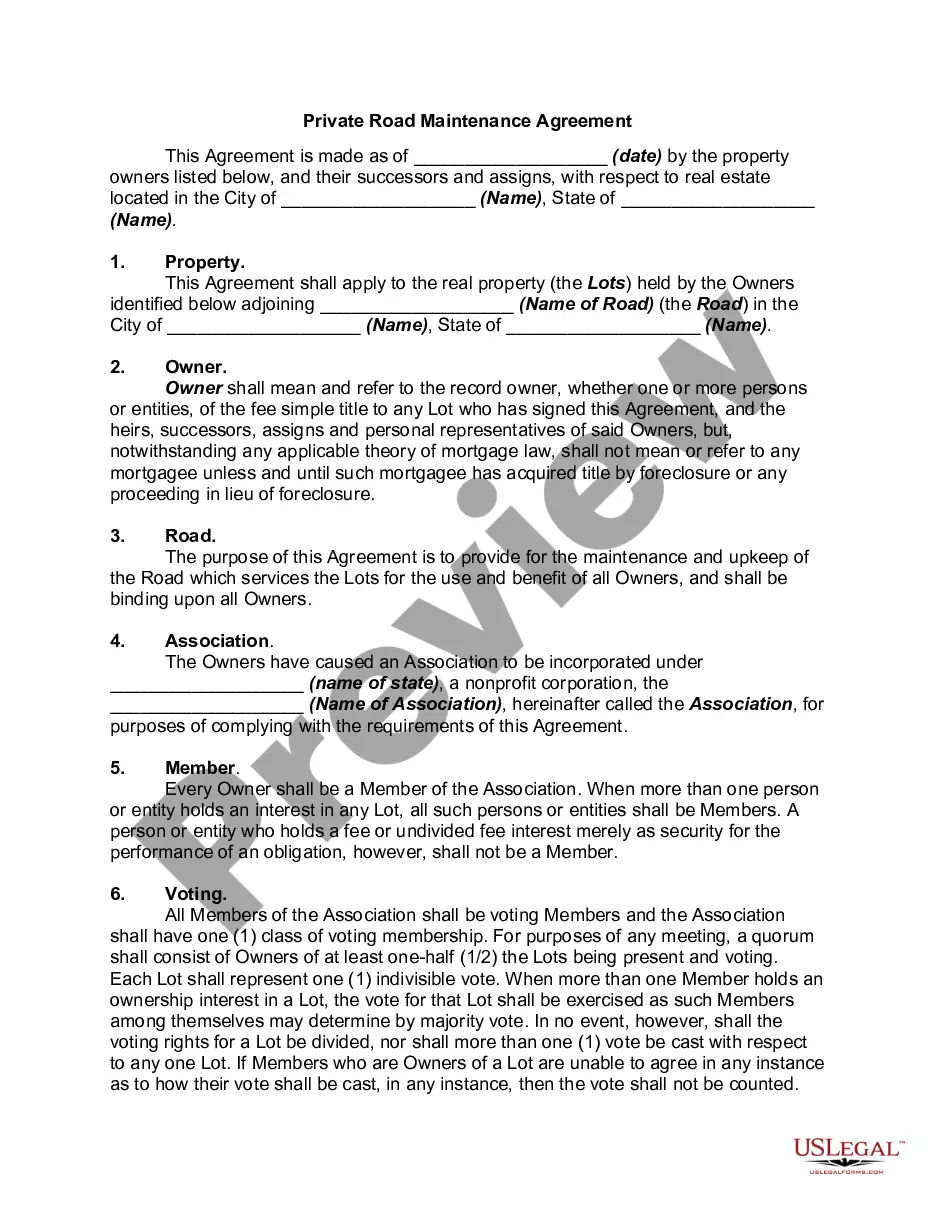
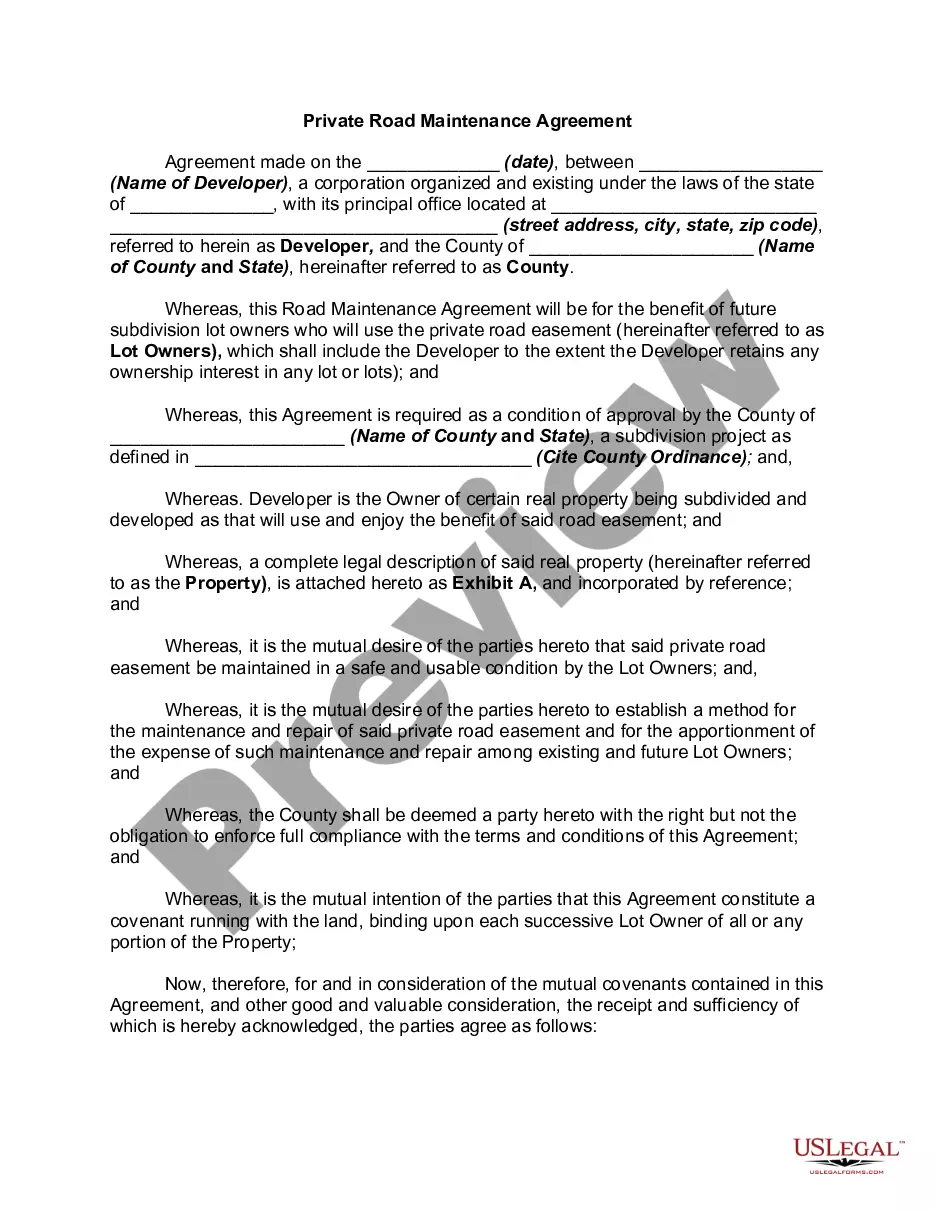
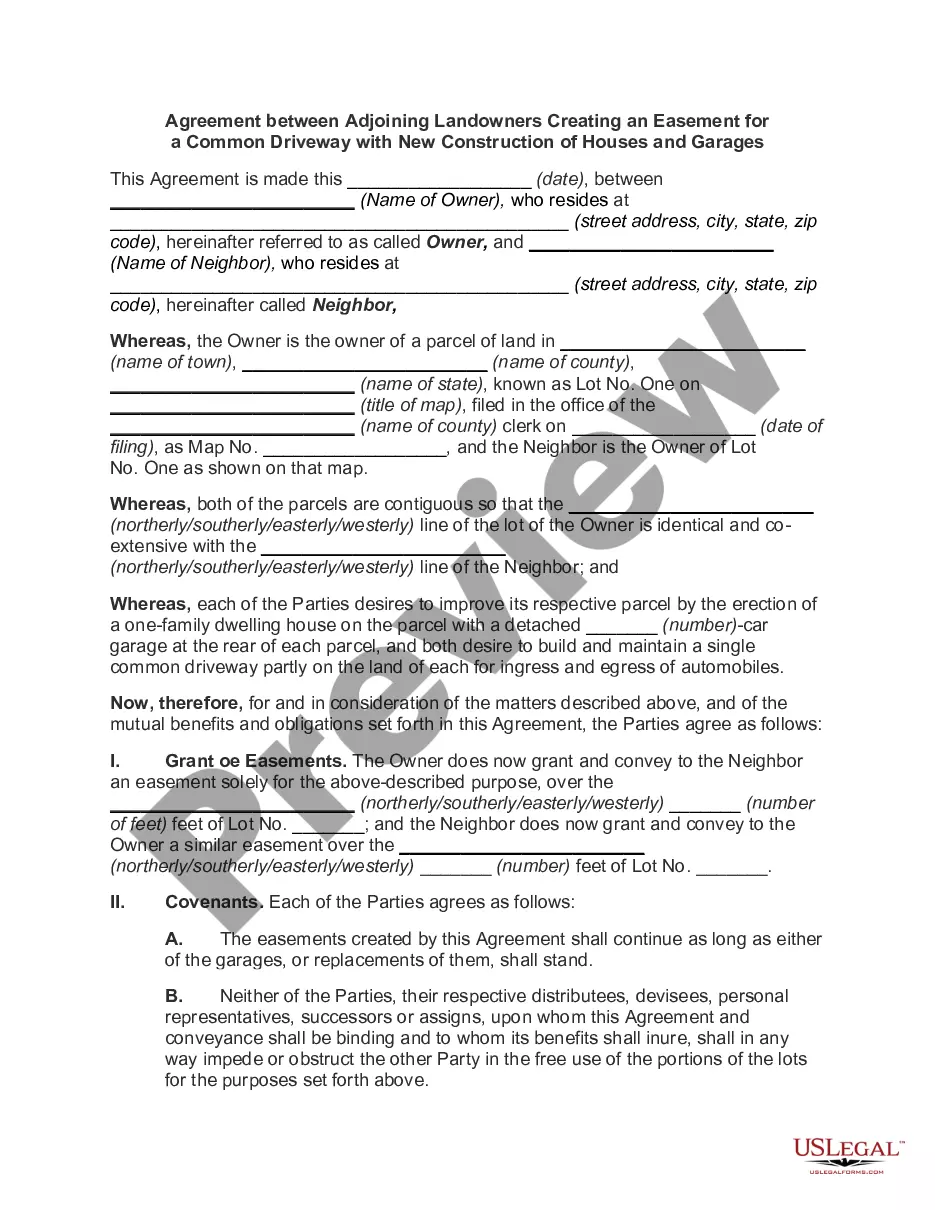
In this form, a licensor grants to a licensee a nonexclusive license for the customers and employees of licensee to drive motor vehicles on the driveway and to allow the licensee to pave and landscape certain property.
New York Driveway License Agreement
Instant download
Description
Free preview
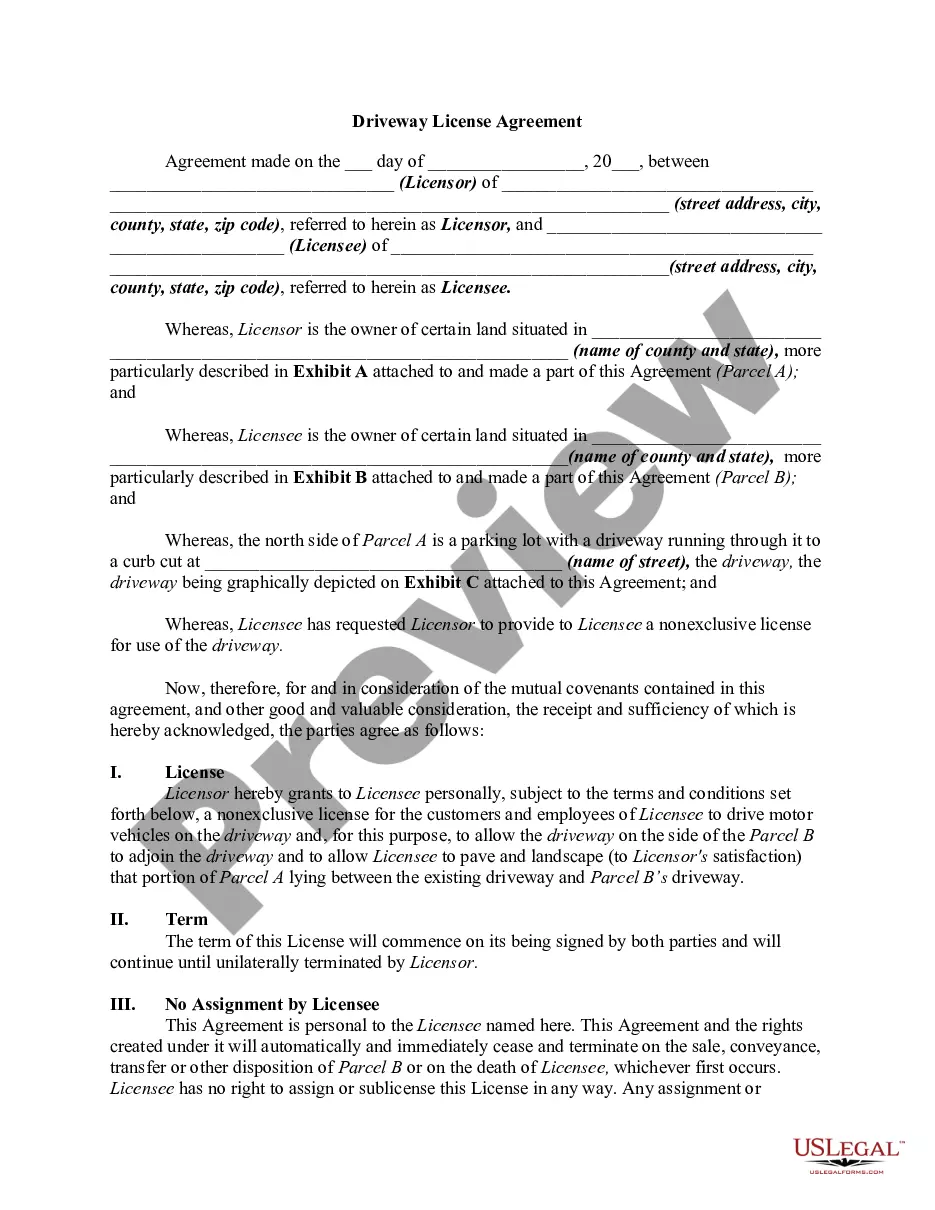
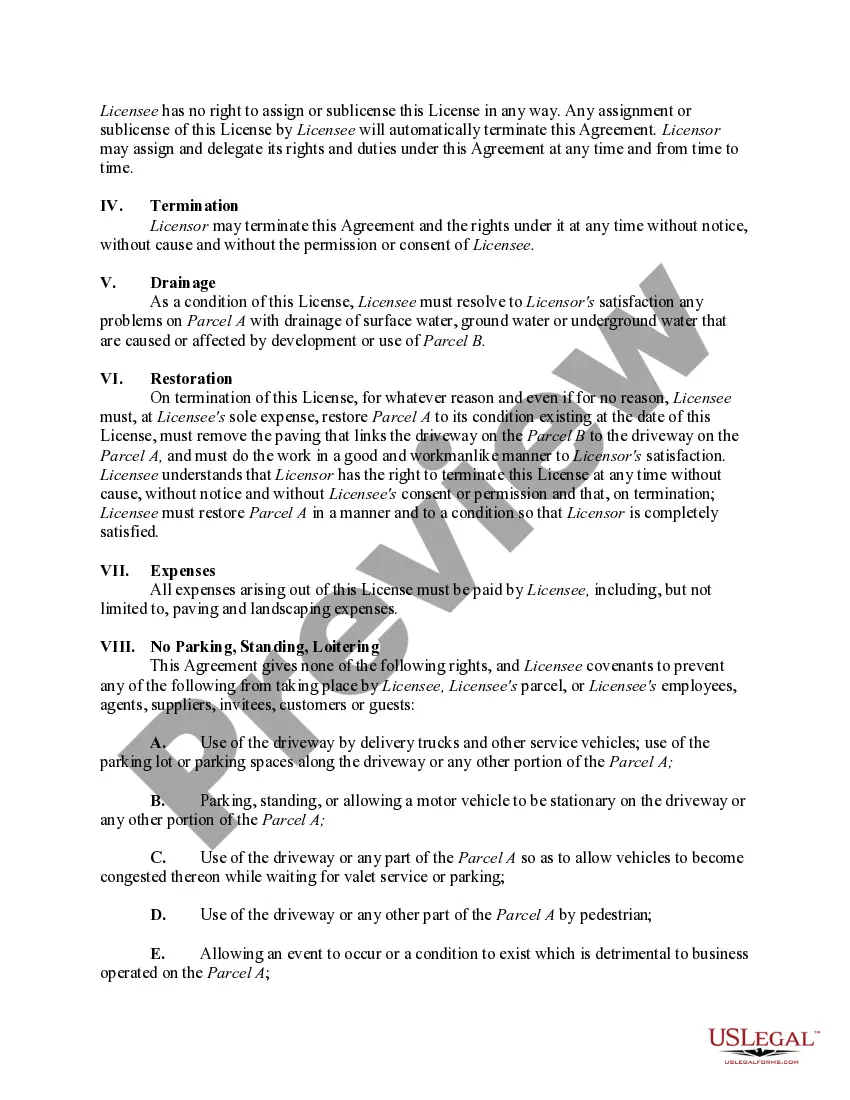
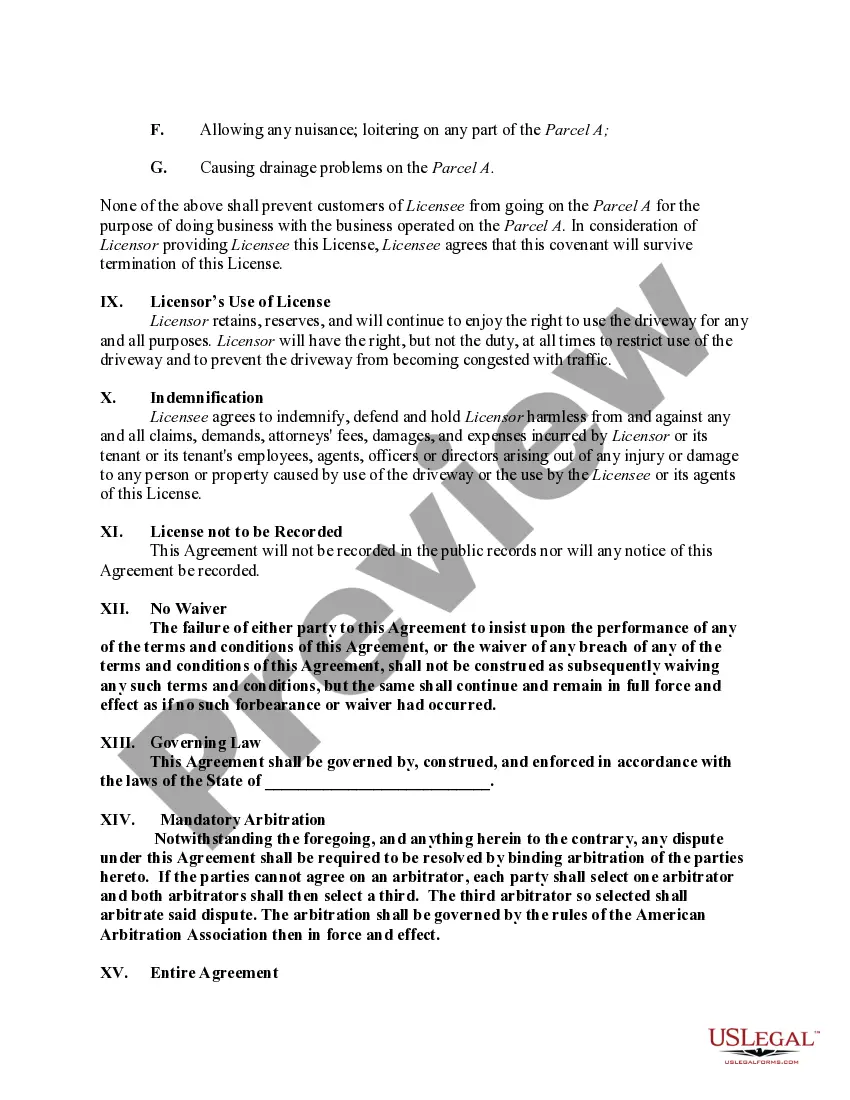
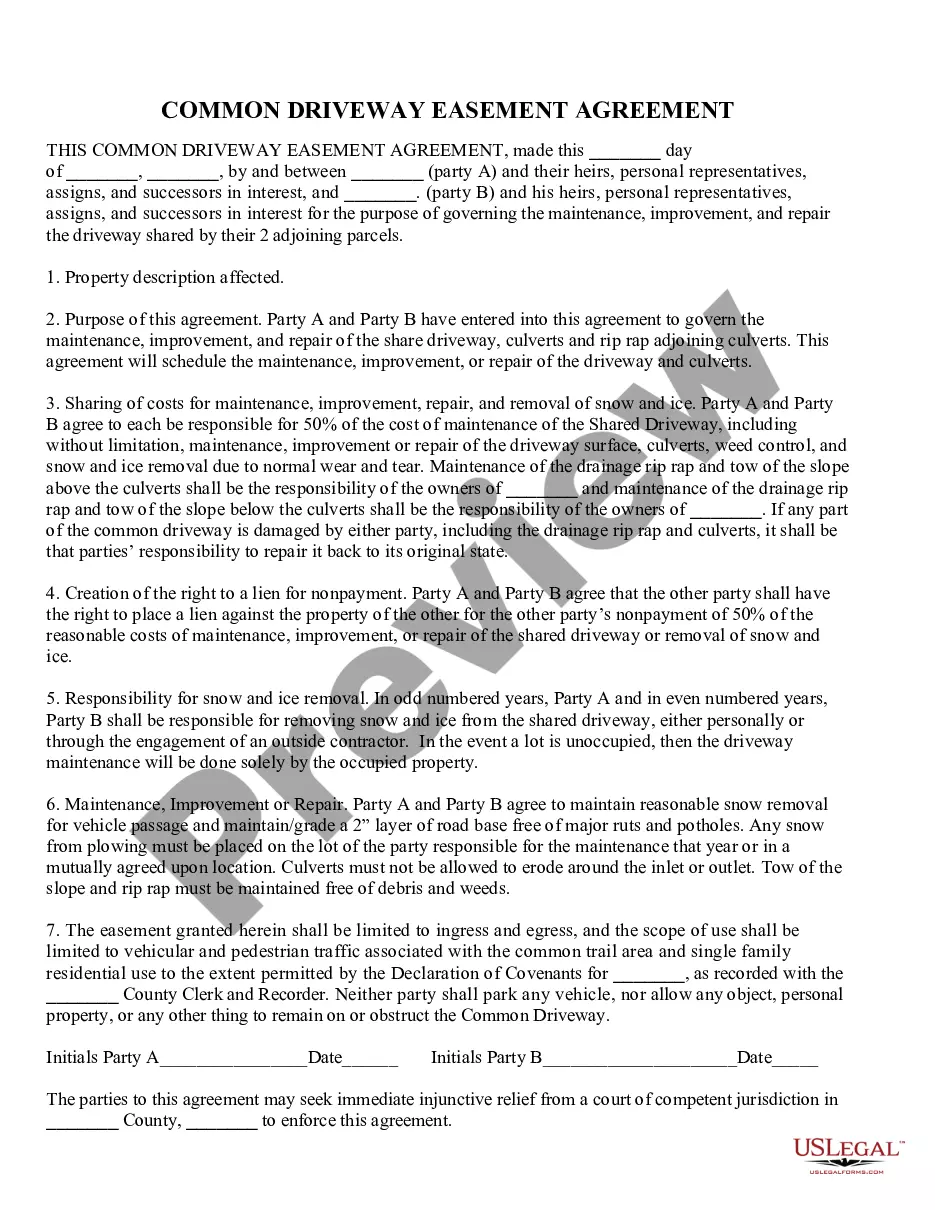
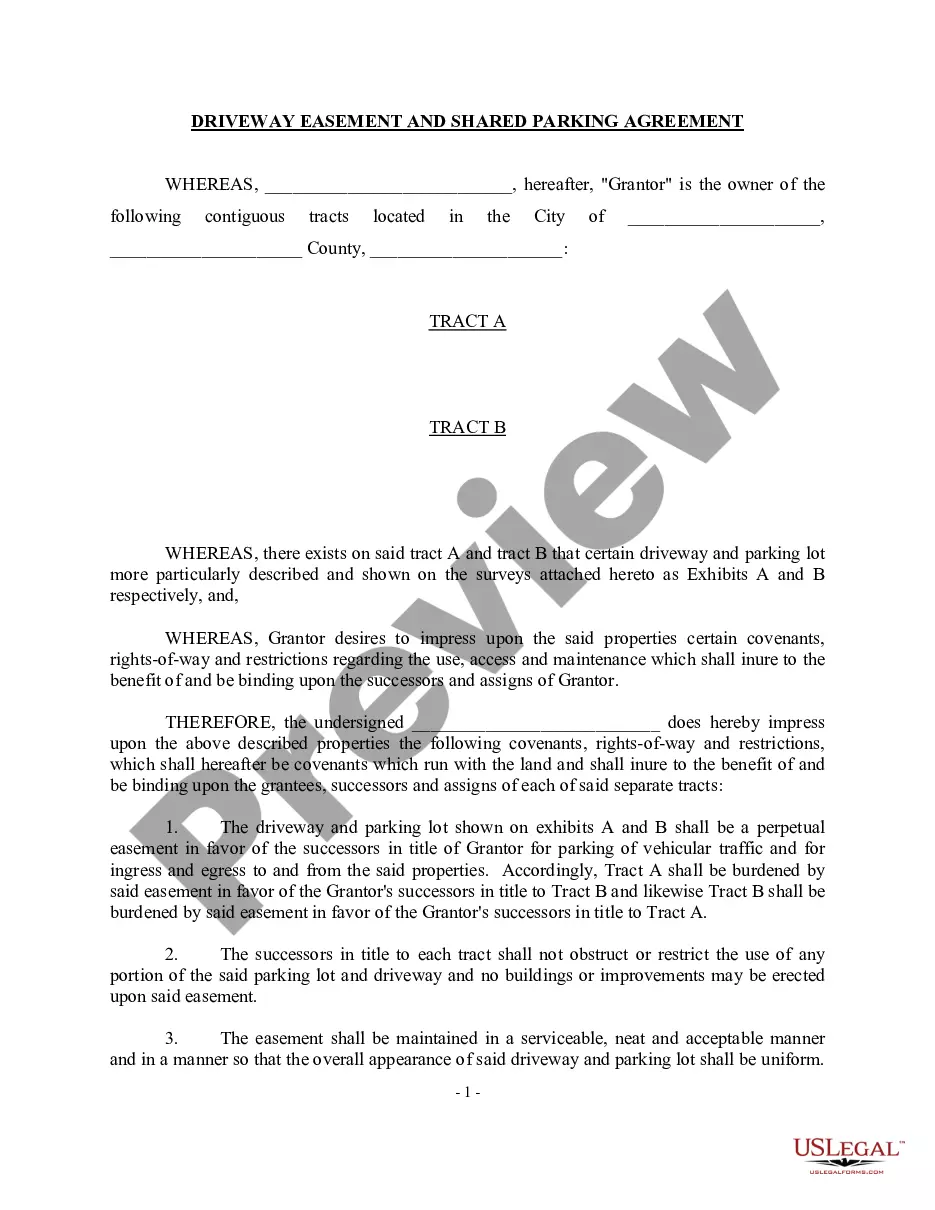




How to fill out Driveway License Agreement?
If you need to finalize, acquire, or print legal document templates, utilize US Legal Forms, the premier selection of legal forms available online.
Employ the site's straightforward and user-friendly search to find the documents you need.
Numerous templates for business and personal uses are organized by categories and states, or keywords.
Step 4. After locating the form you need, click on the Buy now button. Choose your desired pricing plan and enter your credentials to create an account.
Step 5. Complete the transaction. You can use your credit card or PayPal account to finalize the payment.
- Use US Legal Forms to acquire the New York Driveway License Agreement with just a few clicks.
- If you are already a US Legal Forms user, Log In to your account and click on the Download option to locate the New York Driveway License Agreement.
- You can also access forms you have previously stored in the My documents section of your account.
- If you are using US Legal Forms for the first time, follow the instructions below.
- Step 1. Ensure you have chosen the form for the correct city/state.
- Step 2. Use the Preview feature to review the form's content. Remember to read through the description.
- Step 3. If you are not satisfied with the form, use the Search field at the top of the screen to find alternative versions of the legal form template.
Form popularity
FAQ
Yes, in New York, you typically need a permit to pave a driveway. This requirement ensures that construction meets local safety and zoning regulations. Familiarizing yourself with the New York Driveway License Agreement can help you understand the necessary steps to secure your paving permit.
To acquire a driveway permit in New York City, you must file an application with the Department of Buildings. Along with the application, you will need to submit plans that adhere to NYC building codes. Ensuring compliance with the New York Driveway License Agreement will help streamline the approval process.
In NYC, there are specific regulations regarding driveway design and construction. These rules encompass everything from the location to curb cuts and materials used. To navigate these regulations efficiently, refer to the New York Driveway License Agreement, which provides detailed guidelines for homeowners.
The minimum width for a residential driveway in New York typically ranges from 10 to 12 feet. However, larger vehicles may require additional space. It is important to follow the specifications outlined in the New York Driveway License Agreement to guarantee safe and legal access.
To obtain a curb cut permit in New York, start by submitting an application to your local Department of Transportation. The process includes providing specific details about your planned driveway, including dimensions and design. It’s crucial to comply with guidelines set forth in the New York Driveway License Agreement to ensure your application is approved efficiently.
When you plan to build a driveway, consider the budget, the surface material, and available space. It is essential to adhere to local regulations, including the New York Driveway License Agreement, to avoid legal issues. Additionally, think about drainage and access for larger vehicles, as these factors can influence the final design.
To determine if a driveway is legal in NYC, check for appropriate permits and compliance with local zoning laws. Additionally, ensuring that the design meets specifications such as width and materials is crucial. Engaging with resources designed for understanding legal requirements, such as the New York driveway license agreement through US Legal Forms, can simplify this process.
Yes, in most cases, you need a permit to renovate your house in New York, especially for structural changes or electrical work. Applying for the proper permits ensures your renovations meet building codes and safety standards. Always consider how renovations might impact existing agreements like a New York driveway license agreement as you plan.
In New York, you cannot carry a gun in your car without a valid permit. The law is strict about carrying firearms, and violations can lead to serious consequences. Understanding your rights and responsibilities regarding permits is essential, akin to grasping the New York driveway license agreement's regulations to stay compliant.
Homeowners in New York can undertake several activities without a permit, including minor repairs, painting, and constructing fences under certain height limits. However, for any structural work, like adding a driveway, checking local regulations and the implications of the New York driveway license agreement is crucial. Maintaining compliance helps avoid legal trouble.