New York Lease of Alarm System to Residential Customer
Description
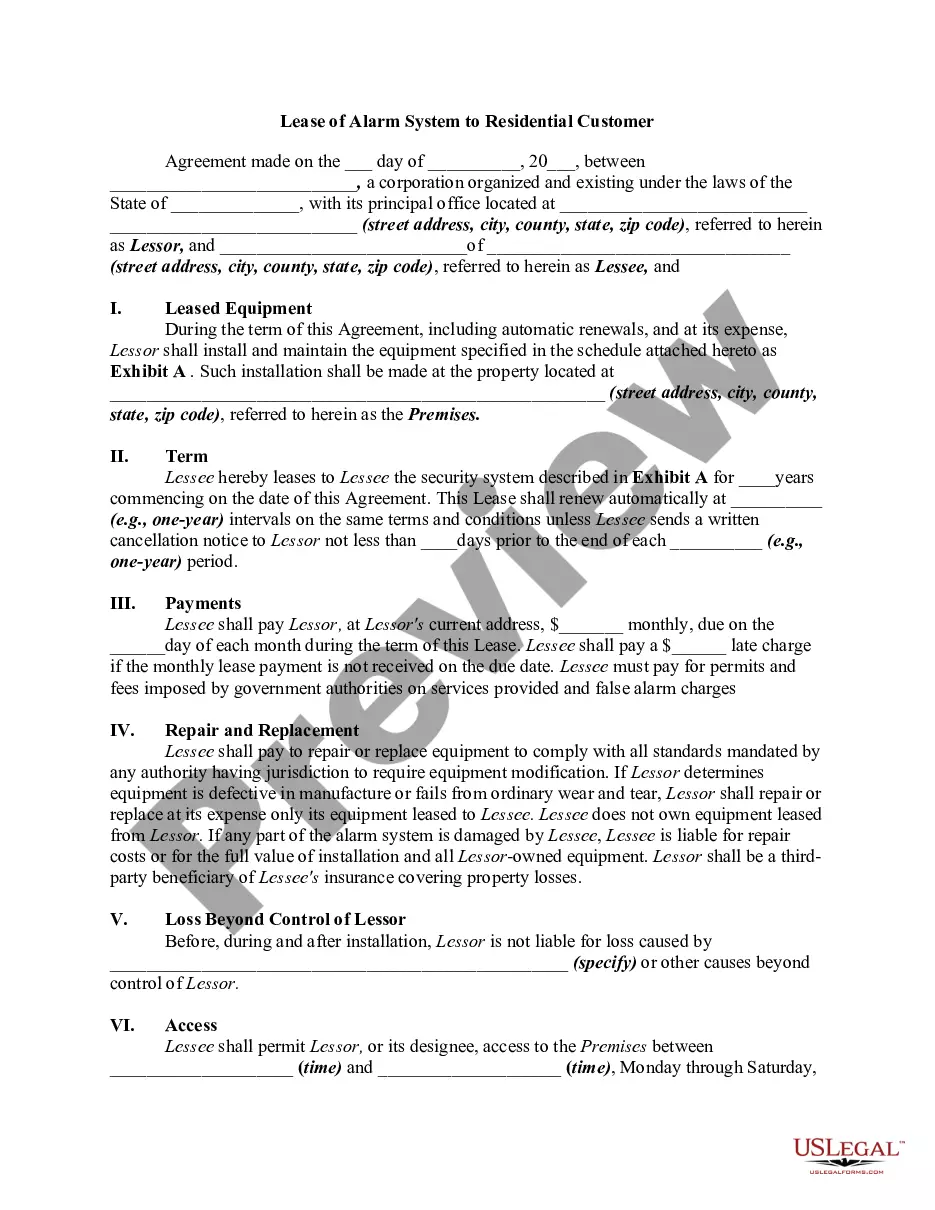
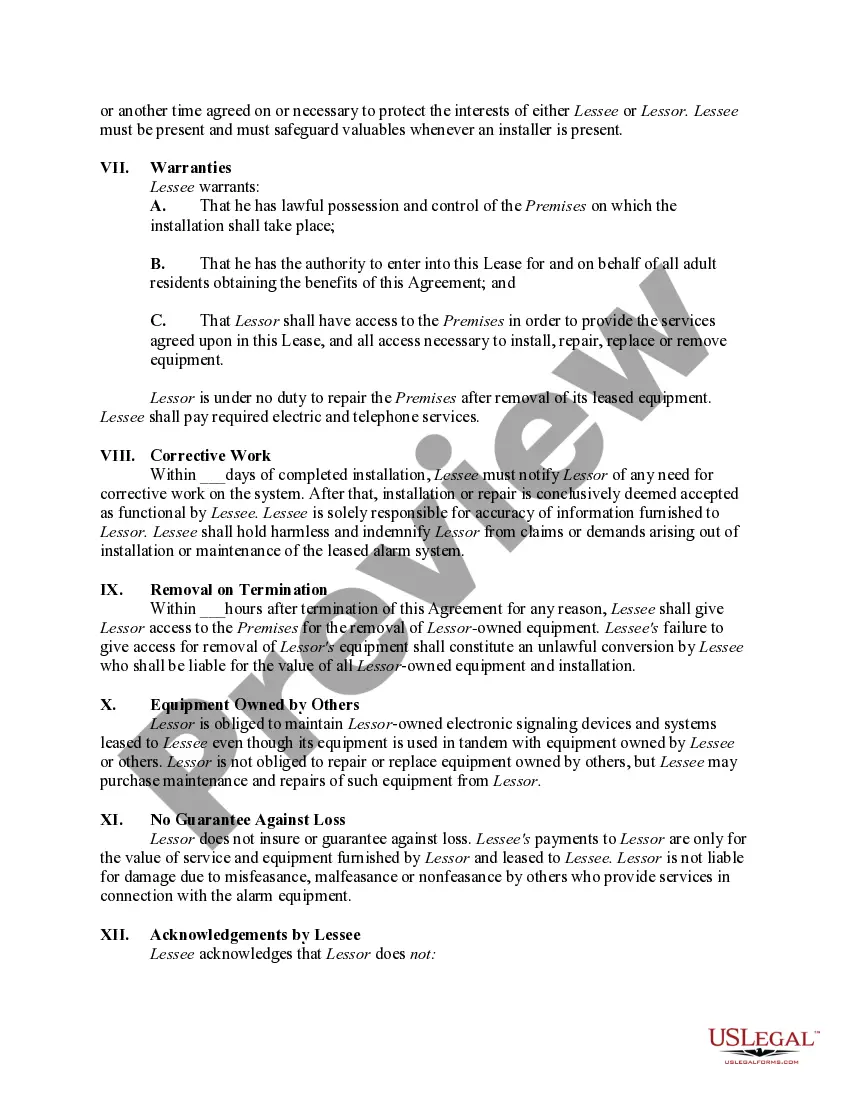
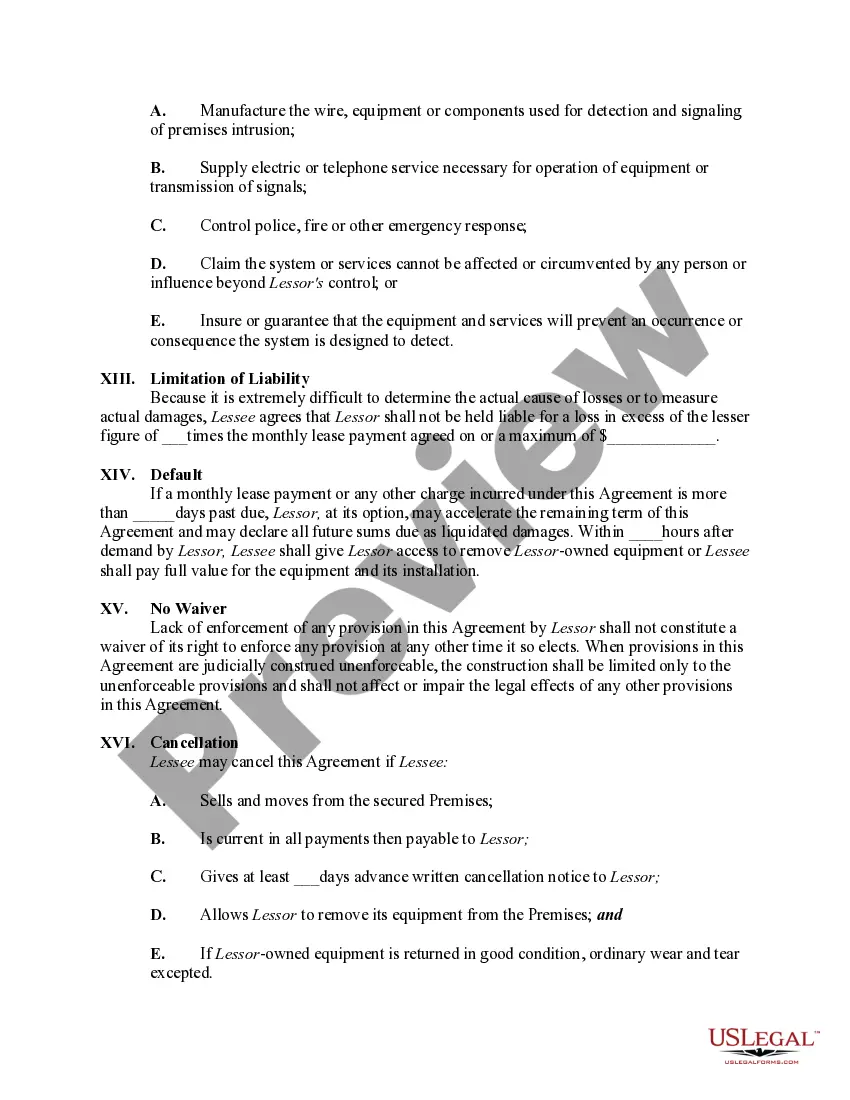
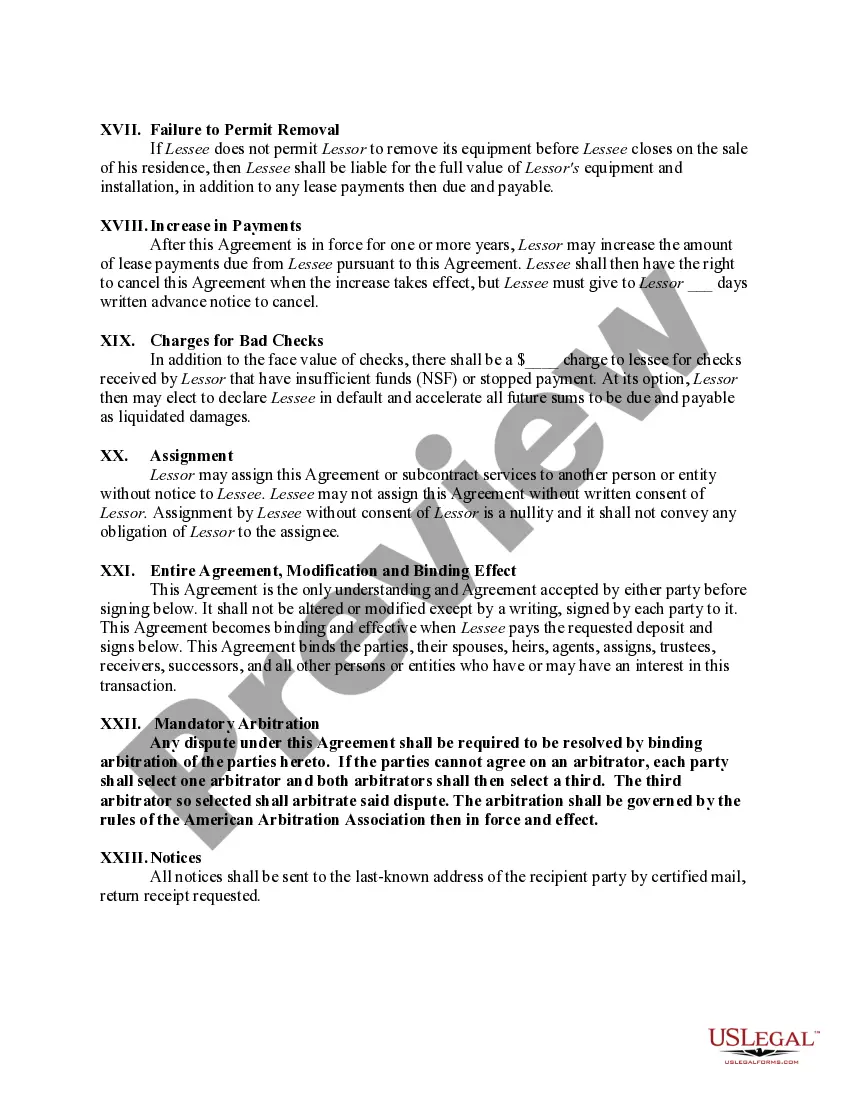
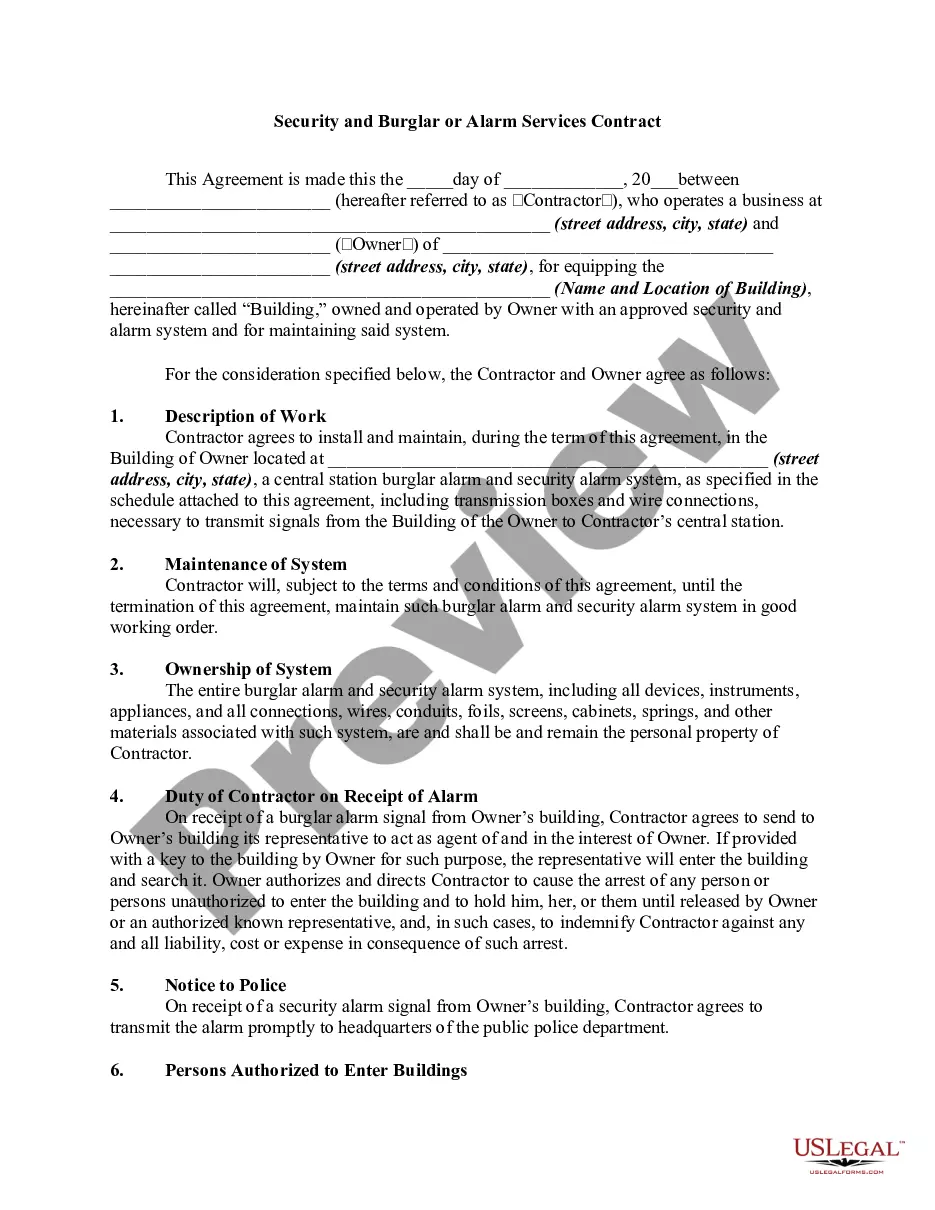
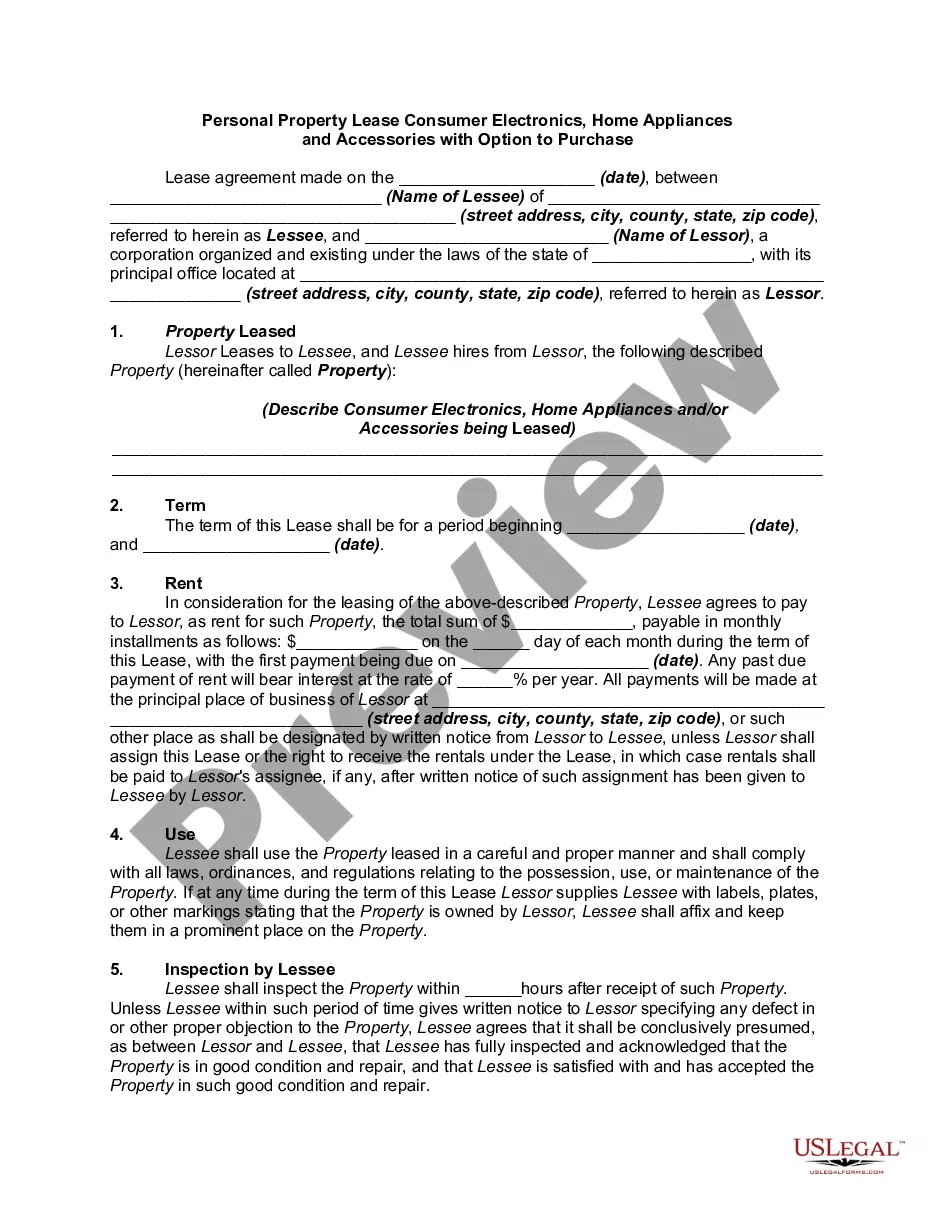
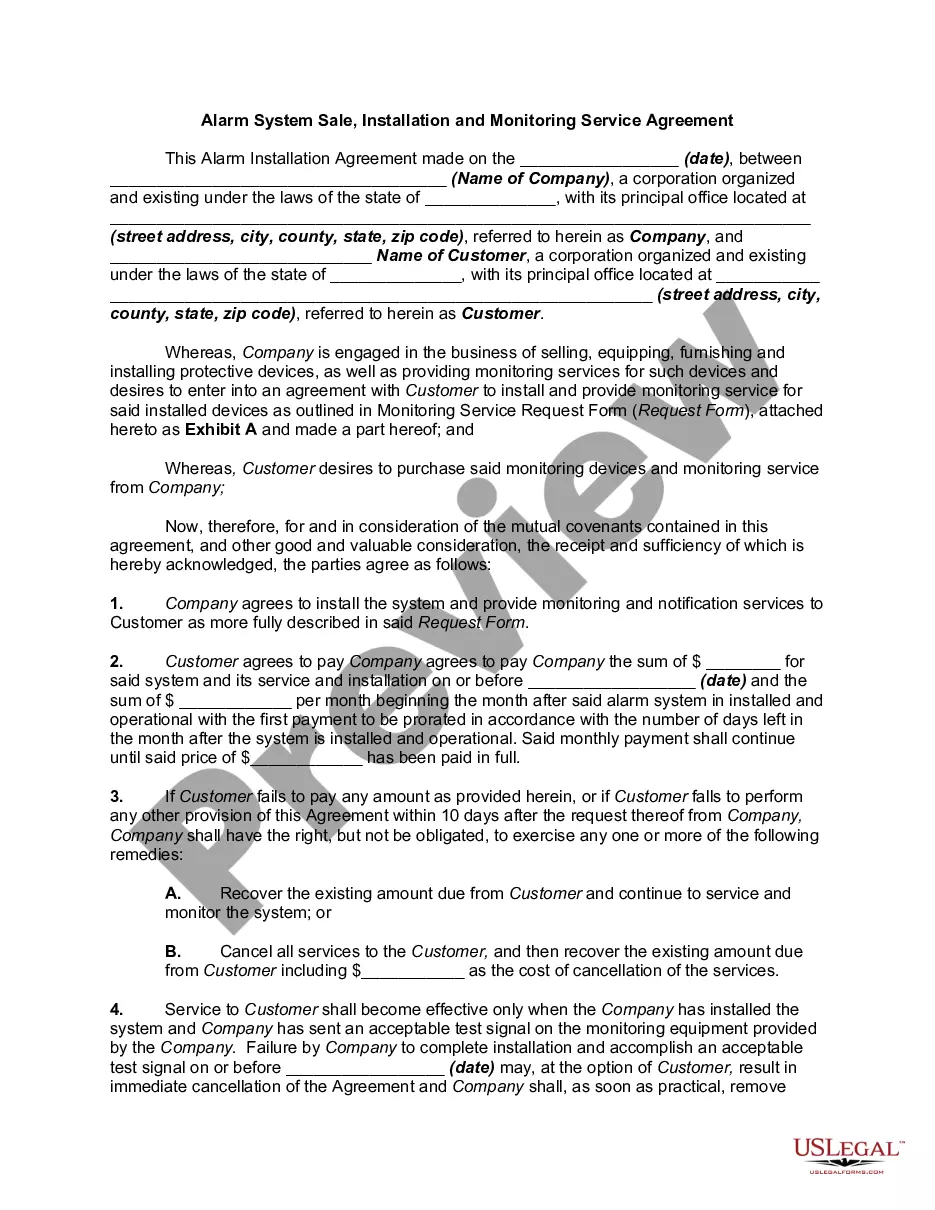
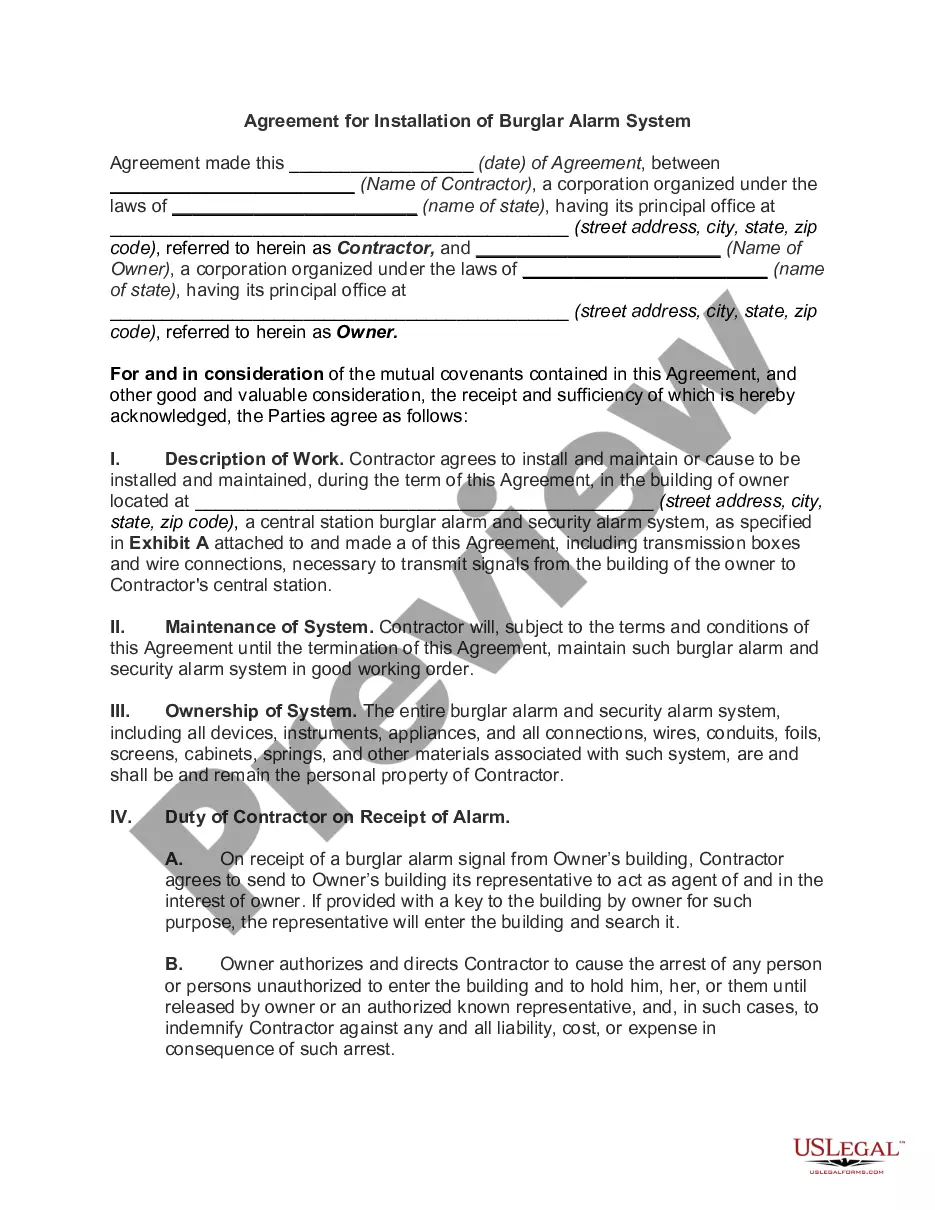
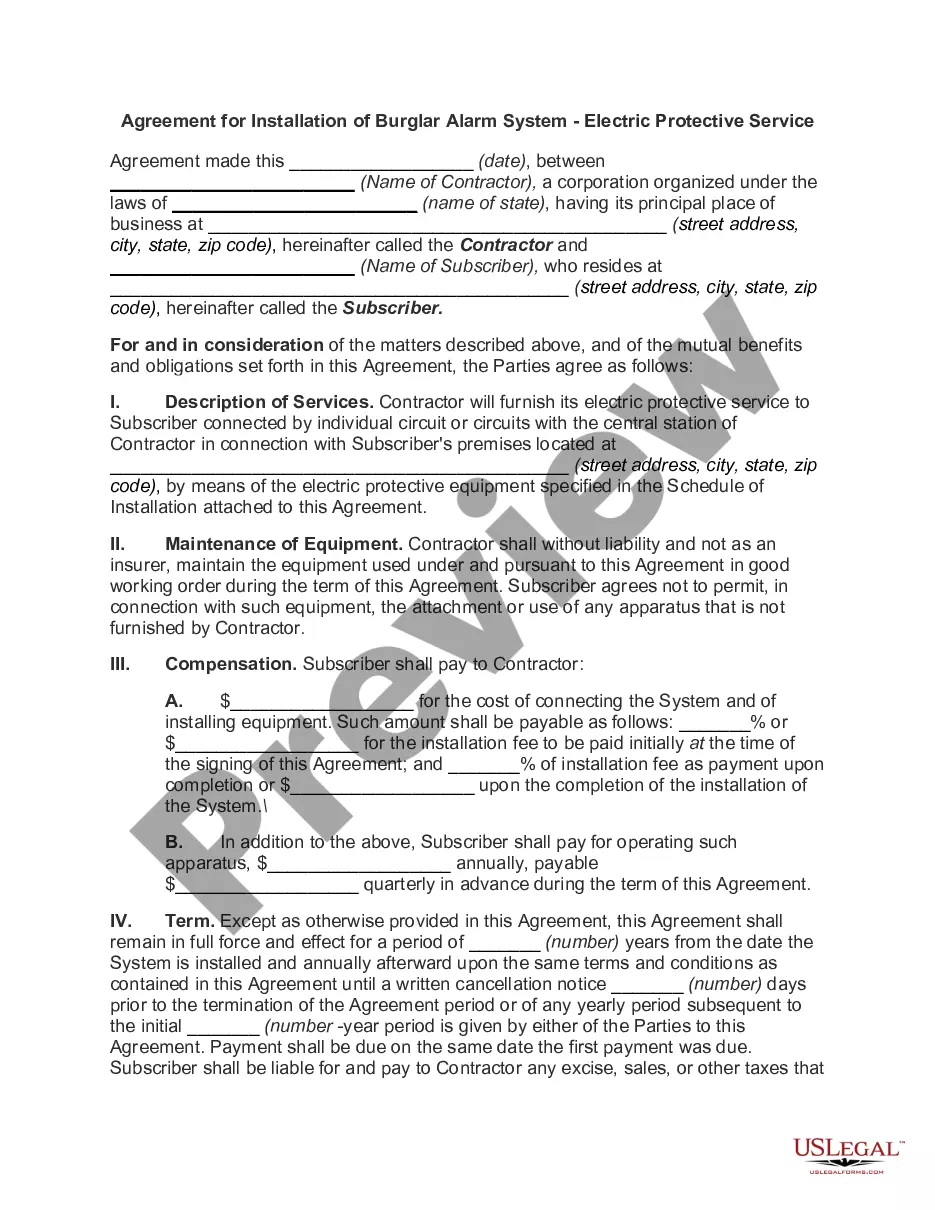

How to fill out Lease Of Alarm System To Residential Customer?
Selecting the optimal authentic document template can be a challenge.
Of course, there are countless templates available online, but how can you identify the genuine type you need.
Utilize the US Legal Forms platform. This service provides thousands of templates, including the New York Lease of Alarm System to Residential Customer, which you can employ for both business and personal purposes.
You can preview the form using the Preview button and review the form description to confirm this is indeed the correct one for you.
- All templates are reviewed by professionals and comply with federal and state regulations.
- If you are already registered, Log In to your account and click on the Acquire button to obtain the New York Lease of Alarm System to Residential Customer.
- Use your account to browse through the legal templates you have previously purchased.
- Visit the My documents tab in your account and retrieve another copy of the document you need.
- If you are a new user of US Legal Forms, here are simple steps for you to follow.
- First, ensure you have selected the correct template for your city/state.
Form popularity
FAQ
In New York, landlords are responsible for maintaining the premises in a safe and habitable condition. This includes addressing issues like plumbing, heating, and electrical concerns. If your rental agreement includes a New York Lease of Alarm System to Residential Customer, ensure the landlord covers necessary upkeep for the alarm system in addition to standard property repairs.
Landlord harassment in New York includes actions like persistent unwanted communication, unauthorized entry, and threatening eviction without cause. Such behaviors create an intimidating environment for tenants, violating housing laws. It's important to report any harassment, especially when a New York Lease of Alarm System to Residential Customer is involved, to ensure your living space remains safe.
Landlords in New York are prohibited from retaliating against tenants who exercise their legal rights, such as reporting safety violations. It is also illegal for landlords to enter a rental unit without proper notice or consent, except in emergencies. Always familiarize yourself with your legal protections when entering a New York Lease of Alarm System to Residential Customer.
Landlords in New York cannot discriminate against tenants based on protected characteristics, such as race, nationality, or gender. Additionally, they cannot lock tenants out or shut off essential services to force compliance. Understanding your rights when signing a New York Lease of Alarm System to Residential Customer can prevent potential landlord overreach.
The most common residential lease in New York is a month-to-month lease, which offers flexibility compared to long-term agreements. This type of lease allows both landlords and tenants to make changes more quickly, while still adhering to state laws. If you're entering a New York Lease of Alarm System to Residential Customer, consider how lease length affects your responsibilities.
Yes, tenants in New York can refuse entry to their landlord under certain circumstances. A landlord must provide reasonable notice, usually at least 24 hours, before entering the rental property, except in emergencies. If your rental includes a New York Lease of Alarm System to Residential Customer, communication about access for maintenance is vital.
A standard lease agreement in New York typically outlines the terms of rental, including duration, rent amount, security deposits, and maintenance responsibilities. It is crucial to include specific clauses related to a New York Lease of Alarm System to Residential Customer if such a system is part of the rental terms. Always read the agreement carefully to understand your rights and obligations.
In New York, lease agreements do not need to be notarized to be legally binding. However, having a lease notarized can provide additional protection for both the landlord and tenant, especially in disputes. When considering a New York Lease of Alarm System to Residential Customer, ensure that all parties sign the document to validate the agreement.
Yes, you can install a security alarm system in your apartment, but you should always check your lease agreement first. Many landlords allow tenants to add security systems for safety, but some may have restrictions. A New York Lease of Alarm System to Residential Customer might include specific terms regarding the installation of such systems.
A security system is typically categorized as a fixed asset. It is a long-term investment that can enhance the overall value of a property. If you enter into a New York Lease of Alarm System to Residential Customer, understanding the classification of your security system helps clarify its role in financial forecasting and insurance.