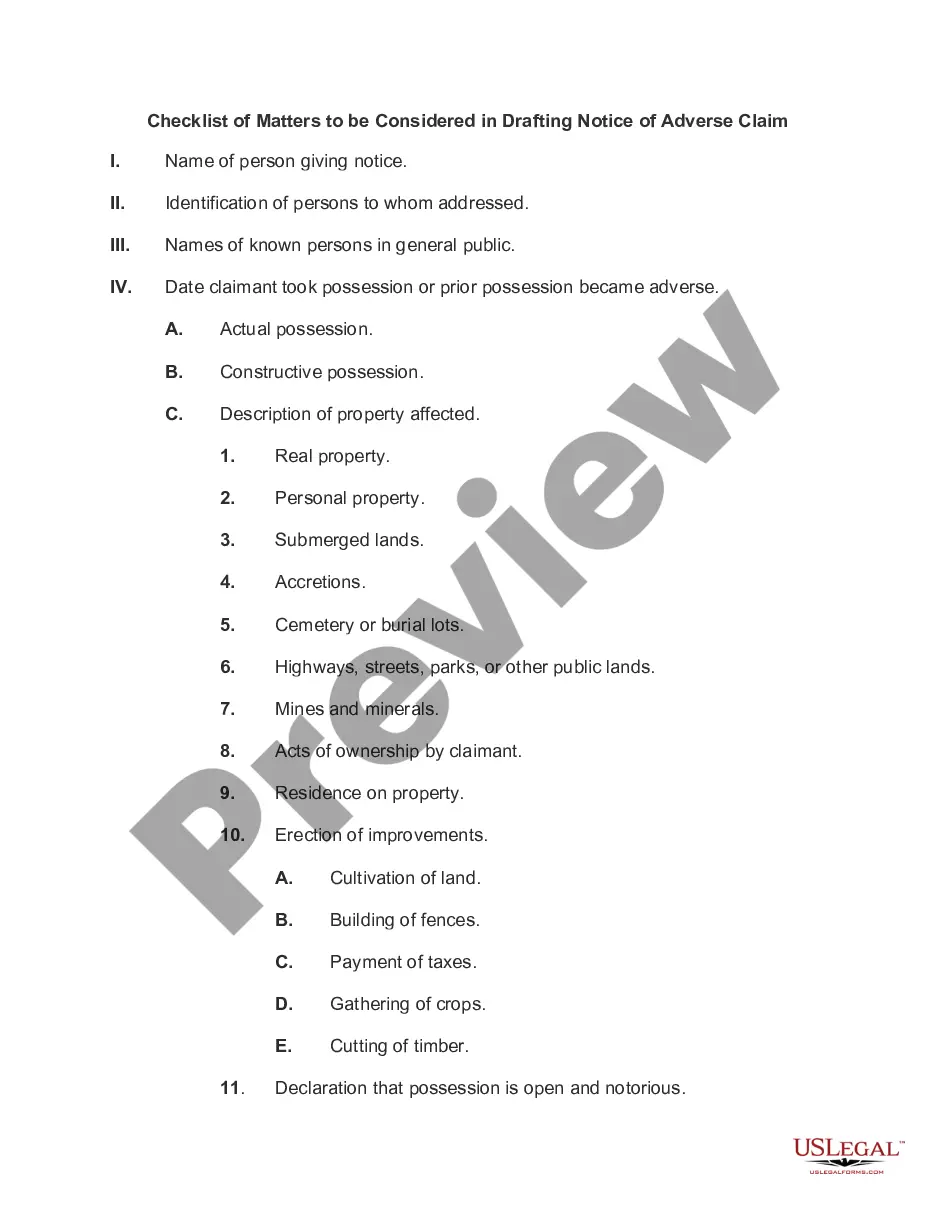
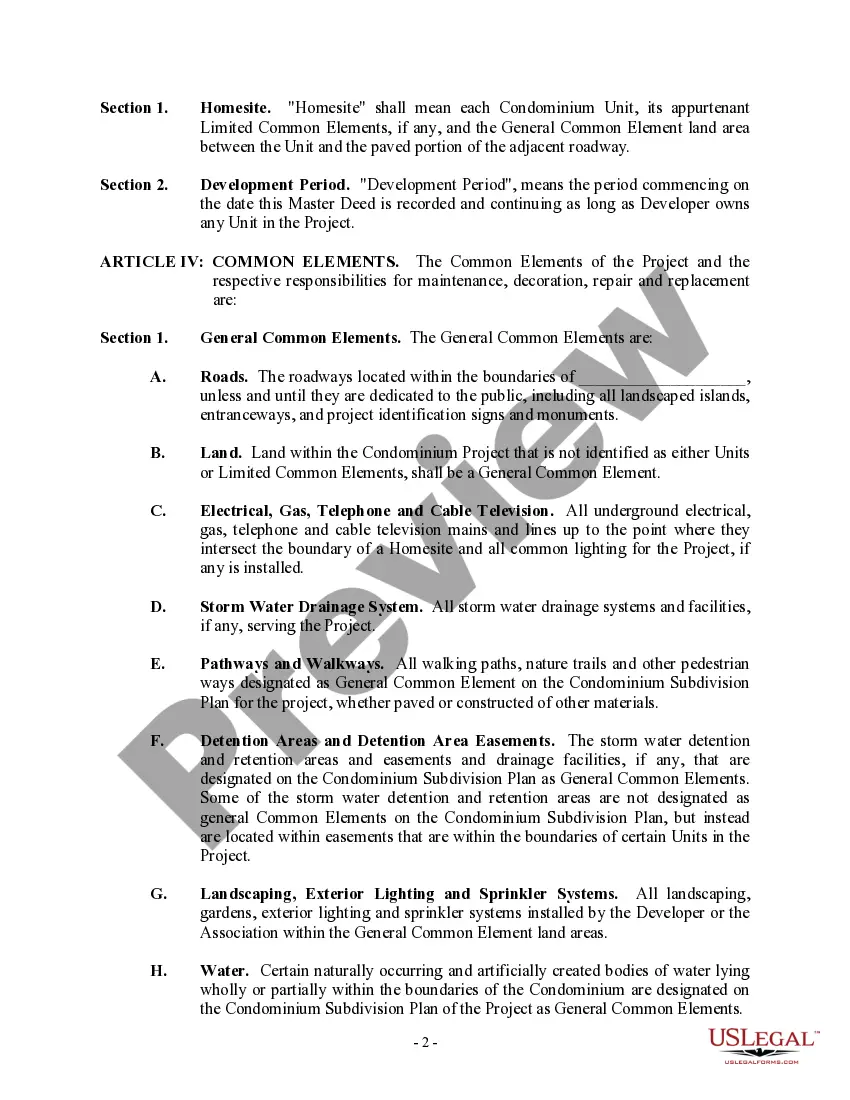
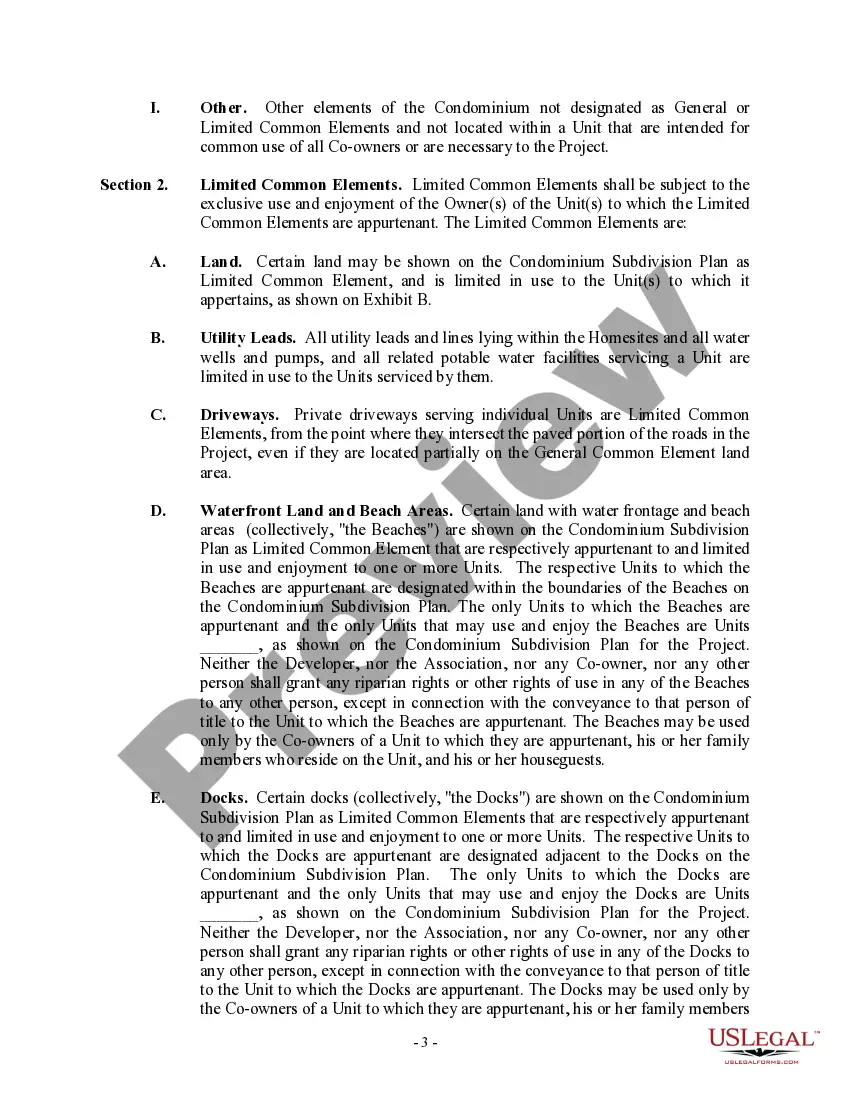
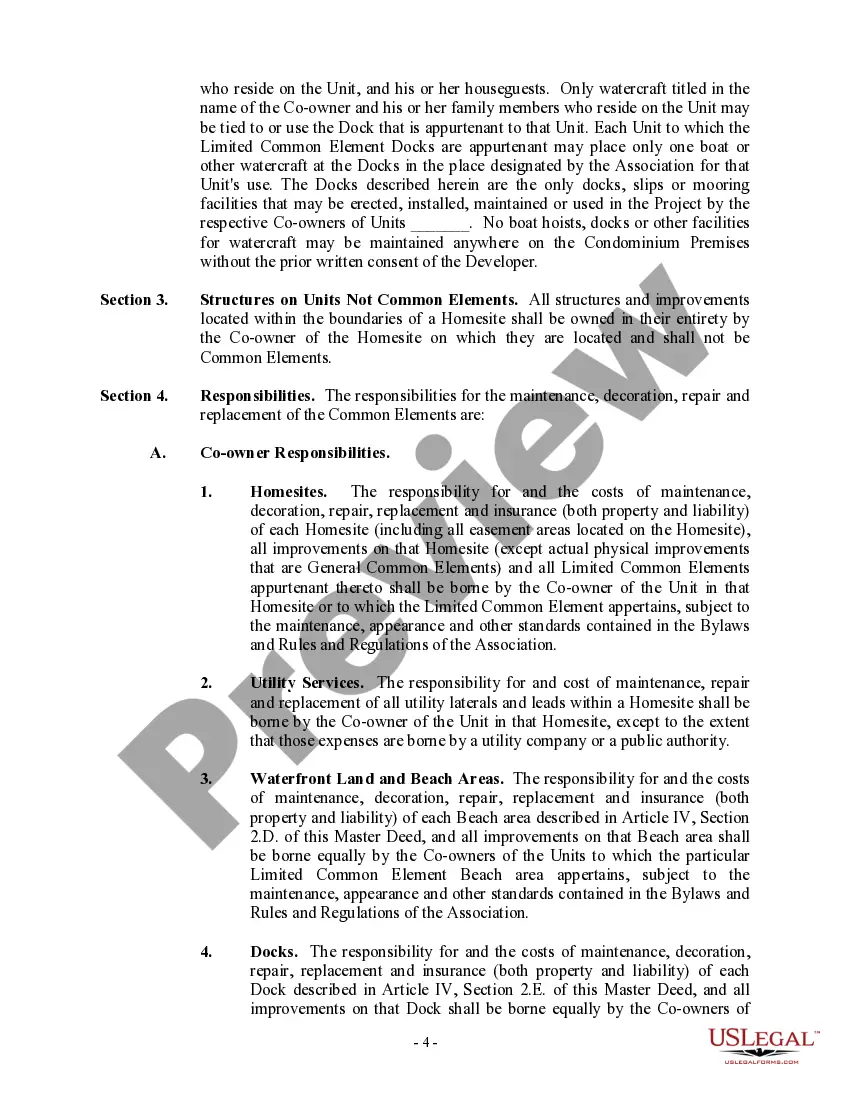
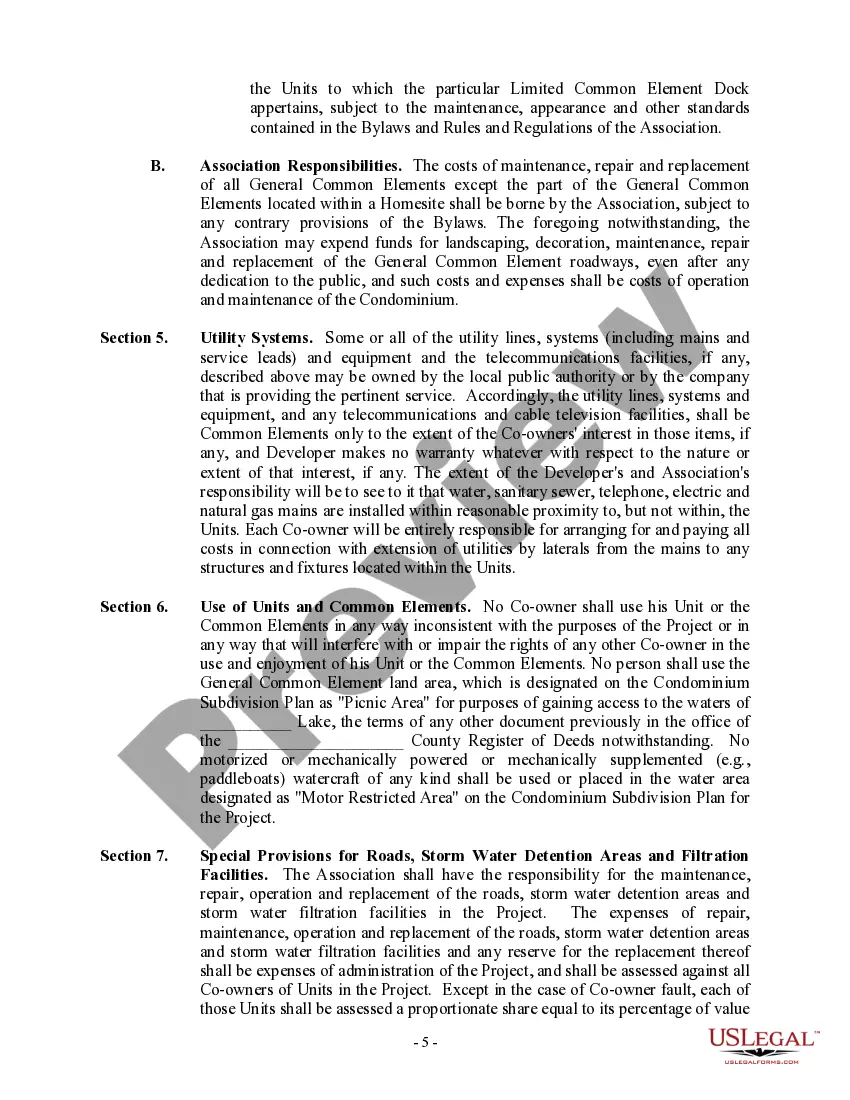
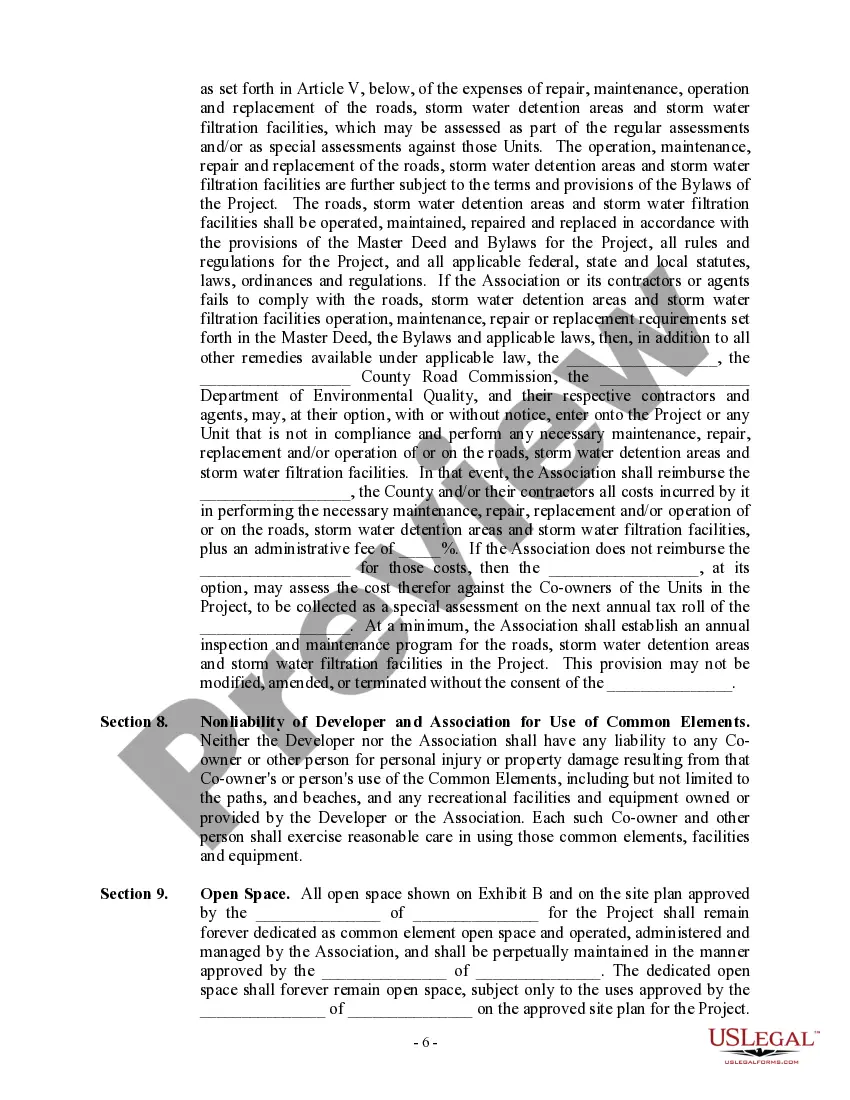
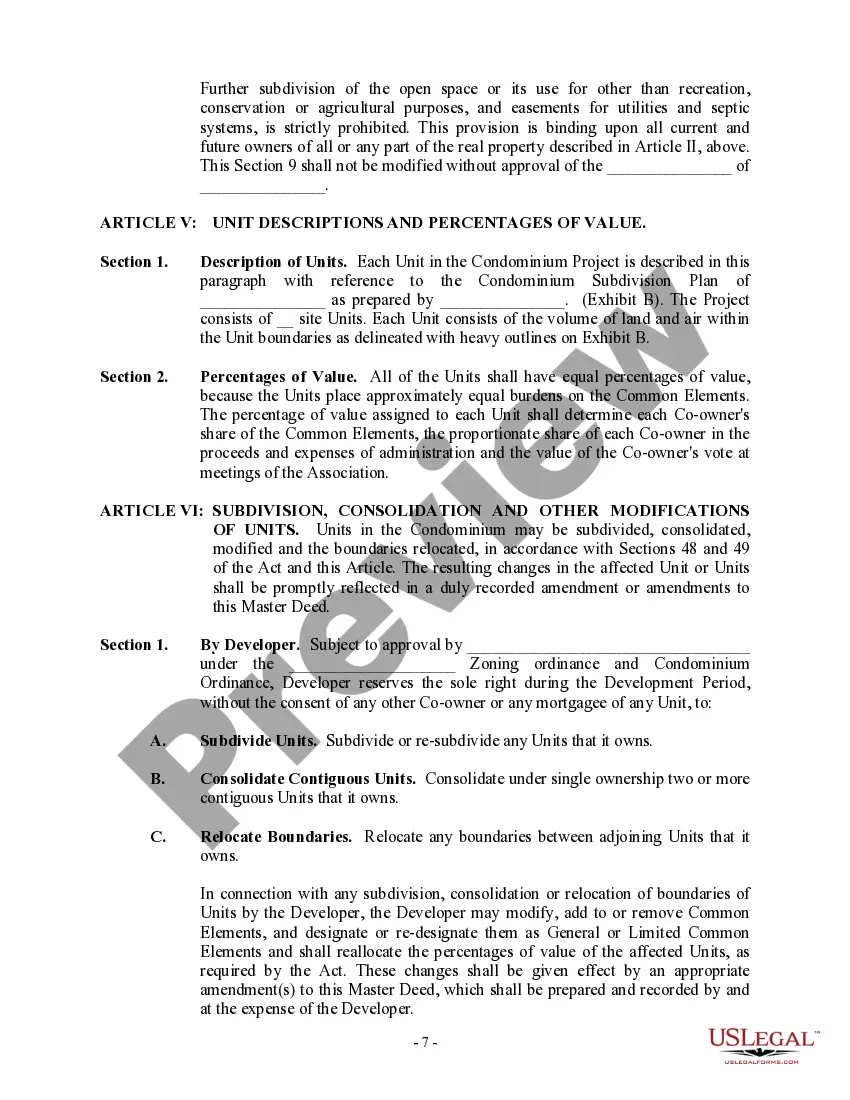
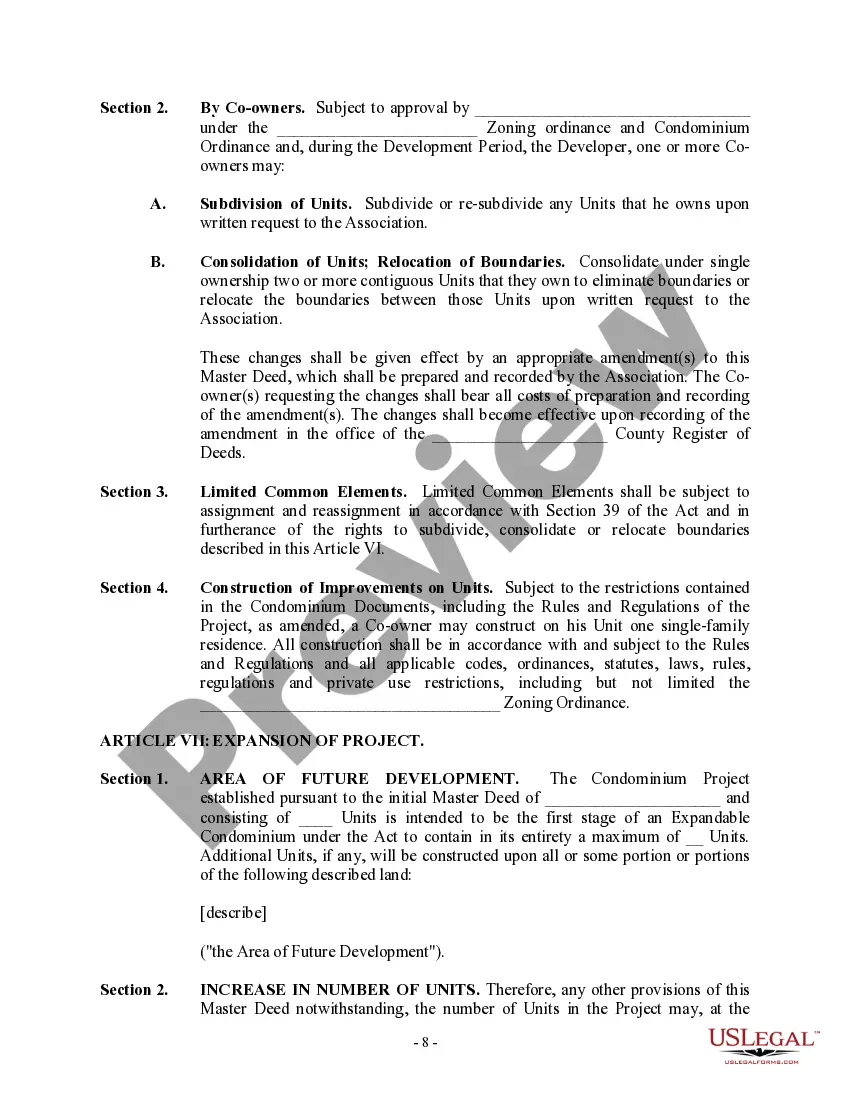
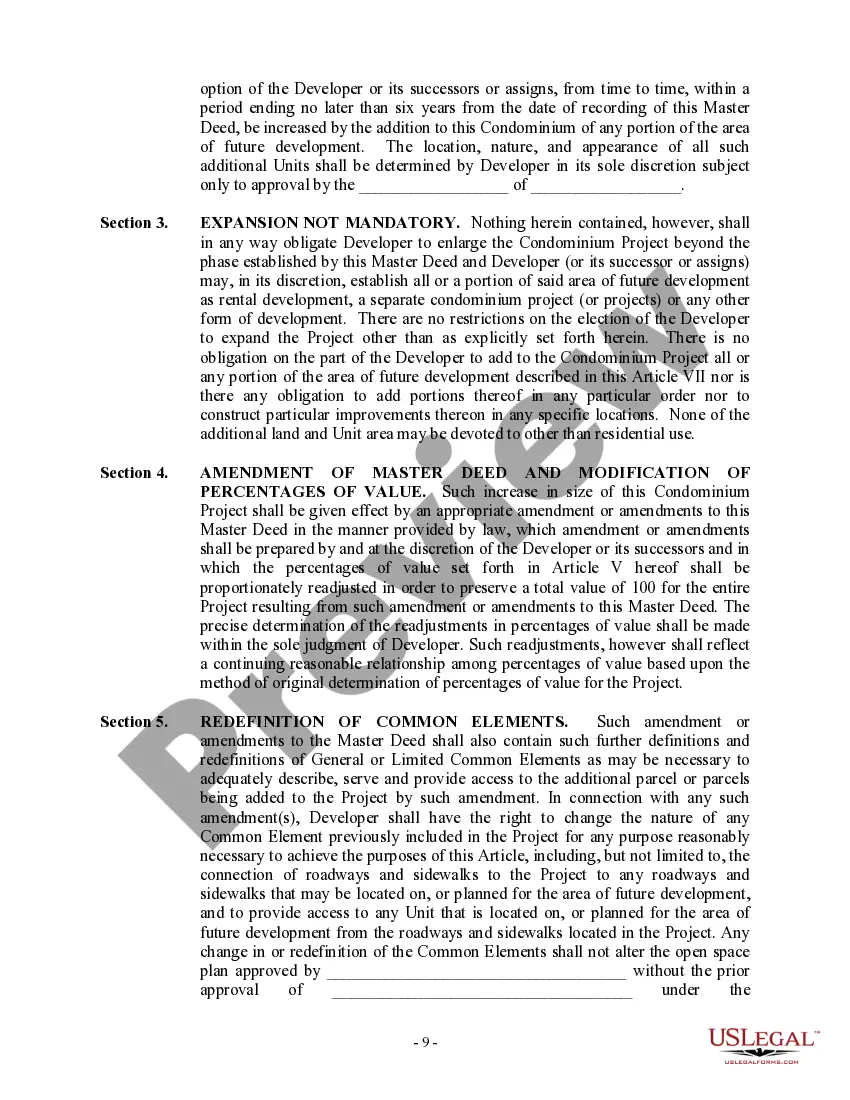
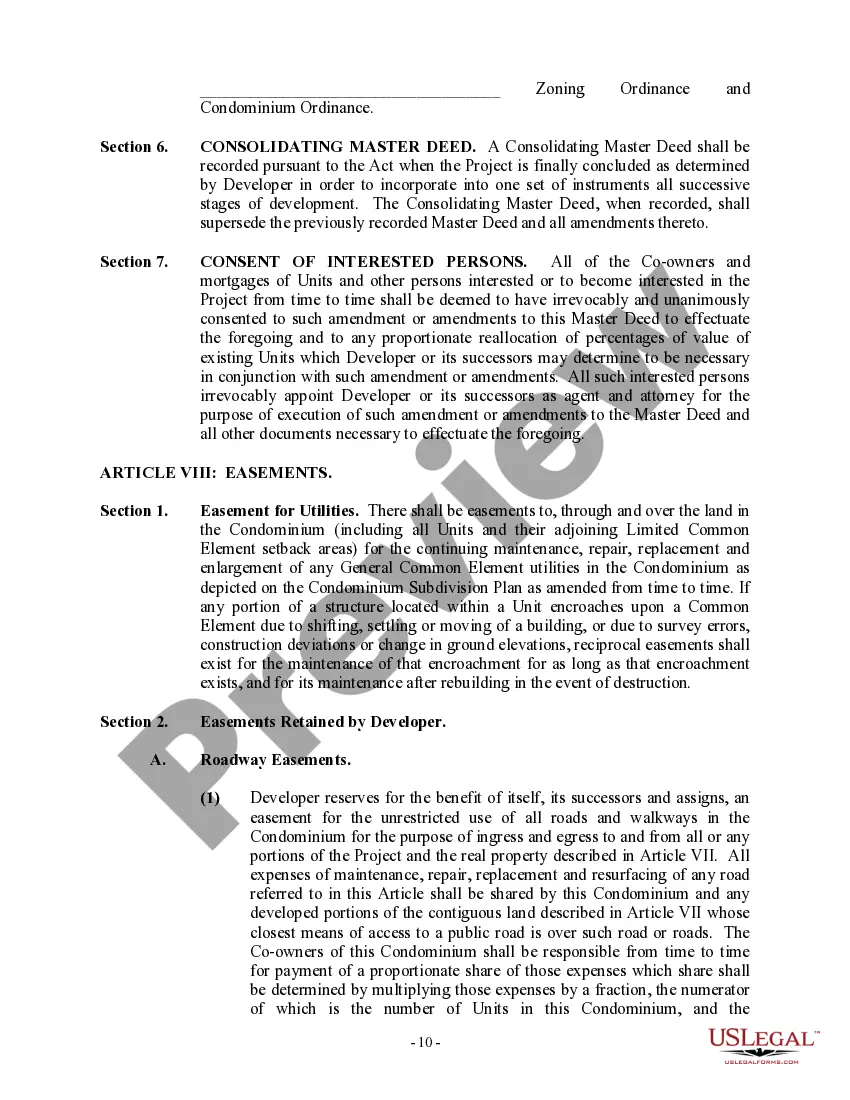
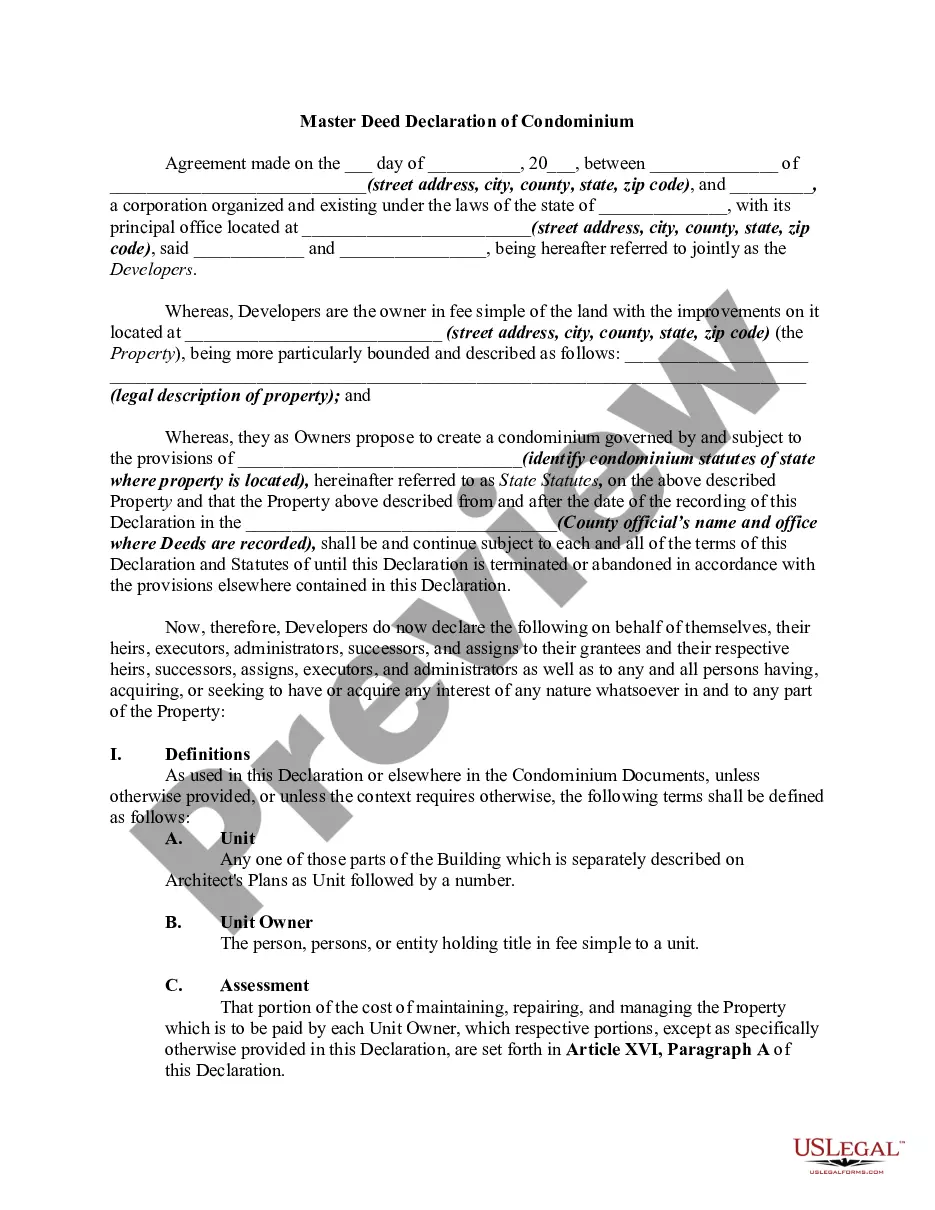
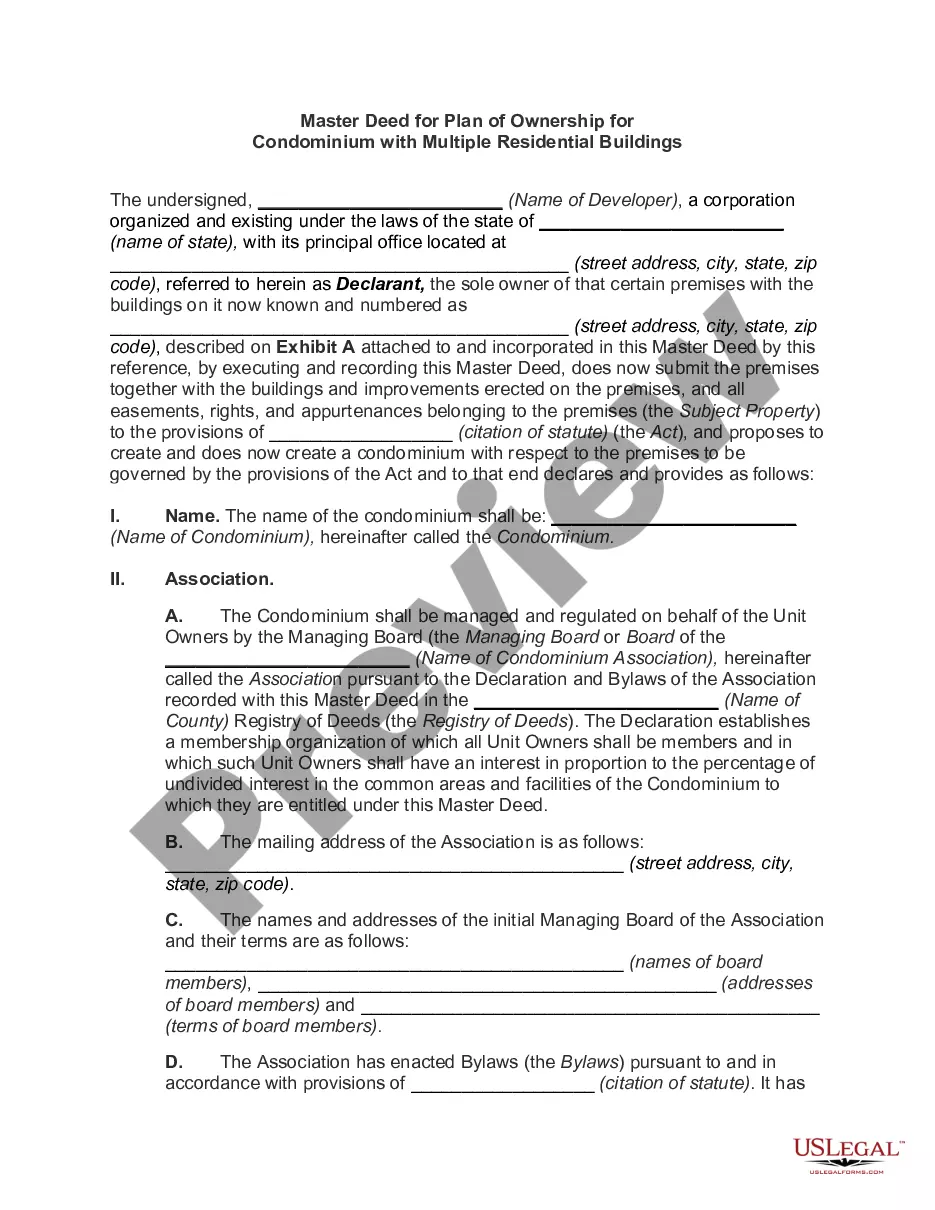
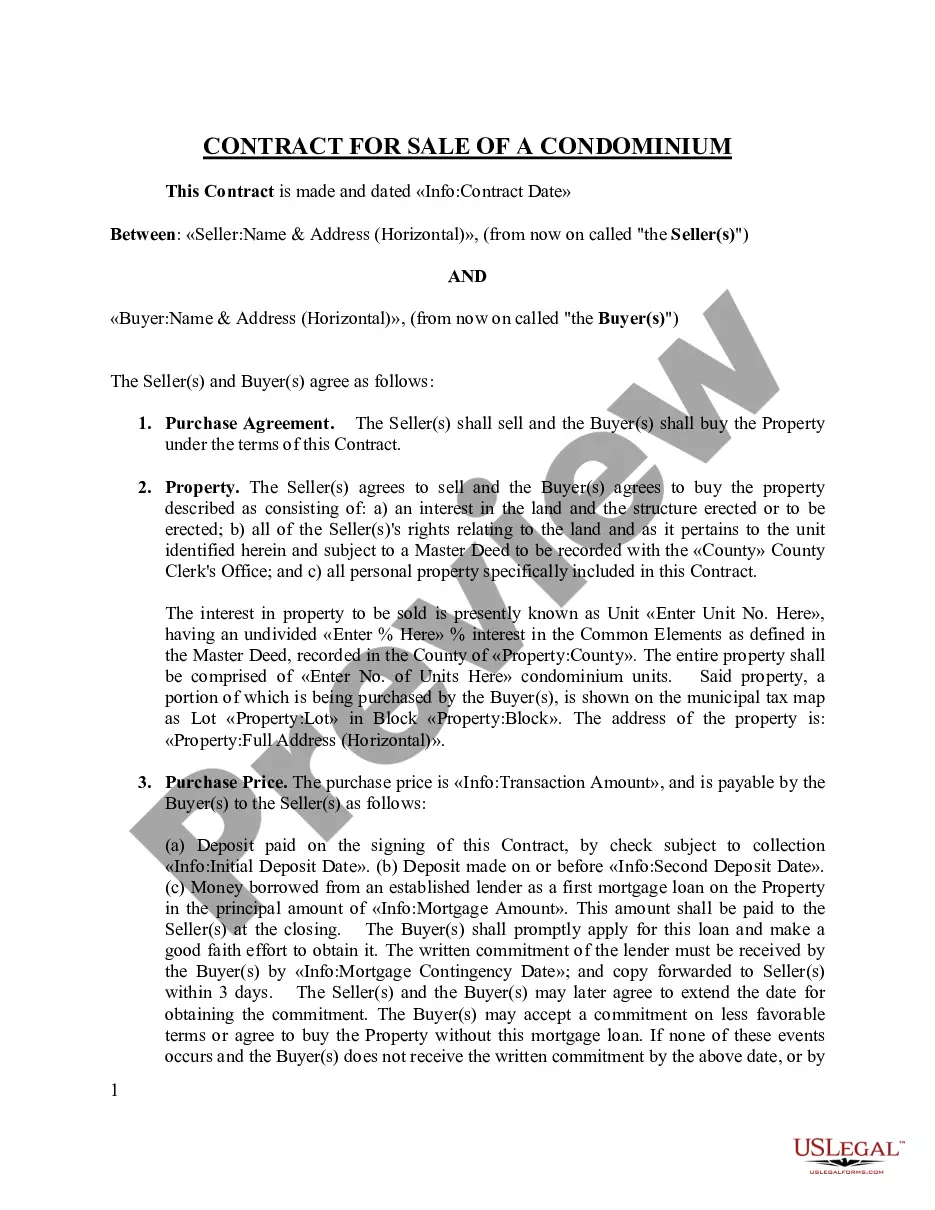
This form is a Master Deed. This Master Deed is executed by a developer pursuant to the provisions of the Condominium Act. The deed contains a legal description of the project and the responsibilities of the co-owner.
New York Condominium Master Deed - Residential Condo Development
Instant download
Description
Free preview



Get your form ready online
Our built-in tools help you complete, sign, share, and store your documents in one place.
Built-in online Word editor
Make edits, fill in missing information, and update formatting in US Legal Forms—just like you would in MS Word.
Export easily
Download a copy, print it, send it by email, or mail it via USPS—whatever works best for your next step.
E-sign your document
Sign and collect signatures with our SignNow integration. Send to multiple recipients, set reminders, and more. Go Premium to unlock E-Sign.
Notarize online 24/7
If this form requires notarization, complete it online through a secure video call—no need to meet a notary in person or wait for an appointment.
Store your document securely
We protect your documents and personal data by following strict security and privacy standards.

Make edits, fill in missing information, and update formatting in US Legal Forms—just like you would in MS Word.

Download a copy, print it, send it by email, or mail it via USPS—whatever works best for your next step.

Sign and collect signatures with our SignNow integration. Send to multiple recipients, set reminders, and more. Go Premium to unlock E-Sign.

If this form requires notarization, complete it online through a secure video call—no need to meet a notary in person or wait for an appointment.

We protect your documents and personal data by following strict security and privacy standards.
Looking for another form?





How to fill out Condominium Master Deed - Residential Condo Development?
It is feasible to spend time on the Internet searching for the approved document template that meets the federal and state requirements you will need.
US Legal Forms provides a vast array of legal forms that are reviewed by experts.
You can easily download or print the New York Condominium Master Deed - Residential Condo Development from my service.
If available, use the Preview option to view the document template as well.
- If you already have a US Legal Forms account, you can Log In and click the Download button.
- Then, you can fill out, edit, print, or sign the New York Condominium Master Deed - Residential Condo Development.
- Every legal document template you purchase is yours indefinitely.
- To obtain another copy of any acquired form, visit the My documents section and click the appropriate option.
- If you are using the US Legal Forms website for the first time, follow the simple instructions below.
- First, ensure that you have selected the correct document template for your state/region of choice.
- Check the form description to confirm you have chosen the right form.
Form popularity
FAQ
Unlike cooperative housing corporations (co-ops), which are governed by state corporate laws and common law, condominium associations are bound by the Real Property Act with regard to the transition of authority, governance procedures, property maintenance obligations, and various other matters impacting New York ...
The Condominium Act is the New York State law which governs the establishment of condominiums. The decisions made by courts in cases involving the Condominium Act are the case law which interprets the statute.
Condo laws are often called Horizontal property or strata title acts. Owners have Fee simple title but share common elements to which they are tenants in common.
The individual units normally share walls, but that isn't a requirement. The main difference between condos and regular single homes is that there is no individual ownership of a plot of land. All the land in the condominium project is owned in common by all the homeowners.
Condo Owner Rights: The Right to Protest When board members fail to meet their fiduciary duties, condo members can remove the board members who are abusing their authority. Condo owners also have the right to protest any regulations that are discriminatory, unfair, or onerous.