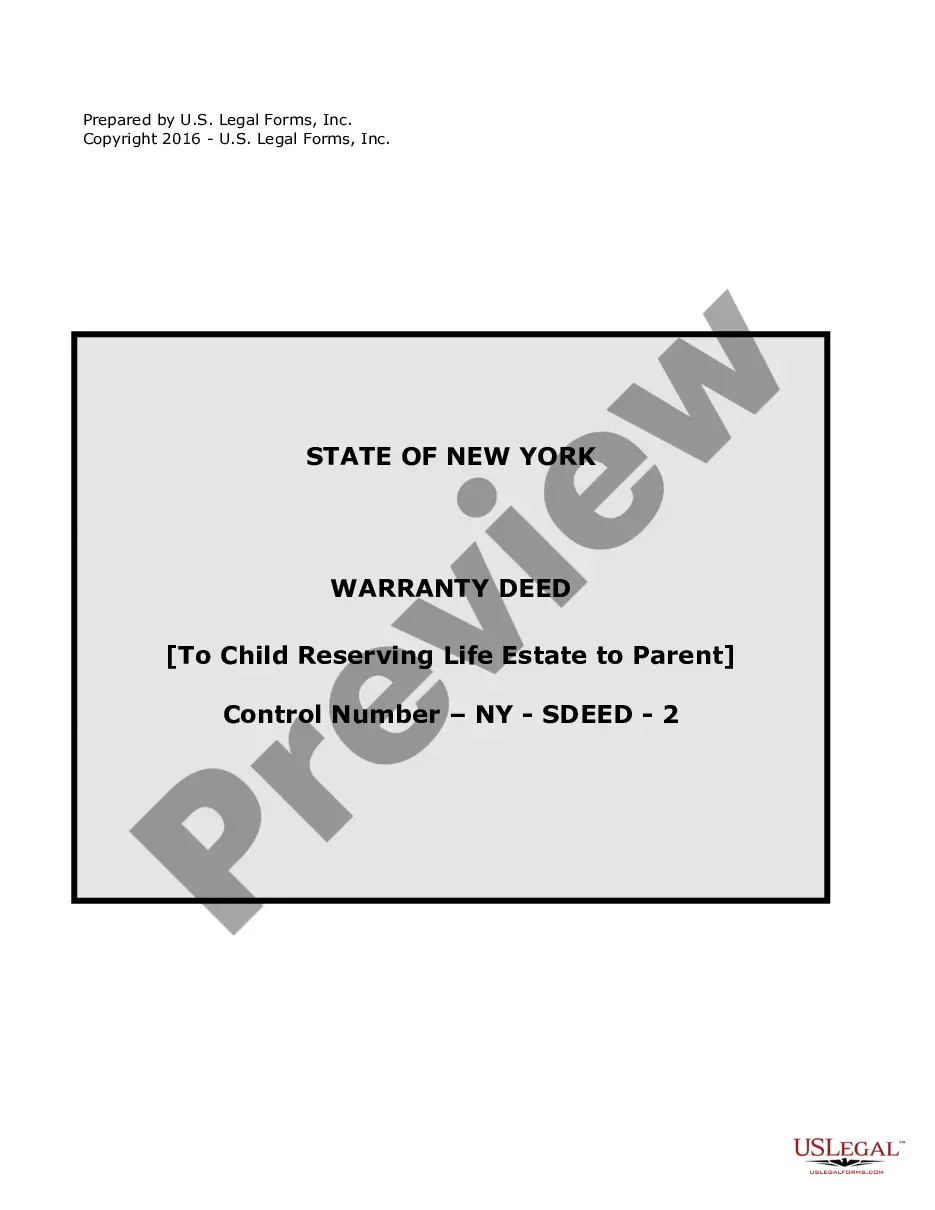
New York Warranty Deed for Parents to Child with Reservation of Life Estate
Overview of this form
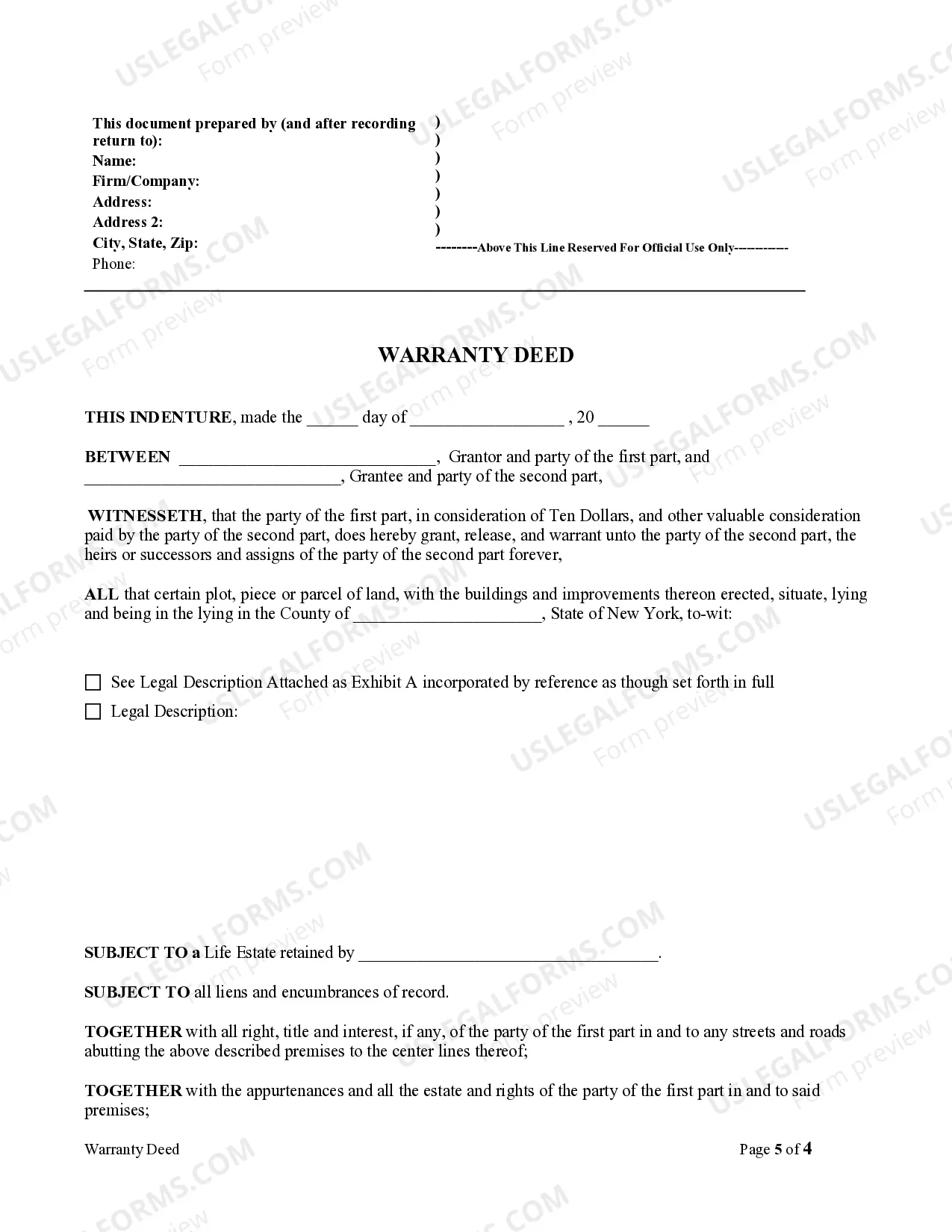
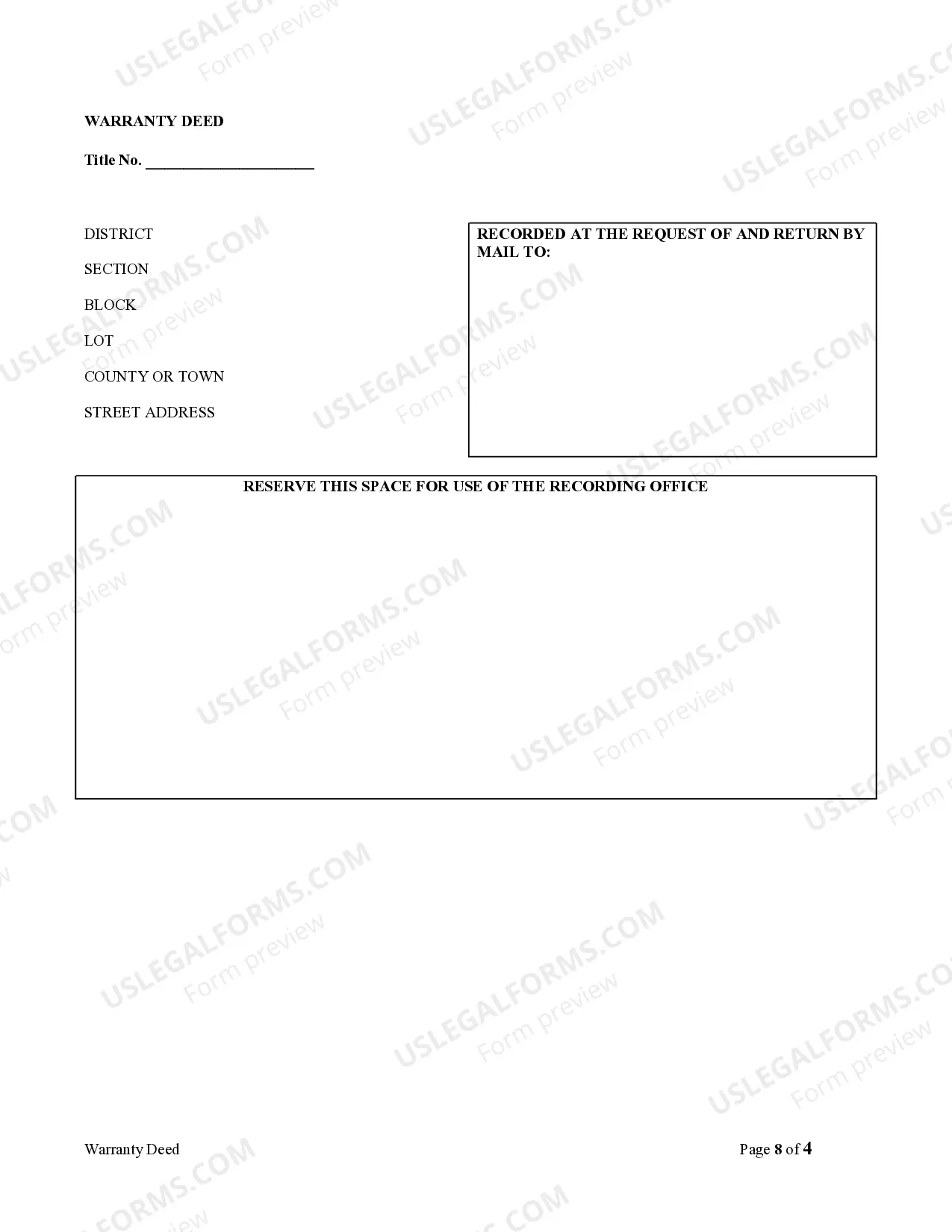
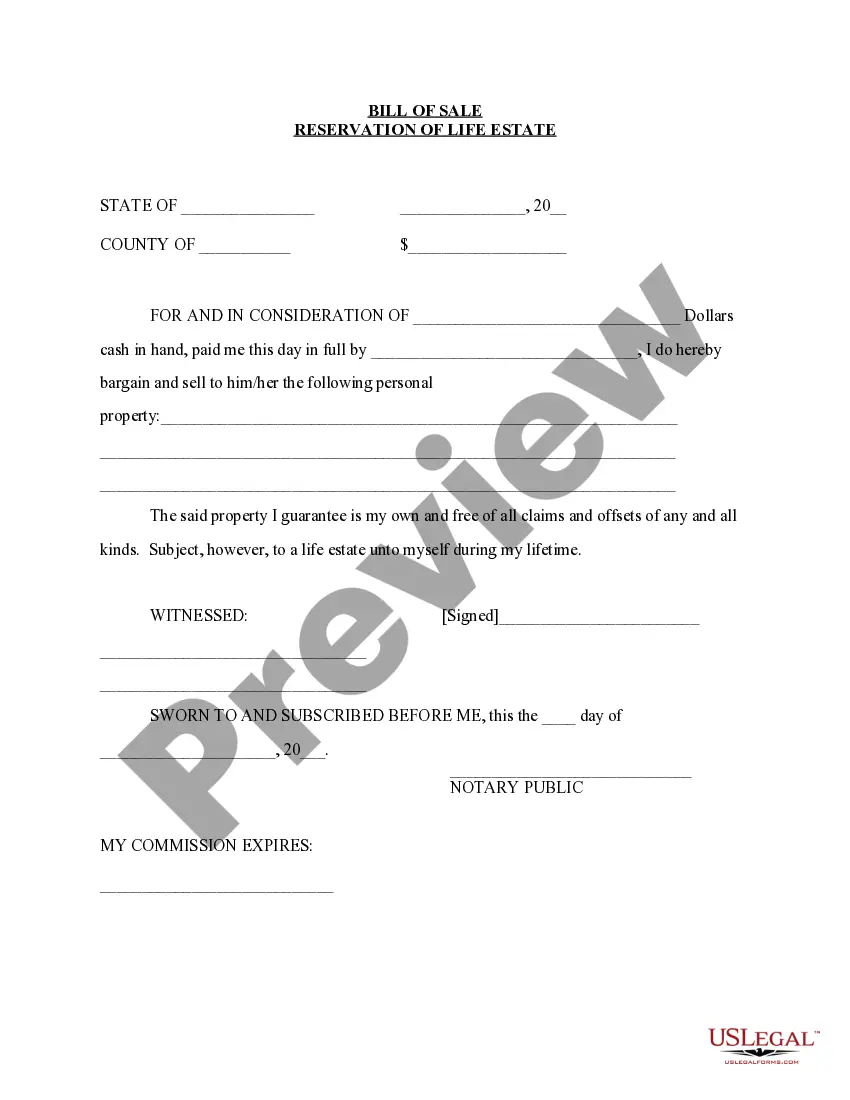
The Warranty Deed for Parents to Child with Reservation of Life Estate is a legal document that allows parents to transfer property ownership to their child while retaining the right to live in the property for the rest of their lives. This differs from a standard deed, as it ensures that the parents maintain a life estate, letting them stay in the home even after the transfer of title occurs.
Key components of this form
- Grantor and Grantee Information: Names and addresses of the parties involved.
- Property Description: A detailed description of the property being transferred.
- Reservation of Life Estate Clause: Clearly states the parentâs right to occupy the property during their lifetime.
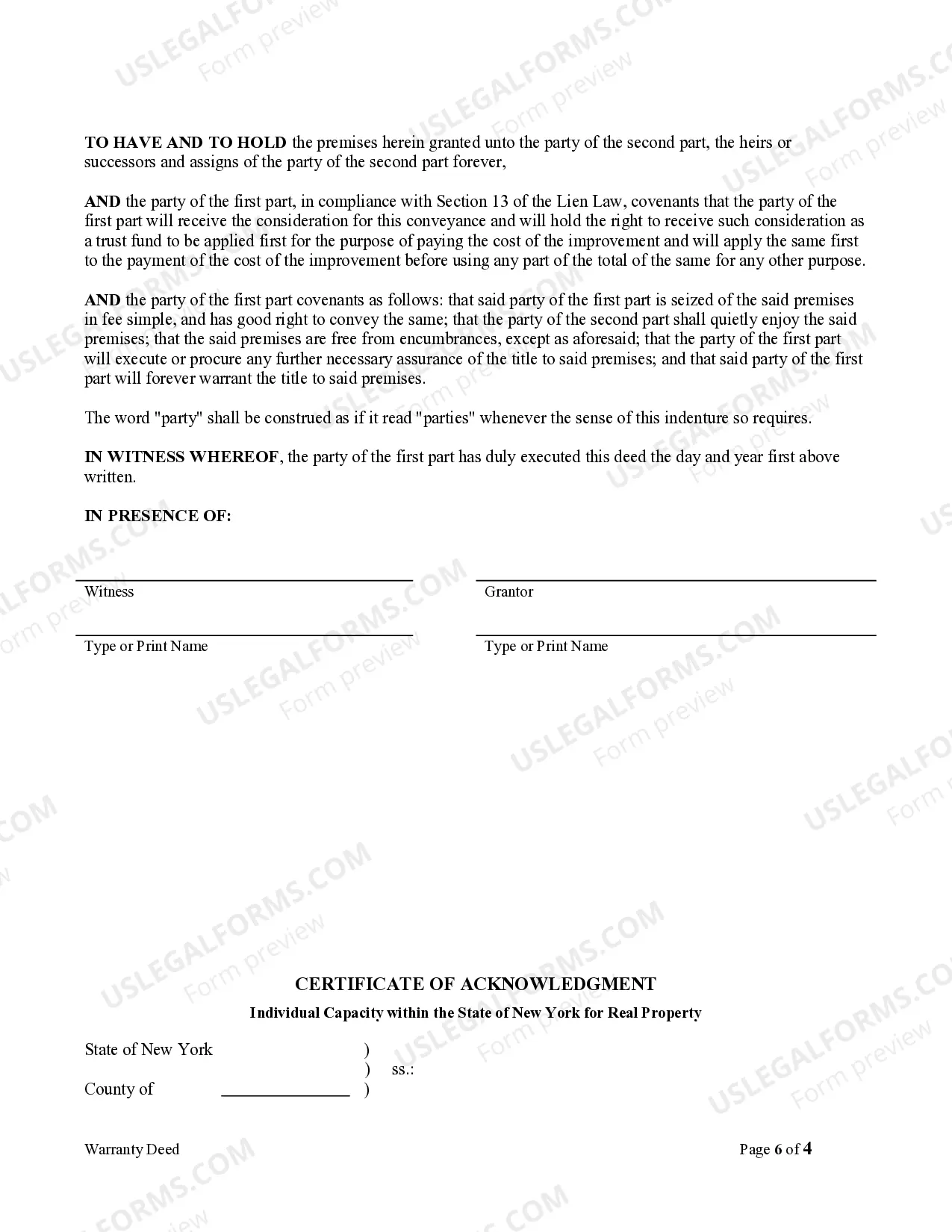
- Covenants: Assurances regarding the propertyâs title and condition.
- Signatures: Required signatures from the grantor and witnesses.




When to use this form
This form is typically used when parents wish to transfer their real estate to their child while ensuring they will continue to live in the property for their lifetime. This situation may arise for estate planning purposes, tax considerations, or to assist children with home ownership without losing their own living arrangement.
Intended users of this form
- Parents seeking to transfer property to their child while retaining occupancy rights.
- Individuals involved in estate planning where property functions need to be retained.
- Children who are receiving property as part of a family arrangement.
How to prepare this document
- Identify the parties: Enter the full names and addresses of the grantor (parent) and grantee (child).
- Specify the property: Provide a complete description of the property being transferred.
- Include the life estate reservation: Clearly articulate that the parents reserve the right to live in the property for their lifetime.
- Review and sign: Both parties must sign and date the document in the presence of witnesses.
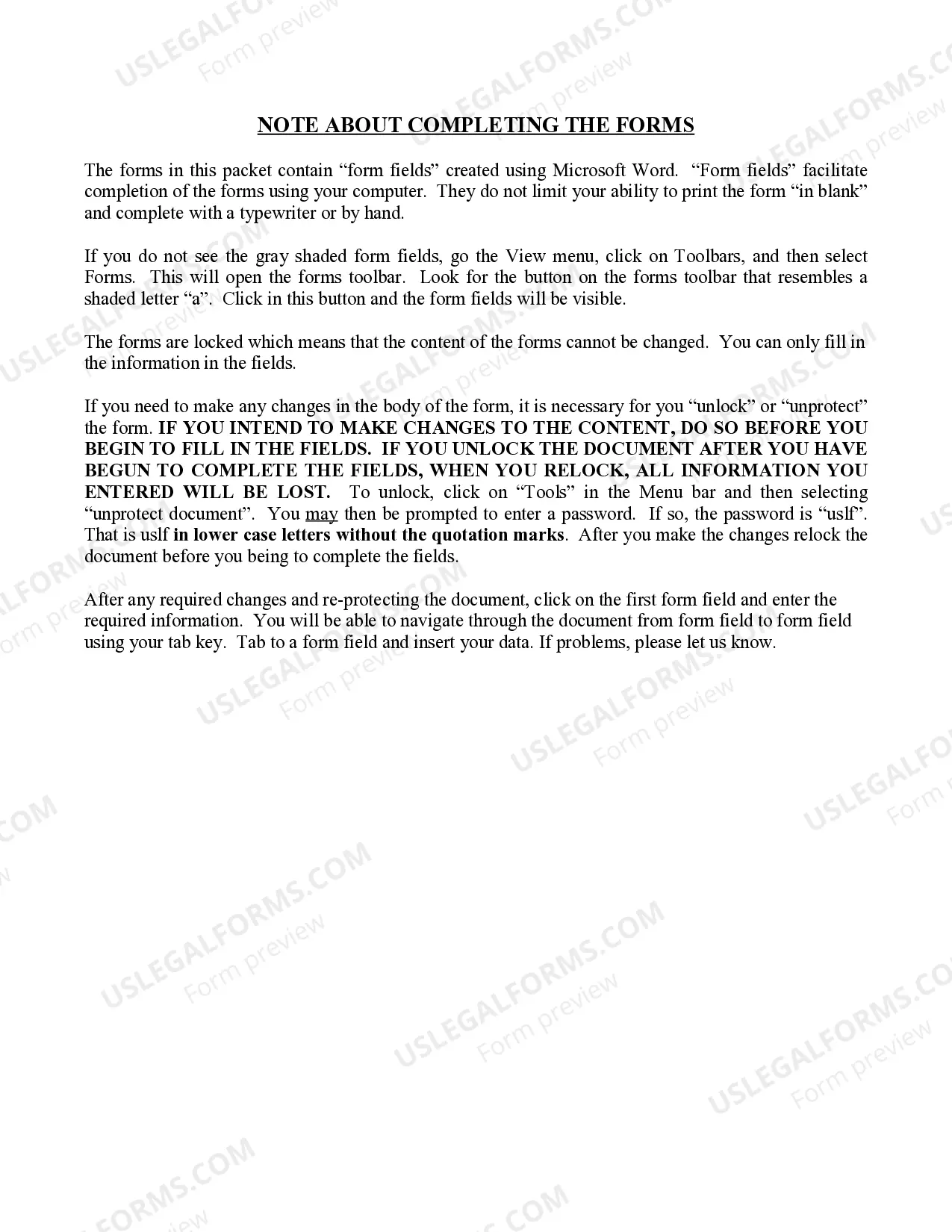
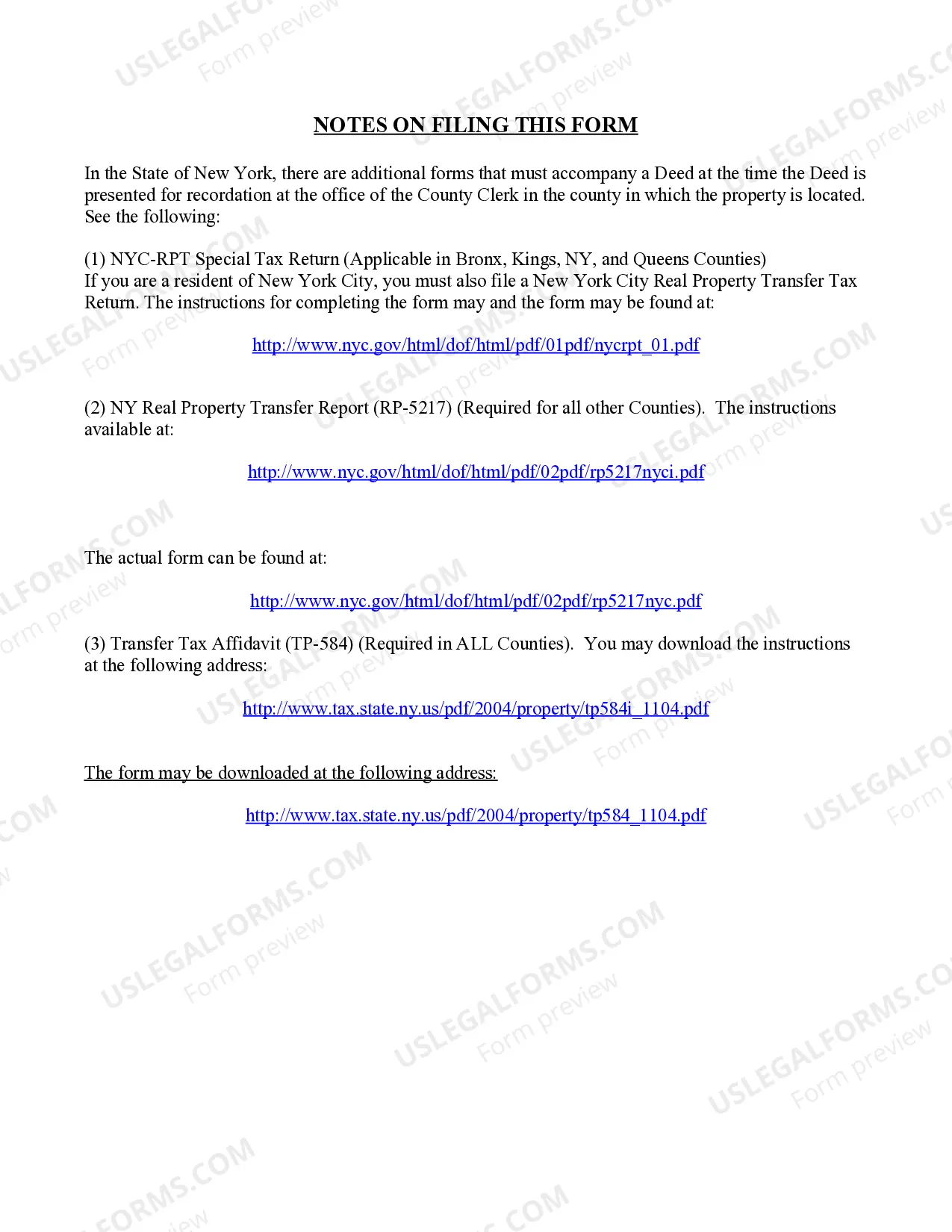
- Attach necessary forms: Include any additional required forms for your specific county in New York.
Is notarization required?
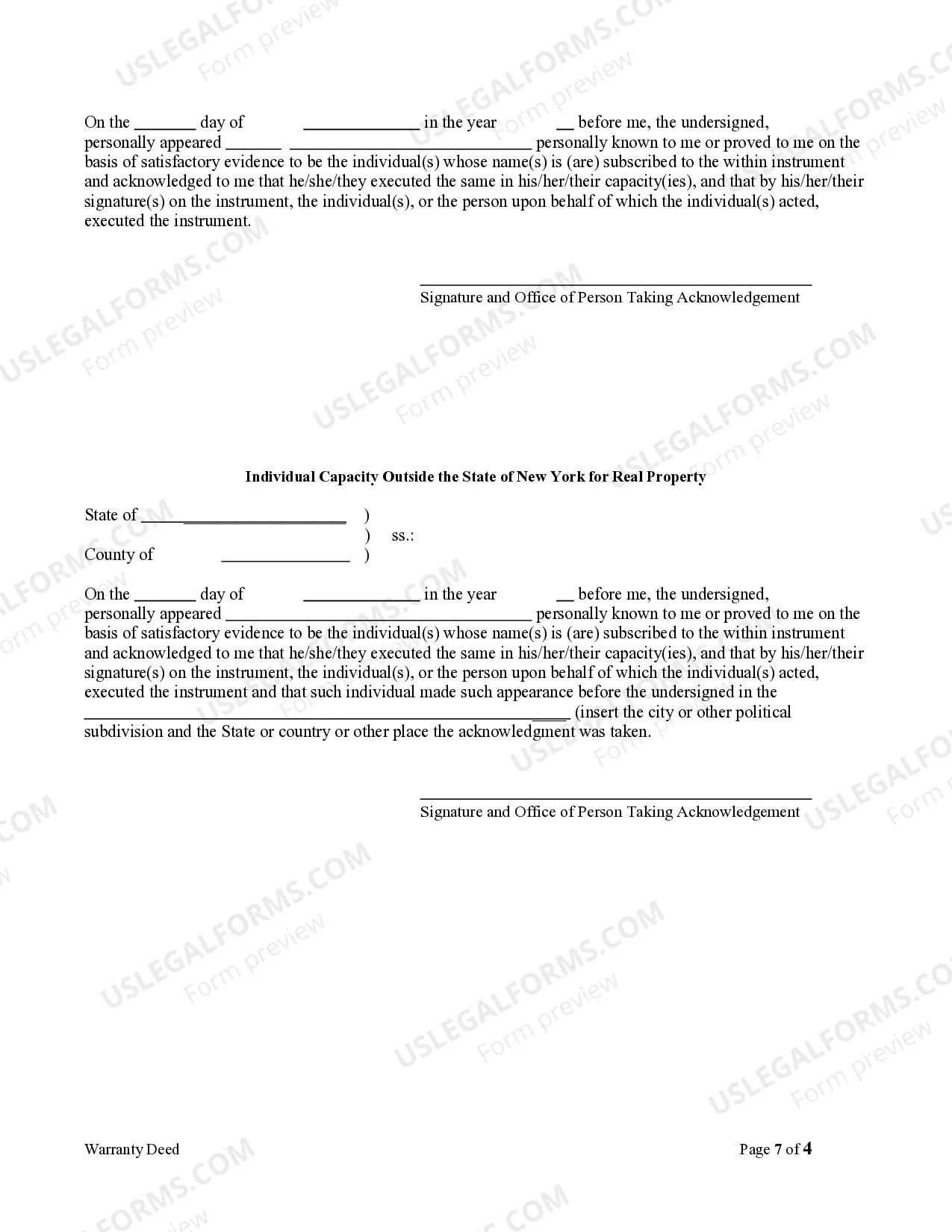
This form does not typically require notarization unless specified by local law. However, it is advisable to have the signatures notarized to enhance the document's legitimacy and facilitate the recording process.
Get your form ready online
Our built-in tools help you complete, sign, share, and store your documents in one place.
Make edits, fill in missing information, and update formatting in US Legal Forms—just like you would in MS Word.
Download a copy, print it, send it by email, or mail it via USPS—whatever works best for your next step.
Sign and collect signatures with our SignNow integration. Send to multiple recipients, set reminders, and more. Go Premium to unlock E-Sign.
If this form requires notarization, complete it online through a secure video call—no need to meet a notary in person or wait for an appointment.
We protect your documents and personal data by following strict security and privacy standards.

Make edits, fill in missing information, and update formatting in US Legal Forms—just like you would in MS Word.

Download a copy, print it, send it by email, or mail it via USPS—whatever works best for your next step.

Sign and collect signatures with our SignNow integration. Send to multiple recipients, set reminders, and more. Go Premium to unlock E-Sign.

If this form requires notarization, complete it online through a secure video call—no need to meet a notary in person or wait for an appointment.

We protect your documents and personal data by following strict security and privacy standards.
Typical mistakes to avoid
- Failing to provide a complete property description.
- Not including signatures from witnesses, which may be required.
- Forgetting to consult local county requirements for additional forms.
- Incorrectly understanding the implications of retaining a life estate.
Why use this form online
- Convenience: Easily download and complete the form from home.
- Editability: Make changes quickly before finalizing your decisions.
- Reliability: Forms are drafted by licensed attorneys, ensuring they meet legal standards.
Looking for another form?
Form popularity
FAQ
The two types of life estates are the conventional and the legal life estate. the grantee, the life tenant. Following the termination of the estate, rights pass to a remainderman or revert to the previous owner.
This life estate deed is a document that transfers ownership of real property, while reserving access and use of the property for the duration of the grantor's life. It allows the original owner (grantor) to remain on the premises with full access to and benefits from the property.
A life estate is usually property that has been acquired during the lifetime of a person with his or her ownership only lasting through the time he or she lives.This also means he or she cannot sell it, rent it or alter it until the life tenant passes on or leaves permanently.
This life estate deed is a document that transfers ownership of real property, while reserving access and use of the property for the duration of the grantor's life. It allows the original owner (grantor) to remain on the premises with full access to and benefits from the property.
A life estate deed permits the property owner to have full use of their property until their death, at which point the ownership of the property is automatically transferred to the beneficiary.
The date the deed was made; The name of the party granting the life estate and their address; The name of the grantee and their address; The address and a legal description of the property that is subject to the life estate;
A life estate deed involves the transfer of ownership from your name to someone else. Although you are no longer the owner of the property, you have the legal right to reside in the property for as long as you live.
The person holding the life estate -- the life tenant -- possesses the property during his or her life. The other owner -- the remainderman -- has a current ownership interest but cannot take possession until the death of the life estate holder.
Reservation of the present interest allows the owner to retain ownership for a period of time measured by the life of one or more individuals, by a term of years, or by a combination of the two.