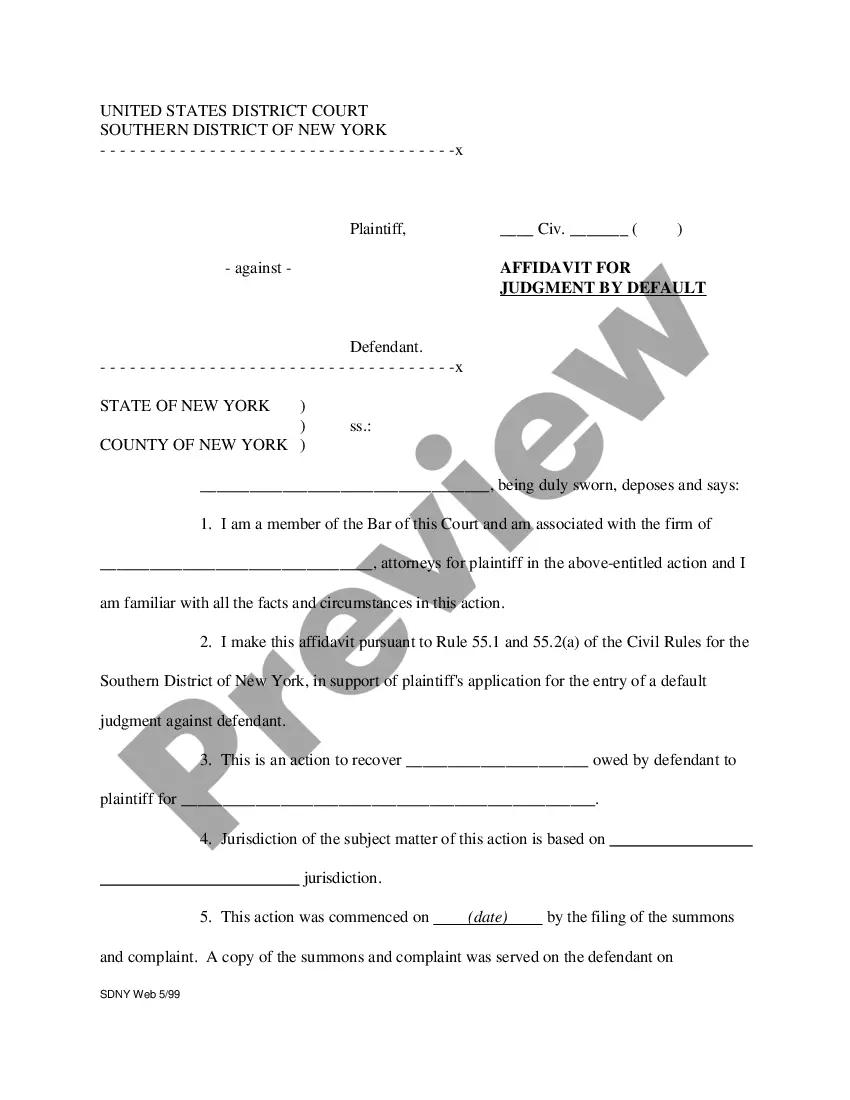
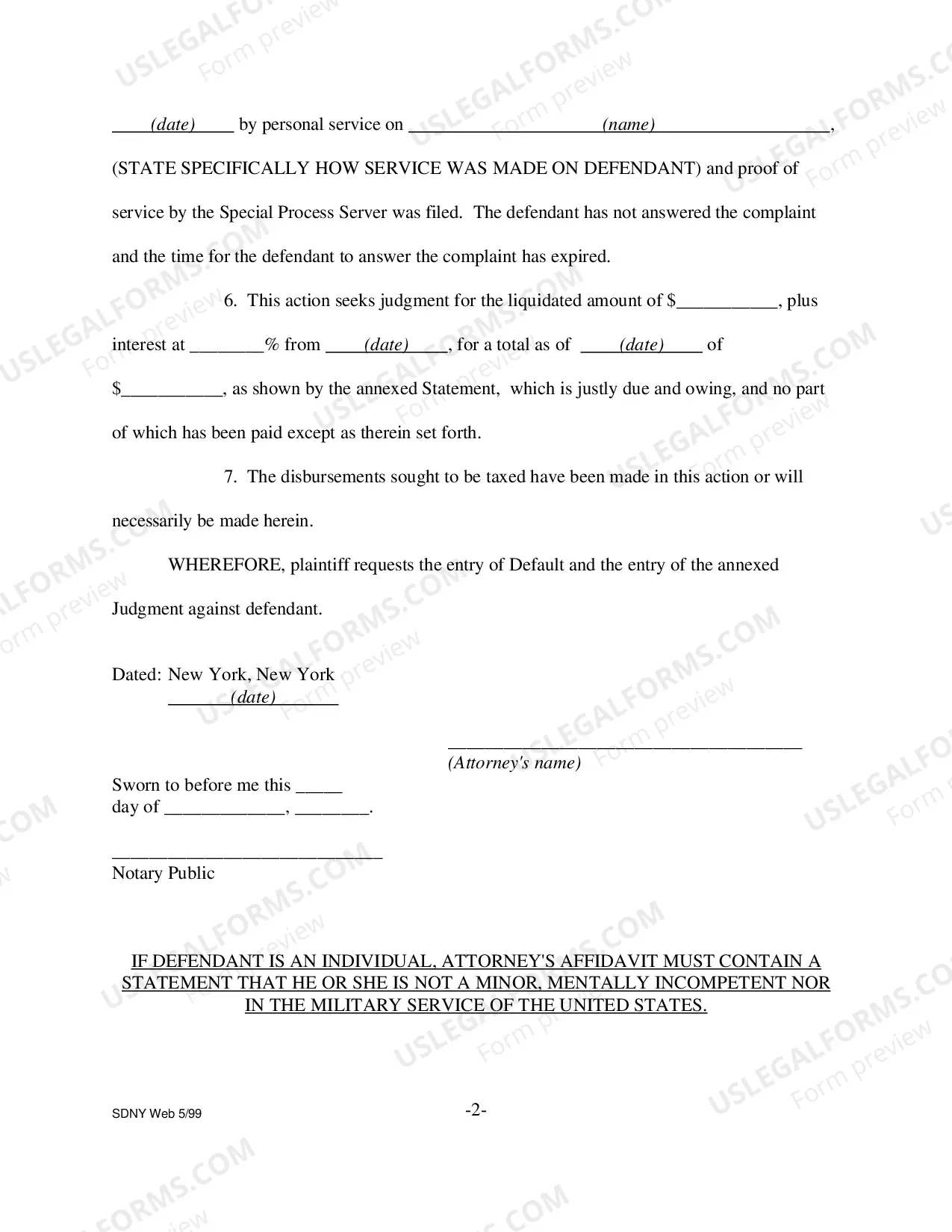
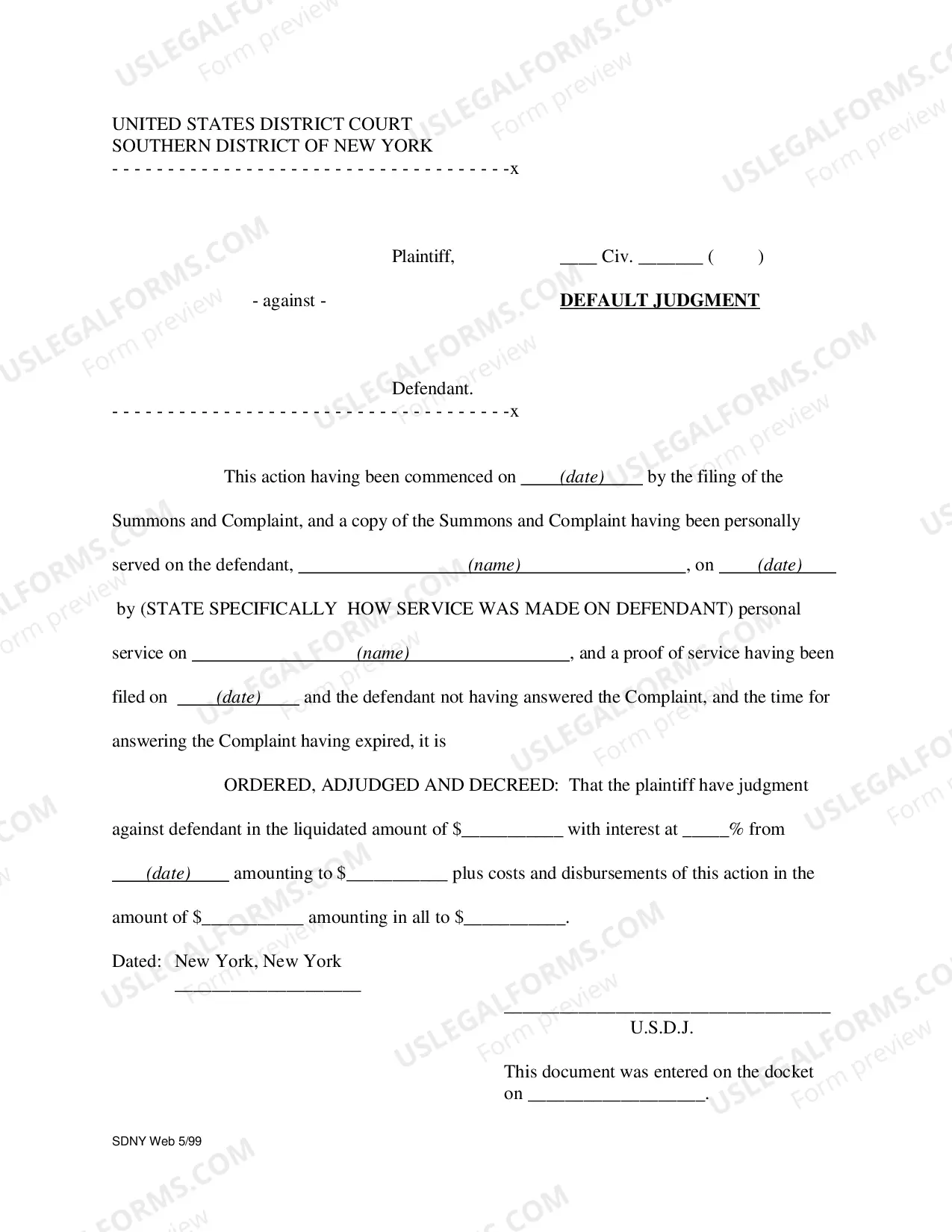
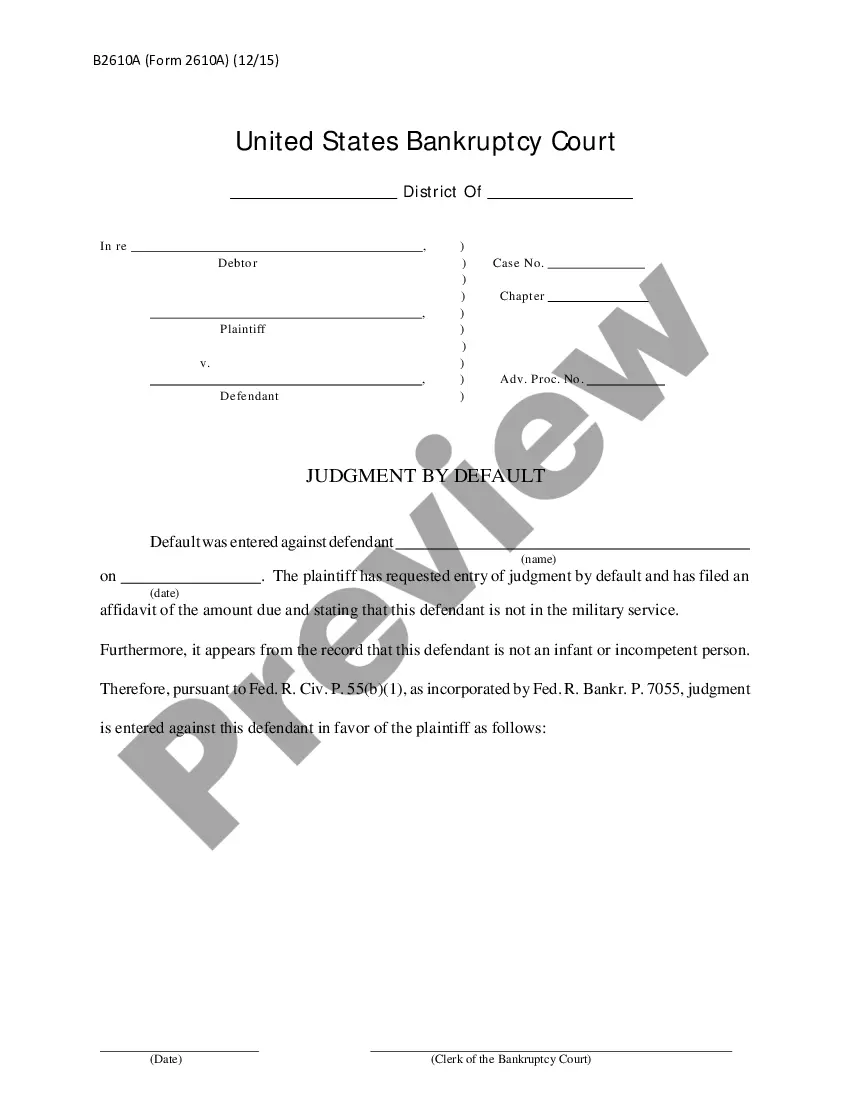
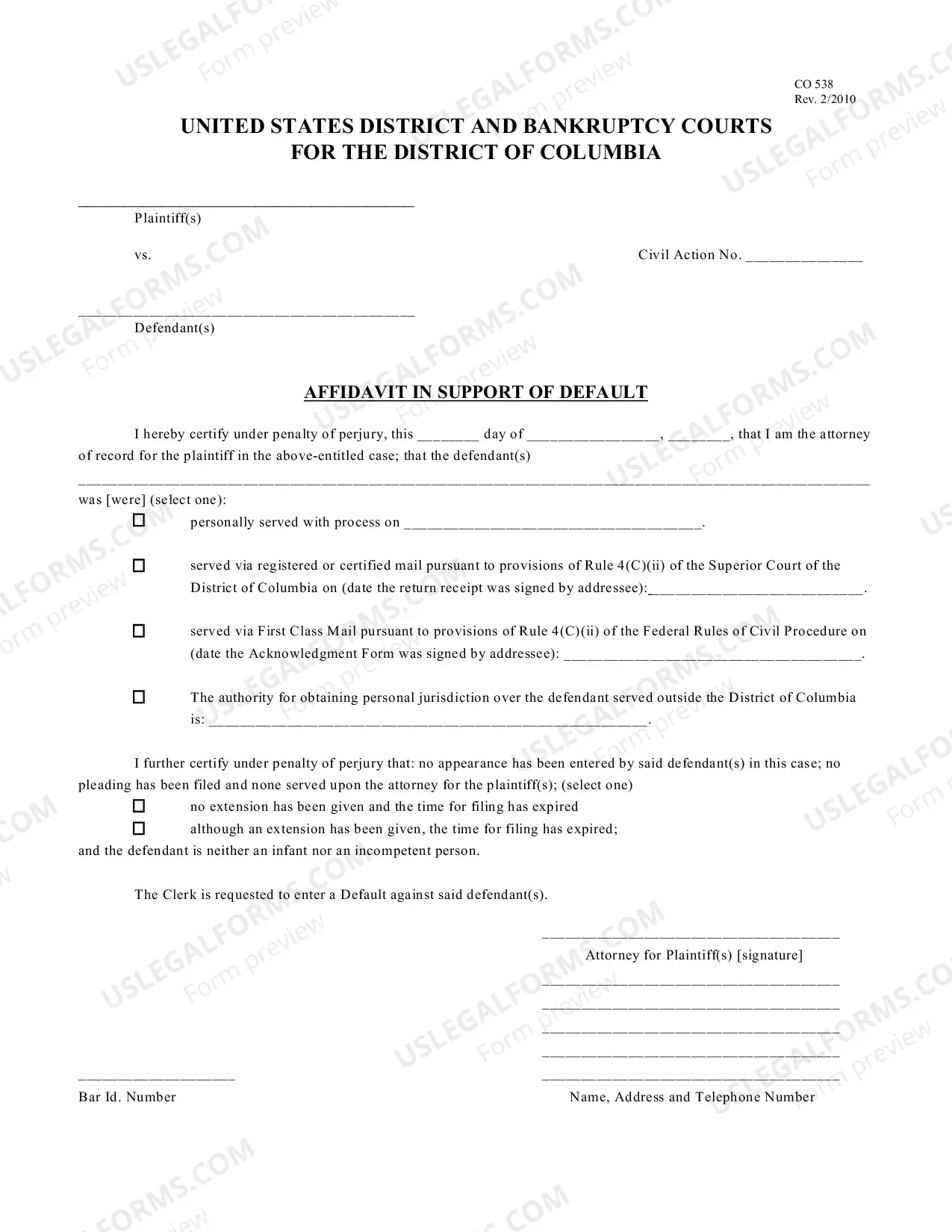
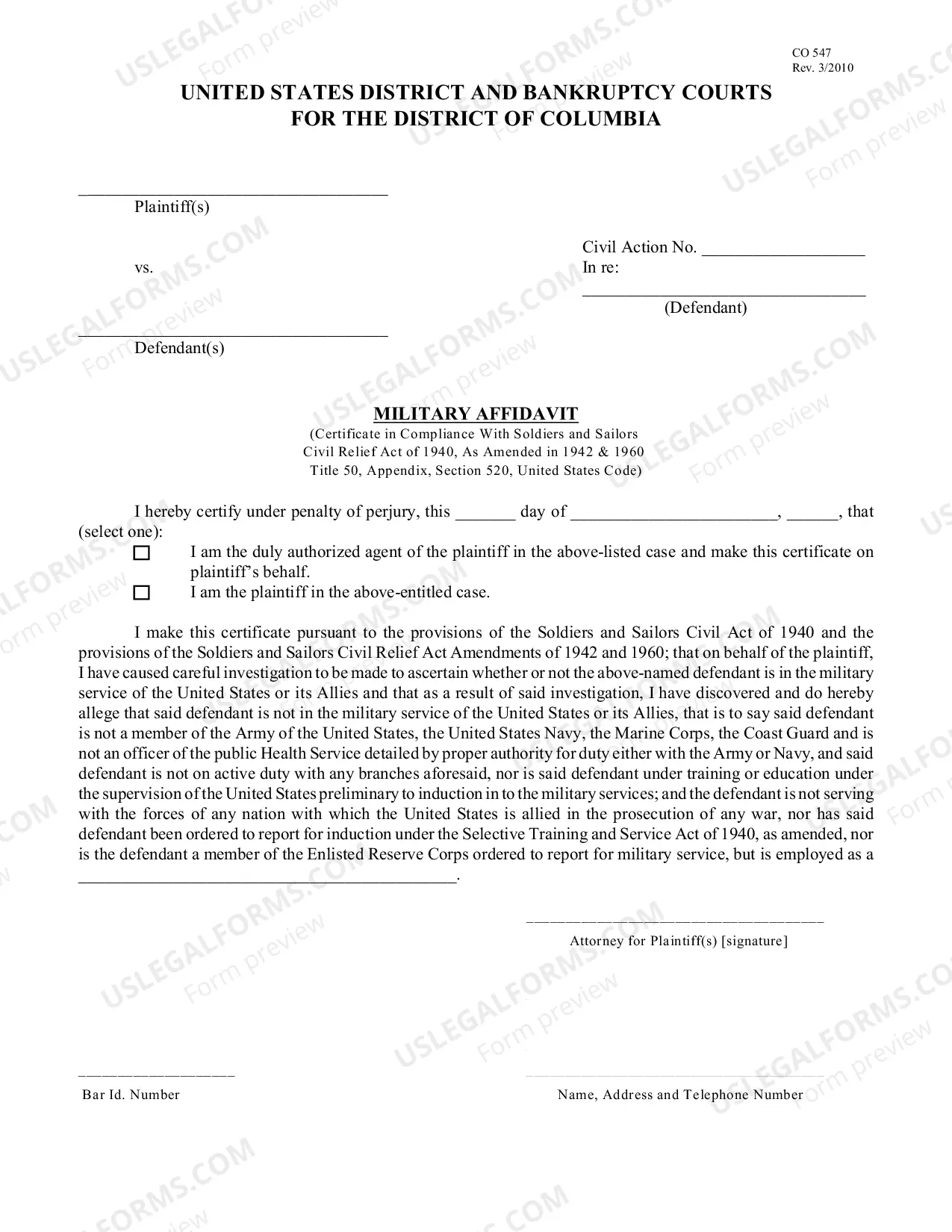
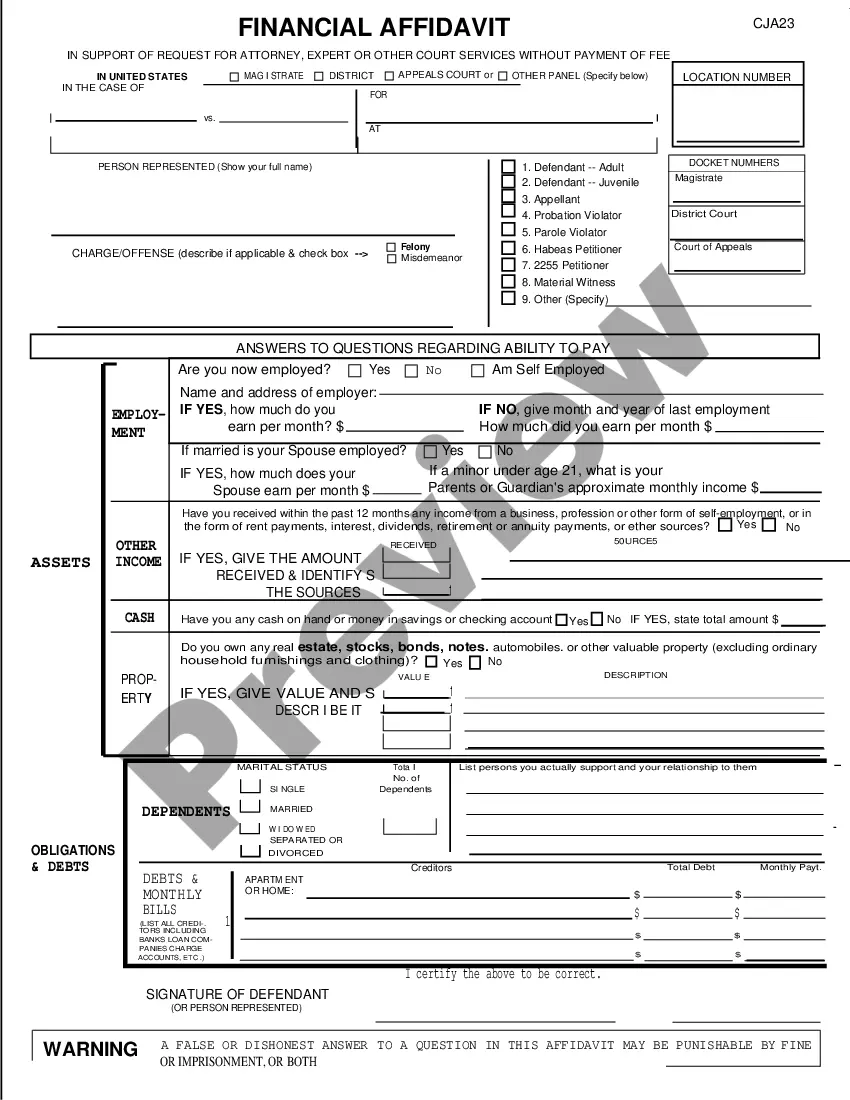
New York Affidavit For Judgment By Default (Sample And Form)
Description
Get your form ready online
Our built-in tools help you complete, sign, share, and store your documents in one place.
Make edits, fill in missing information, and update formatting in US Legal Forms—just like you would in MS Word.
Download a copy, print it, send it by email, or mail it via USPS—whatever works best for your next step.
Sign and collect signatures with our SignNow integration. Send to multiple recipients, set reminders, and more. Go Premium to unlock E-Sign.
If this form requires notarization, complete it online through a secure video call—no need to meet a notary in person or wait for an appointment.
We protect your documents and personal data by following strict security and privacy standards.

Make edits, fill in missing information, and update formatting in US Legal Forms—just like you would in MS Word.

Download a copy, print it, send it by email, or mail it via USPS—whatever works best for your next step.

Sign and collect signatures with our SignNow integration. Send to multiple recipients, set reminders, and more. Go Premium to unlock E-Sign.

If this form requires notarization, complete it online through a secure video call—no need to meet a notary in person or wait for an appointment.

We protect your documents and personal data by following strict security and privacy standards.
Looking for another form?
How to fill out New York Affidavit For Judgment By Default (Sample And Form)?
- If you're a returning user, log in to your account. Make sure your subscription is active, or renew it if necessary.
- Preview the form and read its description to confirm it fits your jurisdiction’s requirements.
- If you find discrepancies, use the Search tab to locate the correct template.
- Click on the Buy Now button to purchase the form, selecting your preferred subscription plan, ensuring you register for full access.
- Enter your payment details via credit card or PayPal to finalize your subscription.
- Download your form to your device, saving it for future access under the My documents section.
In conclusion, US Legal Forms provides an exceptional platform for ready-to-use legal documentation. With over 85,000 legal forms and expert support, you’re empowered to create precise legal documents in no time.
Start your journey today; visit US Legal Forms and streamline your legal document process!
Form popularity
FAQ
If you do not think the default judgment was appropriately entered against you, you must file a motion with the court asking the judge to set aside (void or nullify) the judgment. If the judge grants your motion, the case starts back up again.
Default judgments happen when you don't respond to a lawsuit often from a debt collector and a judge resolves the case without hearing your side.Next up could be wage garnishment or a bank account levy, which allows a creditor to remove money from your bank accounts to repay the debt.
A creditor can file for a Judgment on Affidavit (also known as an Affidavit Judgment) if it has documents that it believes prove that a Defendant owes the creditor a specific amount of money.
In most cases, however, default judgment can be obtained through an administrative process, simply by filing a request with the court, and even where an application is required it can in some circumstances be made without notice to the defendant.
Once a default is entered, the defendant is no longer able to file a response or otherwise participate in the case. When the default is entered, you may also ask the court to enter a judgment in your favor.
First, you can ask the court to set aside the default judgment and give you an opportunity to contest it. Next, you can settle the debt with the debt buyer for an amount less than what the default judgment is for. And finally you can eliminate the default judgment completely by filing for bankruptcy.
Renew the judgment Money judgments automatically expire (run out) after 10 years. To prevent this from happening, the creditor must file a request for renewal of the judgment with the court BEFORE the 10 years run out.
Typically, a court's rules governing enforcement of default judgments include procedures for wage garnishments, attachment of bank accounts and seizure of assets. The plaintiff can usually pursue more than one of these enforcement mechanisms simultaneously.
If you do not think the default judgment was appropriately entered against you, you must file a motion with the court asking the judge to set aside (void or nullify) the judgment. If the judge grants your motion, the case starts back up again.