New York Adverse Possession Affidavit
About this form
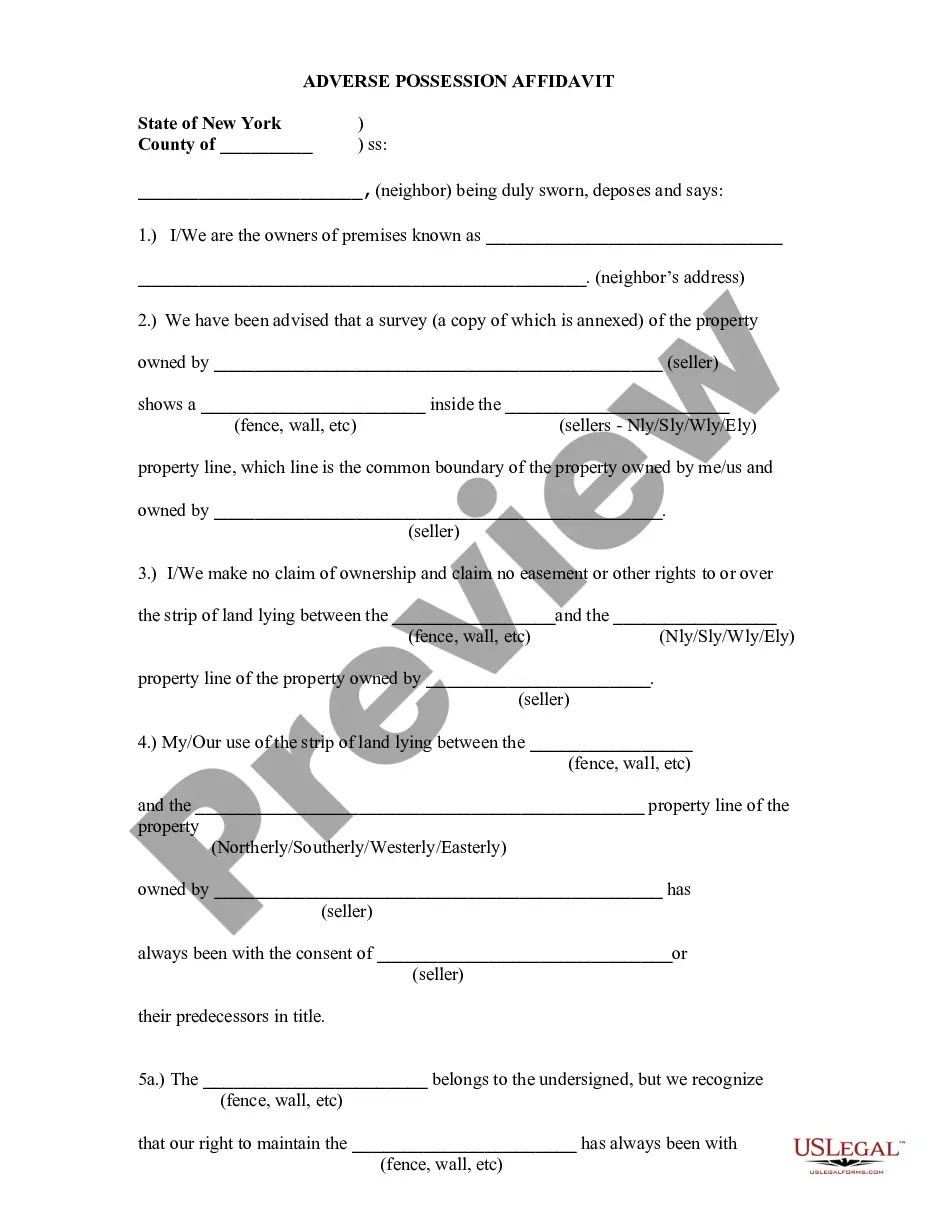
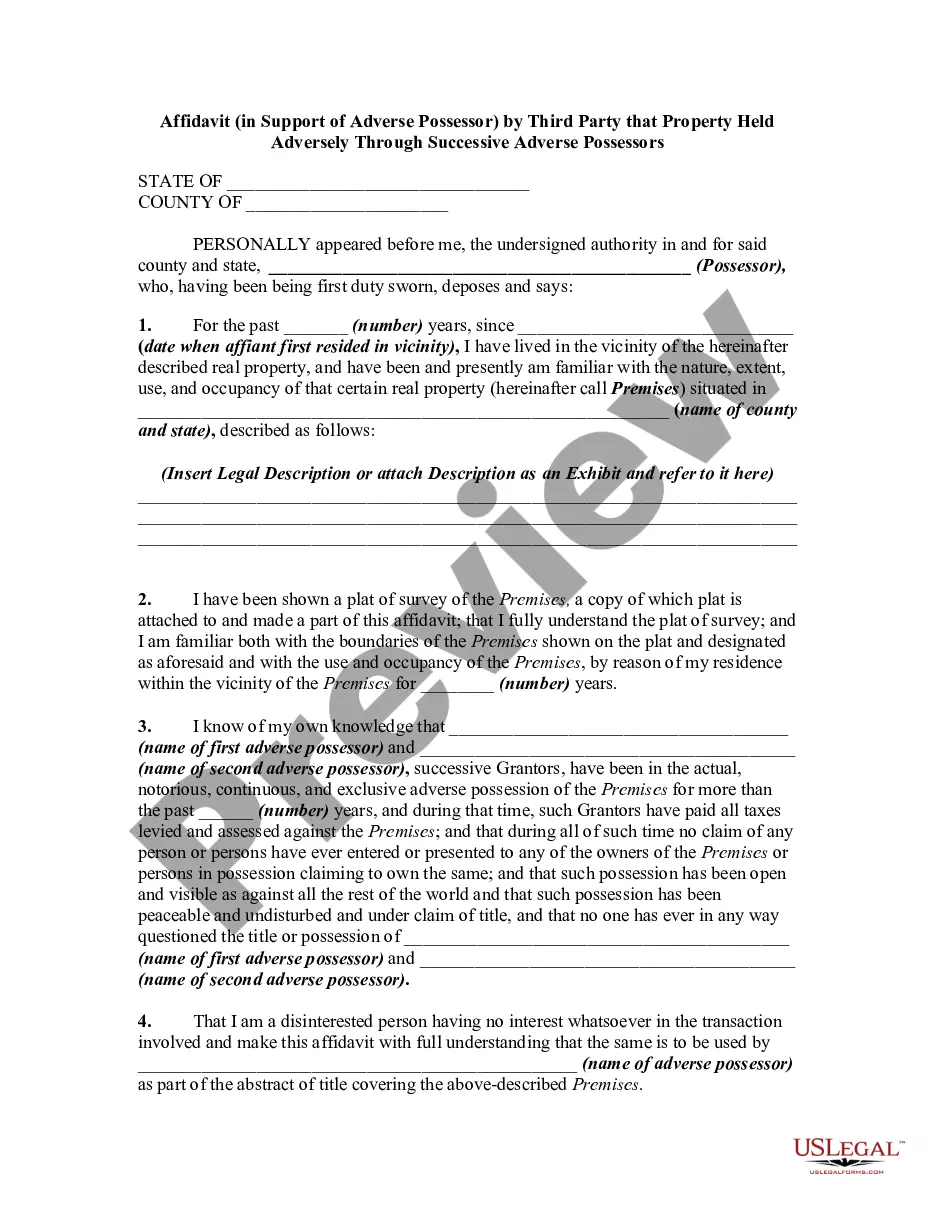
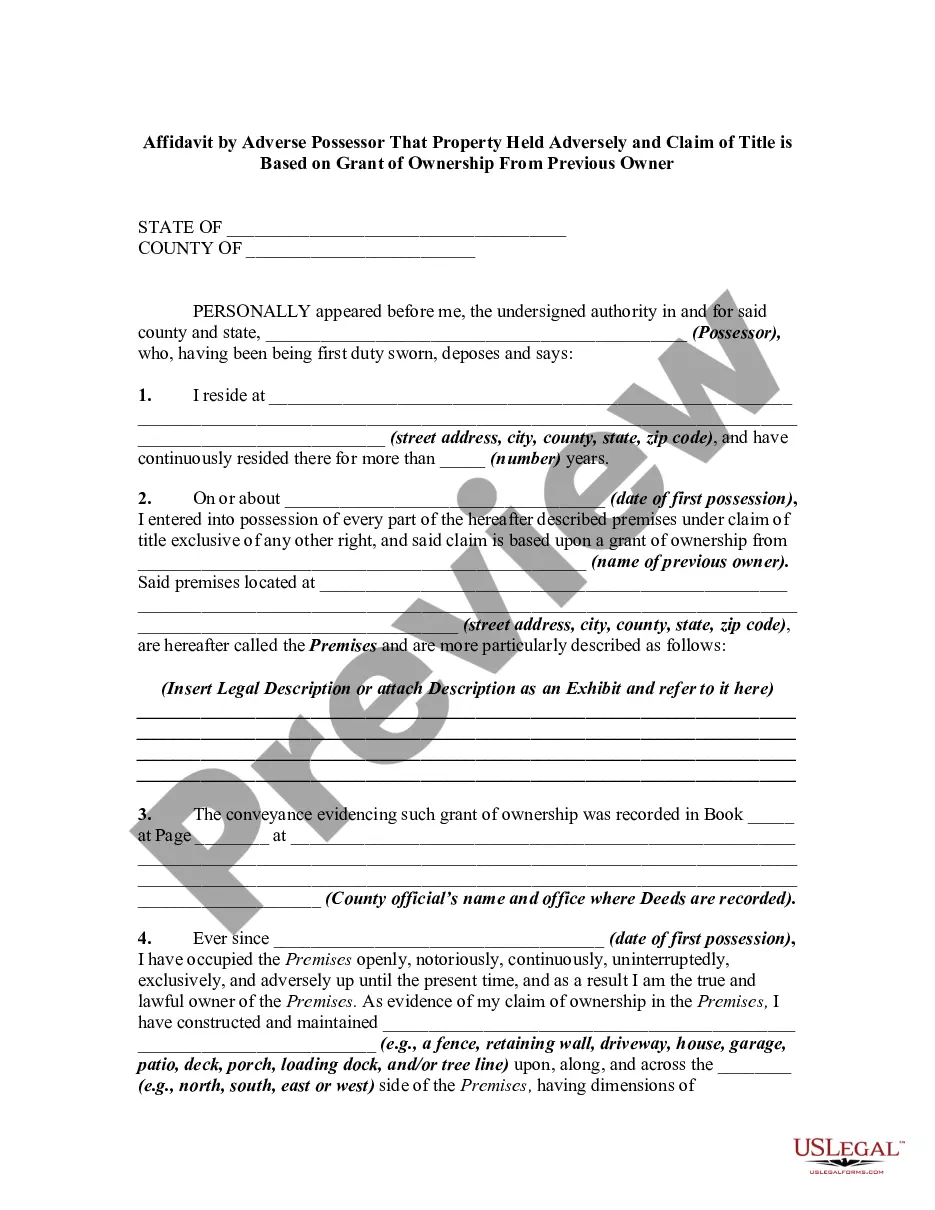
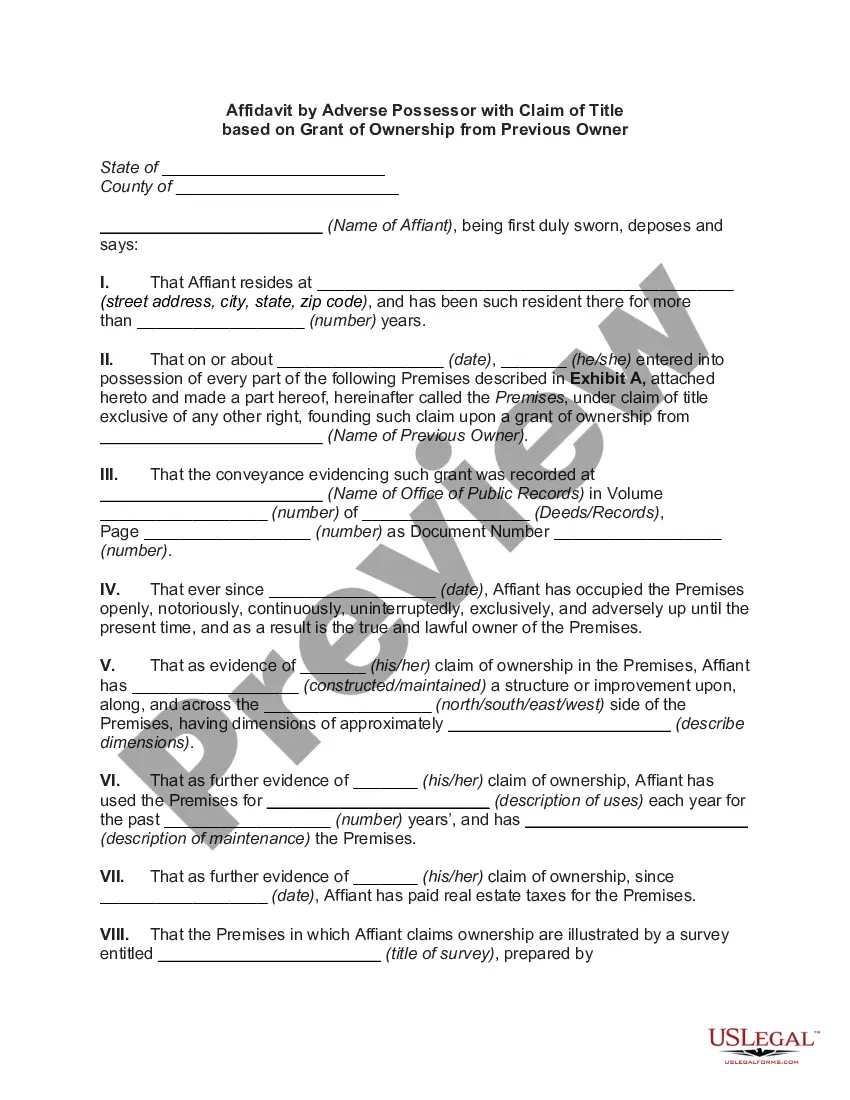
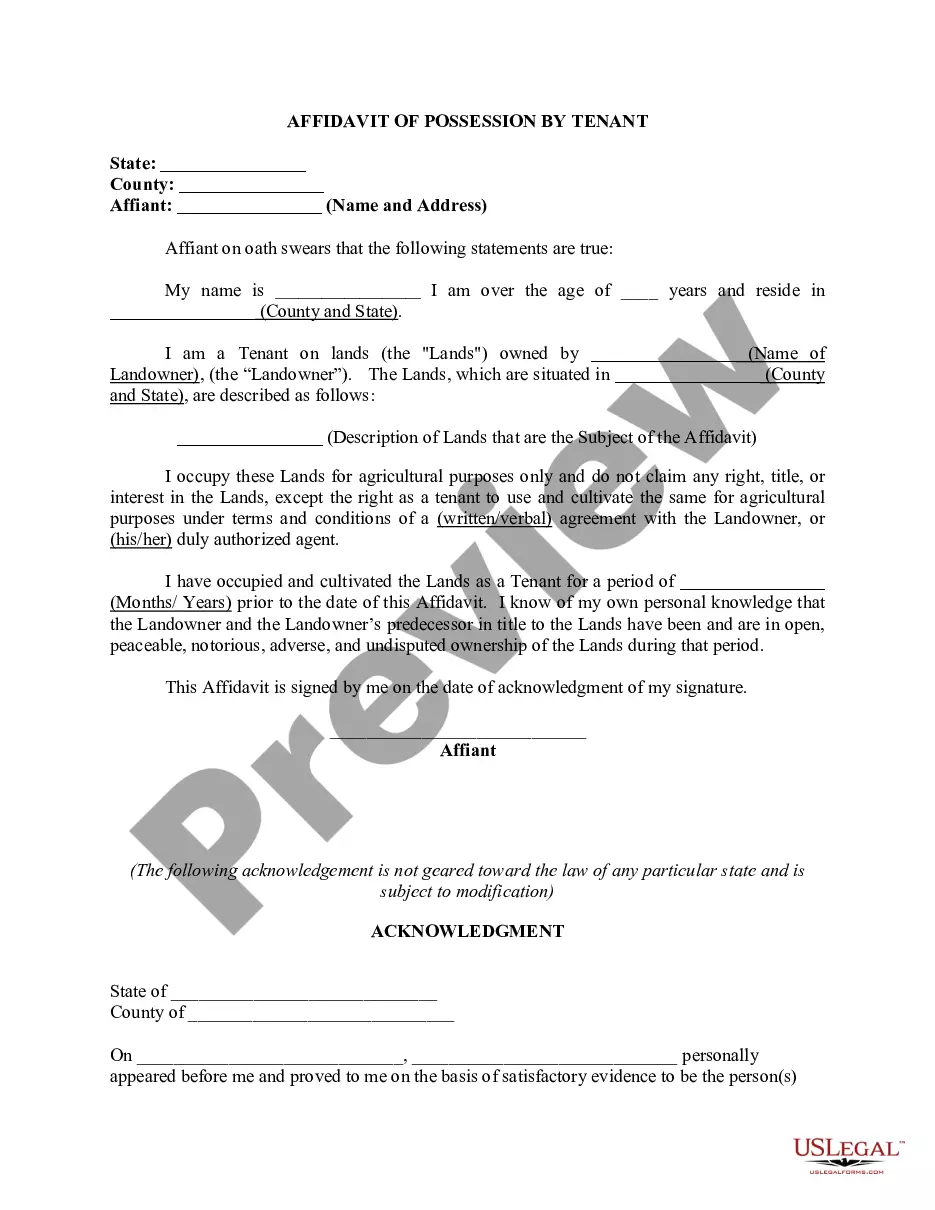
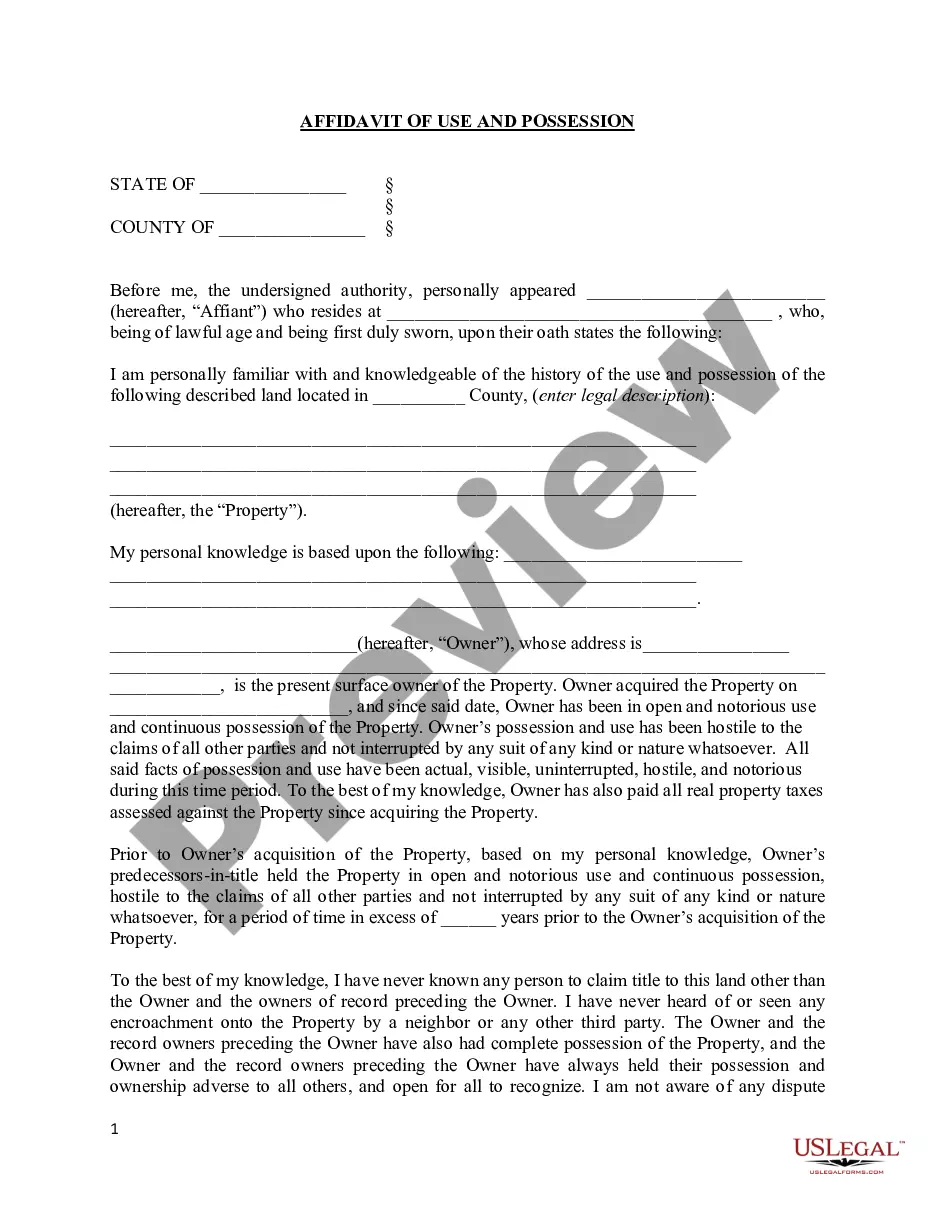
The Adverse Possession Affidavit is a legal document that certifies the factual circumstances regarding a tenant's use of a specific piece of land. The primary purpose of this affidavit is to demonstrate that the tenant does not claim ownership of the property in question, while affirming that the rightful owner is in possession. This form is distinct from other property-related forms as it specifically addresses the nuances of land use and claims, particularly in adverse possession situations.
Form components explained
- Identification of the owners and tenants involved.
- Details of the property being referenced, including its address.
- A description of the relevant property boundaries, such as fences or walls.
- A statement affirming that the tenant makes no claim of ownership or easement.
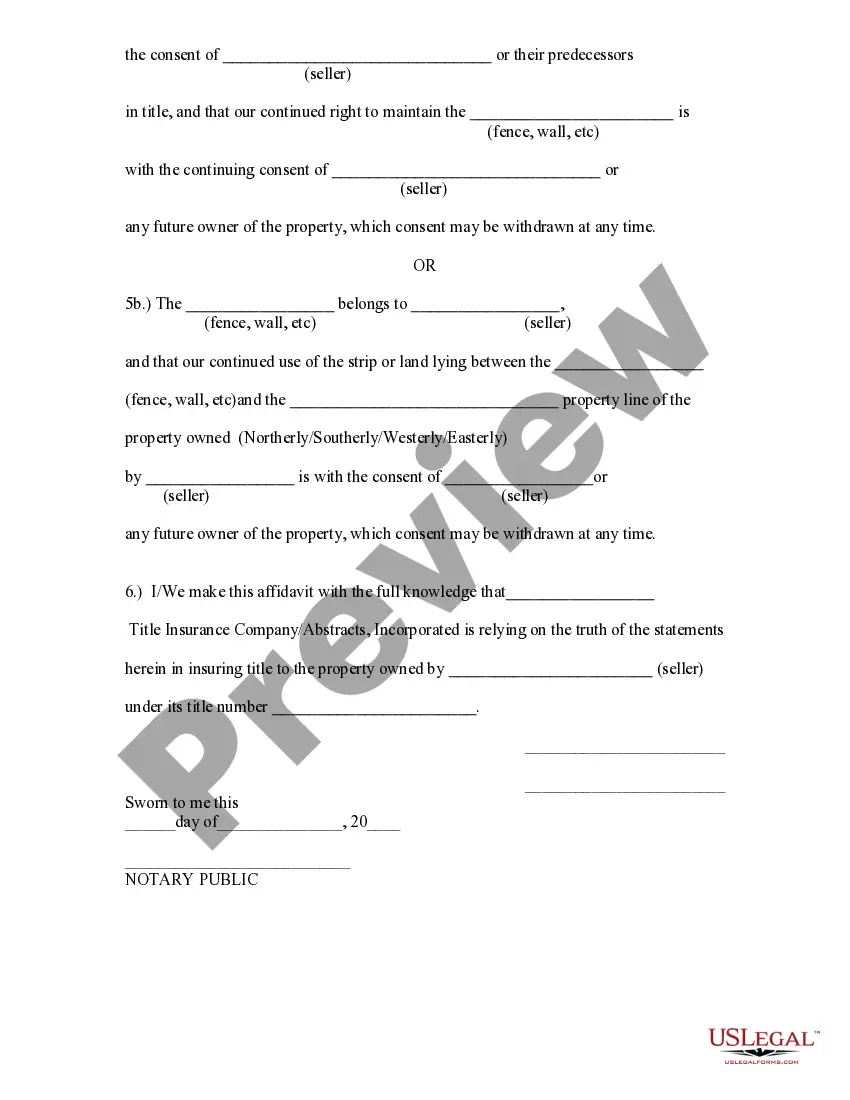
- Consent acknowledgment for maintaining structures on the property.
- Notary section for confirming the affidavit's validity.
Common use cases
This form is typically used in scenarios where a tenant has been using a portion of a property without claiming ownership, and the property owner needs to clarify boundaries and rights involved. It may also be necessary when disputes about land use arise or when seeking to formalize consent regarding property boundaries. Using this affidavit can help prevent future legal issues related to property ownership and usage claims.
Who can use this document
- Property owners who have tenants using their land and want to clarify usage rights.
- Tenants who have been using a portion of the property but do not intend to claim ownership.
- Landlords and real estate professionals managing rental properties where boundary issues may arise.
How to complete this form
- Identify all parties involved, including the property owner and tenant.
- Clearly specify the property address and boundaries relevant to the affidavit.
- Detail the nature of the agreement concerning land use and clarify any claims to ownership.
- Obtain the necessary consent statements and signatures from all parties involved.
- Ensure the form is notarized to confirm its legality.
Notarization requirements for this form
Yes, this form must be notarized to be legally valid. This ensures that the statements made within the affidavit are confirmed as truthful by a notary public. US Legal Forms offers integrated online notarization, available 24/7, enabling secure video calls for notarization without the need for travel.
Get your form ready online
Our built-in tools help you complete, sign, share, and store your documents in one place.
Make edits, fill in missing information, and update formatting in US Legal Forms—just like you would in MS Word.
Download a copy, print it, send it by email, or mail it via USPS—whatever works best for your next step.
Sign and collect signatures with our SignNow integration. Send to multiple recipients, set reminders, and more. Go Premium to unlock E-Sign.
If this form requires notarization, complete it online through a secure video call—no need to meet a notary in person or wait for an appointment.
We protect your documents and personal data by following strict security and privacy standards.

Make edits, fill in missing information, and update formatting in US Legal Forms—just like you would in MS Word.

Download a copy, print it, send it by email, or mail it via USPS—whatever works best for your next step.

Sign and collect signatures with our SignNow integration. Send to multiple recipients, set reminders, and more. Go Premium to unlock E-Sign.

If this form requires notarization, complete it online through a secure video call—no need to meet a notary in person or wait for an appointment.

We protect your documents and personal data by following strict security and privacy standards.
Common mistakes to avoid
- Not properly identifying all parties involved in the affidavit.
- Failing to specify the exact property boundaries and descriptions.
- Omitting the required signatures or consent statements.
- Neglecting to have the document notarized.
Benefits of using this form online
- Convenience of downloading and completing the form from anywhere.
- Editability allows customization to fit specific circumstances.
- Reliability from templates drafted by licensed attorneys.
Looking for another form?

Form popularity
FAQ
Adverse possession is a doctrine under which a person in possession of land owned by someone else may acquire valid title to it, so long as certain requirements are met, and the adverse possessor is in possession for a sufficient period of time, as defined by a statute of limitations.
To establish a claim for adverse possession, and take title to the disputed property, the adverse possessor must establish that their possession of the land has been adverse, under claim of right, open and notorious, continuous, exclusive, and actual for the statutorily required period (the ?prescriptive period?).
Requirements of adverse possession include exclusive use, continuous use and open takeover of the land. You can prevent adverse possession by marking boundary lines and providing written permission of use.
California has the shortest adverse possession time of just five years. Texas requires 30 years. Other states are in between. Ask a local real estate attorney for details in your state.
The statutory period for adverse possession may be as short as three years or as long as twenty years. Many jurisdictions allow an adverse possessor to "tack on" his or her period of adverse possession to a previous possessor's period, so long as there is no lapse in time between the two occupations.
As already mentioned, squatters' rights in California require a squatter to have occupied a property for at least 5 years. It also goes without saying that the entire five years must be uninterrupted. In other words, the squatter must not have abandoned the unit at any point during their 5-year occupation.
In order to establish a claim for adverse possession, a claimant must prove (1) actual possession of the disputed property (2) that is open and notorious, (3) peaceable, (4) under a claim of right, (5) and that is consistently and continuously adverse or hostile to the claim of another person for the duration of the