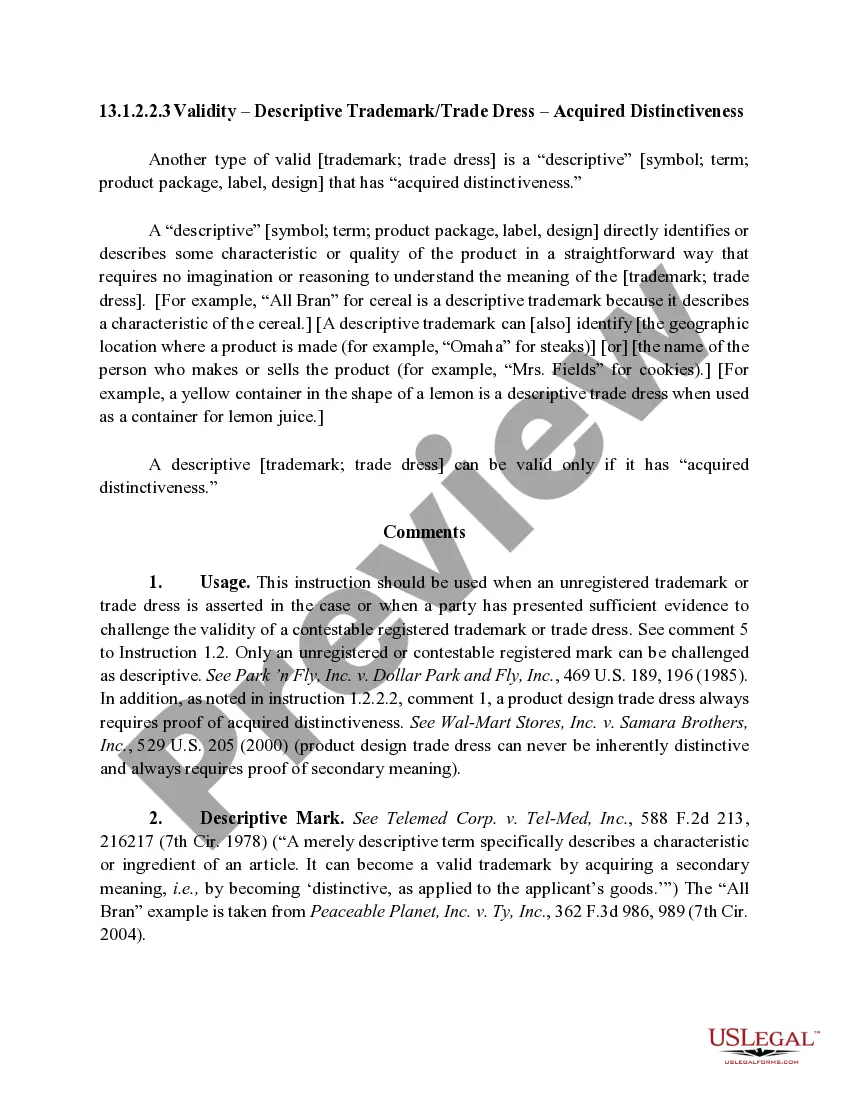
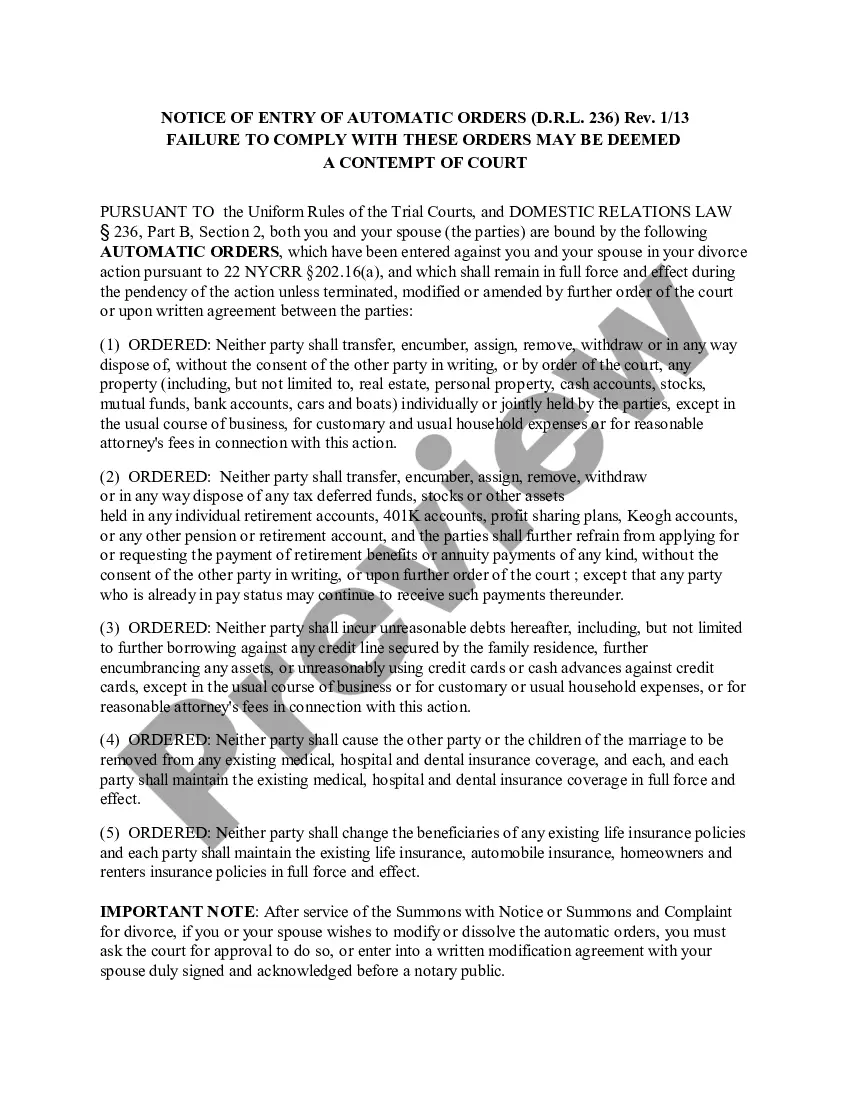
New York Notice of Entry of Automatic Orders
What is this form?
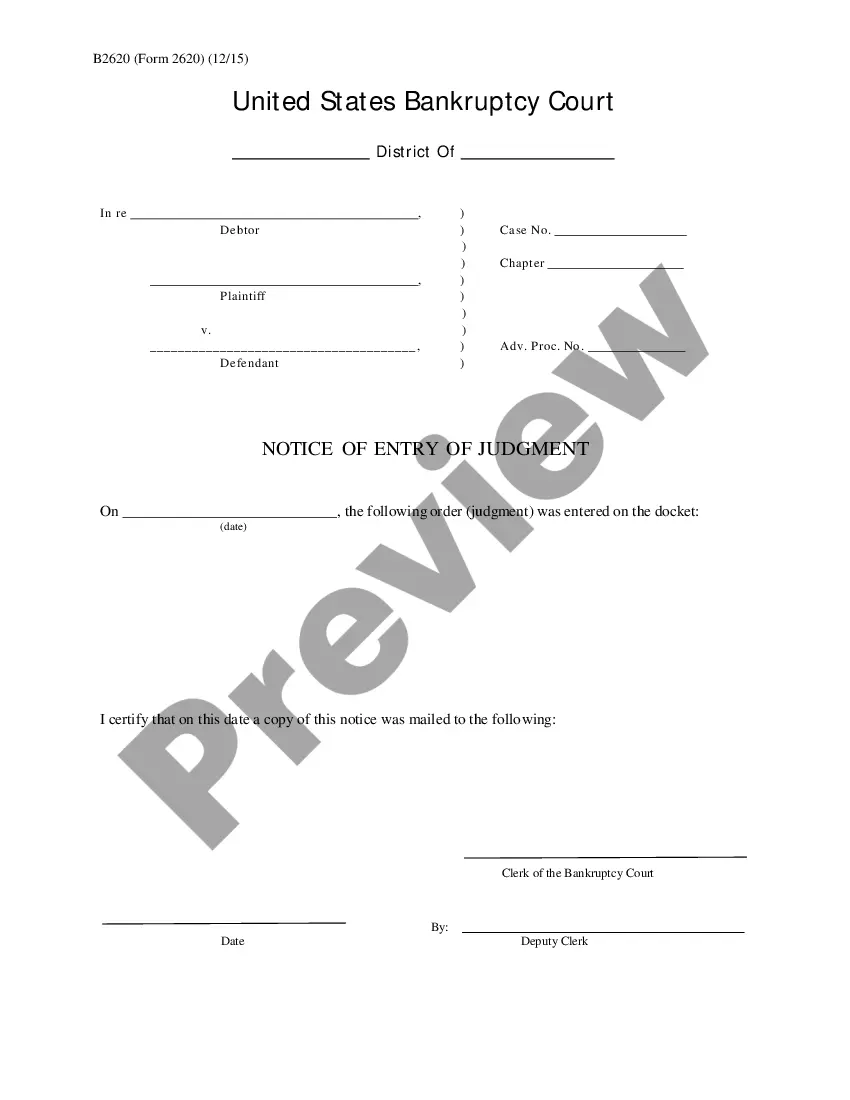
The Notice of Entry of Automatic Orders is a legal document that outlines automatic restrictions placed on both parties involved in a divorce action. This form serves to inform both parties of their obligations regarding property and financial matters during the divorce process. Unlike other forms that may focus on individual agreements, this notice establishes clear guidelines that automatically take effect to protect the interests of both spouses and any children involved.
Form components explained
- Details the automatic orders affecting property and financial matters.
- Prohibits either party from transferring or disposing of assets without written consent.
- Restricts incurring unreasonable debts during the divorce proceedings.
- Mandates maintenance of existing medical and insurance coverage.
- Addresses modifications to orders through court approval or mutual agreement.
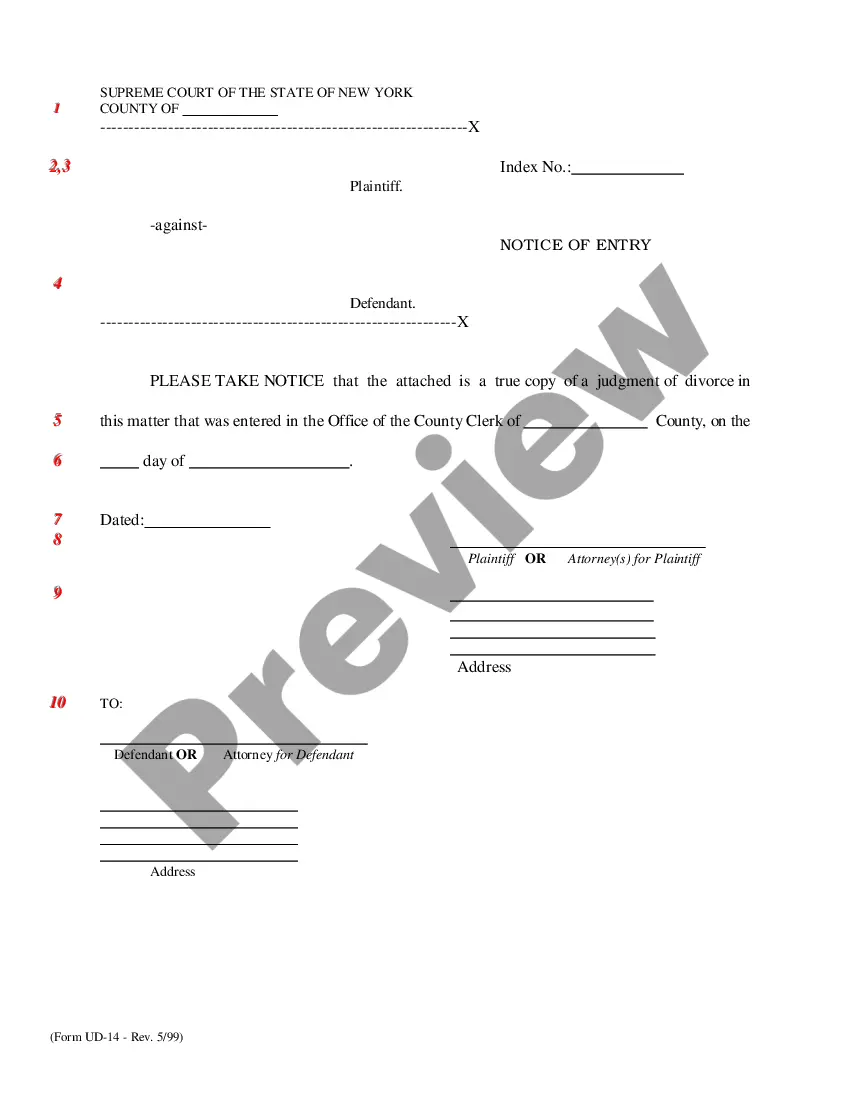
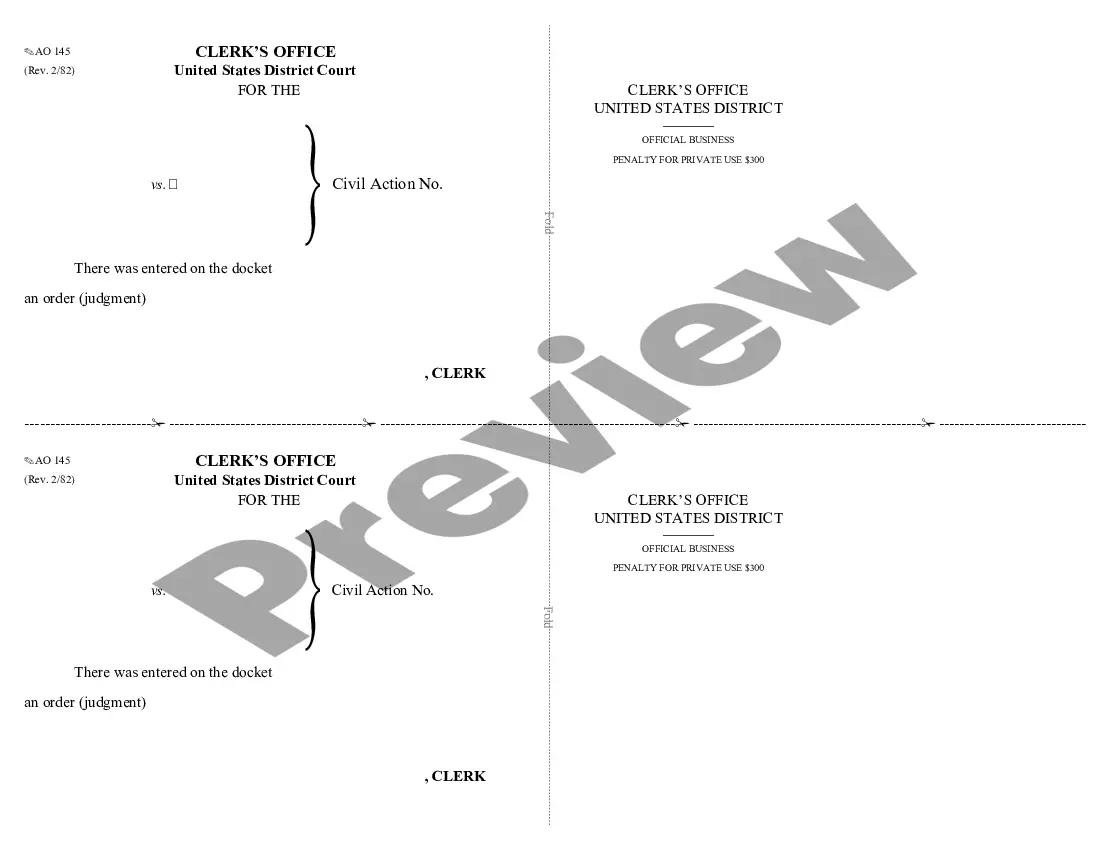
When this form is needed
This form should be used immediately after the service of the Summons with Notice or Summons and Complaint for divorce. It is essential in situations where one or both parties need to be made aware of the automatic orders that apply to their financial and property dealings during the divorce process. This ensures that both parties comply with the court's orders, preventing potential contempt of court issues.
Who should use this form
This form is intended for:
- Individuals initiating or responding to divorce proceedings.
- Divorcing couples seeking to understand their automatic legal obligations.
- Attorneys representing clients in divorce cases.
How to complete this form
- Identify the parties involved in the divorce action.
- Clearly specify the terms of the automatic orders provided in the form.
- Date and sign the notice to acknowledge receipt and understanding of the orders.
- Serve the completed notice to the other party involved in the divorce.
- Keep a copy for your records and refer back to it during the divorce proceedings.
Notarization requirements for this form
This form typically does not require notarization unless specified by local law. Always verify local regulations regarding notarization requirements.
Get your form ready online
Our built-in tools help you complete, sign, share, and store your documents in one place.
Make edits, fill in missing information, and update formatting in US Legal Forms—just like you would in MS Word.
Download a copy, print it, send it by email, or mail it via USPS—whatever works best for your next step.
Sign and collect signatures with our SignNow integration. Send to multiple recipients, set reminders, and more. Go Premium to unlock E-Sign.
If this form requires notarization, complete it online through a secure video call—no need to meet a notary in person or wait for an appointment.
We protect your documents and personal data by following strict security and privacy standards.

Make edits, fill in missing information, and update formatting in US Legal Forms—just like you would in MS Word.

Download a copy, print it, send it by email, or mail it via USPS—whatever works best for your next step.

Sign and collect signatures with our SignNow integration. Send to multiple recipients, set reminders, and more. Go Premium to unlock E-Sign.

If this form requires notarization, complete it online through a secure video call—no need to meet a notary in person or wait for an appointment.

We protect your documents and personal data by following strict security and privacy standards.
Typical mistakes to avoid
- Failing to properly serve the notice to the other party.
- Not keeping a copy of the completed form for personal records.
- Ignoring the need for court approval if seeking to modify the automatic orders.
Benefits of using this form online
- Immediate access to legal templates drafted by licensed attorneys.
- Convenience of downloading and completing the form at your own pace.
- Editable forms allow you to customize information as needed.
Looking for another form?
Form popularity
FAQ
An uncontested divorce costs at least $335 in total court and filing fees.
An uncontested divorce costs at least $335 in total court and filing fees.
Some uncontested divorces are resolved as quickly as six weeks, while others can take six months or more. Since New York doesn't have a waiting period, a divorce that both parties agree on takes roughly 3 months.
In your uncontested divorce, the easiest way to speed your divorce through the court is for the defendant to waive service by signing an Affidavit of Defendant. If your spouse refuses to sign the affidavit, you will have to hire a process server to deliver a copy of the summons and complaint.
The parties in a dissolution of marriage, legal separation, annulment, legal custody, or visitation are automatically subject to these orders which are attached to the Complaint that is filed by the person seeking the divorce or separation, etc. (the Plaintiff), and served on the other spouse (the Defendant).
In New York, an uncontested divorce is where both spouses agree to a end their marriage and have settled all of the divorce-related issues in their case, such as division of property and alimony. In New York, you and your spouse also have to agree on the grounds or reason for your divorce.
1) Meet the Residency Requirements. 2) Know the Grounds for Divorce in New York. 3) Gather the Information You Need to Complete the Forms (Uncontested Divorce) 4) Prepare and File the Necessary Forms. 5) Serve the Forms to Your Spouse. 6) Response by Your Spouse.
An uncontested divorce costs at least $335 in total court and filing fees.
Notice of Automatic Orders. Notice Concerning Continuation of Health Care Coverage. Summons With Notice (Form UD-1 or UD-1a) Verified Complaint (Form UD-2) Affidavit of Service (Form UD-3)