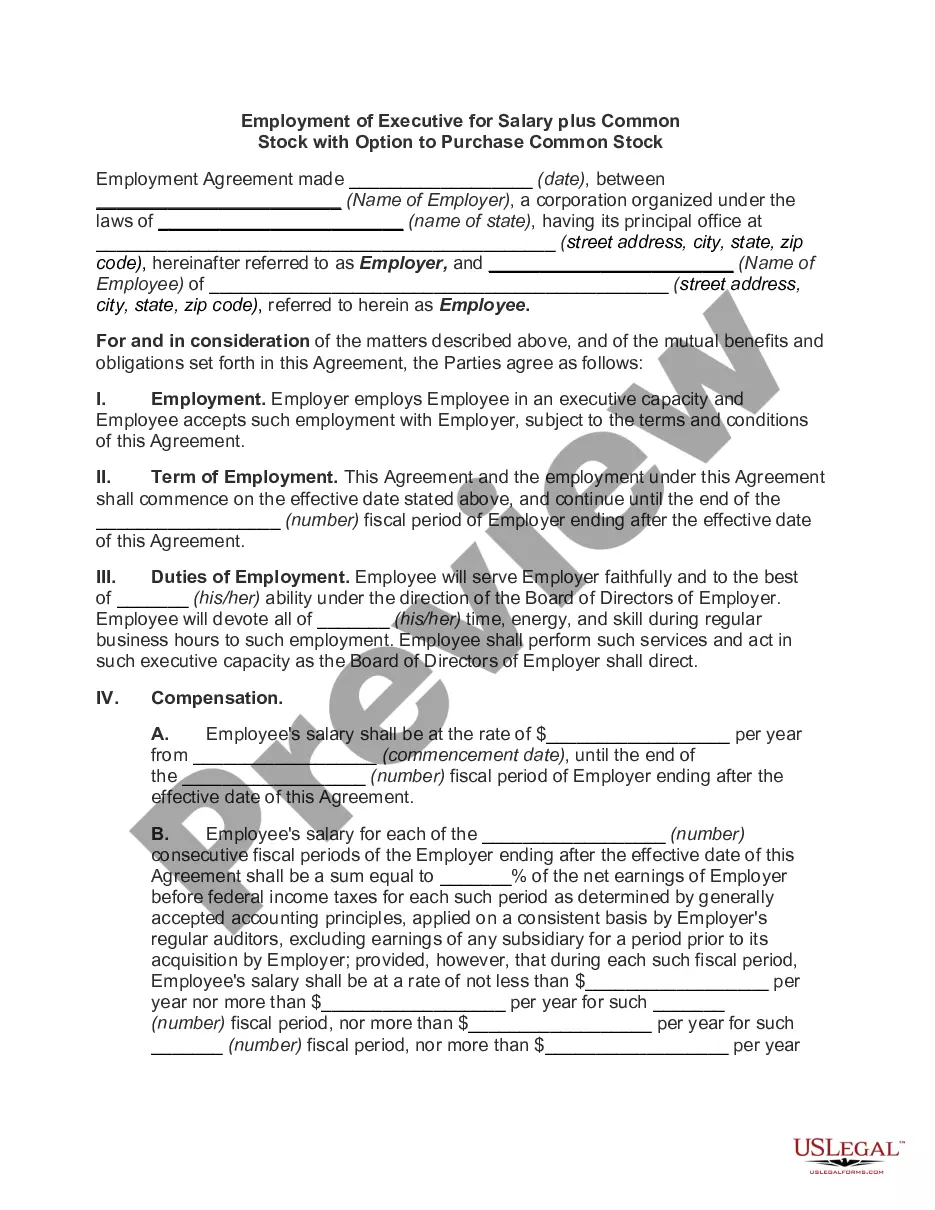
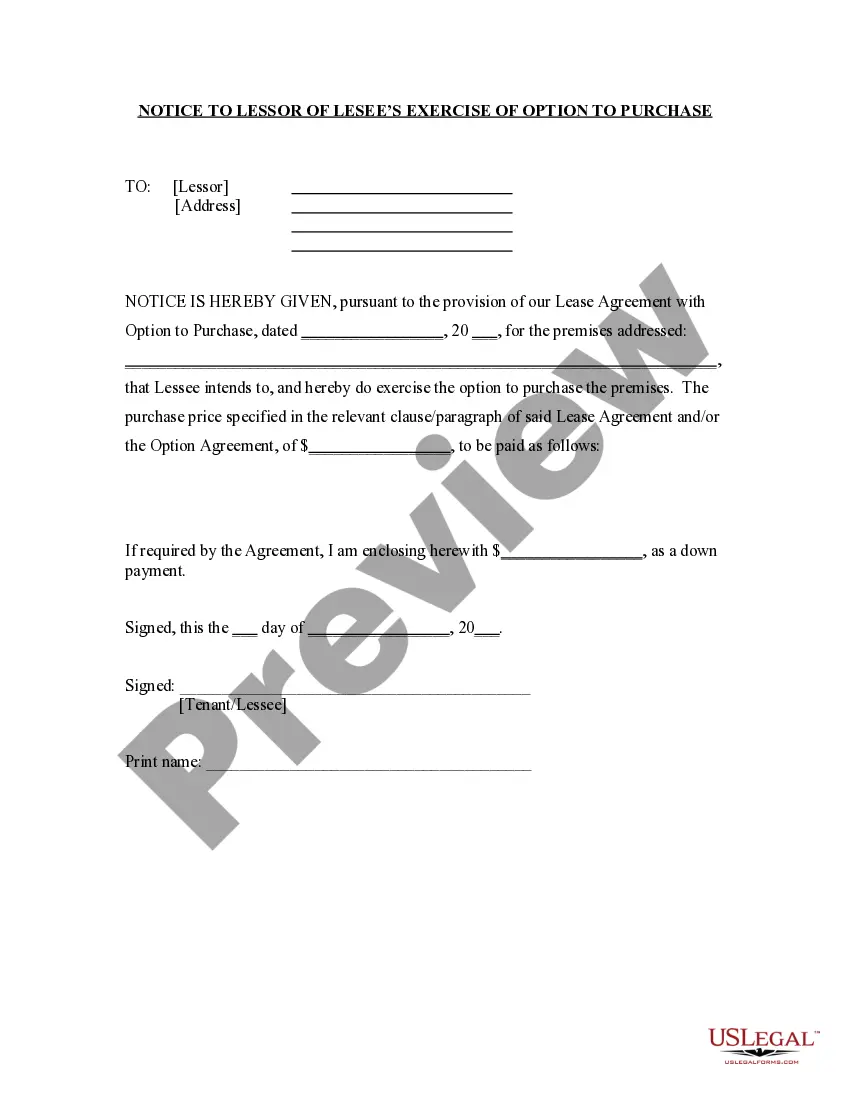
New York Notice to Lessor Exercising Option to Purchase
What is this form?
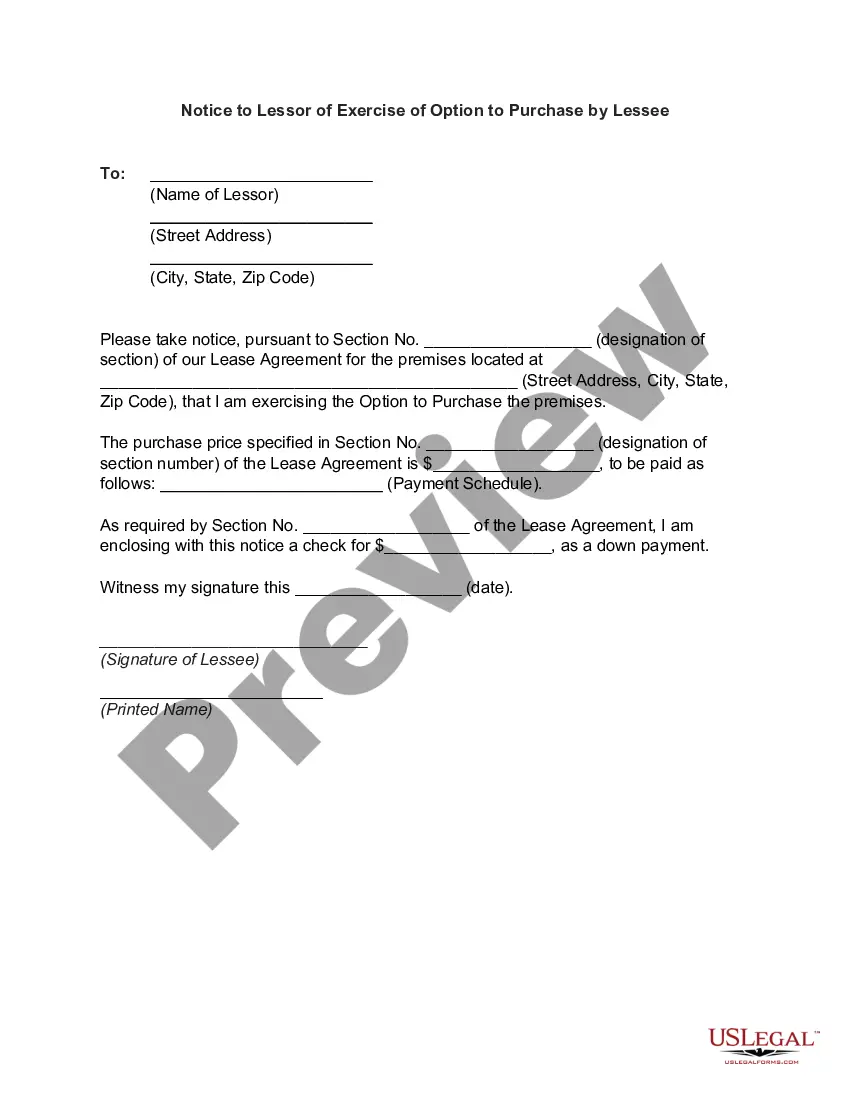
The Notice to Lessor Exercising Option to Purchase is a legal document that acts as formal notification from a tenant to a landlord indicating the tenant's intention to exercise their contractual right to purchase the property. This notice outlines the terms agreed upon in the original contract and ensures compliance with state laws regarding the purchase option. Unlike similar forms, this notice specifically addresses the act of exercising a purchase option, which is often included in lease agreements or option agreements.
Key parts of this document
- Identification of the parties involved (tenant and landlord).
- Declaration of the tenant's intent to exercise the option to purchase.
- Specification of the purchase price as detailed in the lease agreement.
- Details on payment method and timelines for the purchase.
- Print name and signature of the tenant/lessee.
Common use cases
This form is essential when a tenant wishes to notify the landlord of their decision to buy the property they are renting. It is often used in real estate transactions where a lease-option agreement exists, allowing the tenant to purchase the property at a predetermined price during or at the end of the lease term. Failing to provide this notice could result in the expiration of the purchase option.
Who this form is for
- Tenants who hold an option to purchase the property they are renting.
- Landlords who need to be informed formally about the tenant's intention to purchase.
- Real estate professionals assisting clients with lease-option agreements.
Steps to complete this form
- Identify the parties: Clearly state the names of the tenant and landlord.
- Declare intent: Specify that the tenant intends to exercise the option to purchase.
- Specify the purchase price: Enter the amount as stated in the lease or option agreement.
- Detail payment terms: Describe how and when the payment will be made.
- Include signatures: Print the tenant's name and secure their signature to validate the notice.
Does this form need to be notarized?
This form does not typically require notarization unless specified by local law. However, having it notarized can provide additional legal assurance.
Get your form ready online
Our built-in tools help you complete, sign, share, and store your documents in one place.
Make edits, fill in missing information, and update formatting in US Legal Forms—just like you would in MS Word.
Download a copy, print it, send it by email, or mail it via USPS—whatever works best for your next step.
Sign and collect signatures with our SignNow integration. Send to multiple recipients, set reminders, and more. Go Premium to unlock E-Sign.
If this form requires notarization, complete it online through a secure video call—no need to meet a notary in person or wait for an appointment.
We protect your documents and personal data by following strict security and privacy standards.

Make edits, fill in missing information, and update formatting in US Legal Forms—just like you would in MS Word.

Download a copy, print it, send it by email, or mail it via USPS—whatever works best for your next step.

Sign and collect signatures with our SignNow integration. Send to multiple recipients, set reminders, and more. Go Premium to unlock E-Sign.

If this form requires notarization, complete it online through a secure video call—no need to meet a notary in person or wait for an appointment.

We protect your documents and personal data by following strict security and privacy standards.
Avoid these common issues
- Failing to clearly identify both parties involved.
- Not including the correct purchase price from the lease agreement.
- Ignoring specific state requirements for notification periods.
- Neglecting to sign and date the form, making it invalid.
Advantages of online completion
- Convenience of downloading and completing the form at your own pace.
- Editability allowing for customization specific to your situation.
- Access to templates drafted by licensed attorneys ensuring legal reliability.
Looking for another form?
Form popularity
FAQ
You sign one of two types of agreements. You and the landlord set a purchase price. You pay an option fee. You decide how long the rental term will be. Maintenance roles will be defined. Your monthly payment covers rent and down payment savings. When the rental term nears its end, you apply for a mortgage.
Document everything in writing. Keep a written record of everything that is agreed on, and be careful to use the right terms in the agreement. Consult an attorney. Use separate agreements. Keep the term short. Take a security deposit. Pay like an owner. Factor in repair costs. Don't give large rent credits.
A lease purchase agreement in real estate is a rent-to-own contract between a tenant and a landlord for the former to purchase the property at a later point in time. The renter pays the seller an option fee at an agreed-upon purchase price, giving them exclusive rights to buy the property.
The California Residential Lease Agreement-With Option to Purchase is a form used specifically for a purchase agreement that begins as landlord-tenant lease agreement.
Lease-option contracts give you the right to buy the home when the lease expires, while lease-purchase contracts require you to buy it. You pay rent throughout the lease, and in some cases, a percentage of the payment is applied to the purchase price.
In a standard Lease-Purchase Contract, the two parties agree to a lease period during which rent is paid, and the terms of the sale at the end of the lease period, including sale price. Often, the contract is structured in two parts, one representing the lease term and the other a contract of sale.
A lease-option is a contract in which a landlord and tenant agree that, at the end of a specified period, the renter can buy the property. The tenant pays an up-front option fee and an additional amount each month that goes toward the eventual down payment.