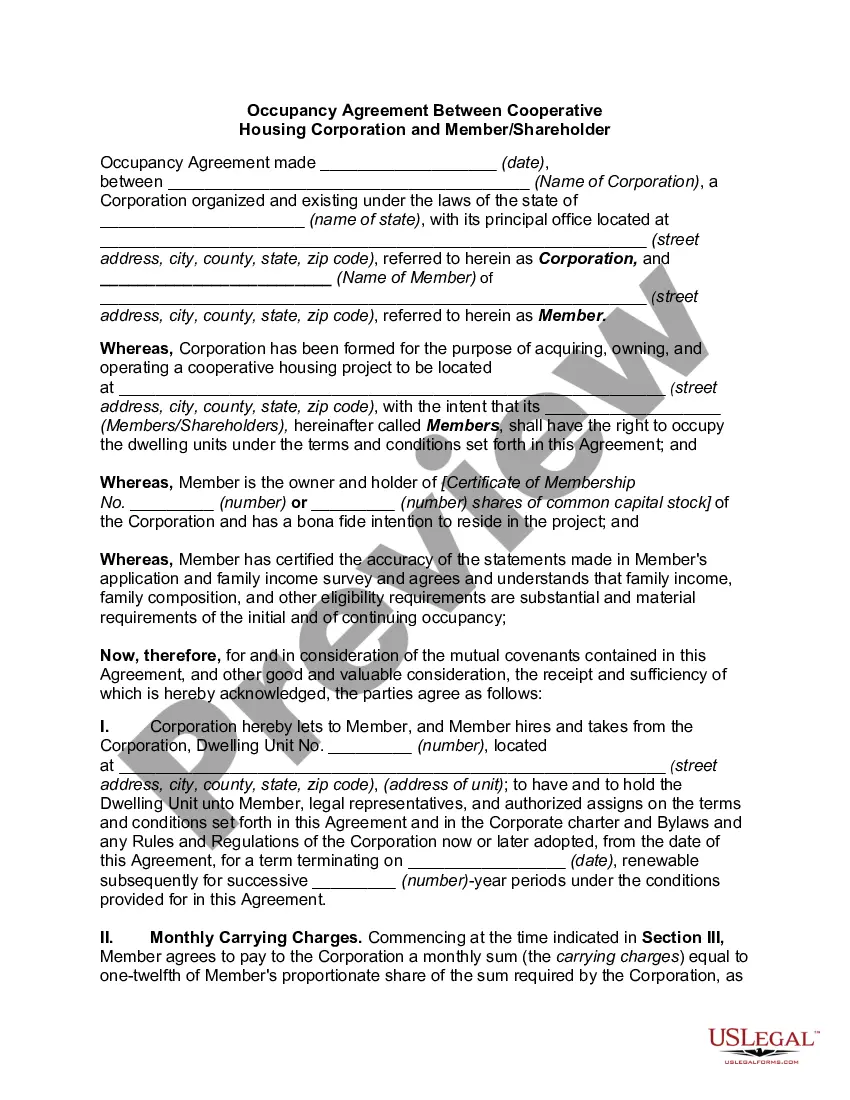
New York Complaint (Example)
Understanding this form
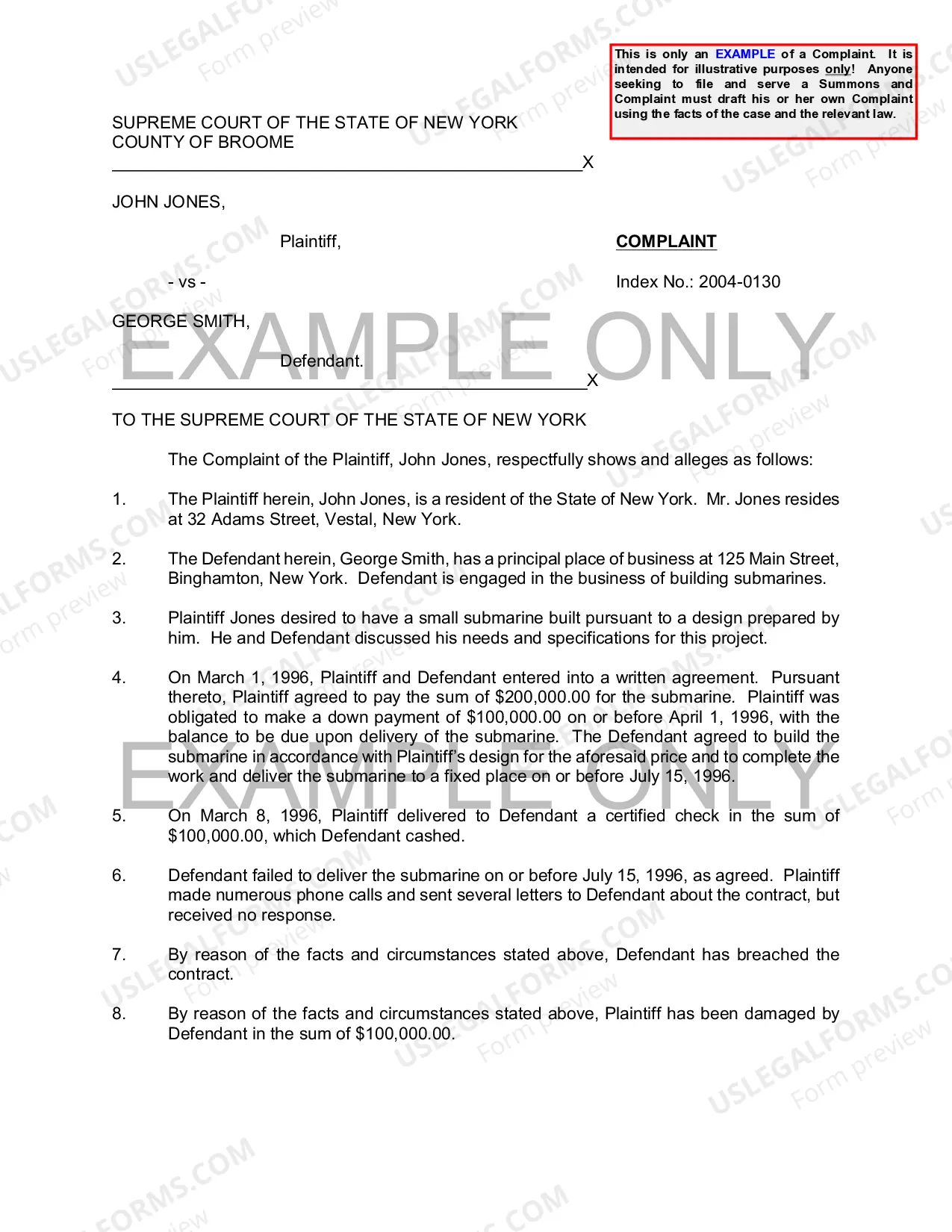
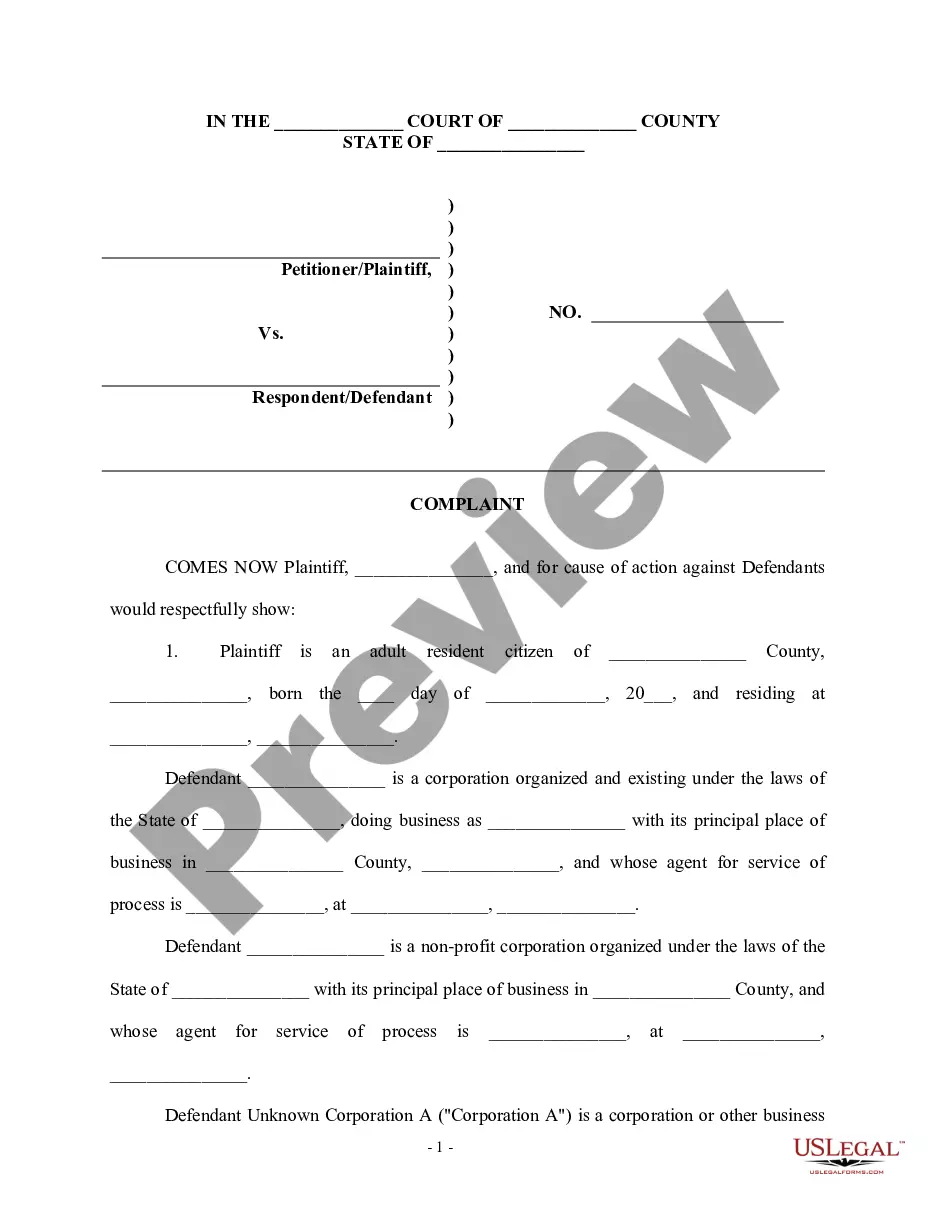
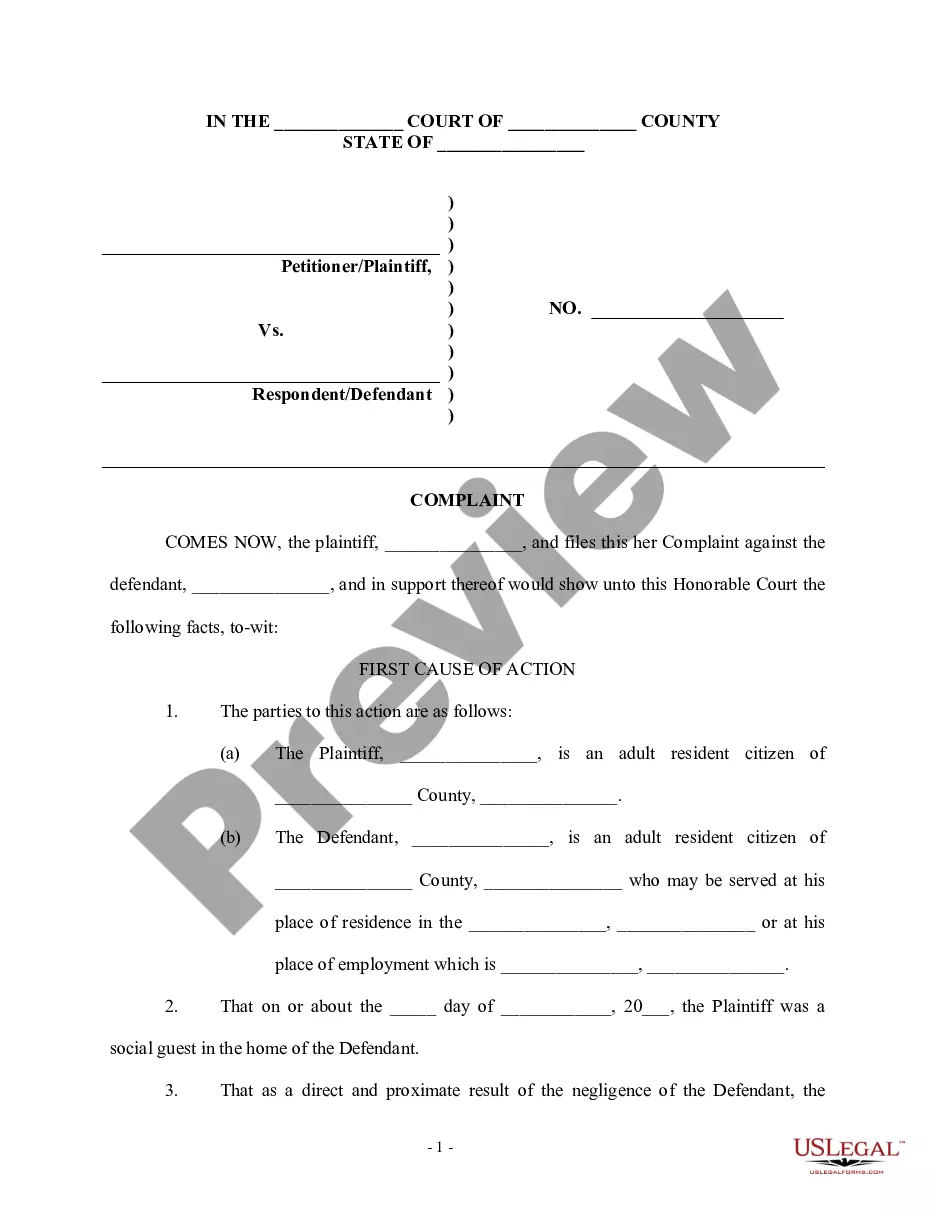
The Complaint form is a legal document used to initiate a lawsuit by outlining the plaintiff's case against the defendant in a court of law. This form sets the stage for civil litigation, allowing the plaintiff to formally address grievances and seek damages or other relief. Unlike other legal forms, the Complaint is specifically designed to detail the claims being made and the relief sought, serving as the starting point for legal proceedings.
Form components explained
- Caption: Identifies the court, parties involved, and case number.
- Jurisdiction: States the legal basis for the court's authority over the case.
- Factual Background: Outlines the events leading to the lawsuit and the relationship between the parties.
- Claim for Relief: Specifies the legal claims being made against the defendant.
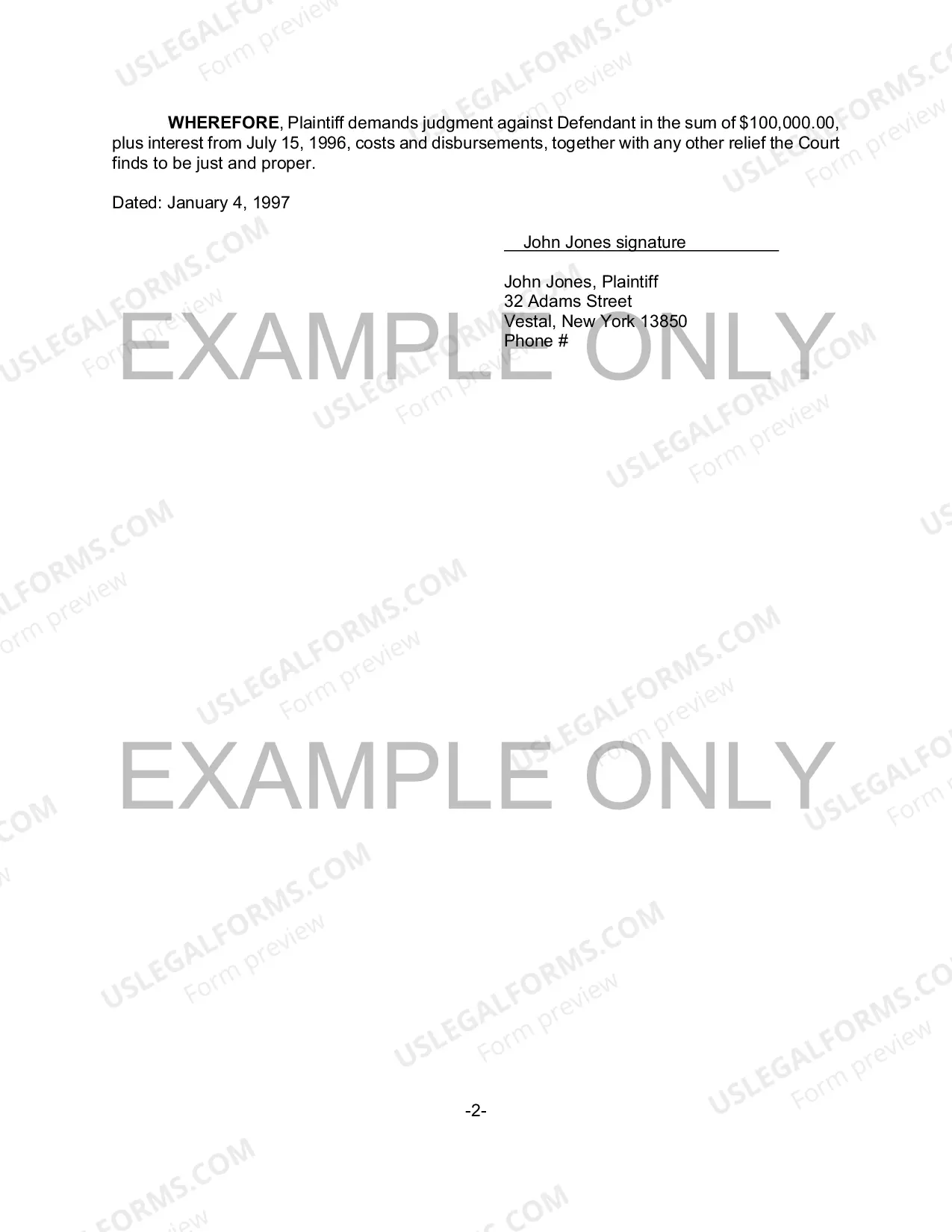
- Prayer for Relief: Details the specific relief or damages sought by the plaintiff.
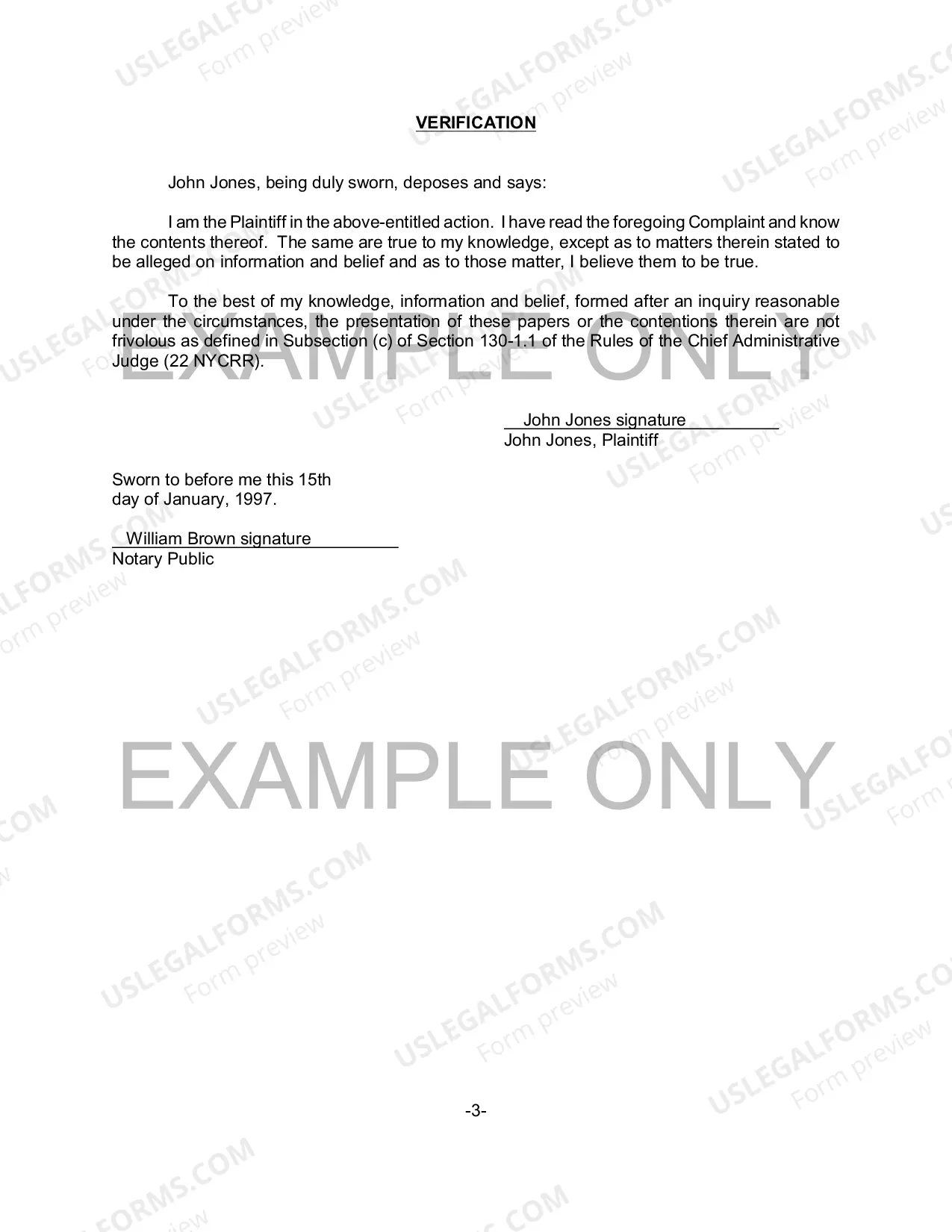
- Verification: Confirms the truth of the statements made in the Complaint.

When to use this form
This form should be used when an individual or entity seeks to bring a lawsuit against another party in a civil court. Scenarios can include breach of contract, personal injury claims, property disputes, or any situation where the plaintiff believes they have been wronged and seeks legal remedy. It is essential for commencing litigation and formally notifying the defendant of the claims they face.
Who this form is for
- Individuals or businesses wishing to file a lawsuit for damages or relief.
- Parties involved in disputes that require formal court intervention.
- Legal representatives drafting a Complaint on behalf of a client.
Steps to complete this form
- Identify the parties: Enter the names and addresses of the plaintiff and defendant.
- Detail the factual background: Clearly describe the events leading to the complaint.
- State the claim for relief: Specify the basis for the lawsuit and what legal claims are being made.
- Specify the damages: Indicate the amount of damages sought or the type of relief requested.
- Sign and date: Ensure the form is signed and dated to validate the document.
Is notarization required?
This form does not typically require notarization to be legally valid. However, some jurisdictions or document types may still require it. US Legal Forms provides secure online notarization powered by Notarize, available 24/7 for added convenience.
Get your form ready online
Our built-in tools help you complete, sign, share, and store your documents in one place.
Make edits, fill in missing information, and update formatting in US Legal Forms—just like you would in MS Word.
Download a copy, print it, send it by email, or mail it via USPS—whatever works best for your next step.
Sign and collect signatures with our SignNow integration. Send to multiple recipients, set reminders, and more. Go Premium to unlock E-Sign.
If this form requires notarization, complete it online through a secure video call—no need to meet a notary in person or wait for an appointment.
We protect your documents and personal data by following strict security and privacy standards.

Make edits, fill in missing information, and update formatting in US Legal Forms—just like you would in MS Word.

Download a copy, print it, send it by email, or mail it via USPS—whatever works best for your next step.

Sign and collect signatures with our SignNow integration. Send to multiple recipients, set reminders, and more. Go Premium to unlock E-Sign.

If this form requires notarization, complete it online through a secure video call—no need to meet a notary in person or wait for an appointment.

We protect your documents and personal data by following strict security and privacy standards.
Mistakes to watch out for
- Omitting key facts that support the claim.
- Failing to properly identify all parties involved.
- Not specifying the correct court jurisdiction.
- Neglecting to sign the form before submission.
Advantages of online completion
- Convenience of completing the form from any location at any time.
- Editability allows for updates and revisions before finalizing.
- Access to templates drafted by licensed attorneys ensures legal compliance.
Main things to remember
- A Complaint initiates a civil lawsuit and outlines the plaintiff's claims.
- Clear and accurate information is vital for the form to be effective.
- This specific form follows New York State's guidelines for civil complaints.
Looking for another form?
Form popularity
FAQ
You are required to respond to the Complaint within 30 days by filing a verified Answer. This means that you must submit a document that specifically admits, denies, or explains each of the facts alleged in the Complaint, unless you do not have knowledge of the answer, and if that is the case, you must state it.
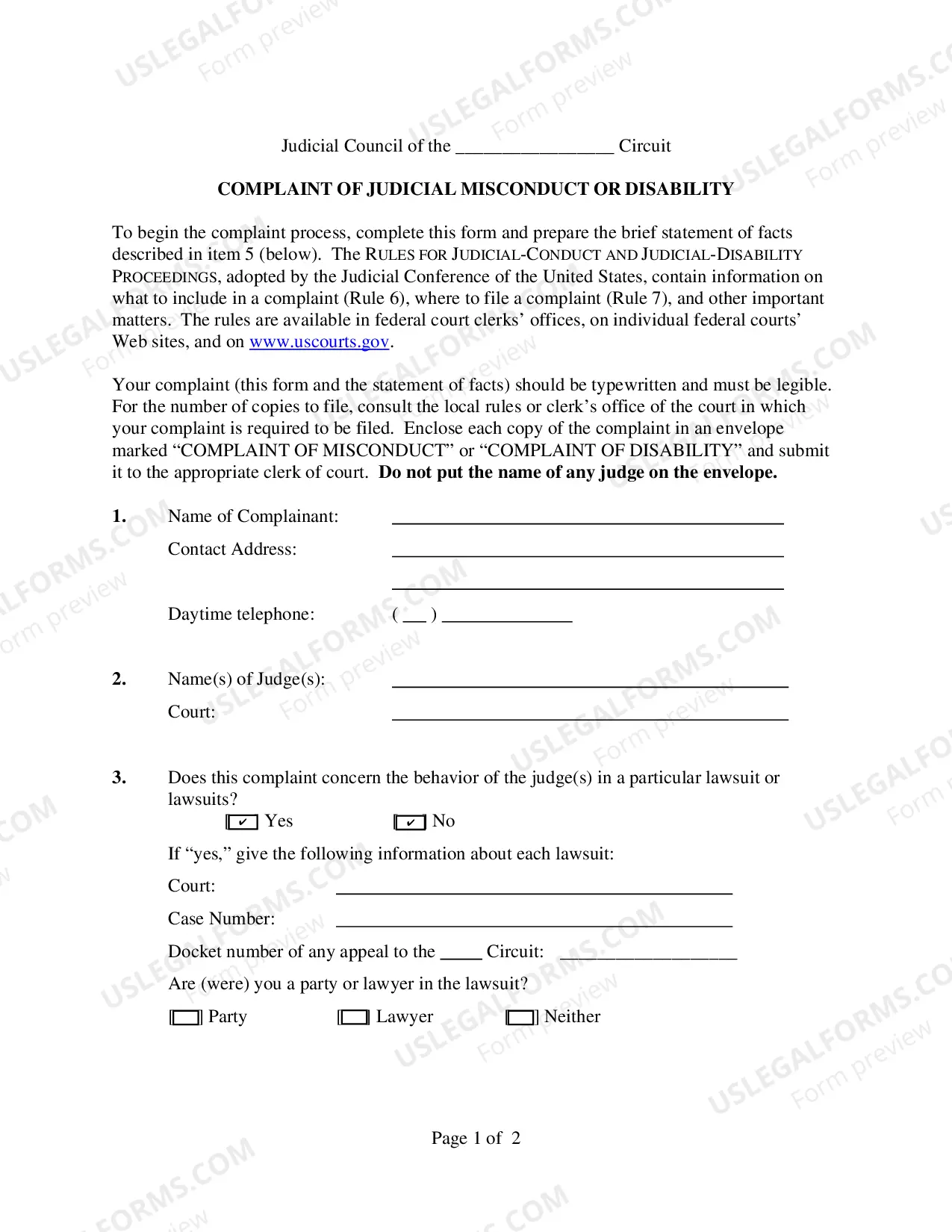
How to file a complaint with the CCRB Call the CCRB's Hotline: 1-800-341-2272. Monday through Friday, 9am - 5pm, you will speak directly to an investigator. After 5pm and on weekends, you can leave your complaint via voicemail.Call 311: anytime 24/7. If calling from outside NYC: 1-212-NEW-YORK.
You can either answer the summons in writing or in person. If you answer in person, you must go to the courthouse clerk's office and tell the clerk about your defenses to the plaintiff's claims. The clerk will check off the boxes in a Consumer Credit Transaction Answer In Person form.
There are three ways to deliver legal papers to start a case. Personal delivery. The papers are handed to the defendant or respondent.Substituted delivery. Papers are left with someone else to give to the defendant or respondent and copies of the papers are mailed.Conspicuous delivery.
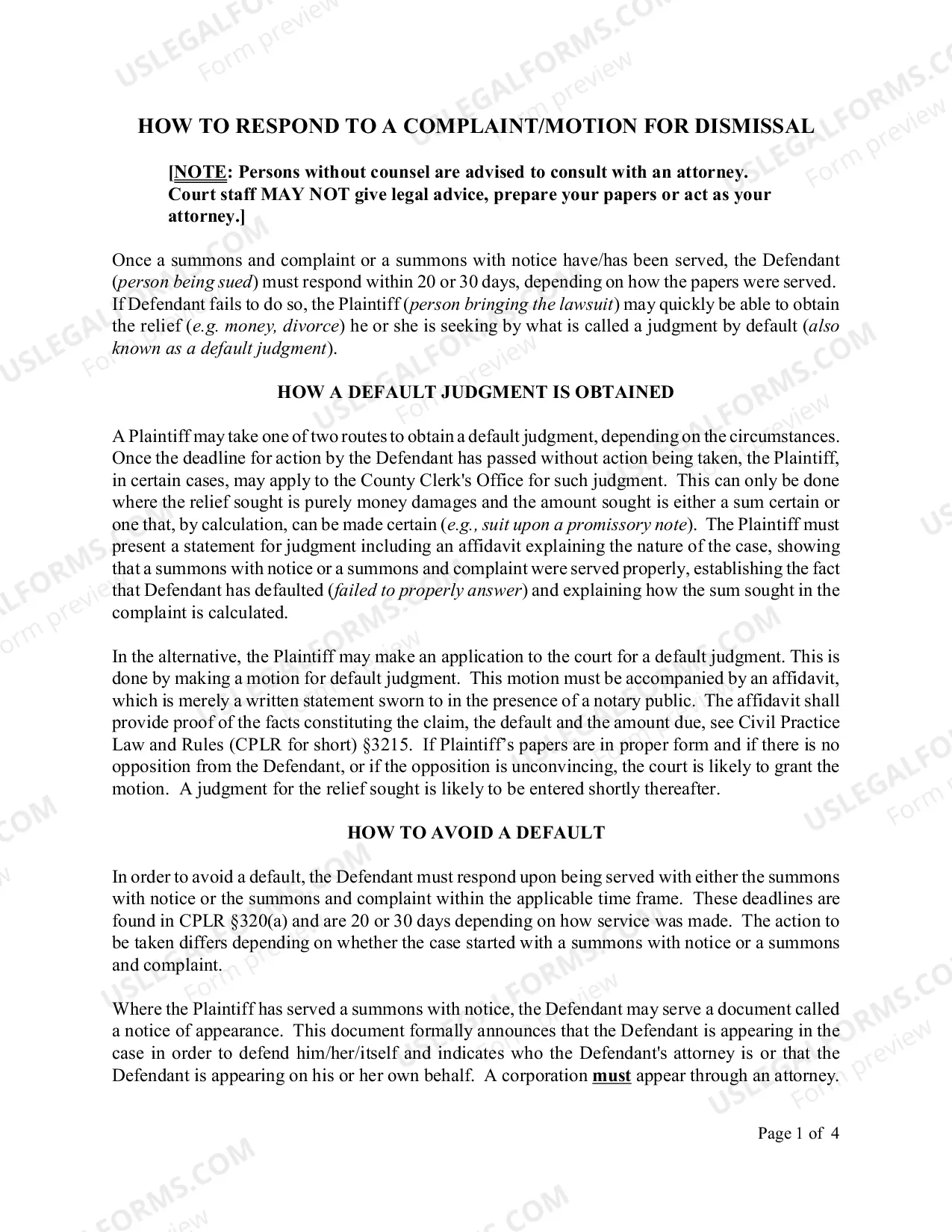
The written response must be made within 20 days of personal service, or within 30 days of the time when service by any other means is complete. If the defendant fails to respond he or she is in default and plaintiff may be able to obtain a default judgment against the defendant.
In order to avoid a default, the Defendant must respond upon being served with either the summons with notice or the summons and complaint within the applicable time frame. These deadlines are found in CPLR §320(a) and are 20 or 30 days depending on how service was made.
A summons with notice or summons and complaint must be served within 120 days of filing with the County Clerk.
Failure to Respond: If a defendant fails to answer the complaint or file a motion to dismiss within the time limit set forth in the summons, the defendant is in default. The plaintiff can ask the court clerk to make a note of that fact in the file, a procedure called entry of default.