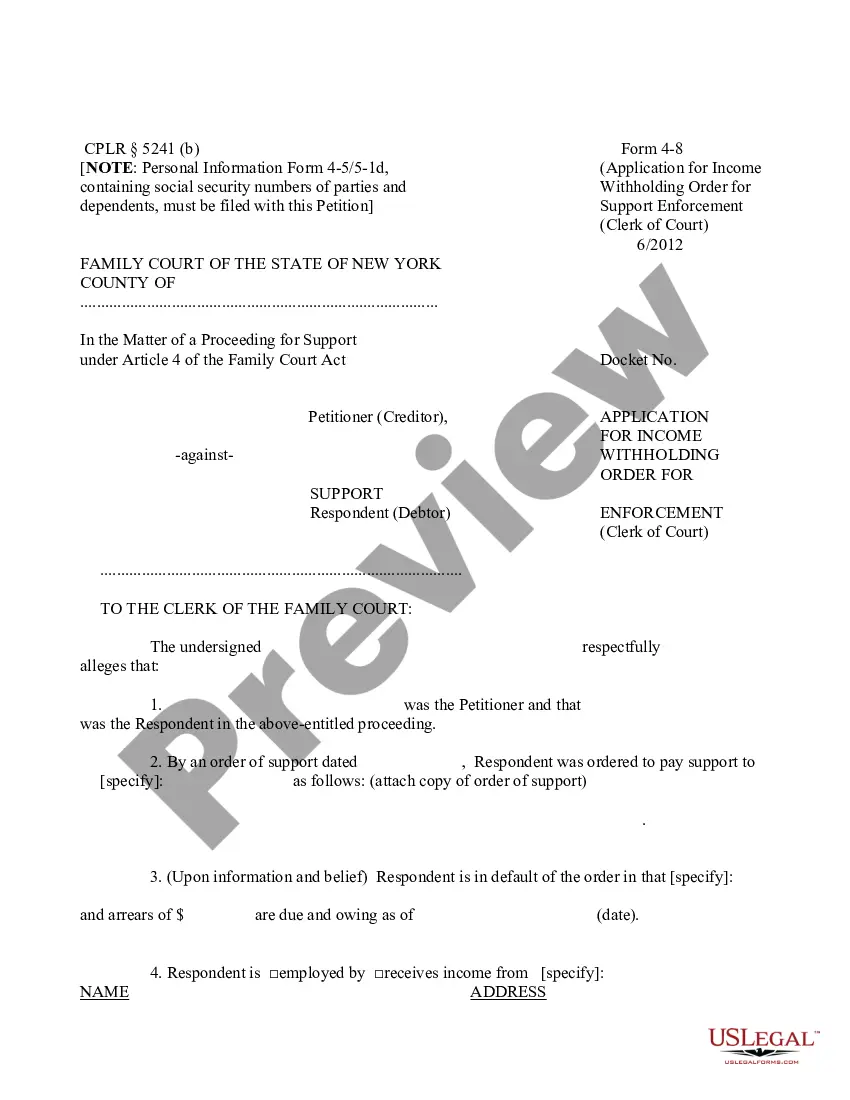
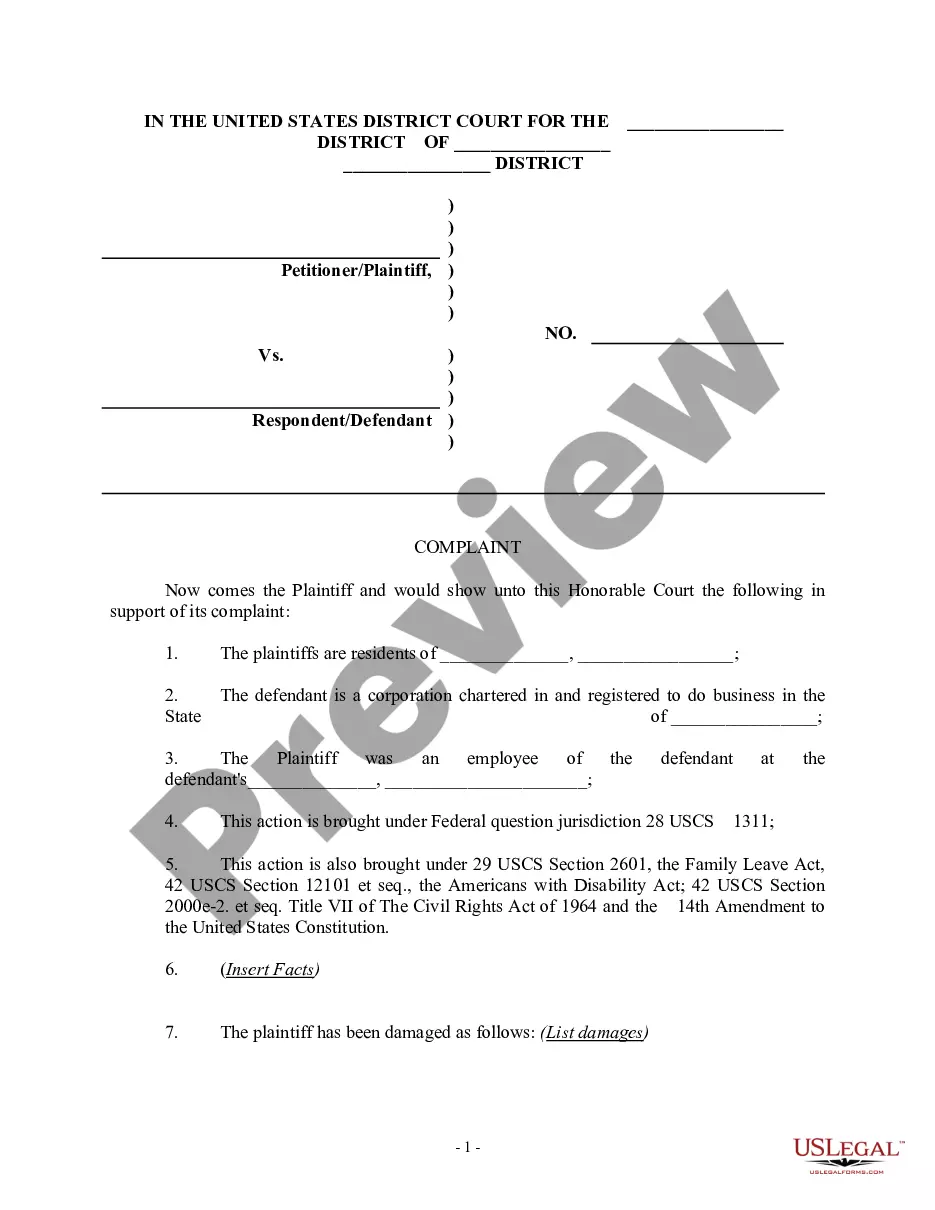
New York Income Execution for Support Enforcement - Clerk of Court


Does this document require notarization?
Notarization is not commonly needed for this form. However, certain documents or local rules may make it necessary. Our notarization service, powered by Notarize, allows you to finalize it securely online anytime, day or night.
Get your form ready online
Our built-in tools help you complete, sign, share, and store your documents in one place.
Make edits, fill in missing information, and update formatting in US Legal Forms—just like you would in MS Word.
Download a copy, print it, send it by email, or mail it via USPS—whatever works best for your next step.
Sign and collect signatures with our SignNow integration. Send to multiple recipients, set reminders, and more. Go Premium to unlock E-Sign.
If this form requires notarization, complete it online through a secure video call—no need to meet a notary in person or wait for an appointment.
We protect your documents and personal data by following strict security and privacy standards.

Make edits, fill in missing information, and update formatting in US Legal Forms—just like you would in MS Word.

Download a copy, print it, send it by email, or mail it via USPS—whatever works best for your next step.

Sign and collect signatures with our SignNow integration. Send to multiple recipients, set reminders, and more. Go Premium to unlock E-Sign.

If this form requires notarization, complete it online through a secure video call—no need to meet a notary in person or wait for an appointment.

We protect your documents and personal data by following strict security and privacy standards.
Looking for another form?

Form popularity
FAQ
Garnishment is a legal process for collecting a monetary judgment on behalf of a plaintiff from a defendant.Garnishment allows the plaintiff (the "garnishor") to take the money or property of the debtor from the person or institution that holds that property (the "garnishee").
Wage garnishment is a legal procedure in which a person's earnings are required by court order to be withheld by an employer for the payment of a debt such as child support.
Call the creditor and negotiate payment terms and have them remove the garnishment; Liquidate assets or obtain a loan to pay off the creditor in full; Ceasing employment with that employer, though not often the best option, will not give the creditor any income to garnish;
Wage garnishment happens when a court orders that your employer withhold a specific portion of your paycheck and send it directly to the creditor or person to whom you owe money, until your debt is resolved.Your earnings will be garnished until the debt is paid off or otherwise resolved.
Limits on Wage Garnishments 25% of the debtor's disposable earnings (what's left after mandatory deductions), or the amount by which the debtor's wages exceed 30 times the minimum wage, whichever is lower.
Respond to the Creditor's Demand Letter. Seek State-Specific Remedies. Get Debt Counseling. Object to the Garnishment. Attend the Objection Hearing (and Negotiate if Necessary) Challenge the Underlying Judgment. Continue Negotiating.
An income execution is a type of levy that may be issued against your wages if you fail to resolve your tax debt. We will ask you to voluntarily pay up to 10% of your gross wages each time you're paid.If you share a tax debt with another person, we can order each of you to pay us with a separate income execution.
Yes. Your bank can charge a garnishment fee, but only if you have more than 2 months' worth of benefits in your account.The bank can't charge garnishment fees against this protected amount. The bank is not allowed to charge fees for this garnishment later, when you have more funds.
Federal law allows up to 25 percent of an employee's disposable wages to be garnished by a creditor that has received a judgment against the employee. An employer is sometimes permitted to charge its own fee to the employee or the creditor for processing the garnishment. The rules vary by state.