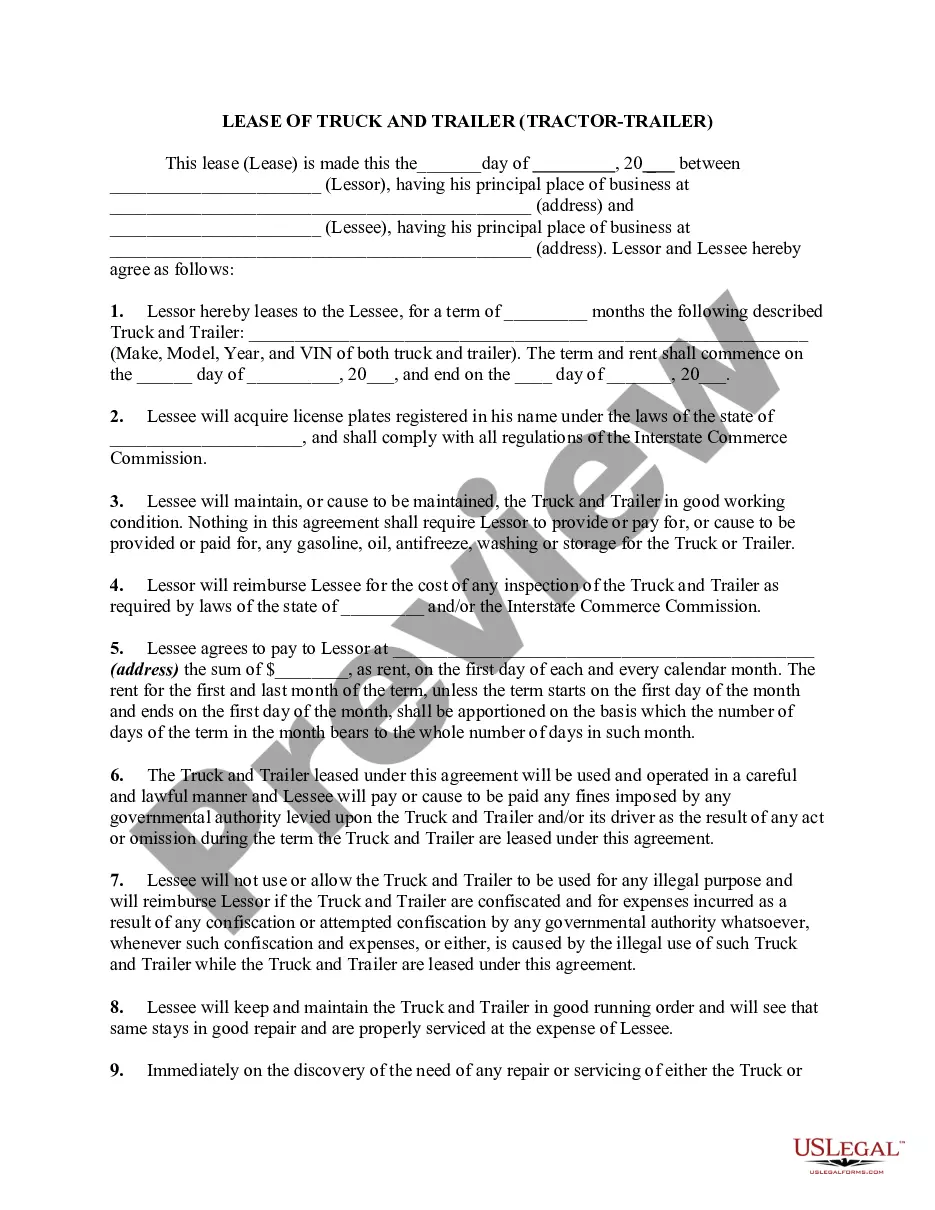
Nevada Retainer Agreement
Description
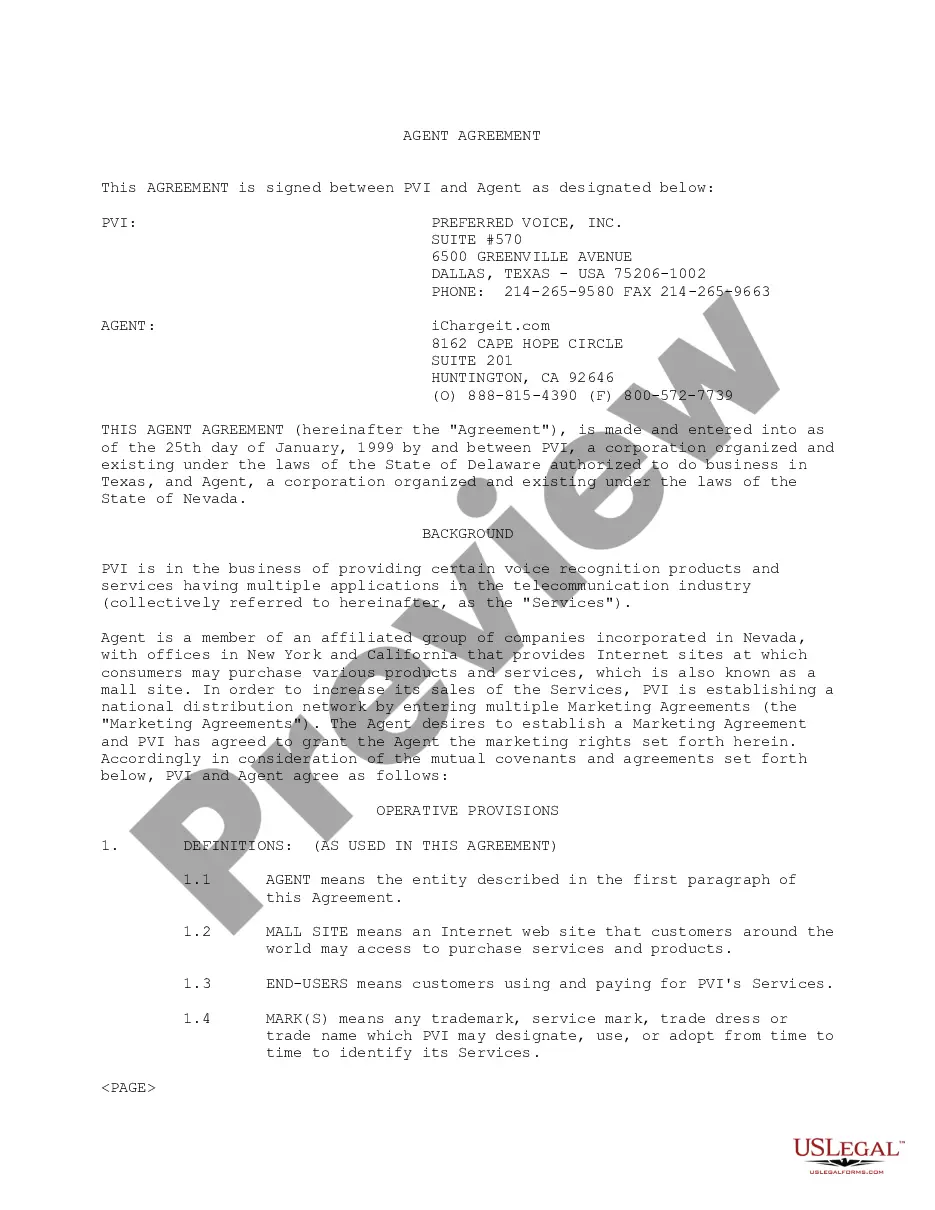
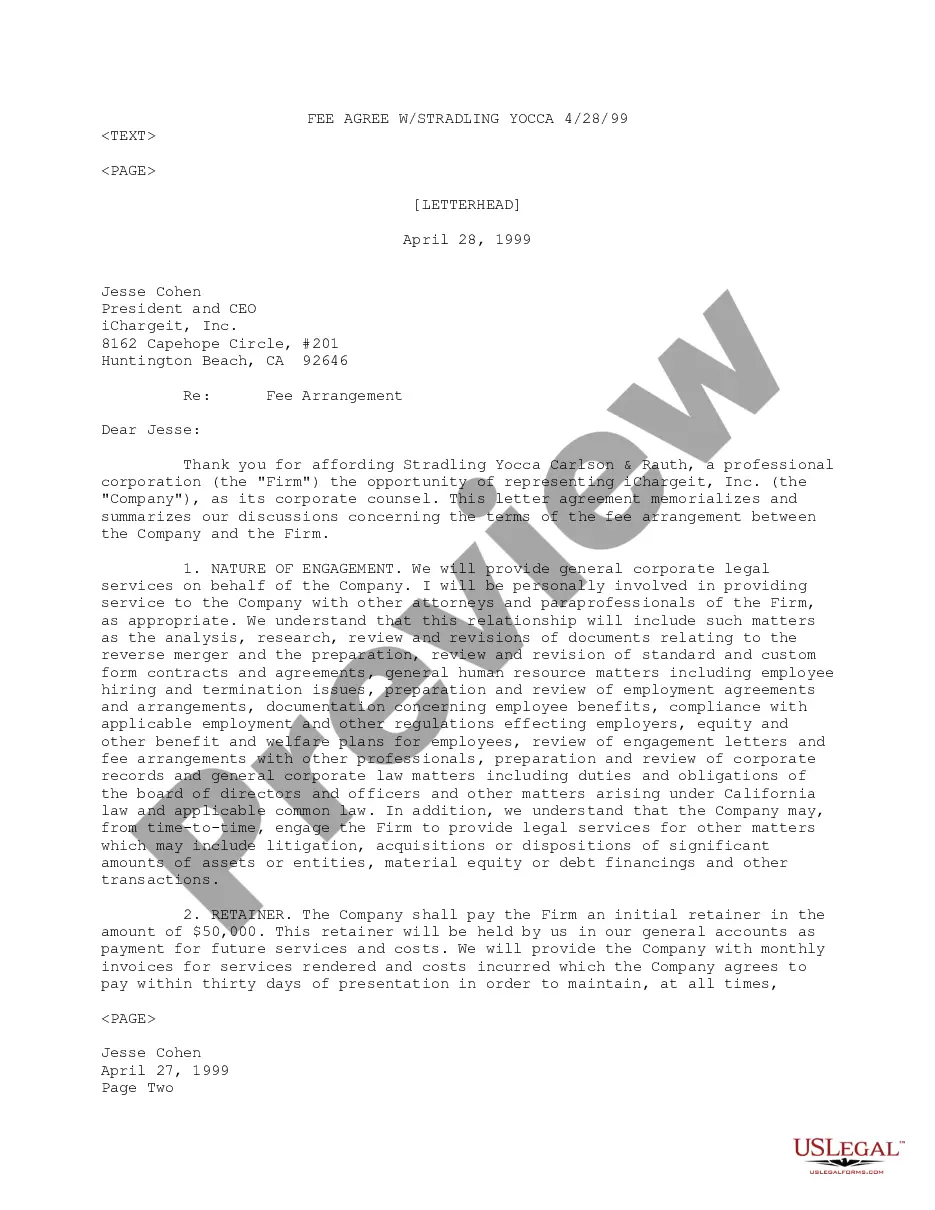
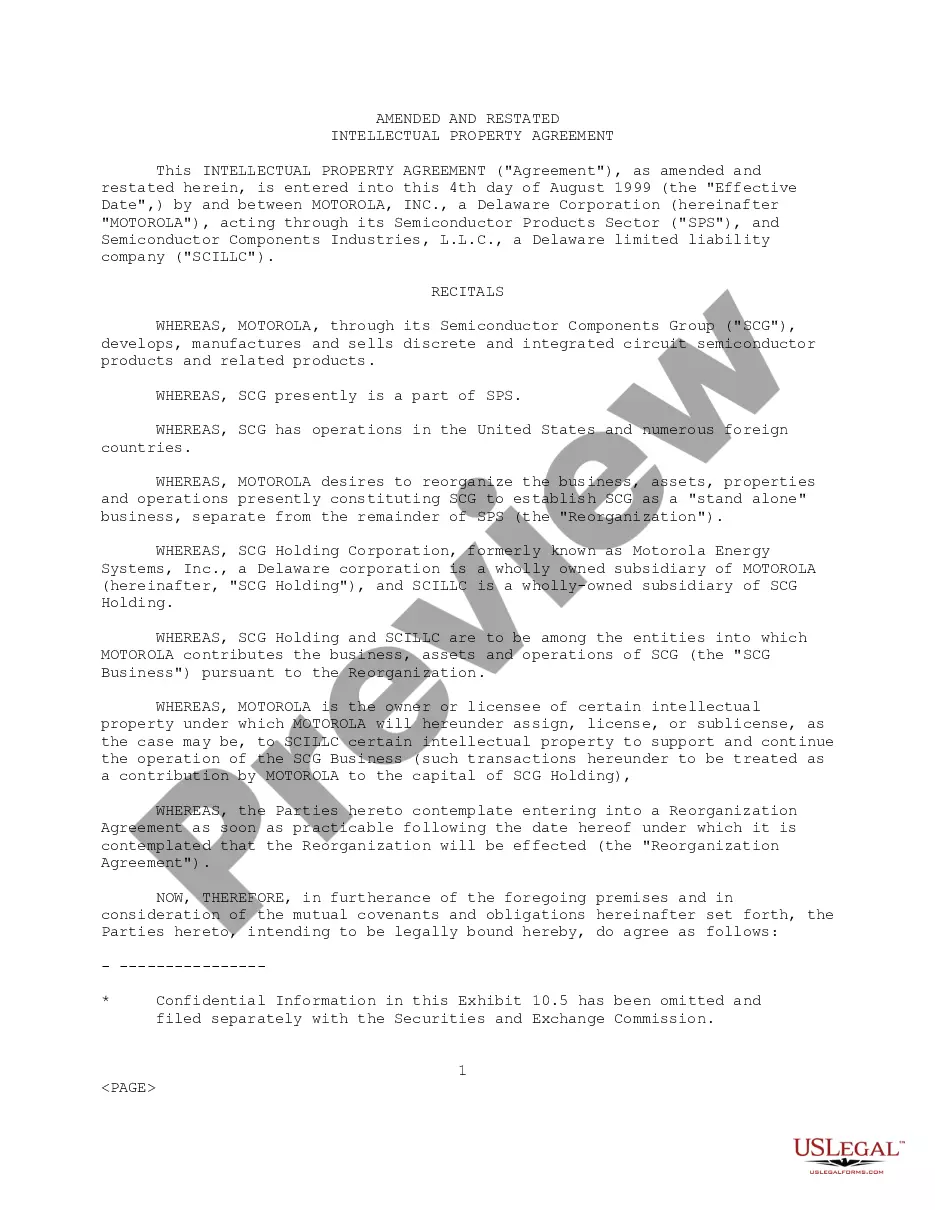
Get your form ready online
Our built-in tools help you complete, sign, share, and store your documents in one place.
Make edits, fill in missing information, and update formatting in US Legal Forms—just like you would in MS Word.
Download a copy, print it, send it by email, or mail it via USPS—whatever works best for your next step.
Sign and collect signatures with our SignNow integration. Send to multiple recipients, set reminders, and more. Go Premium to unlock E-Sign.
If this form requires notarization, complete it online through a secure video call—no need to meet a notary in person or wait for an appointment.
We protect your documents and personal data by following strict security and privacy standards.

Make edits, fill in missing information, and update formatting in US Legal Forms—just like you would in MS Word.

Download a copy, print it, send it by email, or mail it via USPS—whatever works best for your next step.

Sign and collect signatures with our SignNow integration. Send to multiple recipients, set reminders, and more. Go Premium to unlock E-Sign.

If this form requires notarization, complete it online through a secure video call—no need to meet a notary in person or wait for an appointment.

We protect your documents and personal data by following strict security and privacy standards.
Looking for another form?







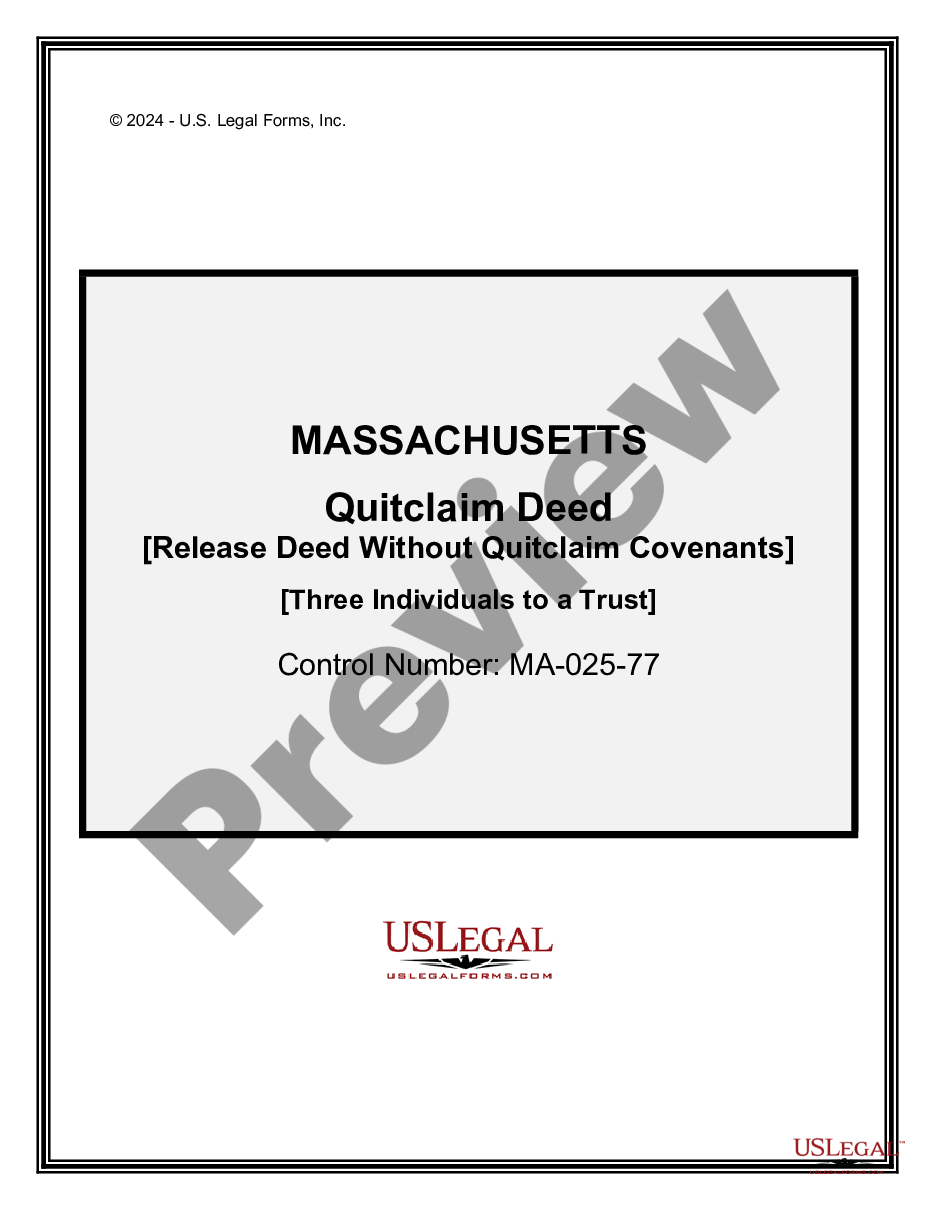

How to fill out Retainer Agreement?
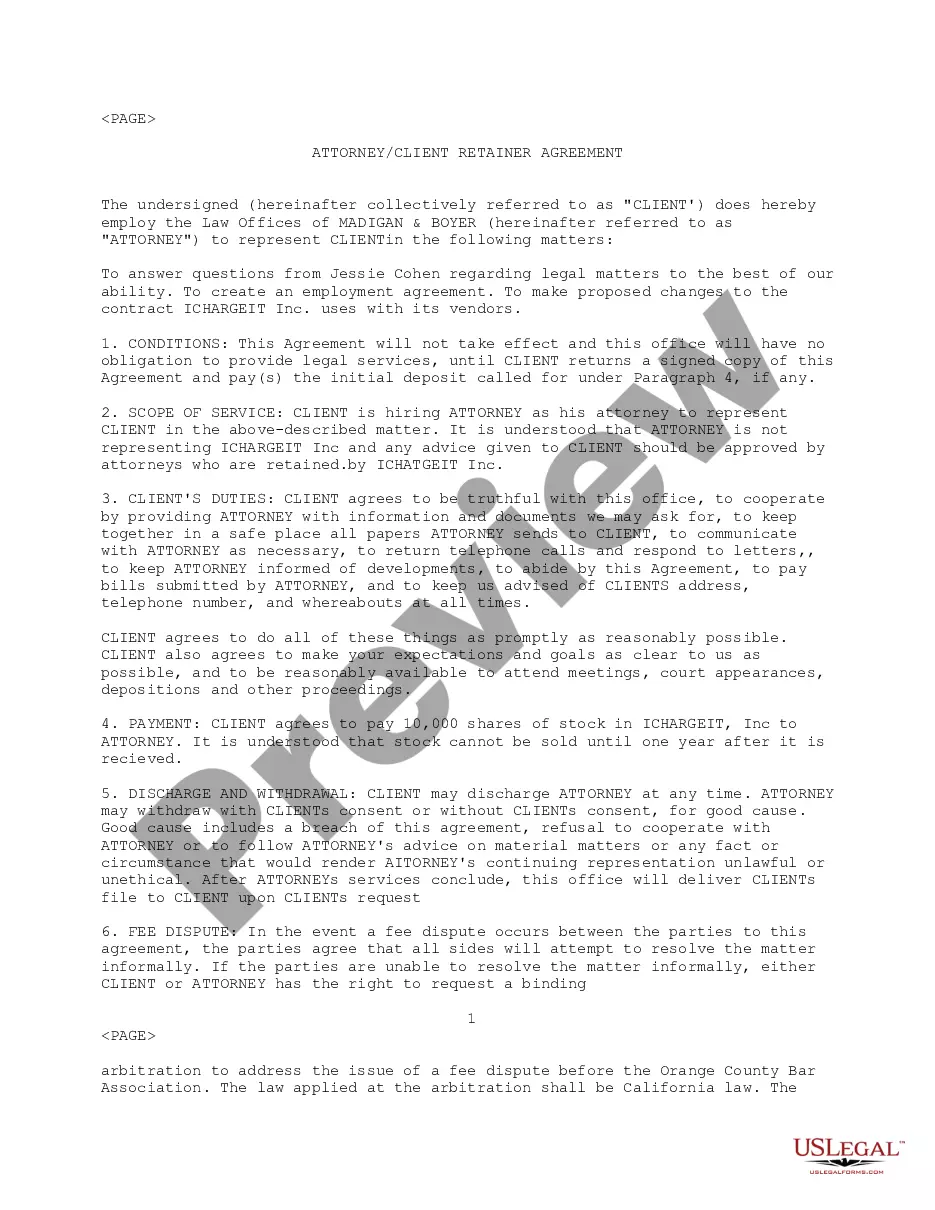
Choosing the best legitimate papers template can be a struggle. Obviously, there are tons of themes available on the net, but how will you find the legitimate develop you want? Take advantage of the US Legal Forms website. The services delivers a large number of themes, such as the Nevada Retainer Agreement, which can be used for organization and private requirements. All of the forms are checked out by pros and meet state and federal needs.
In case you are presently listed, log in to your profile and click on the Acquire option to find the Nevada Retainer Agreement. Use your profile to check throughout the legitimate forms you may have bought previously. Check out the My Forms tab of your own profile and get yet another version of your papers you want.
In case you are a brand new end user of US Legal Forms, here are easy instructions that you should stick to:
- First, be sure you have selected the appropriate develop to your area/county. You are able to look through the shape making use of the Review option and look at the shape outline to make sure it will be the best for you.
- If the develop does not meet your requirements, make use of the Seach discipline to discover the right develop.
- When you are positive that the shape is suitable, click the Buy now option to find the develop.
- Opt for the pricing prepare you want and enter the needed details. Create your profile and pay for an order with your PayPal profile or Visa or Mastercard.
- Choose the data file structure and down load the legitimate papers template to your product.
- Comprehensive, change and print out and sign the obtained Nevada Retainer Agreement.
US Legal Forms is definitely the largest local library of legitimate forms for which you can find different papers themes. Take advantage of the company to down load expertly-made papers that stick to condition needs.
Form popularity
FAQ
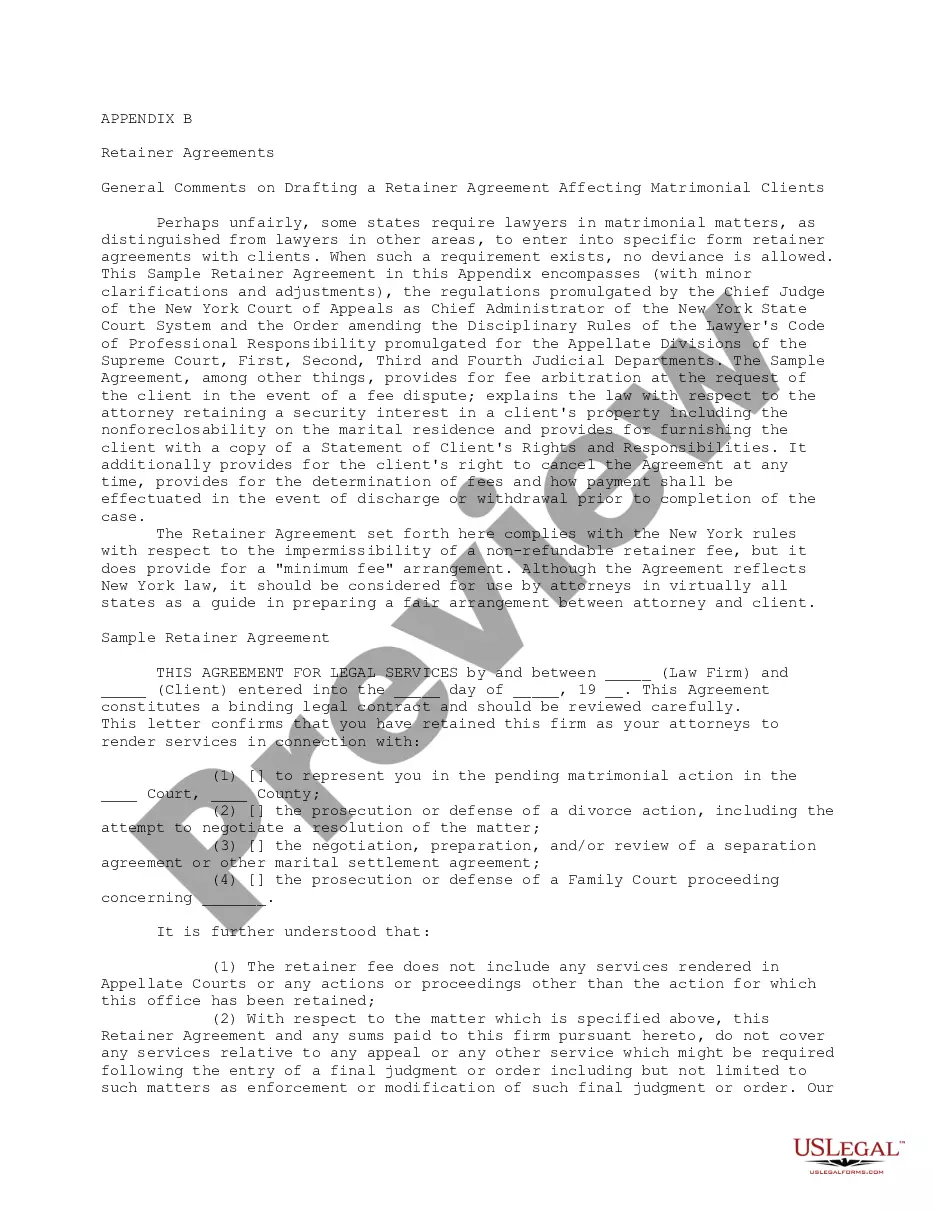
A retainer agreement is a contract between a company and a service provider that lays out the details of a retainer arrangement, for example, the length of the retainer period, the payments that will be provided and details of termination.
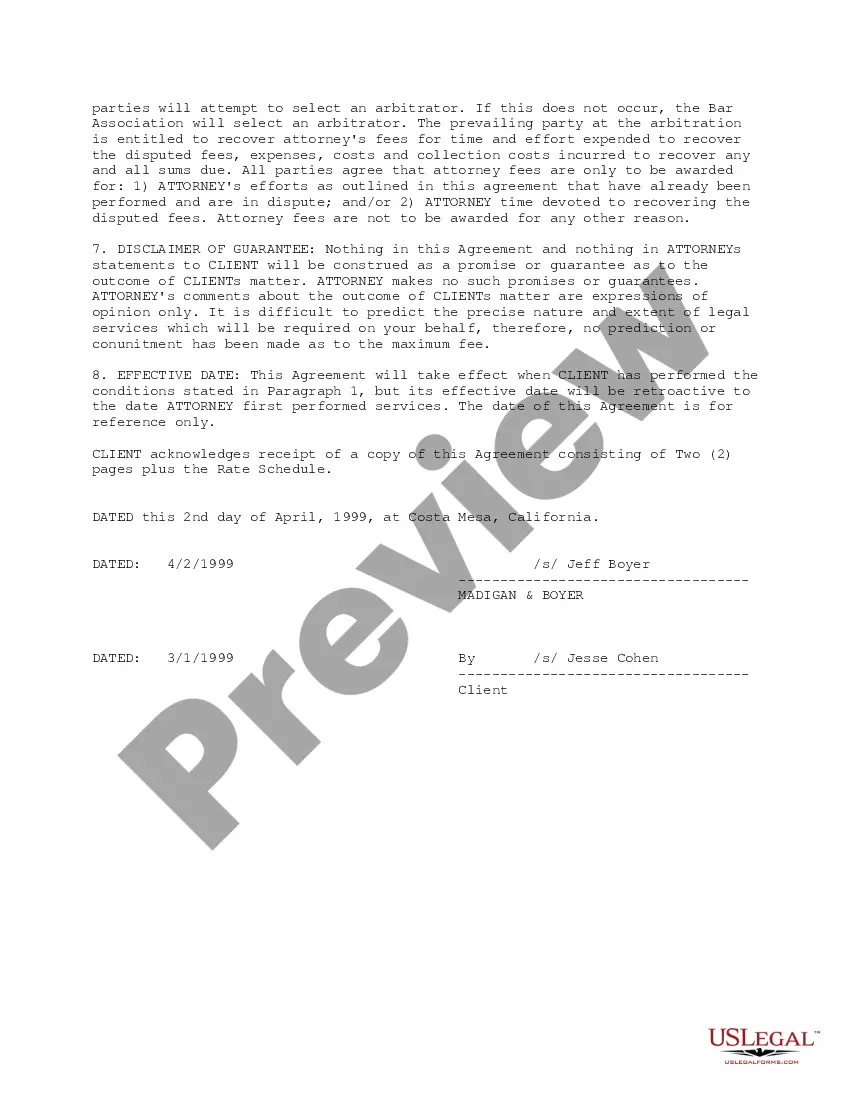
The essential parts of the agreement include: Scope and nature of the work. What is the attorney expected to do for the client? ... Retainer fee. The retainer fee is the amount charged to the client. ... Client expenses. The client typically pays for some expenses, especially filing-related expenses, and travel costs.
A retainer is a fee paid to a lawyer or law firm in advance of services being rendered, and the law firm should hold it in a trust account until the services are provided. It gets booked to the balance sheet as a prepaid expense (which is an asset).
This agreement should cover elements like the services you'll provide, how long the working relationship will last, fees, pricing, confidentiality, and more. This sounds like a lot, but it's important to create a comprehensive agreement that protects your agency should anything go wrong.
A monthly retainer occurs when a client pays an advance payment to access your current and future services for a specified period of time. It's similar to working on a contractual basis, with the payment covering the number of hours you work for the client each month.
The retainer or deposit is treated as a liability to show that, although your business is holding the money from a deposit or retainer, it doesn't belong to you until it's used to pay for services. When you invoice the customer and receive payment against it, you'll turn that liability into income.
A common retainer arrangement is when a client pays upfront for work that will be done in the future. This is a type of work-for-hire arrangement. A type of project for a pay-for-work agreement could be for a marketing consultant offering services that a client can pay for on a monthly basis or as an upfront payment.
The basic structure of retainer agreements is the same though: Agency agrees to provide a service(s) or a number of hours their client needs each month. In turn, the client agrees to the retainer payment that they'd pay in exchange for the agency reserving its time/service for them.