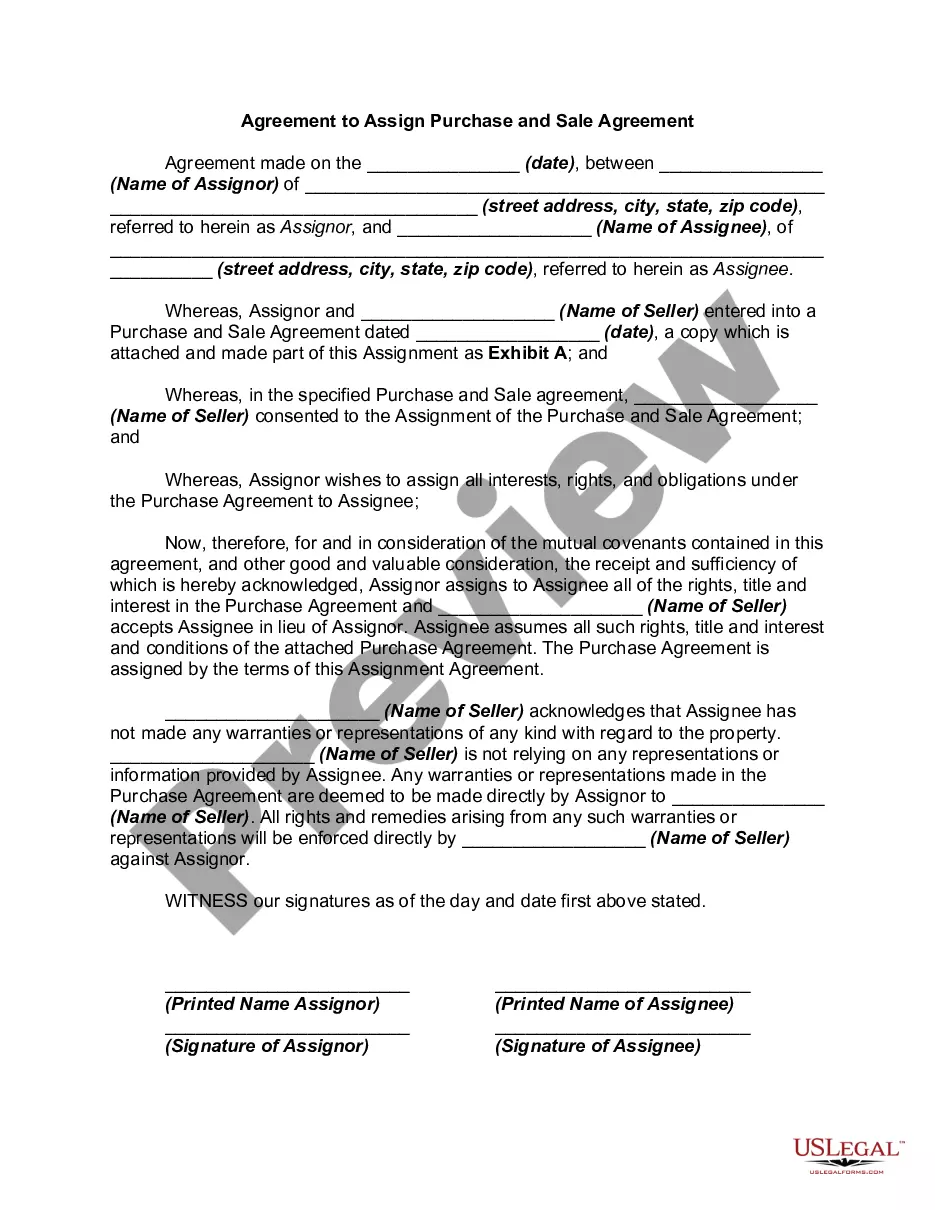
Nevada Fence Line Agreement
Description

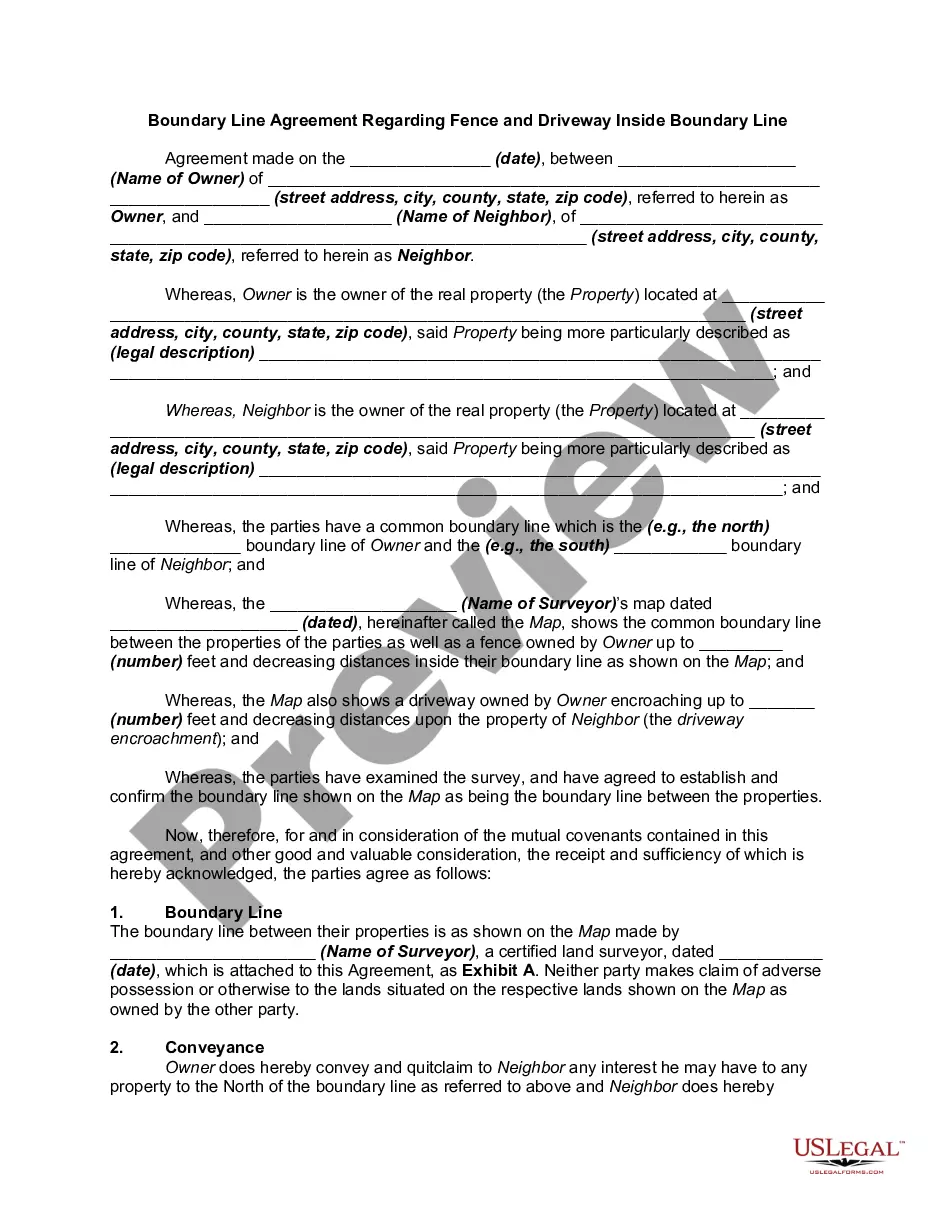
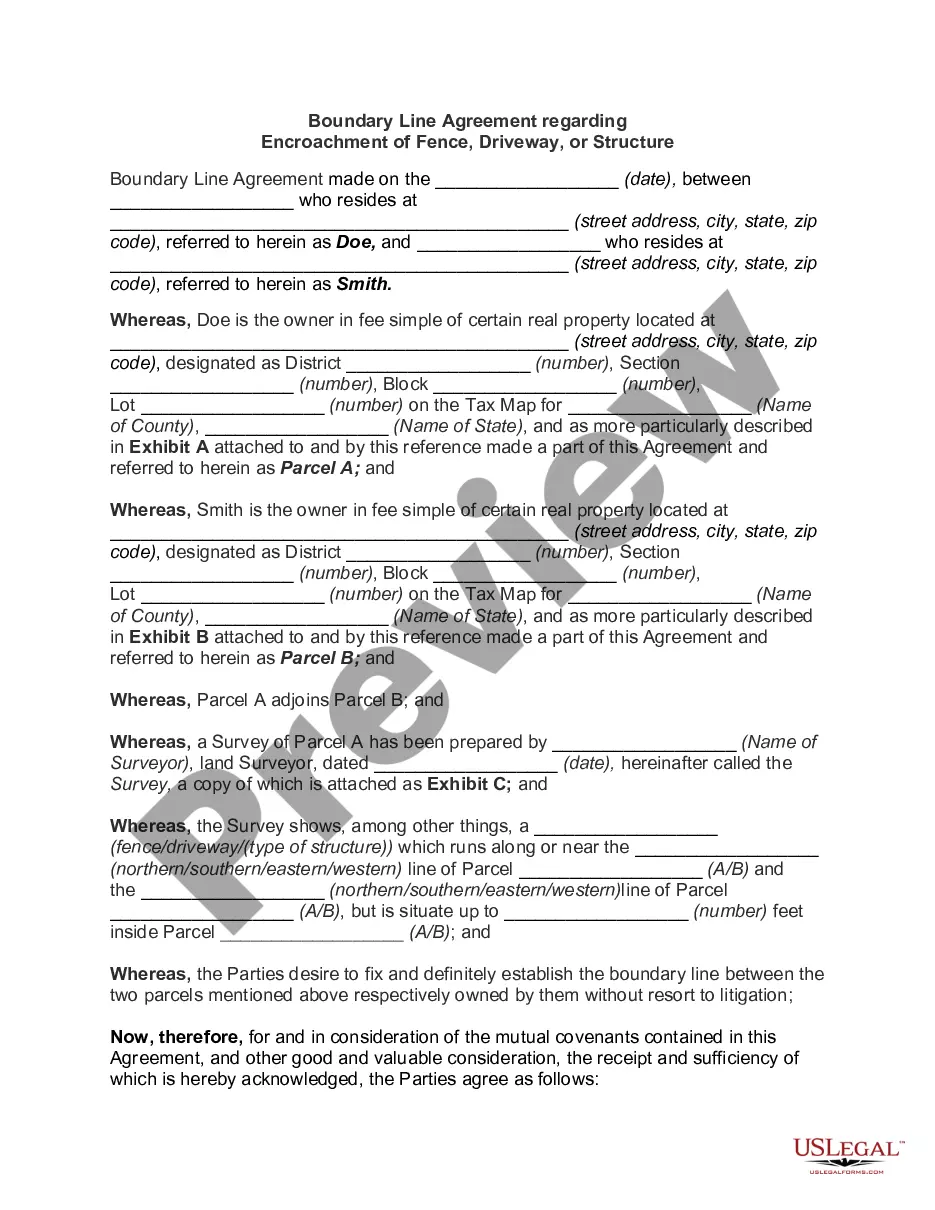
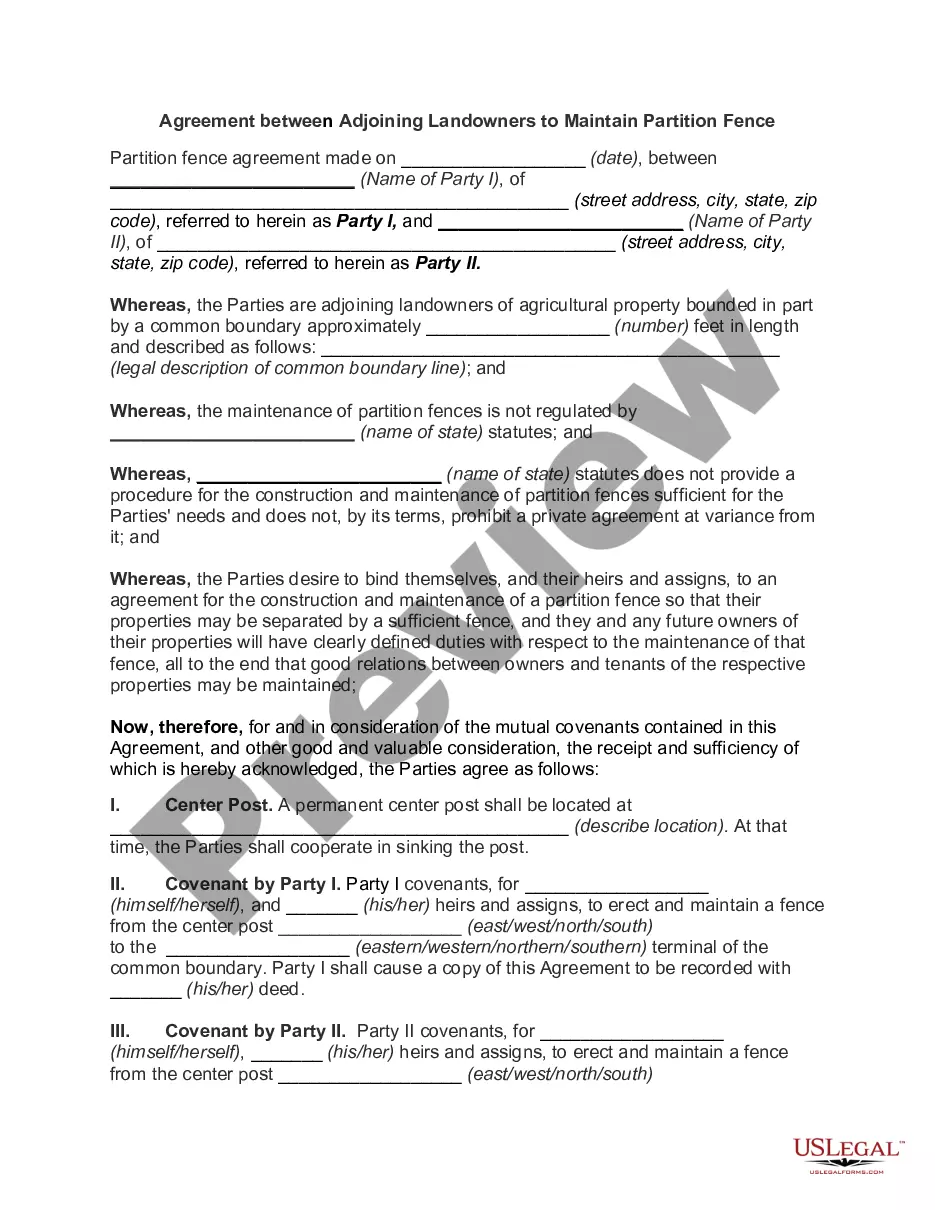
Get your form ready online
Our built-in tools help you complete, sign, share, and store your documents in one place.
Make edits, fill in missing information, and update formatting in US Legal Forms—just like you would in MS Word.
Download a copy, print it, send it by email, or mail it via USPS—whatever works best for your next step.
Sign and collect signatures with our SignNow integration. Send to multiple recipients, set reminders, and more. Go Premium to unlock E-Sign.
If this form requires notarization, complete it online through a secure video call—no need to meet a notary in person or wait for an appointment.
We protect your documents and personal data by following strict security and privacy standards.

Make edits, fill in missing information, and update formatting in US Legal Forms—just like you would in MS Word.

Download a copy, print it, send it by email, or mail it via USPS—whatever works best for your next step.

Sign and collect signatures with our SignNow integration. Send to multiple recipients, set reminders, and more. Go Premium to unlock E-Sign.

If this form requires notarization, complete it online through a secure video call—no need to meet a notary in person or wait for an appointment.

We protect your documents and personal data by following strict security and privacy standards.
Looking for another form?



How to fill out Fence Line Agreement?
Have you found yourself in a situation where you frequently require documents for both business and personal purposes.
There is an assortment of legal document templates accessible online, but locating ones you can trust is challenging.
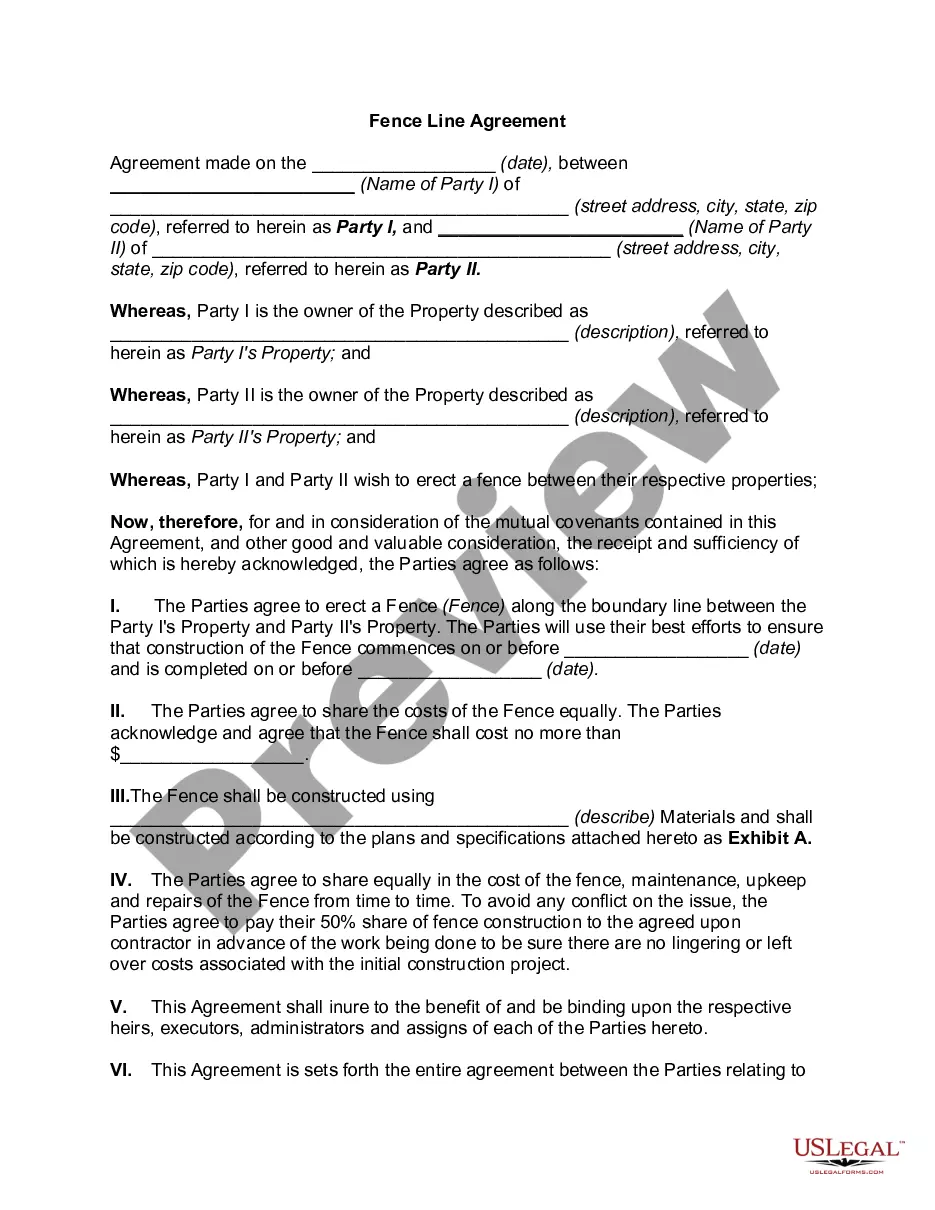
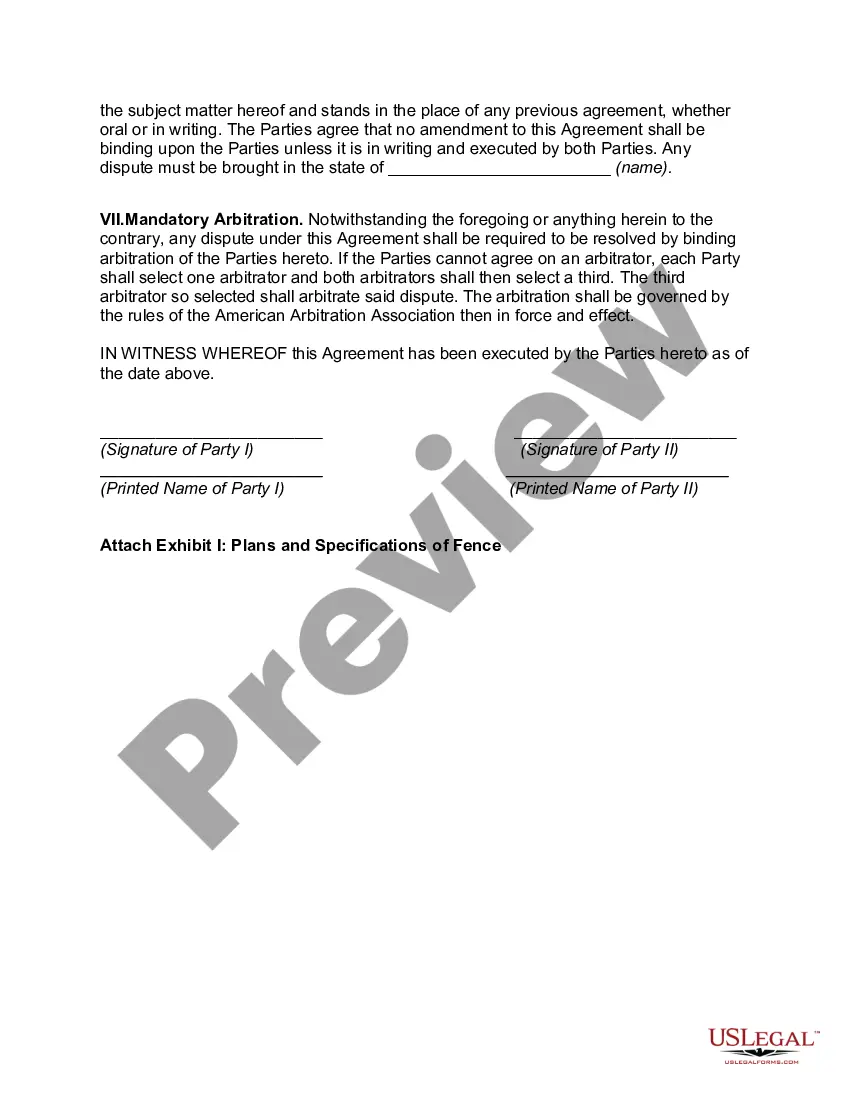
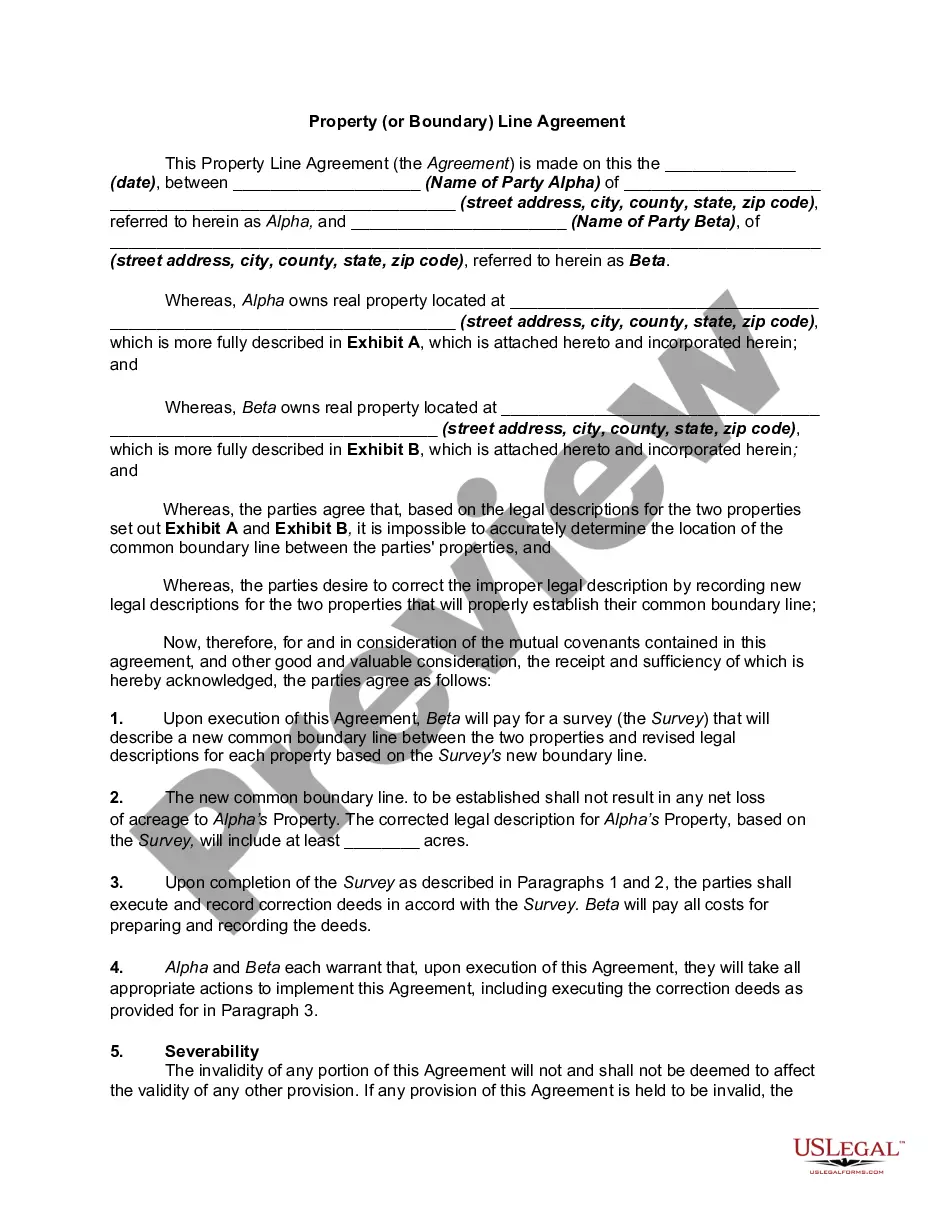
US Legal Forms offers a plethora of form templates, including the Nevada Fence Line Agreement, which can be tailored to comply with state and federal regulations.
Once you find the appropriate form, click on Acquire now.
Choose the subscription plan you prefer, fill in the necessary details to create your account, and pay for the order using your PayPal or credit card.
- If you are already acquainted with the US Legal Forms website and possess an account, simply Log In.
- After that, you can download the Nevada Fence Line Agreement template.
- If you do not have an account and wish to use US Legal Forms, follow these instructions.
- Locate the form you need and ensure it is for the correct state/region.
- Utilize the Review button to inspect the form.
- Read the description to confirm you have selected the correct document.
- If the document is not what you seek, use the Search field to find the document that meets your needs.
Form popularity
FAQ
The byline, in terms of a Nevada Fence Line Agreement, typically refers to a brief statement that identifies parties involved and summarizes the essence of the agreement. This information sets the stage and provides context for the entire document. It serves as an essential introduction, ensuring all parties understand the main purpose of the agreement. Clearly outlining this information can prevent confusion and establish clear expectations.
A boundary agreement, often referred to in the context of a Nevada Fence Line Agreement, is a legally binding contract between property owners. It outlines the precise location of the boundary line between their properties. This agreement can help prevent disputes and misunderstandings regarding property lines in the future. Engaging with a clear boundary agreement fosters good relations with neighbors and promotes property clarity.
In Nevada, you generally cannot build a fence directly on the property line; a common guideline is to place it a few inches inside your boundary. The exact distance may depend on local laws, so reviewing local regulations is essential. A Nevada Fence Line Agreement can help establish clear boundaries and reduce potential conflicts with your neighbors.
Fences/walls cannot be over be over 3 feet in height in front or street side yards or up to 8 feet in height in side or rear yards and must be kept in good repair.
A landowner has the right to trim encroaching tree branches up to the property line. A landowner can be held legally responsible for intentionally damaging a neighbor's tree, and may be forced to pay up to three times the cost of the injury to the tree.
How Close To The Property Line Can I Build? Fences are typically built between 2 and 8 inches from the line between properties. Some areas will allow the building of fences directly on the property line, but in this case, you'll have to cooperate with your neighbor and potentially share the cost of the fence.
The responsibility for the tree and any damage it may cause is that of the tree-owner. If his tree damages your property then he is liable. Should the situation become a legal dispute then you may be covered for your legal costs.
Customers having new fencing installed often ask us exactly where they should position their new fence. Getting it right avoids (potentially costly) disputes over encroachment in the future. As a rule of thumb, the outer face of the fence should be placed along the boundary. The posts should stand on your land.
If the branches of a neighbour's tree start to grow over to your side, you can cut them back to the boundary point between you and your neighbour's property, as long as the tree is not under a tree preservation order.
If you own the tree or hedgeYour neighbour can cut any branches that are overhanging into their garden as long as they only remove the bits on their side of the boundary. If they want you to cut your tree or hedge just because they don't like the way it looks, it's up to you whether you do the work.