Nevada UCC-1 for Personal Credit
Description
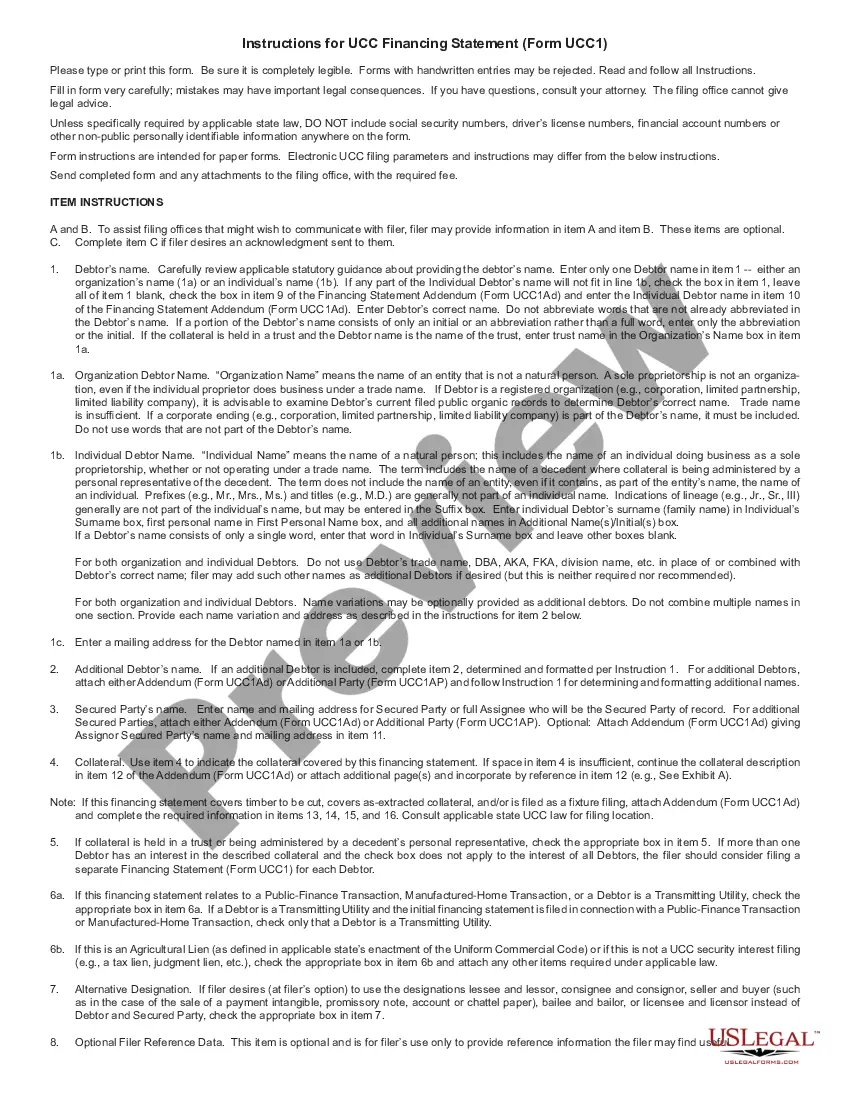
How to fill out UCC-1 For Personal Credit?
US Legal Forms - one of the most substantial collections of legal documents in the United States - provides a variety of legal paper templates that you can download or print.
By using the website, you can obtain thousands of forms for business and personal purposes, categorized by categories, states, or keywords.
You can access the latest versions of forms such as the Nevada UCC-1 for Personal Credit within moments.
If the form does not suit your needs, use the Search box at the top of the screen to find one that does.
If you are satisfied with the form, confirm your selection by clicking the Buy now button. Then, choose the pricing plan you prefer and provide your details to sign up for an account.
- If you already hold a subscription, Log In and download the Nevada UCC-1 for Personal Credit from the US Legal Forms library.
- The Download button will appear on every form you view.
- You have access to all previously downloaded forms in the My documents section of your account.
- If you wish to use US Legal Forms for the first time, follow these simple instructions to get started.
- Make sure you have selected the correct form for your area/state.
- Click the Review button to check the form's details.
Form popularity
FAQ
Yes, UCC filings can affect your personal credit, especially if they indicate that you have outstanding debts secured by your assets. While UCC-1 filings themselves may not directly impact your credit score, they can signal to lenders that you have existing obligations. With Nevada UCC-1 for Personal Credit, it’s critical to stay informed about how these filings relate to your overall financial picture. If you are looking for guidance on managing UCC filings, consider using solutions like uslegalforms, which can help clarify your rights and responsibilities.
UCC filings serve as public records that disclose important information about secured transactions. Specifically, they document a lender's claim over a debtor's assets in case of default. With Nevada UCC-1 for Personal Credit, these filings highlight the nature of the secured interest, including the type of collateral involved and the parties involved in the transaction. This transparency is essential for both borrowers and lenders to understand their rights and obligations.
UCC stands for Uniform Commercial Code, which is a standard set of laws that govern commercial transactions in the United States. When you see UCC on your credit report, it typically refers to a UCC-1 filing related to secured interests in a debtor's personal property. In the context of Nevada UCC-1 for Personal Credit, these filings can indicate that a lender holds a legal claim to your assets until you fulfill your financing obligations. Understanding UCC filings can help you monitor your financial obligations and manage your personal credit effectively.
Yes, Nevada follows the Uniform Commercial Code (UCC), which governs commercial transactions across all states. This means that the Nevada UCC-1 for Personal Credit aligns with the principles established by the UCC. By adhering to these guidelines, Nevada ensures consistent legal standards for filing and enforcing security interests. If you want proper guidance through this process, the USLegalForms platform can provide valuable resources to navigate UCC filings effectively.
Filing a UCC-1 can protect your interests when you extend credit. This form establishes a legal claim to the debtor's assets, ensuring you have priority over other creditors in the event of default. Additionally, it creates public notice of your security interest, forming a critical part of risk management. If you seek to improve your security for personal credit, understanding the Nevada UCC-1 for Personal Credit is essential.
Filing a UCC-1 in Nevada is straightforward. You can begin by gathering the necessary documentation, including details about the debtor and the secured party. Submit the completed UCC-1 form to the Nevada Secretary of State's office, either online or via mail. For a seamless experience, consider using the USLegalForms platform, which simplifies the filing process and ensures you meet all requirements.
Filling out a UCC-1 form for personal credit in Nevada requires careful attention to detail. First, you need to provide accurate information about the debtor, including their name and address. Next, you must describe the collateral clearly to ensure that it reflects your assets correctly. Utilizing a platform like uslegalforms can simplify the process, guiding you step-by-step to ensure your Nevada UCC-1 for Personal Credit is completed correctly.
Yes, the UCC applies to personal property, allowing creditors to secure interests in various types of personal assets. This includes items like vehicles, equipment, and accounts receivable. By filing a UCC-1, creditors can protect their rights regarding these assets. Uslegalforms can assist you in navigating the UCC process to ensure your interests are well represented.
To file a UCC-1, you need to provide accurate information regarding the debtor and the secured party. Include a description of the collateral involved, as this defines the scope of the security interest. Make sure that all paperwork is completed according to Nevada state laws to ensure validity. Uslegalforms offers forms and instructions that simplify this process for you.
A UCC filing can affect an individual's personal credit, depending on the circumstances. It may not appear directly on credit reports but can influence credit perceptions since it indicates a secured interest. This can impact creditworthiness when lenders evaluate applications. For detailed insights into how the Nevada UCC-1 for Personal Credit influences credit, you can consult resources available on uslegalforms.