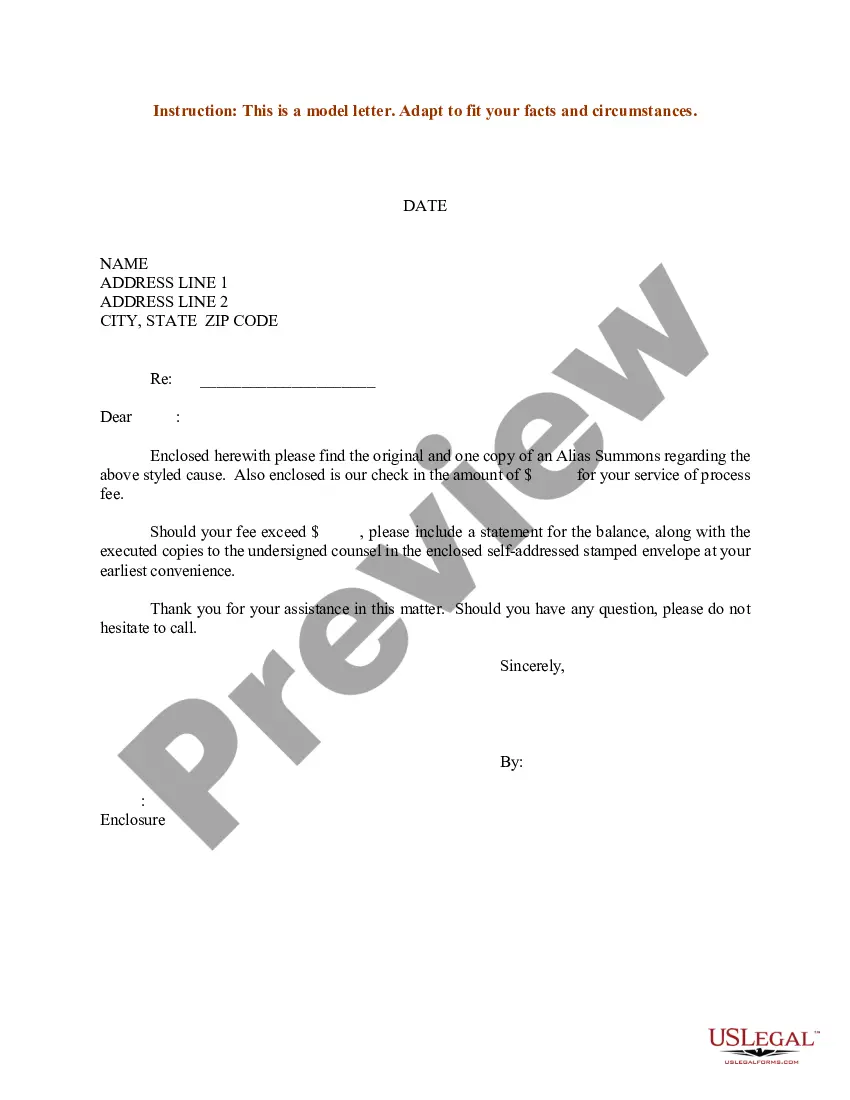
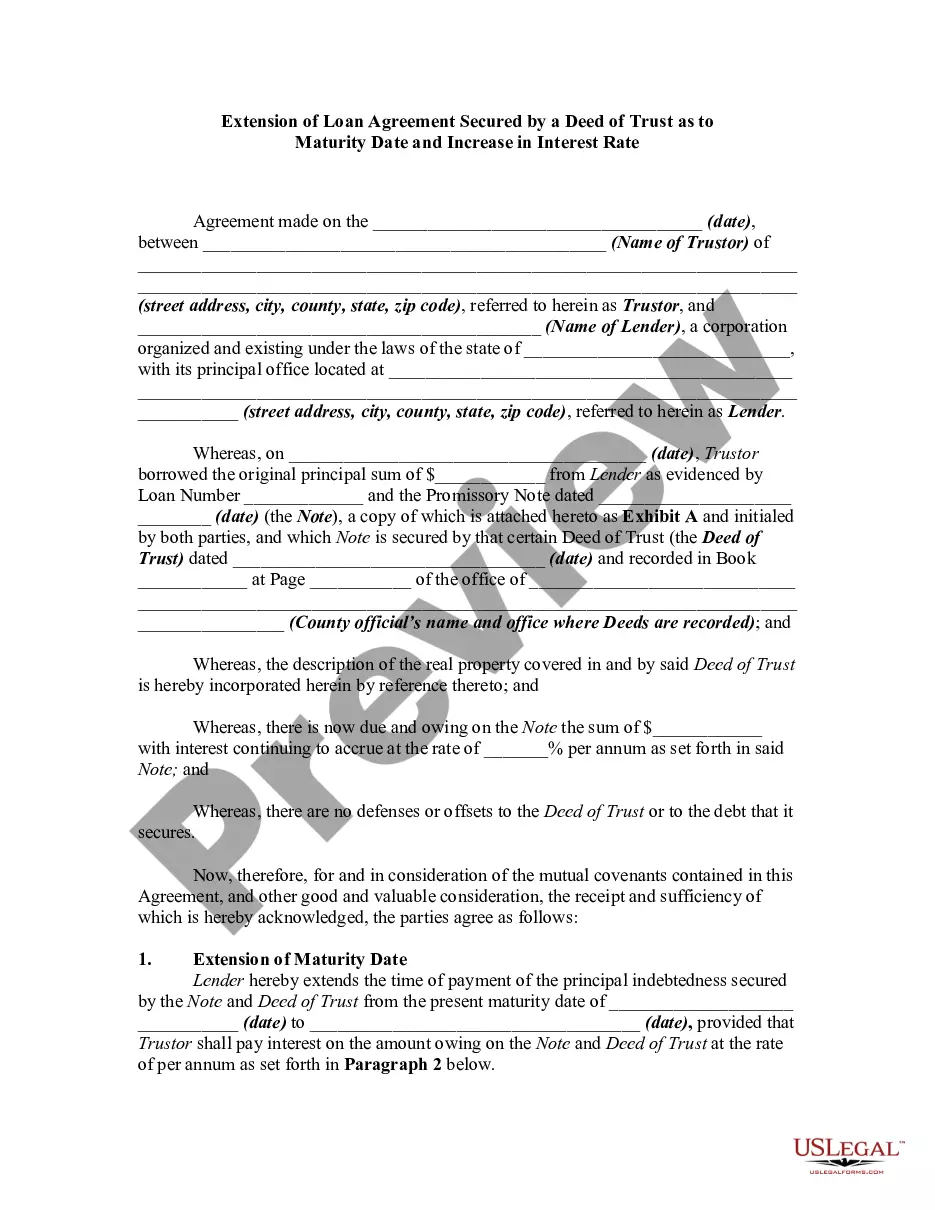
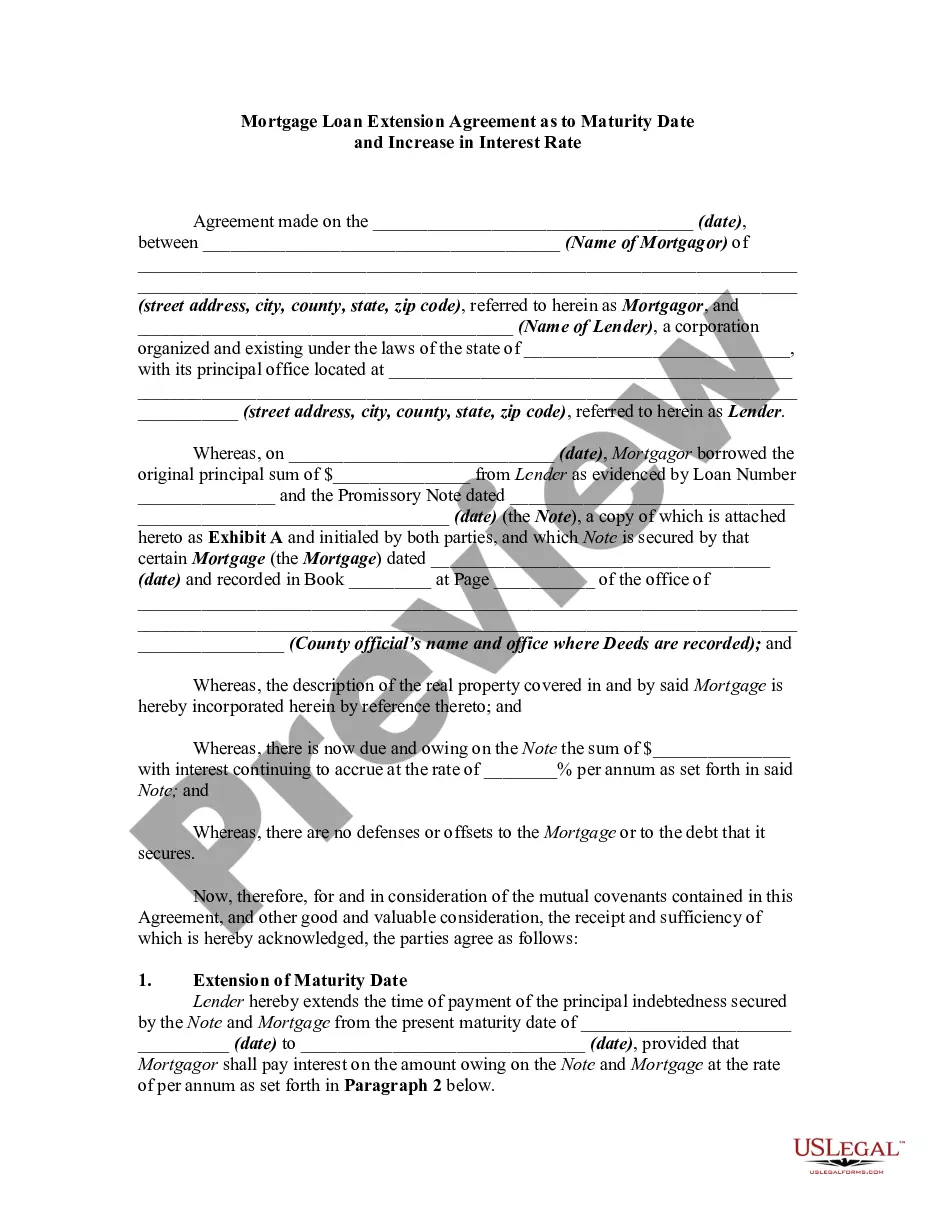
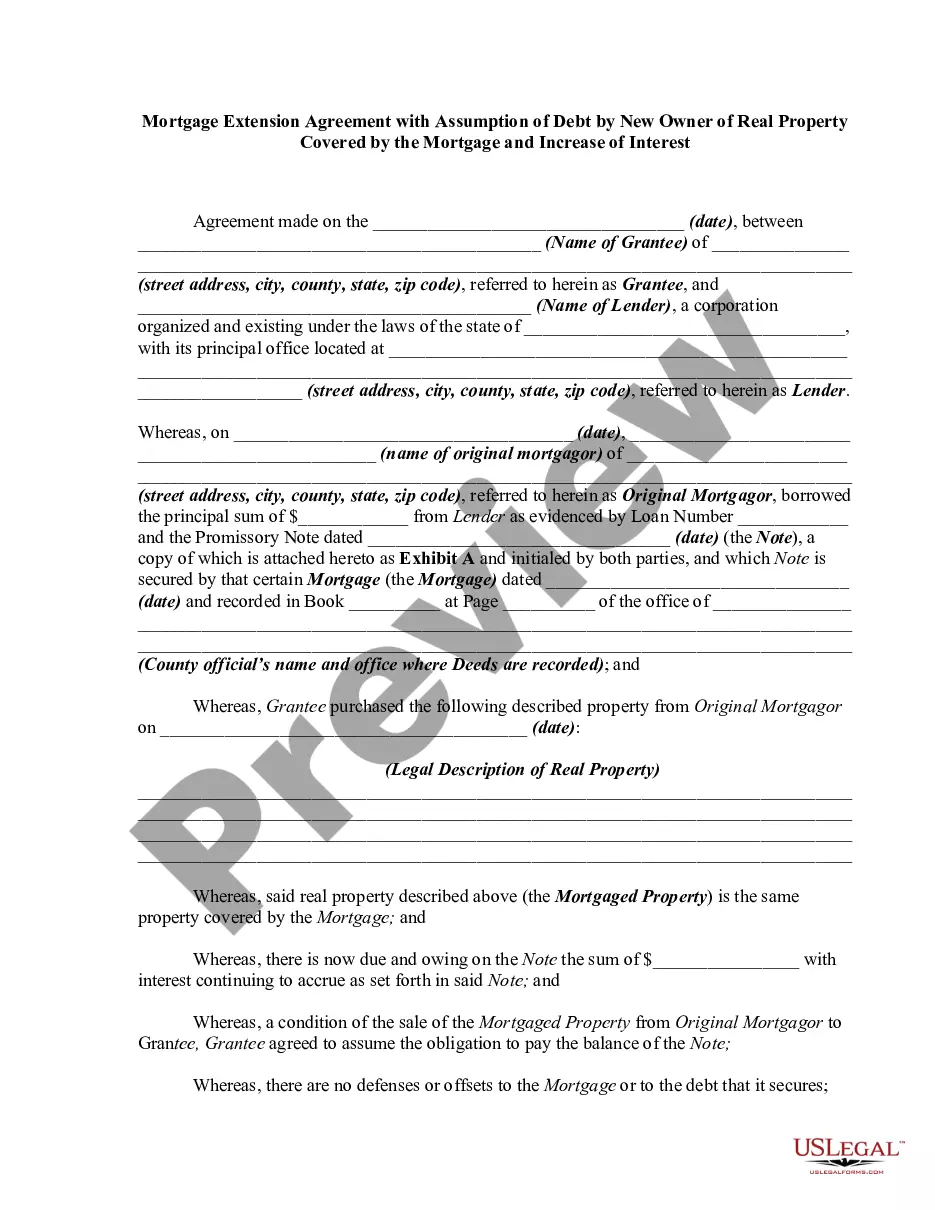
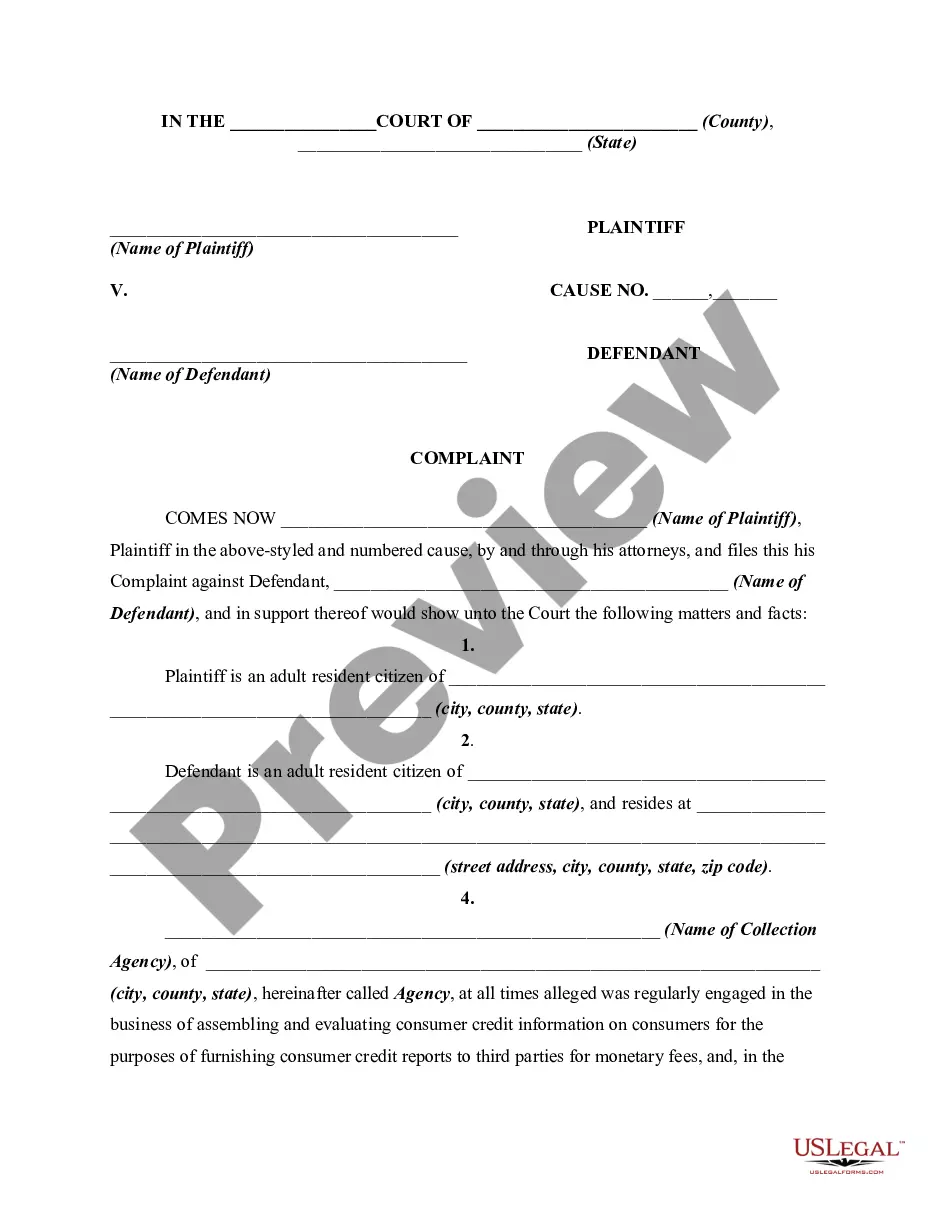
Nevada Rule 48 is a set of rules that governs the procedures for the filing and service of pleadings (documents) in civil cases in the state of Nevada. There are two types of Nevada Rule 48: Rule 48(a) and Rule 48(b). Rule 48(a) is commonly referred to as the "notice pleading" rule and requires that a complaint in a civil action must contain only a short and plain statement of the facts that entitle the plaintiff to relief. Rule 48(b) requires that the defendant be served with a summons and complaint and that the defendant must respond within 20 days after service of the summons and complaint.
Nevada Rule 48
State:
Nevada
Control #:
NV-SKU-1054
Format:
PDF
Instant download
This website is not affiliated with any governmental entity
Public form
Description
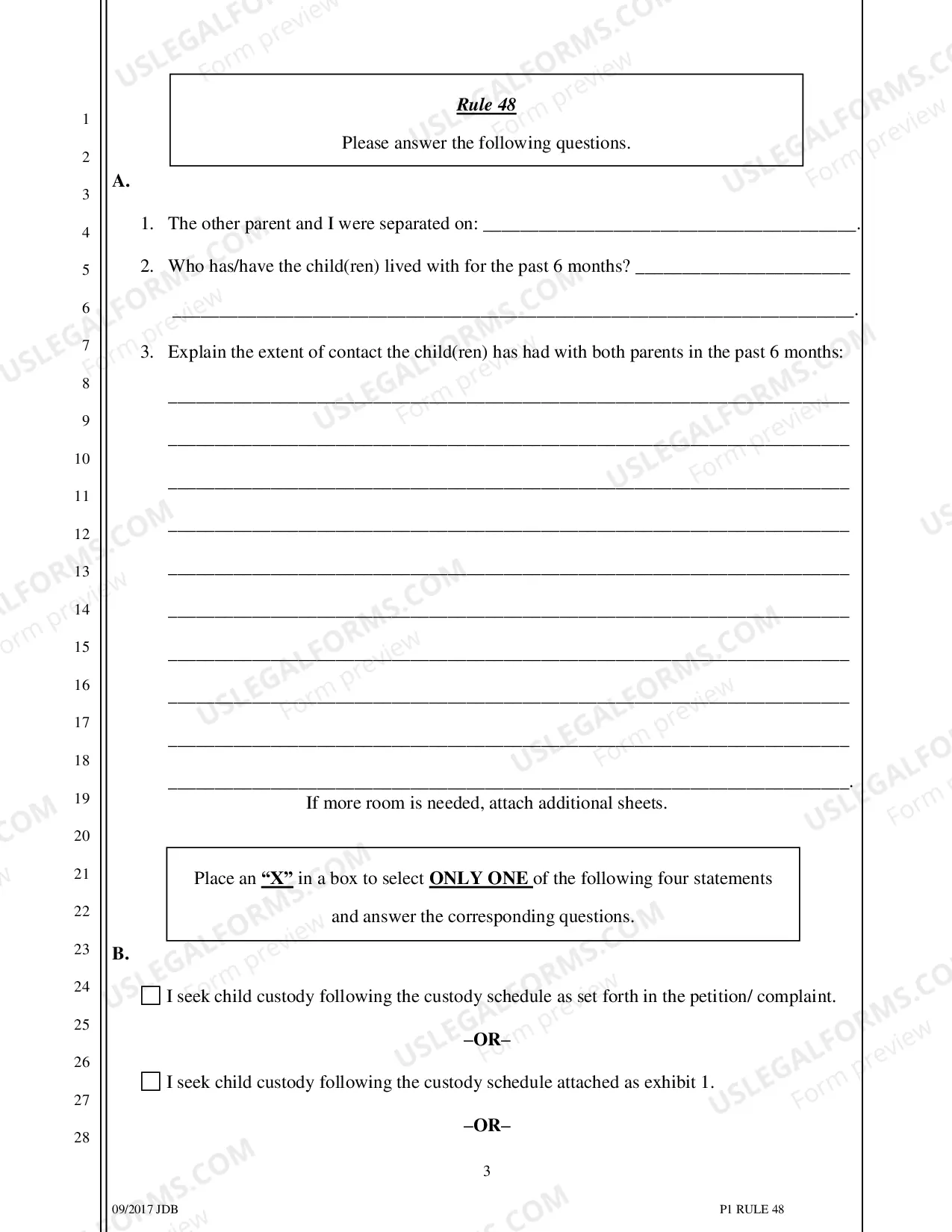
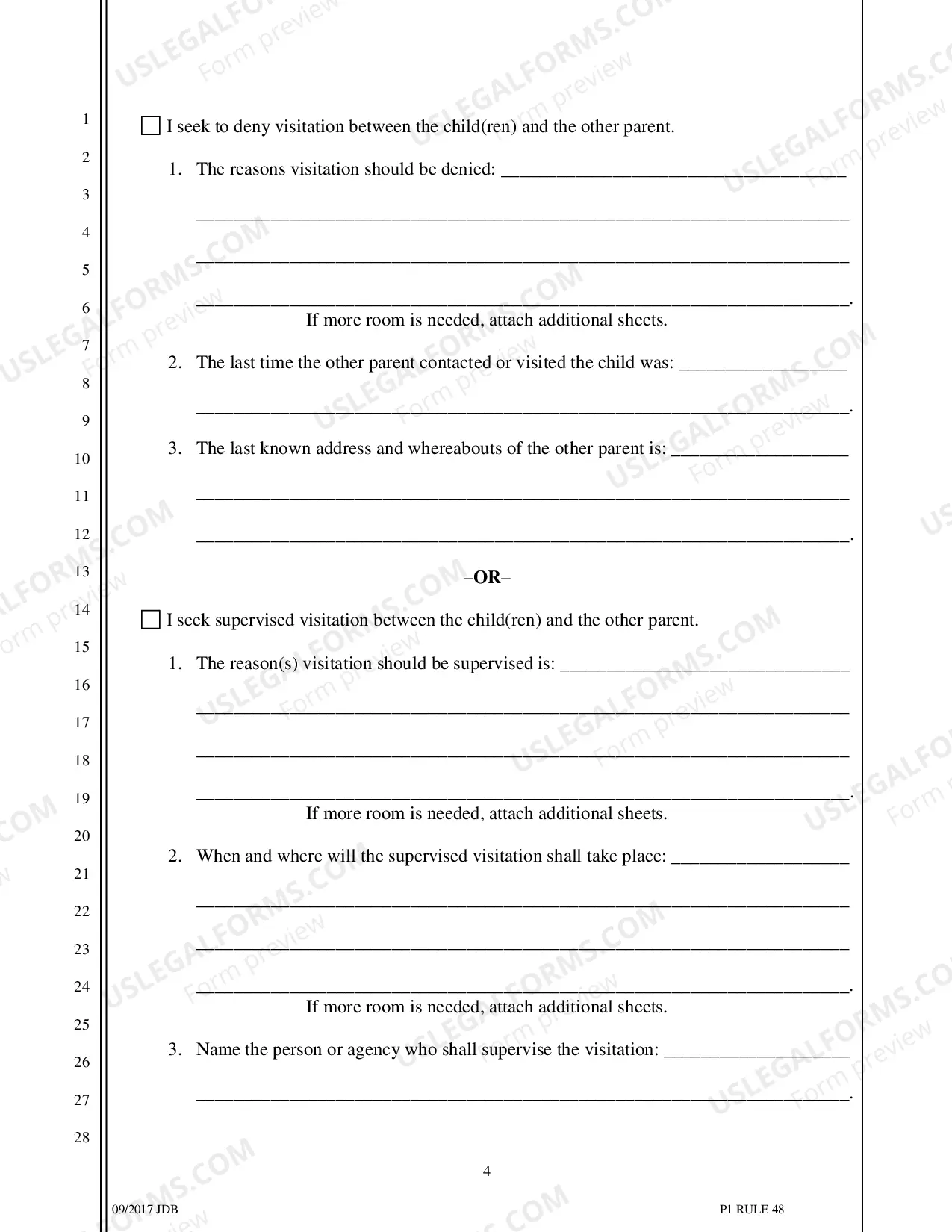
Rule 48
Free preview
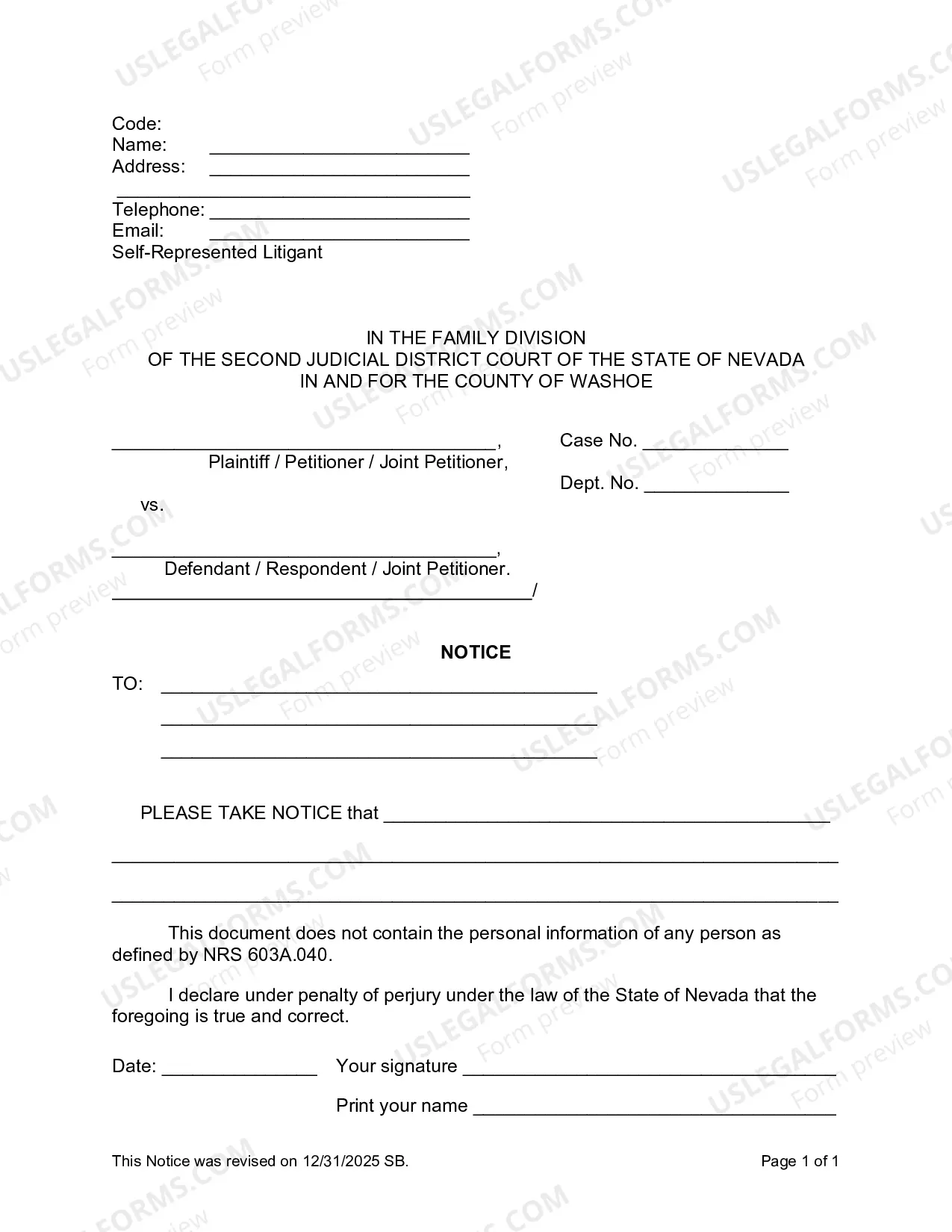
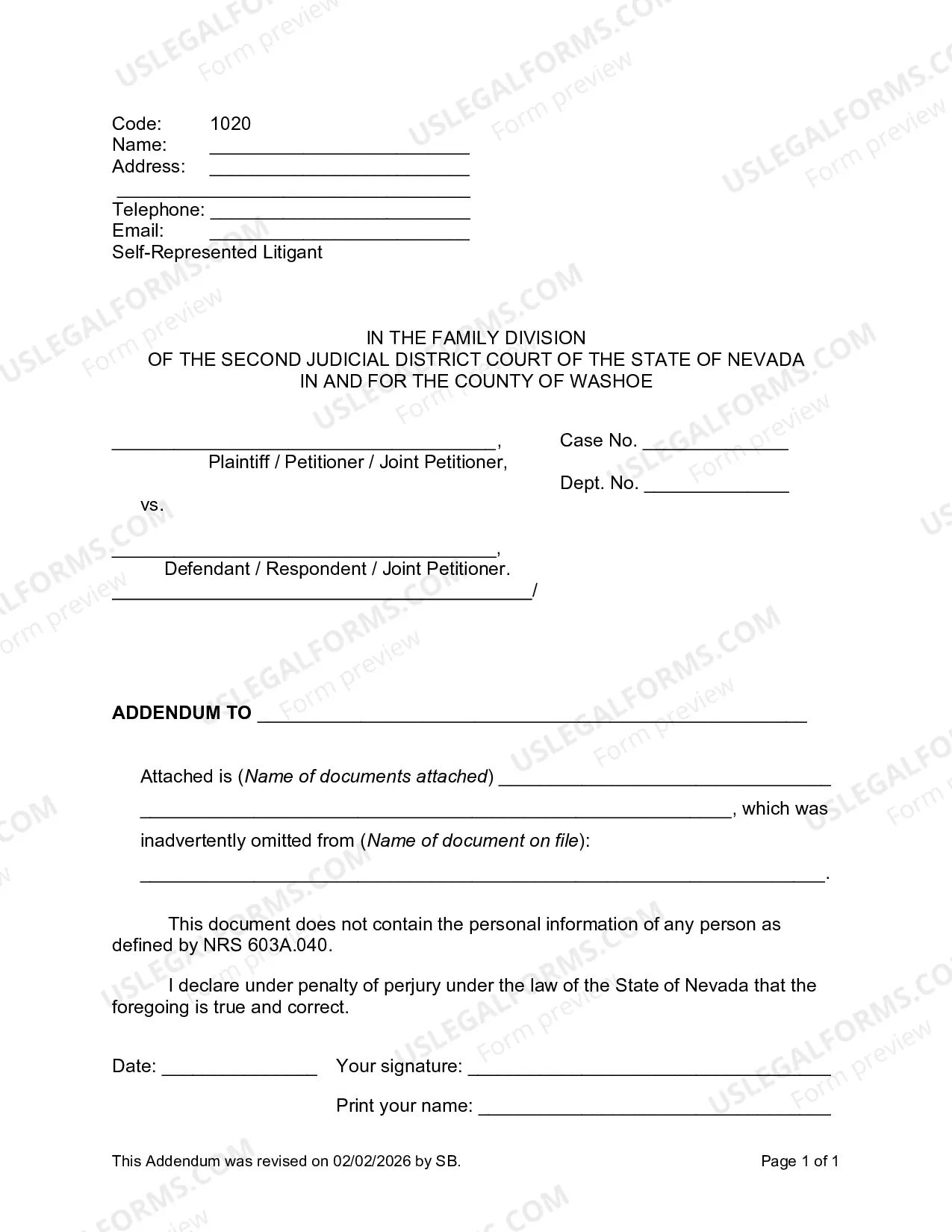
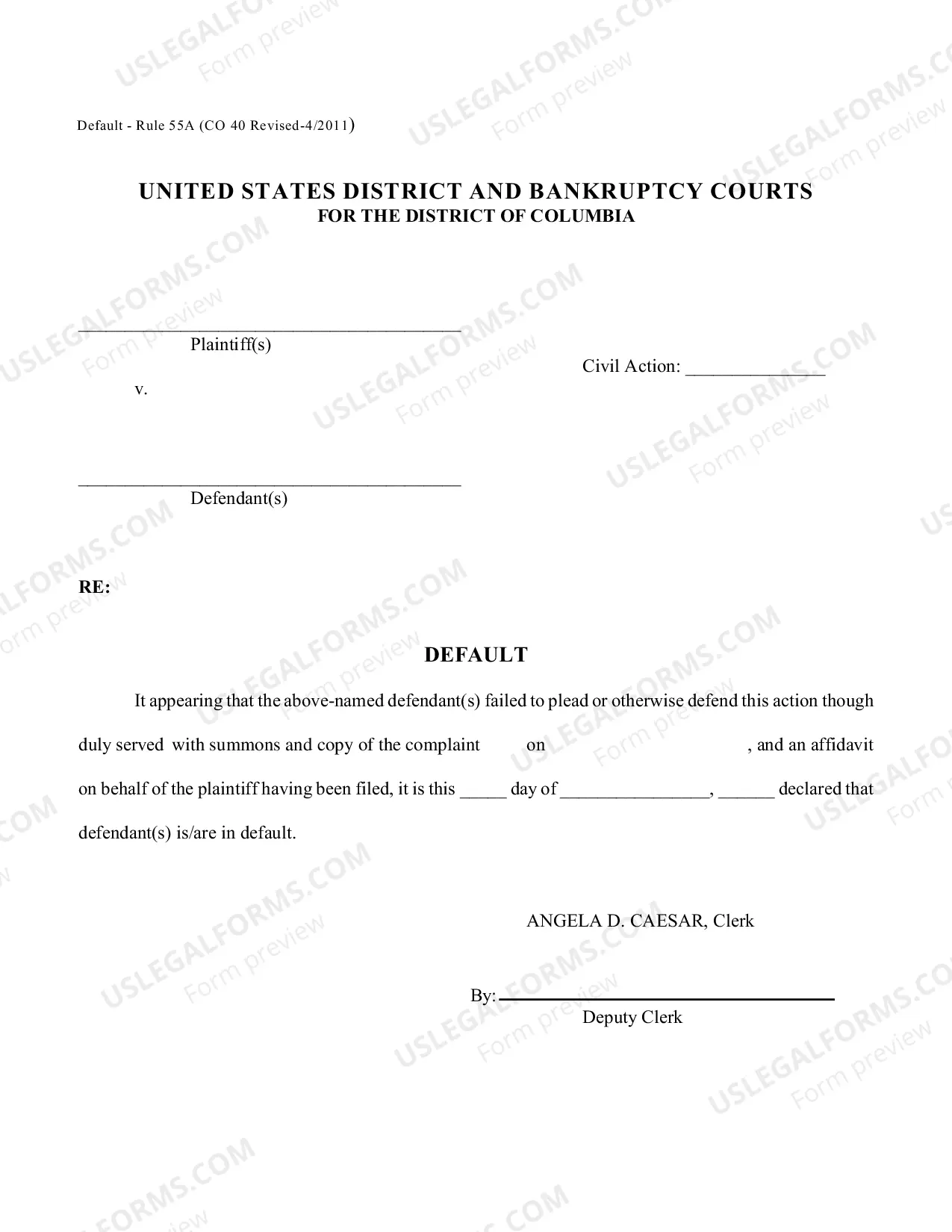
Get your form ready online
Our built-in tools help you complete, sign, share, and store your documents in one place.
Built-in online Word editor
Make edits, fill in missing information, and update formatting in US Legal Forms—just like you would in MS Word.
Export easily
Download a copy, print it, send it by email, or mail it via USPS—whatever works best for your next step.
E-sign your document
Sign and collect signatures with our SignNow integration. Send to multiple recipients, set reminders, and more. Go Premium to unlock E-Sign.
Notarize online 24/7
If this form requires notarization, complete it online through a secure video call—no need to meet a notary in person or wait for an appointment.
Store your document securely
We protect your documents and personal data by following strict security and privacy standards.

Make edits, fill in missing information, and update formatting in US Legal Forms—just like you would in MS Word.

Download a copy, print it, send it by email, or mail it via USPS—whatever works best for your next step.

Sign and collect signatures with our SignNow integration. Send to multiple recipients, set reminders, and more. Go Premium to unlock E-Sign.

If this form requires notarization, complete it online through a secure video call—no need to meet a notary in person or wait for an appointment.

We protect your documents and personal data by following strict security and privacy standards.
Looking for another form?
How to fill out Nevada Rule 48?
How much time and resources do you normally spend on composing official documentation? There’s a greater opportunity to get such forms than hiring legal experts or wasting hours searching the web for a proper template. US Legal Forms is the top online library that offers professionally drafted and verified state-specific legal documents for any purpose, such as the Nevada Rule 48.
To acquire and prepare an appropriate Nevada Rule 48 template, adhere to these simple instructions:
- Examine the form content to ensure it meets your state regulations. To do so, read the form description or utilize the Preview option.
- In case your legal template doesn’t meet your requirements, locate another one using the search bar at the top of the page.
- If you are already registered with our service, log in and download the Nevada Rule 48. If not, proceed to the next steps.
- Click Buy now once you find the correct document. Opt for the subscription plan that suits you best to access our library’s full service.
- Create an account and pay for your subscription. You can make a payment with your credit card or through PayPal - our service is absolutely reliable for that.
- Download your Nevada Rule 48 on your device and complete it on a printed-out hard copy or electronically.
Another advantage of our library is that you can access previously purchased documents that you safely store in your profile in the My Forms tab. Get them at any moment and re-complete your paperwork as frequently as you need.
Save time and effort completing formal paperwork with US Legal Forms, one of the most trustworthy web services. Join us now!
Form popularity
FAQ
Rule 11 - Signing Pleadings, Motions, and Other Papers; Representations to the Court; Sanctions (a) Signature. Every pleading, written motion, and other paper must be signed by at least one attorney of record in the attorney's name-or by a party personally if the party is unrepresented.
Dismissal. (a) By Attorney for Government . The Attorney General or the United States attorney may by leave of court file a dismissal of an indictment, information or complaint and the prosecution shall thereupon terminate.
Rule 45(a)(1) authorizes the issuance of a subpoena to compel a nonparty to produce evidence independent of any deposition or permit inspection of premises within the nonparty's possession.
Rule 35 - Physical and Mental Examinations (a)Order for Examination (1)In General. The court where the action is pending may order a party whose mental or physical condition-including blood group-is in controversy to submit to a physical or mental examination by a suitably licensed or certified examiner.
(B) The court must dismiss an action for want of prosecution if a plaintiff fails to bring the action to trial within 5 years after the action was filed.
NRS 48.015 ?Relevant evidence? defined. As used in this chapter, ?relevant evidence? means evidence having any tendency to make the existence of any fact that is of consequence to the determination of the action more or less probable than it would be without the evidence.
Nevada Rule of Civil Procedure (NRCP) 68, provides that any party may serve an offer of judgment at least 10 days before trial. 1 An offer not accepted within 10 days is deemed rejected and withdrawn.
Under the discovery rule, the statute of limitations doesn't run during the period before the victim discovered or should have discovered the injury. However, a person can't be willfully blind to their injuries, either. It all depends on what a reasonable person should have known or been aware of at the time.