Nevada Notice of Assignment to Living Trust
What this document covers
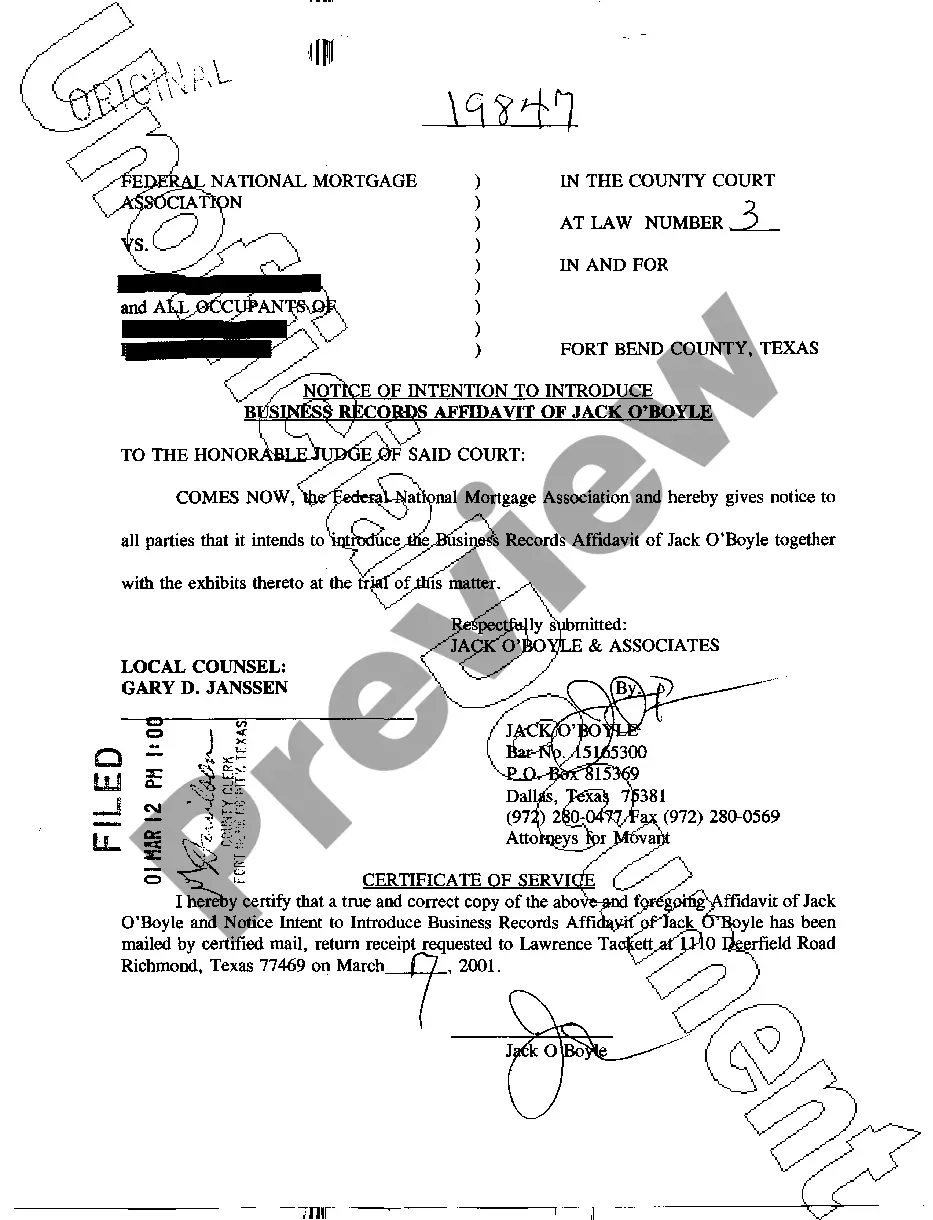
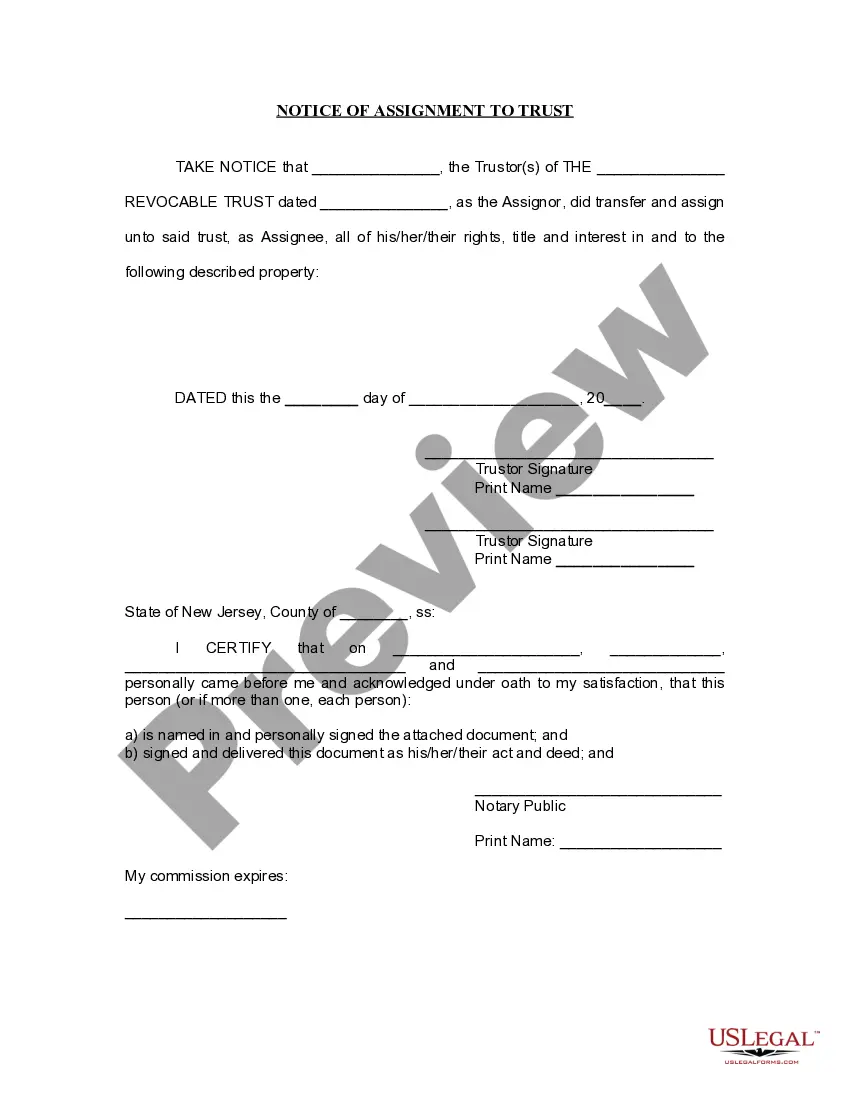
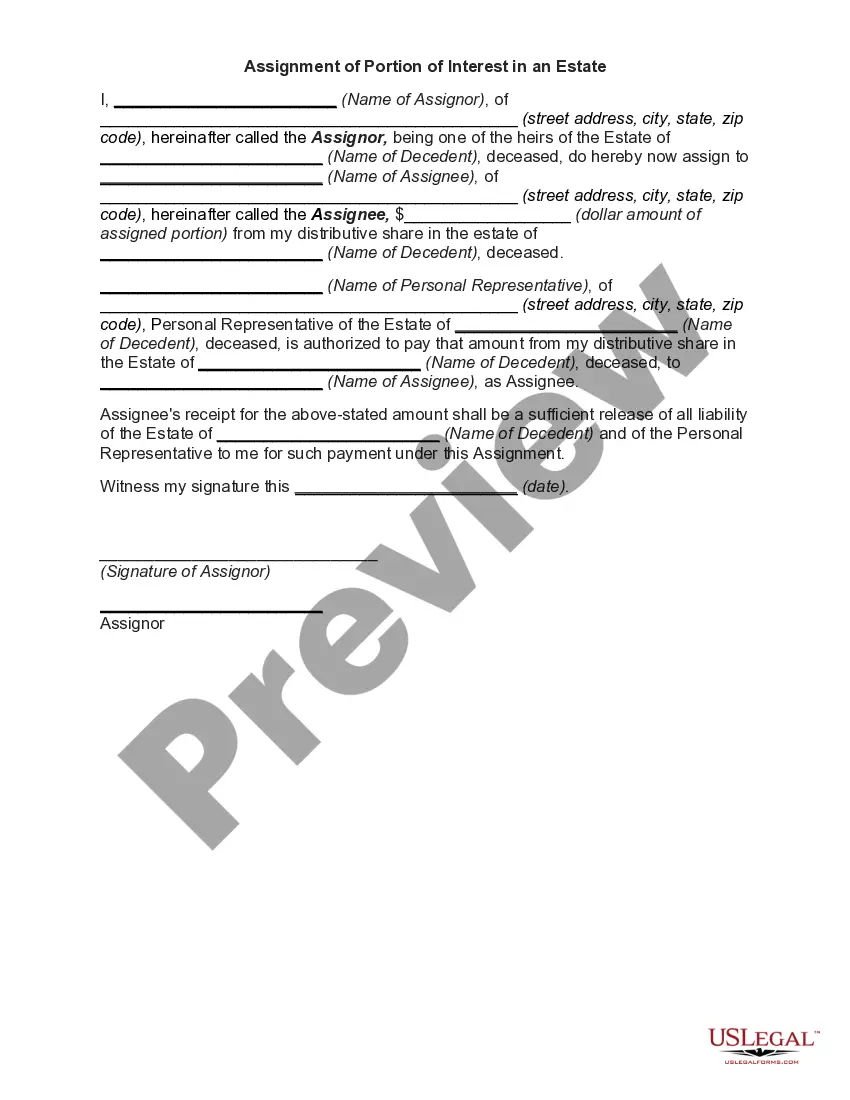
The Notice of Assignment to Living Trust is a legal document that serves as formal notice that the trustor(s) has transferred their rights, title, and interest in specific property to a living trust. This type of trust is created during a person's lifetime and is primarily used for estate planning purposes. Unlike simple property transfers, this document explicitly outlines the assignment to a revocable trust, ensuring clarity in managing and protecting assets for beneficiaries.
What’s included in this form
- Trustor(s) information: Identifies the owner(s) of the property.
- Revocable trust details: Name of the trust and its date of establishment.
- Description of the property: Clearly outlines what property is being assigned.
- Signatures: Required for both the trustor(s) and a notary public to validate the document.
When this form is needed
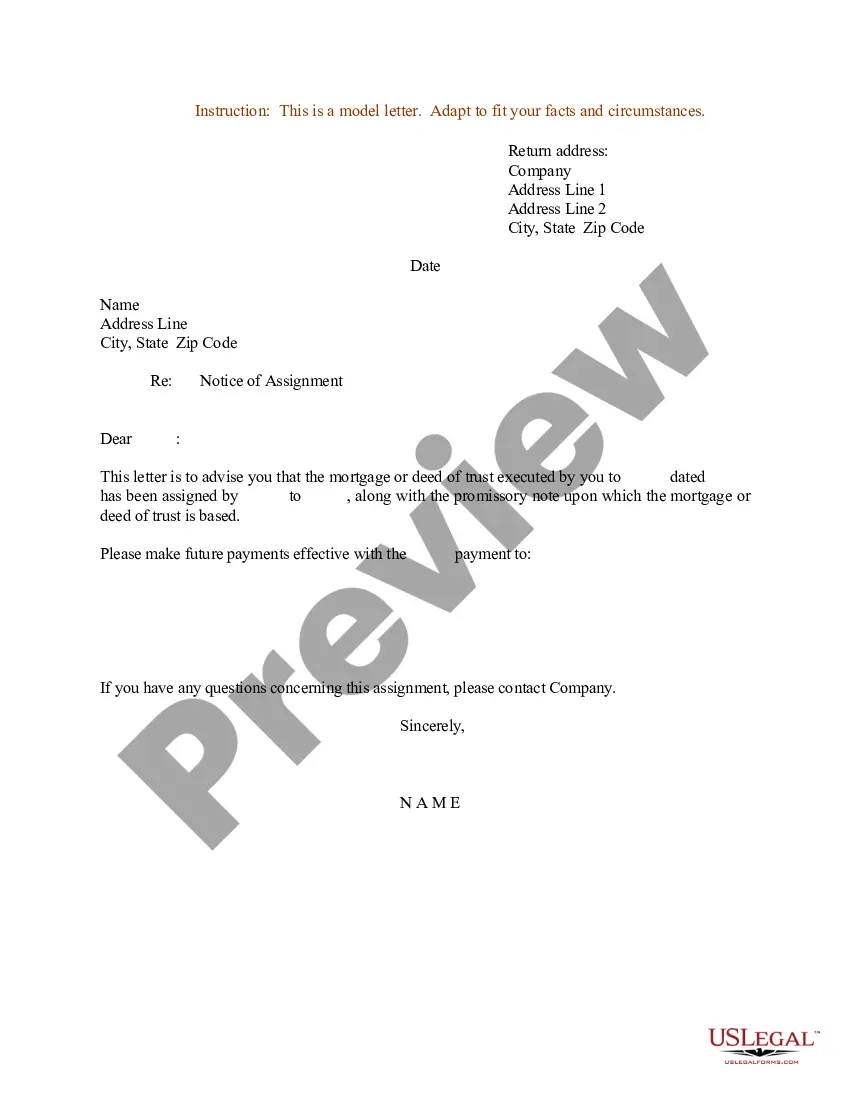
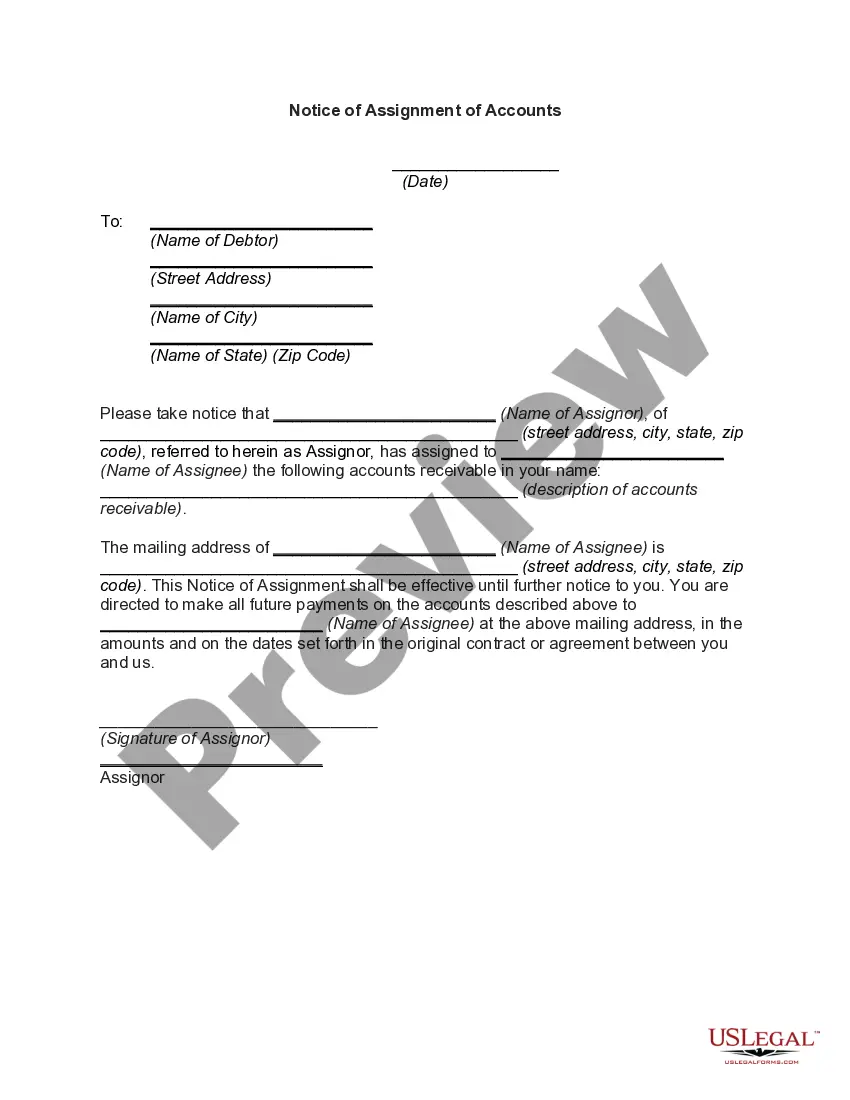
This form is used when a trustor wishes to formally assign their assets to a living trust. It is particularly essential during estate planning to ensure all assets are included in the trust, avoiding potential disputes after the trustor's passing. Utilizing this form helps to clarify the ownership and management of the assets within the trust.
Intended users of this form
This form is suitable for:
- Individuals establishing a living trust who want to assign property to that trust.
- Trustors with existing properties that need to be formally assigned to a trust.
- Estate planning professionals assisting clients in transferring assets into trust.
Completing this form step by step
- Identify the trustor(s) by entering their names and contact information.
- Specify the name and date of the revocable trust to ensure accuracy.
- Clearly describe the property being assigned to provide legal clarity.
- Have the trustor(s) sign the document in the appropriate signature section.
- Complete the notary section to have the document notarized if required.
Does this document require notarization?
This document requires notarization to meet legal standards. US Legal Forms provides secure online notarization powered by Notarize, allowing you to complete the process through a verified video call, available 24/7.
Get your form ready online
Our built-in tools help you complete, sign, share, and store your documents in one place.
Make edits, fill in missing information, and update formatting in US Legal Forms—just like you would in MS Word.
Download a copy, print it, send it by email, or mail it via USPS—whatever works best for your next step.
Sign and collect signatures with our SignNow integration. Send to multiple recipients, set reminders, and more. Go Premium to unlock E-Sign.
If this form requires notarization, complete it online through a secure video call—no need to meet a notary in person or wait for an appointment.
We protect your documents and personal data by following strict security and privacy standards.

Make edits, fill in missing information, and update formatting in US Legal Forms—just like you would in MS Word.

Download a copy, print it, send it by email, or mail it via USPS—whatever works best for your next step.

Sign and collect signatures with our SignNow integration. Send to multiple recipients, set reminders, and more. Go Premium to unlock E-Sign.

If this form requires notarization, complete it online through a secure video call—no need to meet a notary in person or wait for an appointment.

We protect your documents and personal data by following strict security and privacy standards.
Common mistakes to avoid
- Failing to provide a complete and accurate description of the property.
- Not having the document notarized, which may be necessary for validity.
- Incorrectly identifying the trustor(s) or the name of the trust.
Benefits of using this form online
- Convenience: Easily access and complete the form from home.
- Editability: Modify the document as needed before finalizing.
- Reliability: Forms are drafted by licensed attorneys, ensuring legal compliance.
Summary of main points
- This form documents the transfer of property into a living trust.
- It is important for ensuring effective estate planning and clear asset management.
- Always obtain notarization for the form to ensure its legal validity.
- Be thorough when providing property descriptions and trustor details.
Looking for another form?
Form popularity
FAQ
When you create a DIY living trust, there are no attorneys involved in the process. You will need to choose a trustee who will be in charge of managing the trust assets and distributing them.You'll also need to choose your beneficiary or beneficiaries, the person or people who will receive the assets in your trust.
Trusts aren't recorded anywhere, so you can't go to the County Recorder's office in the courthouse to ask to see a copy of the trust. However, if real estate is involved, the trust may be recorded in the local office of the county clerk.
In most places, a living trust document, unlike a will, does not need to be signed in front of witnesses.But you do need to sign your living trust document in front of a notary public for your state. If you create a shared living trust, both of you need to sign the trust document in front of the notary.
A revocable living trust isn't subject to the same kind of rules as a will; it should be valid in any state, no matter where you signed it.If you acquire real estate in your new state, you'll probably want to hold it in the trust, so that it doesn't have to go through probate at your death.
No. Trust does not need to be filed in California. Trusts are private documents and usually there are compelling reasons not to file the trust.
Normally a Nevada trust only requires a notary public affirmation; that is, witnesses are not required. If however the trust is likely to be administered in a state that requires witnesses, sound discretion would mandate that witnesses and a notary public be used in executing the trust.
Choose whether to make an individual or shared trust. Decide what property to include in the trust. Choose a successor trustee. Decide who will be the trust's beneficiaries who will get the trust property. Create the trust document. Sign the document in front of a notary public.
Trusts Are Not Public Record. Most states require a last will and testament to be filed with the appropriate state court when the person dies. When this happens, the will becomes a public record for anyone to read. However, trusts aren't recorded.