Nevada Transfer on Death Deed TOD - Beneficiary Deed for Husband and Wife to Individual
What is this form?
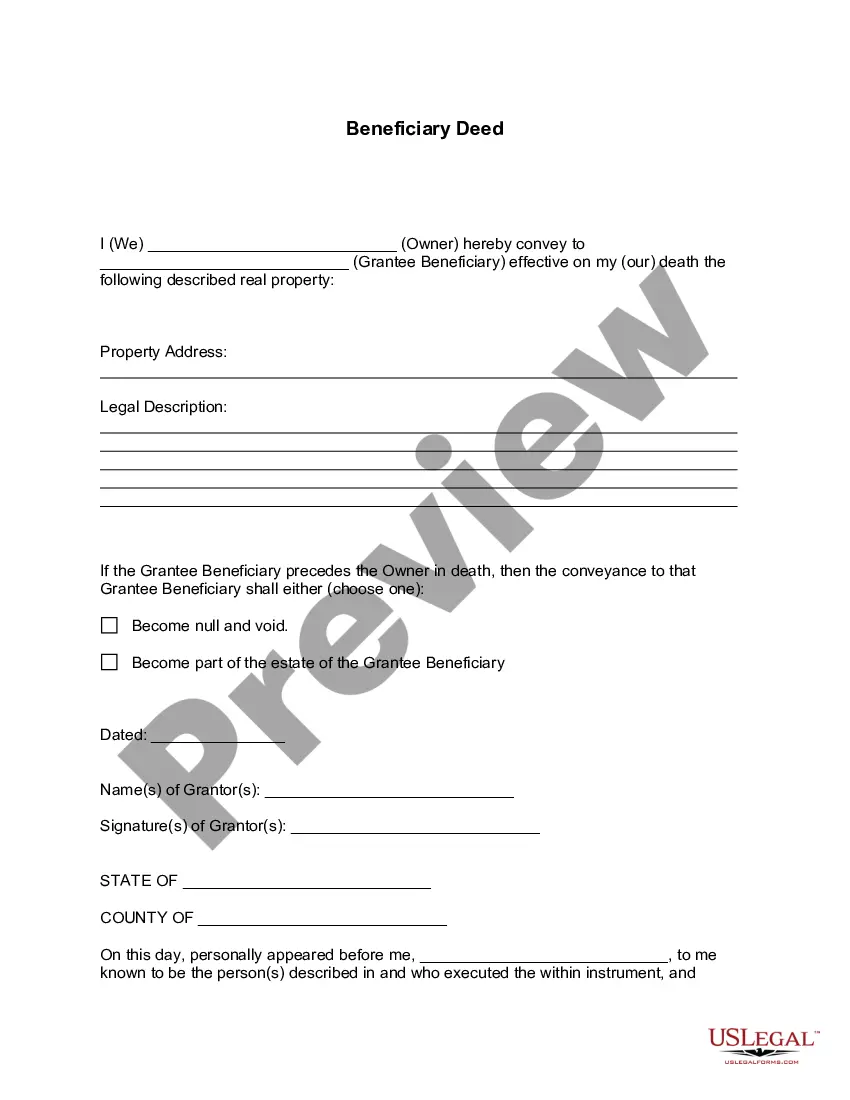
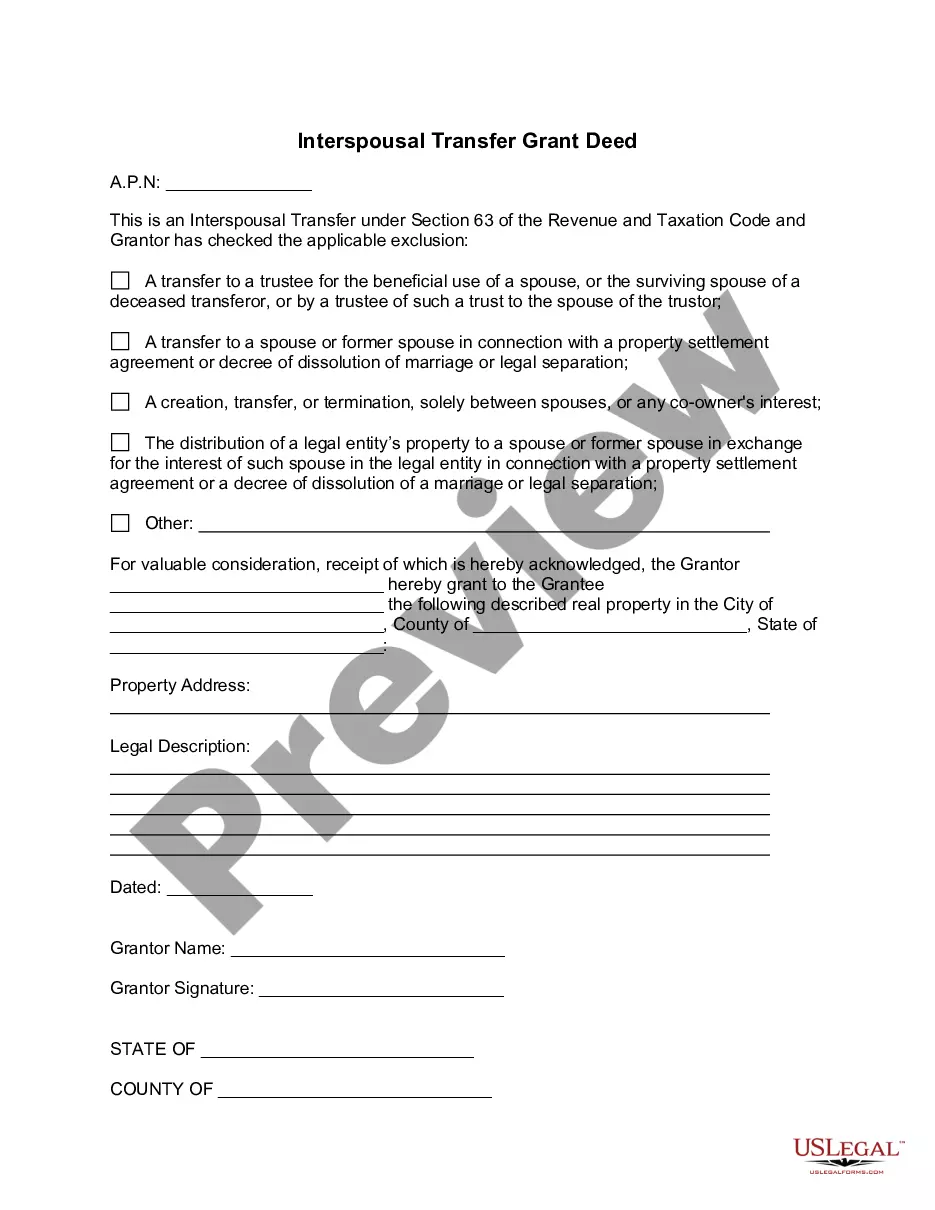
The Transfer on Death Deed (TOD), also known as a Beneficiary Deed, is a legal document that allows married couples to designate a specific individual to receive their property upon their death. This form simplifies the transfer of the property, avoiding probate and ensuring that it passes directly to the designated beneficiary when both spouses pass away. It differs from regular property deeds by including provisions for a transfer that occurs only after the death of the grantors, making it an effective estate planning tool for couples.
Form components explained
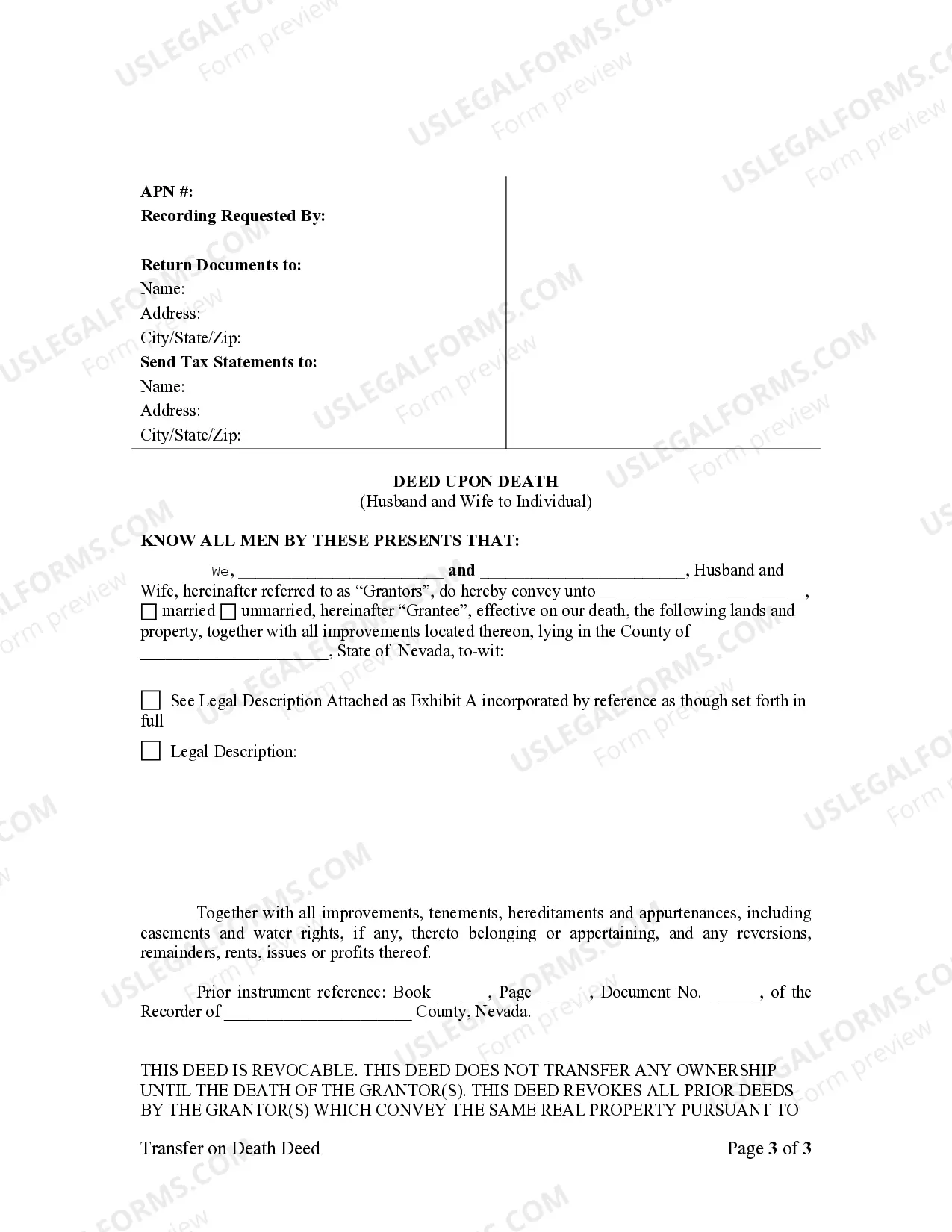
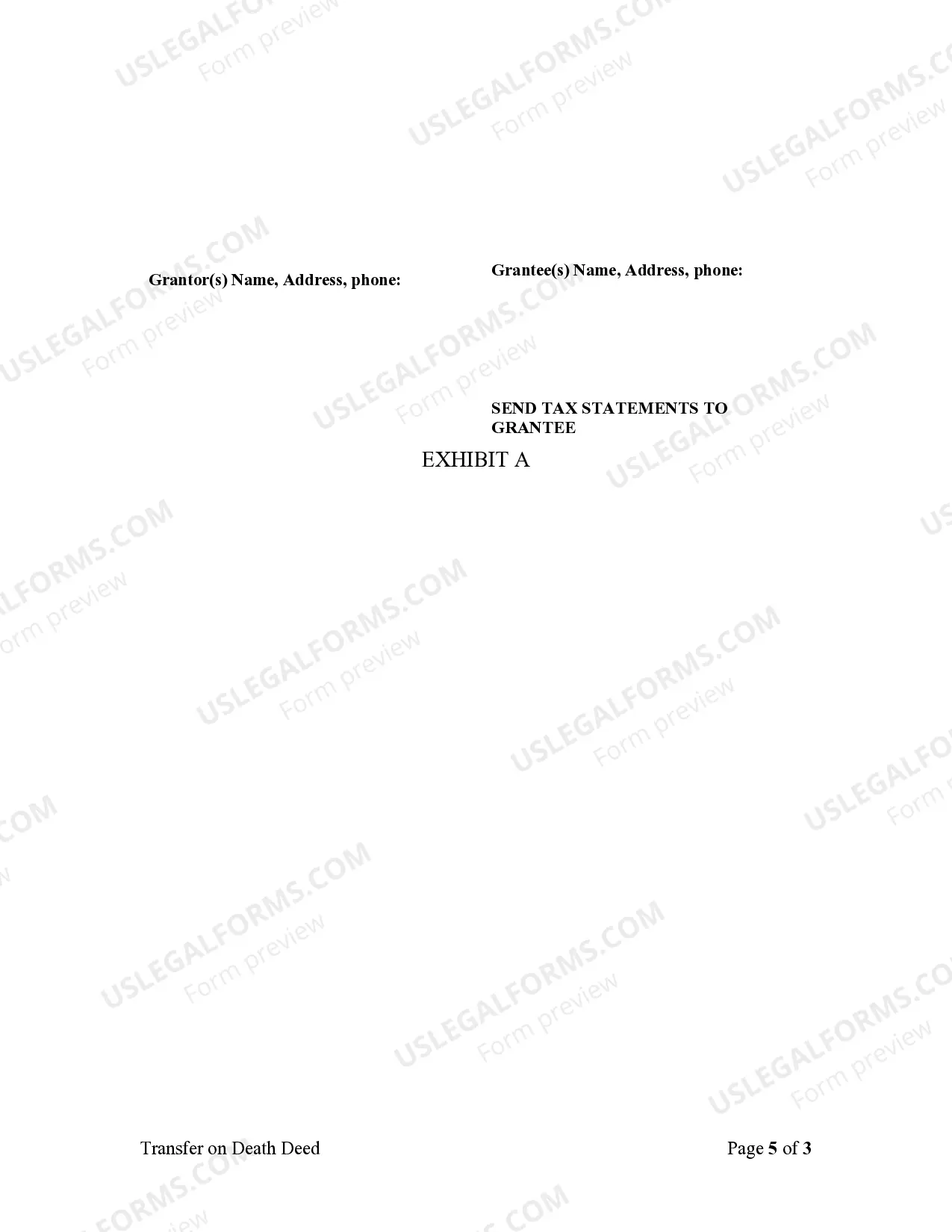
- Identification of the grantors: Includes names of both husband and wife.
- Identification of the grantee: Names the individual who will receive the property.
- Legal description of the property: Specifies the exact location and boundaries of the property being transferred.
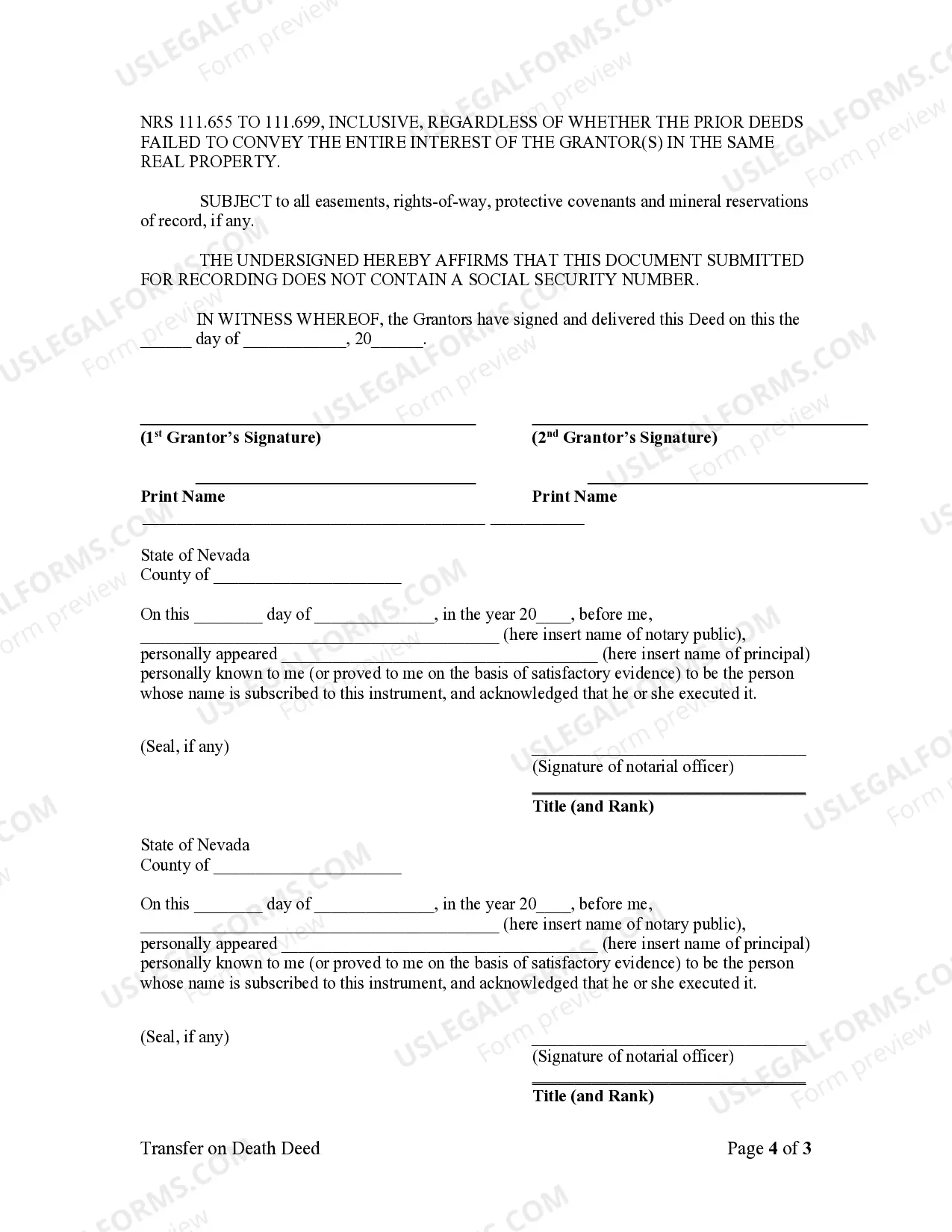
- Effect of the deed: Outlines that the property ownership transfers upon the death of the last surviving grantor.
- Signature fields: Areas where both spouses must sign for the deed to be valid.



Situations where this form applies
This form is useful in various situations, such as when a husband and wife own property jointly and wish to designate a specific person to inherit the property without going through the probate process. It is also applicable for couples who want to ensure the smooth transition of their property to their chosen heirs after both of their deaths. Utilizing a Transfer on Death Deed can simplify estate management and minimize legal complications for beneficiaries.
Who can use this document
The following individuals or couples may find this form beneficial:
- Married couples who jointly own real estate and wish to designate a single beneficiary for property upon their deaths.
- Property owners looking to avoid probate for their real estate.
- Individuals planning their estate and wanting to clearly outline property succession.
Completing this form step by step
- Identify the parties: Enter the full names of both the husband and wife as grantors.
- Specify the grantee: Clearly state the name of the individual who will inherit the property.
- Describe the property: Provide a detailed legal description of the property being transferred.
- Sign the deed: Both grantors must sign the document in the designated signature fields.
- File the deed: Depending on local laws, you may need to file the completed deed with the appropriate county or state office.
Is notarization required?
This document requires notarization to meet legal standards. US Legal Forms provides secure online notarization powered by Notarize, allowing you to complete the process through a verified video call, available 24/7.
Get your form ready online
Our built-in tools help you complete, sign, share, and store your documents in one place.
Make edits, fill in missing information, and update formatting in US Legal Forms—just like you would in MS Word.
Download a copy, print it, send it by email, or mail it via USPS—whatever works best for your next step.
Sign and collect signatures with our SignNow integration. Send to multiple recipients, set reminders, and more. Go Premium to unlock E-Sign.
If this form requires notarization, complete it online through a secure video call—no need to meet a notary in person or wait for an appointment.
We protect your documents and personal data by following strict security and privacy standards.

Make edits, fill in missing information, and update formatting in US Legal Forms—just like you would in MS Word.

Download a copy, print it, send it by email, or mail it via USPS—whatever works best for your next step.

Sign and collect signatures with our SignNow integration. Send to multiple recipients, set reminders, and more. Go Premium to unlock E-Sign.

If this form requires notarization, complete it online through a secure video call—no need to meet a notary in person or wait for an appointment.

We protect your documents and personal data by following strict security and privacy standards.
Avoid these common issues
- Failing to include the legal description of the property, which can make the deed ineffective.
- Not having both spouses sign the deed, which is necessary for a valid transfer.
- Omitting to file the deed with the proper authorities, leading to complications in the transfer of ownership.
Advantages of online completion
- Convenience of downloading the form and completing it at your own pace.
- Editability allows for easy adjustments to fit your specific needs and circumstances.
- Reliable templates drafted by licensed attorneys, ensuring legal compliance and proper language use.
Looking for another form?

Form popularity
FAQ
If you'd like to avoid having your property going through the probate process, it's a good idea to look into a transfer on death deed. A transfer on death deed allows you to select a beneficiary who will receive your property, but only when you've passed away.
Your deed won't be effective unless you recorded (filed) it in the local public records before your death. To get that done, take the signed deed to the land records office for the county in which the real estate is located. This office is commonly called the county recorder, land registry, or registrar of deeds.
The California TOD deed form allows property to be automatically transferred to a new owner when the current owner dies, without the need to go through probate. It also gives the current owner retained control over the property, including the right to change his or her mind about the transfer.
States that allow TOD deeds are Alaska, Arizona, Arkansas, California, Colorado, District of Columbia, Hawaii, Illinois, Indiana, Kansas, Maine, Minnesota, Mississippi, Missouri, Montana, Nebraska, Nevada, New Mexico, North Dakota, Ohio, Oklahoma, Oregon, South Dakota, Texas, Utah, Virginia, Washington, West Virginia,