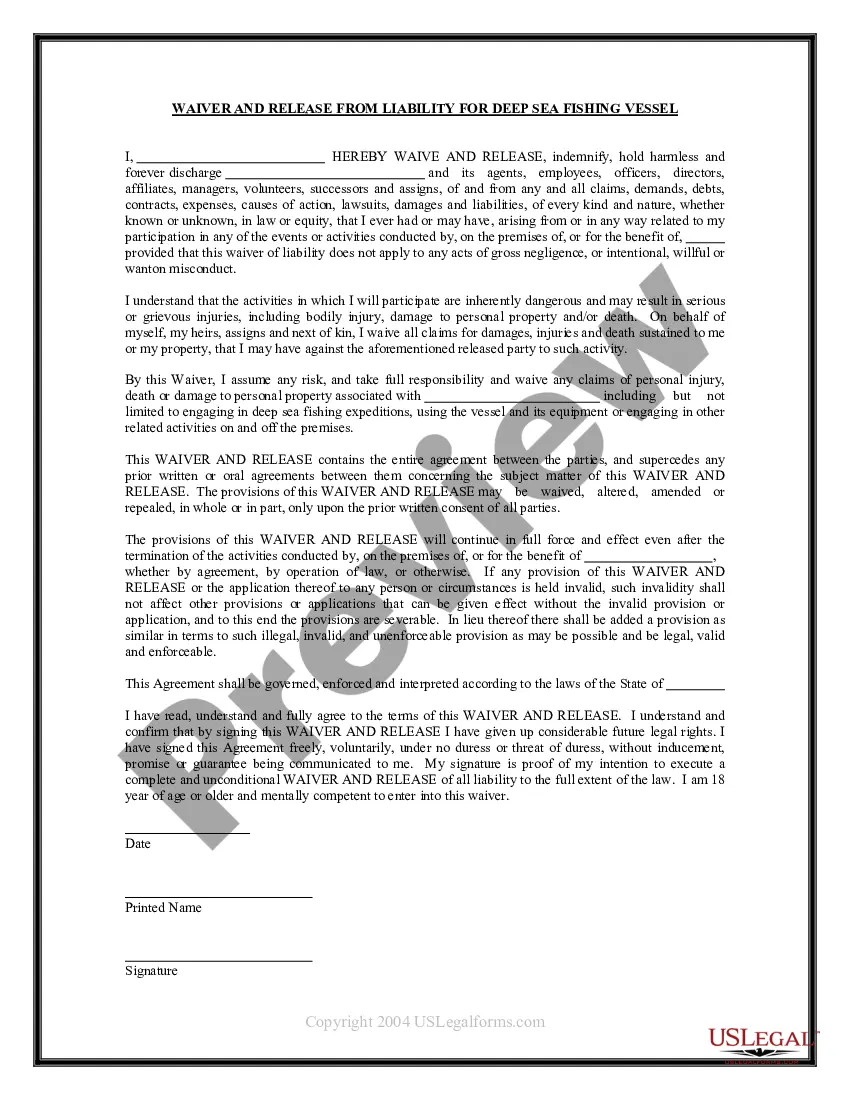
New Mexico Waiver and Release From Liability For Adult for Deep Sea Fishing Vessel
Description
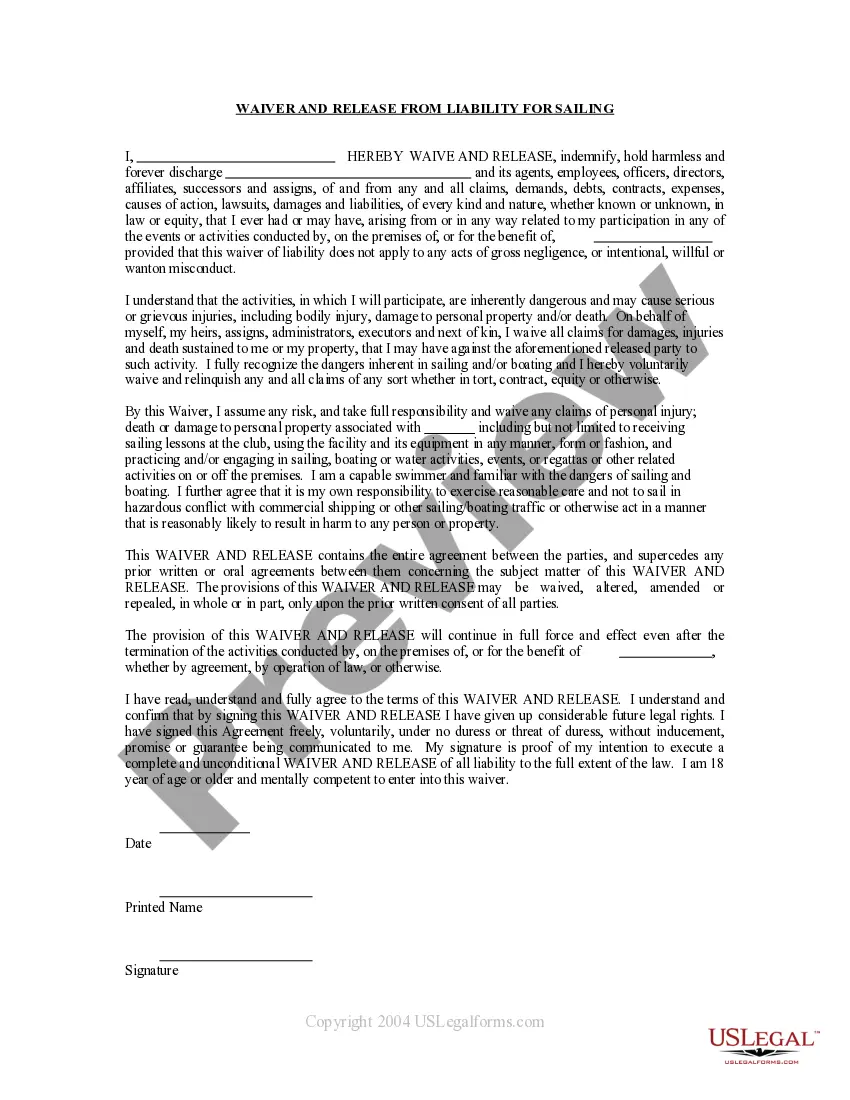
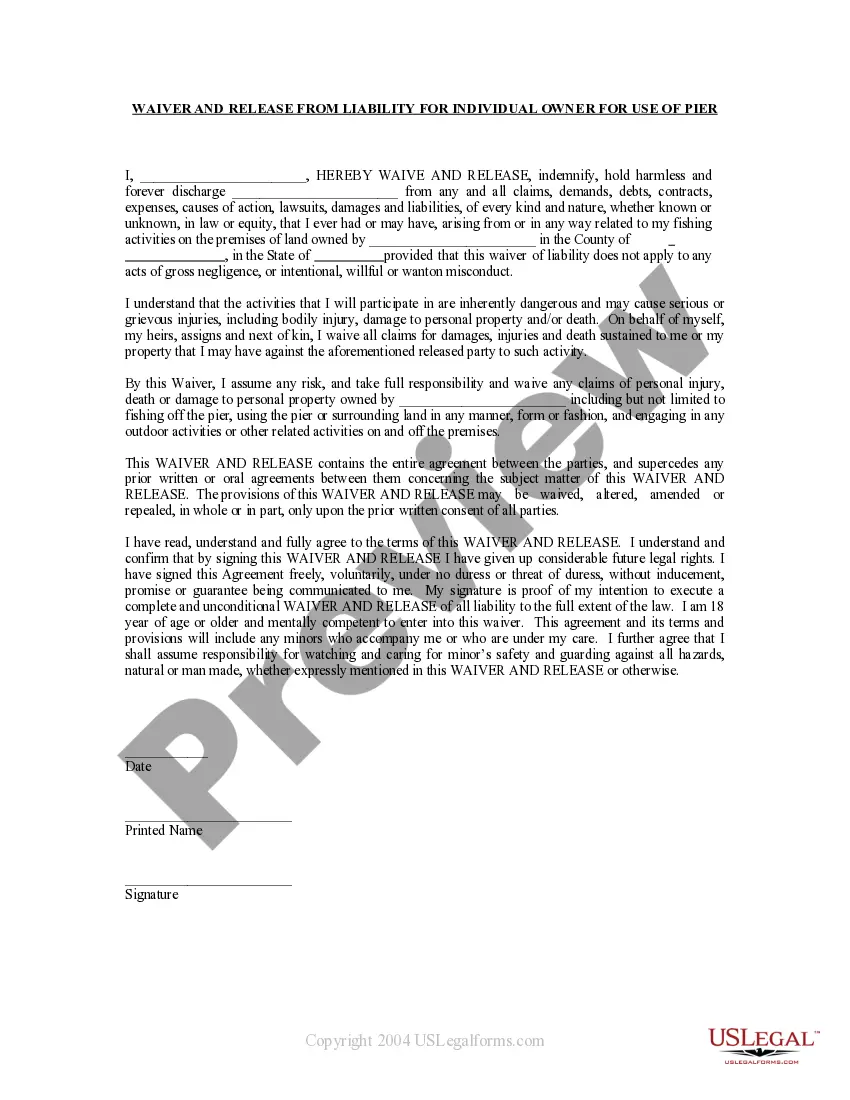
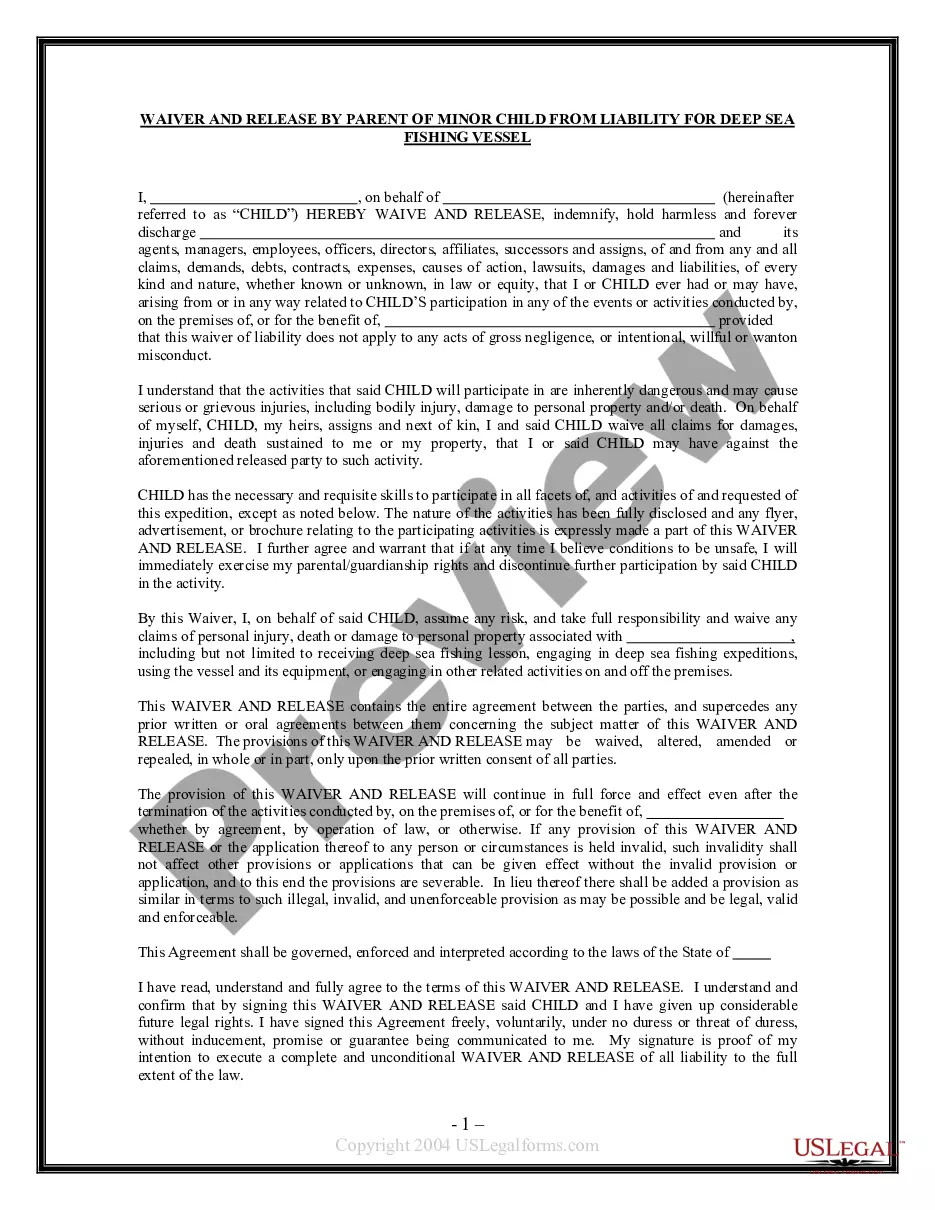
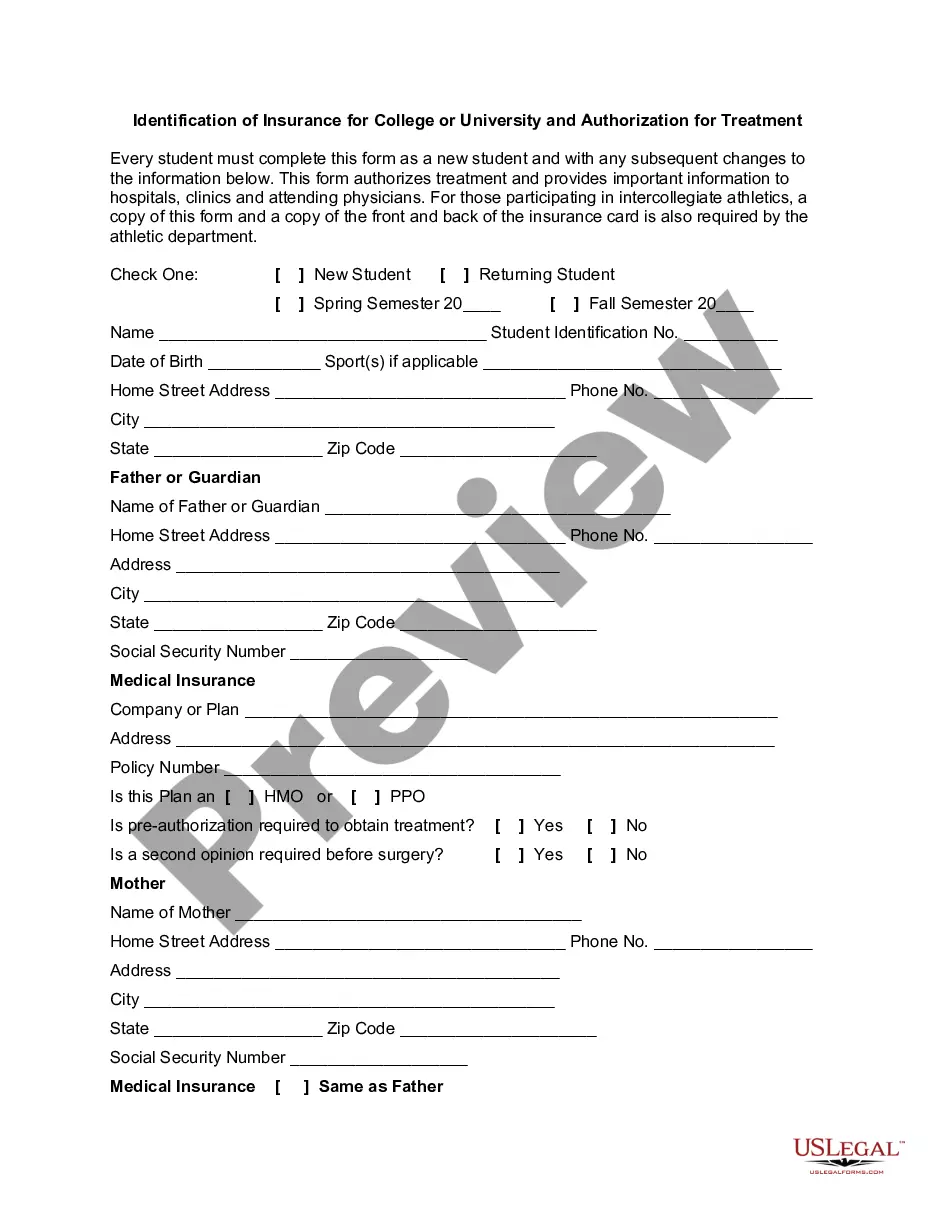
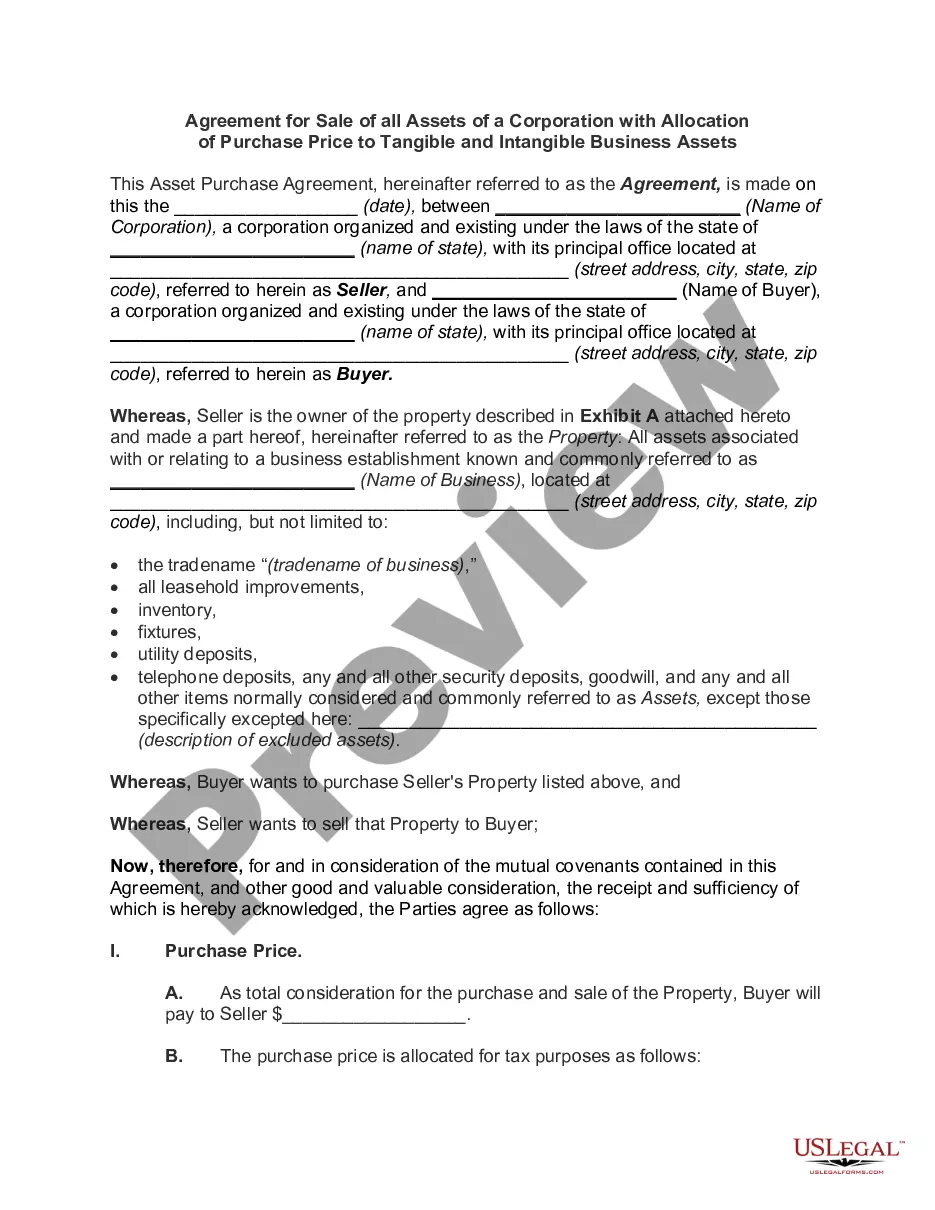
How to fill out Waiver And Release From Liability For Adult For Deep Sea Fishing Vessel?
If you require thorough, download, or create sanctioned document templates, utilize US Legal Forms, the largest repository of legal forms available online.
Employ the site’s simple and user-friendly search to locate the documents you need.
A variety of templates for business and personal purposes are organized by categories and states, or keywords.
Step 4. Once you have found the form you need, click the Acquire now button. Choose the payment plan you prefer and enter your details to create an account.
Step 5. Process the payment. You can use your credit card or PayPal account to finalize the transaction.
- Use US Legal Forms to find the New Mexico Waiver and Release From Liability For Adult for Deep Sea Fishing Vessel with just a few clicks.
- If you are already a US Legal Forms member, Log In to your account and click on the Obtain button to get the New Mexico Waiver and Release From Liability For Adult for Deep Sea Fishing Vessel.
- You can also access forms you previously downloaded from the My documents section of your account.
- If this is your first time using US Legal Forms, follow the steps below.
- Step 1. Make sure you have chosen the form for the correct state/nation.
- Step 2. Use the Preview option to review the form's content. Remember to read through the details.
- Step 3. If you are not satisfied with the form, utilize the Search field at the top of the screen to find other versions of the legal form format.
Form popularity
FAQ
Like sugar, liability disclaimers are imperative but their usefulness is tied to other methods (see more on this below). A waiver is an exculpatory contract. That means it's used to excuse a party from responsibility when the other contracted party is injured by either known or unknown risks in a particular activity.
As tempting as it may be, you should never write your own liability waiver. Unless you're a fully qualified lawyer with experience in this area, it's likely that you'll omit critical language that puts your business at risk for lawsuits.
A release of liability, also known as a liability waiver or a hold harmless agreement, is a contract in which one party agrees not to hold another party liable for damages or injury. These contracts are common in fields that involve some risk to property, finances, or health.
HOW LONG SHOULD I KEEP A RELEASE? The department sponsoring the activity must keep releases for at least three years after the activity ends. Releases signed by a parent or guardian on behalf of a minor must be retained for at least three years after the activity ends or until the minor turns 20, whichever is longer.
A release of liability is a legal agreement between two parties in which one party waives the right to hold another party responsible for potential damages or injuries.
Waivers must be stored by the department supervising the activity for at least three years after the activity ends. Waivers signed on behalf of a minor must be retained for three years after the activity ends or until the minor turns 20, whichever is longer.
A liability waiver, or release of liability, is a legal document that a company or organization has you sign in order to protect them from being sued in the event that you are injured.
Here is all that pertains writing an effective liability waiver:Get help. Writing a waiver should not be complicated.Use the correct structure.Proper formatting.Include a subject line.Include a caution!Talk about the activity risks.Do not forget an assumption of risk.Hold harmless.More items...?
A Release of Liability is an agreement between two parties in which one gives up the right to hold the other legally responsible for current or future injuries, losses, and damages. The party waiving their right receives monetary or non-monetary compensation, also known as consideration.
A waiver/release is an exculpatory contract that attempts to excuse or relieve a party, for injuries to a participant that arise out of the known and unknown risks in an activity. This includes the inherent risks that arise from the sports organization's ordinary negligence.