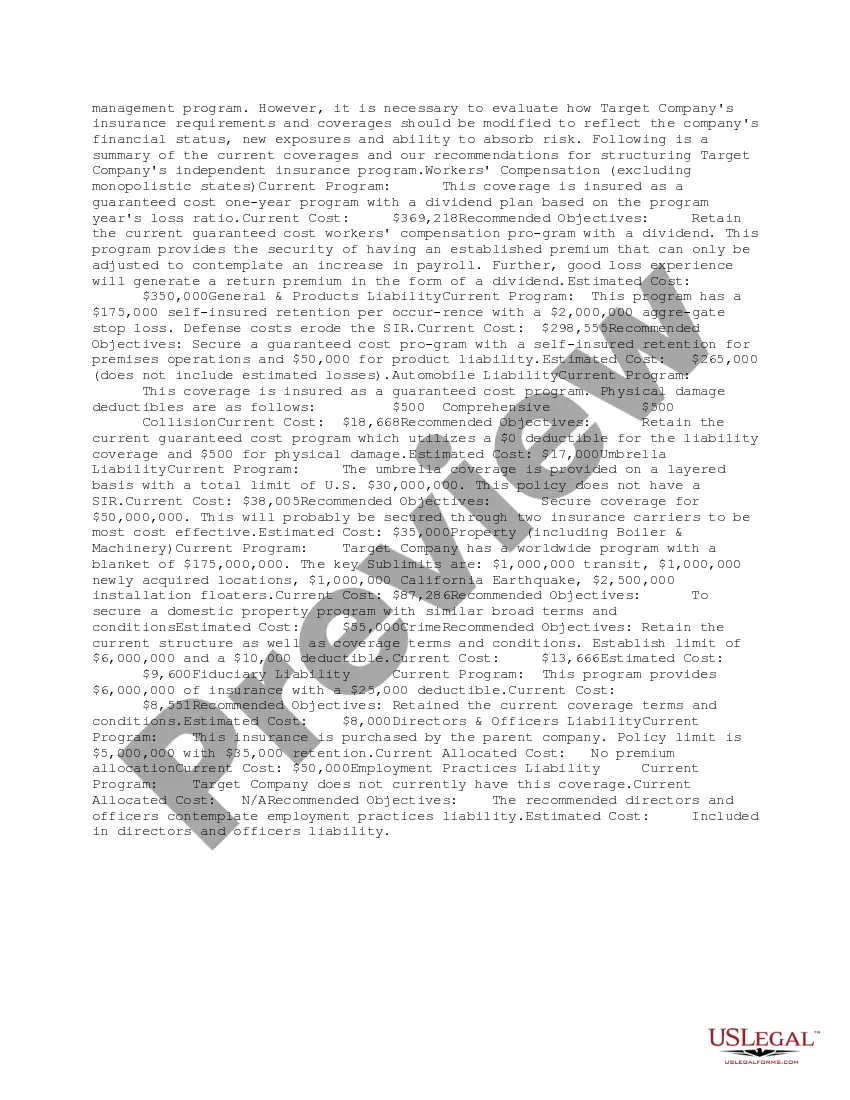
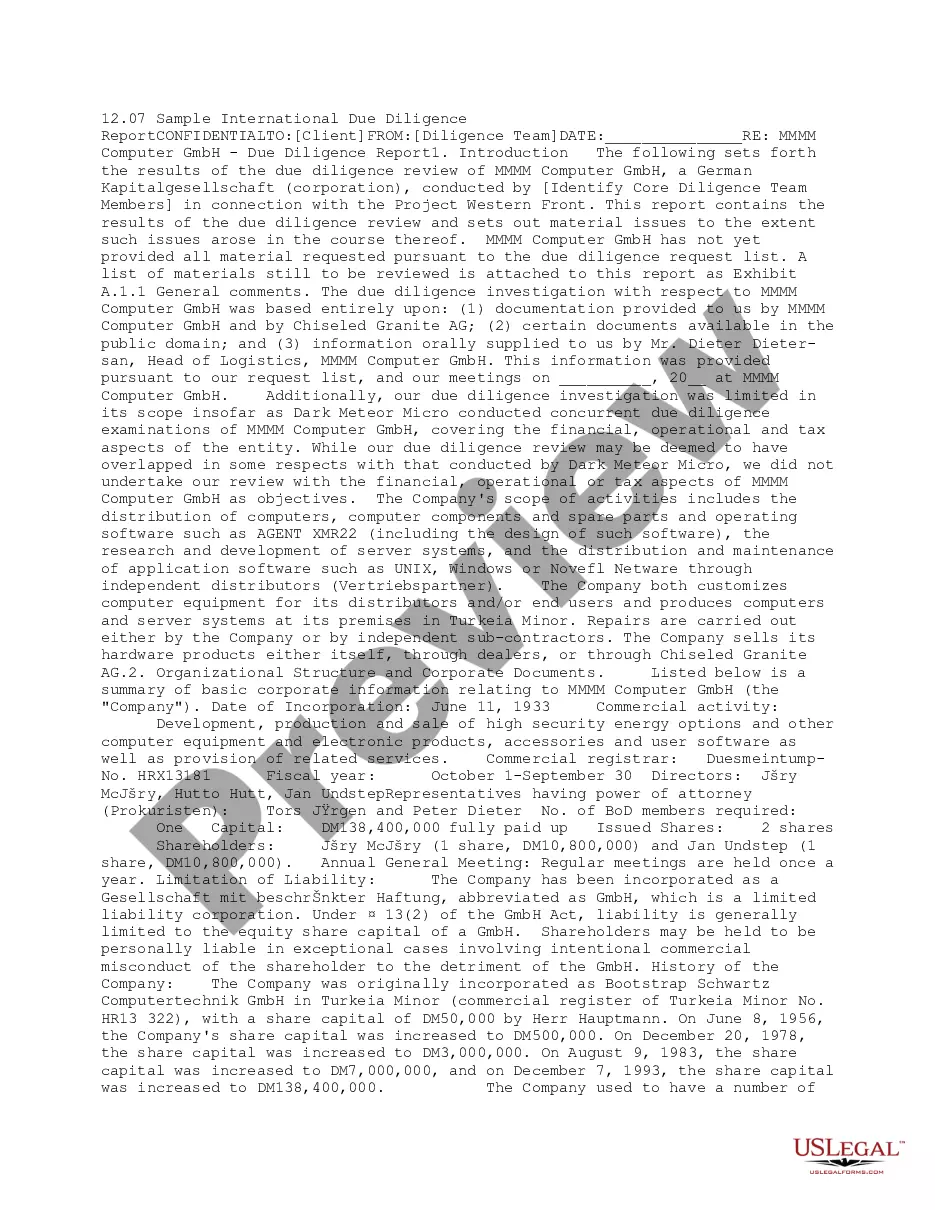
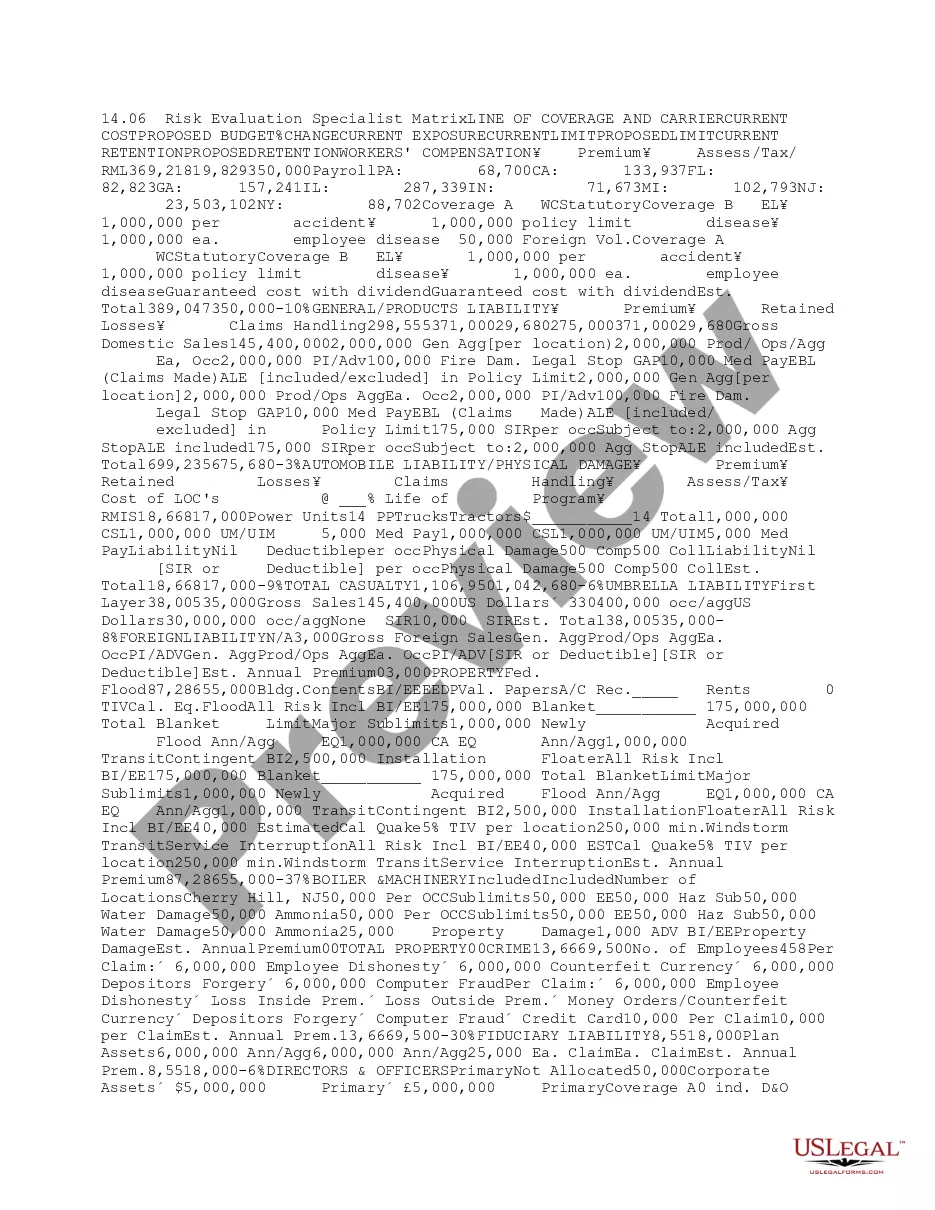
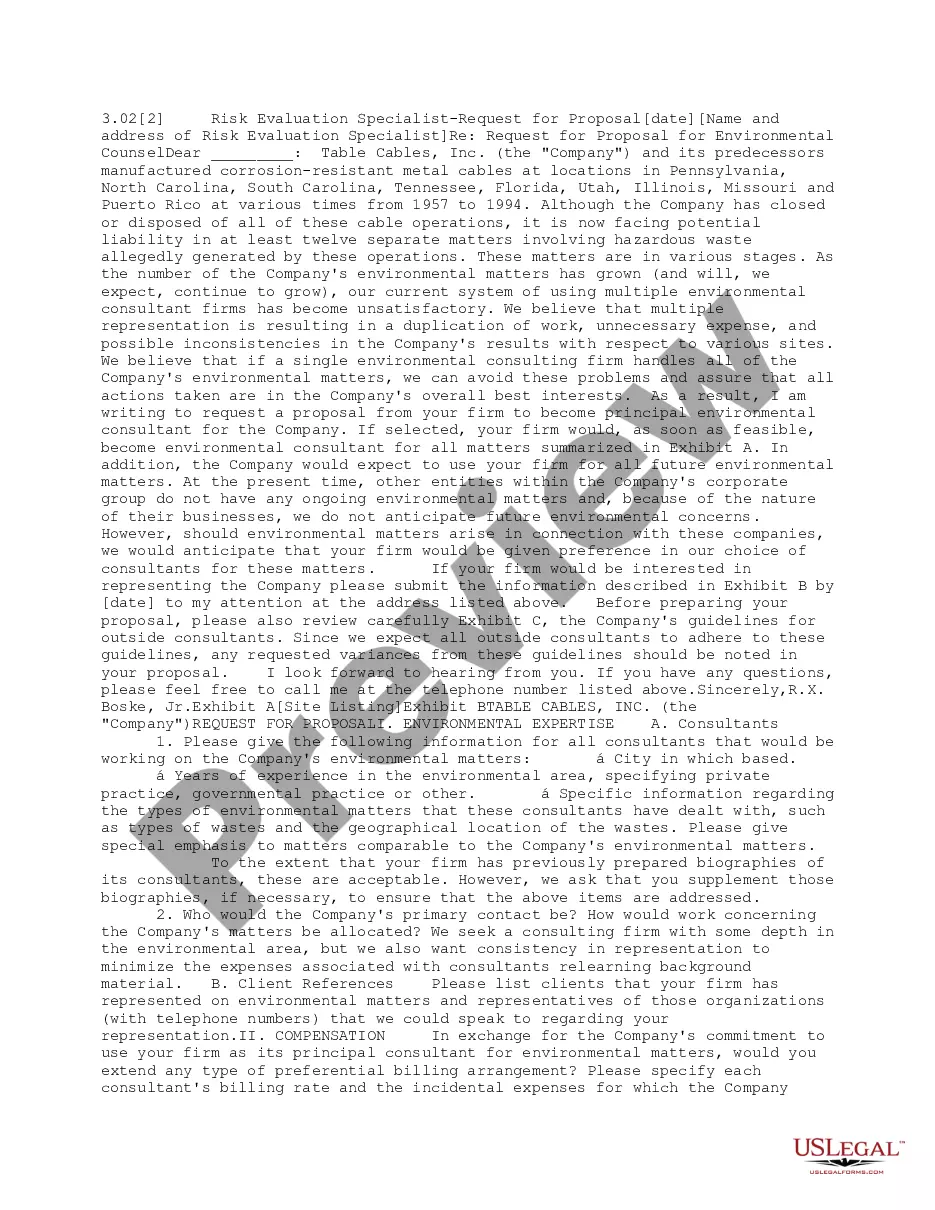
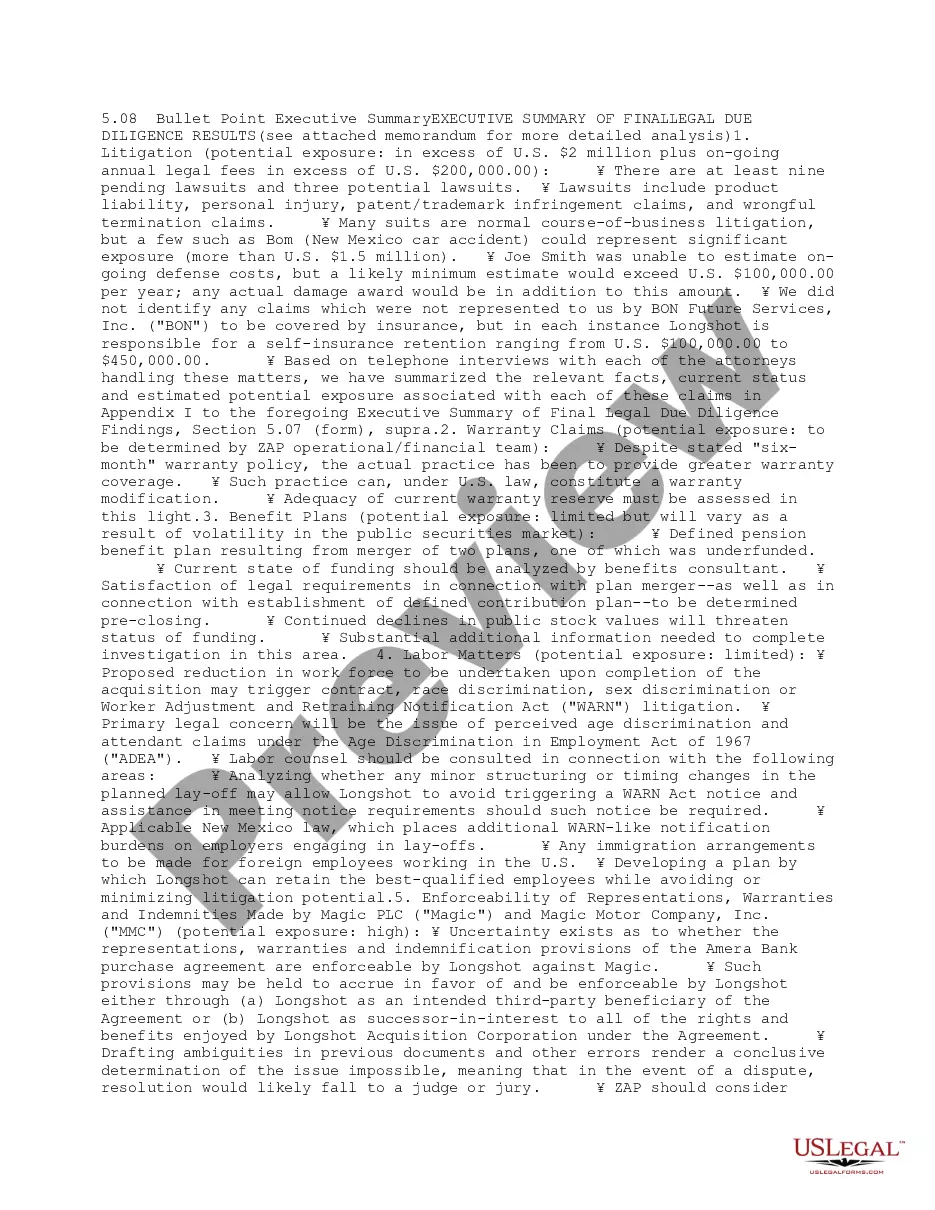
This due diligence form is a report of preliminary findings with respect to a review of the risk management procedures regarding business transactions.
New Mexico Risk Evaluation Specialist Report
Category:
State:
Multi-State
Control #:
US-DD01405
Format:
Word;
PDF;
Rich Text
Instant download
Description
Free preview
Get your form ready online
Our built-in tools help you complete, sign, share, and store your documents in one place.
Built-in online Word editor
Make edits, fill in missing information, and update formatting in US Legal Forms—just like you would in MS Word.
Export easily
Download a copy, print it, send it by email, or mail it via USPS—whatever works best for your next step.
E-sign your document
Sign and collect signatures with our SignNow integration. Send to multiple recipients, set reminders, and more. Go Premium to unlock E-Sign.
Notarize online 24/7
If this form requires notarization, complete it online through a secure video call—no need to meet a notary in person or wait for an appointment.
Store your document securely
We protect your documents and personal data by following strict security and privacy standards.

Make edits, fill in missing information, and update formatting in US Legal Forms—just like you would in MS Word.

Download a copy, print it, send it by email, or mail it via USPS—whatever works best for your next step.

Sign and collect signatures with our SignNow integration. Send to multiple recipients, set reminders, and more. Go Premium to unlock E-Sign.

If this form requires notarization, complete it online through a secure video call—no need to meet a notary in person or wait for an appointment.

We protect your documents and personal data by following strict security and privacy standards.
Looking for another form?
How to fill out Risk Evaluation Specialist Report?
If you wish to acquire, save, or print authentic document templates, utilize US Legal Forms, the largest collection of legal forms available online.
Employ the site’s user-friendly search function to locate the documents you require.
An assortment of templates for commercial and personal applications are categorized by type and jurisdiction, or keywords.
Step 4. Once you have found the form you need, click the Buy now button. Choose the payment plan you prefer and enter your information to create an account.
Step 5. Complete the transaction. You can use your credit card or PayPal account to finalize the purchase.
- Utilize US Legal Forms to access the New Mexico Risk Evaluation Specialist Report with just a few clicks.
- If you are already a US Legal Forms user, Log In to your account and click the Acquire button to find the New Mexico Risk Evaluation Specialist Report.
- You can also access forms you have previously purchased in the My documents section of your account.
- If you are using US Legal Forms for the first time, follow the instructions outlined below.
- Step 1. Ensure you have selected the form for the correct area/region.
- Step 2. Utilize the Preview option to review the form’s content. Do not forget to read the details.
- Step 3. If you are not satisfied with the form, use the Search box at the top of the screen to find other versions of the legal form template.
Form popularity
FAQ
How to Conduct a Risk AssessmentStep 1: Identify Hazards. Relating to your scope, brainstorm potential hazards.Step 2: Calculate Likelihood. For each hazard, determine the likelihood it will occur.Step 3: Calculate Consequences.Step 4: Calculate Risk Rating.Step 5: Create an Action Plan.Step 6: Plug Data into Matrix.
Use the links below to find information on the steps you should take when performing a risk assessment in your organisation.Identify hazards in risk assessment.Establish who might be harmed and how in risk assessment.Evaluate and decide on precautions in risk assessment.Record and share key findings of risk assessment.More items...?
How to carry out an environmental risk assessmentidentify any hazards, ie possible sources of harm.describe the harm they might cause.evaluate the risk of occurance and identify precautions.record the results of the assessment and implement precautions.review the assessment at regular intervals.
Create a risk assessment spreadsheet or matrix that lists the following core information:Business Practices.Associated Risks.Type of Risks.Risk Level (include a summary description of what each level means)Policies, Procedures, and Controls in Place.Date Review Performed.Additional Mitigation Steps Needed.More items...?21 June 2018
In your risk assessment you must identify whether any of the following risks could occur and what the environmental impact could be:any discharge, for example sewage or trade effluent to surface or groundwater.accidents.odour (not for standalone water discharge and groundwater activities)More items...
A risk review process or a risk assessment meeting is a crucial part of any project. Having this meeting will address the strategy behind risk management so that the project manager and the team responsible for the project's success can come together to handle any associated risks before they happen.
The 5 Steps to Risk Assessment Explained1: Identify the Hazards.2: Decide Who Might Be Harmed and How.3: Evaluate the Risks and Take Action to Prevent Them.4: Record Your Findings.5: Review the Risk Assessment.
You can do it yourself or appoint a competent person to help you.Identify hazards.Assess the risks.Control the risks.Record your findings.Review the controls.
- Licensed and retail premises.Overview.Step 1: Identify the hazards.Step 2: Decide who might be harmed and how.Step 3: Evaluate the risks and decide on precautions.Step 4: Record your findings and implement them.Step 5: Review your risk assessment and update if necessary.2 June 2021
The definition of a dynamic risk assessment is: The continuous process of identifying hazards, assessing risk, taking action to eliminate or reduce risk, monitoring and reviewing, in the rapidly changing circumstances of an operational incident.