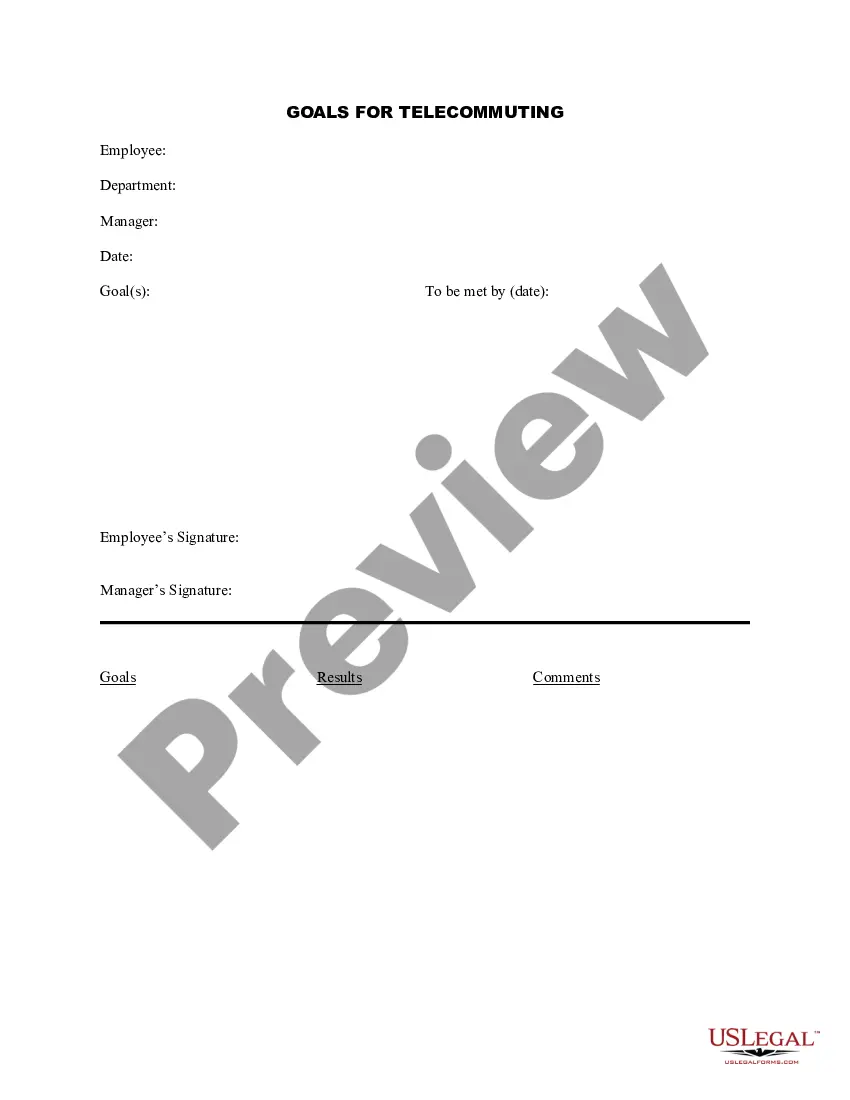
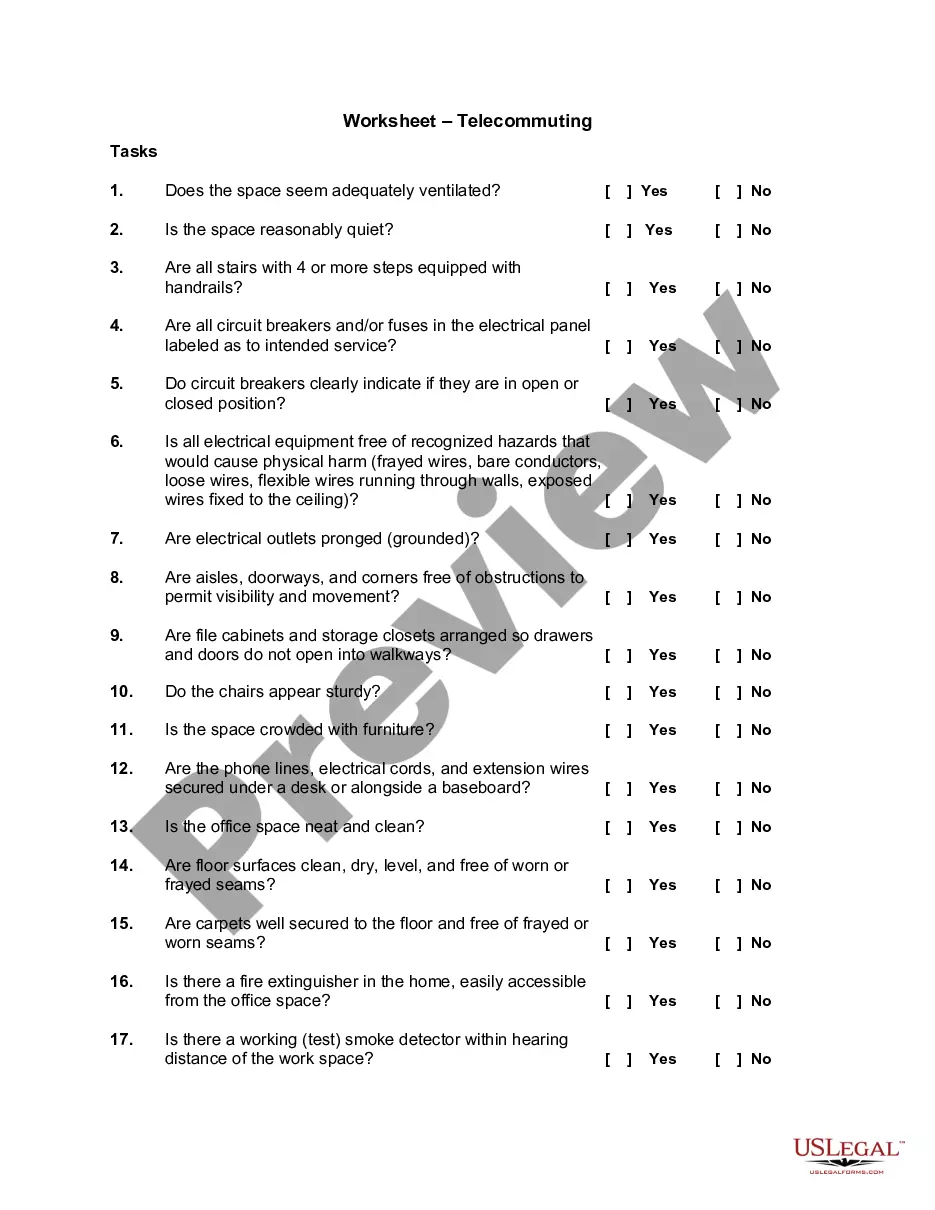
New Mexico Goals for Telecommuting
Description
Get your form ready online
Our built-in tools help you complete, sign, share, and store your documents in one place.
Make edits, fill in missing information, and update formatting in US Legal Forms—just like you would in MS Word.
Download a copy, print it, send it by email, or mail it via USPS—whatever works best for your next step.
Sign and collect signatures with our SignNow integration. Send to multiple recipients, set reminders, and more. Go Premium to unlock E-Sign.
If this form requires notarization, complete it online through a secure video call—no need to meet a notary in person or wait for an appointment.
We protect your documents and personal data by following strict security and privacy standards.

Make edits, fill in missing information, and update formatting in US Legal Forms—just like you would in MS Word.

Download a copy, print it, send it by email, or mail it via USPS—whatever works best for your next step.

Sign and collect signatures with our SignNow integration. Send to multiple recipients, set reminders, and more. Go Premium to unlock E-Sign.

If this form requires notarization, complete it online through a secure video call—no need to meet a notary in person or wait for an appointment.

We protect your documents and personal data by following strict security and privacy standards.
Looking for another form?




How to fill out Goals For Telecommuting?
US Legal Forms - one of the largest collections of legal documents in the USA - offers a broad selection of legal template files that you can download or print.
By using the site, you can access thousands of forms for business and personal needs, organized by categories, states, or keywords. You can obtain the most current versions of forms such as the New Mexico Goals for Telecommuting in a matter of minutes.
If you already hold a monthly membership, Log In and download New Mexico Goals for Telecommuting from the US Legal Forms library. The Download button will appear on every form you view. You have access to all previously downloaded forms within the My documents section of your account.
Complete the financial transaction. Use your credit card or PayPal account to finish the transaction.
Select the format and download the form to your device. Make adjustments. Fill out, modify and print and sign the downloaded New Mexico Goals for Telecommuting. Each template you added to your account has no expiration date and is yours indefinitely. Therefore, if you wish to download or print another copy, simply visit the My documents section and click on the form you need. Access the New Mexico Goals for Telecommuting with US Legal Forms, the most extensive library of legal document templates. Utilize a vast array of professional and state-specific templates that meet your business or personal requirements and specifications.
- Ensure you have selected the correct form for your city/state.
- Click the Review button to examine the form's details.
- Read the form description to confirm that you have chosen the correct form.
- If the form does not meet your needs, utilize the Search area at the top of the screen to find one that does.
- Once you are satisfied with the form, finalize your choice by clicking the Purchase now button.
- Next, select the pricing plan you prefer and provide your details to register for an account.
Form popularity
FAQ
Telework Best Practice GuideSetting clear expectations. Clarify expectations. Be sure to lay out clear expectations around job performance and responsiveness.Plan ahead. Plan Ahead.Communicate regularly. Communicate Regularly.Foster effective teamwork. Foster effective teamwork.Reflect and adjust. Reflect and adjust.
Having a well-designed telecommuting policy is essential for clarifying obligations and responsibilities, as well as ensuring that employees stay productive and efficient.
Consider these five best practices to help your remote team members maximize potential and create a successful off-site arrangement:Designate office space.Establish work hours.Find peak productivity.Communicate early and often.Prioritize mutual trust.
Below are TEN simple tips to staying PRODUCTIVE while working from home or telecommuting:Prepare for what you'll need: If you're going to work from home, make sure you have the resources.Develop your workspace:Get dressed:Stay connected:Stay off the web:Schedule your day:Keep moving:Prepare the night before:More items...?
Teleworking staff must adhere to all departmental and institutional policies including, but not limited to policies regarding confidentiality of information, work schedules, work hours, use of equipment, ethics, performance, leave use and tracking of work hours.
20 Work From Home Best PracticesSet a Work Schedule.Create a Dedicated Workspace.Use the Right Tools and Equipment.Set Boundaries at Home.Plan Breaks and Use Them Wisely.Be an Active Participant in Meetings.Look for Learning Opportunities.Pay Attention to Your Health.More items...?
7 advantages of telecommuting1) Higher employee satisfaction.2) Better work-life balance.3) Increased flexibility.4) Reduced operational costs.5) Reduced expenses for employees.6) Easier to focus.7) There's zero commuting necessary.1) You need the right technology to be effective.More items...?
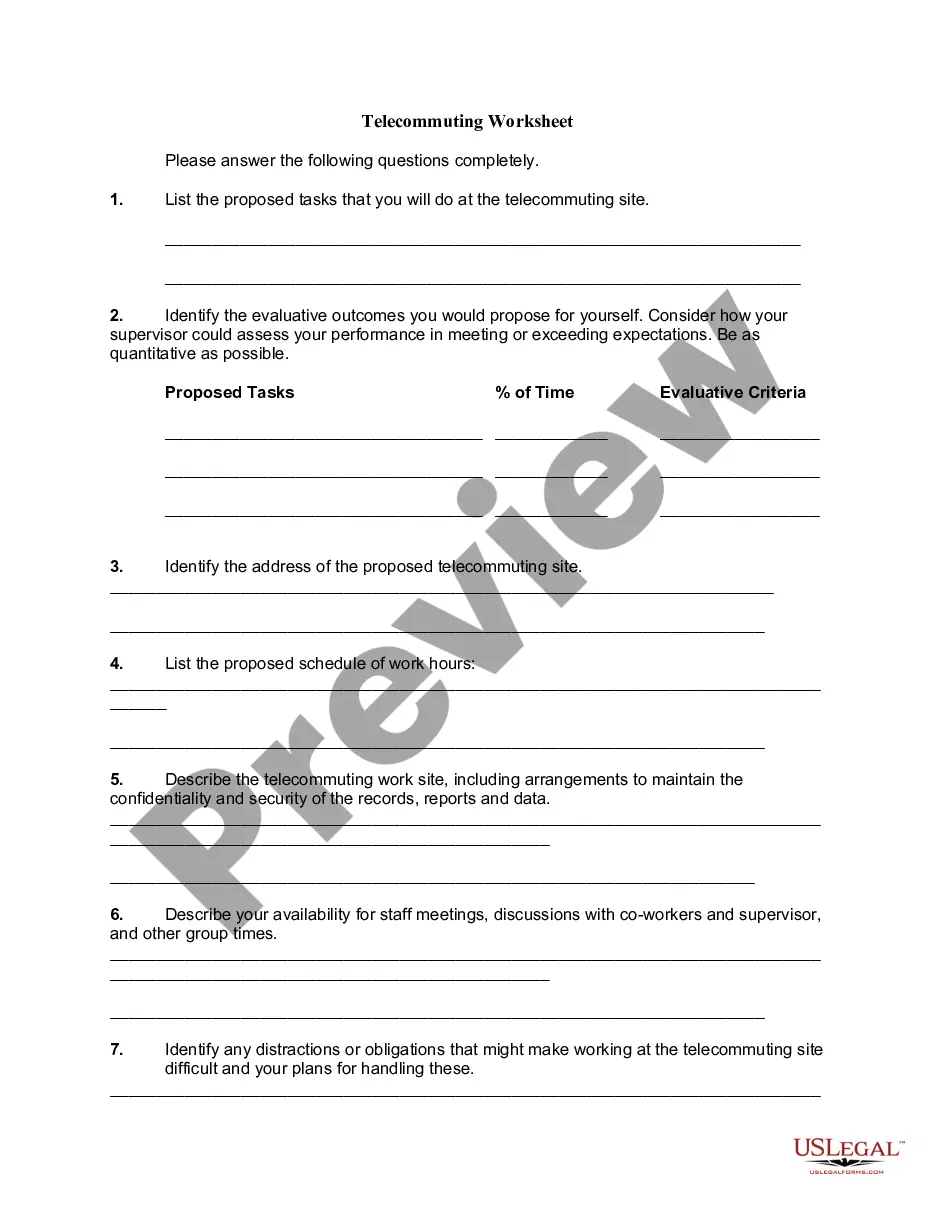
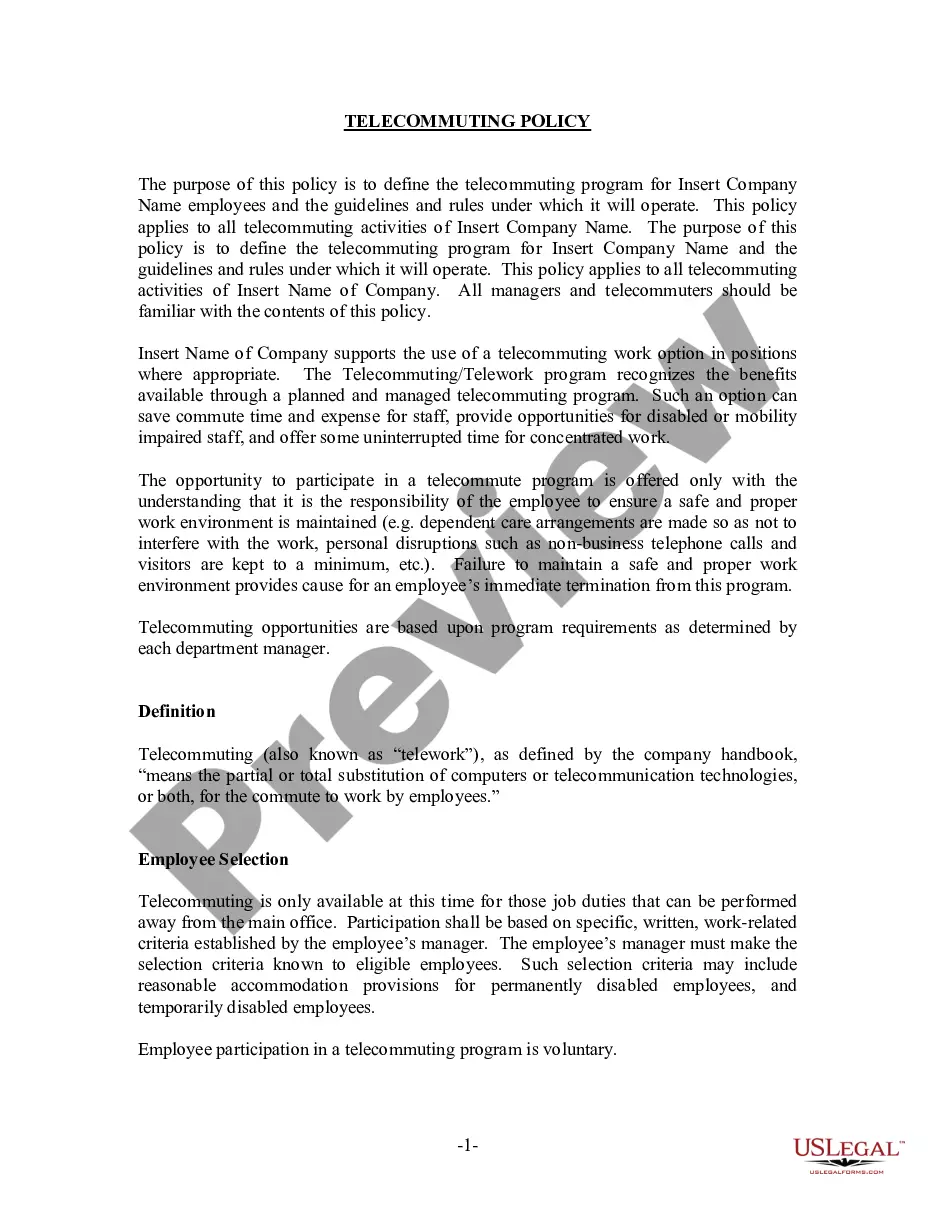
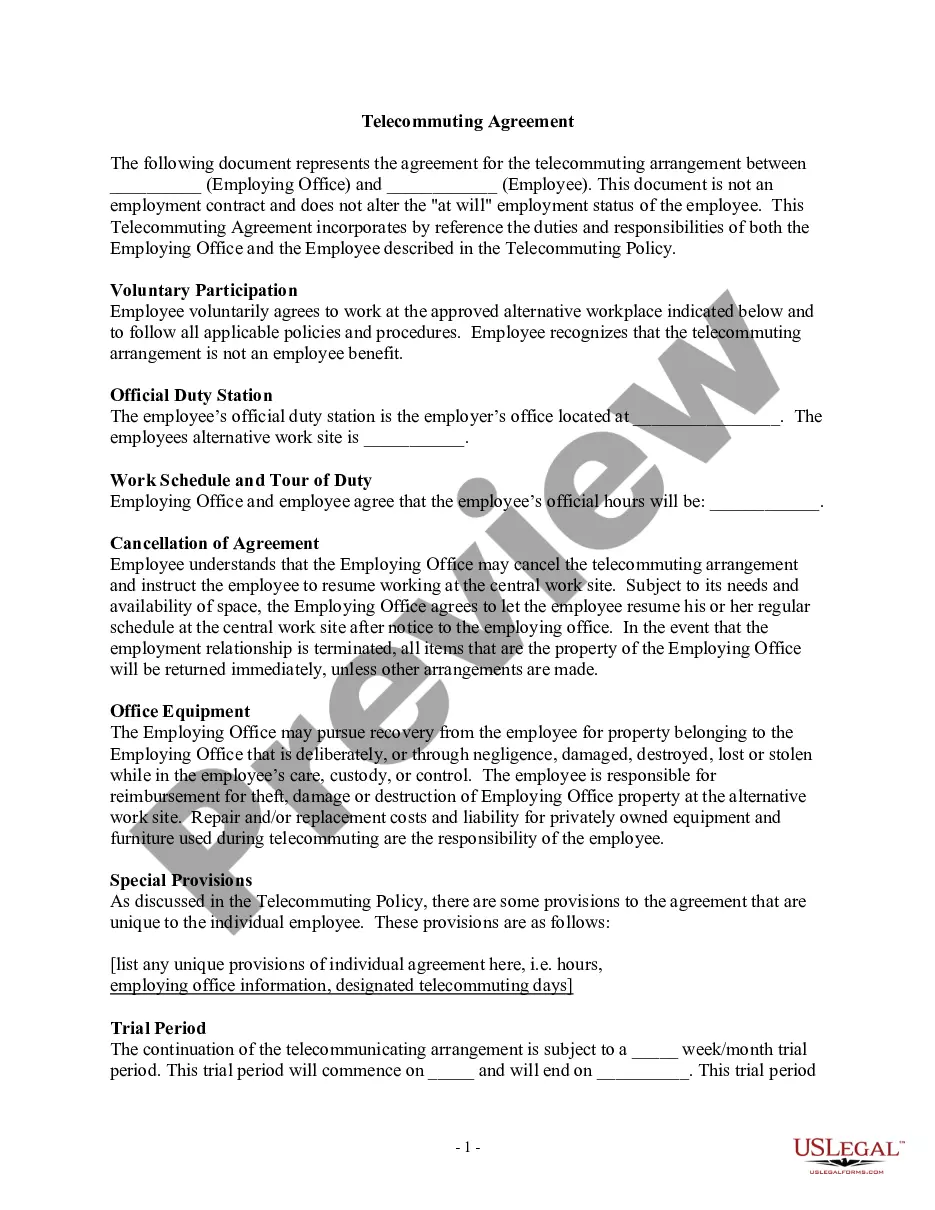
Objective. Telecommuting allows employees to work at home, on the road or in a satellite location for all or part of their workweek. Company Name considers telecommuting to be a viable, flexible work option when both the employee and the job are suited to such an arrangement.
The purpose of the Telecommuting Policy is to provide employees with the guidelines and controls for working remotely. Teleworking, or telecommuting, is the concept of working from home or another location on a full- or part-time basis. Teleworking is not a formal, universal employee benefit.
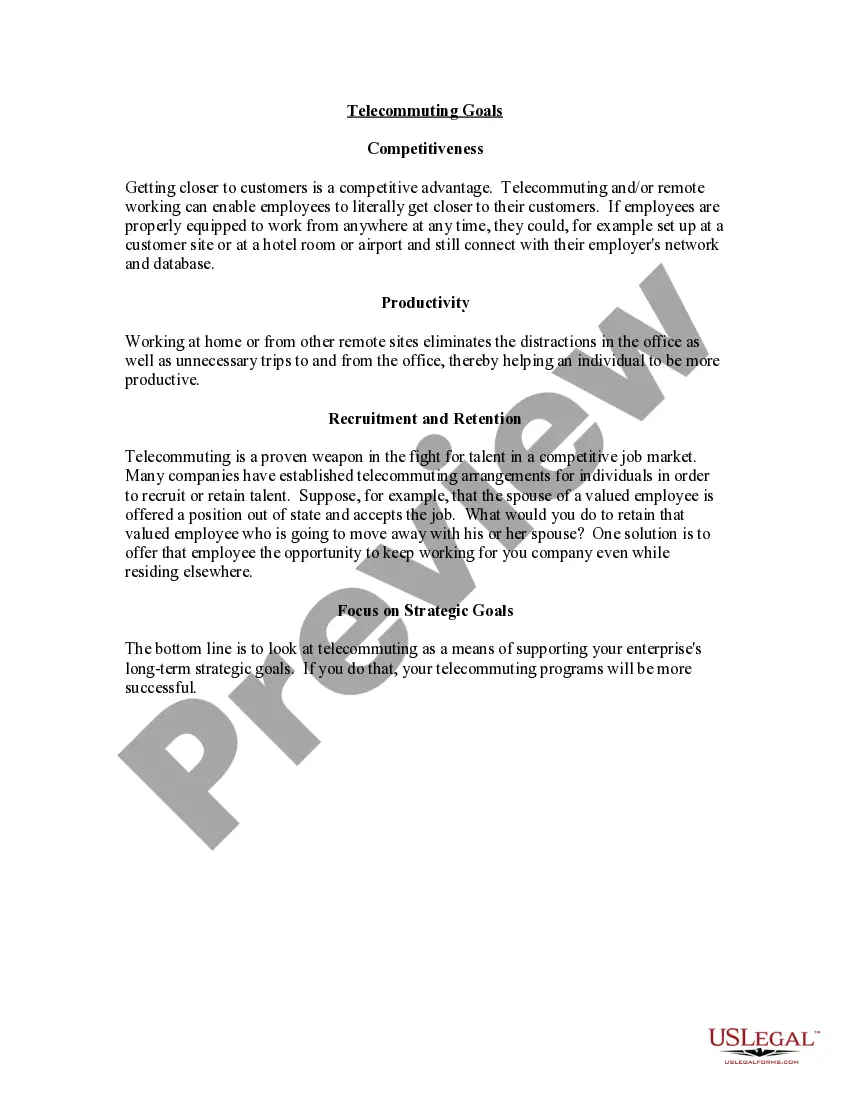
Telework can give employees more control over their schedules and flexibility in meeting personal and professional responsibilities. It can offer freedom from office distractions, reduce work-life stress, and provide an alternative workplace arrangement in case of emergencies.