New Mexico Employment At Will Policy
Description
Get your form ready online
Our built-in tools help you complete, sign, share, and store your documents in one place.
Make edits, fill in missing information, and update formatting in US Legal Forms—just like you would in MS Word.
Download a copy, print it, send it by email, or mail it via USPS—whatever works best for your next step.
Sign and collect signatures with our SignNow integration. Send to multiple recipients, set reminders, and more. Go Premium to unlock E-Sign.
If this form requires notarization, complete it online through a secure video call—no need to meet a notary in person or wait for an appointment.
We protect your documents and personal data by following strict security and privacy standards.

Make edits, fill in missing information, and update formatting in US Legal Forms—just like you would in MS Word.

Download a copy, print it, send it by email, or mail it via USPS—whatever works best for your next step.

Sign and collect signatures with our SignNow integration. Send to multiple recipients, set reminders, and more. Go Premium to unlock E-Sign.

If this form requires notarization, complete it online through a secure video call—no need to meet a notary in person or wait for an appointment.

We protect your documents and personal data by following strict security and privacy standards.
Looking for another form?





How to fill out Employment At Will Policy?
If you desire to complete, download, or generate legal document templates, utilize US Legal Forms, the most extensive collection of legal forms available online.
Take advantage of the website's straightforward and user-friendly search to find the documents you require.
A variety of templates for business and personal purposes are organized by type and jurisdiction, or by keywords.
Step 4. Once you have found the form you need, click on the Purchase now button.
Choose the payment plan you prefer and enter your information to register for an account.
- Employ US Legal Forms to acquire the New Mexico Employment At Will Policy with just a few clicks.
- If you are already a US Legal Forms user, sign in to your account and hit the Download button to retrieve the New Mexico Employment At Will Policy.
- You can also access forms you previously downloaded in the My documents tab of your account.
- If you are using US Legal Forms for the first time, follow the steps below.
- Step 1. Ensure you have chosen the form for the appropriate state/region.
- Step 2. Use the Review option to examine the contents of the form. Don’t forget to read the summary.
- Step 3. If you are not satisfied with the document, use the Search field at the top of the screen to find other variations of the legal document template.
Form popularity
FAQ
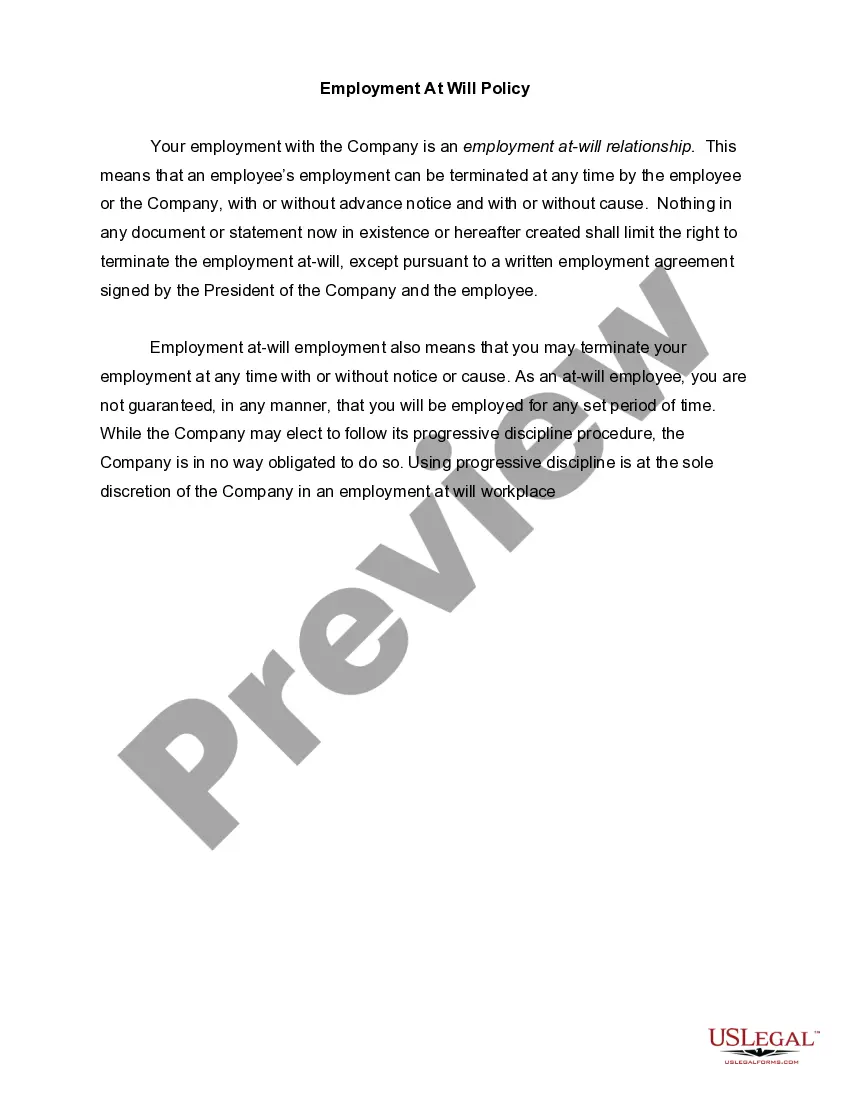
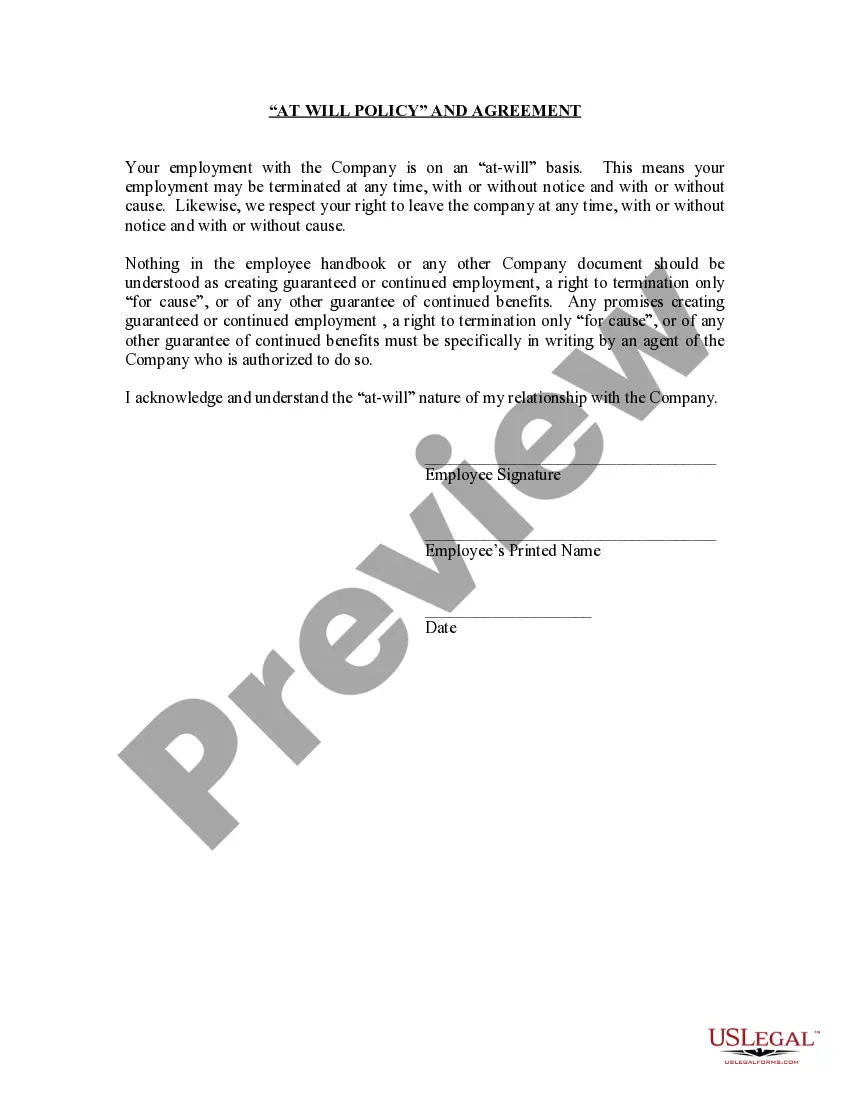
The best definition of employment-at-will is a relationship where either the employer or employee can end the employment with or without cause, and without prior notice. This flexible arrangement aligns with the New Mexico Employment At Will Policy, allowing for fluid job dynamics. It is important for employees to understand this concept as it shapes their employment rights.
An at-will employment clause is a statement in employment documents that outlines the employer's right to terminate an employee at any time, for any lawful reason. This clause helps clarify the nature of the employment relationship and informs employees about their rights under the New Mexico Employment At Will Policy. It is essential for both parties to understand this clause fully.
No, New Mexico law does not require employers to provide a termination letter when an employee is terminated. However, some employers may still choose to issue one to maintain clear communication and documentation. Familiarizing yourself with the New Mexico Employment At Will Policy can provide insights into how terminations typically unfold in your state.
Yes, New Mexico operates under the at-will employment doctrine, meaning employers can terminate employees without cause, provided it does not violate certain laws. It emphasizes the flexibility of both employers and employees in the job market. Understanding the nuances of the New Mexico Employment At Will Policy can empower you to navigate your employment situation effectively.
The three major exceptions include wrongful termination, public policy, and implied contract. In wrongful termination cases, an employee may take action if fired for discriminatory reasons. Public policy exceptions protect employees from termination for refusing to engage in illegal activities. Additionally, implied contracts arise when an employer's policies or statements suggest job security is guaranteed.
One downside of at-will employment is job security. Employers can terminate employees without cause, potentially leading to unexpected job loss. Additionally, some workers feel less valued in at-will positions, which may affect their morale and productivity in relation to the New Mexico Employment At Will Policy.
Yes, at-will employment allows you to resign at any time without needing to provide a reason. This means you have the freedom to leave your job whenever you choose, in accordance with the New Mexico Employment At Will Policy. However, it is a good practice to give notice to your employer as a courtesy.
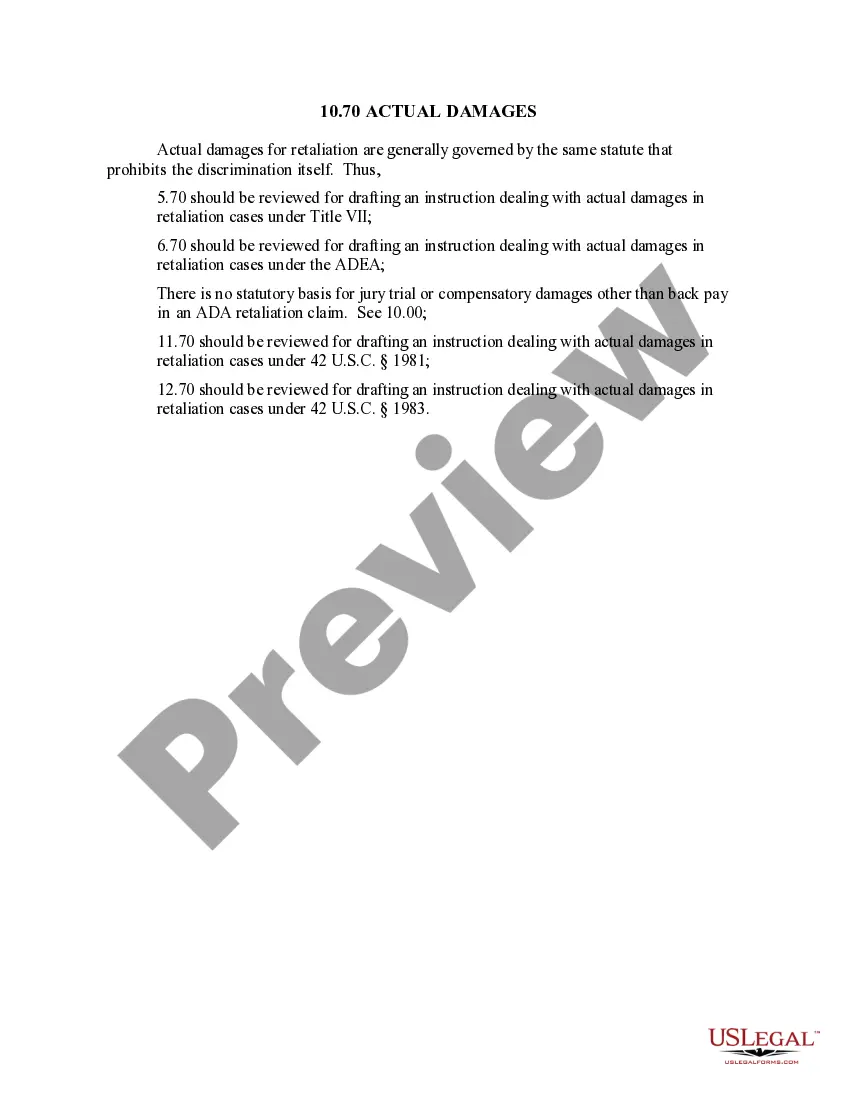
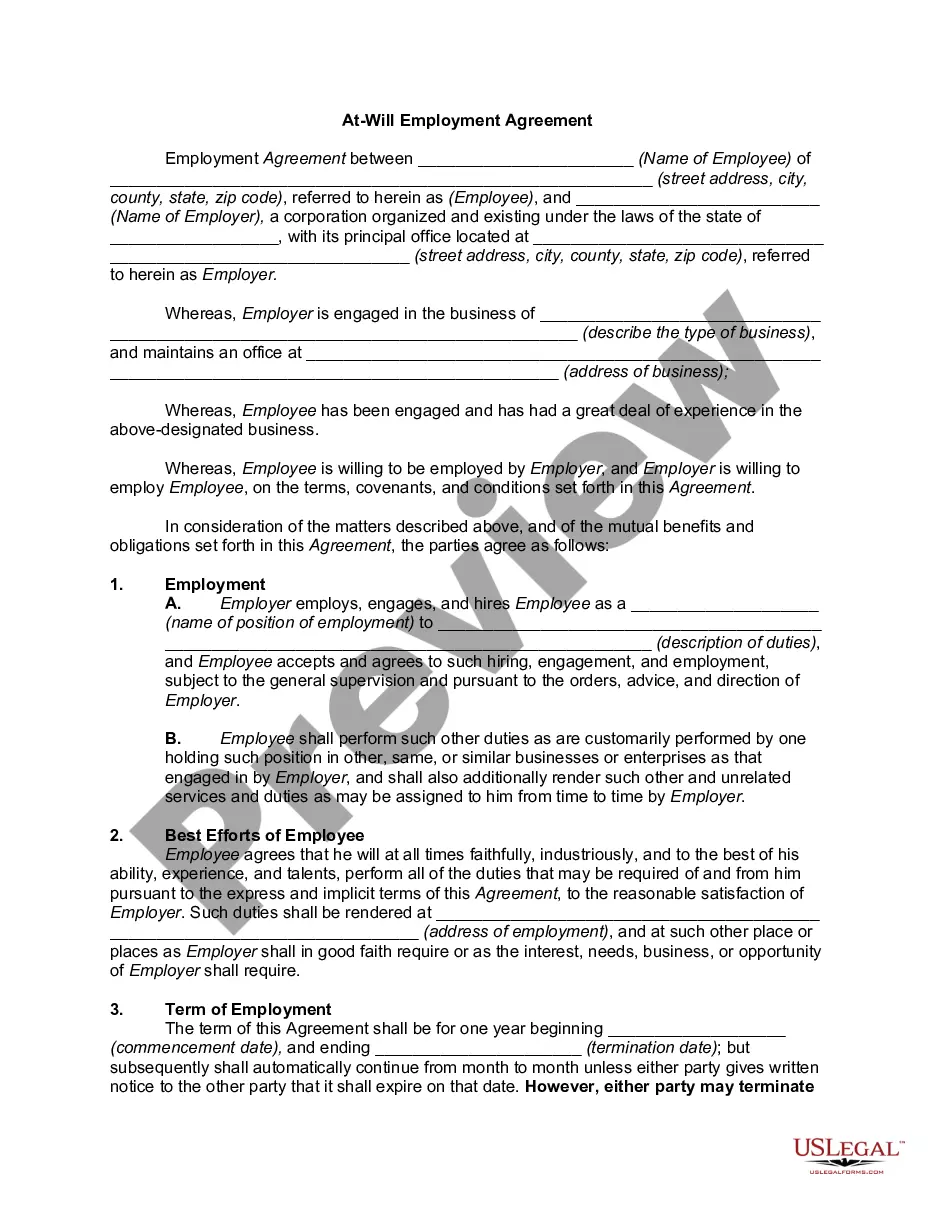
An at-will employment policy template provides a standard framework for employers to establish their New Mexico Employment At Will Policy. This template typically includes clauses detailing the at-will status, termination procedures, and exceptions to at-will employment. Utilizing a well-crafted template can help ensure legal compliance and clarity in employment relationships. For customized solutions, consider exploring the offerings of platforms like US Legal Forms.
The most common exception to the New Mexico Employment At Will Policy is termination based on discrimination or retaliation. If an employee is fired for reasons related to race, gender, or whistleblowing, this may be illegal. Many states, including New Mexico, have laws protecting employees from such unfair practices. Awareness of these exceptions can empower employees to understand their rights.
The main difference is that a New Mexico Employment At Will Policy allows for termination without cause, while an employment agreement typically outlines specific terms and conditions for termination. Employment agreements often include details such as a notice period and justification for termination. Generally, these agreements provide greater job security compared to at-will policies. By understanding these differences, employees can better navigate their employment landscapes.