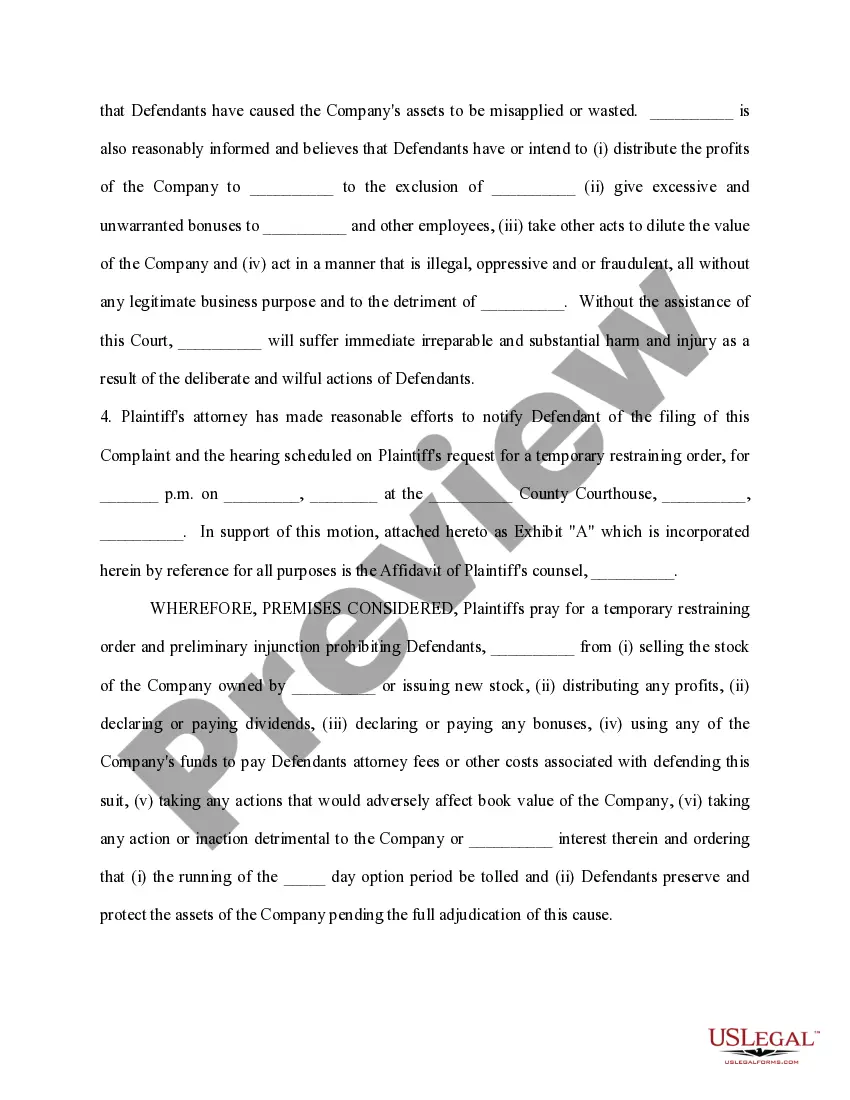
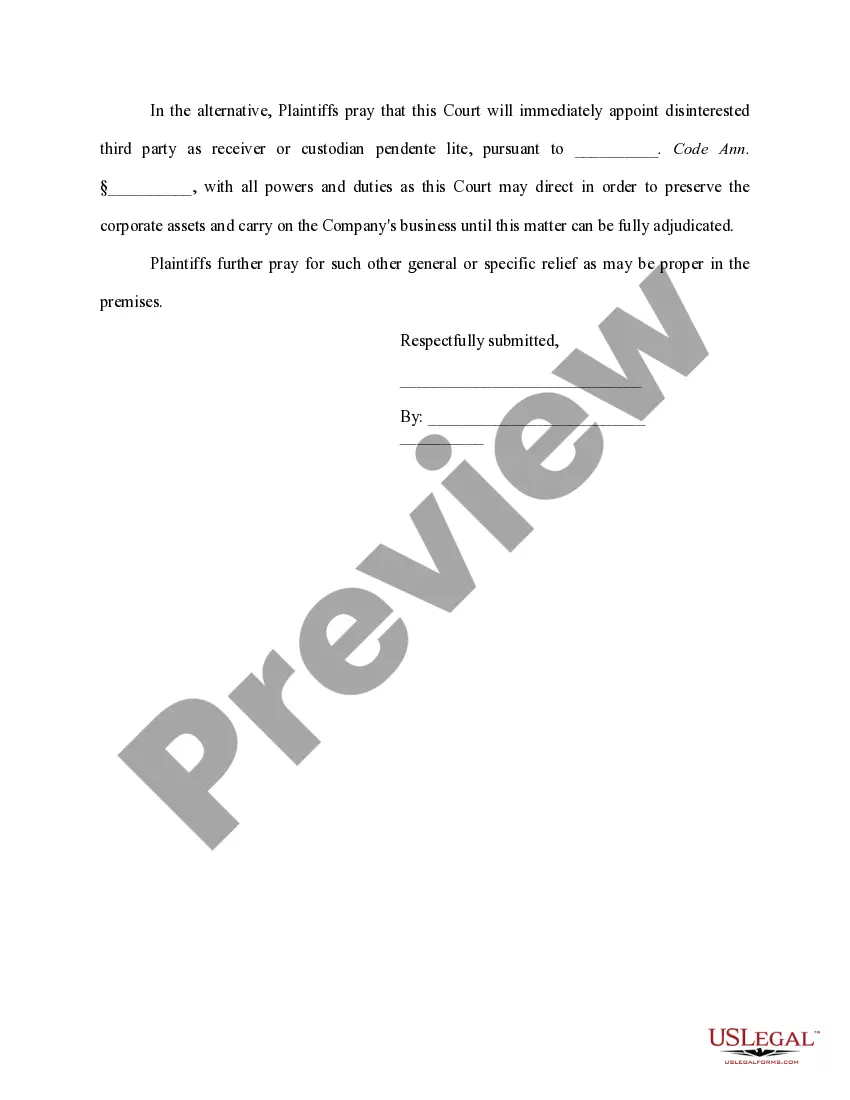
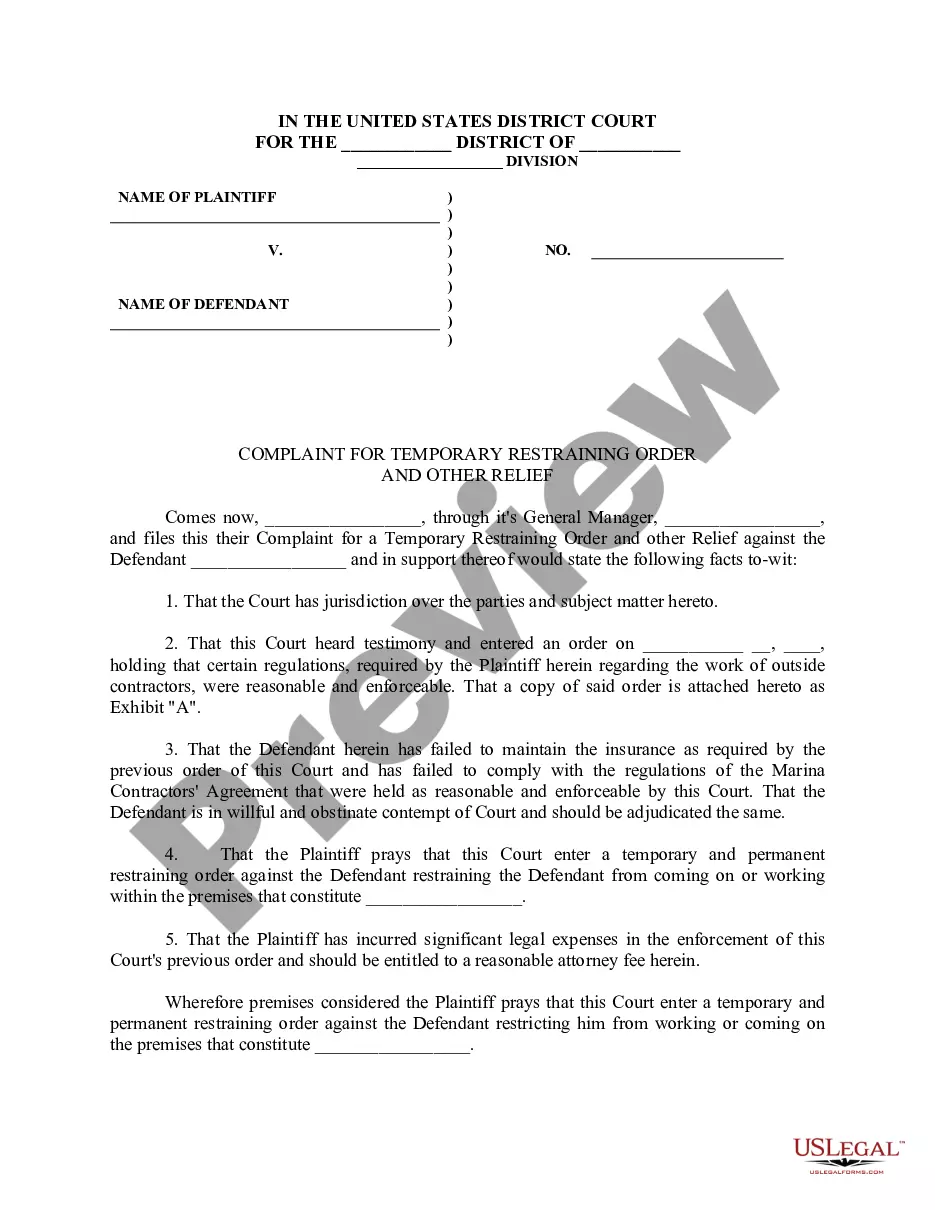
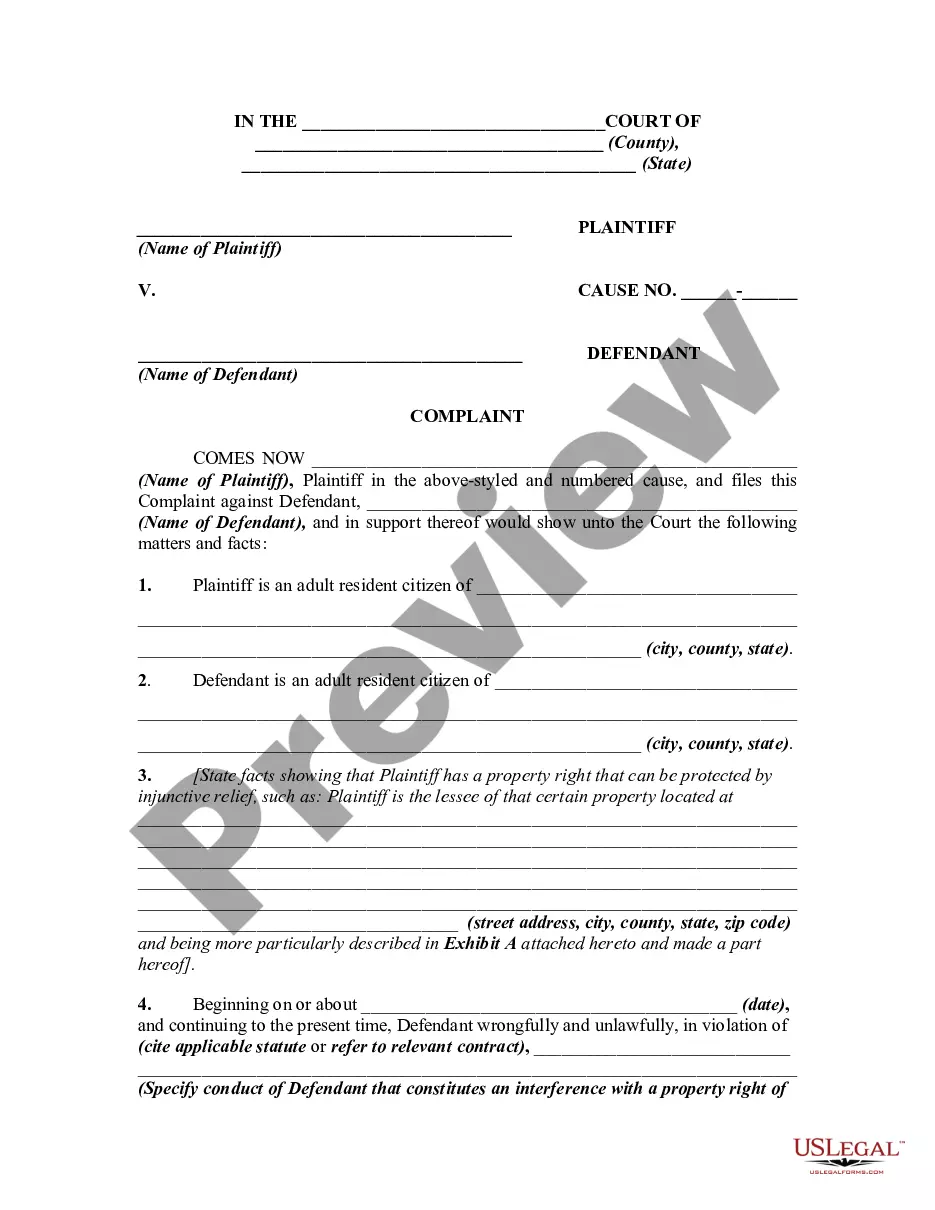
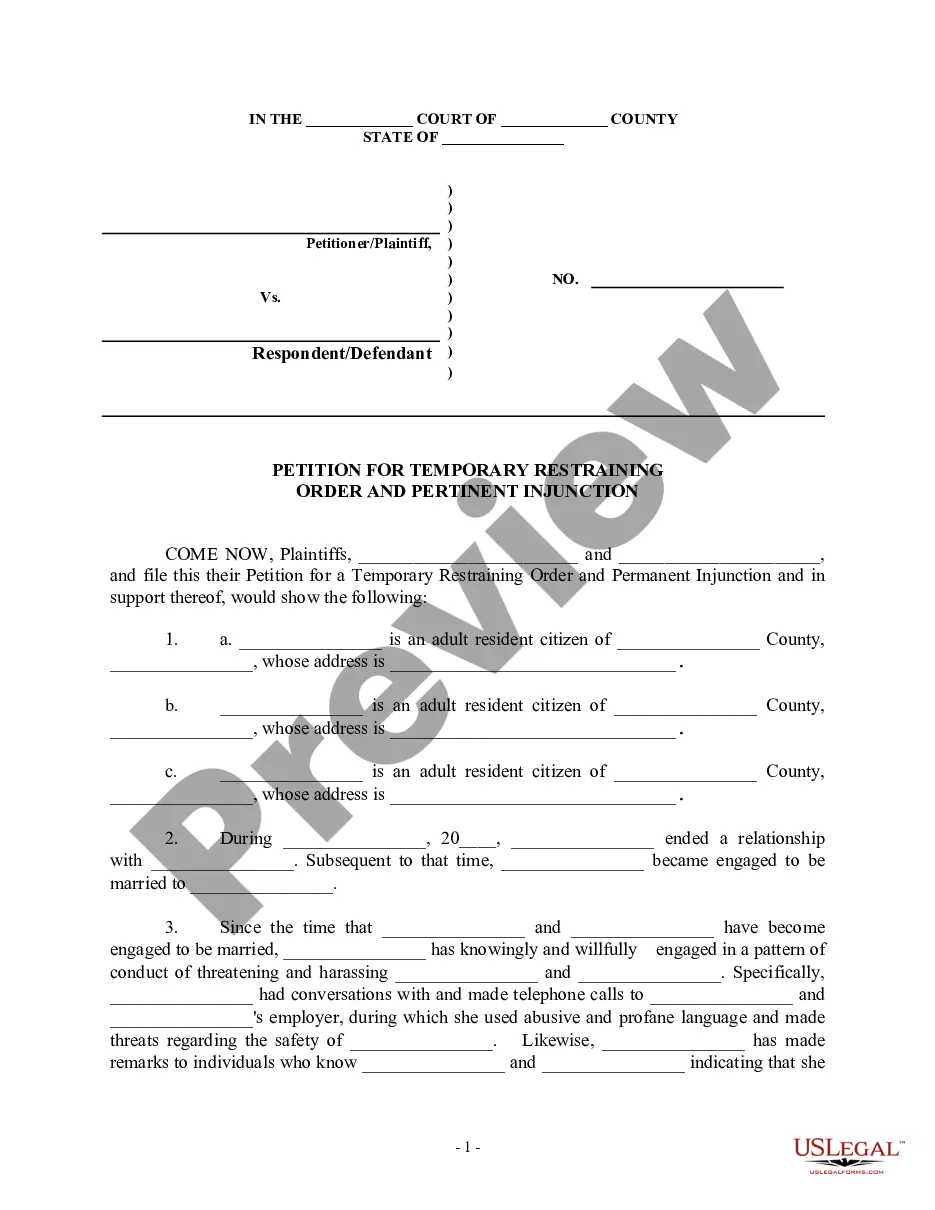
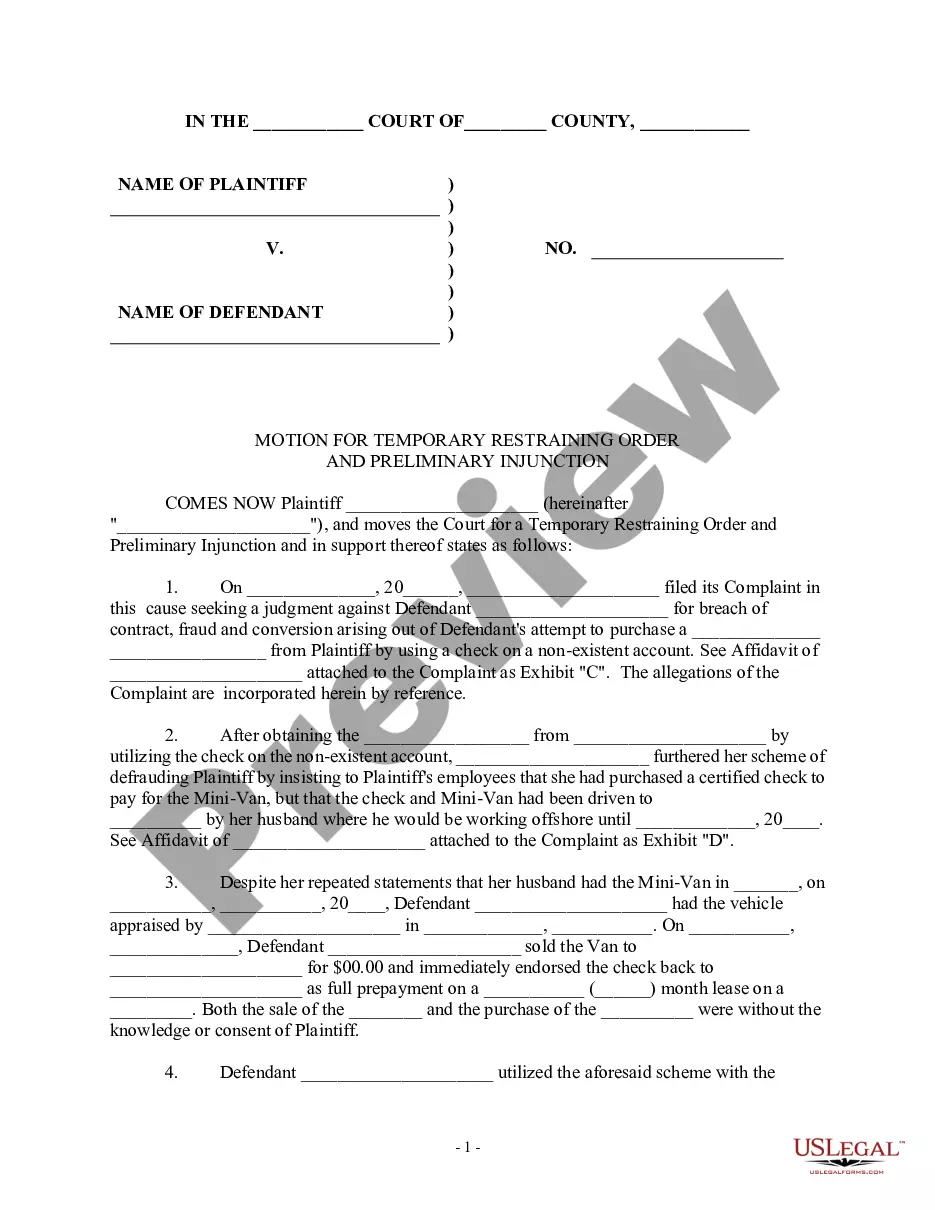
New Mexico Complaint for Temporary Restraining Order, Preliminary Injunction and Permanent Injunction
Description



Get your form ready online
Our built-in tools help you complete, sign, share, and store your documents in one place.
Make edits, fill in missing information, and update formatting in US Legal Forms—just like you would in MS Word.
Download a copy, print it, send it by email, or mail it via USPS—whatever works best for your next step.
Sign and collect signatures with our SignNow integration. Send to multiple recipients, set reminders, and more. Go Premium to unlock E-Sign.
If this form requires notarization, complete it online through a secure video call—no need to meet a notary in person or wait for an appointment.
We protect your documents and personal data by following strict security and privacy standards.

Make edits, fill in missing information, and update formatting in US Legal Forms—just like you would in MS Word.

Download a copy, print it, send it by email, or mail it via USPS—whatever works best for your next step.

Sign and collect signatures with our SignNow integration. Send to multiple recipients, set reminders, and more. Go Premium to unlock E-Sign.

If this form requires notarization, complete it online through a secure video call—no need to meet a notary in person or wait for an appointment.

We protect your documents and personal data by following strict security and privacy standards.
Looking for another form?

How to fill out Complaint For Temporary Restraining Order, Preliminary Injunction And Permanent Injunction?
Finding the appropriate legal document template can be challenging. Obviously, there are numerous templates available online, but how can you obtain the legal form you need? Utilize the US Legal Forms website. The service offers thousands of templates, including the New Mexico Complaint for Temporary Restraining Order, Preliminary Injunction, and Permanent Injunction, which you can use for business and personal purposes. All of the documents are reviewed by professionals and comply with federal and state regulations.
If you are already registered, Log In to your account and click on the Download option to retrieve the New Mexico Complaint for Temporary Restraining Order, Preliminary Injunction, and Permanent Injunction. Use your account to browse through the legal documents you have previously purchased. Navigate to the My documents section of your account and obtain another copy of the document you need.
If you are a new user of US Legal Forms, here are simple instructions for you to follow: First, ensure you have selected the correct form for your city/region. You can preview the form using the Preview option and read the form description to confirm this is the right fit for you. If the form does not meet your requirements, utilize the Search field to find the appropriate form. Once you are confident the form is accurate, click on the Get now option to obtain the form. Choose the pricing plan you prefer and enter the necessary information. Create your account and complete the transaction using your PayPal account or credit card. Select the file format and download the legal document template to your device. Complete, modify, print, and sign the obtained New Mexico Complaint for Temporary Restraining Order, Preliminary Injunction, and Permanent Injunction.
- US Legal Forms is the largest collection of legal forms where you can find a wide range of document templates.
- Utilize the service to obtain professionally crafted papers that adhere to state regulations.
- Ensure your document meets all legal requirements.
- Access templates for various legal needs.
- Save time by using pre-made documents.
- Simplify your legal processes with user-friendly options.
Form popularity
FAQ
The party seeking a preliminary injunctive relief must demonstrate: (1) irreparable injury in the absence of such an order; (2) that the threatened injury to the moving party outweighs the harm to the opposing party resulting from the order; (3) that the injunction is not adverse to public interest; and (4) that the ...
Preliminary injunctions generally last until the end of the lawsuit. Permanent Injunctions: At the end of a court case, if the judge agrees that there is an ongoing threat, he or she may issue a permanent injunction prohibiting the threatened action indefinitely.
Grant of temporary injunction, is governed by three basic principles, i.e. prima facie case; balance of convenience; and irreparable injury, which are required to be considered in a proper perspective in the facts and circumstances of a particular case.
It is well established that, to determine whether an injunction is ?just and proper,? courts apply the ?familiar set of four equitable factors: the movant's likelihood of success on the merits; the possibility of irreparable injury to the moving party; the extent to which the balance of hardships favors each party; and ...
A prohibitory injunction is the most common form of injunction, and directs a party to refrain from acting in a certain manner. Examples of a prohibitory injunction are cease and desist orders (entered against Napster), or an order stopping a bulldozer prior to the razing of an historic building.
Essential conditions for granting of mandatory injunction are: 1. There must be an obligation on the part of the defendant to perform certain acts the breach of which obligation, must be alleged by the Plaintiff. 2.
Unlike TRO, temporary injunctions are slightly more enduring in effect than TRO, and requires a court proceeding and usually requires a notice to the opposing party.
Courts usually grant injunctions as final remedies only where the applicant demonstrates that: Its legal right has been infringed (or is about to be infringed). Money damages are inadequate compensation.