New Mexico Civil Rights Complaint
About this form
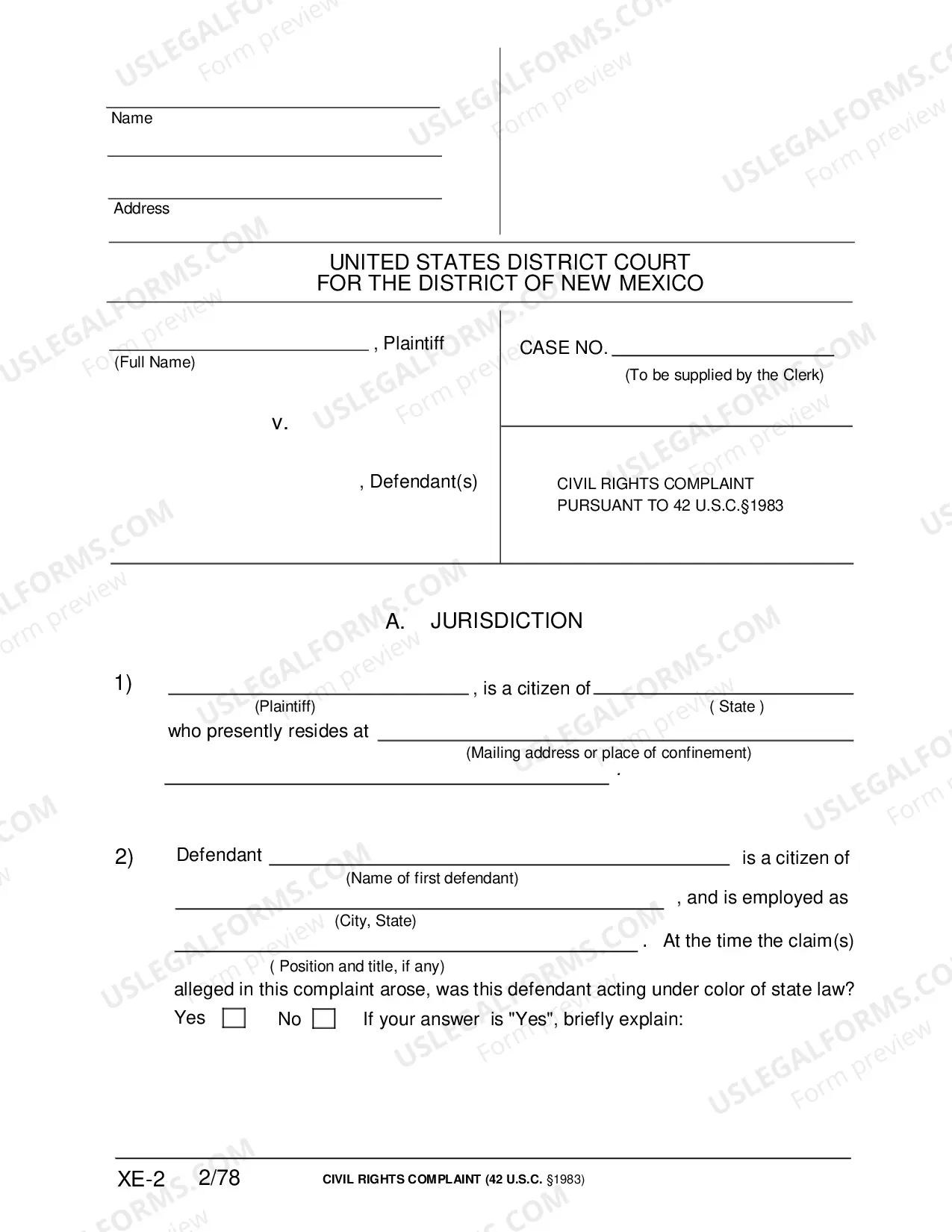
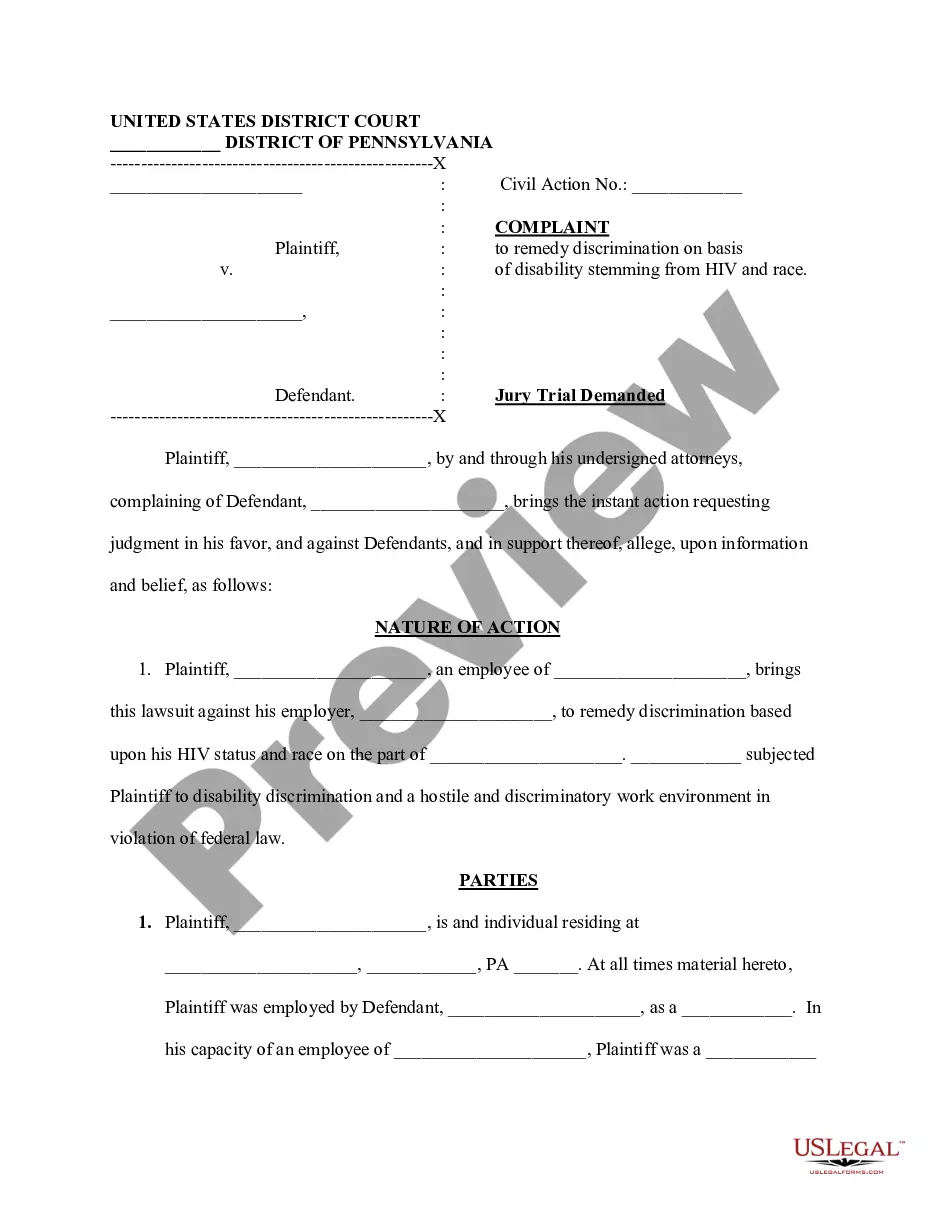
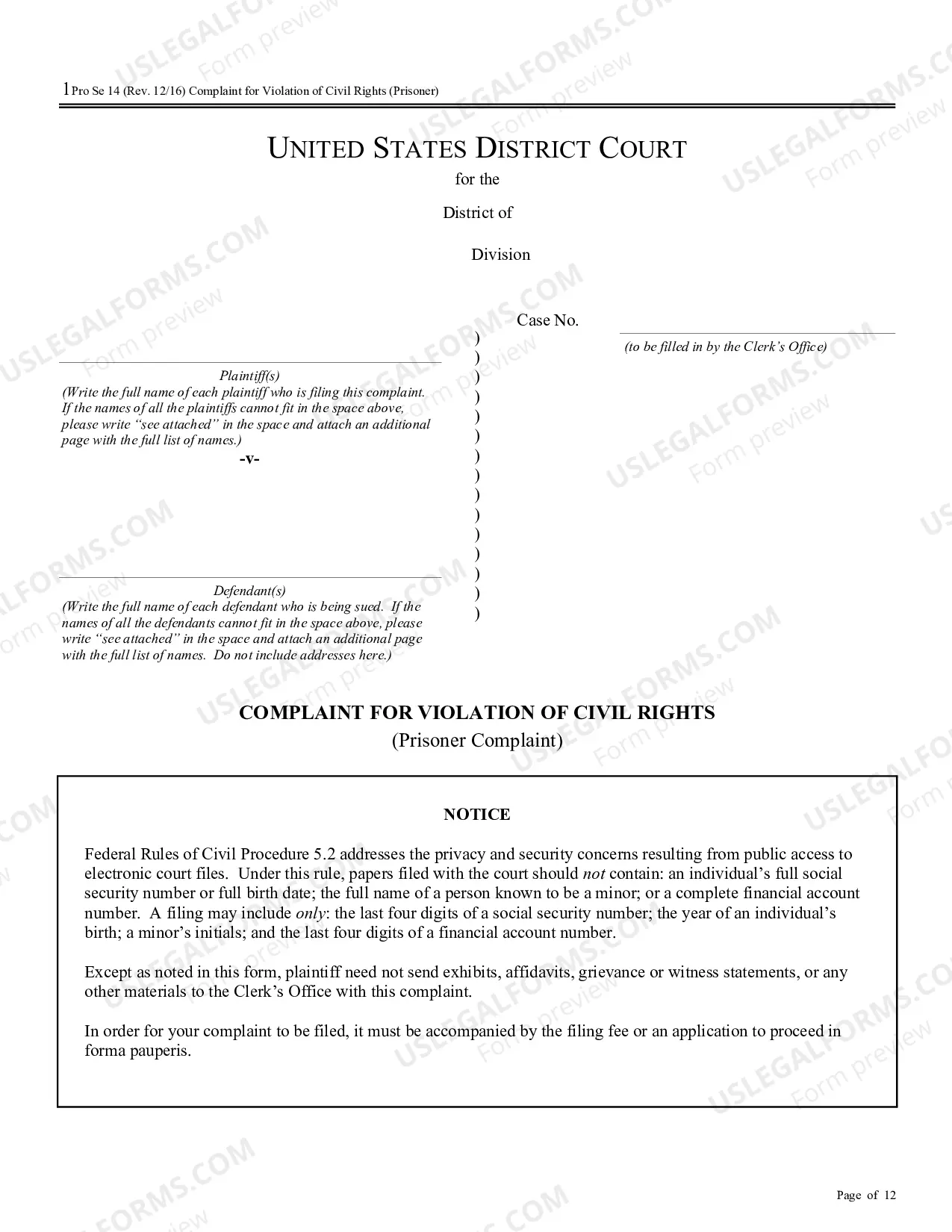
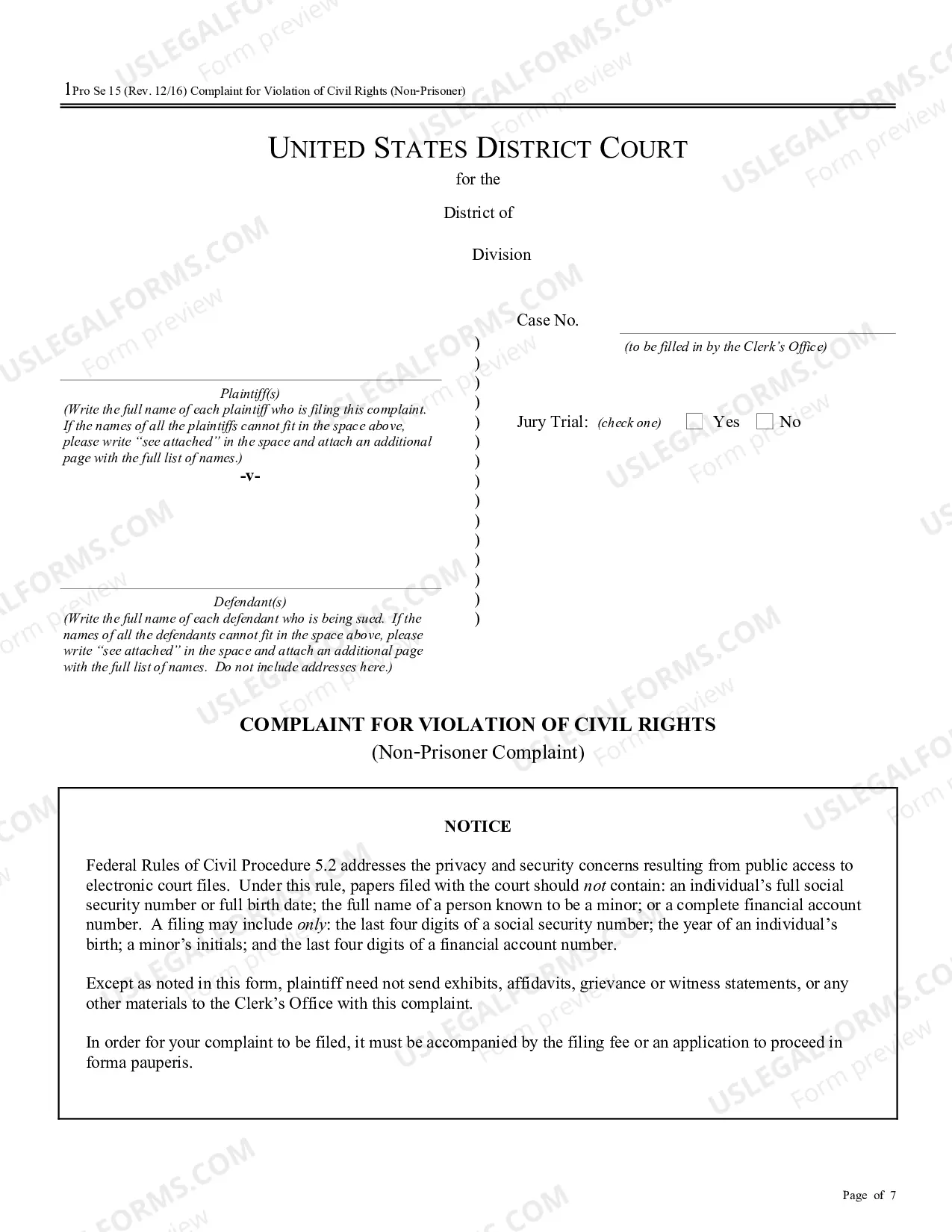
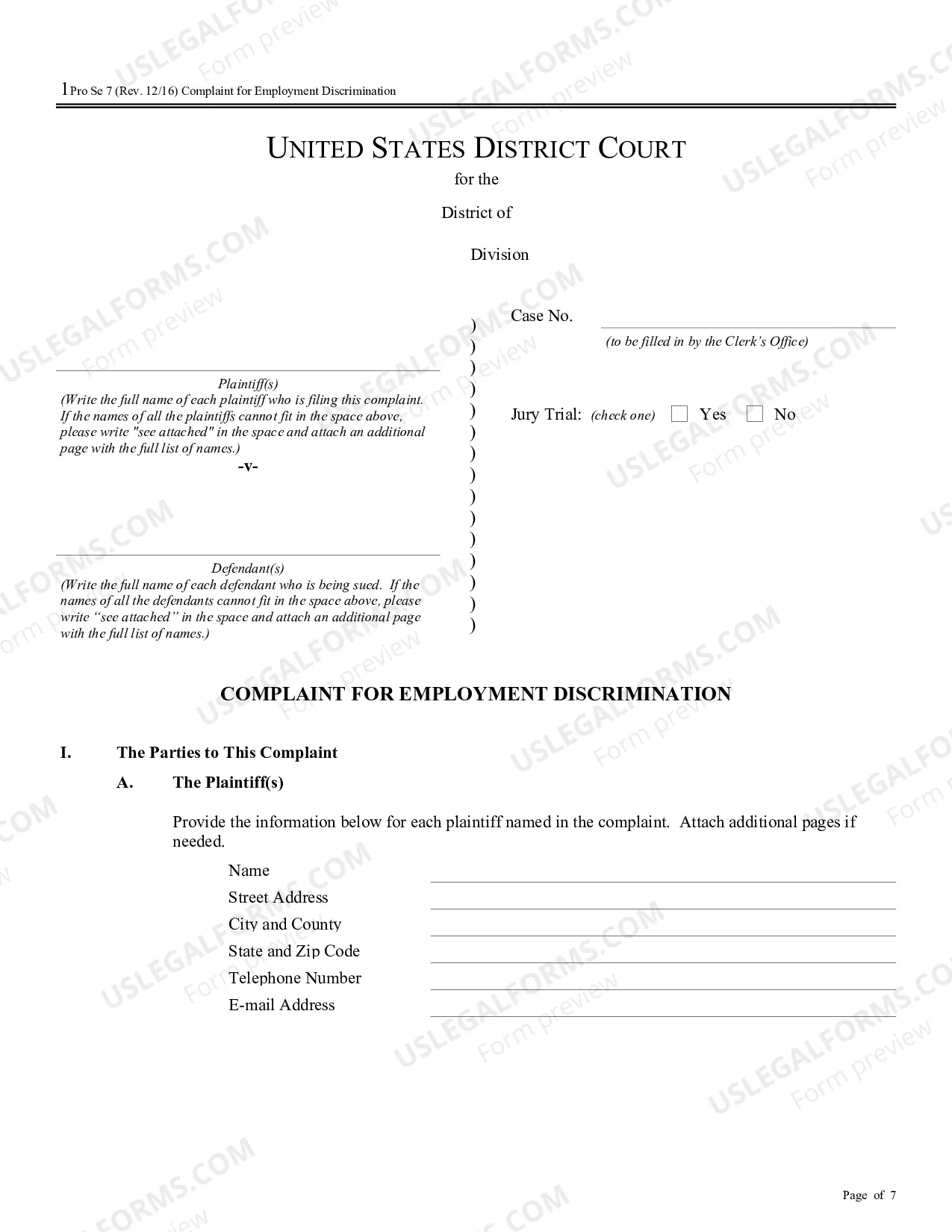
The Civil Rights Complaint form allows individuals to formally allege violations of their civil rights under 42 U.S.C. §1983. This form is specifically used to bring claims against individuals acting under state authority who have allegedly deprived someone of their constitutional rights. It is distinct from other legal forms as it focuses solely on civil rights infringements and provides a structured process for individuals seeking justice in federal court.
What’s included in this form
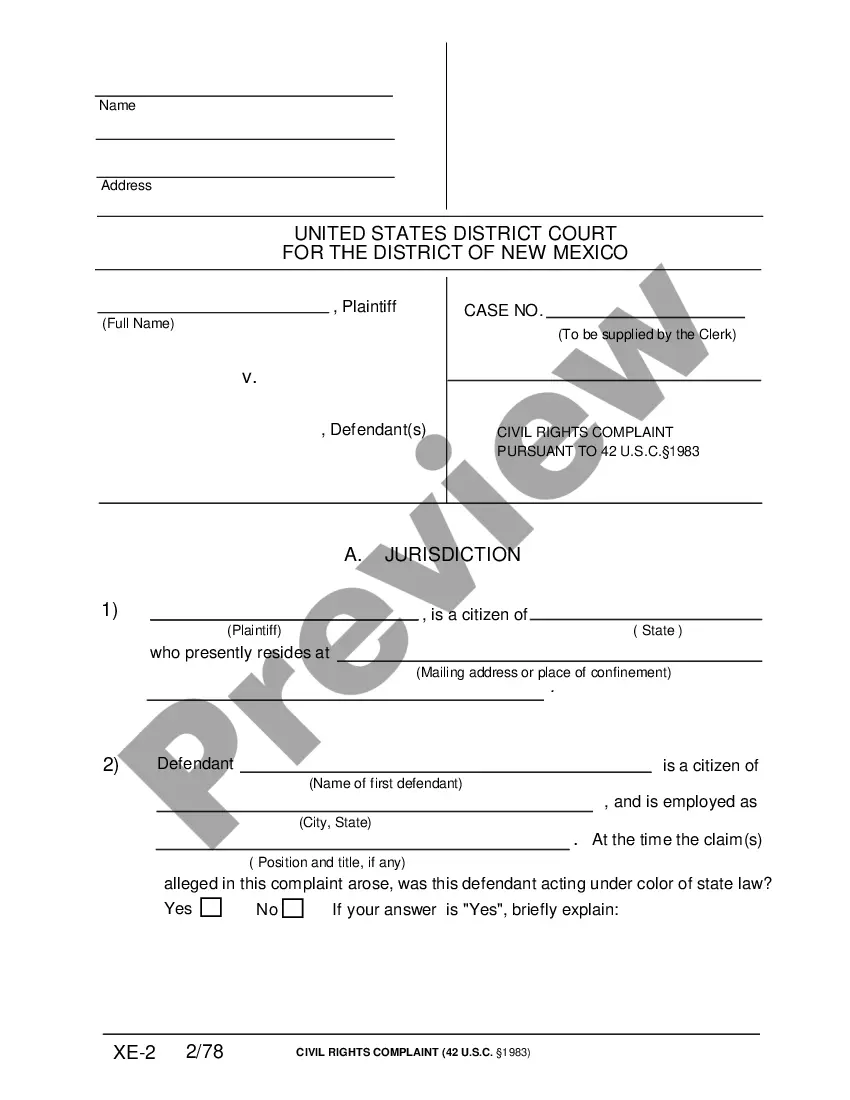
- Plaintiff and Defendant Information: Sections to fill in the names, addresses, and employment details of the parties involved.
- Jurisdiction Details: Information on the legal grounds under which the court has jurisdiction over the case.
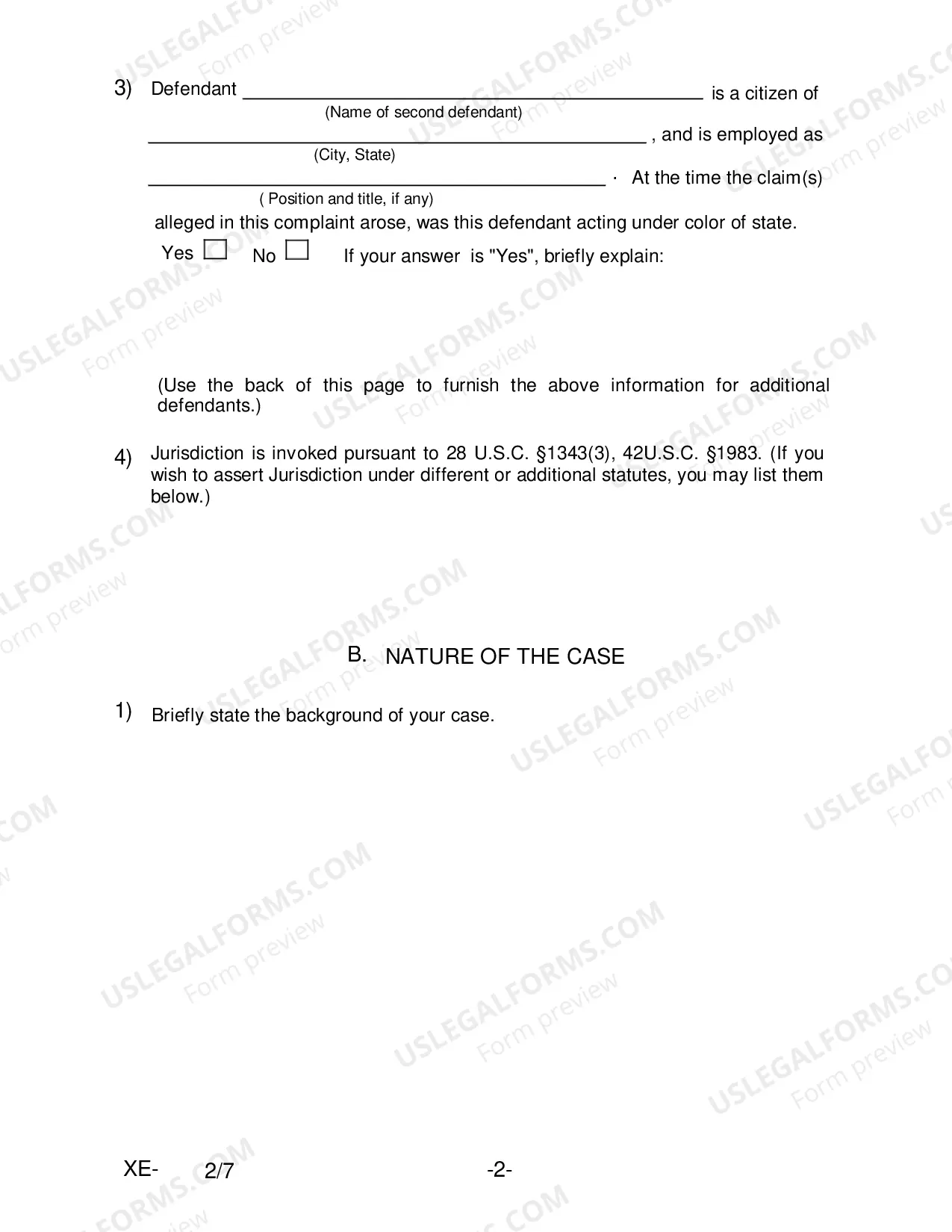
- Nature of the Case: A space to summarize the background of the complaint and the specific charges being made.
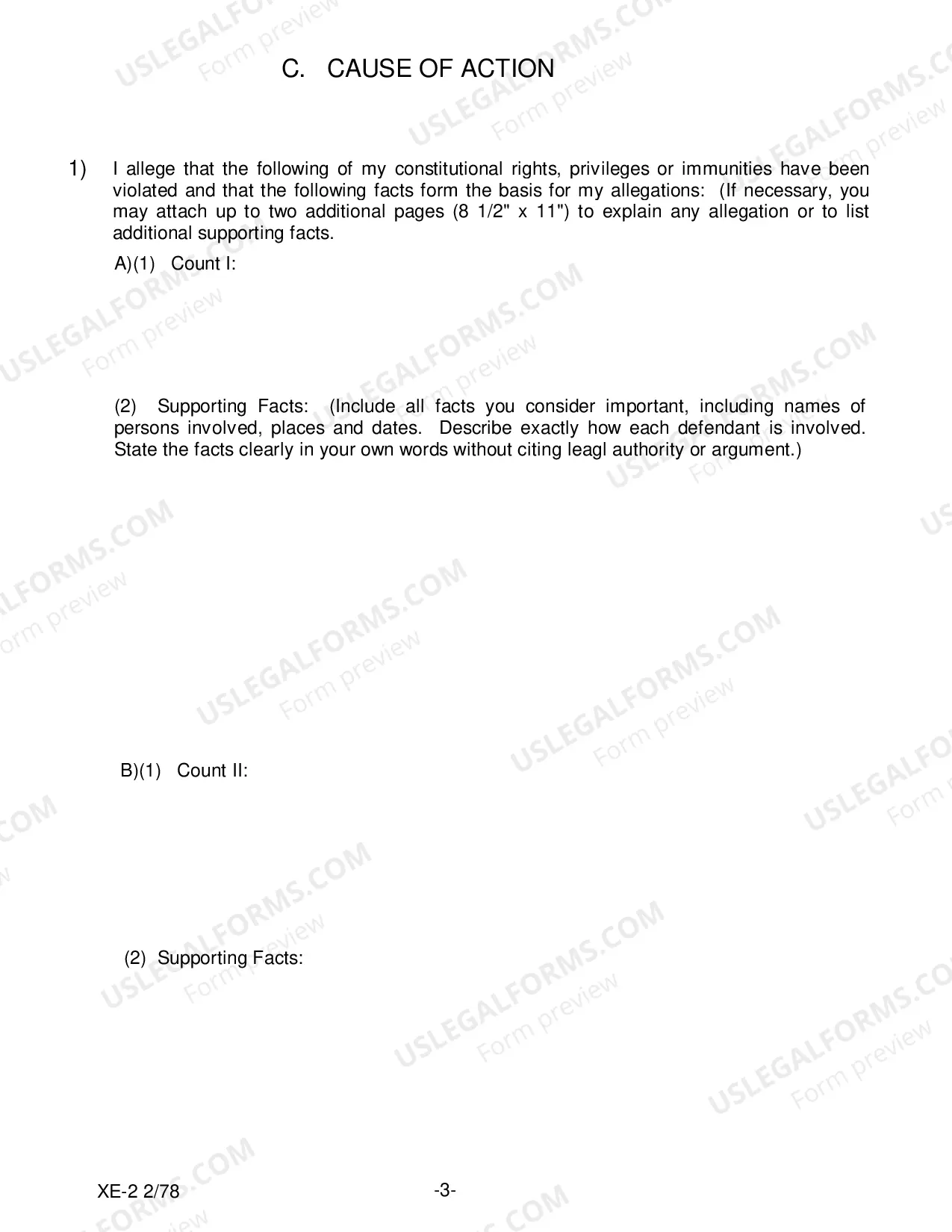
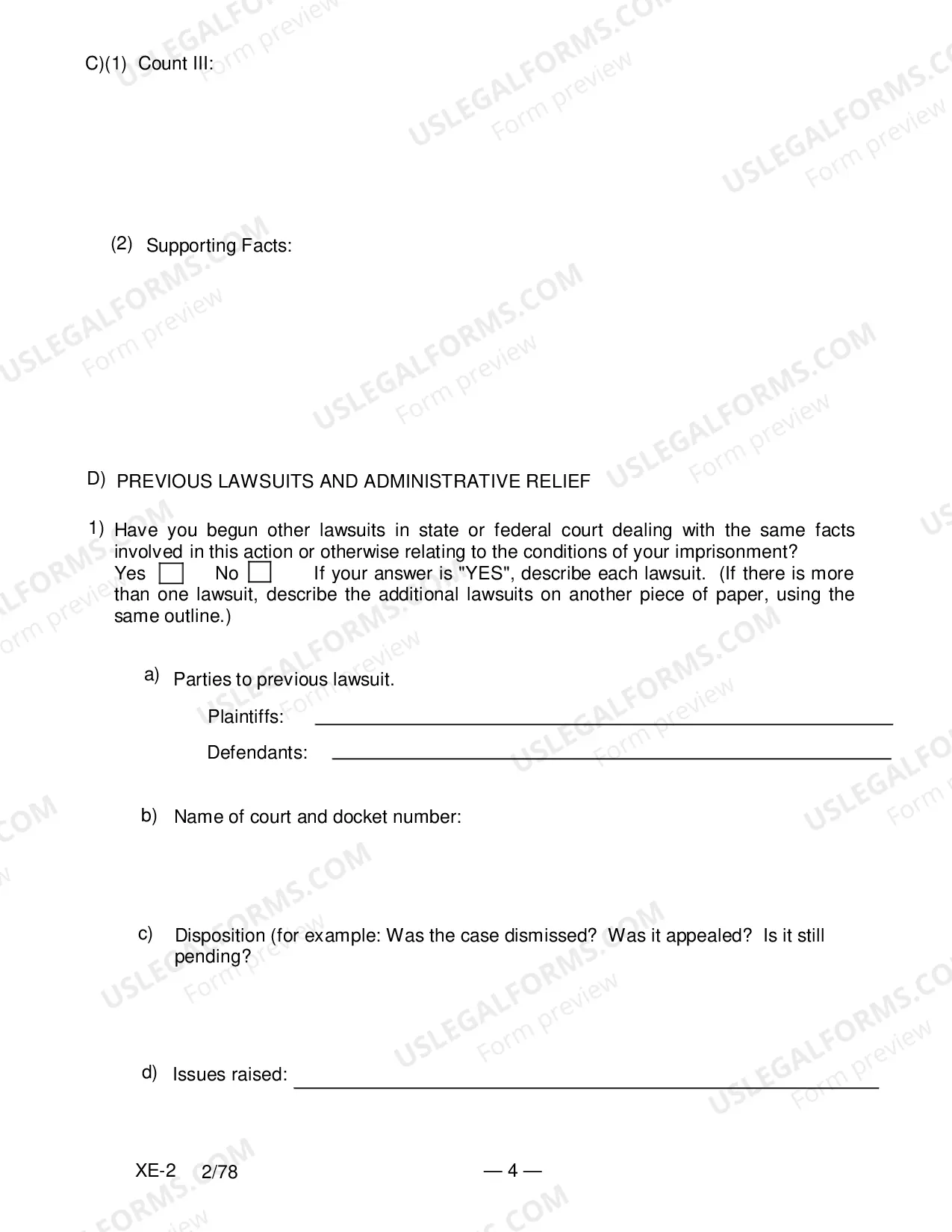
- Cause of Action: An area to detail the violations of constitutional rights and supporting facts.
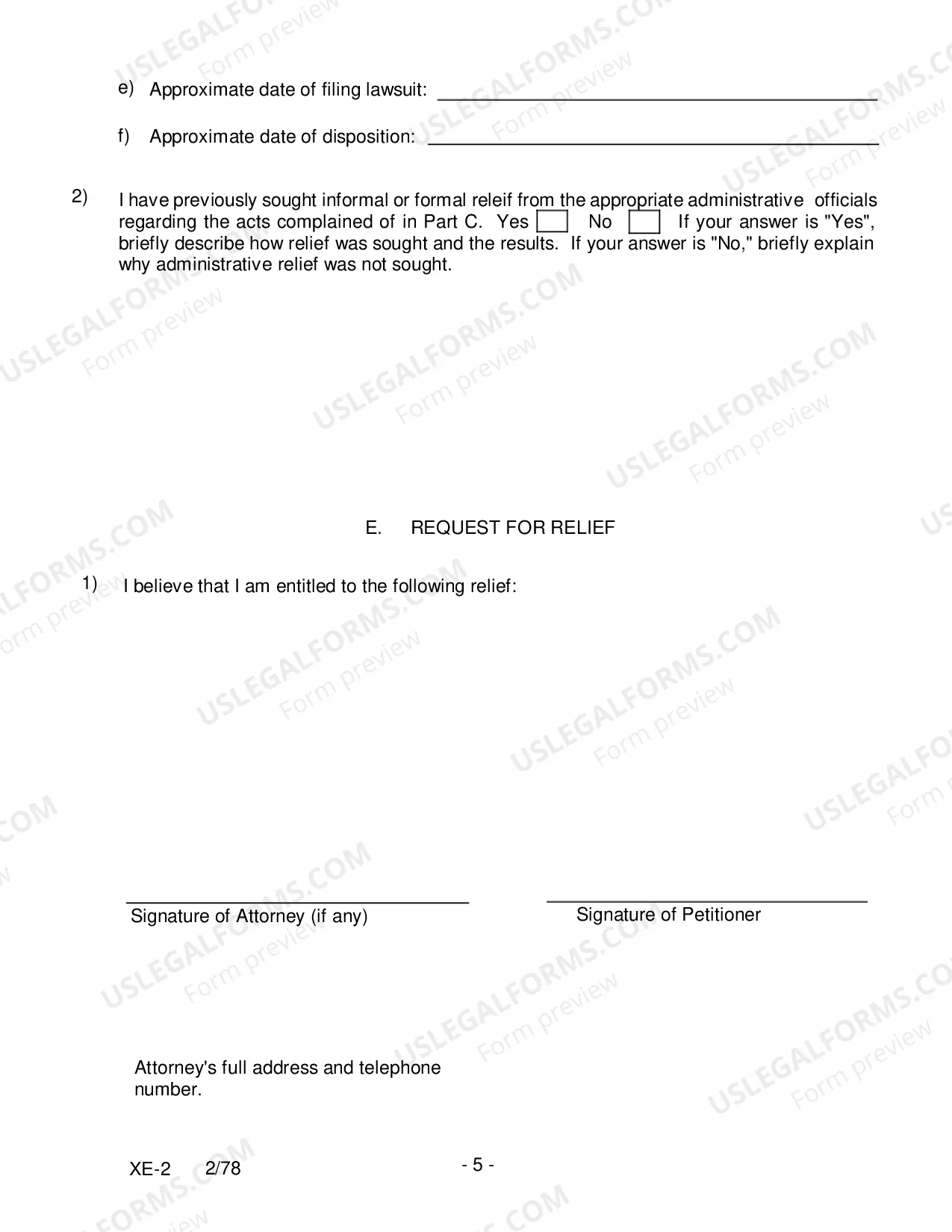
- Request for Relief: A section where the plaintiff specifies what relief or compensation they are pursuing.
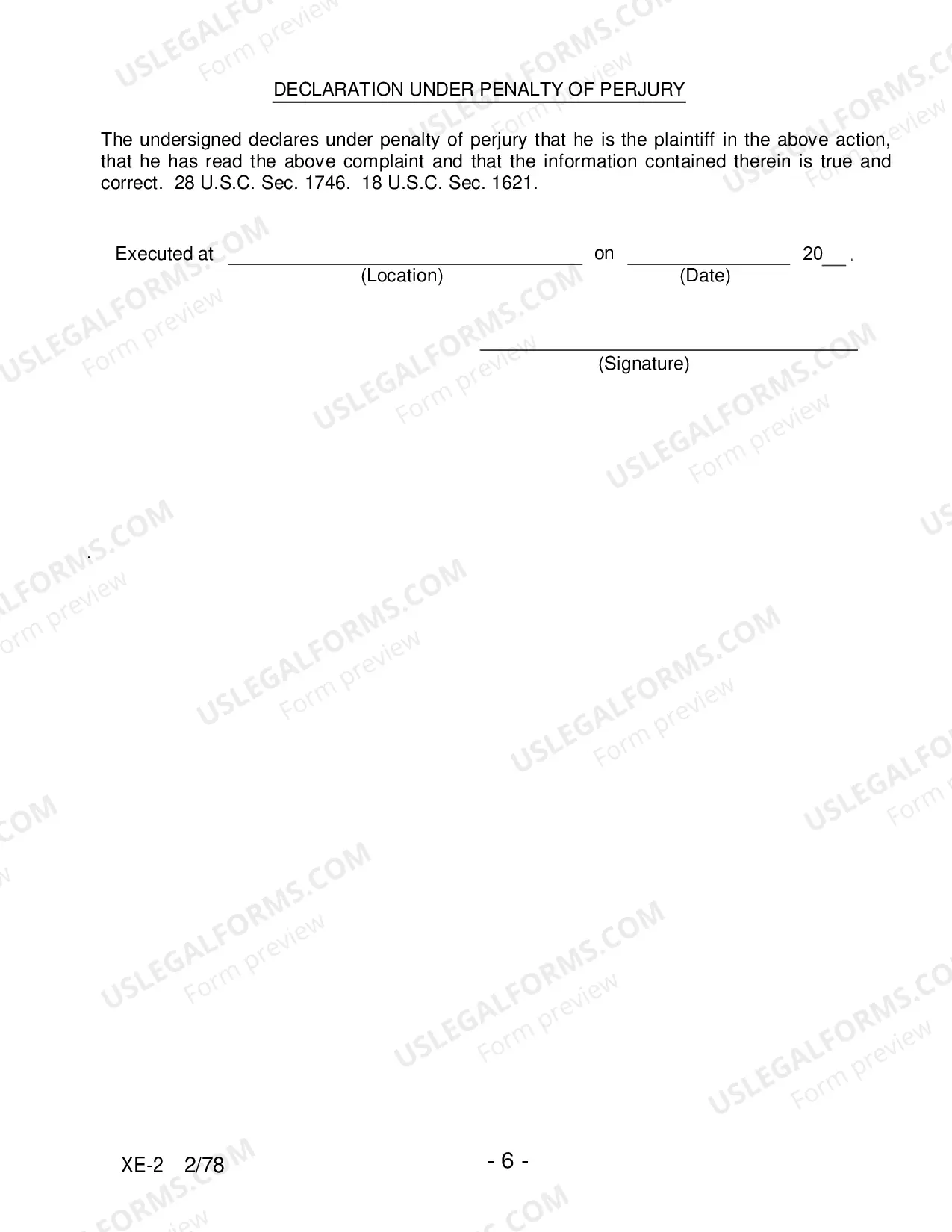
- Declaration Under Penalty of Perjury: A declaration confirming the truthfulness of the complaint's contents.
Situations where this form applies
This form is necessary when an individual believes their civil rights have been violated by a state actor. It should be used when seeking to file a complaint in federal court to address grievances related to constitutional rights, such as unlawful arrest, discrimination, or excessive force. It is applicable when prior attempts to resolve the issue through administrative channels have been unsuccessful or if immediate legal action is necessary.
Who should use this form
- Individuals who believe their civil rights have been violated by someone acting on behalf of the state.
- Persons seeking to hold government officials accountable for wrongful actions.
- People pursuing claims connected to both state and federal law regarding civil rights infringements.
Completing this form step by step
- Identify the parties: Clearly provide the names and addresses of both the plaintiff and defendant.
- Fill out jurisdictional information: Specify the basis for the court's jurisdiction over the case.
- Describe the nature of your case: Summarize the background and context of your complaint.
- Detail the cause of action: Clearly outline the constitutional rights violated and provide supporting facts.
- State your request for relief: Clearly articulate what compensation or actions you are seeking from the court.
- Sign and date the declaration: Confirm the truthfulness of the information provided before submitting.
Notarization requirements for this form
Notarization is generally not required for this form. However, certain states or situations might demand it. You can complete notarization online through US Legal Forms, powered by Notarize, using a verified video call available anytime.
Get your form ready online
Our built-in tools help you complete, sign, share, and store your documents in one place.
Make edits, fill in missing information, and update formatting in US Legal Forms—just like you would in MS Word.
Download a copy, print it, send it by email, or mail it via USPS—whatever works best for your next step.
Sign and collect signatures with our SignNow integration. Send to multiple recipients, set reminders, and more. Go Premium to unlock E-Sign.
If this form requires notarization, complete it online through a secure video call—no need to meet a notary in person or wait for an appointment.
We protect your documents and personal data by following strict security and privacy standards.

Make edits, fill in missing information, and update formatting in US Legal Forms—just like you would in MS Word.

Download a copy, print it, send it by email, or mail it via USPS—whatever works best for your next step.

Sign and collect signatures with our SignNow integration. Send to multiple recipients, set reminders, and more. Go Premium to unlock E-Sign.

If this form requires notarization, complete it online through a secure video call—no need to meet a notary in person or wait for an appointment.

We protect your documents and personal data by following strict security and privacy standards.
Common mistakes to avoid
- Failing to provide complete and accurate information in the plaintiff and defendant sections.
- Not clearly stating the facts supporting the allegations.
- Neglecting to specify the legal grounds for jurisdiction.
- Forgetting to sign the declaration under penalty of perjury.
Advantages of online completion
- Convenience of downloading and editing the form from anywhere.
- Access to up-to-date legal templates drafted by licensed attorneys.
- Ability to save and modify the document as needed before submission.
Summary of main points
- The Civil Rights Complaint form is essential for individuals alleging civil rights violations.
- It is vital to complete the form accurately to ensure the court properly reviews your claims.
- Users are encouraged to seek legal advice if they are unsure about the completion of this form.
Looking for another form?

Form popularity
FAQ
The New Mexico Human Rights Act makes it illegal for an employer to discriminate on the basis of race, color, national origin, ancestry, religion, sex, age, physical or mental handicap, spousal affiliation, sexual orientation, gender identity or serious medical condition.
The Human Rights Act was enacted in 1969 to ensure that all New Mexicans are protected from discrimination in employment, housing, credit and public accommodation. The Human Rights Bureau is responsible for enforcing the Human Rights Act under the New Mexico Department of Workforce Solutions.
Under New Mexico law, employees are entitled to certain leaves or time off, including military leave, voting leave, domestic violence leave, emergency responder leave and paid sick leave. See Time Off and Leaves of Absence. New Mexico prohibits smoking in the workplace and texting while driving. See Health and Safety.
American civil rights include freedom of speech and assembly, equality in public places, the right to vote, the right to privacy, the right to be free from unreasonable searches and seizures, and the right against involuntary servitude.
Civil Rights Laws in New Mexico As a legal concept, ?civil rights? refers generally to the collective rights of all citizens to receive fair and equal treatment under the law. This can apply to everything from the ability to vote and equal access to jobs, schools, and housing, to the ability to marry.
Our country's Constitution and federal laws contain critical protections that form the foundation of our inclusive society ? the right to be free from discrimination, the freedom to worship as we choose, the right to vote for our elected representatives, the protections of due process, the right to privacy.
House Bill 4 (HB 4) creates the ?New Mexico Civil Rights Act.? The Act gives a person who claims deprivation of ?rights, privileges or immunities? secured by the New Mexico Constitution the right to bring a lawsuit in state district court and recover actual damages and injunctive relief.
The New Mexico Human Rights Act protects people from discrimination on the basis of race, age, religion, national origin, ancestry, sex, sexual orientation, gender identity, childbirth or a condition related to pregnancy or childbirth, physical or mental handicap or serious medical condition, and spousal affiliation in