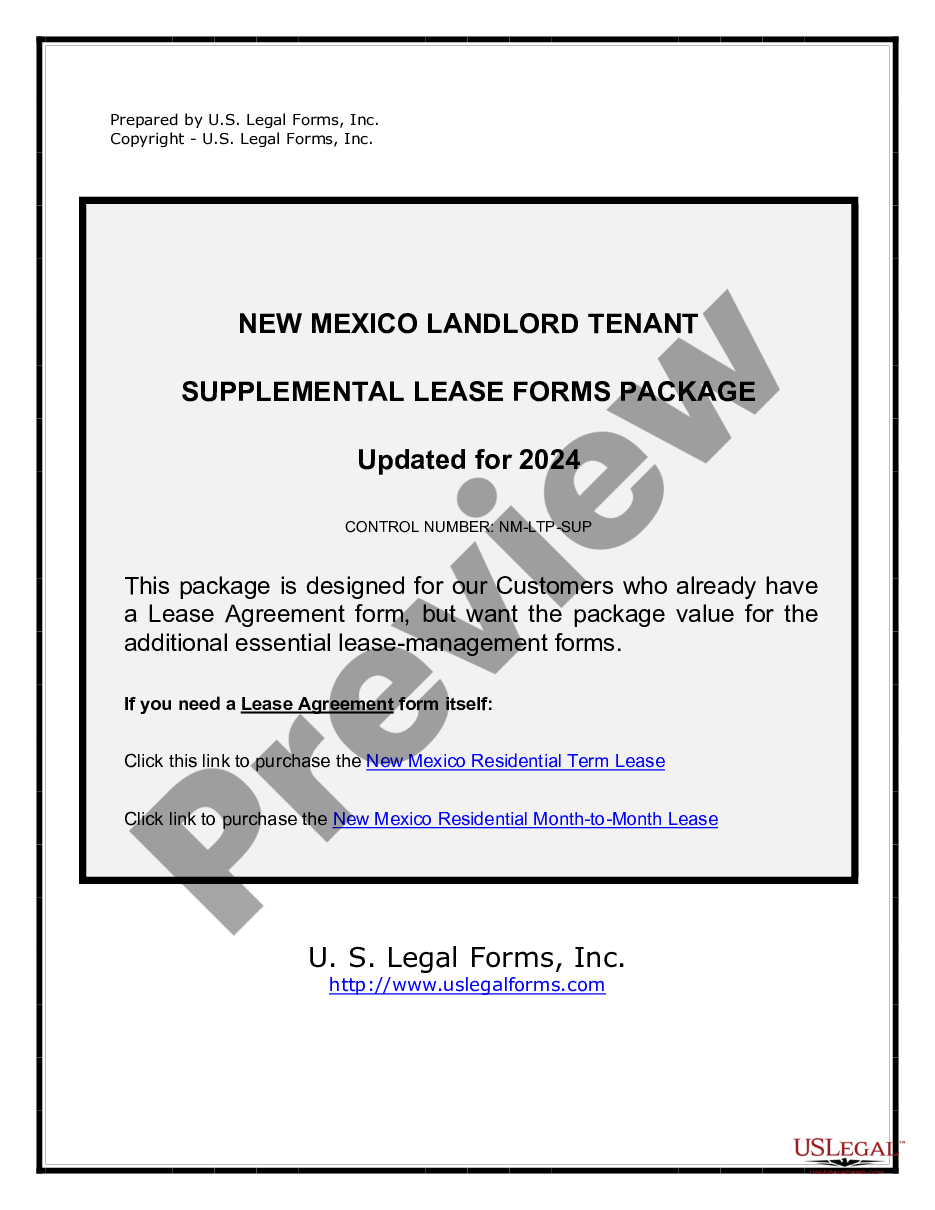
New Mexico Supplemental Residential Lease Forms Package
About this form package
The New Mexico Supplemental Residential Lease Forms Package is a collection of legal forms specially designed for landlords who need essential documents to manage their rental properties. This package includes critical supplemental forms that facilitate the landlord-tenant relationship, such as lease applications and notices. Unlike a comprehensive lease agreement package, this set is intended for those who already have a lease agreement and want to save time and money by accessing necessary management forms at a discounted rate.
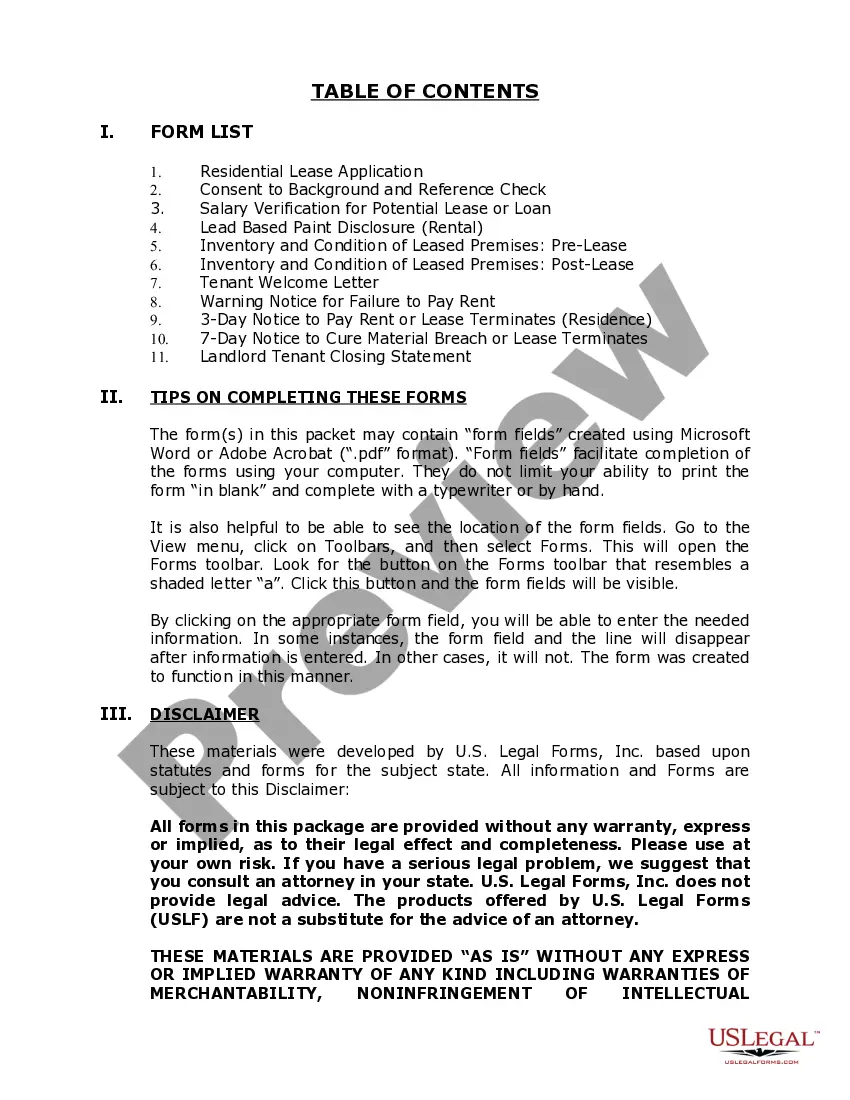
Documents contained in this package
- 3 Day Notice to Pay Rent or Lease Terminated for Residential Property
- 7 Day Notice to Cure Material Breach or Lease Terminates - Residential
- Notice of Default in Payment of Rent as Warning Prior to Demand to Pay or Terminate for Residential Property
- Residential Rental Lease Application
- Salary Verification form for Potential Lease
- Inventory and Condition of Leased Premises for Pre Lease and Post Lease
- Tenant Consent to Background and Reference Check
- Tenant Welcome Letter
- Landlord Tenant Closing Statement to Reconcile Security Deposit
- Lead Based Paint Disclosure for Rental Transaction
When to use this document
This package is useful in various situations, including:
- Before renting a property, to assess potential tenants through applications and background checks.
- To document the condition of a rental unit before a tenant moves in and after they move out.
- When addressing issues with rent payments, using notices for late payments or potential lease termination.
- To communicate important information to tenants, such as welcome letters or lead paint disclosures.
Who can use this document
- Landlords who have a valid lease agreement but need supplemental forms for effective property management.
- Property managers responsible for handling tenant applications, references, and lease termination procedures.
- Anyone who is transitioning between tenants and needs formal documentation for inspections and disclosures.
How to prepare this document
- Review included forms to understand their purpose and requirements.
- Identify the parties involved, including the landlord and tenant details.
- Fill in the appropriate information, such as dates, property details, and terms of tenancy.
- Sign and date the forms where indicated; ensure all parties have copies if needed.
- Store completed documents securely for future reference and compliance.
Notarization details for included forms
Forms in this package typically do not require notarization unless mandated by local law. Always review your state regulations to confirm if notarization is necessary for particular forms.
Get your form ready online
Our built-in tools help you complete, sign, share, and store your documents in one place.
Make edits, fill in missing information, and update formatting in US Legal Forms—just like you would in MS Word.
Download a copy, print it, send it by email, or mail it via USPS—whatever works best for your next step.
Sign and collect signatures with our SignNow integration. Send to multiple recipients, set reminders, and more. Go Premium to unlock E-Sign.
If this form requires notarization, complete it online through a secure video call—no need to meet a notary in person or wait for an appointment.
We protect your documents and personal data by following strict security and privacy standards.

Make edits, fill in missing information, and update formatting in US Legal Forms—just like you would in MS Word.

Download a copy, print it, send it by email, or mail it via USPS—whatever works best for your next step.

Sign and collect signatures with our SignNow integration. Send to multiple recipients, set reminders, and more. Go Premium to unlock E-Sign.

If this form requires notarization, complete it online through a secure video call—no need to meet a notary in person or wait for an appointment.

We protect your documents and personal data by following strict security and privacy standards.
Common mistakes to avoid
- Failing to obtain necessary tenant signatures on all required forms.
- Not documenting the condition of the property thoroughly during move-in and move-out inspections.
- Overlooking the need for timely communication regarding rent payments and lease termination notices.
Advantages of online completion
- Instant access to essential forms without the need for mailing or printing costs.
- Editable forms that can be customized to suit specific property and tenant needs.
- Convenience of managing tenant documentation from any location, at any time.
Looking for another form?
Form popularity
FAQ
An addendum must include the basic elements of any landlord/tenant agreement. You should include the date, the address of the rental property and the names of each party just as you would in the original lease.
The written agreement between the owner and the tenant for the lease of the contract unit to the tenant. The lease includes the tenancy addendum prescribed by HUD. PHA. Public Housing Agency.
Writing a Contract Addendum Name the parties to the contract. Indicate the addendum's effective date, using the same date format used in the original contract. Indicate the elements of the original contract that the addendum intends to change. Concisely but clearly describe the desired changes.
Lease addenda are separate documents that landlords add to an original lease agreement. Landlords use them to provide additional information that the original lease doesn't cover. Be sure not to confuse addenda with lease amendments, which are changes made directly to the existing lease itself.
Create Document. A lease extension addendum is a contract that further extends the term of an existing lease agreement. The addendum will establish a new lease termination date that both the landlord and tenant agree to.
A lease addendum allows a landlord or tenant to make changes to a current residential or commercial lease agreement.Once both parties agree and sign, the addendum should be added to the original lease.
Step 1: Obtain a Written Request. Invite the tenant to submit in writing the request to add another person to the lease. Step 2: Check the Property's Occupancy Limit. Step 3: Acquire a Completed Rental Application. Step 4: Make a Decision. Step 5: Review the Details With the Tenants.
Many leases provide the tenant with an option to renew or extend the lease term beyond the expiration of the initial term.By definition, a lease renewal is a new lease agreement, whereas a lease extension is a continuation of the original lease agreement.
Names of all tenants. Every adult who lives in the rental unit, including both members of a married or unmarried couple, should be named as tenants and sign the lease or rental agreement. This makes each tenant legally responsible for all terms, including the full amount of the rent and the proper use of the property.