New Mexico Forest Products Timber Sale Contract
What is this form?
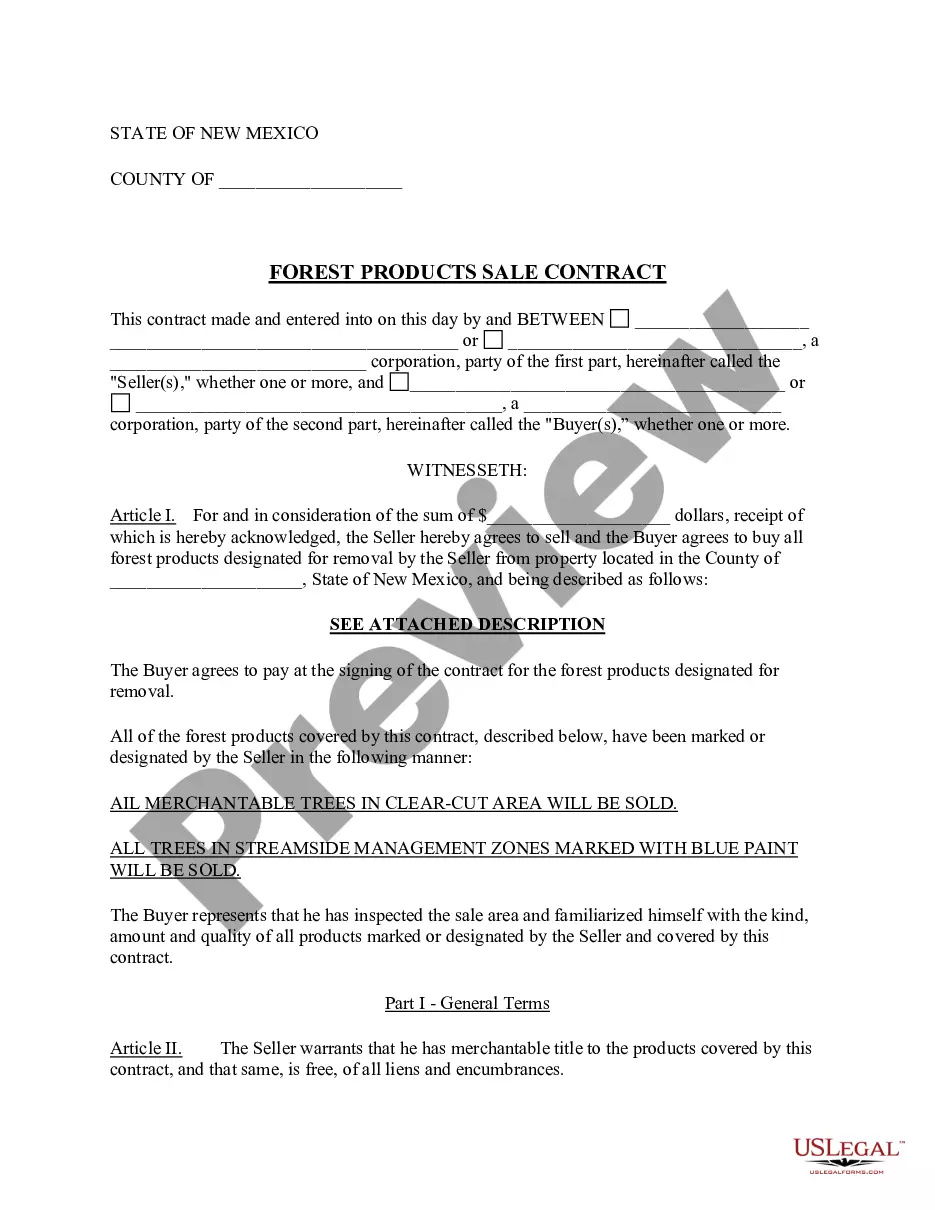
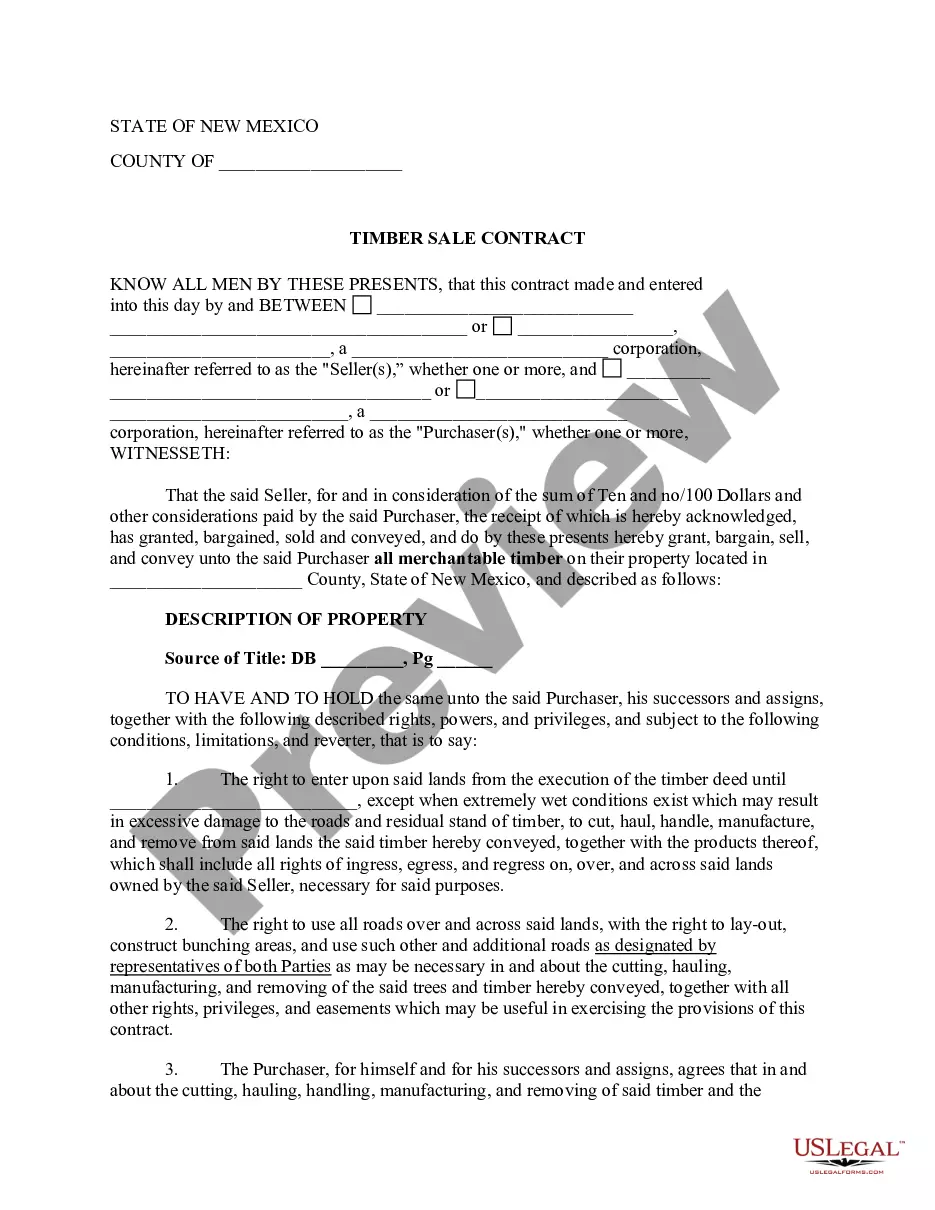
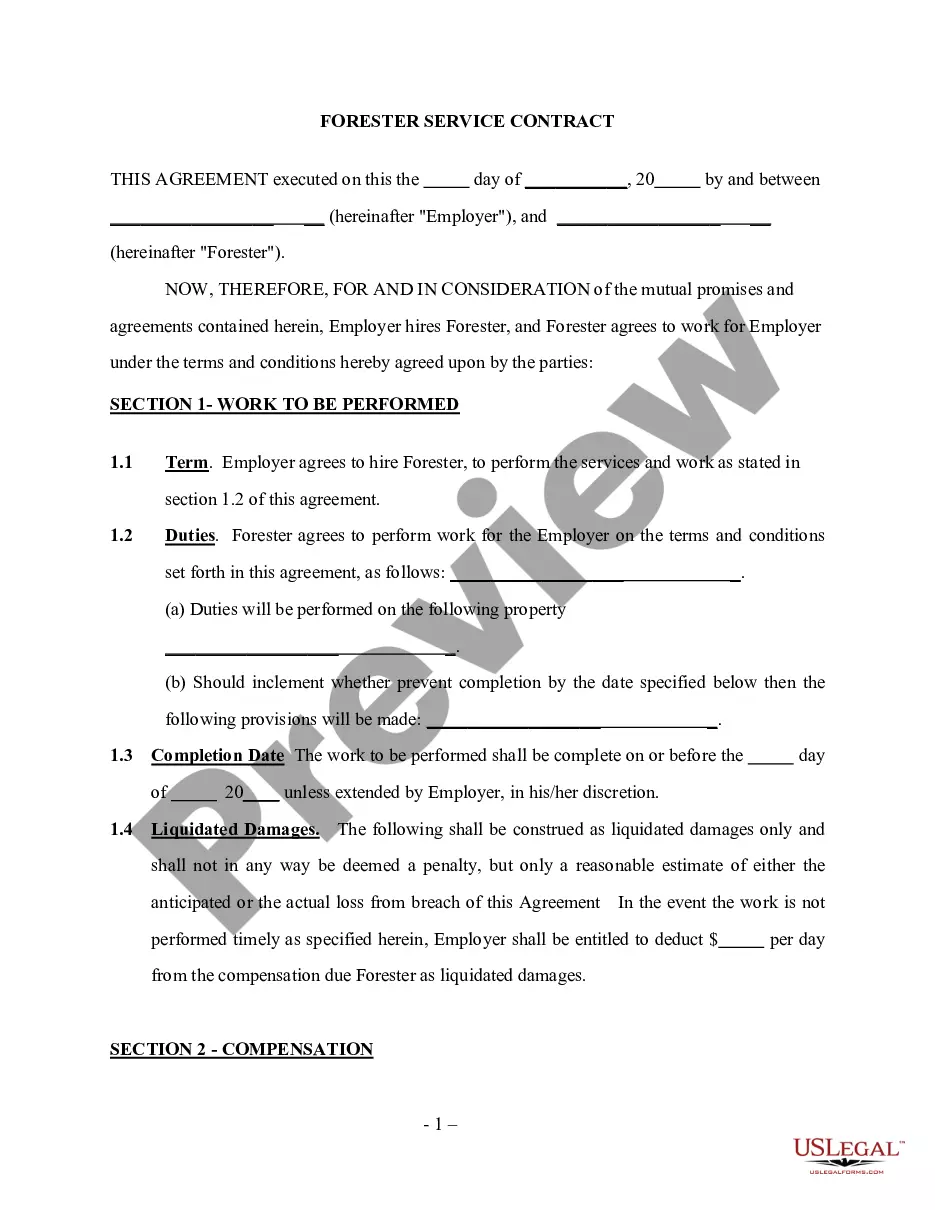
The New Mexico Forest Products Timber Sale Contract is a legal document that formalizes the sale of timber from a seller to a buyer. This contract specifies the terms under which the buyer may harvest and remove designated timber from the seller's property. Unlike general sales agreements, this contract focuses specifically on forest products and addresses the rights and responsibilities of both parties in the context of timber sales.
What’s included in this form
- Parties Involved: Identification of the seller and buyer, including any corporate designations.
- Property Description: Detailed description of the property from which timber will be harvested.
- Payment Terms: Stipulates the payment amount for the timber at the time of contract signing.
- Conditions of Sale: Outlines the rights of ingress and egress for the buyer to remove timber.
- Performance Requirements: Responsibilities regarding road usage, damage to trees, and adherence to safety regulations.
- Duration of Contract: Specifies the length of time the buyer has to complete the timber removal.


When this form is needed
This form should be used when a landowner wishes to sell timber from their property to a buyer. It is particularly relevant for timber businesses or individuals involved in forestry who need a formal agreement to define the terms of timber harvesting. Common scenarios include logging companies purchasing rights from private landowners or government entities selling timber as part of land management efforts.
Who can use this document
- Landowners or sellers of timber who want to ensure legal protection and clarity in the sale process.
- Buyers, such as logging companies, who are looking to purchase timber and require a legally binding agreement.
- Legal representatives managing timber sales on behalf of clients.
Steps to complete this form
- Identify the parties by entering the legal names and designations of the seller and buyer.
- Specify the property details, including the county and a description of the timber to be sold.
- Enter the agreed purchase amount and payment terms clearly.
- Detail any necessary conditions regarding road access and timber management.
- Have all parties sign and date the contract, and ensure it is acknowledged before a notary if required.
Notarization requirements for this form
This form does not typically require notarization unless specified by local law. If notarization is necessary, it can be arranged through US Legal Formsâ integrated online notarization service, which is available 24/7 and ensures a secure video call meeting with a licensed notary.
Get your form ready online
Our built-in tools help you complete, sign, share, and store your documents in one place.
Make edits, fill in missing information, and update formatting in US Legal Forms—just like you would in MS Word.
Download a copy, print it, send it by email, or mail it via USPS—whatever works best for your next step.
Sign and collect signatures with our SignNow integration. Send to multiple recipients, set reminders, and more. Go Premium to unlock E-Sign.
If this form requires notarization, complete it online through a secure video call—no need to meet a notary in person or wait for an appointment.
We protect your documents and personal data by following strict security and privacy standards.

Make edits, fill in missing information, and update formatting in US Legal Forms—just like you would in MS Word.

Download a copy, print it, send it by email, or mail it via USPS—whatever works best for your next step.

Sign and collect signatures with our SignNow integration. Send to multiple recipients, set reminders, and more. Go Premium to unlock E-Sign.

If this form requires notarization, complete it online through a secure video call—no need to meet a notary in person or wait for an appointment.

We protect your documents and personal data by following strict security and privacy standards.
Typical mistakes to avoid
- Failing to clearly describe the property or timber being sold, which can lead to disputes.
- Neglecting to specify the date range for the timber removal period.
- Overlooking the need for notary acknowledgment in case it's required by local law.
Why use this form online
- Convenient access to professional templates drafted by licensed attorneys.
- Editable format allows for easy customization to fit specific needs.
- Secure storage options for completed forms, ensuring important documents are protected.
Quick recap
- The New Mexico Forest Products Timber Sale Contract is essential for formalizing timber transactions.
- Clearly outline rights, responsibilities, and payment terms to protect both parties.
- Ensure compliance with state laws and regulations specific to timber harvesting.
- Using this form online offers convenience and the ability to customize as needed.
Looking for another form?

Form popularity
FAQ
It's generally much easier to sell trees in a woodlot harvest, where many trees are sold and harvested at the same time. To cut down your tree, a timber buyer must bring in laborers, a log truck, skidder, loader, and other equipment. The buyer must cut the logs and haul them to the mill to sell.
To estimate the value of your timber, take the volume, divided by 1,000, and multiply it by the price quoted in your states standing timber stumpage report.
The seller will receive the total payment before the timber is cut. In a per-unit sale the seller and buyer negotiate a price per unit of timber harvested. This type of sale results in the seller receiving payment as the timber is cut.
To calculate the proportionate value of each timber product, divide the appraised value of the product by the total appraised valued of the property. To calculate the original cost basis of each product, multiply its proportionate value, the decimal, by the total acquisition price.
Depending on the type of trees and the market when the timber is sold, you could earn $500 to $2000 per acre (at $1500, you would be looking at $60 per year in income if you were to annualize it over 25 years).
Depending on the type of trees and the market when the timber is sold, you could earn $500 to $2000 per acre (at $1500, you would be looking at $60 per year in income if you were to annualize it over 25 years).
The two basic ways to sell timber are either as stumpage (standing timber) or as logs or other finished products. Each way has its pros and cons. Log sales involve harvesting and processing your own timber and then selling the finished products that come from it: veneer, sawtimber, pulpwood, etc.
It's generally much easier to sell trees in a woodlot harvest, where many trees are sold and harvested at the same time. To cut down your tree, a timber buyer must bring in laborers, a log truck, skidder, loader, and other equipment. The buyer must cut the logs and haul them to the mill to sell.
The Timber Harvesting Plan (THP) is the environmental review documents submitted by landowners to CAL FIRE outlining what timber he or she wants to harvest, how it will be harvested, and the steps that will be taken to prevent damage to the environment.