New Mexico Revocable Living Trust for Husband and Wife with No Children
About this form
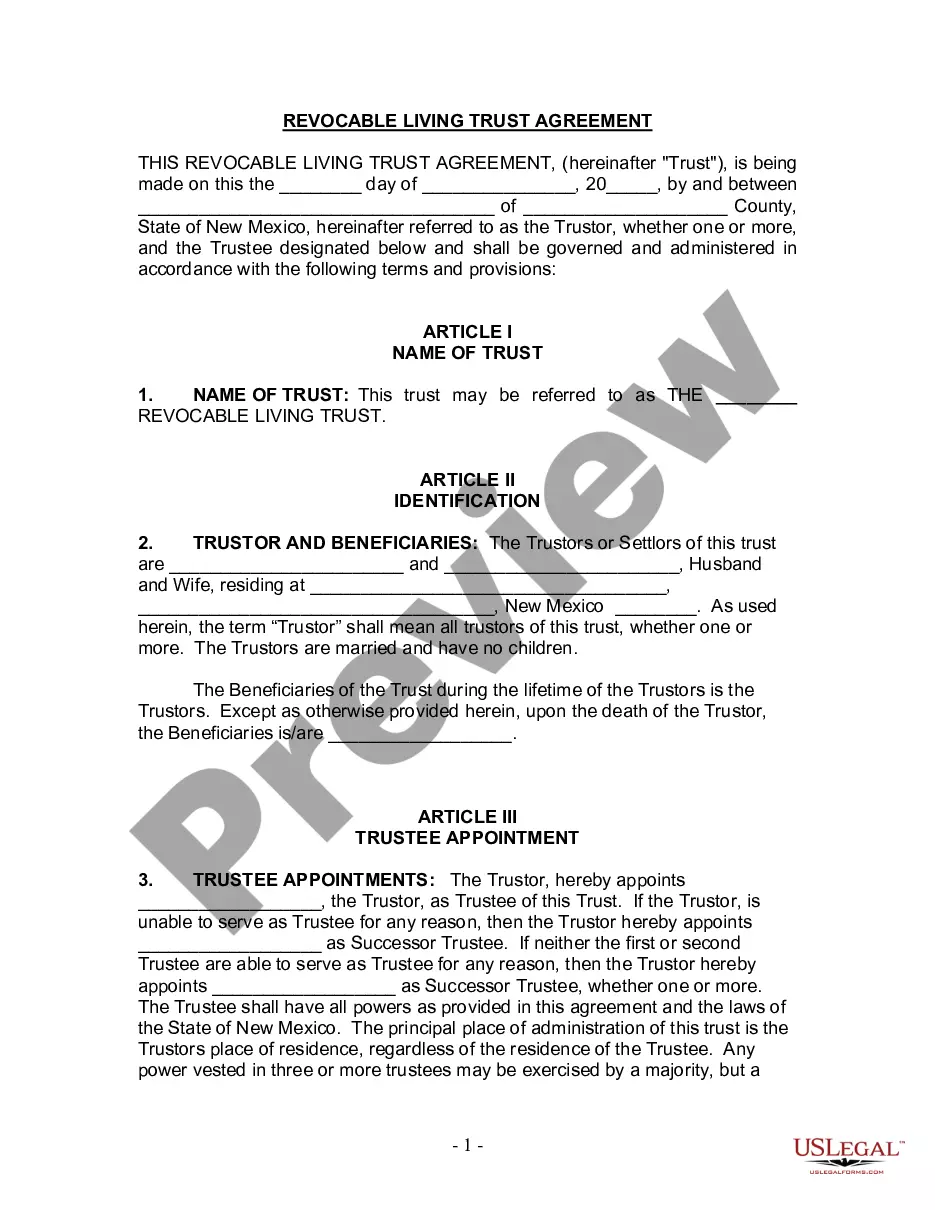
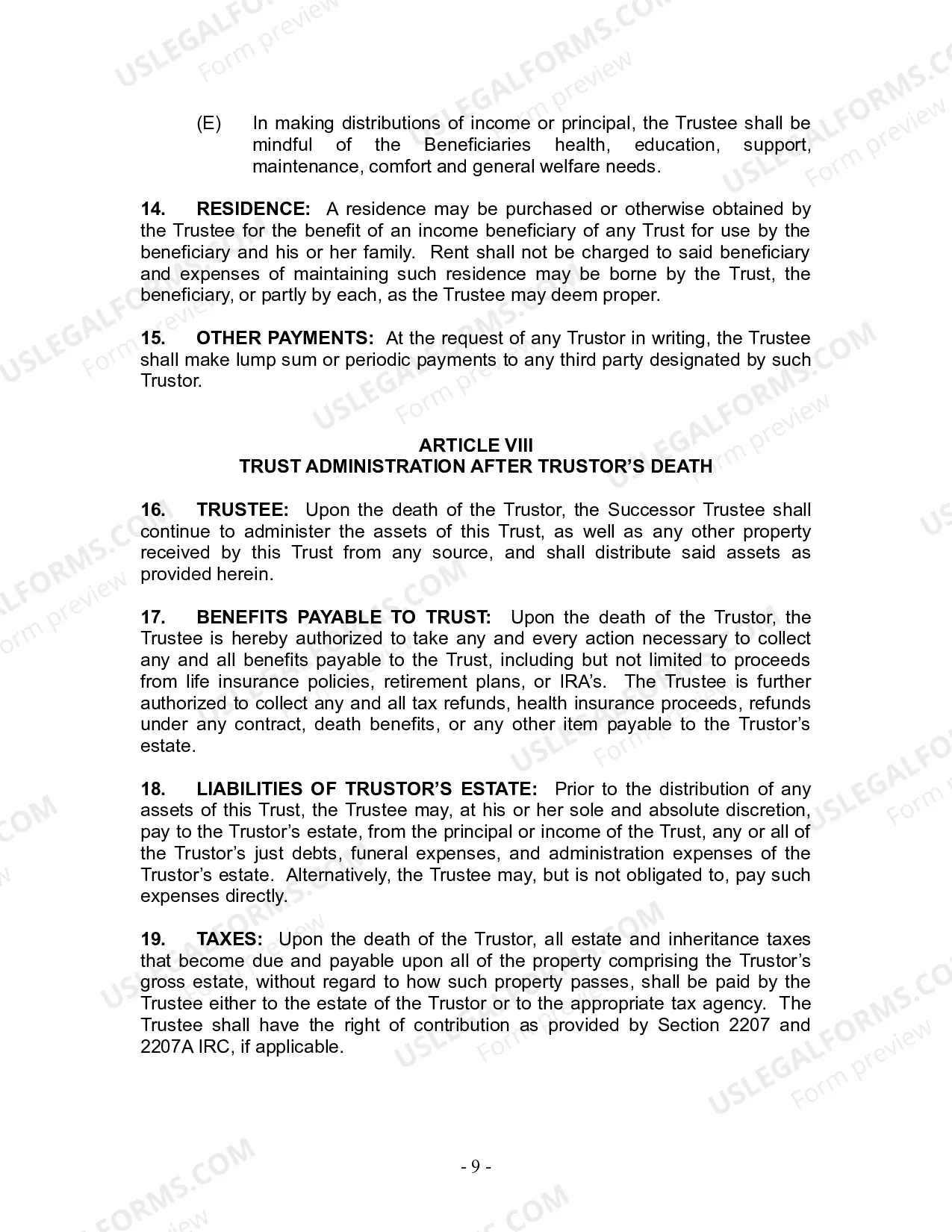
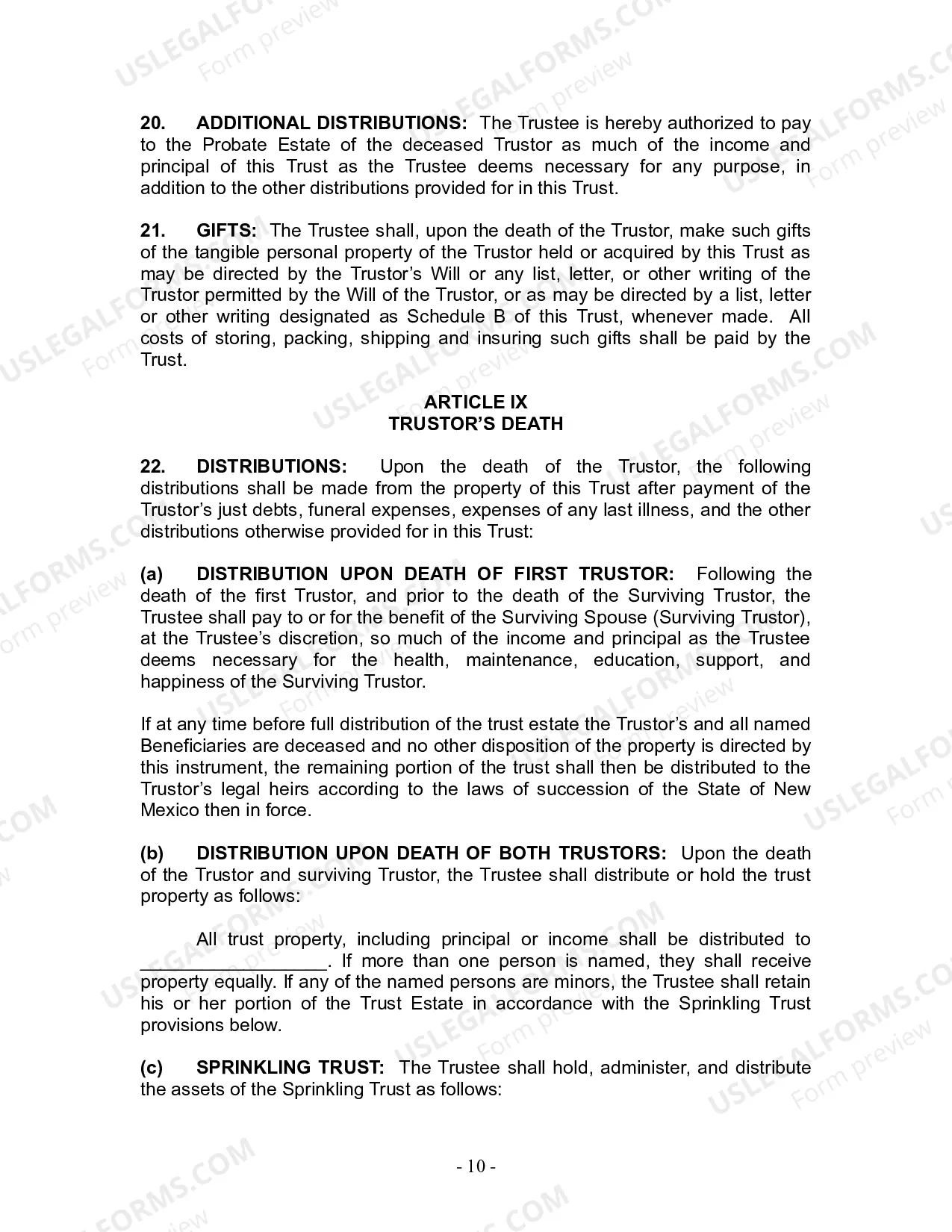
This Revocable Living Trust for Husband and Wife with No Children is a legal document that allows a couple to manage their assets during their lifetimes and specify how those assets will be distributed after their deaths. Unlike a will, a living trust can help avoid the time-consuming and costly probate process, allowing for a smoother transition of assets to beneficiaries. This type of trust provides the creators with control over their assets and can provide tax benefits and privacy upon passing.
Form components explained
- Establishment of the trust, including the names of the Trustors and the Trust's title.
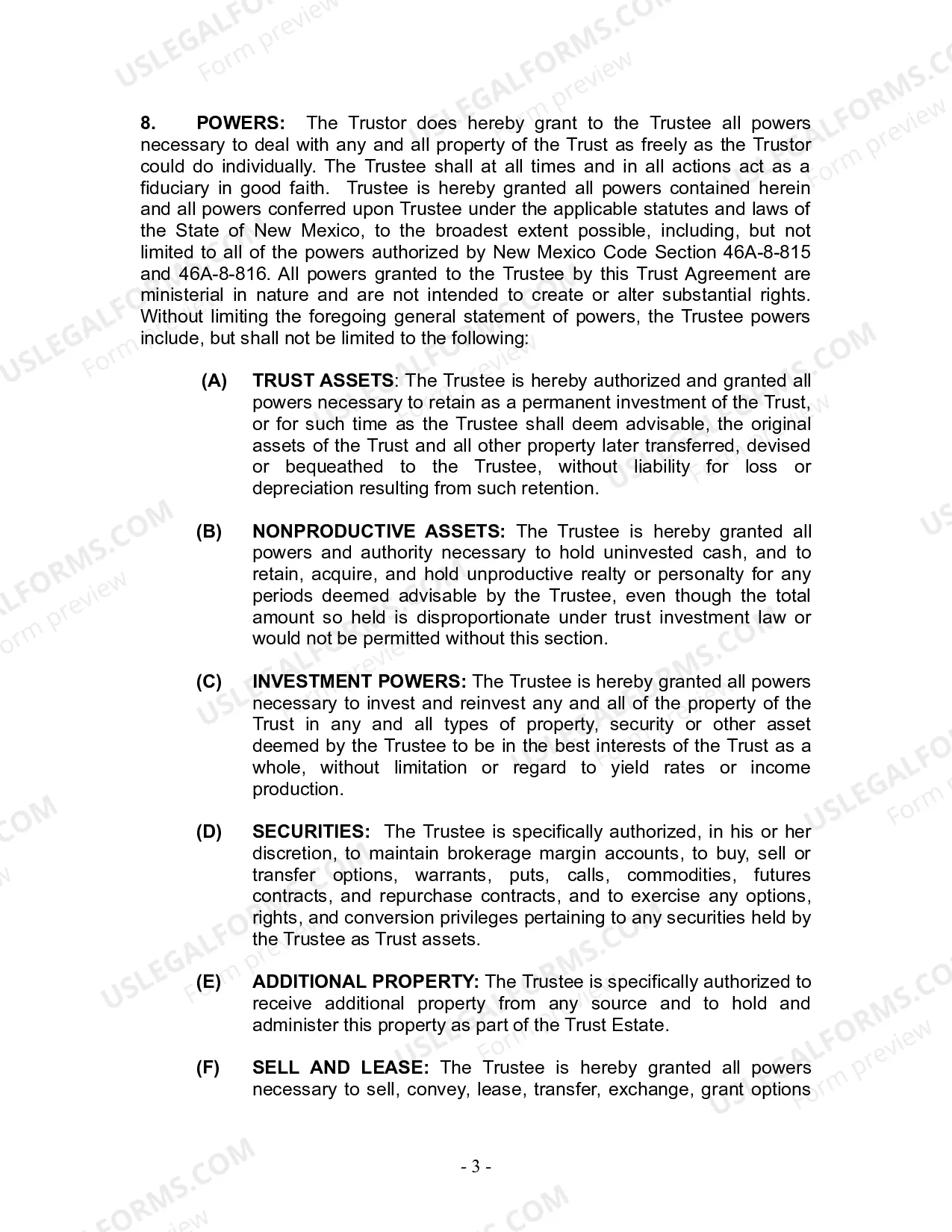
- Appointment of trustees, including provisions for successor trustees.
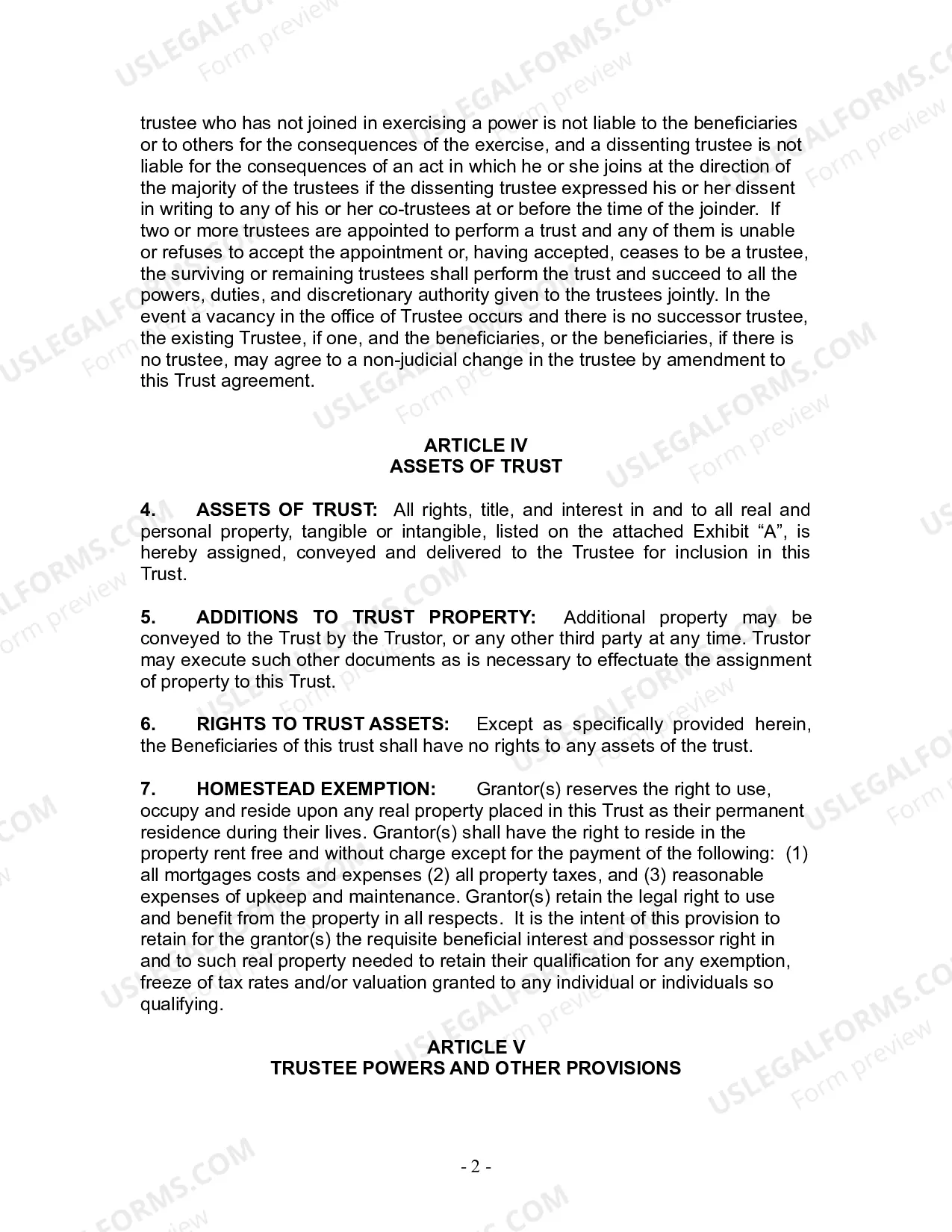
- Transfer of assets into the trust, detailing what property is included.
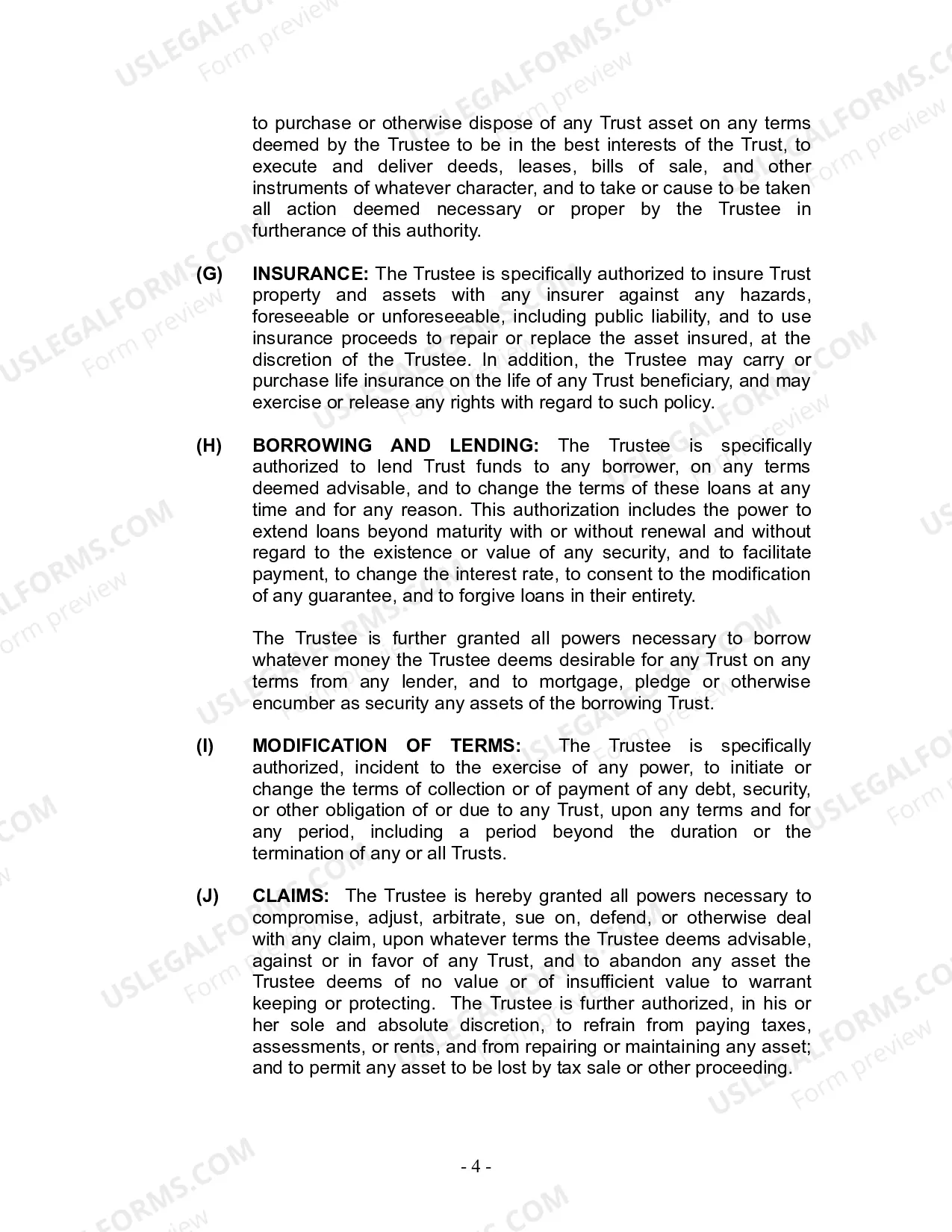
- Rights of the Trustor to manage and amend the trust during their lifetime.
- Instructions for the distribution of trust assets upon the death of the Trustor(s).




Situations where this form applies
This form is ideal for married couples without children who want to ensure their assets are managed according to their wishes during their lifetimes and distributed efficiently upon their passing. It is particularly useful for those looking to avoid probate and reduce estate taxes. This form also benefits couples who have specific desires on how their assets should be distributed, whether to relatives, charities, or other parties.
Who needs this form
- Married couples without children.
- Individuals seeking to manage and protect their assets during their lives.
- Couples looking to simplify the asset distribution process after passing.
- Those wanting to maintain privacy regarding their financial affairs.
Instructions for completing this form
- Identify the parties involved, including the Trustors (husband and wife) and the Trustee.
- List all assets to be transferred into the trust.
- Fill in the names of successor trustees in case the original trustees are unable to serve.
- Specify the provisions for how assets will be distributed upon the death of the Trustor(s).
- Review and sign the document in front of a notary, if required by state law.
Does this document require notarization?
This document requires notarization to meet legal standards. US Legal Forms provides secure online notarization powered by Notarize, allowing you to complete the process through a verified video call, available 24/7.
Get your form ready online
Our built-in tools help you complete, sign, share, and store your documents in one place.
Make edits, fill in missing information, and update formatting in US Legal Forms—just like you would in MS Word.
Download a copy, print it, send it by email, or mail it via USPS—whatever works best for your next step.
Sign and collect signatures with our SignNow integration. Send to multiple recipients, set reminders, and more. Go Premium to unlock E-Sign.
If this form requires notarization, complete it online through a secure video call—no need to meet a notary in person or wait for an appointment.
We protect your documents and personal data by following strict security and privacy standards.

Make edits, fill in missing information, and update formatting in US Legal Forms—just like you would in MS Word.

Download a copy, print it, send it by email, or mail it via USPS—whatever works best for your next step.

Sign and collect signatures with our SignNow integration. Send to multiple recipients, set reminders, and more. Go Premium to unlock E-Sign.

If this form requires notarization, complete it online through a secure video call—no need to meet a notary in person or wait for an appointment.

We protect your documents and personal data by following strict security and privacy standards.
Common mistakes to avoid
- Failing to transfer assets into the trust after creating it.
- Not updating the trust as life circumstances change (e.g., acquiring new assets).
- Omitting successor trustees, which can lead to complications if the original trustee cannot serve.
- Neglecting to specify distributions clearly, leading to potential disputes among beneficiaries.
Benefits of completing this form online
- Convenient access to legally vetted documents from the comfort of your home.
- Edit and customize the form to fit your unique circumstances easily.
- Reliable legal content drafted by licensed attorneys, ensuring compliance with state laws.
- Quick downloads and easy storage for future reference.
Key takeaways
- A Revocable Living Trust is essential for managing assets while both spouses are alive and simplifying estate transfer upon death.
- This form is specifically designed for married couples without children, making it a practical choice for such households.
- Proper execution of this trust can prevent probate, ensuring assets are distributed swiftly according to the trustors' wishes.
Looking for another form?
Form popularity
FAQ
Many married couples own most of their assets jointly with the right of survivorship. When one spouse dies, the surviving spouse automatically receives complete ownership of the property. This distribution cannot be changed by Will.
In New Mexico, you can make a living trust to avoid probate for virtually any asset you ownreal estate, bank accounts, vehicles, and so on. You need to create a trust document (it's similar to a will), naming someone to take over as trustee after your death (called a successor trustee).
Dying without a Will in New MexicoIf you die without a valid will, you'll lose control over what happens to your assets after your death.If there isn't a will, the court will appoint someone, usually an adult child or surviving spouse, to be the executor or personal representative.
When someone dies without a will (or intestate), New Mexico probate law designates the surviving family members to whom the estate will pass.If the deceased left no surviving spouse, then the deceased's surviving children (both biological and adopted) receive the deceased's property in equal shares.
Children - if there is no surviving married or civil partner If there is no surviving partner, the children of a person who has died without leaving a will inherit the whole estate. This applies however much the estate is worth. If there are two or more children, the estate will be divided equally between them.
Inheritance is Considered Separate Property It's also considered separate property under California law. This means that it is yours, and yours alone, if and when you get a divorce. Your spouse will have no ownership rights to that inheritance.You decide to add your spouse's name to the deed.
Many married couples own most of their assets jointly with the right of survivorship. When one spouse dies, the surviving spouse automatically receives complete ownership of the property. This distribution cannot be changed by Will.
California is a community property state, which means that following the death of a spouse, the surviving spouse will have entitlement to one-half of the community property (i.e., property that was acquired over the course of the marriage, regardless of which spouse acquired it).
But to protect spouses from being disinherited, most of these states give a surviving spouse the right to claim one-third to one-half of the deceased spouse's estate, no matter what the will provides. (For other limitations on what a will can do, see What a Will Won't Do.)