New Mexico Landlord Agreement to allow Tenant Alterations to Premises
What this document covers
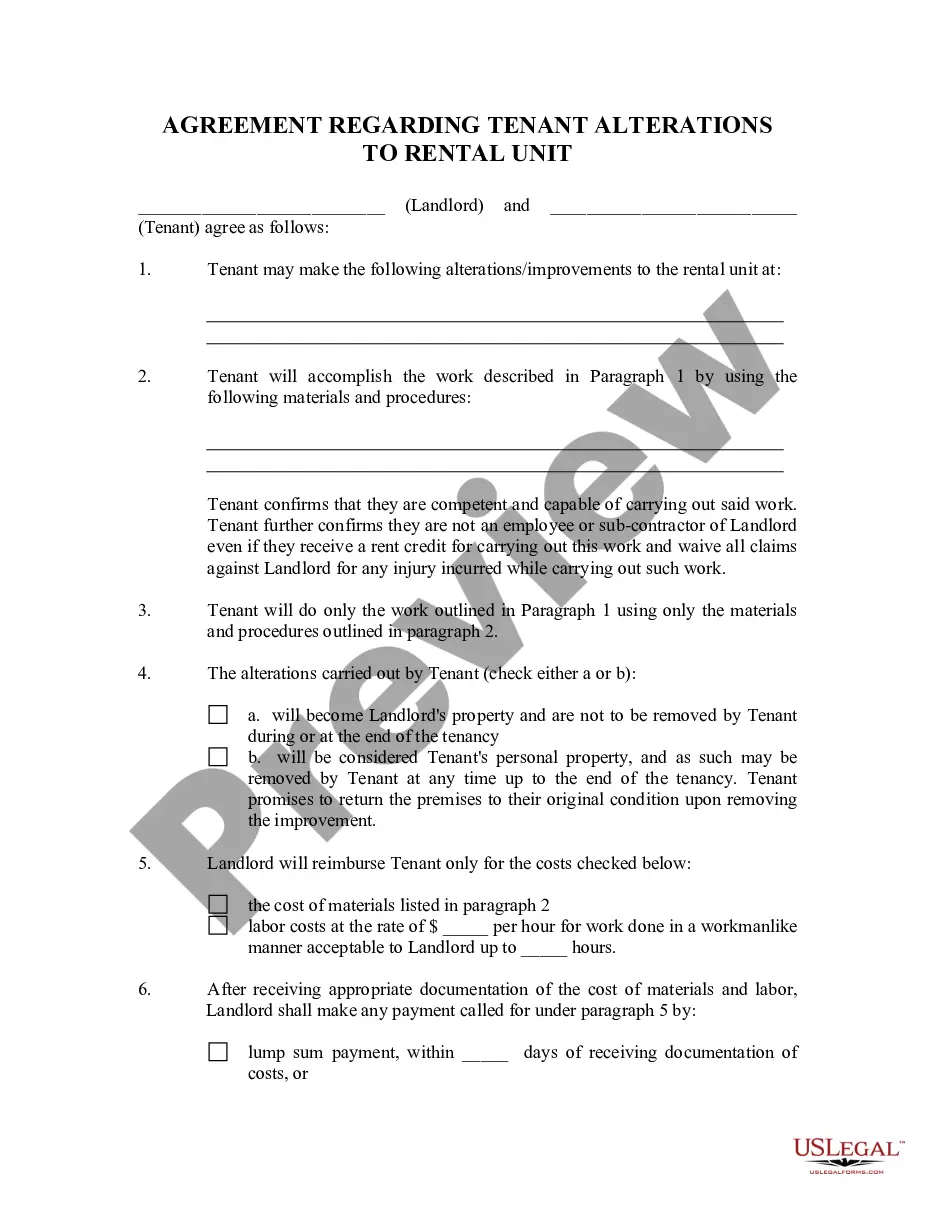
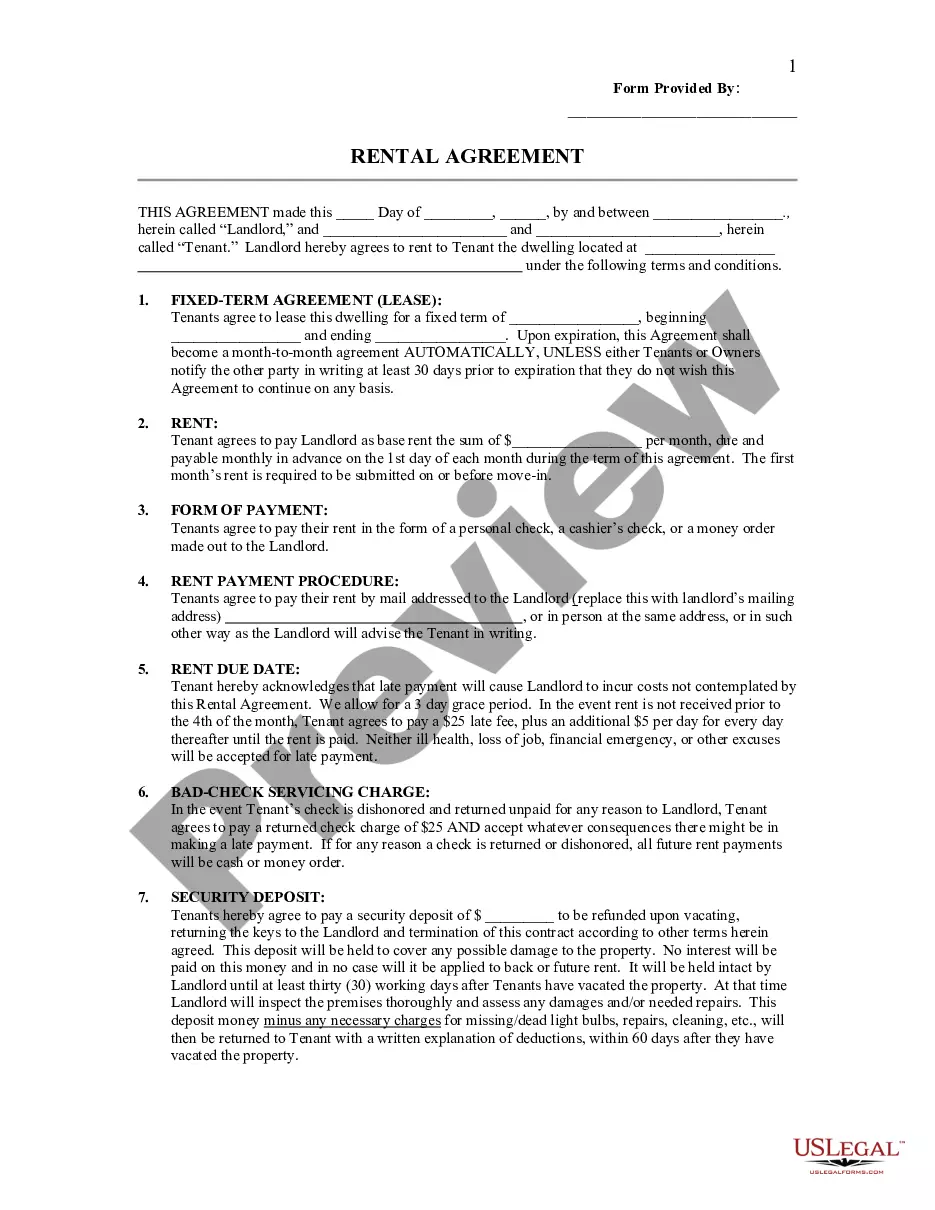
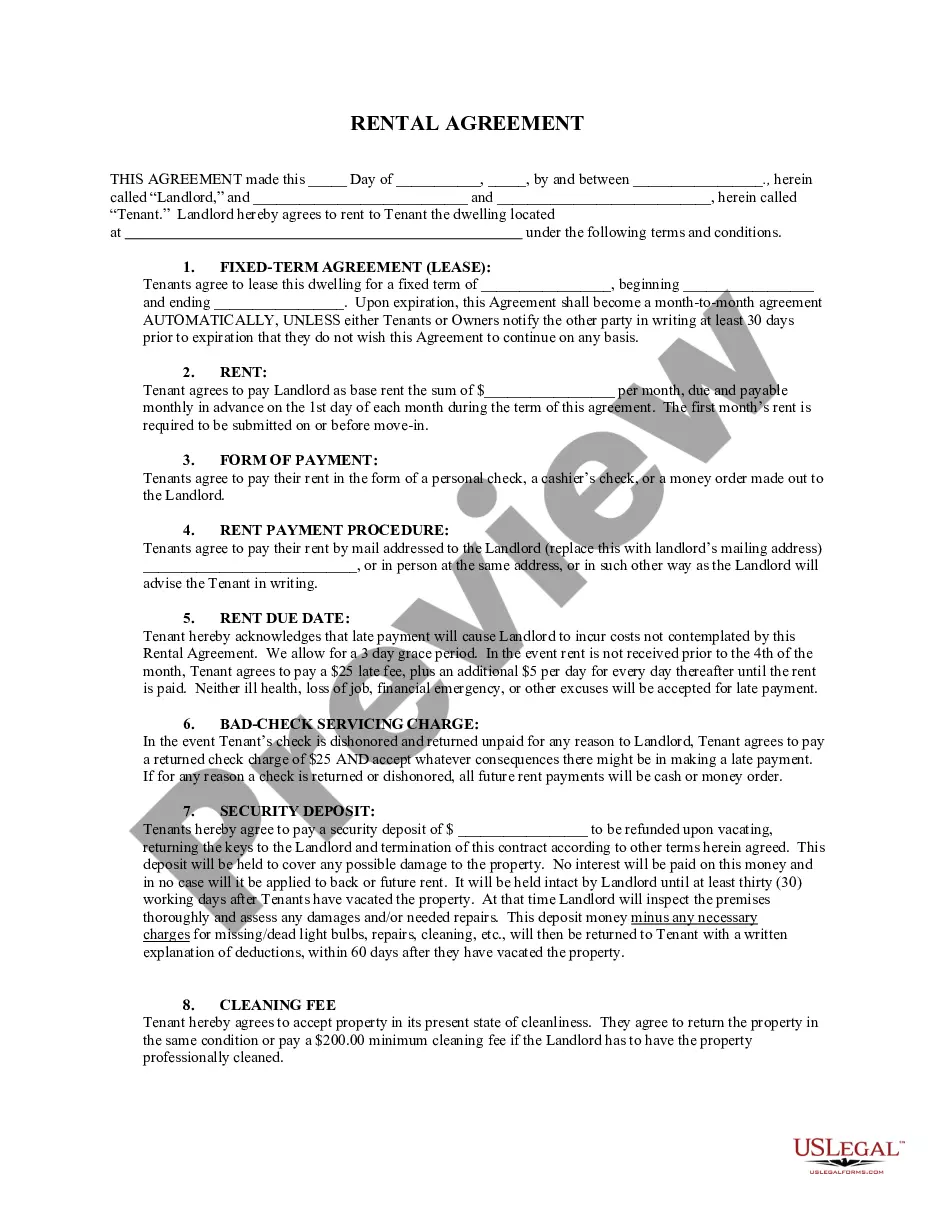
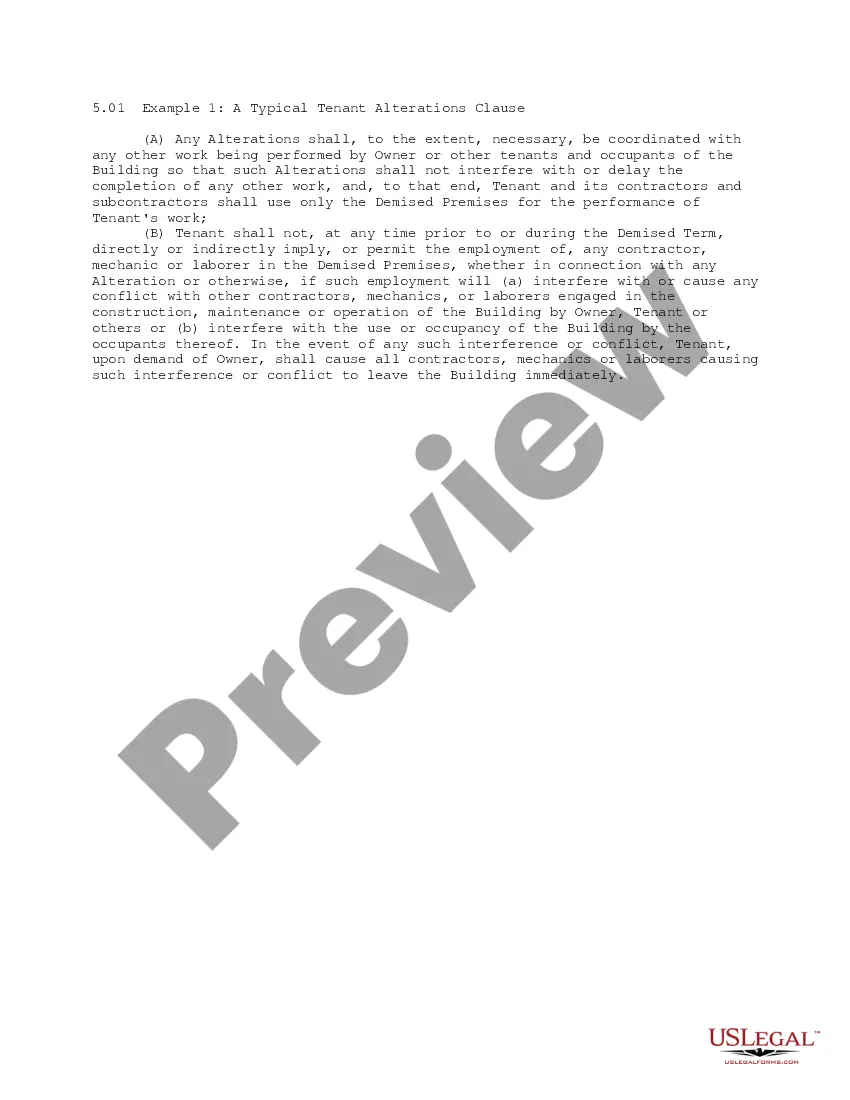
The Landlord Agreement to allow Tenant Alterations to Premises is a legal document that outlines the terms under which a tenant may make alterations or improvements to a rental property. This form helps to ensure clarity between landlords and tenants, minimizing misunderstandings about ownership of the alterations, costs, and responsibilities upon the tenant's departure. It is distinct from general rental agreements as it specifically addresses alterations made by the tenant.
What’s included in this form
- Tenant's rights to make specific alterations or improvements to the rental unit.
- Clarification of whether the alterations will be the landlord's or the tenant's property.
- Details on reimbursement for alterations and improvement costs, including materials and labor.
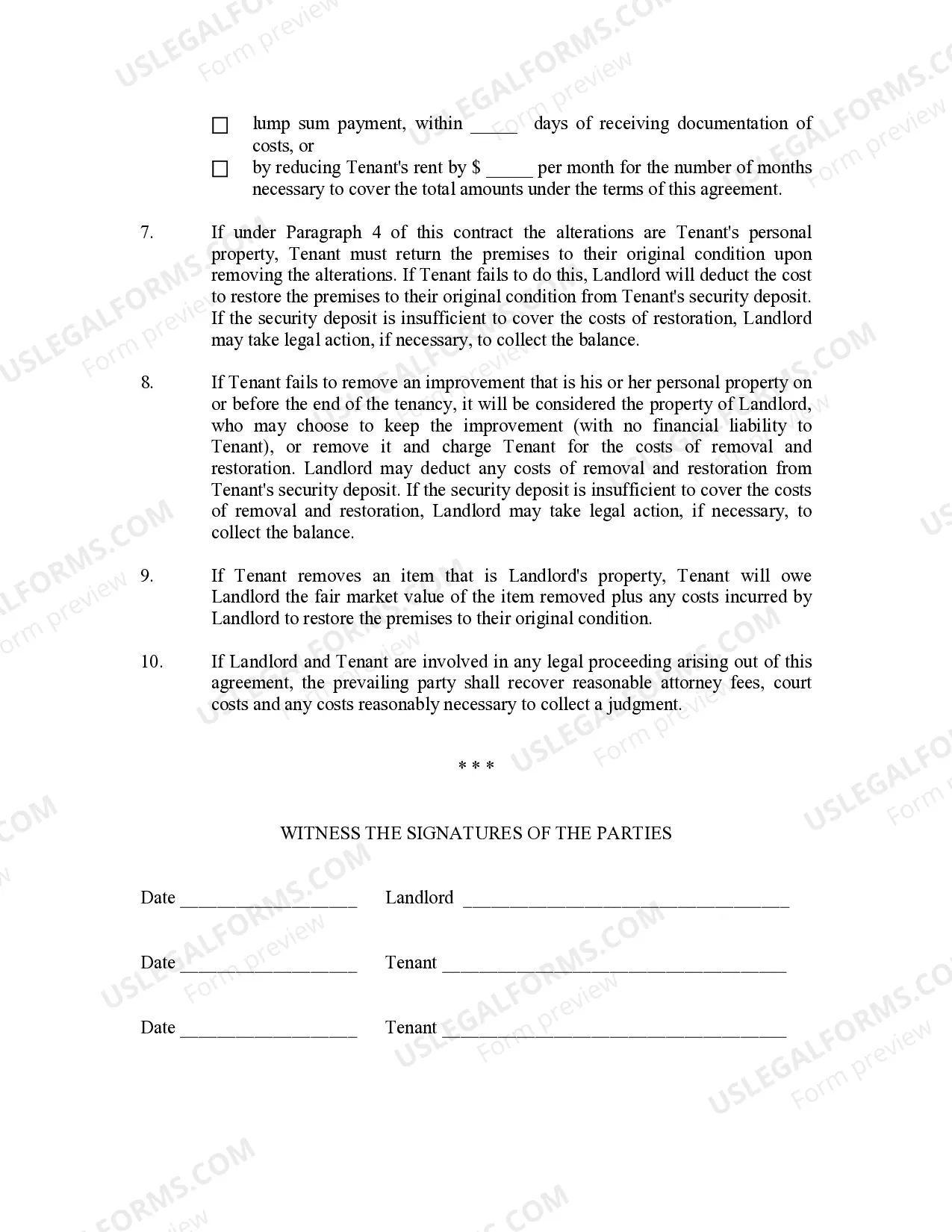
- Responsibilities for restoring the premises upon removal of tenant-owned alterations.
- Consequences of not returning the premises to its original condition.
- Legal provisions for recovery of costs related to alterations and attorney fees for disputes.
Common use cases
This form is ideal for situations where a tenant wishes to make improvements or modifications to a rental unit. Common scenarios include a tenant wanting to paint the walls, install shelves, or make other significant changes to enhance the living space. Using this form can help outline mutual agreements and protect both parties in the event of a dispute regarding the alterations.
Who this form is for
This form is suitable for:
- Landlords who want to establish clear guidelines for tenant alterations.
- Tenants who intend to make changes to their rented property and want to formalize the agreement.
- Real estate professionals managing rental properties on behalf of landlords.
How to prepare this document
- Identify the parties involved by entering the names of the landlord and tenant.
- Outline the specific alterations or improvements the tenant wishes to make.
- Clarify whether the alterations will belong to the landlord or the tenant.
- Detail the reimbursement agreement for materials and labor costs.
- Set forth the timeline for payments and any provisions for restoring the premises.
- Both parties should sign and date the form to make it legally binding.
Does this document require notarization?
This form does not typically require notarization to be legally valid. However, some jurisdictions or document types may still require it. US Legal Forms provides secure online notarization powered by Notarize, available 24/7 for added convenience.
Get your form ready online
Our built-in tools help you complete, sign, share, and store your documents in one place.
Make edits, fill in missing information, and update formatting in US Legal Forms—just like you would in MS Word.
Download a copy, print it, send it by email, or mail it via USPS—whatever works best for your next step.
Sign and collect signatures with our SignNow integration. Send to multiple recipients, set reminders, and more. Go Premium to unlock E-Sign.
If this form requires notarization, complete it online through a secure video call—no need to meet a notary in person or wait for an appointment.
We protect your documents and personal data by following strict security and privacy standards.

Make edits, fill in missing information, and update formatting in US Legal Forms—just like you would in MS Word.

Download a copy, print it, send it by email, or mail it via USPS—whatever works best for your next step.

Sign and collect signatures with our SignNow integration. Send to multiple recipients, set reminders, and more. Go Premium to unlock E-Sign.

If this form requires notarization, complete it online through a secure video call—no need to meet a notary in person or wait for an appointment.

We protect your documents and personal data by following strict security and privacy standards.
Avoid these common issues
- Failing to outline all planned alterations, leading to disputes later.
- Not specifying who is responsible for costs, which may result in misunderstandings regarding reimbursements.
- Neglecting to have both parties sign the agreement, which can affect its validity.
Benefits of completing this form online
- Quick and convenient access to a professionally drafted legal document.
- Easy customization to fit specific tenant-landlord agreements.
- Downloadable format allows for storage and printing as needed.
Legal use & context
- The agreement is legally binding, provided it is completed and signed by both parties.
- All provisions regarding alterations must comply with local housing and property laws.
- In any dispute, legal proceedings may be necessary to enforce this agreement.
What to keep in mind
- This form clarifies rights and responsibilities for tenant alterations.
- It helps prevent legal disputes by establishing clear terms.
- Both parties should understand their obligations under the agreement to ensure a smooth rental experience.
Looking for another form?


Form popularity
FAQ
Renters' Rights in New Mexico Landlord/tenant laws are in place to protect the rights of tenants in New Mexico and every other state. These rights cover discrimination, security deposits, rent disclosure, and notice before landlord entry. Some minor variances can exist between states, however.
If the tenant pays for leasehold improvements, the capital expenditure is recorded as an asset on the tenant's balance sheet. Then the expense is recorded on income statements as amortization over either the life of the lease or the useful life of the asset, whichever is shorter.
Review Your Lease Before You Sign. Research Local Laws. Keep Records. Pay Your Rent. Maintain Respectful Communication. Seek an Agreeable Solution. Request Repairs in Writing. What Do You Think?
In cases like this, landlords are entitled to deduct the remaining tax basis in capitalized leasehold improvements made for a particular tenant upon termination of the lease if such improvements are irrevocably disposed of or abandoned and won't be used by a subsequent tenant.
If you think your landlord is violating the Fair Housing Act, you can get that landlord in trouble by filing a complaint at HUD.gov. Your remedy for breach of quiet enjoyment is to terminate the lease and move or sue in small claims court.
Often, landlords will provide a 'leasehold improvement allowance' for their tenants which is merely a set amount they agree to pay for. If the improvements you want cost more than the allowance, you will be responsible for those extra costs.
Can a tenant claim for improvements made during the lease? The position differs in the case of immovable and movable property. Tenant can claim for:The claim arises only once the lease is terminated and lessee vacated the property.
Leasehold improvements are any changes made to a rental property in order to customize it for the particular needs of a tenant. These can include alterations such as painting, installing partitions, changing the flooring, or putting in customized light fixtures.
Your landlord discriminates against you. Your landlord takes your security deposit illegally. Your rental unit is inhabitable. The property owner interferes with your right to quiet enjoyment. Your landlord fails to make the necessary repairs.