New Mexico Stop Notice - Corporation
What is this form?
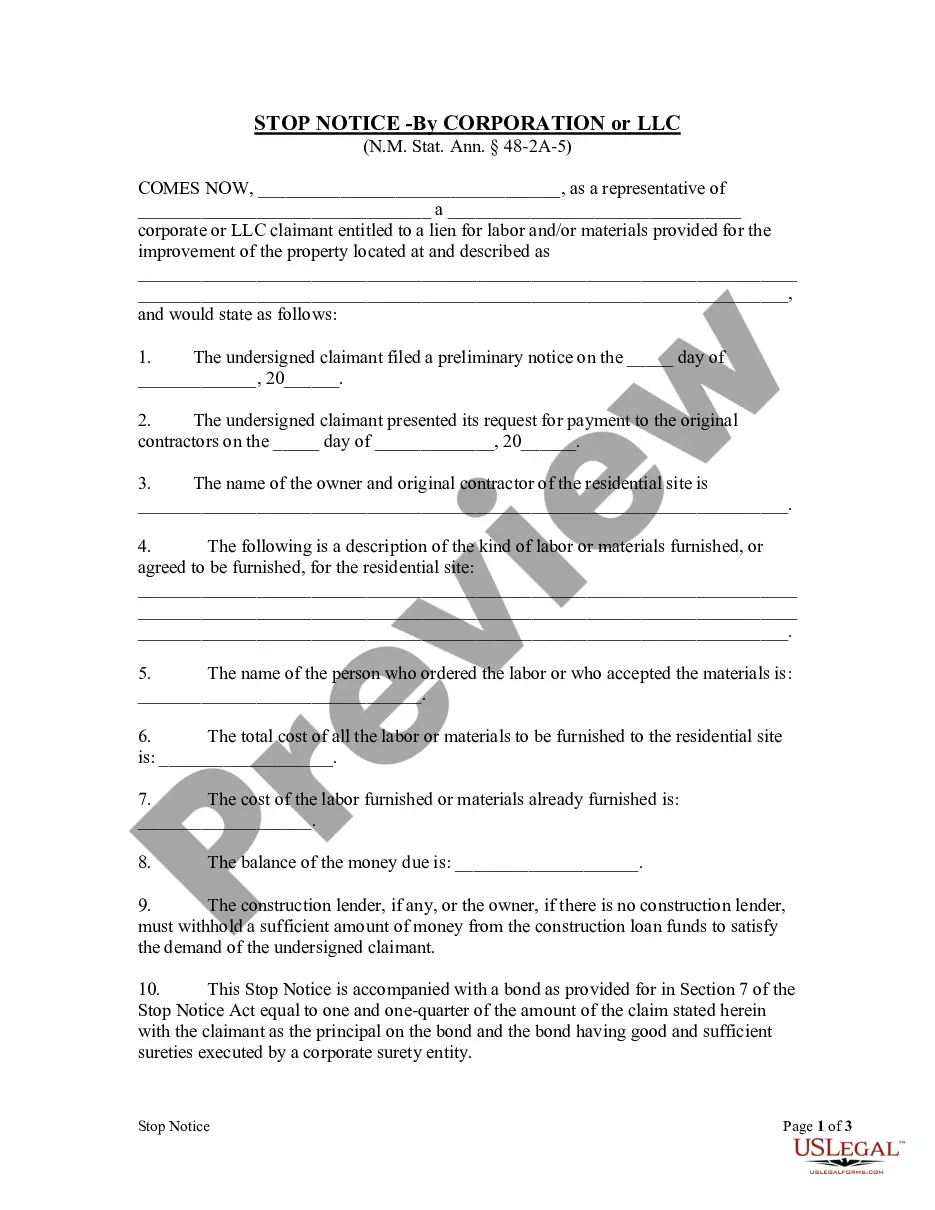
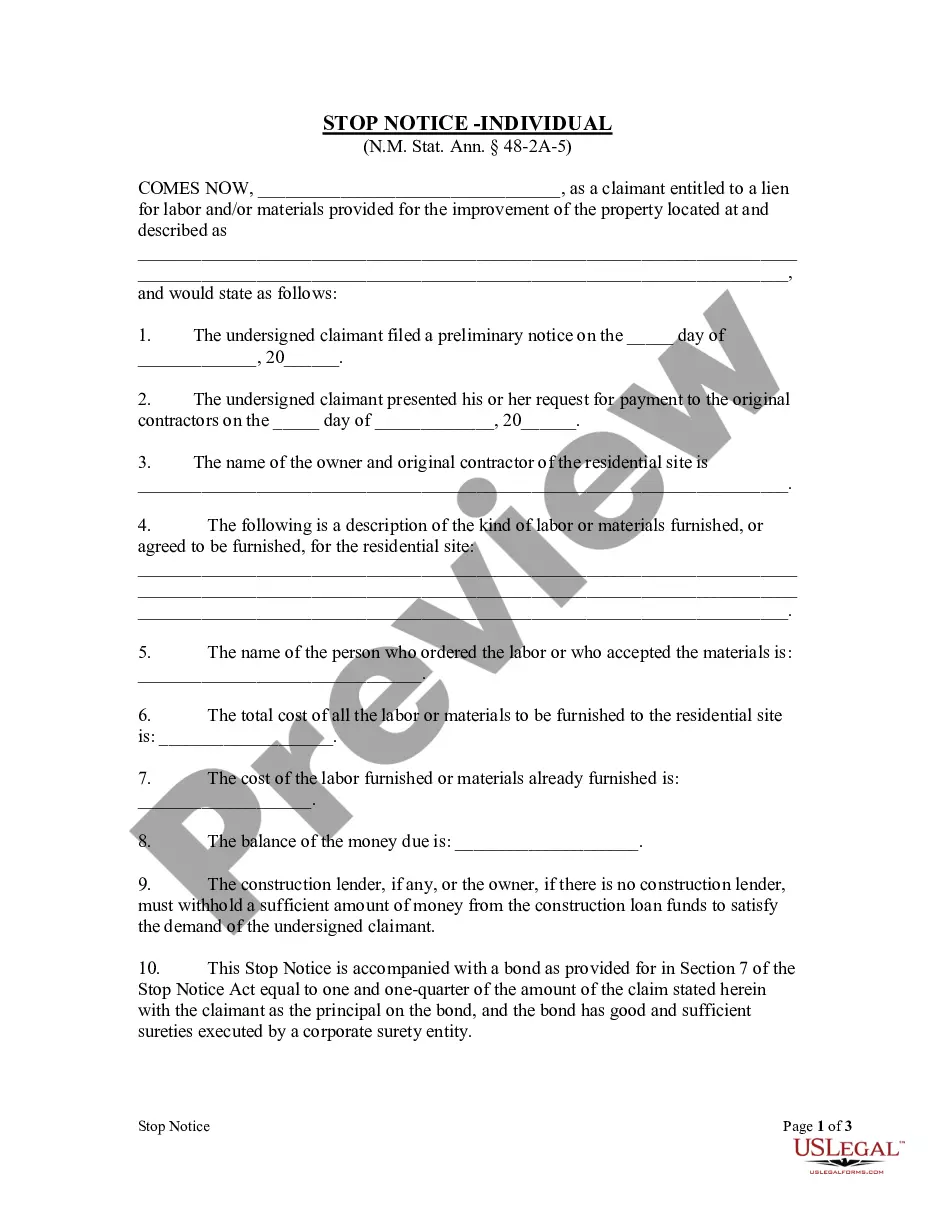
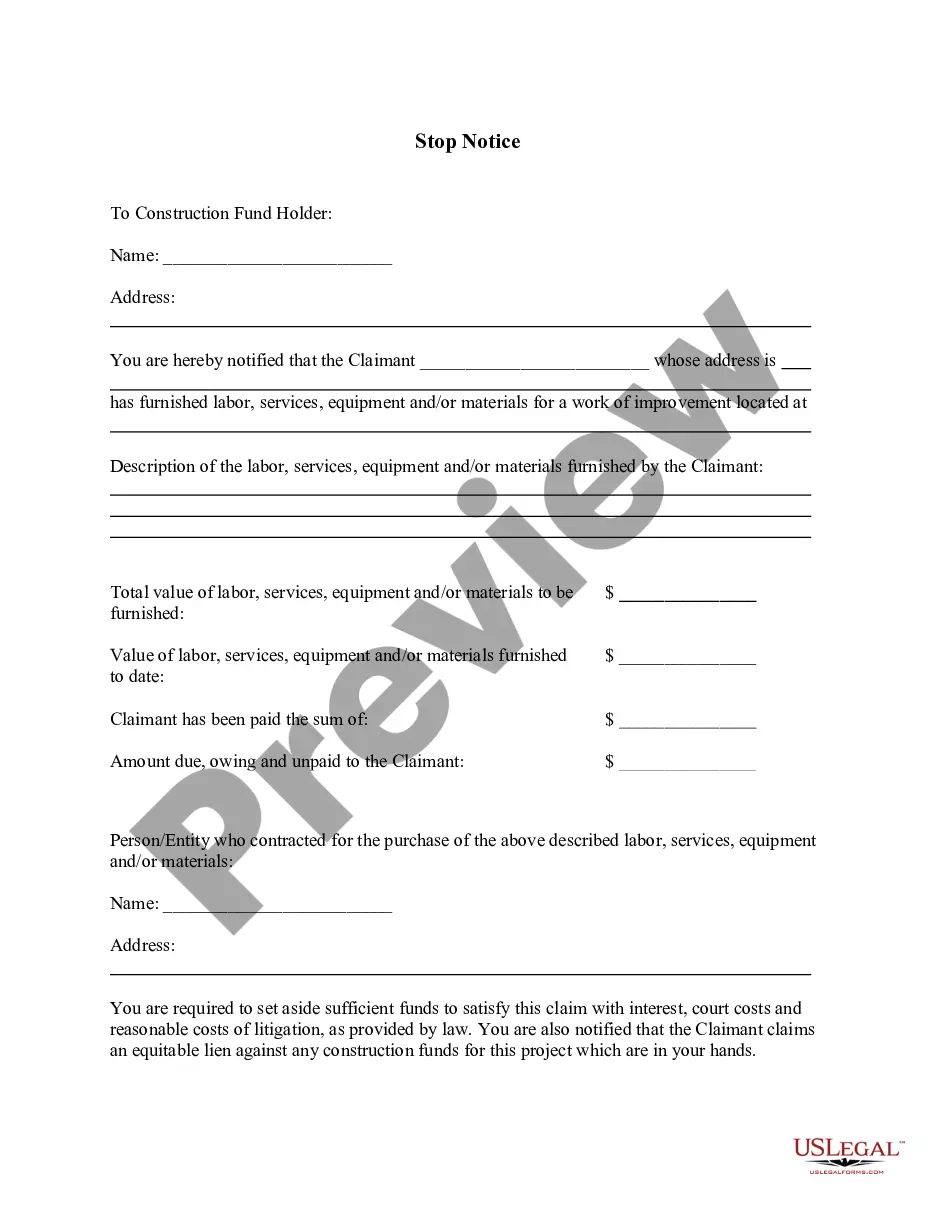
The Stop Notice - Corporation is a legal document that allows a corporate lien claimant to formally notify an owner or construction lender about an unpaid claim for labor and/or materials provided for property improvements. This form is essential for protecting a contractor's right to receive payment by ensuring that the owner or lender withholds sufficient funds. Unlike similar forms, the Stop Notice specifically caters to corporations and outlines required dates, total costs, and a demand for payment, which helps safeguard the claimants' financial interests in construction projects.
Form components explained
- Claimant information, including the corporation's name and representative.
- Details on the preliminary notice filing date and payment request date.
- Name of the property owner and original contractor involved.
- Description of labor or materials provided to the property.
- Total cost of labor or materials, along with costs already incurred.
- A statement requiring the owner or lender to withhold funds to satisfy the claim.
- Details regarding a bond accompanying the Stop Notice, if applicable.
When to use this form
This form should be used when a corporation has provided labor or materials for property improvements but has not received payment. It serves as a notification to the owner or construction lender that the claimant intends to enforce a lien for the unpaid services or goods. Typical scenarios include commercial or residential construction projects where the contractor has not been compensated as agreed, and it is crucial to secure payment before the funds are disbursed or the project is completed.
Intended users of this form
This form is intended for:
- Corporations that provide labor or materials for construction projects.
- Contractors and suppliers who are pursuing payment for their services.
- Legal representatives acting on behalf of corporate claimants.
Completing this form step by step
- Identify the corporate claimant and entering the representative's name.
- Provide the address and legal description of the property involved.
- Fill in the dates of the preliminary notice and payment request.
- Describe the labor or materials provided in detail.
- Calculate and enter the total cost, costs already incurred, and the balance due.
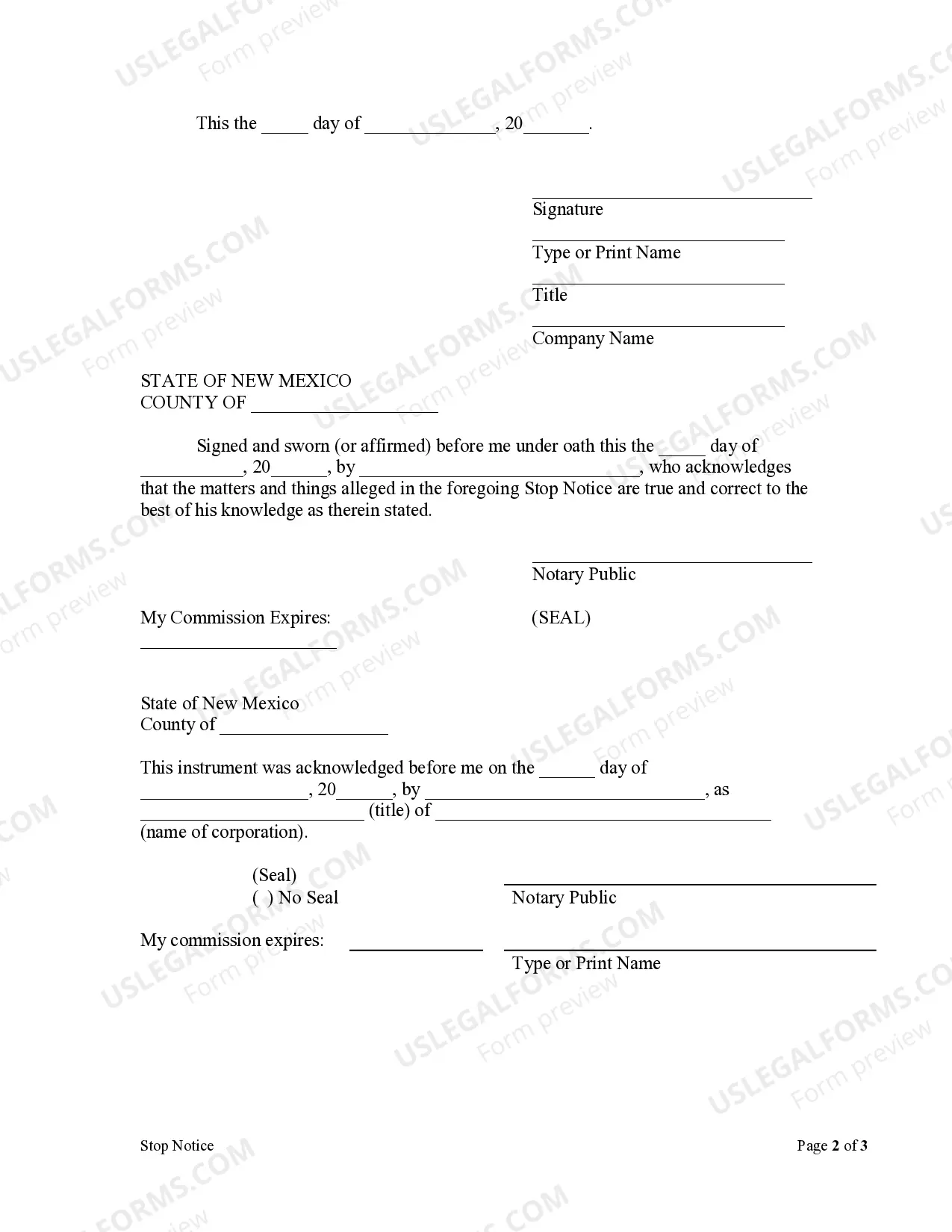
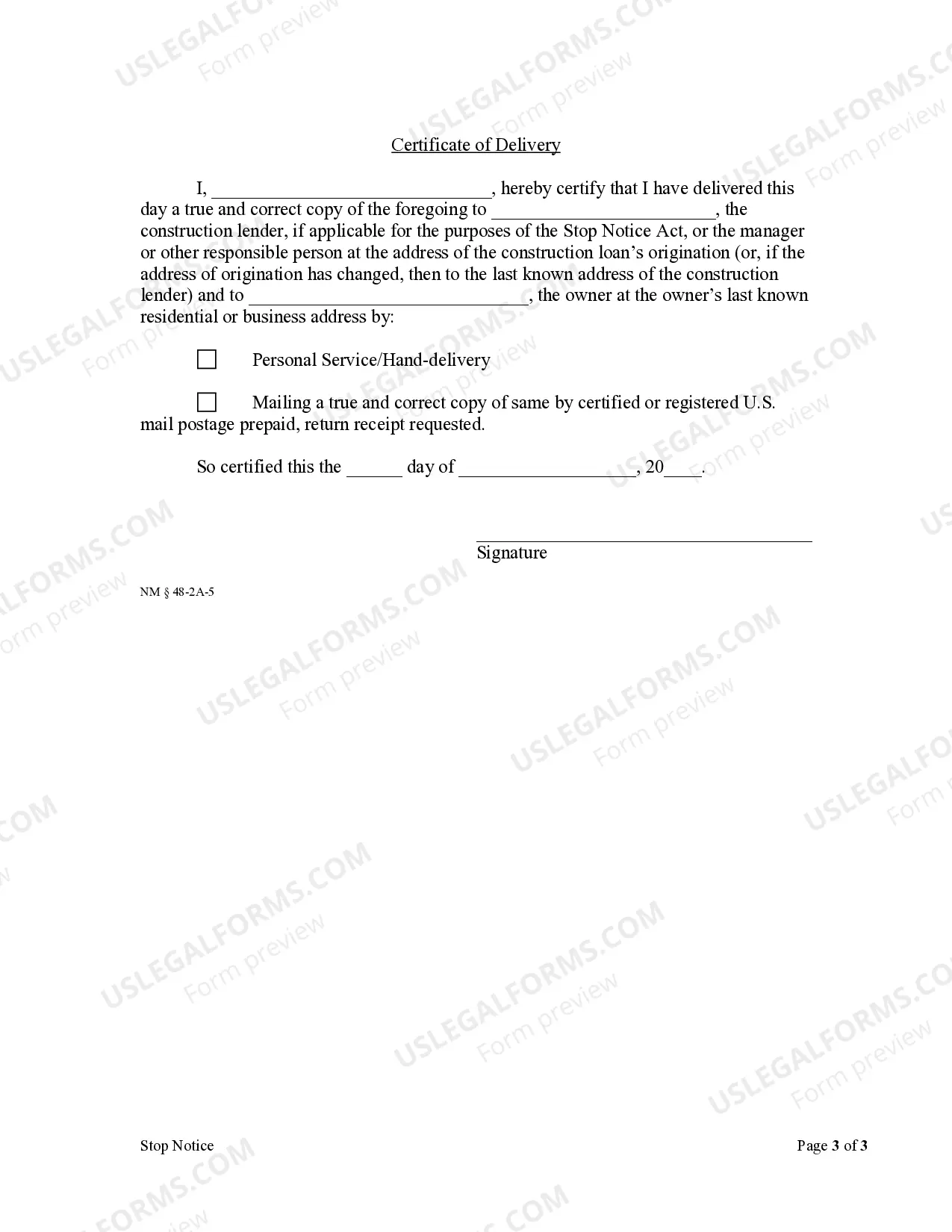
- Sign and date the form, and have it notarized as required.
Does this form need to be notarized?
This form needs to be notarized to ensure legal validity. US Legal Forms provides secure online notarization powered by Notarize, allowing you to complete the process through a verified video call, available anytime.
Get your form ready online
Our built-in tools help you complete, sign, share, and store your documents in one place.
Make edits, fill in missing information, and update formatting in US Legal Forms—just like you would in MS Word.
Download a copy, print it, send it by email, or mail it via USPS—whatever works best for your next step.
Sign and collect signatures with our SignNow integration. Send to multiple recipients, set reminders, and more. Go Premium to unlock E-Sign.
If this form requires notarization, complete it online through a secure video call—no need to meet a notary in person or wait for an appointment.
We protect your documents and personal data by following strict security and privacy standards.

Make edits, fill in missing information, and update formatting in US Legal Forms—just like you would in MS Word.

Download a copy, print it, send it by email, or mail it via USPS—whatever works best for your next step.

Sign and collect signatures with our SignNow integration. Send to multiple recipients, set reminders, and more. Go Premium to unlock E-Sign.

If this form requires notarization, complete it online through a secure video call—no need to meet a notary in person or wait for an appointment.

We protect your documents and personal data by following strict security and privacy standards.
Common mistakes to avoid
- Failing to file the Stop Notice within the timeline specified by law.
- Not providing complete or accurate descriptions of the labor or materials provided.
- Omitting vital dates related to preliminary notices and payment requests.
- Forgetting to include required signatures and notarization.
Benefits of completing this form online
- Convenient access to a customized Stop Notice template.
- Editable documents that allow for easy adjustments based on specific project details.
- Reliable and secure online storage for your completed forms.
Legal use & context
- This form serves as an official notification to secure lien rights under state law.
- It is enforceable in court if disputes arise regarding unpaid claims.
- Proper completion and filing are essential for maintaining the legal rights of the claimant.
What to keep in mind
- The Stop Notice - Corporation is crucial for corporations seeking payment for services rendered in construction.
- Timeliness and accuracy in filing are vital to protect lien rights.
- Notarization is required to ensure the form's legal validity.
Looking for another form?


Form popularity
FAQ
Renters' Rights in New Mexico Landlord/tenant laws are in place to protect the rights of tenants in New Mexico and every other state. These rights cover discrimination, security deposits, rent disclosure, and notice before landlord entry. Some minor variances can exist between states, however.
A landlord cannot legally evict you without a court order, whether or not you have a lease.) How long does it take for a landlord to evict a tenant? A landlord can evict a tenant only by going through a formal eviction proceeding, which can take a few weeks from start to finish.
The notice must state that the tenant has three days to either pay the rent or the lease will terminate and the landlord will file an eviction lawsuit (see N.M. Stat. Ann. § 47-8-33(D)). If the tenant does not pay the rent within the three-day time period, the landlord can then proceed with the eviction.
The notice must state that the tenant has three days to either pay the rent or the lease will terminate and the landlord will file an eviction lawsuit (see N.M. Stat. Ann. § 47-8-33(D)). If the tenant does not pay the rent within the three-day time period, the landlord can then proceed with the eviction.
Landlord & Tenant Resources 1-800-340-9771.
3-Day Notice. 7-Day Notice. 30-Day Notice. Petition by Owner for Restitution. Service of the Eviction Packet. Answer and Counterclaims to a New Mexico Eviction Suit. Trial and Defenses. Order and Writ of Restitution.
Landlord must give notice to terminate the tenancy: Month-to-month: 30 days. Week-to-week: seven days. Eviction: three days for failure to pay rent; seven days for noncompliance with rental agreement.