New Mexico Permanent Public Water and Sewer Easement
What is this form?
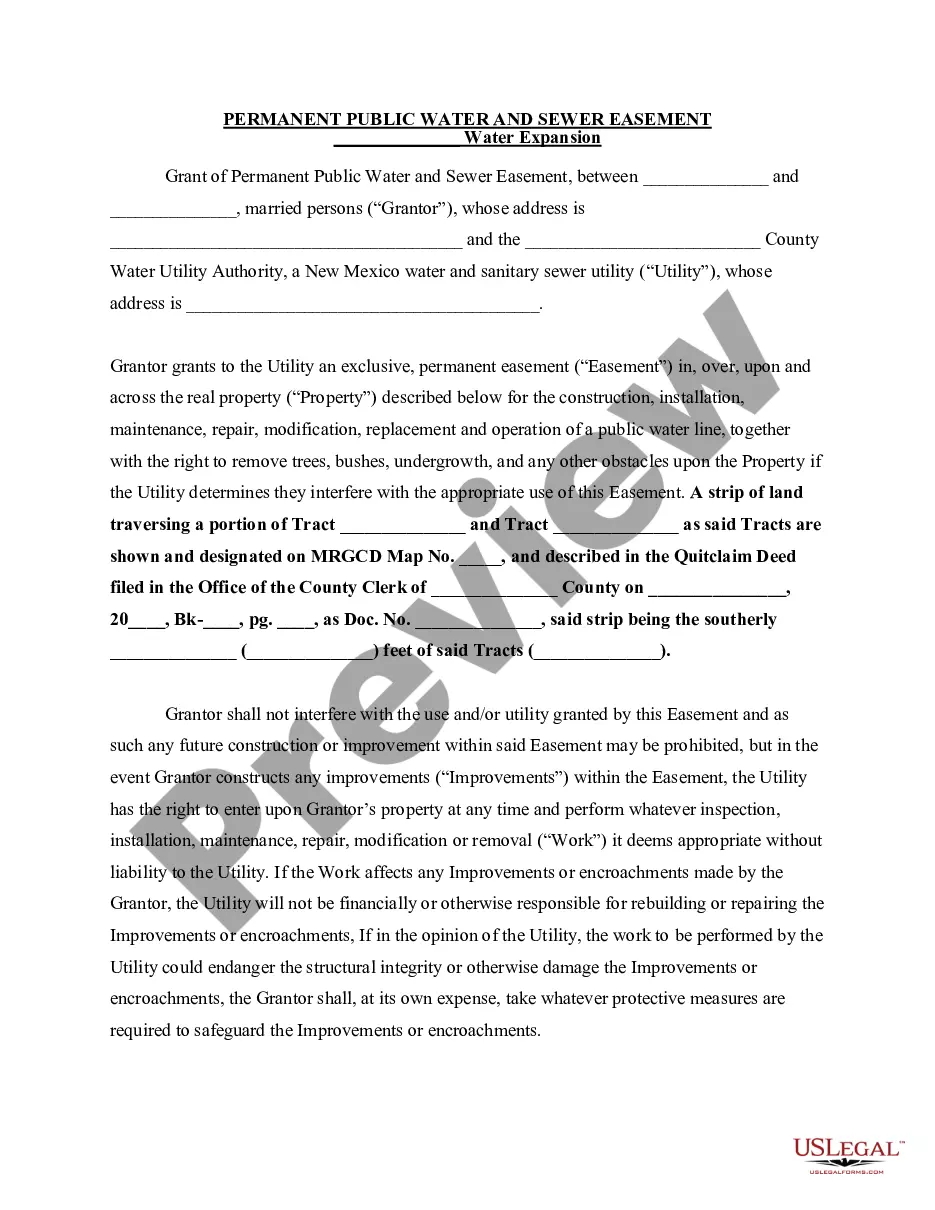
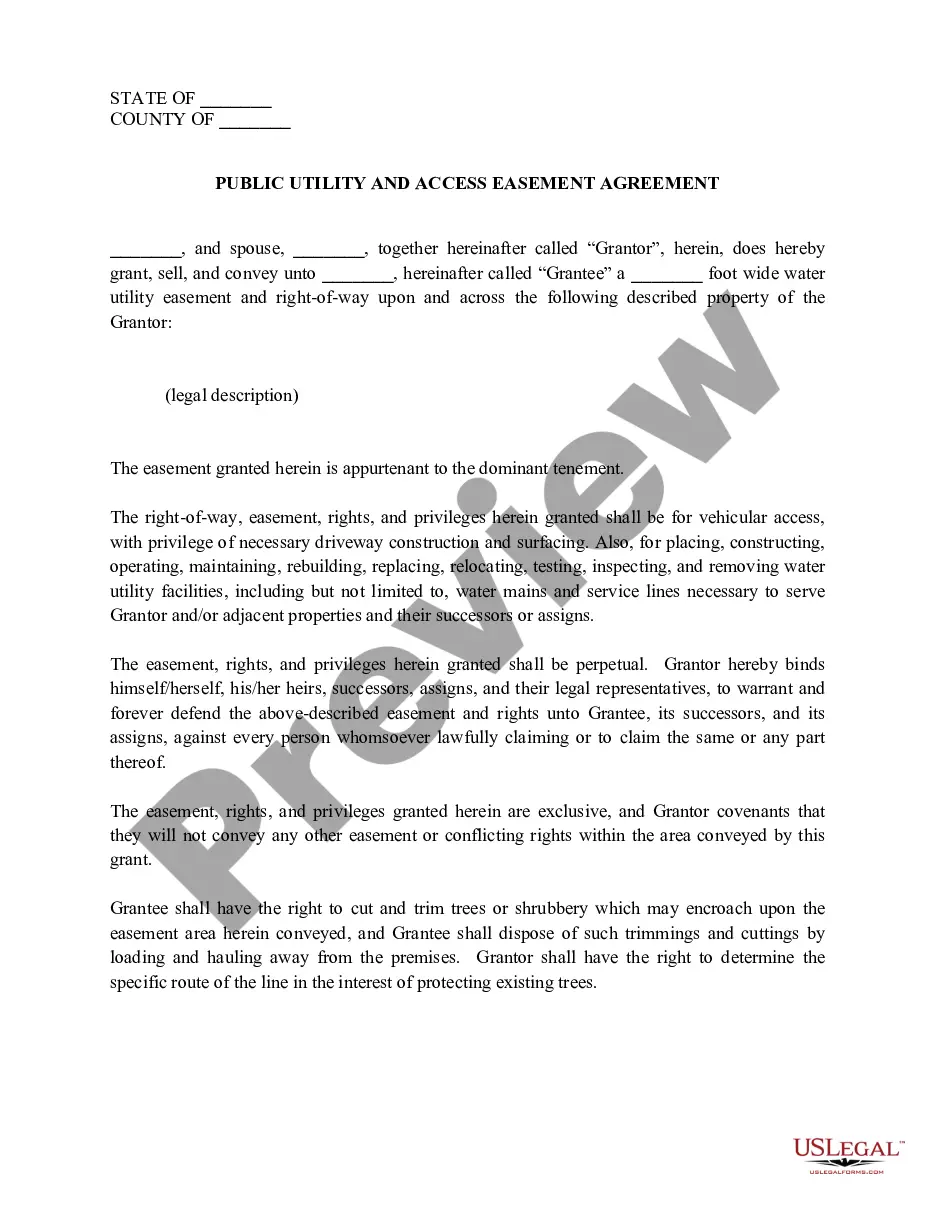
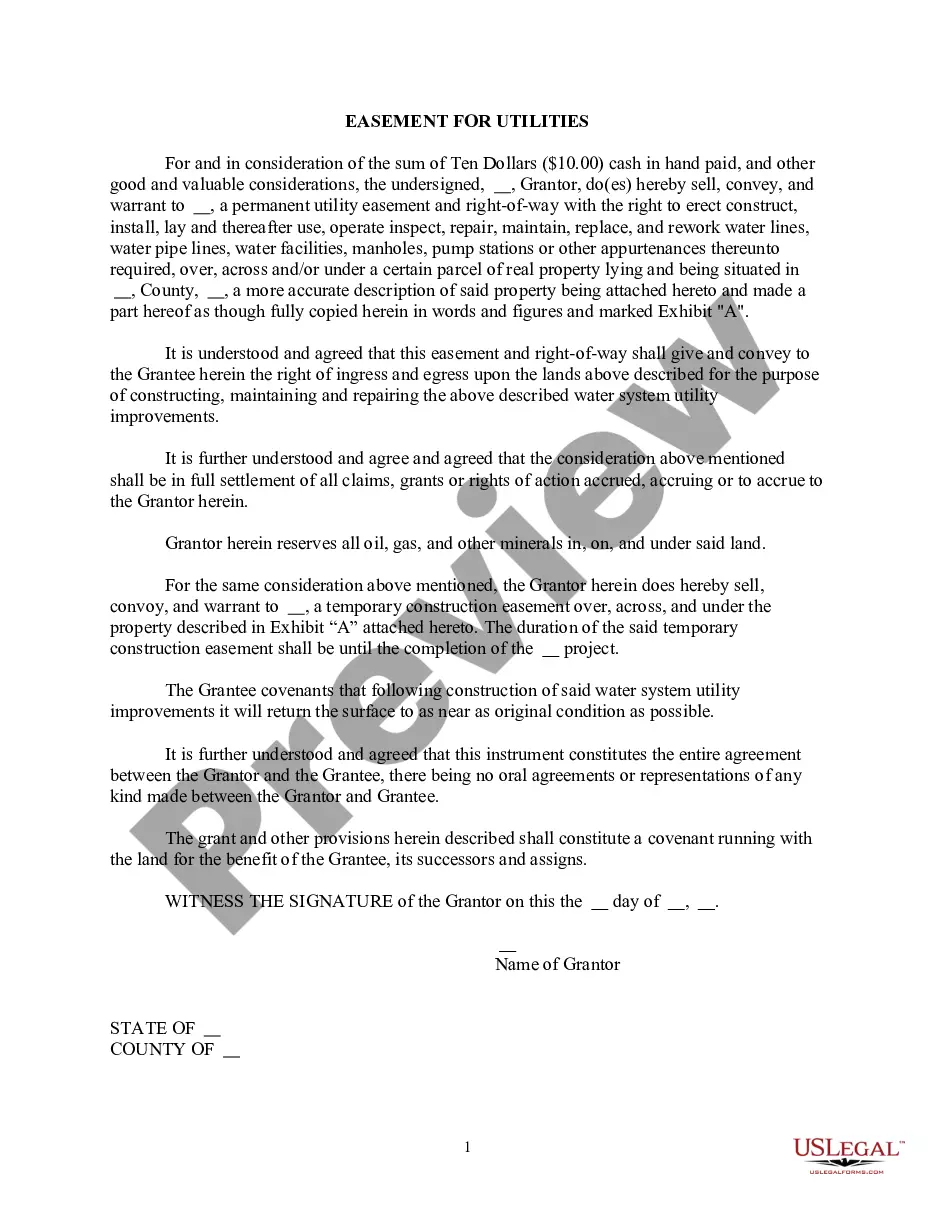
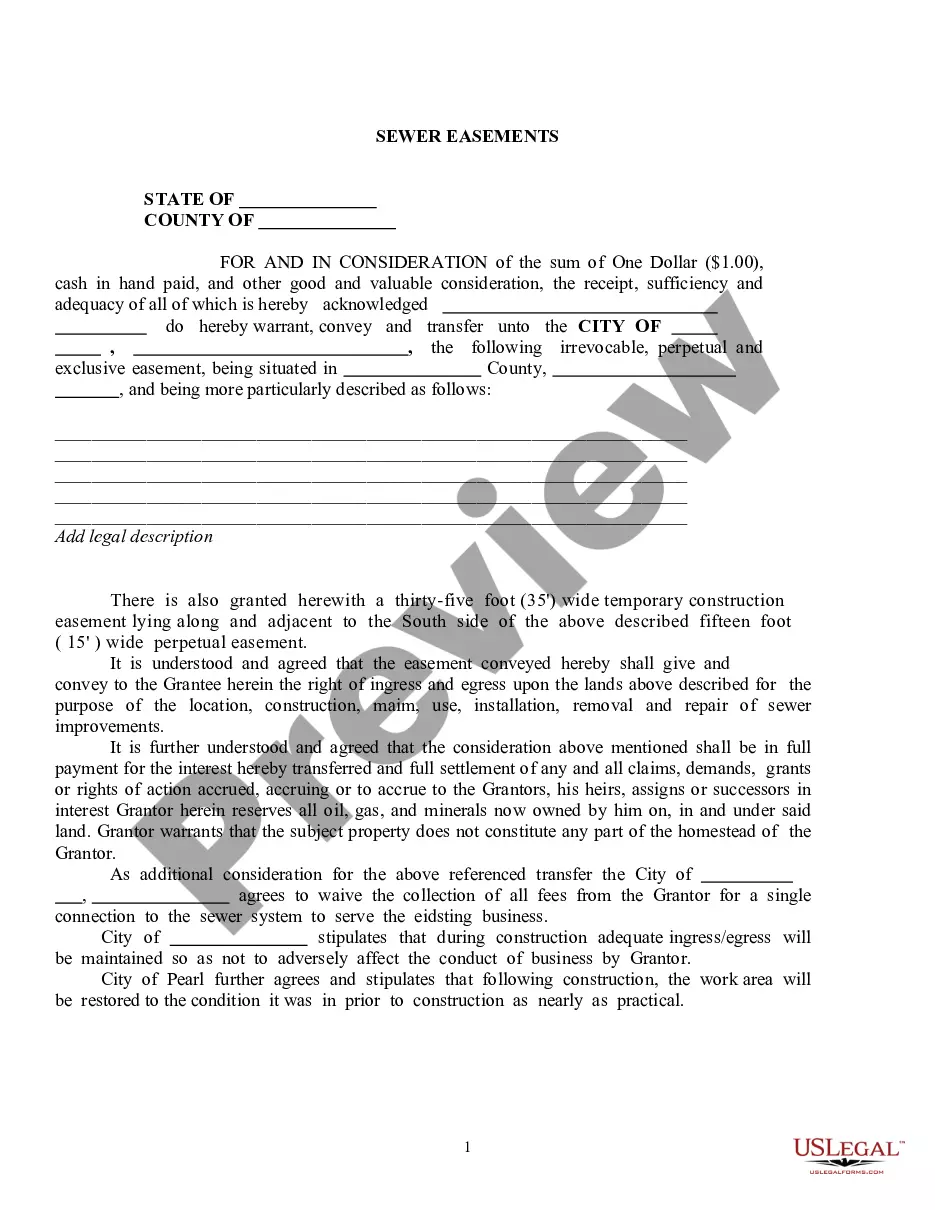
The Permanent Public Water and Sewer Easement form is a legal document that grants a water utility the right to access and use a specific portion of land for public water and underground sewer lines. This easement ensures that the utility can construct, maintain, and operate necessary infrastructure without interference from the property owner. Unlike simple access agreements, this form provides a perpetual right, meaning the utility can maintain its infrastructure indefinitely, making it a crucial tool for both property owners and utility companies.
Main sections of this form
- Identification of the Grantor (property owner) and the Utility (water authority).
- Defined area of the easement, including property description and boundaries.
- Rights granted to the Utility, including construction, maintenance, and the removal of obstacles.
- Obligations of the Grantor regarding non-interference with the easement.
- Provisions for liability and damage to any improvements made by the Grantor.
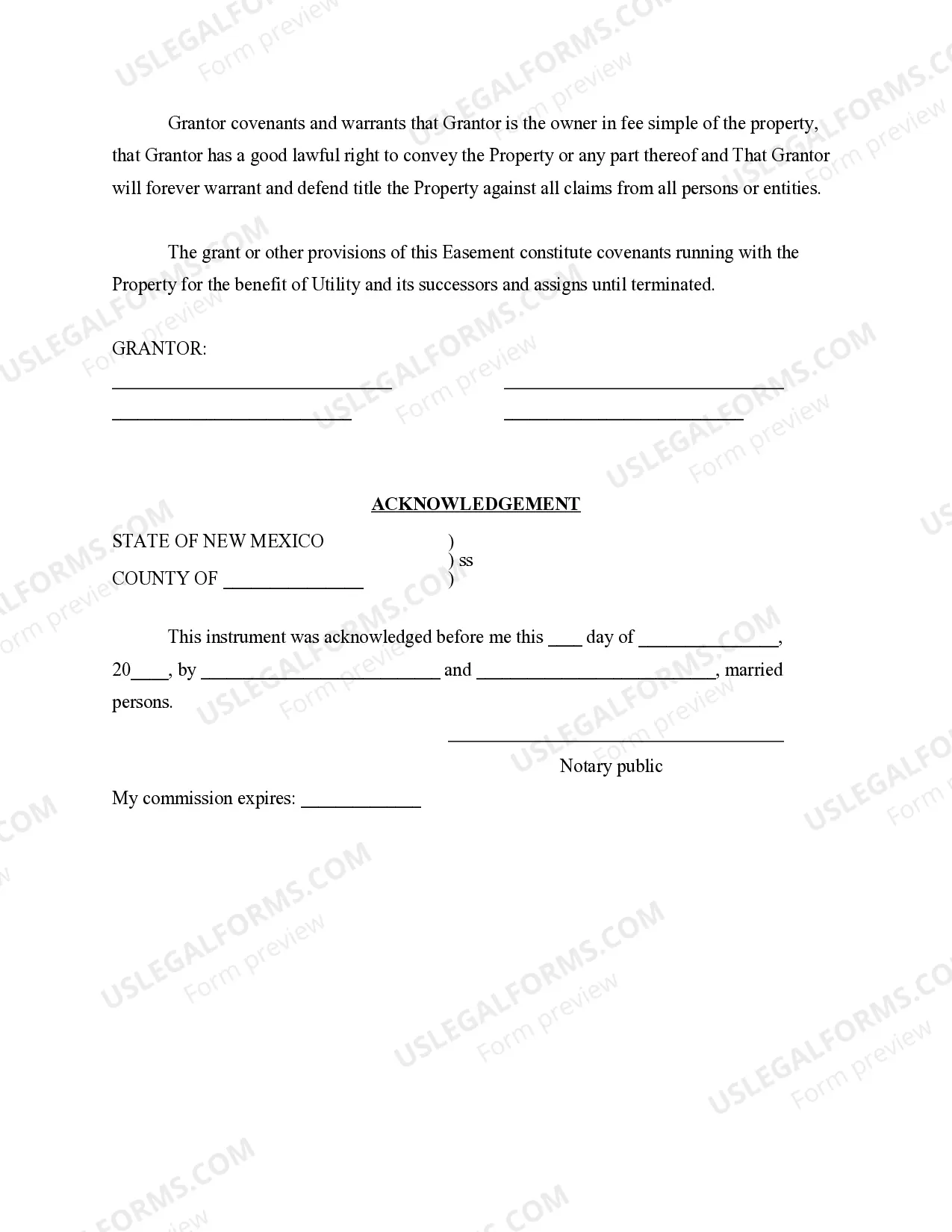
- Notarization section to validate the agreement.
When this form is needed
This form should be used when a water utility needs to install, maintain, or operate public water and sewer lines that cross private property. It is essential in situations where infrastructure expansion is necessary, and the utility requires continual access. Property owners may also use this form to formalize any existing verbal agreements or arrangements with utility providers for ingress and egress rights to their property for these purposes.
Who needs this form
- Property owners who are granting an easement to a water utility.
- Water utility authorities needing a legal framework for ongoing access to maintain infrastructure.
- Legal representatives of either party looking to document easement terms.
- Homeowners or businesses that are involved in development projects near existing utilities.
Completing this form step by step
- Identify the parties involved by filling in the names of the Grantor and the Utility.
- Describe the property by providing the relevant tract numbers and legal descriptions as indicated.
- Specify the rights granted to the utility regarding construction and maintenance of water and sewer lines.
- Provide the date of the acknowledgment and ensure that it is signed by a notary public.
- Ensure all necessary signatures are obtained from the Grantor and the Utility representative.
Notarization guidance
Yes, this form must be notarized to be legally valid. US Legal Forms offers integrated online notarization services available 24/7 through secure video calls, ensuring a convenient and legally equivalent process without the need for travel.
Get your form ready online
Our built-in tools help you complete, sign, share, and store your documents in one place.
Make edits, fill in missing information, and update formatting in US Legal Forms—just like you would in MS Word.
Download a copy, print it, send it by email, or mail it via USPS—whatever works best for your next step.
Sign and collect signatures with our SignNow integration. Send to multiple recipients, set reminders, and more. Go Premium to unlock E-Sign.
If this form requires notarization, complete it online through a secure video call—no need to meet a notary in person or wait for an appointment.
We protect your documents and personal data by following strict security and privacy standards.

Make edits, fill in missing information, and update formatting in US Legal Forms—just like you would in MS Word.

Download a copy, print it, send it by email, or mail it via USPS—whatever works best for your next step.

Sign and collect signatures with our SignNow integration. Send to multiple recipients, set reminders, and more. Go Premium to unlock E-Sign.

If this form requires notarization, complete it online through a secure video call—no need to meet a notary in person or wait for an appointment.

We protect your documents and personal data by following strict security and privacy standards.
Typical mistakes to avoid
- Failing to provide accurate property descriptions, which can lead to disputes later.
- Not obtaining notarization, which could invalidate the easement.
- Overlooking the inclusion of utility rights, which may result in limitations on required access.
- Neglecting to clarify responsibilities for damages to improvements.
Benefits of completing this form online
- Easy access to legally drafted templates that save time and reduce errors.
- Editable options allow customization to meet specific circumstances.
- Reliable and formatted according to legal standards required in New Mexico.
- Convenient online access enhances usability for property owners and utilities.
Quick recap
- A Permanent Public Water and Sewer Easement is essential for utility access and maintenance.
- Complete accuracy is critical when defining property boundaries and rights.
- Notarization is required for the form's legal enforceability.
Looking for another form?
Form popularity
FAQ
An easement is a "nonpossessory" property interest that allows the holder of the easement to have a right of way or use property that they do not own or possess. An easement doesn't allow the easement holder to occupy the land or to exclude others from the land unless they interfere with the easement holder's use.
Easements are not serious issues on the whole. However, they can make a big difference to the potential profitability of a property because of the various building limitations often associated with them.
What are Easements and Rights-of-Way? Easements are nonpossessory interests in real property. More simply, an easement is the right to use another's property for a specific purpose. Rights-of-way are easements that specifically grant the holder the right to travel over another's property.
Benefits the owner of adjacent land. The easement is thus appurtenant to the holder's land. The benefited land is called the dominant tenementThe land that benefits from an easement., and the burdened landthat is, the land subject to the easementis called the servient tenement.
A water easement, specifically, may grant a person access to water sources, water lines, and/or drainage that is on property owned by another person.
When termed as a utility easement, it means a utility company's right to access and control the portion of another person's land that is located near utility facilities and structures (i.e. utility poles, transformers, overhead or underground electrical lines).
So, having an easement on a property may have a permanent outcome on the property with rights of the home owner. But not all easements are bad.If you live in a rural area, you run into bad easement issues more often, typically where the easement was created by a parcel owner next to your land.
An easement is an interest in a real estate property or parcel of land.Essentially this means that someone other than you could have access to the land. This isn't necessarily a bad thing.