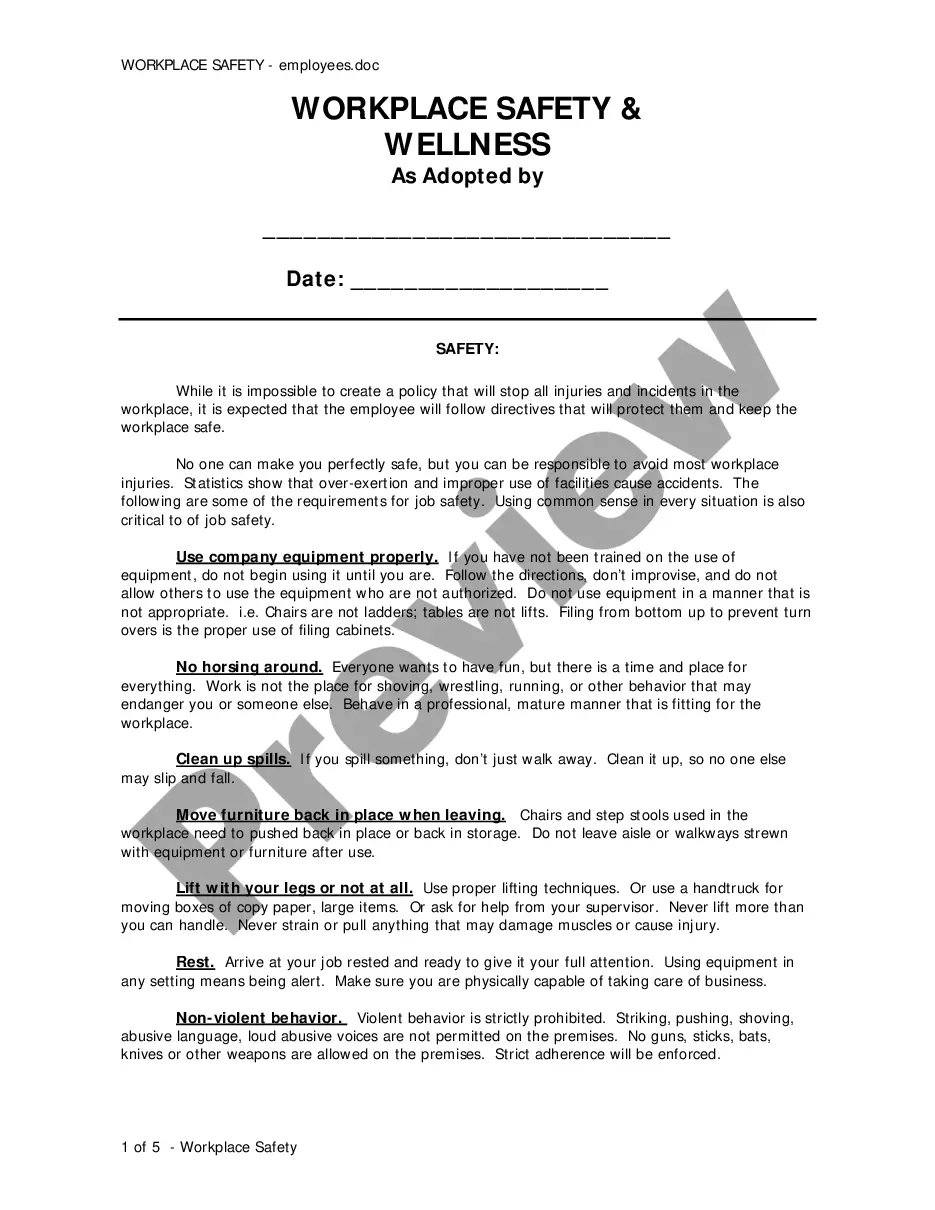
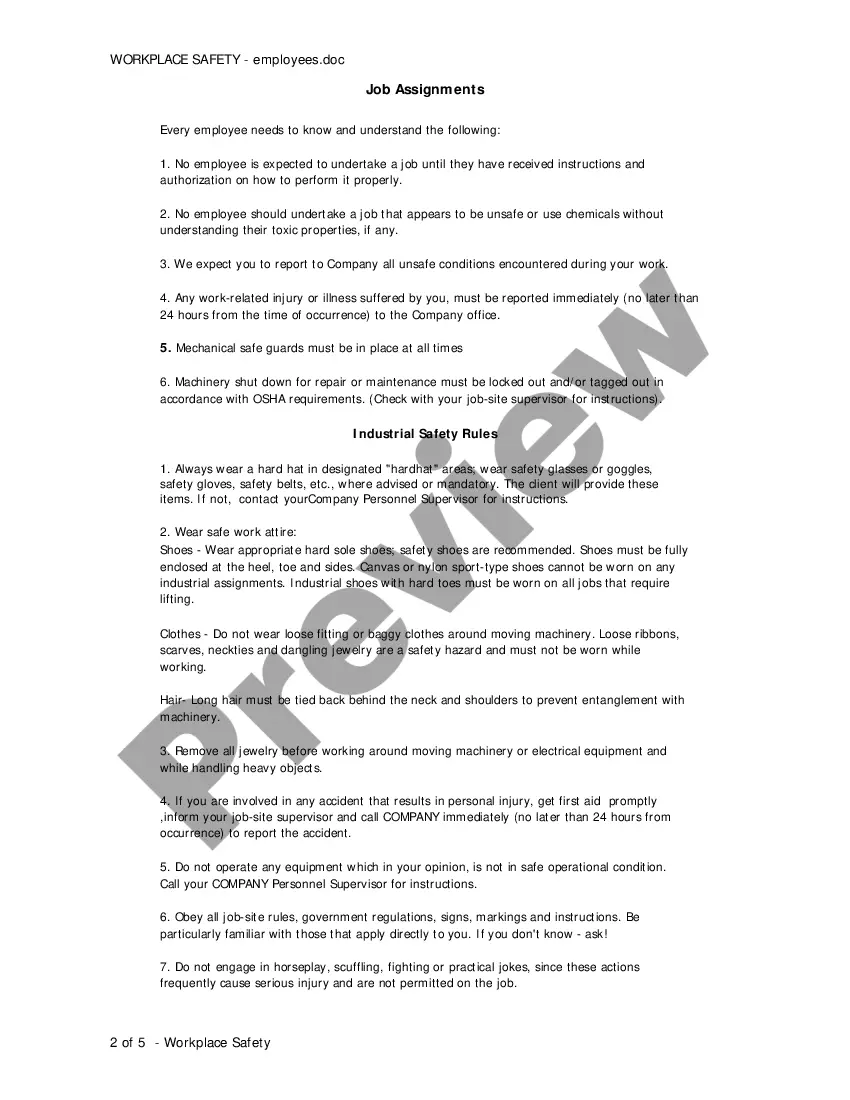
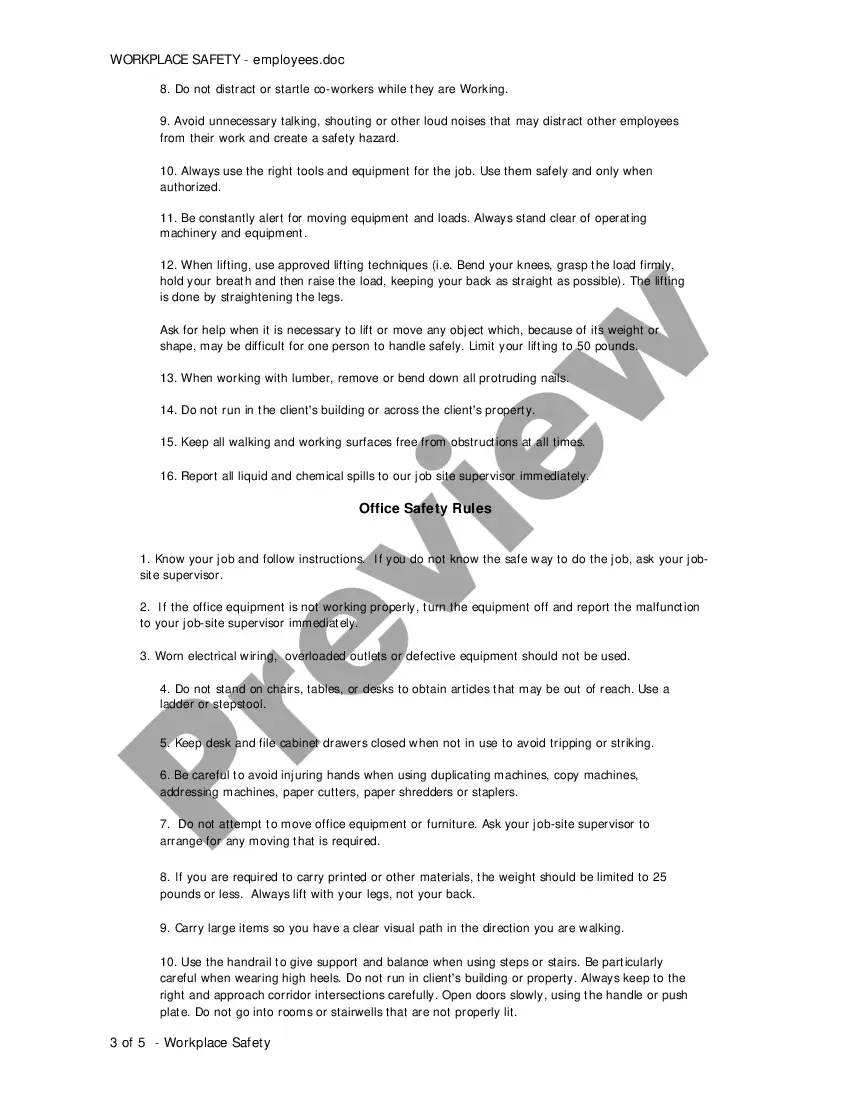
Safety policies for employees.
New Jersey Workplace Safety Policy - For Employee
Instant download
Description
Free preview
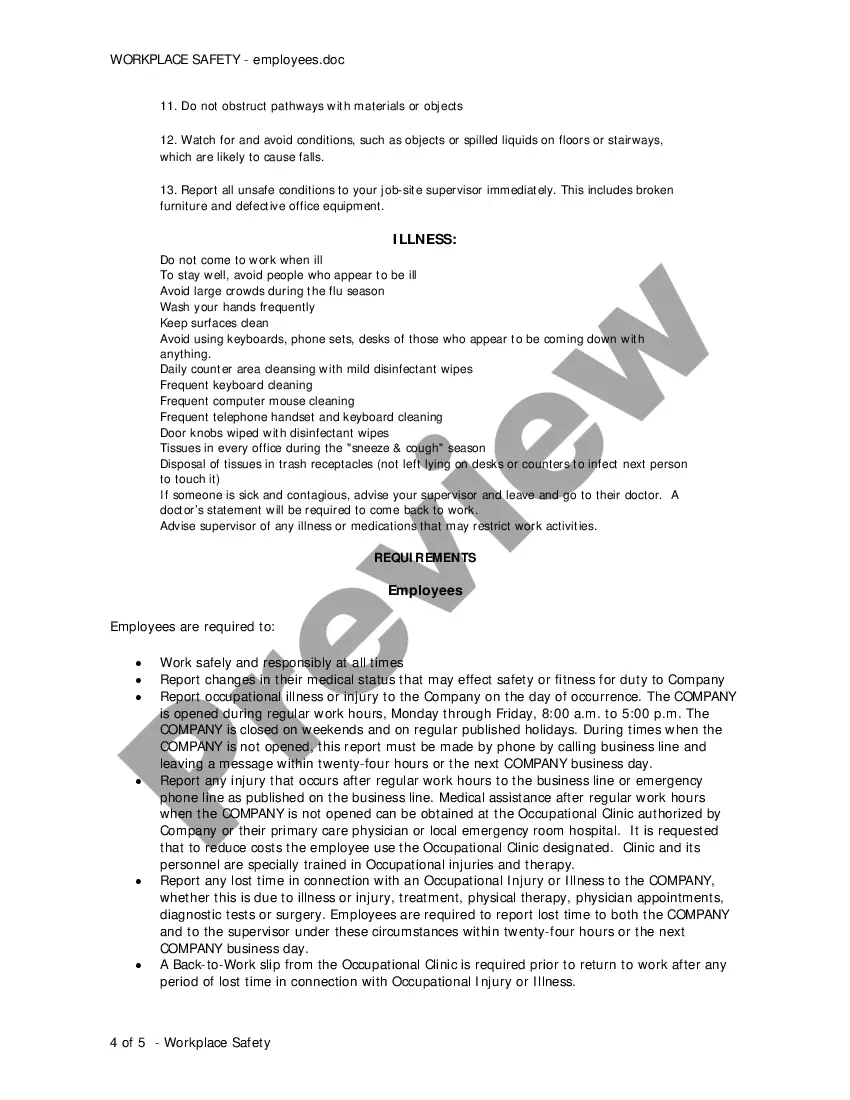
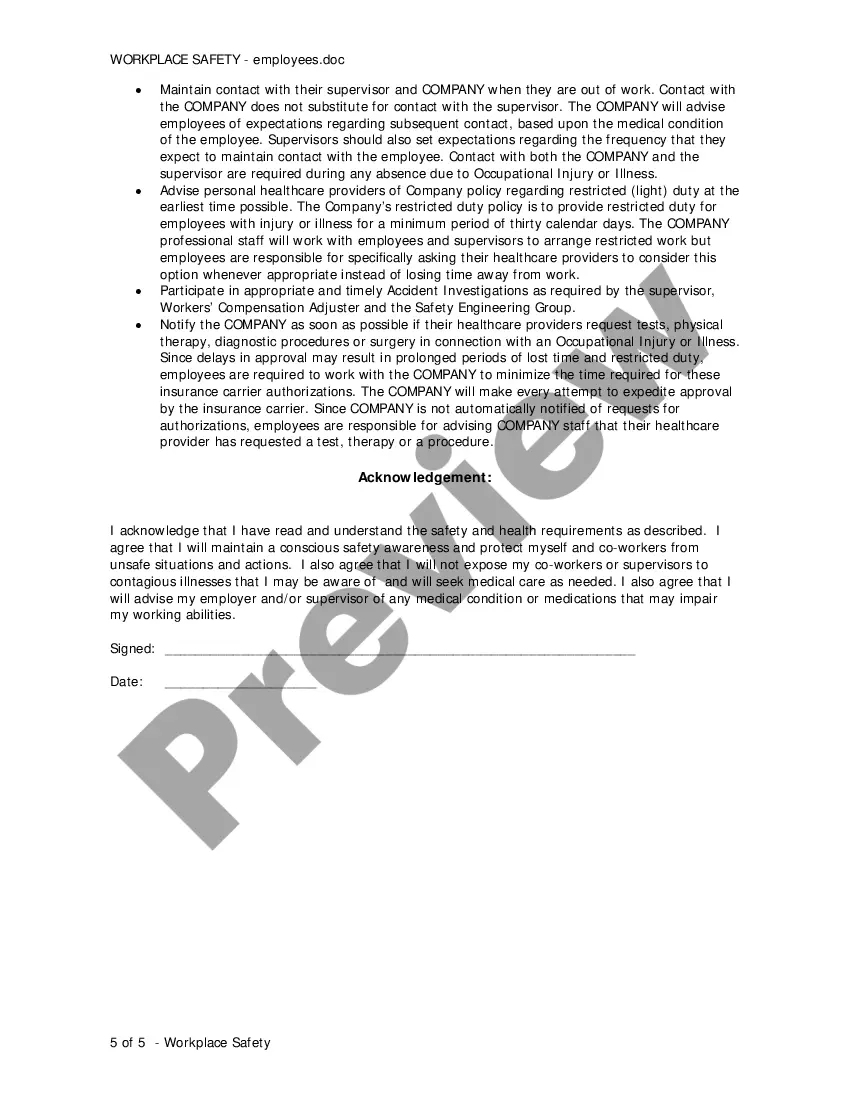
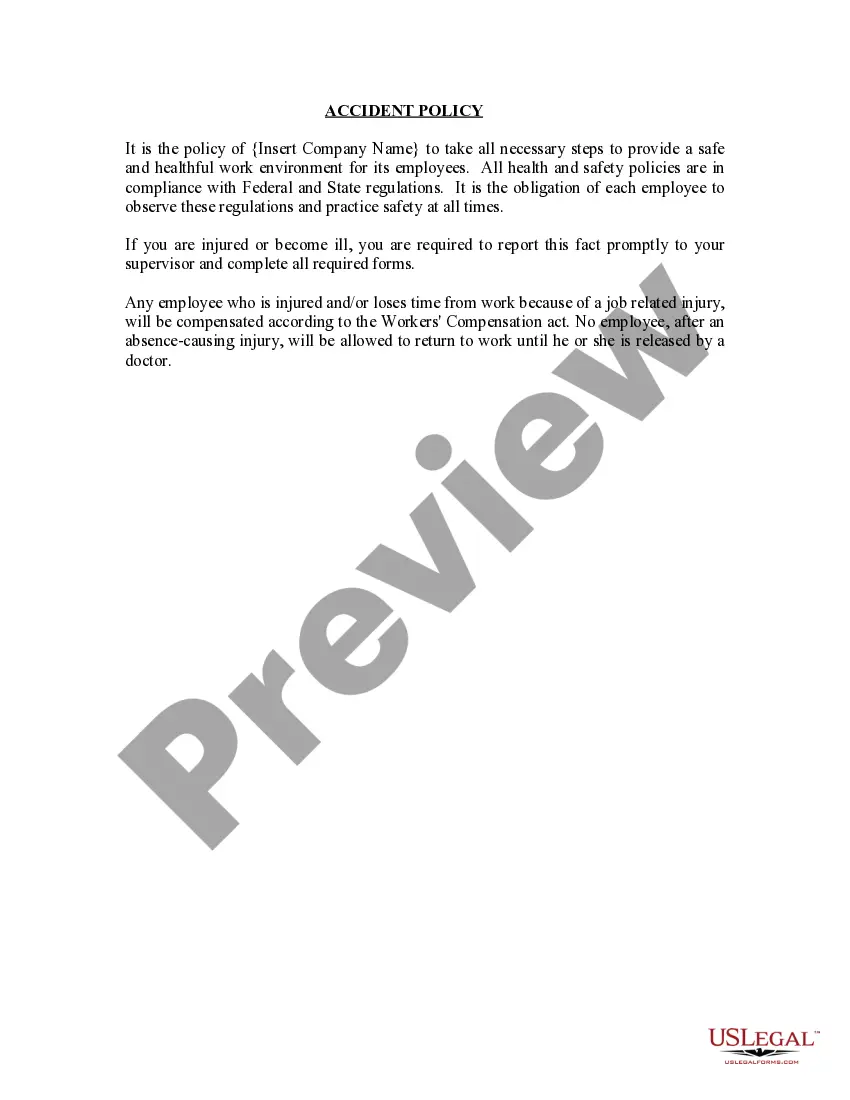
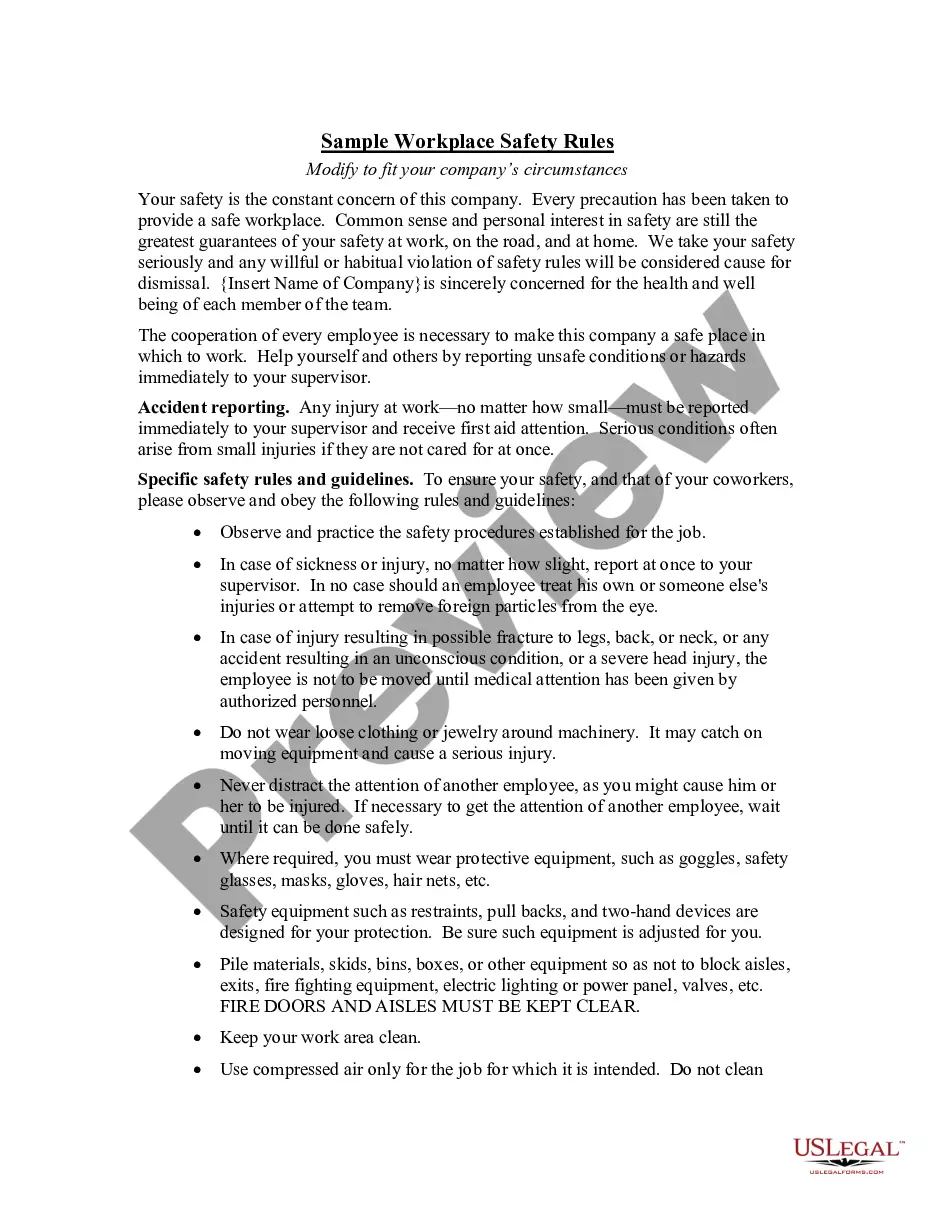
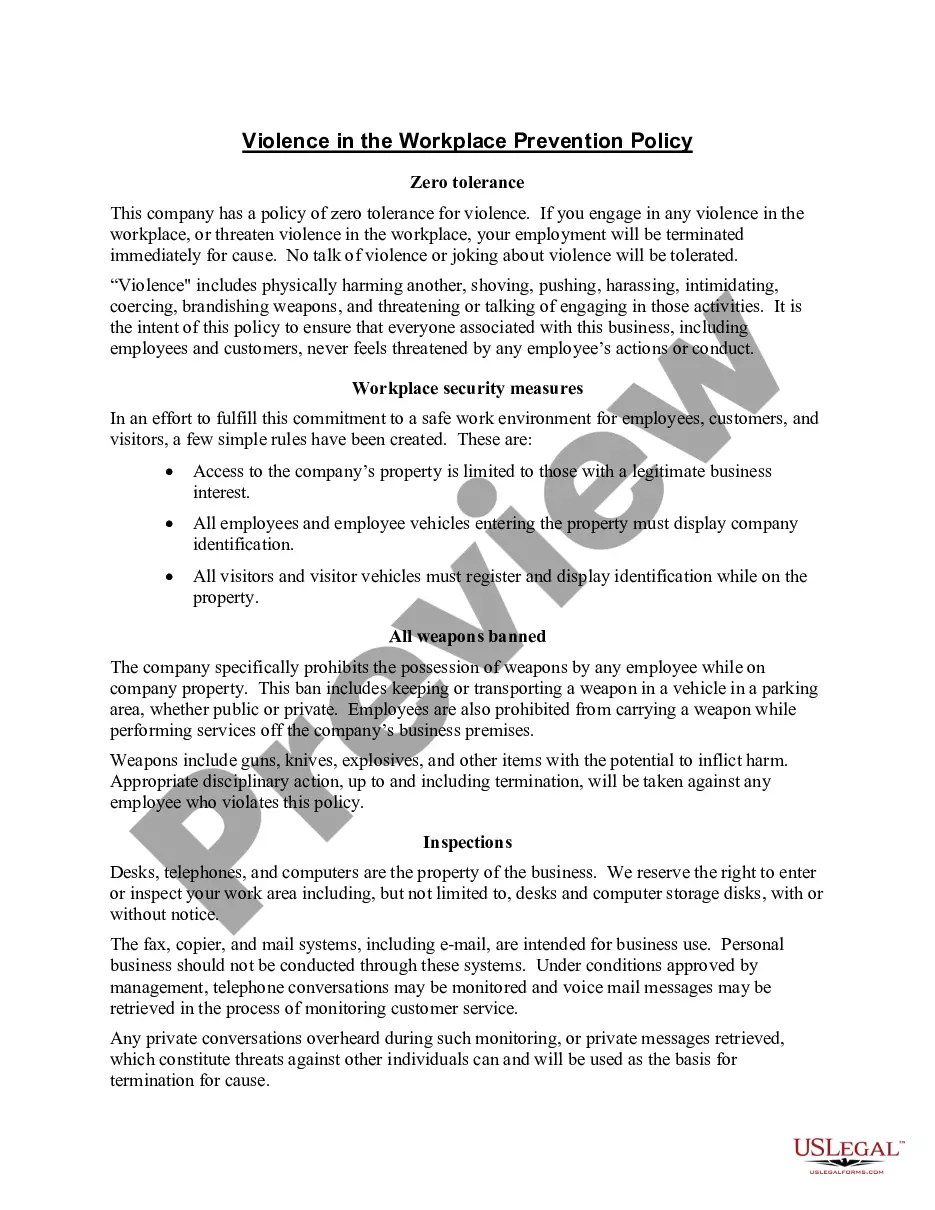
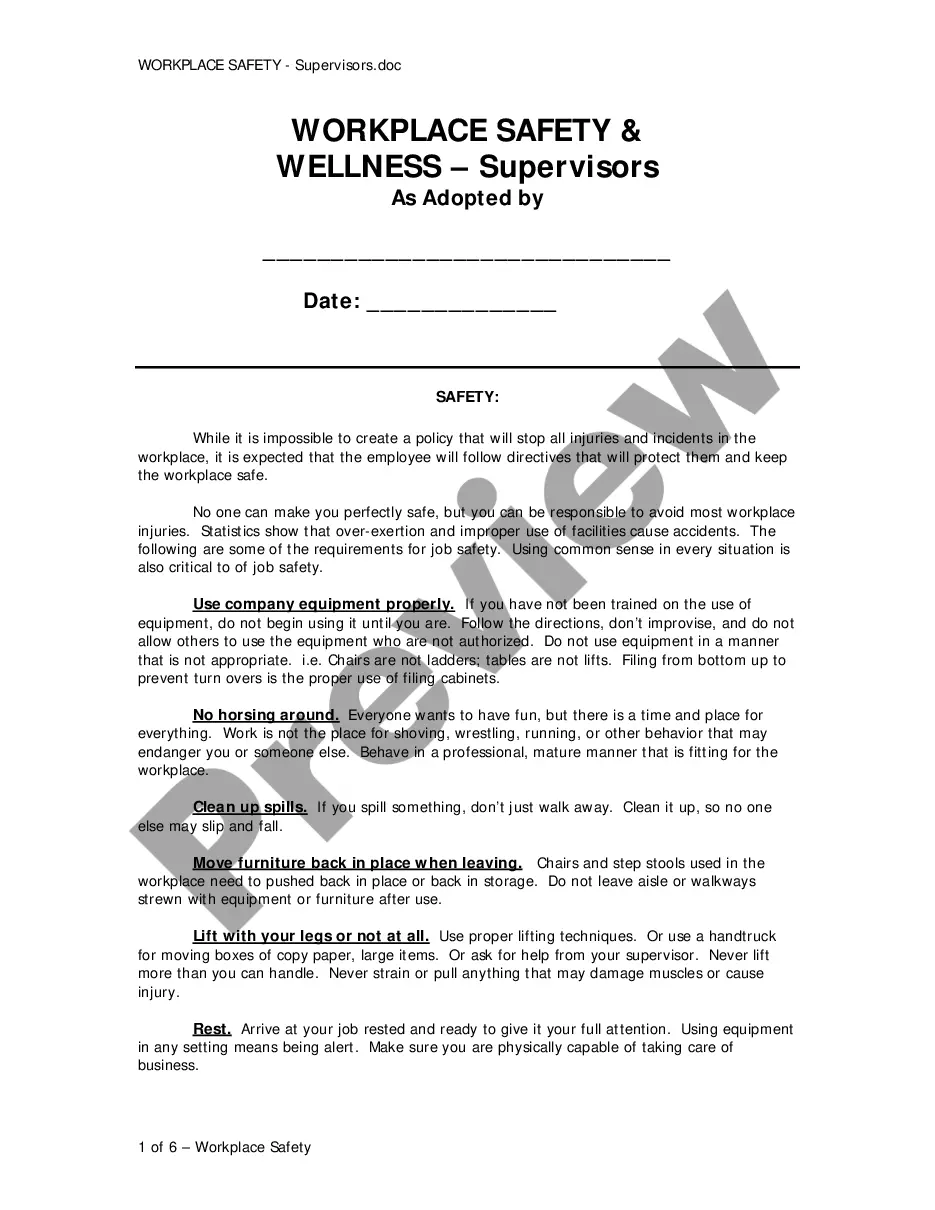

How to fill out Workplace Safety Policy - For Employee?
You might spend numerous hours online trying to locate the legal document template that meets the federal and state requirements you need.
US Legal Forms offers a vast array of legal forms that have been assessed by experts.
You can effortlessly download or print the New Jersey Workplace Safety Policy - For Employee with my help.
If available, use the Review button to examine the document template as well.
- If you already have a US Legal Forms account, you can Log In and click on the Download button.
- After that, you can complete, modify, print, or sign the New Jersey Workplace Safety Policy - For Employee.
- Every legal document template you purchase is yours permanently.
- To obtain another copy of the purchased form, head to the My documents tab and click on the respective button.
- If you are using the US Legal Forms website for the first time, follow the straightforward instructions below.
- First, make sure you have selected the appropriate document template for your county/city of choice.
- Read the form description to confirm you have chosen the correct document.
Form popularity
FAQ
OSHA is the definitive organization responsible for writing the rules that govern employee safety standards in the U.S. They develop regulations based on research, industry input, and best practices. By staying updated on OSHA's rules, employees can effectively follow the New Jersey Workplace Safety Policy - For Employee, ensuring a safer work environment.
Occupational Health and Safety (OHS) is a broader concept that encompasses various policies and practices aimed at ensuring employee safety, while OSHA is the U.S. agency that enforces these specific regulations. OHS can apply globally, focusing on health and risk management, whereas OSHA's regulations are specific to the U.S. Understanding these distinctions can guide you in adhering to your New Jersey Workplace Safety Policy - For Employee.
OSHA is the primary organization responsible for maintaining employee safety in the workplace in the U.S. They create and enforce regulations that help ensure safe working environments. By recognizing OSHA's role, you can better navigate the New Jersey Workplace Safety Policy - For Employee, ensuring your workplace adheres to safety standards.
OSHA stands for the Occupational Safety and Health Administration, while EPA stands for the Environmental Protection Agency. Both organizations play crucial roles in ensuring workplace safety and environmental protection in the United States. Familiarizing yourself with these agencies can enhance your understanding of the New Jersey Workplace Safety Policy - For Employee, ensuring a comprehensive approach to safety.
The Occupational Safety and Health Administration (OSHA) is part of the U.S. Department of Labor, which establishes rules and regulations for workplace safety. These regulations are designed to ensure safe working conditions across various industries. Understanding these regulations can enhance your awareness of the New Jersey Workplace Safety Policy - For Employee, ensuring you know your rights and responsibilities.
To file a complaint with OSHA in New Jersey, you can visit the OSHA website or contact your local OSHA office directly. You can submit a complaint online, by mail, or by phone, and you will need to provide specific details about your workplace safety concerns. Ensuring a safe work environment aligns with the New Jersey Workplace Safety Policy - For Employee, helping protect you and your colleagues.
Employees have the right to work in environments that do not pose health risks, and they can report unsafe conditions without fear of retaliation. These rights are protected under the New Jersey Workplace Safety Policy - For Employee, which fosters a culture of safety and accountability. Understanding these rights empowers employees to advocate for their own safety and well-being in the workplace. Employers must respect these rights to create a productive and safe work environment.
The 7 safety rules typically include wearing protective equipment, reporting unsafe conditions, following proper lifting techniques, keeping work areas clean, using tools correctly, participating in safety training, and knowing emergency procedures. These rules are integral parts of the New Jersey Workplace Safety Policy - For Employee, aiming to create a safe and healthy work environment. By promoting these rules, employers can significantly reduce workplace incidents.
An example of a safety policy would include protocols for using protective gear in hazardous work environments, such as construction sites. This would specify the required equipment, methods of use, and training required for employees. Such practices are essential components of the New Jersey Workplace Safety Policy - For Employee, ensuring that all employees are aware of and adhere to safety standards. Establishing clear safety policies helps prevent accidents and injuries.
The employee safety policy in New Jersey outlines roles and responsibilities related to safety in the workplace. It provides a detailed approach to hazard identification, reporting procedures, and employee rights. This aligns with the New Jersey Workplace Safety Policy - For Employee, aiming to create a safer work environment. Understanding and implementing this policy helps businesses protect their employees and promote a culture of safety.