Resolution to Incorporate ASCAP nonprofit Corporation by Members of Unincorporated Association
Understanding this form
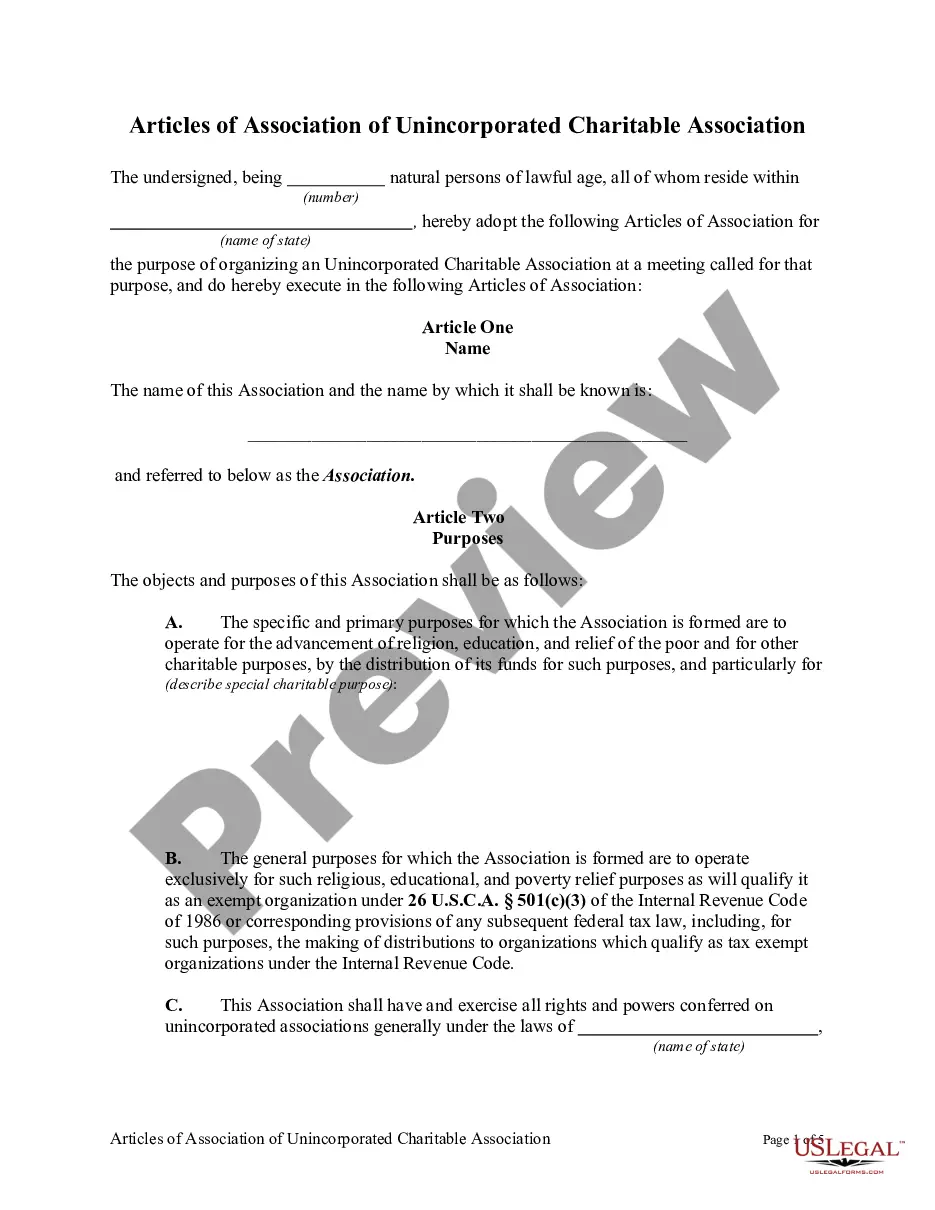
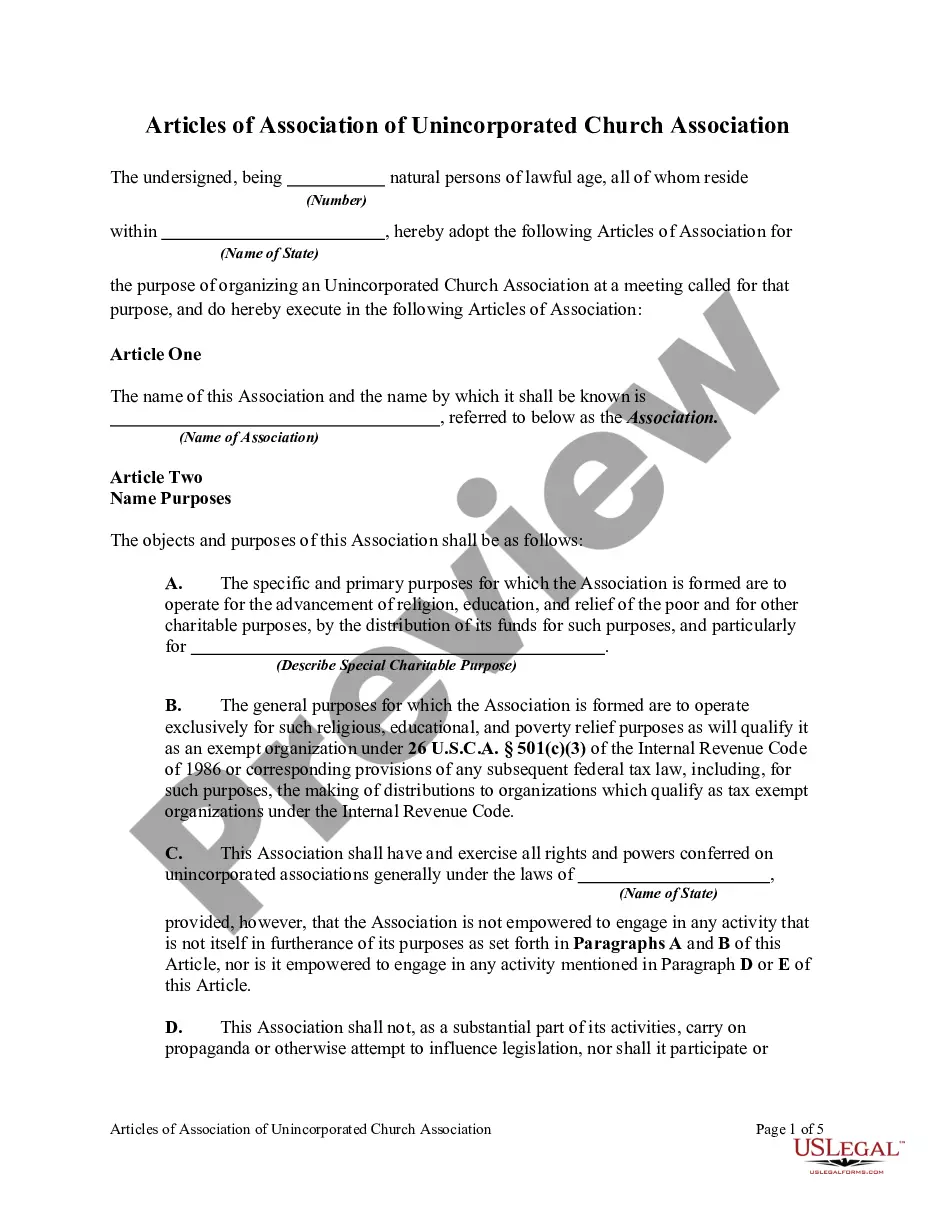
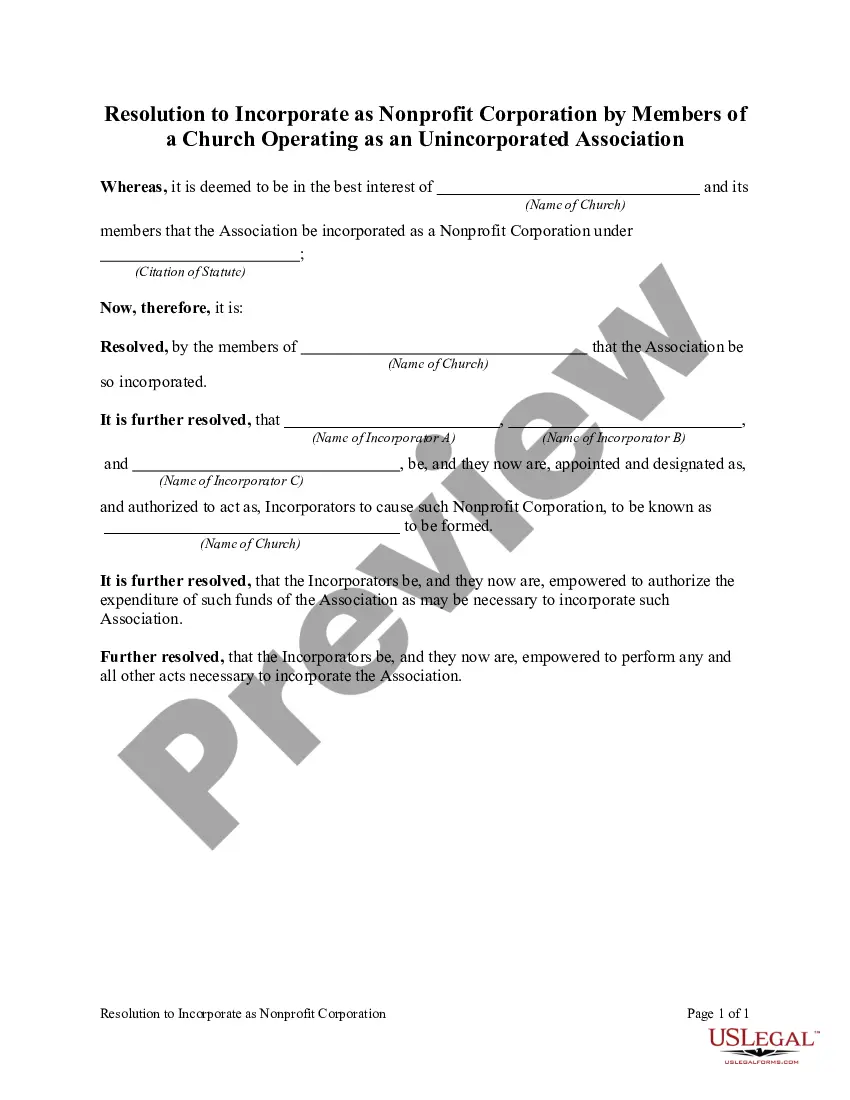
The Resolution to Incorporate ASCAP Nonprofit Corporation by Members of Unincorporated Association is a legal document used to convert an existing unincorporated association into a recognized nonprofit corporation. This form is essential for organizations seeking to obtain nonprofit status, which provides tax benefits and the ability to solicit donations. Unlike for-profit corporations, nonprofit corporations must follow specific procedures and file additional documentation to gain legal recognition.
Main sections of this form
- Statement of intent to form a nonprofit corporation.
- Name and purpose of the organization.
- Details of the members endorsing the resolution.
- Authorization for designated individuals to file on behalf of the corporation.
When to use this document
This form is used when a group operating as an unincorporated association wishes to formally establish itself as a nonprofit corporation. It is appropriate when members want to secure nonprofit status for legal recognition, to take advantage of tax benefits, and to enhance fundraising capabilities.
Who this form is for
- Members of an existing unincorporated association seeking to become a nonprofit corporation.
- Organizations that wish to gain legal recognition and tax-exempt status.
- Groups planning to solicit donations from the public or apply for grants.
How to prepare this document
- Identify the members of the unincorporated association.
- Clearly state the name and purpose of the intended nonprofit corporation.
- Record the members' agreement to the resolution.
- Authorize a designated person to act on behalf of the corporation during the incorporation process.
- Ensure all signatures are collected and dated where required.
Notarization guidance
Notarization is not commonly needed for this form. However, certain documents or local rules may make it necessary. Our notarization service, powered by Notarize, allows you to finalize it securely online anytime, day or night.
Get your form ready online
Our built-in tools help you complete, sign, share, and store your documents in one place.
Make edits, fill in missing information, and update formatting in US Legal Forms—just like you would in MS Word.
Download a copy, print it, send it by email, or mail it via USPS—whatever works best for your next step.
Sign and collect signatures with our SignNow integration. Send to multiple recipients, set reminders, and more. Go Premium to unlock E-Sign.
If this form requires notarization, complete it online through a secure video call—no need to meet a notary in person or wait for an appointment.
We protect your documents and personal data by following strict security and privacy standards.

Make edits, fill in missing information, and update formatting in US Legal Forms—just like you would in MS Word.

Download a copy, print it, send it by email, or mail it via USPS—whatever works best for your next step.

Sign and collect signatures with our SignNow integration. Send to multiple recipients, set reminders, and more. Go Premium to unlock E-Sign.

If this form requires notarization, complete it online through a secure video call—no need to meet a notary in person or wait for an appointment.

We protect your documents and personal data by following strict security and privacy standards.
Avoid these common issues
- Failing to include all members' signatures.
- Not clearly stating the purpose of the organization.
- Overlooking state-specific requirements for incorporating a nonprofit.
- Incorrectly naming the organization or not checking for existing trademarks.
Advantages of online completion
- Convenience of accessing and downloading the form instantly.
- Editability to customize the form for specific organizational needs.
- Reliability of using templates drafted by licensed attorneys.
Main things to remember
- This resolution is vital for transitioning to a formal nonprofit structure.
- Ensure compliance with state-specific regulations during the filing process.
- Verify that all members are in agreement and properly sign the document to avoid legal issues.
Looking for another form?
Form popularity
FAQ
Noun. a privately owned business, often owned by one person who has unlimited liability as the business is not legally registered as a company.
An unincorporated association is not a legal entity. It is an organisation of two or more persons, who are the members of the association.The affairs of an unincorporated association are usually managed by a committee chosen by the members. An unincorporated association does not have limited liability.
Incorporated associations An incorporated association has its own legal identity separate from its members, providing protection to members in legal transactions. An incorporated association: is a 'legal person'
Incorporated vs unincorporated at a glance Individual liability is limited and risk for each member is reduced. Unincorporated groups cannot enter into contracts or own property in their own right. Incorporated groups can own property and enter into contracts in their own right. Low or limited start-up cost.
An incorporated business, or a corporation, is a separate entity from the business owner and has natural rights.Unincorporated businesses are usually sole proprietor or partnership companies. The main difference between an incorporated and unincorporated business is the way owners shoulder business activities.
An association is simply a collection of people who have joined together for a certain object or goal. Those same persons could achieve the protection of limited liability by creating a corporation,limited liability company or limited partnership.
Common examples of unincorporated associations include local sports clubs, investment clubs, residents' associations and voluntary organisations. Unincorporated associations may have trading or business objectives, carry on commercial activities or have a charitable purpose.
Even though it's not a corporate entity, an unincorporated association might still qualify for section 501(c)(3) tax-exempt status with the Internal Revenue Service (IRS) if its purposes fall within the IRS's exempt purposes.
An unincorporated members' club cannot sue nor be sued, or hold property in its own name.Club members tend to have two conflicting views of the position, either they believe they are not liable for any debt, or that they have unlimited liability.