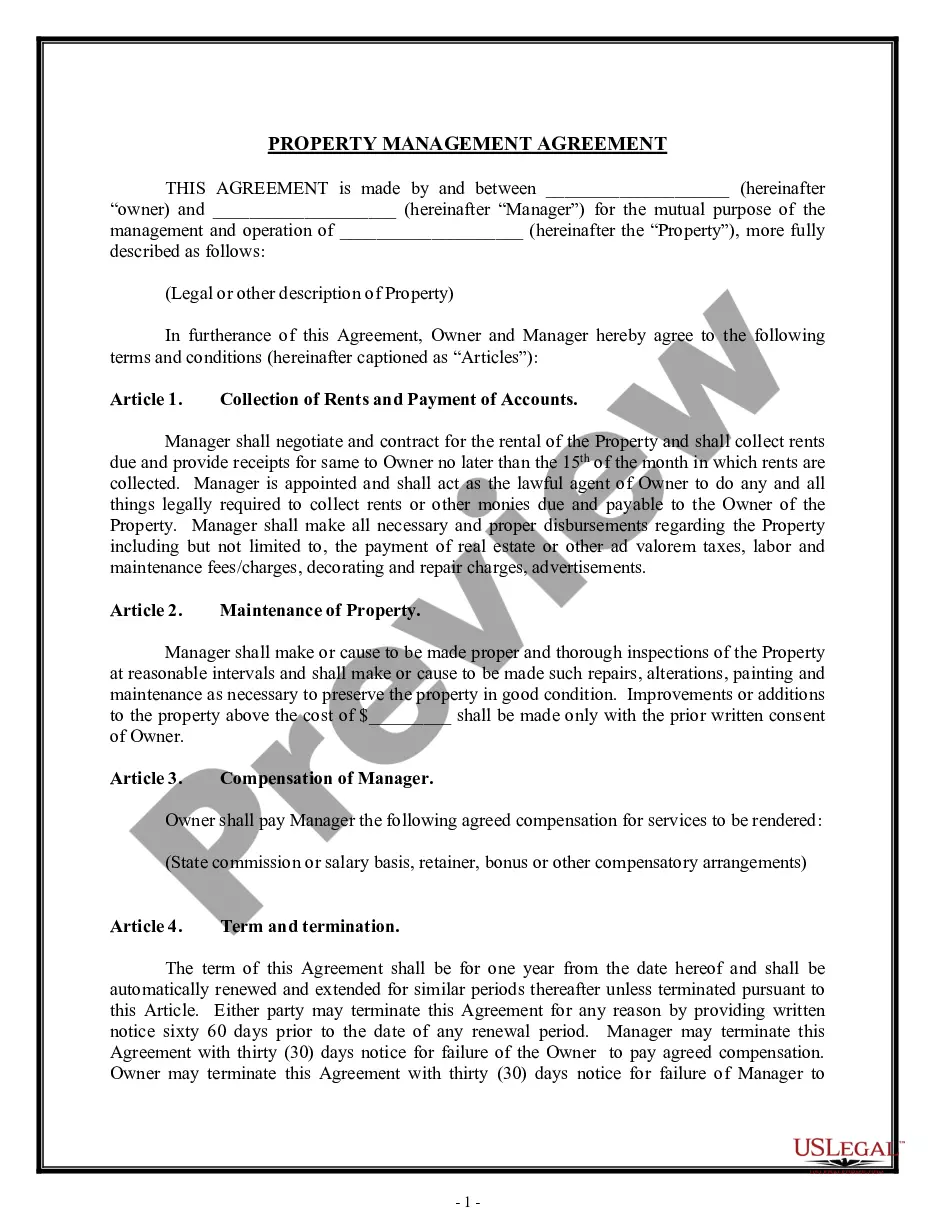
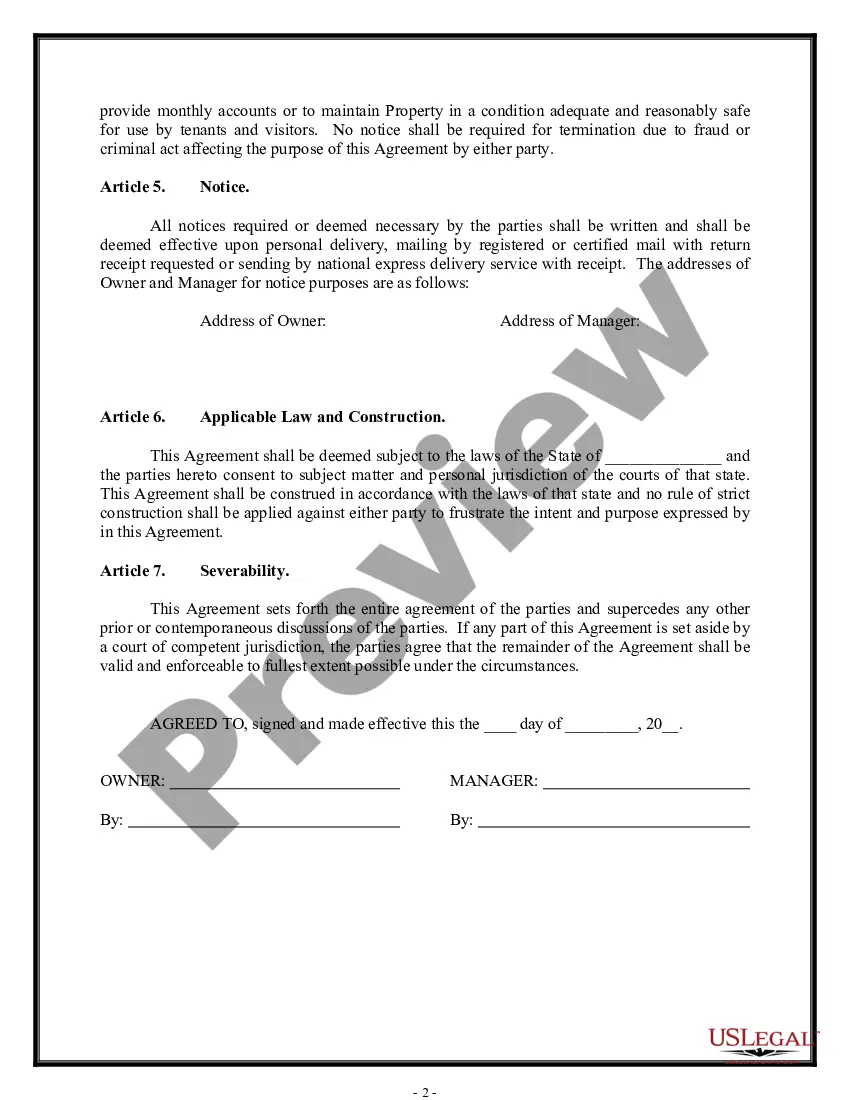
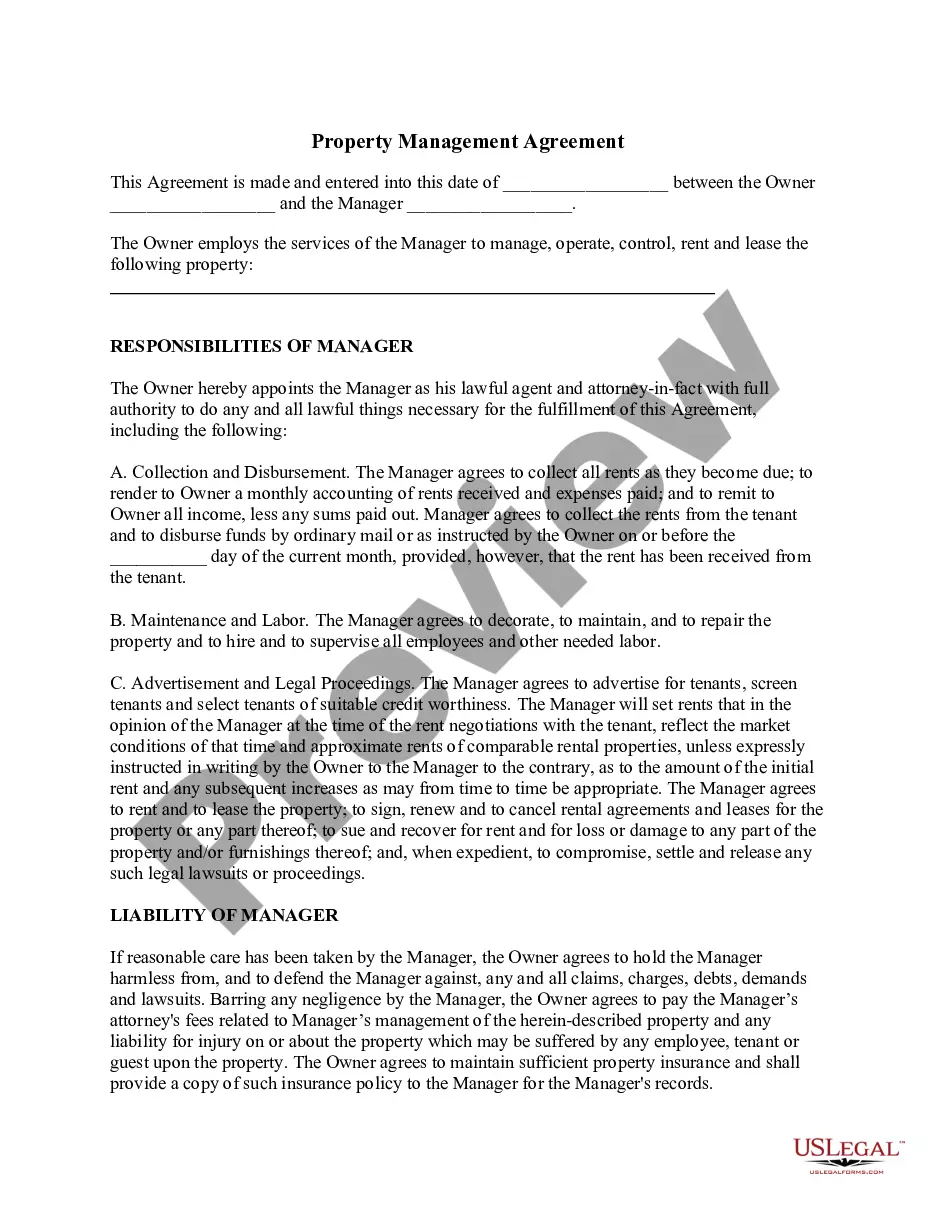
This agreement is made between an owner and a manager for the mutual purpose of the management and operation of a certain piece of property. Provisions within the document include: collection of rents and payment of accounts, maintenance of property, compensation of manager, and severability.
New Jersey Property Management Agreement
State:
Multi-State
Category:
Control #:
US-01640
Format:
Word;
Rich Text
329 downloads
Description
Free preview
Get your form ready online
Our built-in tools help you complete, sign, share, and store your documents in one place.
Built-in online Word editor
Make edits, fill in missing information, and update formatting in US Legal Forms—just like you would in MS Word.
Export easily
Download a copy, print it, send it by email, or mail it via USPS—whatever works best for your next step.
E-sign your document
Sign and collect signatures with our SignNow integration. Send to multiple recipients, set reminders, and more. Go Premium to unlock E-Sign.
Notarize online 24/7
If this form requires notarization, complete it online through a secure video call—no need to meet a notary in person or wait for an appointment.
Store your document securely
We protect your documents and personal data by following strict security and privacy standards.

Make edits, fill in missing information, and update formatting in US Legal Forms—just like you would in MS Word.

Download a copy, print it, send it by email, or mail it via USPS—whatever works best for your next step.

Sign and collect signatures with our SignNow integration. Send to multiple recipients, set reminders, and more. Go Premium to unlock E-Sign.

If this form requires notarization, complete it online through a secure video call—no need to meet a notary in person or wait for an appointment.

We protect your documents and personal data by following strict security and privacy standards.
Looking for another form?
How to fill out Property Management Agreement?
Locating the appropriate sanctioned document template can be quite a challenge.
Clearly, there are numerous templates available online, but how do you find the authorized form you require.
Utilize the US Legal Forms site. The service offers thousands of templates, including the New Jersey Property Management Agreement, which you can use for business and personal purposes.
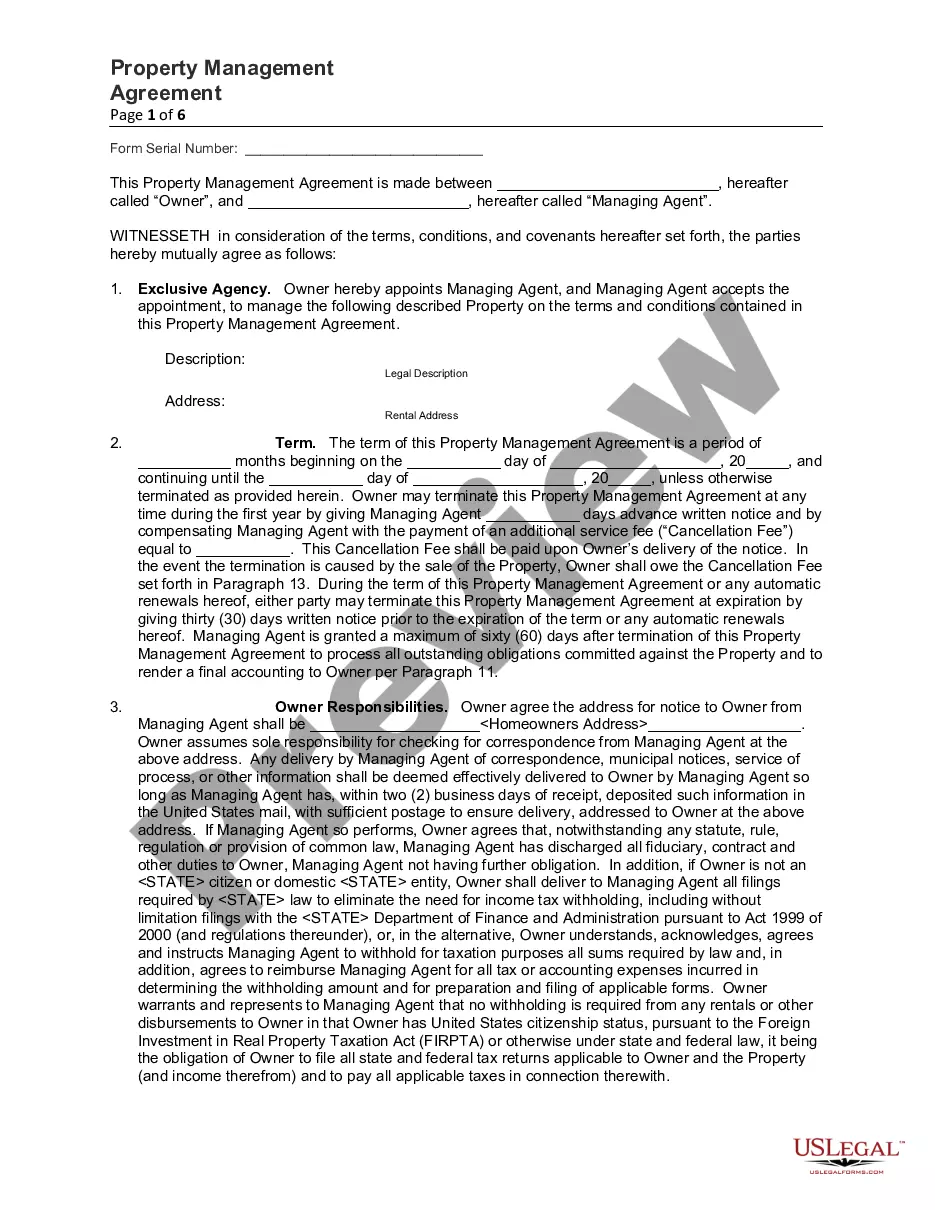
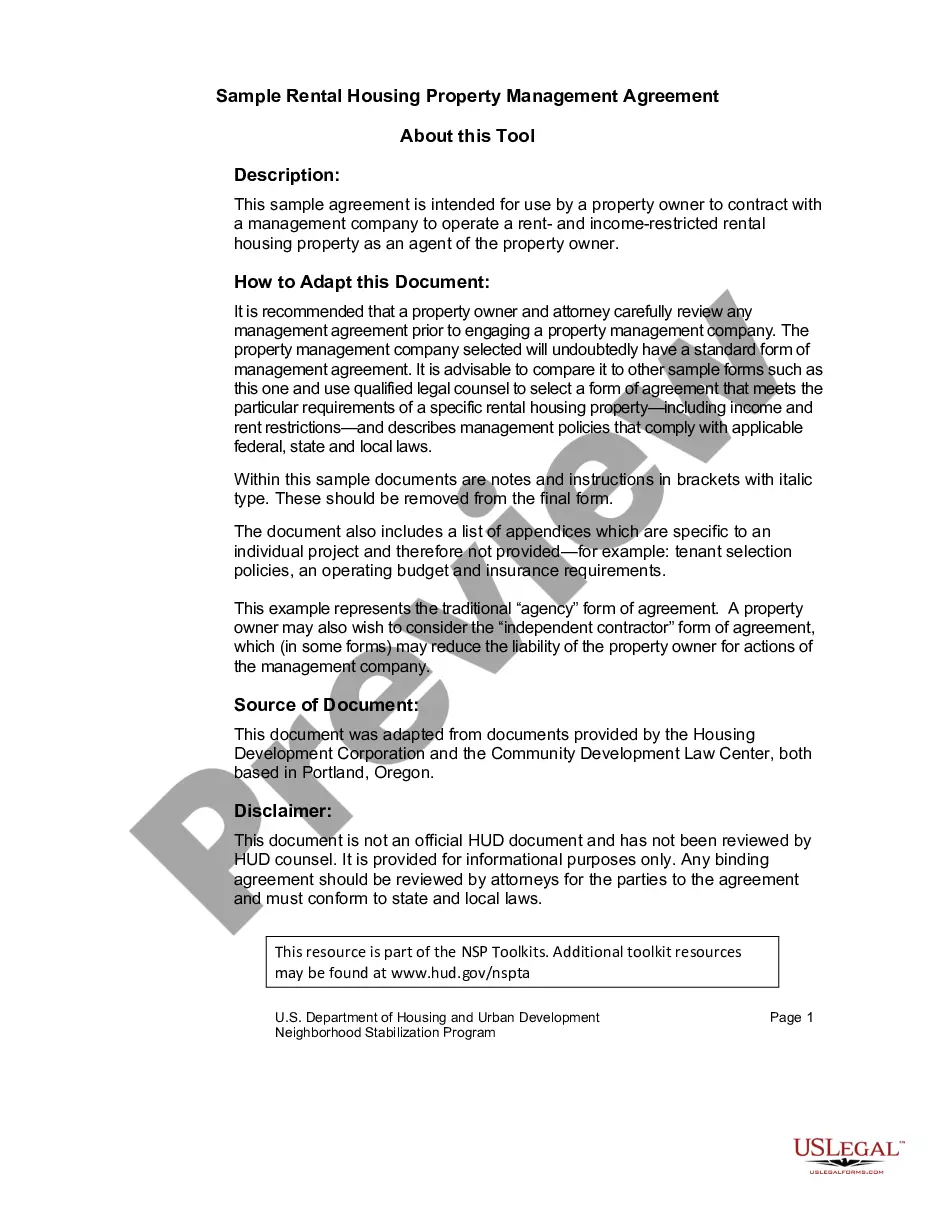
You can preview the form using the Review button and read the form description to ensure it is suitable for your needs.
- All the forms are reviewed by professionals and comply with state and federal regulations.
- If you are already registered, Log In to your account and click the Acquire button to locate the New Jersey Property Management Agreement.
- Use your account to browse the legal forms you have previously obtained.
- Navigate to the My documents tab in your account and download another copy of the document you require.
- If you are a new user of US Legal Forms, here are simple guidelines for you to follow.
- First, ensure you have chosen the correct form for your city/state.
Form popularity
FAQ
In New Jersey, property managers must have a real estate license if they handle rental properties on behalf of others. The licensing requirement ensures that property managers comply with state laws and regulations governing real estate transactions. Using a well-crafted New Jersey Property Management Agreement can help clarify responsibilities and expectations between property owners and managers. To learn more about compliance and license requirements, consider exploring the resources available on the US Legal Forms platform.
Filling out a New Jersey Property Management Agreement requires careful attention to detail. Begin by entering the property owner's name and the management company's information. Clearly outline the responsibilities of both parties, including maintenance, tenant relations, and financial management. For convenience, you can use platforms like USLegalForms, which provide templates and guidance to ensure your agreement meets all legal requirements.
While a property management agreement should be thorough, it is not necessary to include personal opinions or informal agreements. The focus should remain on clear, official terms regarding management duties, financial matters, and property specifics. By keeping a New Jersey Property Management Agreement professional and direct, you minimize risks of misunderstandings and disputes.
The minimum period for a property management agreement in New Jersey often varies but is usually set for one year. This duration provides stability for both property owners and managers, allowing for adequate time to establish efficient operations. When crafting a New Jersey Property Management Agreement, consider this timeline to ensure all parties have realistic expectations.
A management agreement generally includes items like property maintenance guidelines, tenant management processes, and financial reporting protocols. These elements are crucial for effective property operation and tenant relations. Including these specifics in your New Jersey Property Management Agreement enhances the likelihood of a successful partnership.
Typically, a property management agreement includes provisions regarding leasing the property, maintenance responsibilities, and tenant screening processes. It may also cover financial management aspects, such as rent collection and disbursement of funds. When you structure a New Jersey Property Management Agreement, ensure that all critical components are addressed to facilitate effective property oversight.
A property management agreement must include essential elements such as the scope of services, property details, duration of the agreement, and fees. It's vital to clearly outline the responsibilities of the property manager and the property owner. This clarity helps avoid disputes and ensures smooth operations within the New Jersey Property Management Agreement framework.
A lease is a contract between a landlord and tenant outlining the terms of rental, while a management agreement is a contract between a property owner and a property manager detailing the manager’s responsibilities. The lease governs the relationship between the tenant and landlord, whereas the management agreement focuses on the owner-manager relationship. Understanding this distinction is essential when approaching a New Jersey Property Management Agreement.
In New Jersey, you do need a license to operate as a property manager, depending on your responsibilities. If you engage in activities such as collecting rent or negotiating leases on behalf of property owners, a real estate license becomes necessary. This is crucial for anyone wanting to enter the New Jersey Property Management Agreement landscape. Always ensure you comply with state regulations to avoid legal issues.
A management contract, such as a New Jersey Property Management Agreement, typically lasts for about one year but can be tailored to fit your particular situation. While some contracts may extend beyond a year, they should enable flexibility to adapt to changes in property management needs. It is crucial to read through the contract details to fully understand your commitments.