New Jersey Complaint based on Open Account, Breach of Contract, Unjust Enrichment
Description
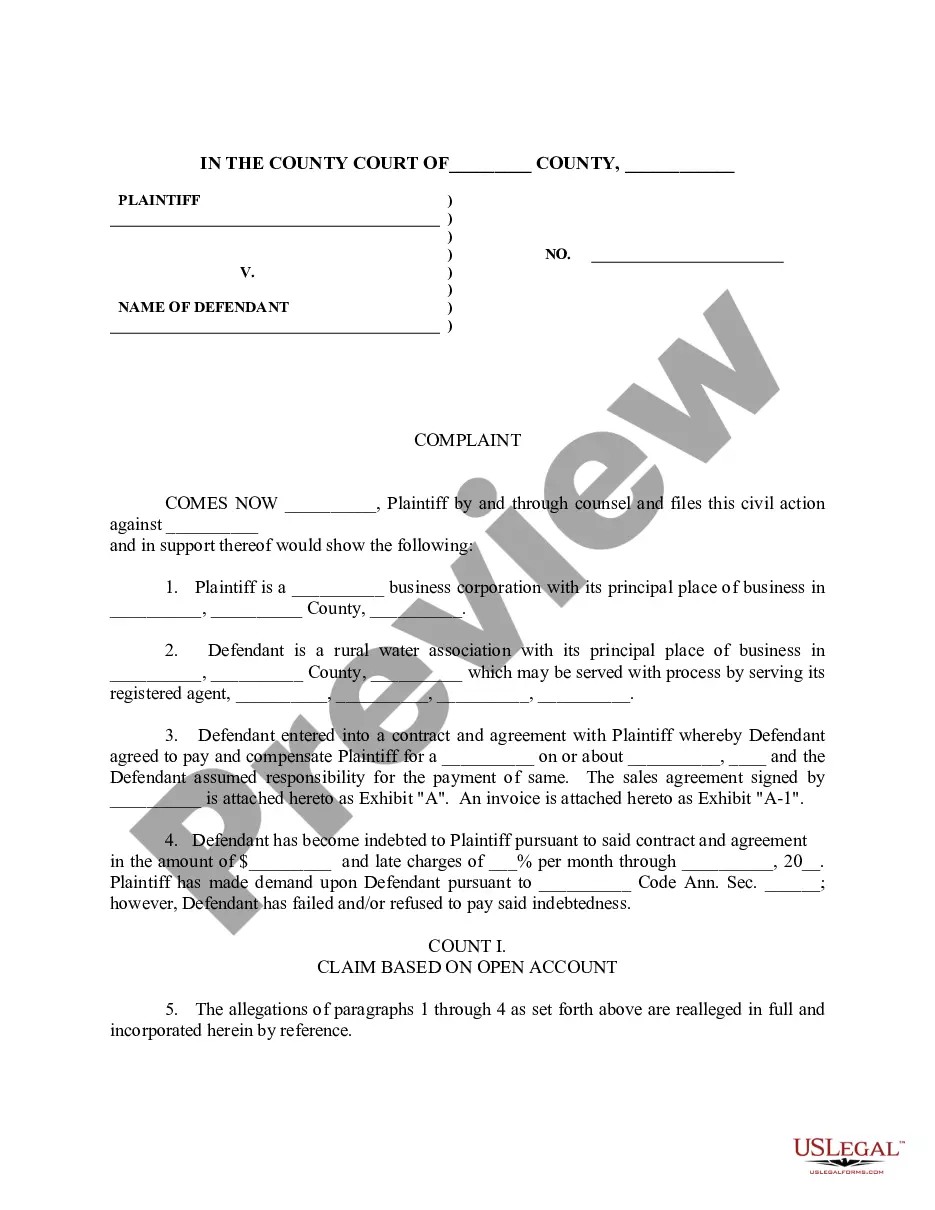
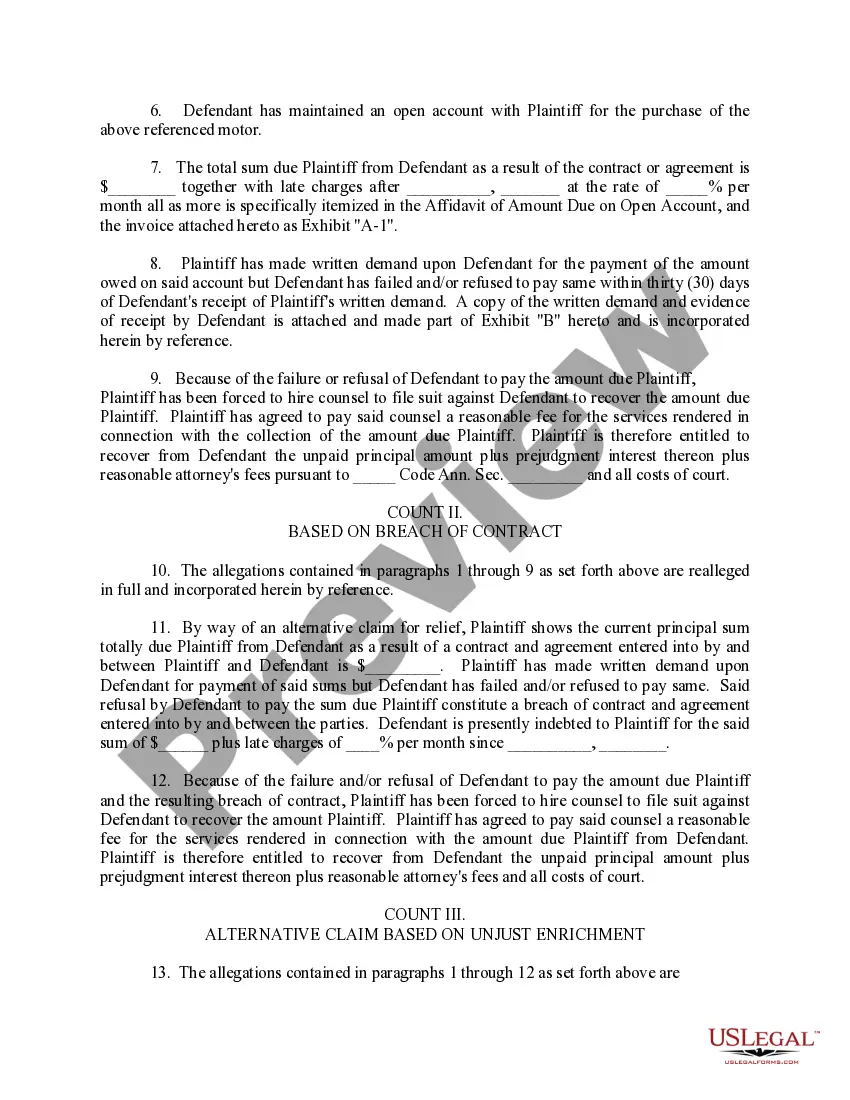
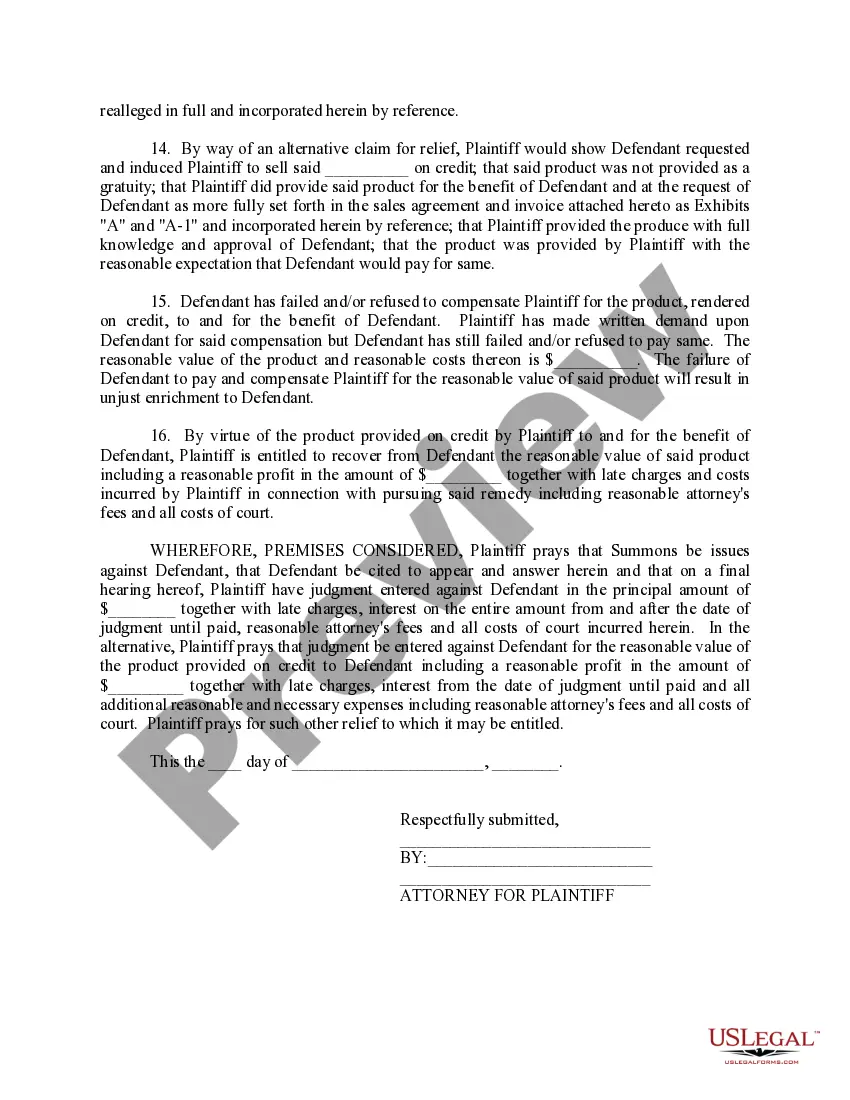
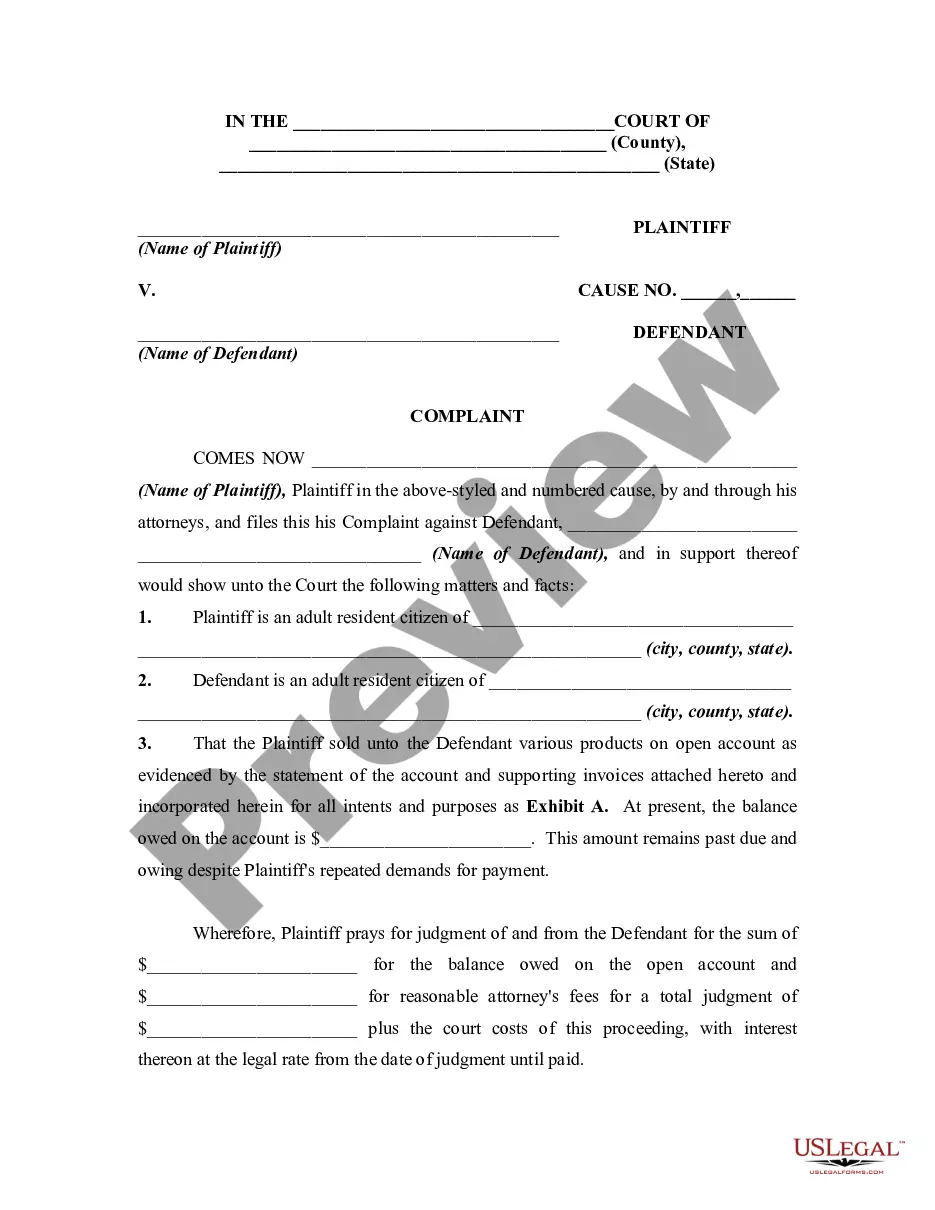
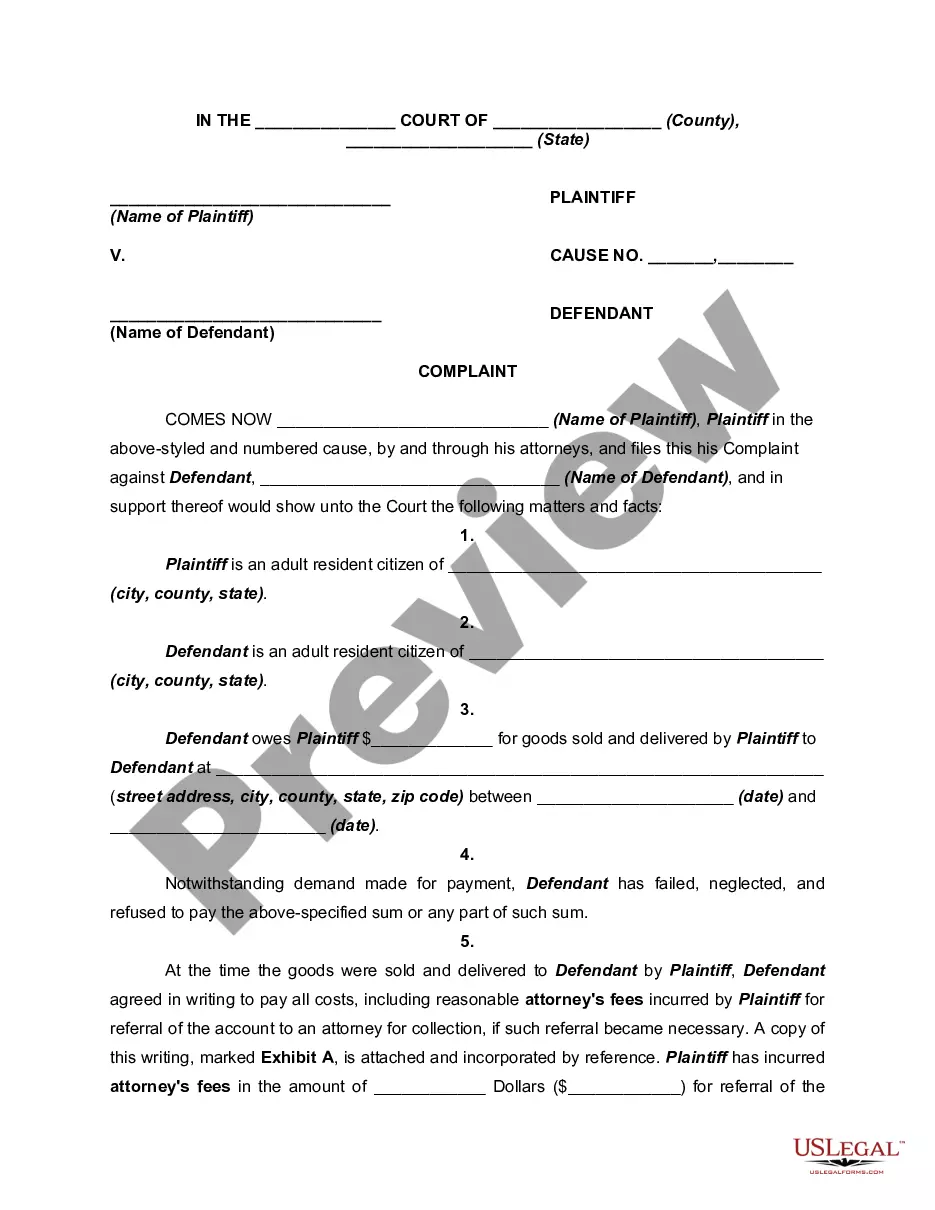
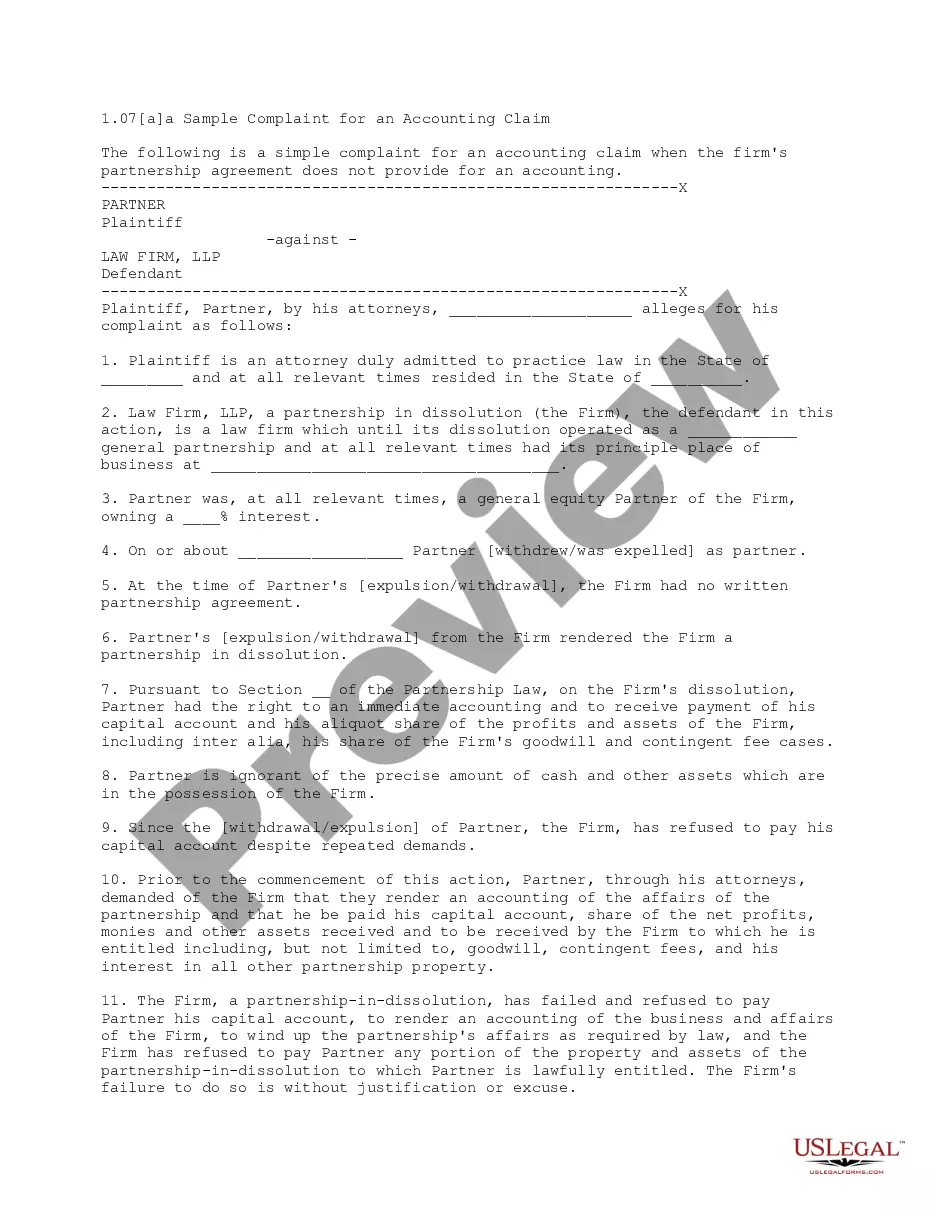




How to fill out Complaint Based On Open Account, Breach Of Contract, Unjust Enrichment?
Selecting the optimal valid document format can be quite a challenge. Of course, there are numerous templates accessible online, but how do you find the valid type you desire? Utilize the US Legal Forms website. The service provides thousands of templates, including the New Jersey Complaint based on Open Account, Breach of Contract, Unjust Enrichment, which you can use for business and personal purposes. All templates are reviewed by professionals and adhere to state and federal regulations.
If you are already registered, Log In to your account and click the Acquire button to access the New Jersey Complaint based on Open Account, Breach of Contract, Unjust Enrichment. Use your account to review the legal templates you have previously purchased. Navigate to the My documents section of your account and download another copy of the document you need.
If you are a new user of US Legal Forms, here are simple instructions for you to follow: First, ensure you have selected the correct form for your city/county. You can view the form using the Review button and examine the form outline to confirm this is suitable for you. If the form does not meet your requirements, use the Search field to find the appropriate form. Once you are certain the form is suitable, click the Get now button to obtain the form. Choose the pricing plan you prefer and enter the necessary information. Create your account and complete the purchase using your PayPal account or Visa or Mastercard. Select the file format and download the legal document format to your device. Finally, complete, edit, print, and sign the acquired New Jersey Complaint based on Open Account, Breach of Contract, Unjust Enrichment.
- US Legal Forms is the largest collection of legal forms.
- You can find a variety of document templates.
- Utilize the service to obtain professionally crafted documents.
- All papers comply with state requirements.
- Access a wide range of templates for various legal needs.
- Ensure you have the correct form for your situation.
Form popularity
FAQ
3 Elements of a Claim for Unjust Enrichment The defendant received a benefit; At the plaintiff's expense; and, Under circumstances that would make it unjust for the defendant to retain the benefit without commensurate compensation.
One of the elements that the plaintiff must prove is defendant's breach of contract. Failure to perform a contract in ance with its terms constitutes a breach of contract. It does not matter if the failure was purposeful or inadvertent.
?A mistaken payment is generally regarded as the central example of an unjust enrichment. The unjust factor is the mistake which negatives the voluntariness of the payor. The enrichment is the money, which is an incontrovertible benefit.
Under New Jersey law, to state a claim for unjust enrichment, a plaintiff must demonstrate ?both that defendant received a benefit and that retention of that benefit without payment would be unjust.? VRG Corp.
4 Elements of a Breach of Contract Claim (and more) The existence of a contract; Performance by the plaintiff or some justification for nonperformance; Failure to perform the contract by the defendant; and, Resulting damages to the plaintiff.
Elements of a Tortious Interference Claim Someone interfered with your contract or the business you were pursuing; The interference was done with malice. In this context, malice means the action was taken intentionally and without justification or excuse; and. The interference caused your economic damage.
An award of compensatory damages is the most common of the legal remedies for breach of contract. The calculation of compensatory damages is based on the actual losses you have sustained as a result of the breach of contract. They typically fall into two categories: expectation damages and consequential damages.
A contract is a legally enforceable promise, either made in writing or orally. Breach of contract occurs when one or more parties to a contract break that promise by failing to perform or fulfill any term of the contract without a legitimate legal excuse.
Damages are usually awarded to an injured party for losses suffered as a result of the defaulting party's actions or non-actions. The purpose of an award of damages for breach of contract is to put the injured party in the position it would have been in had the contract been performed.
You Either Have Breach of Contract, or Unjust Enrichment. You Can't Have Both. Simply put, as a claimant you must decide from the get-go whether your claim is based upon the breach of a valid written contract, or whether your claim is grounded in quasi-contract, i.e., to seek recovery on an strictly equitable basis.