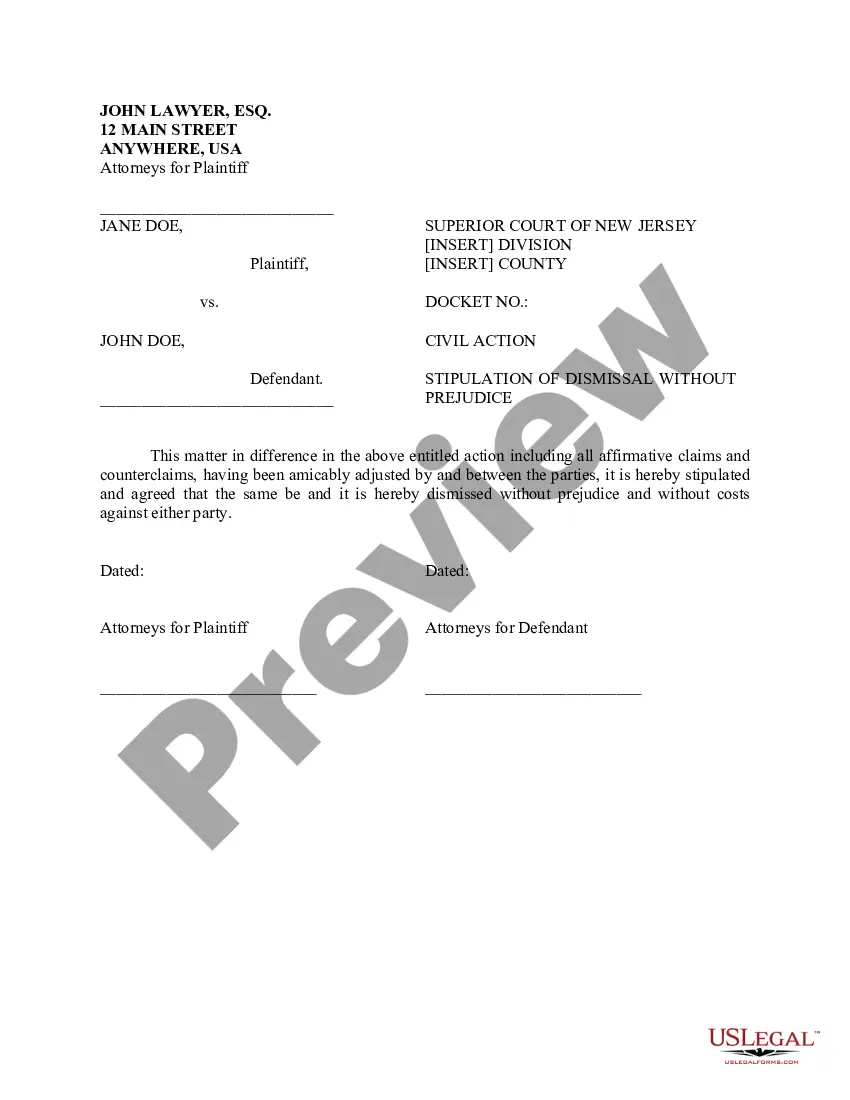
New Jersey Stipulation of Dismissal without Prejudice
About this form
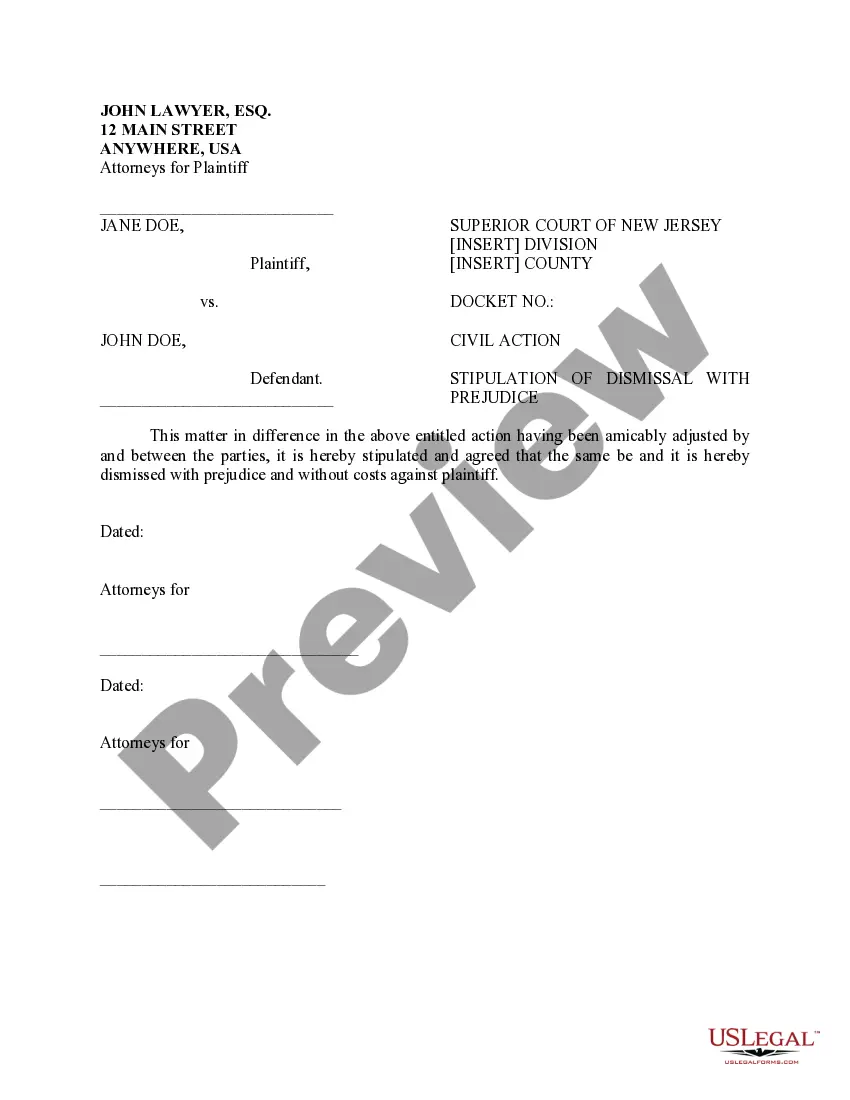
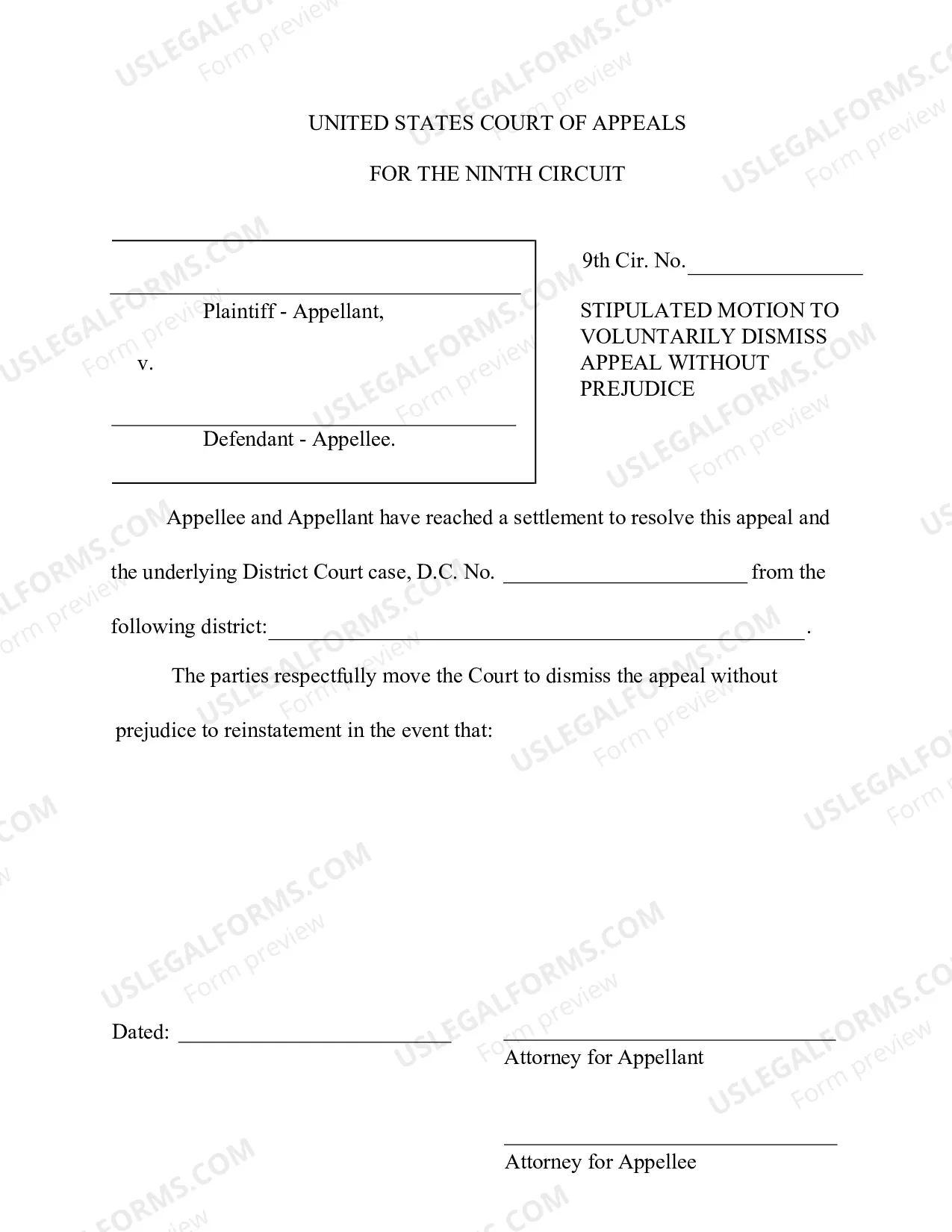
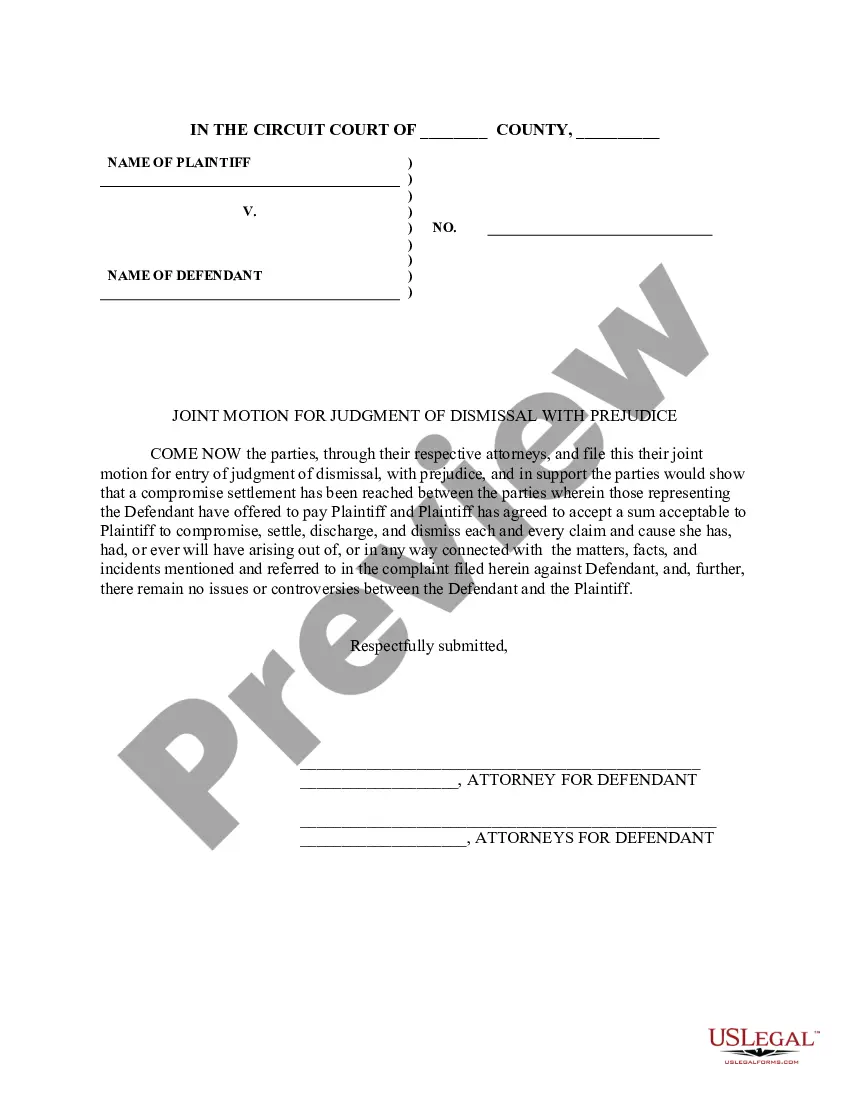
The Stipulation of Dismissal without Prejudice is a legal document used to formally dismiss a civil action without barring the ability for the plaintiff to refile in the future. Unlike a dismissal with prejudice, which permanently ends a case, this form allows both parties to settle their differences amicably without incurring costs. It is commonly utilized in situations where disputes are resolved outside of court or when parties choose to pause legal proceedings while maintaining their rights to pursue the matter later.
Key parts of this document
- Title indicating the action is a Stipulation of Dismissal without Prejudice.
- Identification of the parties involved, such as the Plaintiff and Defendant.
- Statement affirming that all claims and counterclaims have been adjusted between the parties.
- A clause confirming dismissal without prejudice and costs against either party.
- Signature lines for the attorneys representing both the Plaintiff and Defendant.
When to use this form
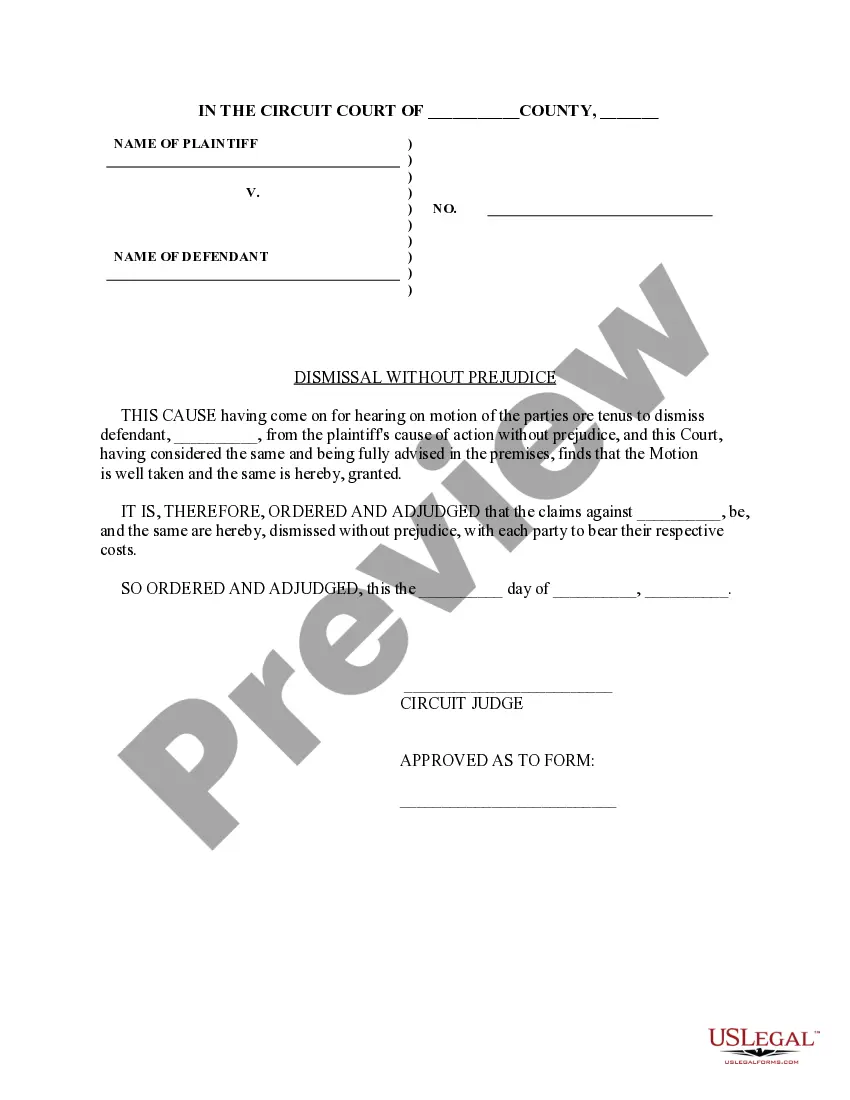
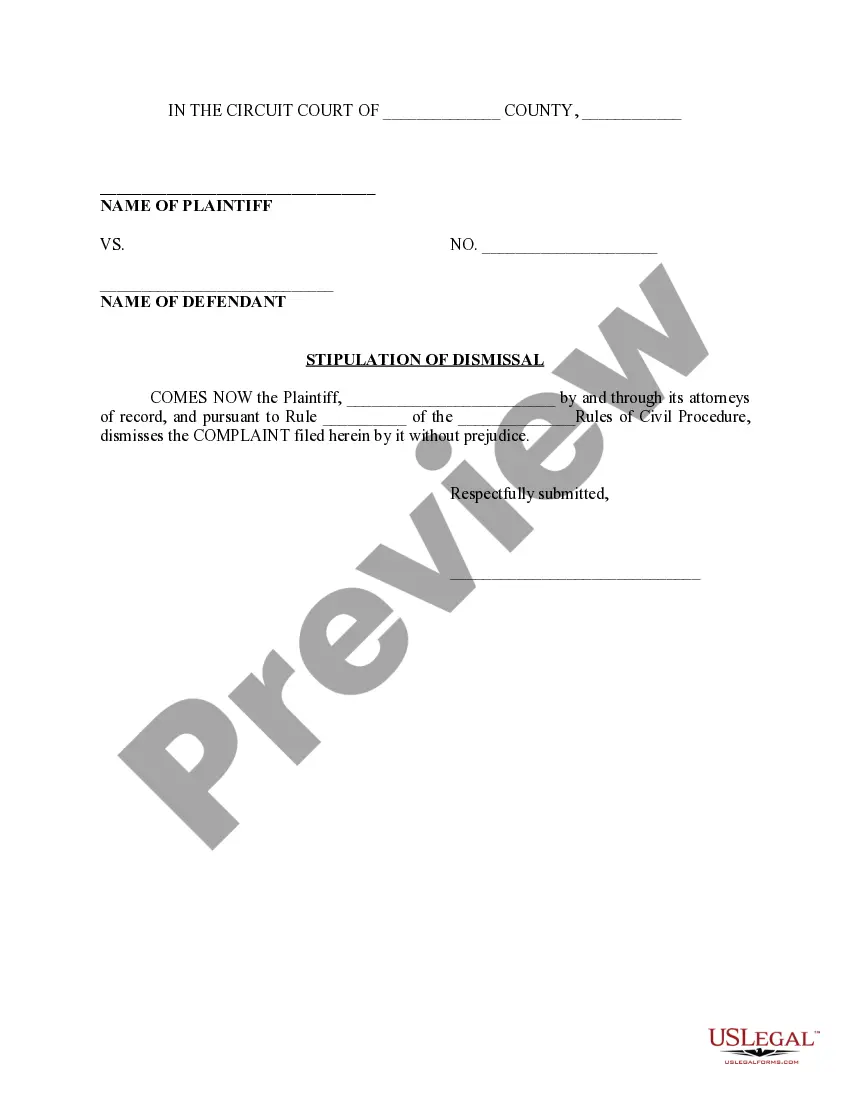
This form is used when both parties in a civil case have reached a mutual agreement to dismiss the case but wish to retain the option to refile it in the future. It is particularly relevant in scenarios where the parties have settled their differences out of court or when they want to pause the litigation process without forgoing their rights. Common situations include resolved disputes in contract cases, negotiations that have achieved resolution, or proactive legal strategies in ongoing litigation.
Who should use this form
- Litigants involved in a civil action who wish to dismiss their case without prejudice.
- Attorneys representing clients in civil disputes looking to settle matters amicably.
- Parties who have reached an agreement and need a formal record of their dismissal.
Instructions for completing this form
- Identify and enter the names of the Plaintiff and Defendant at the top of the form.
- Fill in the title and other necessary information regarding the court, including the division and county.
- State the Docket Number and ensure it corresponds to the original civil action.
- Have both parties or their legal representatives sign and date the document.
- File the completed form with the appropriate court to finalize the dismissal.
Notarization guidance
This form does not typically require notarization unless specified by local law. However, it's advisable to check with your jurisdiction's requirements to ensure compliance.
Get your form ready online
Our built-in tools help you complete, sign, share, and store your documents in one place.
Make edits, fill in missing information, and update formatting in US Legal Forms—just like you would in MS Word.
Download a copy, print it, send it by email, or mail it via USPS—whatever works best for your next step.
Sign and collect signatures with our SignNow integration. Send to multiple recipients, set reminders, and more. Go Premium to unlock E-Sign.
If this form requires notarization, complete it online through a secure video call—no need to meet a notary in person or wait for an appointment.
We protect your documents and personal data by following strict security and privacy standards.

Make edits, fill in missing information, and update formatting in US Legal Forms—just like you would in MS Word.

Download a copy, print it, send it by email, or mail it via USPS—whatever works best for your next step.

Sign and collect signatures with our SignNow integration. Send to multiple recipients, set reminders, and more. Go Premium to unlock E-Sign.

If this form requires notarization, complete it online through a secure video call—no need to meet a notary in person or wait for an appointment.

We protect your documents and personal data by following strict security and privacy standards.
Common mistakes to avoid
- Not including all necessary party information, which can lead to complications in processing.
- Forgetting to sign the form, leaving it invalid.
- Using an incorrect Docket Number, leading to issues with court records.
Why use this form online
- Immediate access to a professionally drafted legal form tailored to your needs.
- Convenient download and edit options allow for quick customization.
- Assurance of legal compliance, as templates are created by licensed attorneys.
Looking for another form?
Form popularity
FAQ
A stipulated dismissal is always a voluntary agreement between the parties. After the court makes a determination of how much the defendant should pay, the parties can enter into the agreement and have it entered as an order by the judge.
Definition from Nolo's Plain-English Law Dictionary When a lawsuit is dismissed with prejudice, the court is saying that it has made a final determination on the merits of the case, and that the plaintiff is therefore forbidden from filing another lawsuit based on the same grounds.
The courts in California may dismiss a case either with or without prejudice. Cases dismissed with prejudice cannot be reopened.After a dismissal without prejudice, a case may be refiled in Los Angeles. This means that you can face the same charges again.
When a case is dismissed without prejudice, it leaves the plaintiff free to bring another suit based on the same grounds, for example if the defendant doesn't follow through on the terms of a settlement. See: dismiss, dismissal with prejudice.
The without prejudice (WP) rule will generally prevent statements made in a genuine attempt to settle an existing dispute, whether made in writing or orally, from being put before the court as evidence of admissions against the interest of the party which made them.
When a lawsuit is dismissed with prejudice, the court is saying that it has made a final determination on the merits of the case, and that the plaintiff is therefore forbidden from filing another lawsuit based on the same grounds. See also: dismiss, dismissal without prejudice. courts.
An order to dismiss a case can occur when the appellate court, having reversed the conviction on the grounds of a bad search or arrest, examines what's left of the case and determines that there is not enough evidence to warrant another trial.
The courts in California may dismiss a case either with or without prejudice. Cases dismissed with prejudice cannot be reopened.After a dismissal without prejudice, a case may be refiled in Los Angeles. This means that you can face the same charges again.