New Jersey Complaint for Violation of Franchise Practices Act
About this form
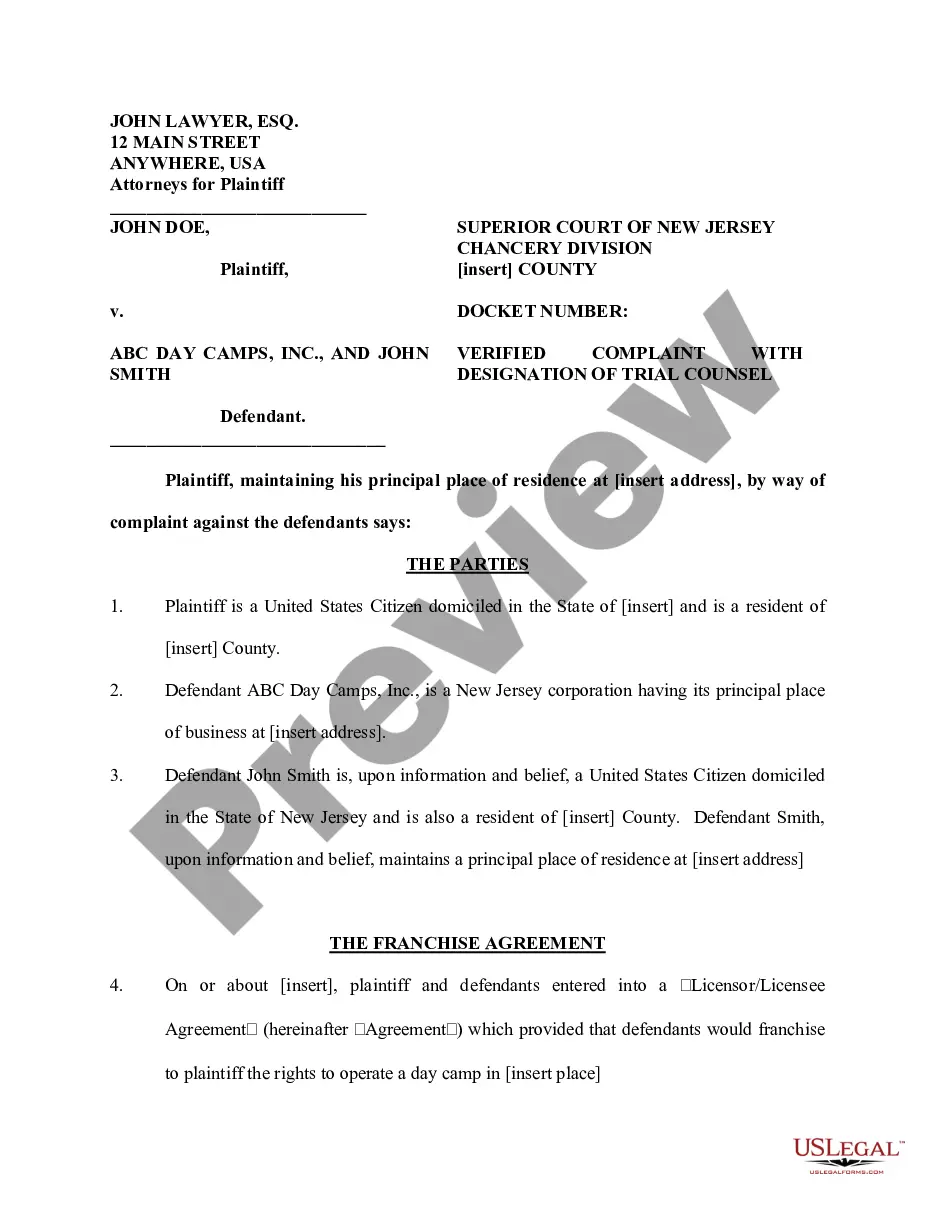
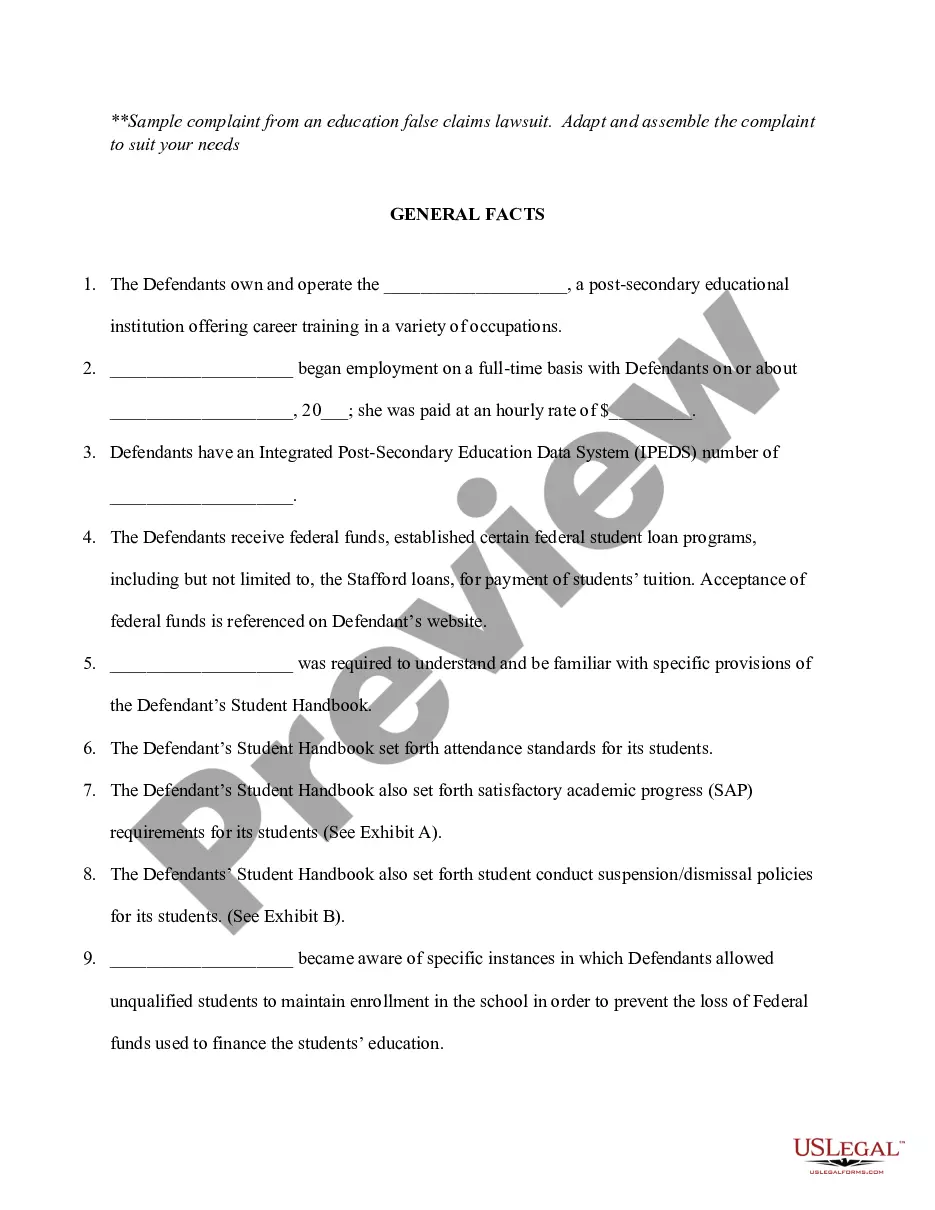
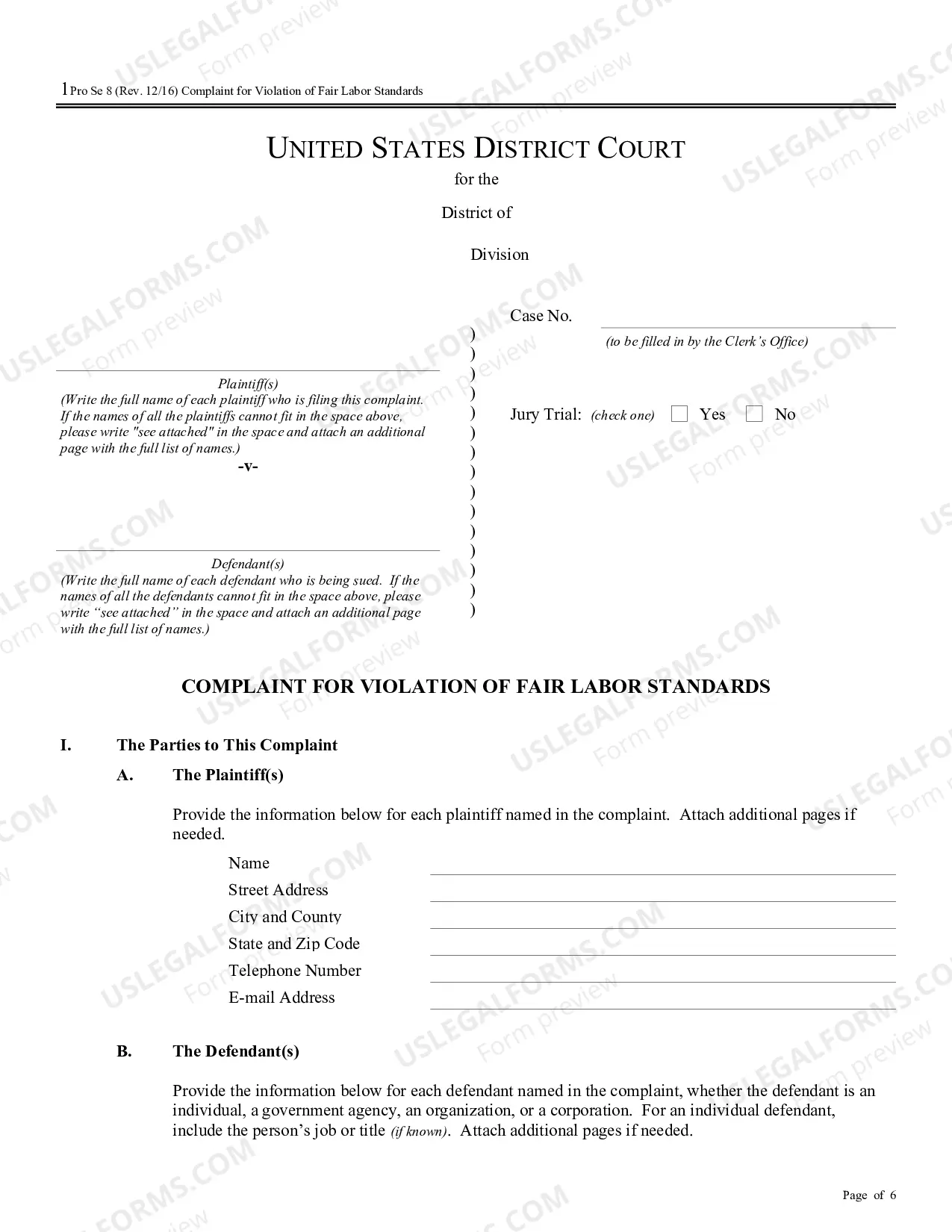
This Complaint for Violation of Franchise Practices Act is a legal document used in proceedings related to breaches of the Franchise Practices Act specifically within the state of New Jersey. This form allows a franchisee to formally allege violations by the franchisor, such as wrongful termination of the franchise agreement, and provides a structured way to seek legal remedies in court.
Key parts of this document
- Parties involved: Identifies the plaintiff and defendants.
- Franchise agreement details: Outlines terms, conditions, and relevant dates.
- Allegations: Lists specific breaches of the Franchise Practices Act and other related claims.
- Damages sought: Specifies the type of relief, such as compensatory damages and injunctive relief.
- Verification section: Confirms the truthfulness of the information provided by the plaintiff.


When to use this form
You should use this Complaint for Violation of Franchise Practices Act when you believe that a franchisor has unlawfully terminated your franchise agreement without proper notice or for baseless reasons. This form is essential when you seek to claim damages for lost profits, regain possession of your business, or enforce your rights under the Franchise Practices Act.
Who should use this form
- Franchisees in New Jersey who have experienced illegal termination of their franchise agreements.
- Individuals seeking redress for damages incurred due to violations of the Franchise Practices Act.
- Anyone looking for a formal method to address disputes with franchisors over unfair practices.
How to prepare this document
- Identify the parties: Fill in the names and addresses of the plaintiff and defendants.
- Detail the franchise agreement: Specify the date and terms of the agreement.
- State the allegations: Clearly outline the reasons for the complaint against the defendants.
- Specify the relief sought: Indicate what damages or remedies you are requesting from the court.
- Sign and date the form: Ensure that all necessary signatures are affixed before filing.
Is notarization required?
This form does not typically require notarization unless specified by local law. However, it is advisable to confirm with your legal counsel for your specific situation.
Get your form ready online
Our built-in tools help you complete, sign, share, and store your documents in one place.
Make edits, fill in missing information, and update formatting in US Legal Forms—just like you would in MS Word.
Download a copy, print it, send it by email, or mail it via USPS—whatever works best for your next step.
Sign and collect signatures with our SignNow integration. Send to multiple recipients, set reminders, and more. Go Premium to unlock E-Sign.
If this form requires notarization, complete it online through a secure video call—no need to meet a notary in person or wait for an appointment.
We protect your documents and personal data by following strict security and privacy standards.

Make edits, fill in missing information, and update formatting in US Legal Forms—just like you would in MS Word.

Download a copy, print it, send it by email, or mail it via USPS—whatever works best for your next step.

Sign and collect signatures with our SignNow integration. Send to multiple recipients, set reminders, and more. Go Premium to unlock E-Sign.

If this form requires notarization, complete it online through a secure video call—no need to meet a notary in person or wait for an appointment.

We protect your documents and personal data by following strict security and privacy standards.
Avoid these common issues
- Failing to clearly specify the violations of the Franchise Practices Act.
- Omitting important details about the franchise agreement.
- Not including all parties involved in the complaint.
- Neglecting to sign and date the form before submission.
- Using outdated or incorrect jurisdictional references.
Benefits of completing this form online
- Convenience: Complete the form from anywhere with internet access.
- Editability: Easily update information as needed before finalizing.
- Reliability: Access professionally drafted templates created by licensed attorneys.
Legal use & context
- This form is used in civil proceedings to assert claims under the New Jersey Franchise Practices Act.
- Enforceability relies on correctly following the legal guidelines for franchise agreements.
- Limited to claims arising from actions taken by franchisors in violation of established franchise laws.
What to keep in mind
- Use this form to address violations of the Franchise Practices Act in New Jersey.
- Follow the structure and instructions provided to ensure proper completion.
- Be aware of the potential for damages and legal remedies available under state law.
Looking for another form?
Form popularity
FAQ
In most cases, franchise agreements can be terminated when a material breach has occurred. A material breach is when one of the parties in the agreement has done something that deprives the other party of the benefit of the contract or destroys the value of the contract.
Intellectual property. Misrepresentation. Competition law. Restraint of trade. Anti-bribery. Data protection. Trading schemes.
A Franchisee Has To Put In Time and Resources. A franchisee is essentially a business owner. A Franchisee Needs To Report Back To the Franchisor. A franchisee is basically owning a franchise of an already established business. A Franchisee Has To Financially Support The Business. Reflect The Brand And Maintain Standards.
If a franchisor moves to close a franchise on an owner, it probably because of a breach of this agreement. In fact, most franchise agreements include a clause that gives the franchise company the right to terminate it if the franchisee breaches the same provision more than twice within 12 months.
Suffrage, political franchise, or simply franchise is the right to vote in public, political elections (although the term is sometimes used for any right to vote).The combination of active and passive suffrage is sometimes called full suffrage. Suffrage is often conceived in terms of elections for representatives.
The right to initial and ongoing training and support. The right to competitive sourcing of inventory, product, service and supplies. The right to reasonable restraints upon the franchisors ability to require changes within the franchise system.The right to representation and access to the franchisor.
Can I Sue My Franchisor? Whether or not you, as a franchisee, can assert claims in a lawsuit against your franchisor is a loaded question. On one hand, the answer is yes; you can sue anyone for anything at any time it doesn't mean you'll win or that the case will go anywhere, but you can.