New Jersey Complaint for Adoption
What this document covers
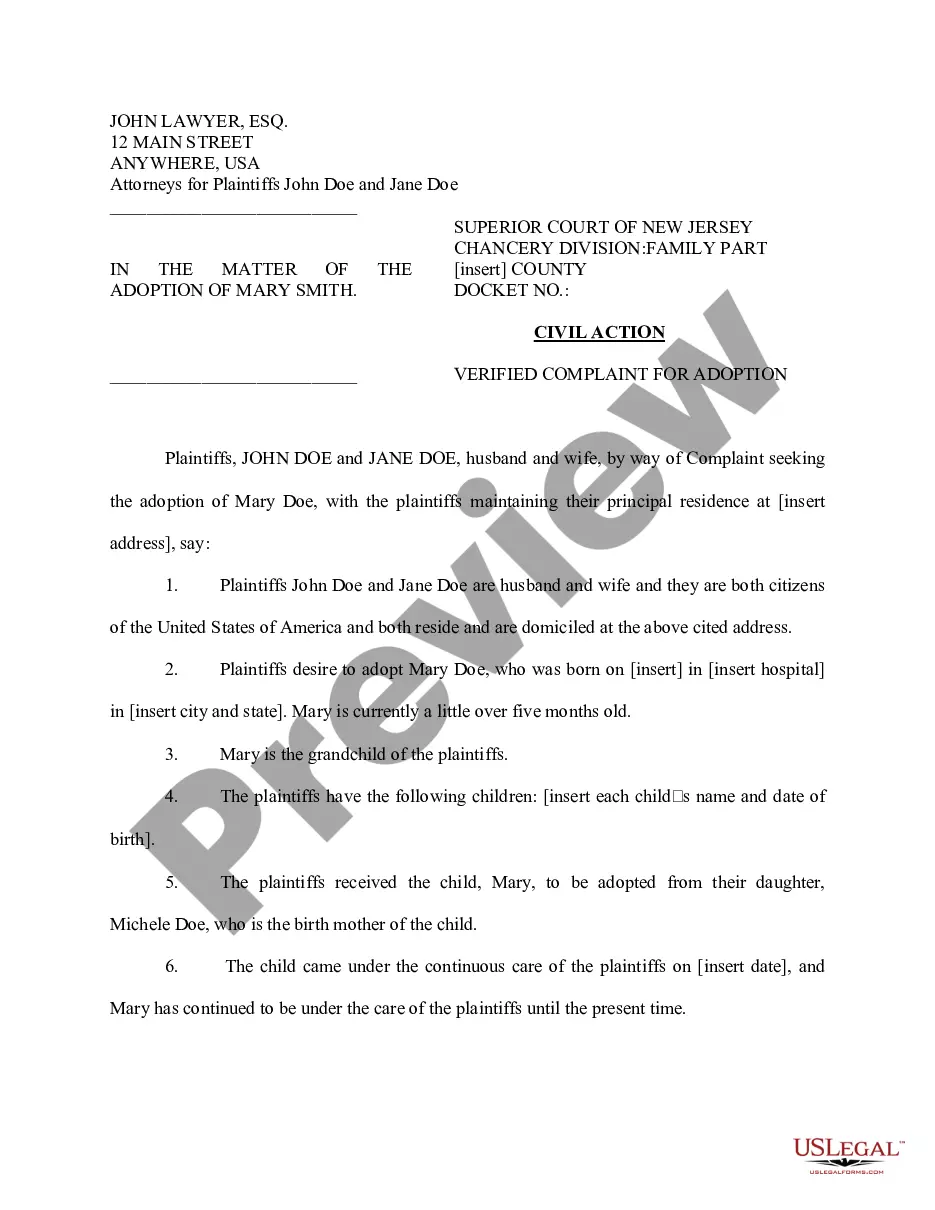
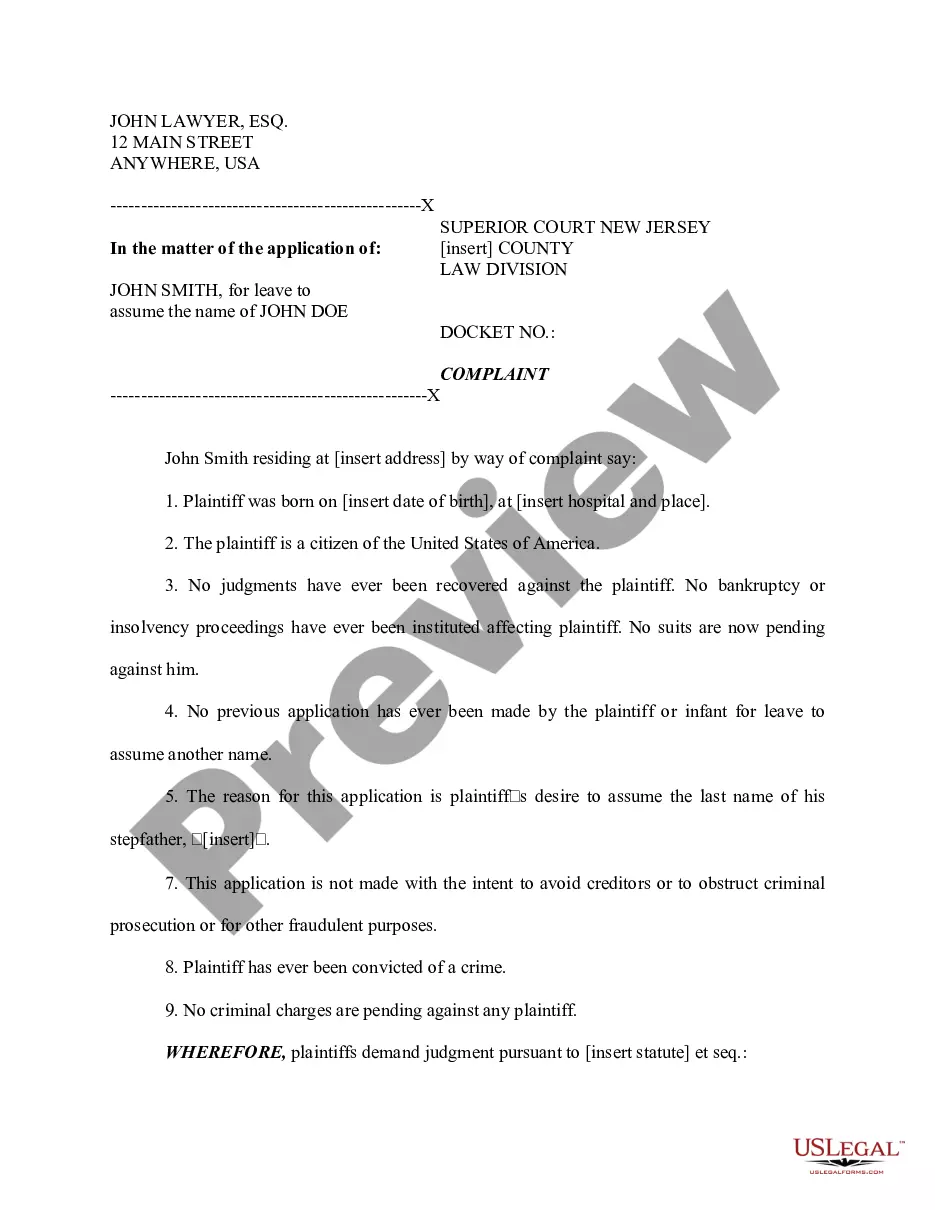
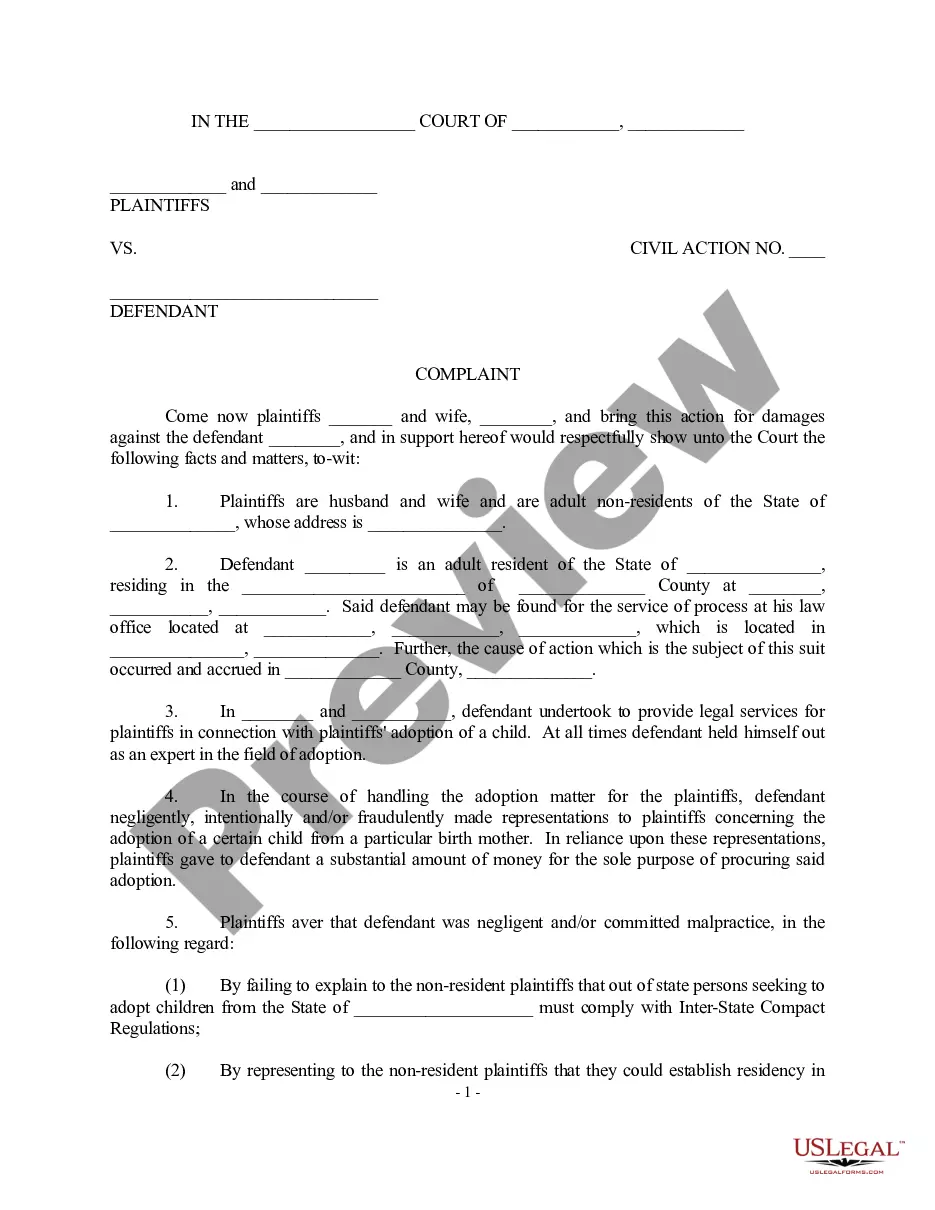
The Complaint for Adoption is a legal document used by grandparents wishing to adopt their grandchild. This form initiates the legal adoption process, allowing the petitioning grandparents to gain full parental rights over the child. It differs from other adoption forms by specifically targeting situations where the grandparents are the adoptive parents, ensuring their legal status and responsibilities toward the child.
Form components explained
- Plaintiffsâ information: Names and residential details of the adopting grandparents.
- Child's details: Name, birth information, and current care status of the child being adopted.
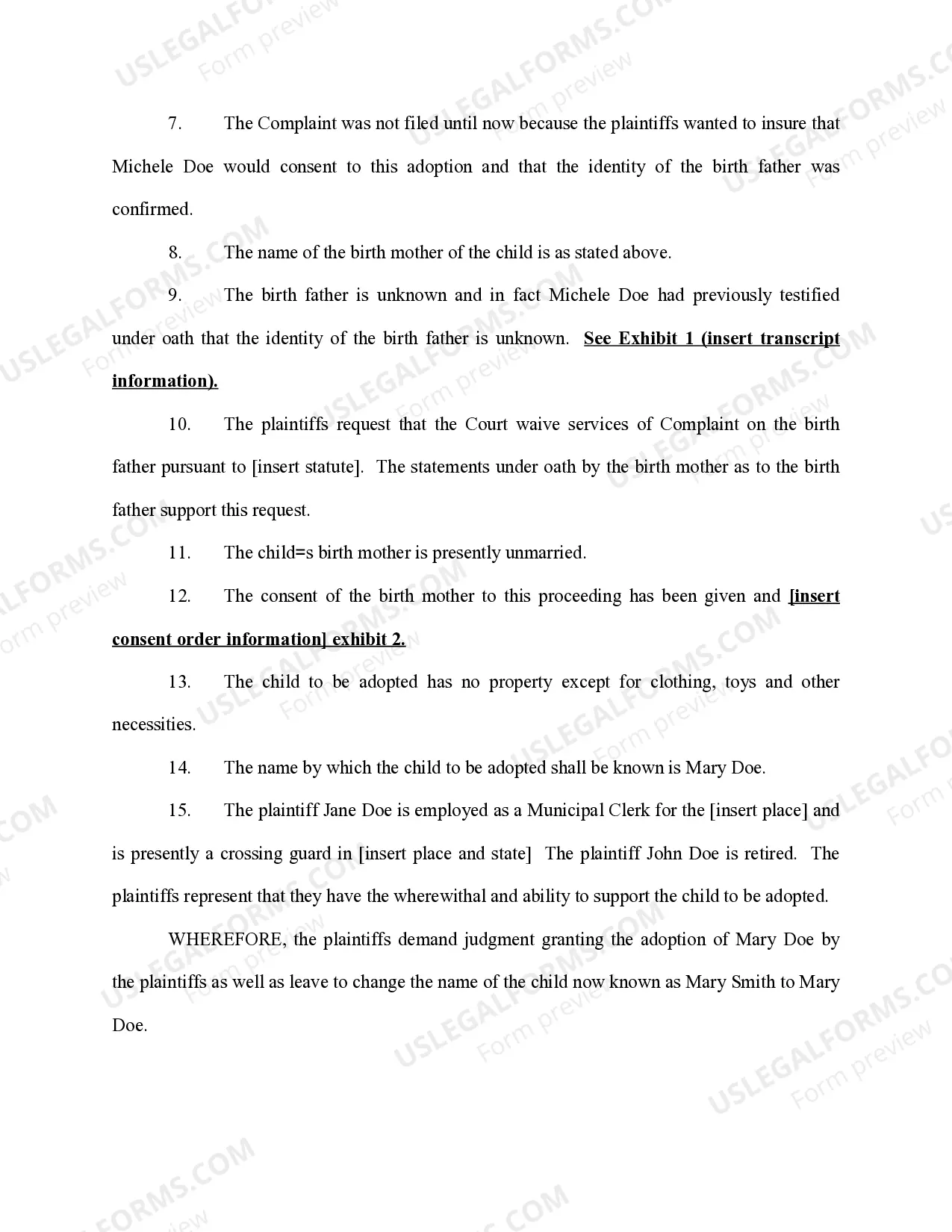
- Birth parents' information: Details regarding the child's birth mother and father, including consent issues.
- Consent statement: Verification of consent from the birth mother for the adoption.
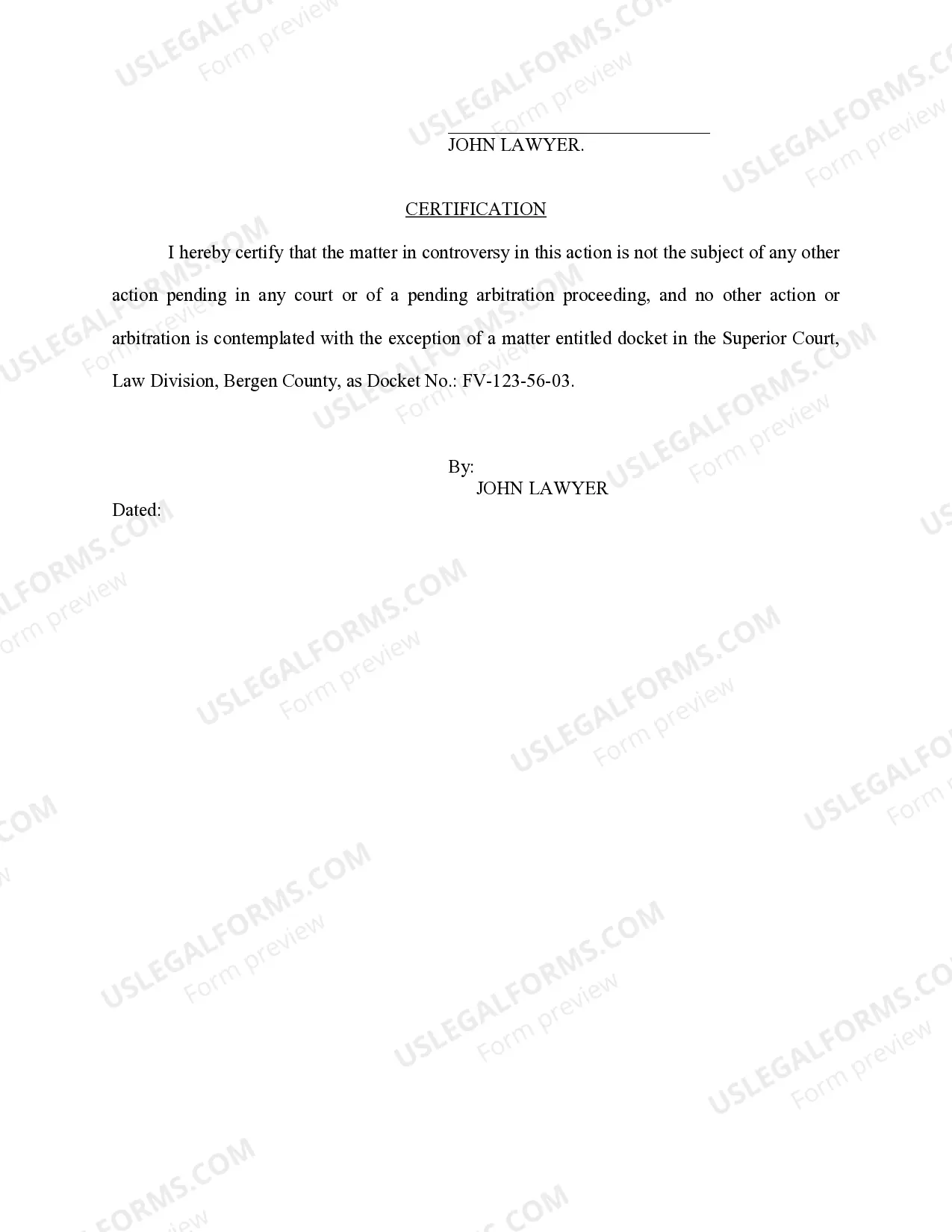
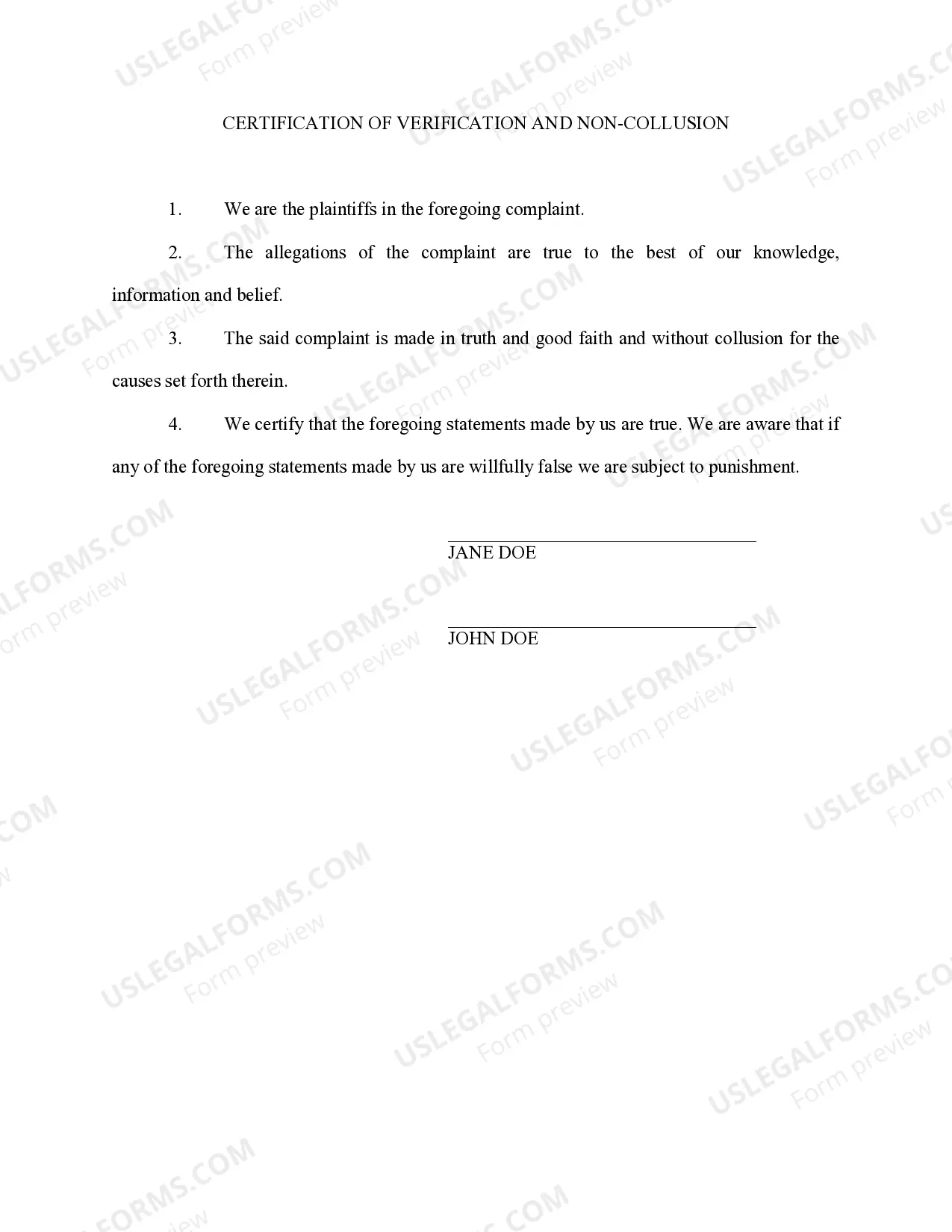
- Certification statements: Legal affirmations regarding the truthfulness of the claims made in the complaint.
- Prayers for relief: Requests for the court to grant the adoption and change the childâs name.

When to use this form
This form is necessary when grandparents seek to adopt their grandchild, particularly when the birth parents are unable or unwilling to fulfill their parental duties. Situations might include a child whose biological parents have consented to the adoption due to various circumstances, such as the inability to care for the child or abandonment.
Who needs this form
- Grandparents wanting to legally adopt their grandchild.
- Couples who are seeking to provide a stable home for a child in their family.
- Those who have received consent from the birth mother for the adoption process.
- Individuals familiar with adoption laws in their state and the need for formal legal proceedings.
Completing this form step by step
- Identify the parties: Fill in the names and addresses of the grandparents seeking adoption.
- Provide childâs details: Enter the relevant information about the child, including date of birth and current custodial arrangements.
- Document consent: Clearly state the birth mother's consent to the adoption, including any necessary supporting documents.
- Fill in the birth details: If applicable, describe the status of the birth father and any relevant legal considerations.
- Sign and date the form: Ensure all parties involved in the adoption sign the document in the appropriate sections.
Does this document require notarization?
This form does not typically require notarization unless specified by local law. It is always advisable to check local requirements to ensure legal compliance.
Get your form ready online
Our built-in tools help you complete, sign, share, and store your documents in one place.
Make edits, fill in missing information, and update formatting in US Legal Forms—just like you would in MS Word.
Download a copy, print it, send it by email, or mail it via USPS—whatever works best for your next step.
Sign and collect signatures with our SignNow integration. Send to multiple recipients, set reminders, and more. Go Premium to unlock E-Sign.
If this form requires notarization, complete it online through a secure video call—no need to meet a notary in person or wait for an appointment.
We protect your documents and personal data by following strict security and privacy standards.

Make edits, fill in missing information, and update formatting in US Legal Forms—just like you would in MS Word.

Download a copy, print it, send it by email, or mail it via USPS—whatever works best for your next step.

Sign and collect signatures with our SignNow integration. Send to multiple recipients, set reminders, and more. Go Premium to unlock E-Sign.

If this form requires notarization, complete it online through a secure video call—no need to meet a notary in person or wait for an appointment.

We protect your documents and personal data by following strict security and privacy standards.
Mistakes to watch out for
- Failing to include complete information about all parties involved in the adoption.
- Not providing adequate documentation to support claims, such as consent forms from the birth mother.
- Overlooking required signatures or dates, which can lead to delays or rejection of the complaint.
- Using outdated forms that may not comply with current legal standards.
Benefits of completing this form online
- Convenience of downloading the form directly from home.
- Editability allows users to customize the form according to their specific situation.
- Access to legal advice from licensed attorneys who draft these forms, ensuring legal compliance.
Looking for another form?

Form popularity
FAQ
The rights include of adoptive parents include: The right to be treated with respect and honesty. The right to have emotional support before, during, and after the adoption placement. The right to ask questions and receive answers about all steps of the process.
This may surprise you but not every adoption is permanent in California. Under certain circumstances, you can terminate an adoption by asking the court to reverse the adoption order. The process is referred to as a vacation or annulment. The child's natural parents or the adoptive parents can file a reversal petition.
After the adoption process is finalized by a court, both birth parents lose all legal rights to their child. This means that a biological mother will not have the right to make important life decisions on behalf of her child, nor will she have the right to petition for custody or even visitation.
In most cases, a father can block the adoption only if he meets one of these strict legal requirements: You are married to him, or were married to him within 300 days of the child's birth. He has received the child into his home and has publicly acknowledged the child as his own.
Unmarried couples may adopt jointly, and unmarried people may adopt through a procedure known as a single-parent adoption. Adoption agencies are allowed to create their own rules about who can adopt and under what circumstances, as long as they don't run afoul of state law.
An individual 18 years or older who is at least 10 years older than the child, a married couple, a married individual without his or her spouse if living separately, or the child's brother, sister, aunt, uncle, grandparent, birth father, or stepparent.
If you want to adopt a stepchild, you must have the consent (or agreement) of both your spouse and the child's other parent (the noncustodial parent) unless that parent has abandoned the child. By giving his or her consent, the noncustodial parent gives up all rights and responsibilities, including child support.
Child abuse or neglect. Spousal abuse or domestic battery. A crime against children, including child pornography. A crime involving violence, including rape, sexual assault, or homicide, but not including other physical assault or battery. Aggravated assault on a family or household member.
Under California law, a noncustodial parent's consent isn't necessary for adoption if the parent willfully fails to communicate with and to pay for the care, support, and education of the child (when they were able to do so) for a period of at least one year.